Michael Dirda on “The Knowledge Most Worth Having”


My education in the value of the personal essay probably began in a time and space I don’t recall. But I was compelled to appreciate this specialized form of literature most memorably during my reading of Philip Lopate’s collection The Art of the Personal Essay. The enthusiasm inspired by his anthology resulted in a welcome appetite for more of the same. Lopate’s genius for selecting the best of the breed was proven by the difficulty I experienced during my search for collections of comparable value. The annual publication of books in The Best American Essays series, edited by Robert Atwan, sometimes approximates the Lopate standard. And there are other worthy collections. Thankfully, my quest for the best has put me in touch with individual authors, contemporary essayists of the first rank, whose writing is consistently creative, wise, and ennobling.

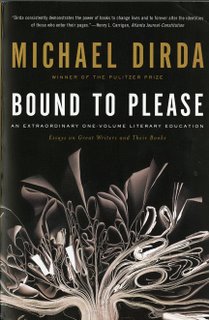
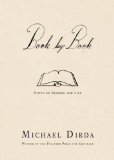
My favorite contemporary essayists include Michael Dirda, Joseph Epstein, John Updike, and many others. This post loiters in one section of one essay from Michael dirdabook-by-bookDirda’s book Book by Book: Notes on Reading and Life. The essay is titled “The Pleasures of Learning,” and the section I’ve isolated for consideration here is called “The Knowledge Most Worth Having.” This section consists of seven sentences, followed by a list of sixteen items, and a concluding sentence that reads:
Know these well, and nearly all of world literature will be an open book to you.

Clearly, Dirda’s reference to “the knowledge most worth having” is circumscribed by a specific purpose. He doesn’t mean to catalog all that it is most important to know. More precisely, he asks, “What should a person know of the world’s literature?” This question presupposes that some works are more worthy of our time and meditation than others, and that if we are to have a “structured reading program” we must have a criterion for determining which works are most deserving. Dirda gives us a criterion and then “a roughly chronological short  list of those that the diligent might read in a year or two.” Both the criterion and the list are interesting.

Dirda’s criterion—the test he uses in deciding which authors and which works are most rewarding for the reader who would attain a knowledge of the world’s literature—is simple. Devote yourself to those works “that later authors regularly build on, allude to, work against.”  Dirda does not elaborate on the principle, except to bestow a name on works that meet this condition; they are “the great patterning works.”

For further insight into the principle, we might consider Dirda’s list. He does not claim that it’s exhaustive. Actually, he implies that it is not. It’s a place to begin. Still, it’s a comfort to hear that “there aren’t many of these key books,” and it’s enticing to be told that “they aren’t all obvious classics.” One might spend a year or two in the company of these books, and then move on to others.

Before I reveal the list, I want to ask, again, what is the point of the list? It is to commend works with the potential to crack open the world of great literature. These works have this power because other authors have built on them, alluded to them, and worked against them. They are, in other words, touchstones for so much great literature that our capacity to appreciate and know the greatness of other works is unlocked by our acquaintance with these.

Now to the list. It is no surprise that it begins with

  • The Bible (Old and New Testaments)

Dirda recommends the Authorized, or King James, Version because it’s “the one that has most influenced the diction and imagery of English prose.” As a kid, I attended a Baptist Sunday School that used the King James Bible in Bible lessons, Scripture memory, and “sword drills.” (Incidentally, I never heard anyone seriously proffer a defense of the KJV on the grounds that “if it was good enough for Saint Paul, it’s good enough for me.” My Sunday school teachers were far more sophisticated than that.) In the third grade, taught by my mother, we children were awarded Bibles of our own—the King James Version, of course. Shortly after that, the production of new English translations began in earnest, and today the original KJV of 1611 is little known, even by those who know the Bible. I’m a proponent of the multiple versions doctrine, that individual versions or translations have their distinctive virtues, and that more than one should be consulted in the serious study of the Bible. But Dirda is hardly alone in proclaiming the incomparable linguistic beauty and legendary influence of the KJV, and I do not disagree. (For those interested in the translation debate, I recommend D. A. Carson’s book The King James Version Debate: A Plea for Realism.)

Next on the list:

The items listed by Dirda are not annotated. He doesn’t say why an entry meets the criterion he’s adopted. But some source containing the ancient myths of Greek, Roman, and Norse provenance is a no-brainer, and Bulfinch’s is the industry standard. Oddly, my copy of the generally reliable Benét’s Reader’s Encyclopedia (mine is the 3rd edition) has no entry for this classic collection. But then, neither does my handy paperback copy of The Reader’s Companion to World Literature. No matter. The important thing is that allusions to mythologies abound in acknowledged “great literature.” The reason for this is worthy of contemplation, but beyond the scope of this post.

Fine. If ancient mythologies must be known on the grounds that they are sources for innumerable allusions, then Homer’s influence is no less significant. The Ionian poet as a man is a mystery. Even his actual existence is doubted. The story of the composition, preservation, and function of “Homer” among the ancient Greeks is interesting in its own right, and is told with clarity uncompromised by brevity in . . . Benét’s.

We begin to suspect that the influence of the ancients runs deep in our literature. Plutarch, who lived in the first century of the Common Era, is best known as a biographer. It’s an irony of history and of literature that little is known about Plutarch himself—no biographer for the biographer. Shakespeare made use of Plutarch in two of his great plays. (Plutarch was, by the way, a master of the personal essay, and his compendium, the Moralia, has survived to please readers to this day.)

So far, Dirda’s choices are obvious. Of course Dante. But why the Inferno and not the whole the the Divine Comedy? Dirda doesn’t declare. So let’s speculate. The Inferno is the first part of the Divine Comedy. So maybe you read the first part and can’t put it down. Or you do put it down, but you’ve had enough Dante for the purposes envisioned by Dirda. Imaginative writing about hell does make for scintillating writing. For some, heaven is boring in comparison, and a proffered reason for indifference about the soul’s destiny. Strange logic.

Next in line:

I confess that I was initially surprised by this entry from the early Middle Ages. But I shouldn’t have been. This is our source for Ali Baba, Aladdin and his Magic Lamp, Sinbad the Sailor, and the phrase “Open Sesame” (which appeals to our get-rich-quick aspirations). The story of Sultan Shahriar and his clever wife Shaharazad is endlessly intriguing. But a guide to The Arabian Nights would be useful, if only because of its length.

The Middle Ages brings to mind the next fairly obvious choice:

  • Thomas Malory, Le Morte D’Arthur (tales of King Arthur and his knights)

Seeing the Monty Python movie is no substitute for reading the book. Take my word for it. But it does give a sense of the book that is somewhat surprising. (Take that with a grain of salt.) The written tales were probably composed in prison by a chap who commended the ideals  of chivalry and was notorious for violating those same ideals. Alfred, Lord Tennyson, was very much taken with these tales, and transcribed them into epic poetry in his Idylls of the King. Here is a clear case where one legendary author, the Victorian poet Tennyson, is understood better against background knowledge of a 15th century author of legend.

You knew he had to show up on the list eventually, and if you’ve been following the chronology, you may have suspected his appearance at any moment—William Shakespeare.

Some of these have been quite respectably adapted for film. Hamlet, starring Mel Gibson (1990) finally made sense of “words, words, words” to me. The Orson Welles film Chimes at Midnight (1965), featuring Welles as Falstaff and John Gielgud as Henry IV, was a favorite of Welles and is generally thought to be one of his greatest movies.

There have been a dozen or more adaptations of King Lear. Most celebrated is the 1983 version starring Laurence Olivier and Dianna Rigg. Another cinematic reprise is planned. How would you like to see Naomi Watts, Keira Knightley, and Gwyneth Paltrow as the three daughters of King Lear, played by Anthony Hopkins? It’s in the works. So now is an especially auspicious time to have a read of the original King Lear.

Film or television adaptations of A Midsummer Night’s Dream were released in 1935, 1968, 1996, 1999, 2002, and 2005. Enough said.

An adaptation of The Tempest is said to be in production. It won’t be the first. The Tempest was first “screened” in 1905, in a two-and-a-half minute production. The play enjoyed a science fiction adaptation in 1956 in the film The Forbidden Planet. Other adaptations were screened in 1982, 1991, 1992 (in animation that is faithful to Shakespeare).

These works by Shakespeare are immortal. The enjoyment of a worthy film adaptation is enriched by a reading of Shakepeare himself.

Michael Dirda’s list continues. But here the entries shade into the controversial.

Miguel de Cervantes Saavedra introduced his dubious but endearing hero, the Man of La Mancha, in two volumes (1605 and 1616). Cervantes is credited by many as the first modern novelist. Since he died in 1616, that’s quite a distinction. The only thing controversial about including Don Quixote on Dirda’s short list is that the list is so short. Some would argue that the inclusion of Don Quixote obliges the inclusion of some other great work not on the list. But the fact is, this grand novel supremely fits Dirda’s criterion. If you disagree, you’re tilting at windmills.

A shade more controversial are

and

Defoe wrote something like 250 works. They call that prolific. Businessman, journalist, government representative, spy, possibly even double agent, but best known for his novel Robinson Crusoe, or The Life and Strange Surprising Adventures of Robinson Crusoe, of York, Mariner. Through this depiction of a solitary figure stranded on an island, we learn how noble men might conduct themselves under such conditions. Crusoe is an admirable figure, with lessons to teach us all. Who hasn’t imagined what it would be like, what we would do, what we would become, if we were to live in such forced seclusion?

Swift was a genius. As evidence for this, I take the liberty of quoting:

Gulliver’s Travels is perhaps the sole major work in all English literature that has continuously led a double life: it has been at once one of the most glamorous of children’s adventure stories and one of the most pungent critiques of humanity addressed to the mature imagination. This almost incredible marriage of opposites is possible because in the main the disturbing satire for adults lurks inconspicuously behind the pleasantly exciting façade of the explorer’s tale; the child can rarely see behind the façade, and the adult can never cease seeing behind it or trying to pierce through it. Further, there are times when Swift is entirely concerned with the façade—of the elaboration of the details of the story for its own sake . . . and the presence of such passages assists the young reader—or the unperceptive reader generally—to take the whole story at the simplest level of meaning. . . . Swift’s obvious enjoyment of playing the game—of unusual sizes, mysterious phenomena, and strangely shaped creatures—gives zest to his narrative without in any way impeding him when he chooses to make the game philosophical. (The Reader’s Companion to World Literature, 226)

Dirda’s inclusion of Gulliver’s Travels is vindicted by the suggestion that this satire “draws upon at least five traditions of world literature,” and the claim that “the use of fantasy for serious statement, virtually eliminated by two centuries of emphasis upon realism, is reappearing in our own day” (The Reader’s Companion to World Literature, 229).

Dirda goes on to add items undeniably suited to his premise. But these, I confess, lie at the periphery of my own reading interests:

and

Fairy tales and folk tales. Their influence has been great. My interest is negligible. For the record, the noted study of folklore and human society is James Frazer’s The Golden Bough.

The final three works are perhaps the most controversial choices. Again, one could argue that some other work is more worthy of inclusion on such a list.

I believe a rationale may be built for each of these entries. Notice, Jane Austin is the only woman to be valorized on the basis of Dirda’s criterion. Some readers might object to this. I know some writers would have filled in with other great female authors just to avoid the appearance of impropriety and escape censure by enforcers of political correctness. But this is Dirda’s list.

There should be considerable pride in and no prejudice against the admission of Jane Austin to the august company of writers of seminal importance. (I hope that doesn’t sound like a bad pun or a contradiction in terms.) In 2003, the BBC sponsored a program called The Big Read, in quest of “the nation’s best-loved novel.” Pride and Prejudice was voted #2, after Tolkien’s Lord of the Rings. I suspect many titles voted onto the Top 100 list for The Big Read found their way there with the help of recent cinematic adaptations. But Dirda’s basis for including Jane Austin’s novel isn’t current popularity but lasting influence in the field of literature.

Lewis Carroll has to be acknowledged, even by someone without predilections for his plotting and style. Alice in Wonderland falls into that class of fairy tales and folklore that have little appeal for me.

As for The Adventures of Sherlock Holmes, I’m completely sympathetic with ranking it high on a list of entertaining and well-crafted fiction. I would even consider bringing Holmes along for my island exile. I’m less sure of the application of Michael Dirda’s criterion for educating ourselves in preparation for mastery of the world’s great literature. Doyle’s imagination, plotting, and writing style are both creditable and inimitable. But there are others. Agatha Christie has sold better—much better, in fact. Edgar Allen Poe is the acknowledged inventor of the mystery story, and is the namesake for the Edgar Award in mystery fiction. I suppose that Doyle gets the nod because Sherlock Holmes is the paradigmatic sleuth, the one who comes to mind first when that special expertise is needed. Fair enough.

So there you have it. A criterion and a list. I’ve tried to make sense of Dirda’s choices. Using his criterion, and limited to sixteen items, I think he succeeds.

Related Posts by Doug Geivett:
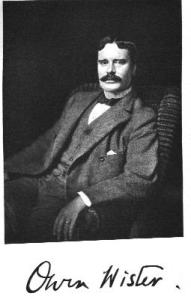
Reading Owen Wister


wisterowen1Owen Wister, The Virginian: A Horseman of the Plains (1902) — I started reading this novel January 8, 2009. I was hooked by the first paragraph. I suppose some ‘hawsses’ really are giddy pranksters. Wister’s book is a classic, the first in the western genre, and unexcelled. Humor I can appreciate appears on every page. Bits are stories in their own right, and fun to read aloud. You can hear how the Virginian sounds from the way the author crafts his dialogue. Wister and Theodore Roosevelt were close friends. The complete text of the novel is available online at Project Gutenberg. You could have a look there, then decide whether to get a hard copy. It can be ordered at Amazon here.
Excerpt from Chapter 5—”Enter the Woman”

“We are taking steps,” said Mr. Taylor. “Bear Creek isn’t going to be hasty about a schoolmarm.”

“Sure,” assented the Virginian. “The children wouldn’t want yu’ to hurry.”

But Mr. Taylor was, as I’ve indicated, a serious family man. The problem of educating his children could appear to him in no light except a sober one.

“Bear Creek,” he said, “don’t want the experience they had over at Calef. We must not hire an ignoramus.”

“Sure!” assented the Virginian again.

“Nor we don’t want no gad-a-way flirt,” said Mr. Taylor.

“She must keep her eyes on the blackboa’d,” said the Virginian, gently.

“Well, we can wait till we get a guaranteed article,” said Mr. Taylor.

. . . . The Virginian was now looking over the letter musingly, and with awakened attention.

“‘Your very sincere spinster,'” he read aloud and slowly.

“I guess that means she’s forty,” said Mr. Taylor.

“I reckon she is about twenty,” said the Virginian. And again he fell to musing over the paper that he held.

“Her handwriting ain’t like any I’ve saw,” pursued Mr. Taylor. “But Bear Creek would not object to that, provided she knows ‘rithmetic and George Washington, and them kind of things.”

“I expect she is not an awful sincere spinster,” surmised the Virginian, still looking at the letter, still holding it as if it were some token.”

Living too Fast with Books


This post-holiday season I pored over the offerings of a major bookseller advertizing deep discounts on books. I found much to interest me and placed my order. Shipping was FREE, so I even saved on the cost of fuel driving to the nearest big box book store.

swiftmapping-the-worldThe parcel arrived today. Here’s what came in the box:

Mapping the World, by Michael Swift. This is truly a handsome book. It can’t help make an impression at 17 inches wide and a foot tall—the perfect size to support my MacbookPro on my lap (the thing does get hot). This book, by a writer/publisher that specializes in cartography, lavishly features some 200 beautiful maps. The panoramic layout and size are perfect. This was easily the heaviest book in the box, ensuring that the free shipping really counted for something.

Next out of the box, a book of normal physique by Peter Walsh called It’s All Too Much: An Easy Plan for Living a Richer Life with Less Stuff. What could be more timely than a book to shame me for acquiring so many more books in one day? And in the same box! Whether this is a book I can do without for my soon to be “richer life” I’ll know when I read what Peter has to say.

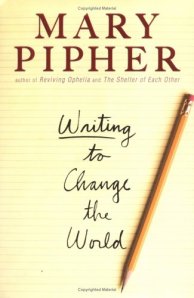
pipherwriting-to-change-worldOh, here’s Author 101, by Rick Frishman—first of the batch related to writing and reading. This batch includes Michael Dirda, Book by Book: Notes on Reading and Life; Mary Pipher, Writing to Change the World (who isn’t tantalized by that prospect?); Karen E. Peterson, Write. 10 Days to Overcome Writer’s Block. Period. (ordered on the basis of Kurt Vonnegut’s ringing endorsement—Wait. Did he ever have the block?); and, Good Fiction Guide, edited by Jane Rogers and boasting an annotated list of “4000 Great Books to Read” (a classified fiction guide from Oxford University Press).

What have we here? Italian language CDs from Berlitz? Indeed. Also in the “CD category,” Peter Kreeft’s lecture series Questions of Faith: The Philosophy of Religion. I know Peter, professor of philosophy at Boston College, and I expect great audio presentations on atheism, the problem of evil, arguments for God’s existence, religion and science, immortality, heaven, hell, religious experience, and an answer to the question . . . “What would Socrates think?” Hmm.

There’s financial guidance to be had from Ben Stein (the Expelled guy) and Phil DeMuth, in their book Yes, You Can Get a Financial Life! The exclamation point at the end of the title is reassuring. But I wonder, “Is it too late.” Have to see about that. Published in 2007, it does pre-date the fine mess that was made in October by our genius Congress.

Two items for the kitchen, so to speak. Kitchens: Design Is in the Details, by Brad Mee, and the Black & Decker Complete Guide to Kitchens, with everything you need to know to “Design, Plan & Install a Dream Kitchen.” (My idea of a dream kitchen is a kitchen that installs itself. But I couldn’t find a book on that.) Have you seen these Black & Decker guides? They’re the best for the do-it-yourselfer. If you DIY, you may already know that.

Getting back to the simpler life theme, there’s an suitably thin book called The Declutter Workbook: 101 Feng Shui Steps to Transform Your Life, by Mary Lambert. Come on, Mary, we both know that my life isn’t going to be “transformed” by applying feng shui to all our stuff. But for a guy who lives with three women, who have plenty of stuff, it’s a start. And maybe I’ll finally figure out what feng shui is.

I’m not done yet.

You know that book You—The Owner’s Manual? Well now I own one.

In the category of “most exotic cover” is Top 10 of Everything 2009, by Russell Ash. I can’t tell you anything about it because it’s shrink wrapped. But I’m sure it’s good. I bought it, right?

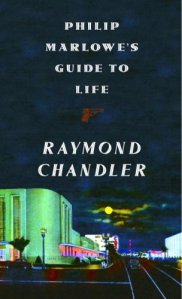
The most diminutive, but maybe the most overall helpful, is Raymond Chandler’s book (or “book-ie”) Philip Marlowe’s Guide to Life. The pages measure 4 x 6 inches, and there’s a profile sketch of a handgun on the front cover. I’m starting with this book tonight.

Finally, in the “not-books-after-all” category, there are three wall calendars for 2009, “The Ultimate Motorcycle,” “Just Australian Shepherds” (I think that’s my dog on the front cover), and “On Broadway Theater Posters” (a gift for one of my daughters). I don’t aussie-wall-calendar-cover-2009know yet whether Aussies or Triumphs will adorn the wall in my university office. Either way, I’ll be inspired to get less done.

So there you have it. A forecast of my reading activities for some snatches of 2009.

I got a good deal, but probably spent more money more frivolously than Ben Stein and Phil DeMuth would approve. I hogged up books I don’t have room to shelve, compounding the clutter problem. So Peter Walsh and Mary Lambert will be tisking me. There’s a chance our kitchen remodel won’t be started before this time next year, even with the inspiring ideas book and the step-by-step guide. I do now have a beautiful book of maps—almost a piece of furniture in its own right—for the coffee table we don’t have.

You may not make for inspiring reading, but when you’ve owned a human body long enough, a manual for maintenance and repairs is a valuable reference work. I can work on my Italian, not because I plan to go there again, but because it adds some spice when you can sprinkle your conversation with fancy words like ciao and feel like you mean it. Since I spend little time in my car, the eight CDs of Peter Kreeft should last me for a couple years.

marloweguideI can at least pretend to be changing the world with my writing, and get some help with the effort when I’m stuck, or when I forget that world-changing potential is literally at my fingertips. Jane Rogers will save me the trouble of reading hundreds of books I really ought to read, though she probably can’t do much for the guilt I’m going to feel for cheating. One book I know I’ll read, keep, and re-read is Book by Book. Michael Dirda is, as it says on the book’s cover, “a cultural treasure.”

I have to admit, though, I’ve got to watch this binge book-buying and the dangerous speed reading it leads to. As Philip Marlowe once said, “I got up and went to the built-in wardrobe and looked at my face in the flawed mirror. It was me all right. I had a strained look. I’d been living too fast.”

The Religious Lives—and Questions—of Children


I know from experience that children think deep thoughts and come up with the most difficult questions. Throughout their childhood, my daughters plied me with questions about the nature of the universe, the existence of God, whether we have souls—that sort of thing. I have always been amazed by two things as a parent and a university professor. First, grad students in philosophy ask questions they probably had when they were three to five years old. They had’t forgotten the answers; they had forgotten the questions. Second, the quirky solutions young kids reach in answer to deep intellectual challenges are seldom more quirky than the ideas of philosophers and theologians about the same things. Come to think of it, their answers often bear a remarkable resemblance!

I’m not the first to marvel at this. My friend Jim Spiegel also teaches philosophy. He has twice as many children as I do, and they’re about half the ages of my kids. And his kids don’t let him relax from doing philosophy when he comes home from work. Fortunately for us, he’s written a spanking new book about his experiences in this arena.

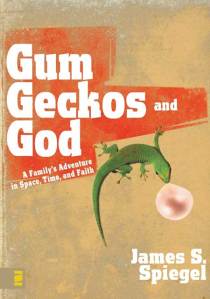
It’s called Gum, Geckos and God: A Family’s Adventure in Space, Time, and Faith. My copy just arrived and already I’ve read the first forty pages. Jim is a talented writer and an insightful parent. He can tell a good story, and this book is loaded with them. He’s funny, too, and self-effacing. If you have children or grandchildren, or know someone who does, and you haven’t given up asking questions about faith, I think you might enjoy and grow wiser reading this book.

How to Get the Most Out of Your Kindle—Tip #4


For all of you Kindle users who like to keep up with favorite blog feeds, the Kindle will help you do that through its Whispernet technology. The Kindle offers several advantages over cell phones and Blackberrys.

  • The Kindle screen is much more reader friendly, with its window size, ink technology, and scrolling features.
  • All feeds that you download remain on your Kindle as long as you like, and there’s plenty of room (especially with the card slot that allows unlimited storage in small format).
  • Bookmarking, highlighting, and note-taking are conveniently available.

So how do you use your Kindle to access your favorite blogs? It all starts with a Google Reader account—which you should have anyway. You can access your Google Reader blog feeds directly through your Kindle.

For clear, step-by-step guidelines, check out the post at The Puget News, titled “Using Google Reader on the Amazon Kindle.”

* * *

Special thanks to David, a regular reader and commentator at this blog, for letting me know about the Puget News post.

* * *

New to Kindle? Check it out here.

Related Posts:

Kindle Your Reading Habits

How to Get the Most Out of Your Kindle—Tip #1

How To Get the Most Out of Your Kindle—Tip #2

How To Get the Most Out of Your Kindle—Tip #3

Getting the Most Out of Your Kindle—Tip #2


Sarah Palin was a newsmaker when her selection as John McCain’s running-mate was announced. Suppose you wanted to read prominent newpaper coverage of her convention speech the following day—in The New York Times, The Washington Post, The Los Angeles Times, The Boston Globe, or even The Times of London or Germany’s Allgemeinde. Suppose you wanted to sample editorials from all of these papers.

You could have your dog fetch them from the front driveway (if he hasn’t been retired because of illegal immigration). You could make a special trip to your local bookstore and pick up copies of each of these papers. Or you might go online and scan the web editions.

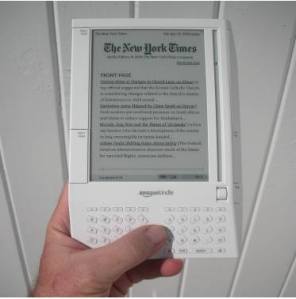
But have you considered using your Kindle? You can subscribe to all of these papers, and more, to be downloaded automatically to your Kindle as soon as they are off the press. But you don’t have to subscribe to several papers, or any papers. Why not just purchase each of these papers for that day only, and read the bits you like? Kindle gives you that option.

Sure, you could go the laptop route and be more or less portable. But you’d need an internet connection, and you’d have something larger and heavier to carry around—unless you have one of those fancy cell “phones” that does it all. What you wouldn’t have, even with the cell phone, is the possibility of reading on a screen more than half the size of an iPhone screen, wi-fi uploads wherever you go, the freedom to read offline with no extra effort, portability when you travel on airplanes, bookmarking wherever you’ve left off in your reading. You wouldn’t be able to mark passages or make notes with ease. You wouldn’t be able to adjust font size to accommodate your reading environment. You wouldn’t have hours or days of battery power.

Use your Kindle to read the newspaper. You’ll be glad you did.

Related Posts:

Kindle Your Reading Habits

How to Get the Most Out of Your Kindle—Tip #1

How to Get the Most Out of Your Kindle—Tip #3

How to Get the Most Out of Your Kindle—Tip #4

How To Cultivate the Reading Habit


Reading takes effort. But with the right habits and tools, it is richly rewarding. Here’s a list of tips for improve your reading skills and achieving more of your reading goals.

  1. Relate your reading goals to your larger goals. If you’re powerfully motivated to achieve some larger goal, try thinking about reading as a component in achieving that goal. One goal will fuel another.
  2. Understand that you don’t have to read everything on your list to benefit from the reading habit.
  3. Set specific reading goals. How many books do you want to read in the next year, or month? What kinds of books do you want to read? Make a note of the specific reasons you want to read these books.
  4. Select several books to have on hand to read at the same time.
  5. Use procrastination to your advantage. If you’re procrastinating about reading a particular book in your pile, use that procrastination to read another book in the pile.
  6. Select books that are practical and books that are theoretical. Books of the practical sort recommend solutions to interesting problems, provide guidance for self improvement, or explain how to do something. Books of a theoretical nature expand your knowledge base and enlarge your powers of critical thinking.
  7. In each broad category—the practical and the theoretical—include books that fit different subcategories. You might pick one book from each of ten subcategories: literary fiction (a novel), light fiction (another novel), short fiction (a collection of short stories), poetry (an anthology of works from a specific period, or on a common theme, or by the same writer), biography, history, inspirational literature, cultural commentary, and two practical books (for example, a book that will help you improve your writing and a book about sea kayaking).
  8. Make a note of the primary reasons you have for reading each of the books you’ve selected. Don’t settle for mere enjoyment. Assume that you’re going to enjoy the books you’ve compiled and refine your reasons for reading each book. Is one book in your pile because you want to improve your motorcycling skills? Is a book in the history category going to help you understand some event in the present? Will a particular novel enlighten you about a personally puzzling aspect of the human condition? Will the poetry you’ve picked improve your powers of imagination, or help you see the ordinary in extraordinary ways? Are you reading this book on cosmology in order learn the latest theories about the origin of the universe? Is that book about the narcissistic personality disorder going to help you understand a difficult colleague at work? Write these aims into each book.
  9. Keep these books together in a place where you feel relaxed and are most likely to have the inclination to read. This may be a cabinet next to your bed. Otherwise, use your imagination.
  10. Develop the habit of reading whenever your book stash in nearby. If you have a varied selection of books in different categories, just read what most suits your mood at the time.
  11. Pre-read each book to get an idea what it’s is about and how it’s organized. This will save time in the long run. It will help you decide whether to read the book more carefully, how to re-read the book to achieve your specific goals, and how much time to allocate for a closer read.
  12. Guard against time consuming eye movements. Keep your eyes moving from left to right, without regressing (even if you feel you’ve missed something). Train your eyes to “land” (ever so briefly) on points along the trajectory of your reading path, without moving your head. Work at reducing the number of “landings” for each line as you subconsciously scan for key words and phrases in the line.
  13. Separate the wheat from the chaff. Based on your pre-reading, decide which books deserve to be read more closely.
  14. While reading more analytically, pace yourself to fit the specific goals of your reading and the nature of the material as it changes from one passage to another. Skip over the bits that you already understand, or are repetitive, or don’t serve your reading objectives. Slow down for the complex parts, where key concepts are explained, or crucial details of a plot are revealed, or the line of a major argument is delineated.
  15. Mark your book in pencil as you read. Underline, circle, add symbols in the margins to identify a feature of special significance (for example, asterisks, question marks, explanation marks, bracketed numerals for lists or numbered items, arrows, horizontal lines for significant but unmarked breaks in the progression, check marks, squares, triangles). Create a simple shorthand system with letters of the alphabet for frequent kinds of marking. (If a passage is quotable, I draw a ‘Q’ in the margin. If it should be noted elsewhere in my files, I draw a cursive ‘f’.) Use vertical lines. Bracket sections with corner marks. Experiment with squiggly lines, double lines, light lines and heavy lines, and lines that are mostly light with brief stretches of heavy lines.
  16. Write unfamiliar words in the top or bottom margins—and look them up in a dictionary. This is the best way to improve your vocabulary. Over time, you’ll write fewer words and have a record of the growth of your vocabulary.
  17. Write out questions that come to mind—questions stimulated by what you’re reading. Interrogate the author. (Or, if you prefer, have a “conversation.”)
  18. Draw simple charts to show relationships that have been describe.
  19. Create your own index to the book, using the back endpages. Index key terms and concepts. If necessary, invent names for concepts.
  20. Reserve space in the back endpages to index passages that relate to research, writing, or speaking you may be doing. If you have an abbreviated title for each project, you can use this title for indexing purposes. Later, you’ll be able to return to these notes and enter them elsewhere as needed.
  21. Keep track of the structure and progression of the book.
  22. Write a summary and/or general outline of the entire book into the front endpages, and make a note about the general value of the book relative to your purposes. You may want to draft this on separate paper or with a word processor, and then transfer your final version into the pages of the book. Another option is to use Post-It notes that are nearly the size of a trade book and stick them into the front of the book with these notes and comments.
  23. For maximum portability and time management in pursuit of your reading goals, buy a Kindle and learn how to use it efficiently. (See separate posts with Kindle Tips on this blog.)

***

NOTE: Some of the ideas described in this post can also be found in How to Read a Book, by Mortimer Adler and Charles Van Doren. As the subtitle says, this is The Classic Guide to Intelligent Reading.

Bedside Books—The Stuff I Don’t Have to Read


6 September 2008

7 September 2008

14 September 2008

1 October 2008

My Bookshelf of Best Books


Click here for a list of 100 books of virtually every kind that have given me the most pleasure, and have been the most personally useful, spiritually uplifting, and intellectually stimulating.

Related Posts:

<script type=”text/javascript” src=”http://www.assoc-amazon.com/s/impression-counter?tag=faifilandphi-20&o=1″></script&gt;
<noscript><img src=”http://www.assoc-amazon.com/s/noscript?tag=faifilandphi-20&#8243; alt=”” /></noscript>

Getting the Most Out of Your Kindle—Tip #1


“Bibliophile” isn’t a strong enough label for my affection for books. “Bibliophiliac” is probably more accurate. One symptom is my habit of cruising bookstores. But as much as I like the brick and mortar shops, they have two limitations: price and selection. Three out of four times they don’t have a book I’m there to find, and the one out of four times they do I usually have to pay full price. So I resort to browsing, which is dangerous. The temptation to buy, even if it’s something I wasn’t looking for, can be overpowering. You know the drill.

But I have a Kindle, and I (almost) never leave home without it. And my Kindle is very handy when I’m in browse mode.

Suppose my arms are laden with books that beckon. I go to the most inconspicuous bench or chair in the store, turn on my Kindle, and flip the switch for Whispernet. Within a few seconds I have a wireless connection to the Kindle store. I type in the title for one of the books I’ve gathered and let my Kindle search for it. If the title isn’t yet available on Kindle, I set the book aside and repeat the process for the next one, working my way through the stack.

It really gets interesting when I find that a Kindle version of the book is available. I have a choice. I can order it and have it on my Kindle within moments, usually at a deep discount, OR I can download a selection from the book . . . for FREE. Since I can always buy the book later, and I may decide I want a physical copy rather than the Kindle edition, I download the free selection and move on to the next book.

Later, when my pulse has slowed, I read the selections I’ve downloaded. I now have a good idea whether I want to spend my money, and whether I want the Kindle version or a physical copy of any item. Bottom line? I make better decisions about the books I buy, I spend less, and I enjoy greater mental health. All because my companionable Kindle has kept me from compulsive spending and buyer’s remorse. And eventually, my Kindle pays for itself! How great is that?

***

The Get Rich Slowly blog has posted “Six Steps to Curbing Compulsive Spending.” They’re good ideas. Let me add one more, specially suited to the bibliophiliac:

7. Don’t shop bookstores without your Kindle.

Related Posts:

Show Your Appreciation to Those Who Blog Books


Some of the best blogs are “Book Blogs,” and My Friend Amy is hosting Book Blogger Appreciation Week for September 15-19.

I blog books and enjoy finding consistently classy book blogs. So I’ll be making my own nominations in a few of the twenty-four categories Amy has set up.

Meanwhile, here are some award categories Amy might consider adding:

  • Best Philosophy Book Blog
  • Best Science Fiction Blog
  • Best Biography Blog
  • Best Science Writing Blog
  • Best Writing about Writing Blog

Be Still and Know that I Am an Artist


Margaret Atwood tells a joke:

The Devil comes to the writer and says, “I will make you the best writer of your generation. Never mind generation—of this century. No—this millennium! Not only the best, but the most famous, and also the richest; in addition to that, you will be very influential and your glory will endure for ever. All you have to do is sell me your grandmother, your mother, your wife, your kids, your dog and your soul.”

“Sure,” says the writer, “Absolutely—give me the pen, where do I sign?” Then he hesitates. “Just a minute,” he says. “What’s the catch?”

Atwood uses this fictional exchange to explore “the problem of moral and social responsibility in relation to the content of a work of art.” The passage appears in chapter four of her 2002 book Negotiating with the Dead: A Writer on Writing. I’m still in chapter three, but I skipped ahead.

Negotiating with the Dead is a literary essay on the writer as artist. At least, that’s true of the half I’ve read so far. Chapter 3, titled “The Great God Pen,” traces the Art Wars generally, and the world of poetry and fiction as a theatre of war in particular. And she examines an interesting argument—strictly syllogistic, mind you—that “we should devote ourselves to beauty-worship.” An unexpected but crucial premise in this argument is Jesus’ declaration, “The truth shall make you free.”

The interesting story here is that art has displaced religion in a secular society. Atwood isn’t all that explicit about this. But what she says is suggestive. Her chapter begins with clichéd questions about literary worth and money. Since writers are warned against unrealistic expectations of monetary gain, they must come to grips with deeper incentives. One possibility commends “the social usefulness of art.” But writers beguiled by this idyllic motive are victims of censorship, often inflicted by themselves. “Thus, the heroes of Art became those who were willing, as they say, to push the envelope.”

In due course, this pushed artists in the direction of a “pure aesthetic” that pitted art against moral purpose. The upshot, in the words of Ralph Waldo Emerson, is that beauty, rather like God, “is its own excuse for being.”

Oscar Wilde drew out religious parallels with art that imitate the language of Christianity, says Atwood. In his preface to The Picture of Dorian Gray Wilde wrote, “No artist has ethical sympathies.” He added, “Those who find beautiful meanings in beautiful things are the cultivated. For these there is hope. They are the elect to whom beautiful things mean only Beauty.”

The artist is a high priest of the imagination. But this does not require scruples. When it comes to Art, some get it and some don’t. Art for art’s sake is non-utilitarian. It disdains mammon and turns a blind eye to social responsibility. For a writer of this persuasion, there is no accountability. The only ultimate is the instinct of the artist.

Atwood explores this theme without committing herself to its creed. But she does seem to think that there are only two other motives for writing. They are writing for monetary gain and writing to fulfill a social responsibility of one sort or another.

***

Atwood is probably best known for her novel The Handmaid’s Tale (1985), depicting an apocalyptic future with the world’s women in subjection to a theocracy run by fanatical devotees of the Bible. The film adaptation appeared in 1990, starring Faye Dunnaway, Natasha Richardson, and Robert Duvall.

Kindle Your Reading Habits


The Kindle is a thin, book-sized reading device that holds innumerable e-books and other digital reading material that can be downloaded in an instant using wireless technology almost anywhere in the U.S. Wow! Amazon boasts a Kindle library of over 160,000 items. And the inventory continues to grow.

The Kindle came out fall 2007. My gadget-guy instincts kicked in immediately. But I held off buying. I thought the price might go down (it did), that the wait period for it to come in the mail would shorten (it did), and that my “need” for a Kindle would increase (it did).

I ordered my Kindle from Amazon in March so I would have it in time for my trip to Europe in May. It’s the only thing I took for reading material during my trip. And it’s one of the reasons why I was able to travel extremely light using carry-on baggage only.

So now I can get my reading fix no matter where I happen to be. And if I just want to read today’s issue of The New York Times, or I don’t have a book that suits my mood, I can download what I want no matter where I am. The technology is wireless.

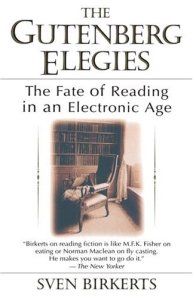
A few years ago, I read The Gutenberg Elegies, by Sven Birkerts. Like Birkerts, I believe it would be a tragedy if books—I mean real books—became a thing of the past because they all went digital. I’m a hardcore advocate for having a houseful of books. To me, books—books on shelves, books in piles—are the ultimate in home decorating options. Books speak to me even when I’m not reading. There’s nothing quite like being in the presence of books.

Still, I welcome the arrival of the digital version of reading material. While an e-book can’t replace the role of a real book, there are things it can do for readers that the traditional book can’t. And Kindle is the way to go in this arena.

Here are seven of the main reasons why I now own and use a Kindle:

  1. I can go anywhere and read what I want while I wait.
  2. I can go anywhere in the U.S. and download books for instant reading.
  3. I can subscribe to newspapers and magazines without having them pile up around the house.
  4. I can pack light when I travel and still bring a huge library with me.
  5. I save space on my shelves for physical copies of books I really must have.
  6. I save money when I order books for my Kindle.
  7. It’s the easiest way to read in bed.

The Kindle is the perfect complement to my other hobbies. I can fit a whole library in the saddle on my motorcycle, or carry it in a small book bag on my back. The Kindle goes with me when I’m kayak touring. Traveling is a greater pleasure now that I can haul all the books I want on my Kindle. I can practice foreign languages as long as I have the right tools on my Kindle.

Yes, I can mark my Kindle books, bookmark them, and take unlimited notes that are linked to specific passages in them.

Then there’s the cool factor. A woman and her daughter saw me reading on my Kindle at a Starbucks; seeing mine convinced them to get one for themselves. On a recent trip to Europe, nearby passengers asked about it. On the train between Stuttgart and Zurich an engineering student who had never heard of the Kindle decided within a few minutes that he had to have one.

***

For Discussion:

  • Had you heard of the Kindle before now?
  • Are you interested in becoming a Kindle user?
  • Are you a Kindle user?
  • If so, what would you say are the best reasons to have a Kindle?
  • What are some of the things you’ve downloaded to your Kindle?
  • What is your evaluation of the Kindle?

Related Posts:

How to Write Book Reviews for Your Blog


Book reviews are everywhere now. And more people are writing reviews and posting them online. Journal and magazine editors worry that literary book reviews will become obsolete and that paid reviewers will be out of a job. I hope this doesn’t happen, because so much of the reviewing done online is of a different quality and serves a different purpose. At the same time, I think the proliferation of book reviewing by bloggers is a positive development. Read more of this post

Good Reading—Part 1


We discover good reads in lots of different ways. I’ve benefited from reading books about reading and about books worth reading. I have several of these in my library. And one I purchased 18 years ago is still a source of fresh ideas for me. The Prentice Hall Good Reading Guide, by Kenneth McLeish, doesn’t need to be updated. Read more of this post