Be a Good Student—Best Book in This Category


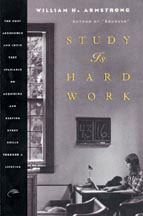
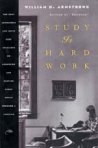
armstrongstudy-is-hard-workIt’s brief, it’s well-organized, and it’s full of sane advice. It’s a book called Study Is Hard Work. The author, William H. Armstrong, explains all the fundamental skills needed to be a successful lifelong learner. Here are the chapter titles:

  1. Learning to Listen
  2. The Desire to Learn
  3. Using the Tools
  4. Getting More From What You Read
  5. Developing a Vocabulary
  6. Putting Ideas in Order
  7. Books and the Library
  8. Written Work
  9. Acquiring Skill in Methods
  10. How to Study Languages
  11. Letting Mathematics Serve You
  12. How to Study Science
  13. Getting the Most Out of History
  14. Tests and Examinations

All of this in 143 pages. Each chapter begins with an Interest Measurement Test and ends with five Review Questions. Each “Interest Measurement Test” is a set of five questions that get readers to think about their current experiences and skill level in some category of study. Here are a few samples:

  • “Have you ever stopped to think what your life would be like if there were no books?”
  • “Do you believe that you really have a desire to learn, or would you, had you been left alone from birth, be totally primitive and beastlike in your thoughts and feelings?”
  • “Do you believe that, other than your parents, the people who will most influence your life for good are your teachers?”
  • “When you have read a book do you feel that you have talked with, and come to know, the author?”
  • “Do you know certain traits of your own mind that lend themselves to some methods of study more effectively than others?”
  • “Would you agree that there is much of the poet in all great mathematicians?”
  • “Do you believe that your life will be influenced by your interpretation of history?”
  • “Are you afraid of tests, or do you consider them a challenge?”

Chapters are loaded with numbered tips, steps, strategies, for doing all the things a college or university student must do to succeed, all showing students how to achieve real success by learning with pleasure and good work management. My students are exceptional graduate students, and every one of them could benefit from practicing the methods set forth here.
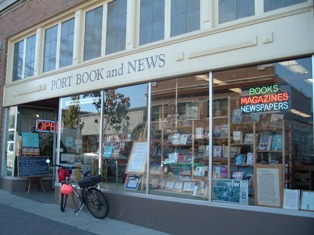
bookstoreport-book-newsI came across this book at a charming little bookshop we visit when we’re in Port Angeles, Washington. One tip for studying foreign languages struck me right away as eminently sensible and yet generally unknown.

“Make your own vocabulary cards, writing the word to be learned on one side and the English meaning on the other. If you are lucky enough to be studying two languages, write the meaning in the second language on the back also.”

The second sentence is simply brilliant. It makes a truly powerful suggestion, and it strikes a positive chord about foreign language study. My first thought was, “If you’re going to learn a foreign language, why not make it two?”

If you aren’t officially a student and you read this book out of curiosity, you may feel a strong desire to sign on for a class at your local college or university. I say, go for it! But if for some reason you aren’t able to take a class, Armstrong is still an excellent guide through the steps to independent learning. It all begins with a desire to learn (chapter 2).

Note: There are two other groups who would be helped by this book. First, high school students, especially those who plan to go on to higher education. Why not learn how to learn before learning gets even harder? Second, home school parents. These heroic people know what lifelong learning means, and welcome suggestions for organizing the learning process into manageable steps. I believe that practicing the principles presented in this handy book will shave hours of labor from the task of home schooling, make the whole experience more enjoyable, and result in much less stress.

From Amazon:
armstrongstudy-is-hard-work1

From “That Bookstore in Portland”:

armstrongstudy-is-hard-work1

Leave your comments about this book in the reply box below!
The Religious Lives—and Questions—of Children


I know from experience that children think deep thoughts and come up with the most difficult questions. Throughout their childhood, my daughters plied me with questions about the nature of the universe, the existence of God, whether we have souls—that sort of thing. I have always been amazed by two things as a parent and a university professor. First, grad students in philosophy ask questions they probably had when they were three to five years old. They had’t forgotten the answers; they had forgotten the questions. Second, the quirky solutions young kids reach in answer to deep intellectual challenges are seldom more quirky than the ideas of philosophers and theologians about the same things. Come to think of it, their answers often bear a remarkable resemblance!

I’m not the first to marvel at this. My friend Jim Spiegel also teaches philosophy. He has twice as many children as I do, and they’re about half the ages of my kids. And his kids don’t let him relax from doing philosophy when he comes home from work. Fortunately for us, he’s written a spanking new book about his experiences in this arena.

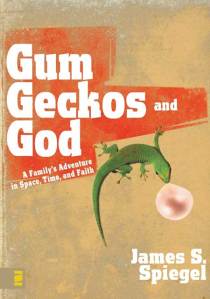
It’s called Gum, Geckos and God: A Family’s Adventure in Space, Time, and Faith. My copy just arrived and already I’ve read the first forty pages. Jim is a talented writer and an insightful parent. He can tell a good story, and this book is loaded with them. He’s funny, too, and self-effacing. If you have children or grandchildren, or know someone who does, and you haven’t given up asking questions about faith, I think you might enjoy and grow wiser reading this book.

Critical Thinking—Best Book in This Category


Amazon

Amazon

I teach philosophy to graduate students. Many of these men and women are married. Wives of the married men often invite me to speak to their group. Some have told me how much they desire to understand what their husbands are studying, and, frankly, to be able to hold their own in argument when their husbands, by dint of their occupation, have a seeming advantage.

There’s one book I’ve been recommending to them. It’s an excellent general introduction to the skills we all need—both for gentle sparring and for serious debate, but also just for organizing our beliefs into cogent perspectives.

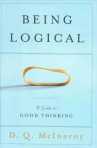
Written by D. Q. McInerny, it’s called Being Logical: A Guide to Good Thinking (2005). (I see that it’s also now available in a Kindle edition.)

Charles Osgood offers this poetic endorsement:

Given the shortage of logical thinking,

And the fact that mankind is adrift, if not sinking,

It is vital that all of us learn to think straight.

And this small book by D.Q. McInerny is great.

It follows therefore since we so badly need it,

Everybody should not only buy it, but read it.

That Bookshop in Portland

That Bookshop in Portland

* * *

What Others Are Saying:

What Good Writers Do—Best Book in This Category


To be a good writer, you must be able to select the best words, craft sentences, and build paragraphs. This is more than a matter of knowing the rules of punctuation and having a strong vocabulary. Read more of this post

Getting the Most Out of Your Kindle—Tip #2


Sarah Palin was a newsmaker when her selection as John McCain’s running-mate was announced. Suppose you wanted to read prominent newpaper coverage of her convention speech the following day—in The New York Times, The Washington Post, The Los Angeles Times, The Boston Globe, or even The Times of London or Germany’s Allgemeinde. Suppose you wanted to sample editorials from all of these papers.

You could have your dog fetch them from the front driveway (if he hasn’t been retired because of illegal immigration). You could make a special trip to your local bookstore and pick up copies of each of these papers. Or you might go online and scan the web editions.

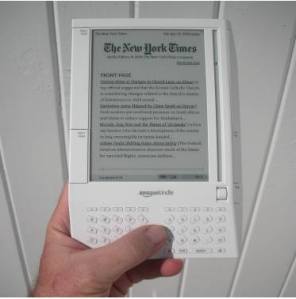
But have you considered using your Kindle? You can subscribe to all of these papers, and more, to be downloaded automatically to your Kindle as soon as they are off the press. But you don’t have to subscribe to several papers, or any papers. Why not just purchase each of these papers for that day only, and read the bits you like? Kindle gives you that option.

Sure, you could go the laptop route and be more or less portable. But you’d need an internet connection, and you’d have something larger and heavier to carry around—unless you have one of those fancy cell “phones” that does it all. What you wouldn’t have, even with the cell phone, is the possibility of reading on a screen more than half the size of an iPhone screen, wi-fi uploads wherever you go, the freedom to read offline with no extra effort, portability when you travel on airplanes, bookmarking wherever you’ve left off in your reading. You wouldn’t be able to mark passages or make notes with ease. You wouldn’t be able to adjust font size to accommodate your reading environment. You wouldn’t have hours or days of battery power.

Use your Kindle to read the newspaper. You’ll be glad you did.

Related Posts:

Kindle Your Reading Habits

How to Get the Most Out of Your Kindle—Tip #1

How to Get the Most Out of Your Kindle—Tip #3

How to Get the Most Out of Your Kindle—Tip #4

Stuff I Have to Read (Not That I Don’t Want To)


<script type=”text/javascript” src=”http://www.assoc-amazon.com/s/impression-counter?tag=faifilandphi-20&o=1″></script&gt;
<noscript><img src=”http://www.assoc-amazon.com/s/noscript?tag=faifilandphi-20&#8243; alt=”” /></noscript>

Bedside Books—The Stuff I Don’t Have to Read


6 September 2008

7 September 2008

14 September 2008

1 October 2008

My Bookshelf of Best Books


Click here for a list of 100 books of virtually every kind that have given me the most pleasure, and have been the most personally useful, spiritually uplifting, and intellectually stimulating.

Related Posts:

<script type=”text/javascript” src=”http://www.assoc-amazon.com/s/impression-counter?tag=faifilandphi-20&o=1″></script&gt;
<noscript><img src=”http://www.assoc-amazon.com/s/noscript?tag=faifilandphi-20&#8243; alt=”” /></noscript>

Be Still and Know that I Am an Artist


Margaret Atwood tells a joke:

The Devil comes to the writer and says, “I will make you the best writer of your generation. Never mind generation—of this century. No—this millennium! Not only the best, but the most famous, and also the richest; in addition to that, you will be very influential and your glory will endure for ever. All you have to do is sell me your grandmother, your mother, your wife, your kids, your dog and your soul.”

“Sure,” says the writer, “Absolutely—give me the pen, where do I sign?” Then he hesitates. “Just a minute,” he says. “What’s the catch?”

Atwood uses this fictional exchange to explore “the problem of moral and social responsibility in relation to the content of a work of art.” The passage appears in chapter four of her 2002 book Negotiating with the Dead: A Writer on Writing. I’m still in chapter three, but I skipped ahead.

Negotiating with the Dead is a literary essay on the writer as artist. At least, that’s true of the half I’ve read so far. Chapter 3, titled “The Great God Pen,” traces the Art Wars generally, and the world of poetry and fiction as a theatre of war in particular. And she examines an interesting argument—strictly syllogistic, mind you—that “we should devote ourselves to beauty-worship.” An unexpected but crucial premise in this argument is Jesus’ declaration, “The truth shall make you free.”

The interesting story here is that art has displaced religion in a secular society. Atwood isn’t all that explicit about this. But what she says is suggestive. Her chapter begins with clichéd questions about literary worth and money. Since writers are warned against unrealistic expectations of monetary gain, they must come to grips with deeper incentives. One possibility commends “the social usefulness of art.” But writers beguiled by this idyllic motive are victims of censorship, often inflicted by themselves. “Thus, the heroes of Art became those who were willing, as they say, to push the envelope.”

In due course, this pushed artists in the direction of a “pure aesthetic” that pitted art against moral purpose. The upshot, in the words of Ralph Waldo Emerson, is that beauty, rather like God, “is its own excuse for being.”

Oscar Wilde drew out religious parallels with art that imitate the language of Christianity, says Atwood. In his preface to The Picture of Dorian Gray Wilde wrote, “No artist has ethical sympathies.” He added, “Those who find beautiful meanings in beautiful things are the cultivated. For these there is hope. They are the elect to whom beautiful things mean only Beauty.”

The artist is a high priest of the imagination. But this does not require scruples. When it comes to Art, some get it and some don’t. Art for art’s sake is non-utilitarian. It disdains mammon and turns a blind eye to social responsibility. For a writer of this persuasion, there is no accountability. The only ultimate is the instinct of the artist.

Atwood explores this theme without committing herself to its creed. But she does seem to think that there are only two other motives for writing. They are writing for monetary gain and writing to fulfill a social responsibility of one sort or another.

***

Atwood is probably best known for her novel The Handmaid’s Tale (1985), depicting an apocalyptic future with the world’s women in subjection to a theocracy run by fanatical devotees of the Bible. The film adaptation appeared in 1990, starring Faye Dunnaway, Natasha Richardson, and Robert Duvall.

Remains of the Day


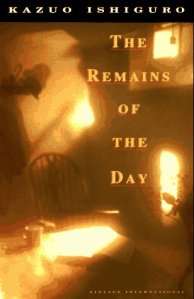
The Remains of the Day, published in 1989, is Kazuo Ishiguro’s third novel. Born in Nagasaki, Japan in 1954, Ishiguro lived in Great Britain from age five and is a British citizen. And there can be no question that he is a British novelist.

This novel won him the Booker Prize. In an interview at the time of his award, Ishguro explained that he wanted to explore two themes, how ordinary people relate to people of influence and the effects of sublimating one’s own feelings for an ill-conceived ideal. His vehicle for this is a series of brooding ruminations by a British butler who has dedicated his best years in service to a wealthy Brit who was a naive Nazi sympathizer in the years leading up to World War 2. Read more of this post

If You Don’t Feel Like Writing, You Can Always Read About It


You want to write but you can get going? Do the next best thing—read about writing. But make sure what you’re reading is written well. This is my list of recommendations for reading that leads to improved writing. This is kind of an annotated bibliography. I include a favorite quote from each item. Read more of this post

Good Reading—Part 1


We discover good reads in lots of different ways. I’ve benefited from reading books about reading and about books worth reading. I have several of these in my library. And one I purchased 18 years ago is still a source of fresh ideas for me. The Prentice Hall Good Reading Guide, by Kenneth McLeish, doesn’t need to be updated. Read more of this post

Beyond the Sounds of Poetry


In a separate post, I’ve recommended Robert Pinsky’s little book The Sounds of Poetry. So maybe you’ve jumped in and grabbed your own copy of the book to get yourself educated in the values of poetry. What comes after Pinsky’s guide? Here are a few suggestions that vaguely parallel my own path toward greater understanding and appreciation of the riches of poetry. Read more of this post

Don’t Like Poetry? Start Here


How often have you read a poem and thought, “I don’t get it”? I can relate. How about this one: “I don’t get it; but I wish I could”? That was me, too. And it kept me away from poetry. Then I discovered Robert Pinsky’s little book The Sounds of Poetry: A Brief Guide. Pinsky helped me get it, and made me a believer in poetry.

There are several reasons why I wanted a deeper appreciation of the poetry I didn’t understand. Read more of this post

Presidential History: Rutherford B. Hayes


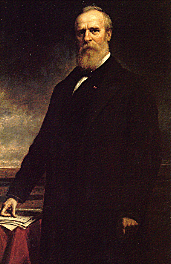
Presidential biography is a long-standing interest of mine. I’ve read more about Theodore Roosevelt than any other historical figure. He would be my favorite in many respects. But I also especially enjoy learning about lesser-known Presidents, like Chester Arthur and Rutherford B. Hayes. Since my Reading Jags often include forays into the arena of Presidential history, I’ll include periodic posts about these jags. This post is dedicated to the nineteenth President of the United States, Rutherford B. Hayes (1822-1893).

Jag for July 23, 2008

Jenny Drapkin posted her blog at http://www.mentalfloss.com today. She acknowledges that Hayes was widely known as a man of integrity. But she attributes considerable responsibility surrounding his controversial election to the man himself. This is probably unfair. Hayes went to bed on the night of the election expecting his opponent to win. His opponent expected the same result. Drapkin recounts a few of the details that determined the somewhat shocking outcome. To say the least, close elections raise special problems.

The Hayes vs. Tilden horse-race was made more complicated by the continued festering of North/South relations. It was still a period of reconstruction, and there were no easy solutions. Who can say what a Tilden presidency would have been like? As it was, the Hayes presidency lasted for only a single term. (The Wikipedia entry on Hayes indicates that Hayes had promised to serve for one term only and had advocated for one-term presidencies of six years. It might be enjoyable to hear a conversation between Rutherford B. Hayes and Franklin Roosevelt on that point—and why not include George Washington, for good measure?)

The White House Biography points out that Hayes, who was from Ohio, sought to establish stronger support for the Republican party in the South. But those with Republican sensibilities considered it too risky to exhibit public sympathy for this effort. (Some will be surprised to learn that Mark Twain campaigned for Hayes, the Republican who wrote in his diary, “the best religion the world has ever had is the religion of Christ.”)

Drapkin’s article comes at an interesting time, in the pre-convention days of the contest between senators John McCain (Republican) and Barack Obama (Democrat). She alludes to “the current political process,” and mentions the “chad debacle of years past,” but she doesn’t explicitly reference the current contestants. Her brief article is a reminder that intrigue has marred presidential politics for a good long while. She suggests that what our generation has witnessed is comparatively benign.

It is useful to sober up on the smelling salts of history when we are in the midst of an election period with so much at stake and such partisan division.