Quotations to Live By


“The less routine the more life.” —Amos Bronson Alcott

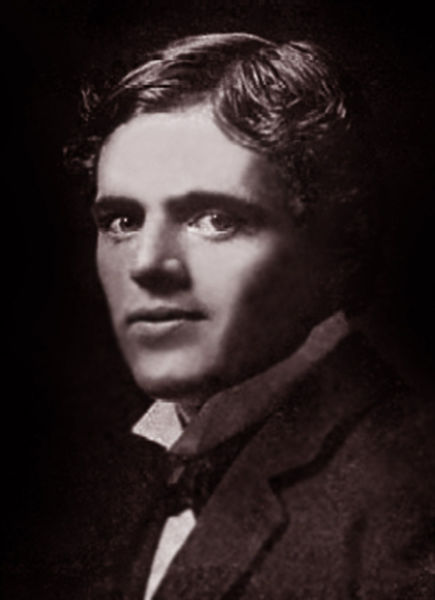
Jack London, 1900

“I would rather be ashes than dust! I would rather that my spark should burn out in a brilliant blaze than it should be stifled by dryrot. I would rather be a superb meteor, every atom of me in magnificent glow, than a sleepy and permanent planet. The proper function of man is to live, not to exist. I shall not waste my days in trying to prolong them. I shall use my time.” —Jack London

“Old age should burn and rave at close of day;
Rage, rage, against the dying of the light.”
—Dylan Thomas, “Do not go gentle into that good night”

First Lines: Thinking of the Future When It’s Become the Present


“Not until my ears popped and the plane was coming down over the winking lights of Bogatá—or really it looked like any other city at night—did I raise my eyes from the page I’d been puzzling at and begin to think of the girl, or woman, the friend or acquaintance, Natasha, whom I was flying so far to visit. That’s how it was with me then: I couldn’t think of the future until I arrived there.”

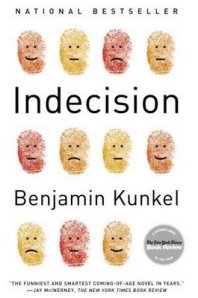
—Dwight B. Wilmerding, lead character in the novel Indecision, by Benjamin Kunkel

“I couldn’t think of the future until I arrived there.” In this case, the character is literally arriving by plane at

Book Cover for Indecision, by Benjamin Kunkel

Book Cover for Indecision, by Benjamin Kunkel

Bogatá, and he’s thinking—really thinking—for the first time about the point of his trip. Whatever he was reading before this moment had occupied his attention and had nothing to do with what was going to happen next.

Wilmerding was there to visit Natasha, and he’d come a long way by plane. Natasha doesn’t have a settled identity for this protagonist. She is, variously, “the girl, or woman, the friend or acquaintance” he’s come to see. These are his thoughts. But if this is so, why has he travelled so far to see her?

That’s what we want to find out, isn’t it?

As for Bogatá, on approach into the airport, it didn’t look different than any other city at night. Has he seen Shanghai, I wonder? But I take his point—in a way, cities do look alike, even the ones we’re seeing for the first time. We approach a new place intent on noticing what’s foreign about it. We’re romantics when it comes to travel. But if we think about it, we really must be more modest. We have projected a difference that doesn’t exist.

Wilmerding hints that his penchant for waiting ’til the future arrives before thinking about it is now past. That’s interesting. What accounts for this idiosyncrasy? And are we any different? Shall we find out?

That’s our question as we stand in the Barnes and Noble fiction isle trying to decide whether to buy and read Kunkel’s novel. We are in the grip of Indecision.

First Lines: What Does Sunday Sound Like?


Sometimes you read the first line of a novel and you just have to take the next step. If you’re lucky, the next sentence is equally galvanizing, and before you know it, you’re deep into another read.

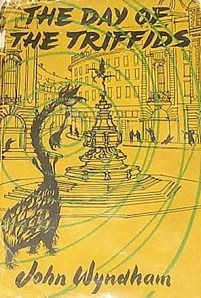
The experience is rare. But it happened for me again the other day. The sentence that did it comes from John Wyndham’s book The Day of the Triffids: “When a day that you happen to know is Wednesday starts off by sounding like Sunday, there is something seriously wrong somewhere.”

First Edition Cover of John Wyndham's Novel, The Day of the Triffids (1951)

First Edition Cover of John Wyndham's Novel, The Day of the Triffids (1951)

The Day of the Triffids is favorably reviewed by its numerous readers. For example, it averages four-and-a-half stars at Amazon for sixty-nine customer reviews. But it’s still not known very well outside the sci-fi community. Paul Thompson, of Devon, England, has dedicated a website to this book. It’s called “The Reader’s Guide to John Wyndham’s The Day of the Triffids.”

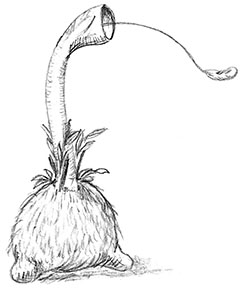
Here is an artist’s rendition of a triffid:

Sketch of a Triffid

Sketch of a Triffid

Best discussions of The Day of the Triffids:

If you’re familiar with Wyndham’s novel, please post your thoughts.

Quotations: On Philosophy


“Philosophy doesn’t begin in some abstract realm; the questions that philosophers concern themselves with begin in human experience.” —Charles Johnson, in his interview with Diane Osen for The Book That Changed My Life

Quotations: On Film


“Even the objects in a fictional world are shot through with meaning and philosophical significance.” —Charles Johnson, in his interview with Diane Osen for The Book That Changed My Life

Quotations: On Literature


“Even the objects in a fictional world are shot through with meaning and philosophical significance.” —Charles Johnson, in his interview with Diane Osen for The Book That Changed My Life

“I think that a good work of fiction is comparable to a good work of philosophy. That means it must engage the life of the spirit as well as the life of the intellect. I don’t want the characters to just talk the ideas; I want them grounded in the drama they find themselves in, in the world of action. Philosophy doesn’t begin in some abstract realm; the questions that philosophers concern themselves with begin in human experience.” —Charles Johnson, in his interview with Diane Osen for The Book That Changed My Life

Quotes: On Art


“. . . there is a tremendous social responsibility that comes with any public act we do, and that includes creative acts, as well.” —Charles Johnson, in his interview with Diane Osen for The Book That Changed My Life

“. . . Mozart sits down at the pianoforte/And composes music which had been ready/Before he himself was born in Salzburg.” —From Czeslaw Milosz’s poem, “Creating the World,” in New and Collected Poems, 1931-2001

“Form is an integral part of any art because art affirms order . . . .” —Ted Kooser, The Poetry Home Repair Manual

Quotations: On Food


A Meal Without Wine Is Breakfast

—Title of a book by Sharon Tyler Herbst

Sources for Quotations about Food and Beverages

Best Quote Challenge—On Happiness (July 6, 2008)


Lytton Strachey (1880-1932) broke new ground as a biographer committed to describing the psychology of each subject he wrote about. His most familiar work is a set of chapter-length biographies called Eminent Victorians (1918). Strachey’s close study of the human condition led him to conclude that “happiness is the perpetual possession of being well deceived.” It’s doubtful that anyone who believed such a thing could be happy.

Born to privilege and suffering great reversals later in life, François de la Rochefoucauld (1613-1680) was not quite as pessimistic. He wrote, “We are never so happy nor so unhappy as we imagine.” If he’s right, one has to wonder how he knew.

The Best Quote Challenge for this week—July 6 to July 12—is “On Happiness.”

Here are the rules:

  1. Submit your quotation no later than July 12, 2008.
  2. Submit no more than one quotation for this challenge.
  3. Identify the source for the quotation you submit.
  4. Feel free to quote yourself; that is, you’re welcome to submit a quote of your own invention.
  5. Use the “Leave a Comment” link below this post to enter your submission.
  6. All submissions will be screened and must be consistent with the general guidelines for posting comments at this blog. (See the “Comments Policy” page.)

On Sunday, July 13, a new Best Quote Challenge will be set at this blog. During the week of July 13-19, votes will be taken for the “Best Quote on Freedom” submitted this week. So be sure to come back to this post then to cast your vote using the “Leave a Comment” link below.

Quotes on Parenting


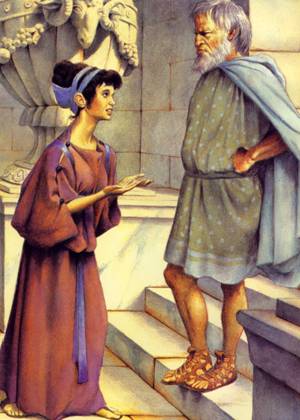
“I would my father looked but with my eyes.” —Hermia, daughter of Egeu, in Shakespeare’s A Midsummer Night’s Dream

Egeus was determined to wed his daughter to Demetrius, a man of his own choosing and against the wishes of Hermia to marry Lysander, the man she loved. The play depicts the tension between a father, who demands submission to his authority, and his tenderhearted daughter. The artwork here was discovered by Bill Huntley
in a children’s book during a visit to Greece.

When one has not had a good father, one must create one. —Friedrich Nietzsche

To bring up a child in the way he should go, travel that way yourself once in a while. —Josh Billings

A mother who is really a mother is never free. —Honoré de Balzac

The first half of our lives is ruined by our parents and the second half by our children.” —Clarence Darrow

The fundamental defect of fathers is that they want their children to be a credit to them. —Bertrand Russell

Don’t limit your child to your own learning, for he was born in a different time. —Rabbinical saying

No matter how old a mother is, she watches her middle-aged children for signs of improvement. —Florida Scott-Maxwell

Insanity is hereditary—you can get it from your children. —Sam Levinson

People should be free to find or make for themselves the kinds of educational experiences they want their children to have. —John Holt

Best Quote Challenge—On Freedom (June 29, 2008)


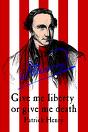
Patrick Henry said, “Give me liberty, or give me death.” This Friday is Independence Day. The Best Quote Challenge for this week—June 29 to July 5—is “On Freedom.”

Here are the rules:

  1. Submit your quotation no later than July 5, 2008.
  2. Submit no more than one quotation for this challenge.
  3. Identify the source for the quotation you submit.
  4. Feel free to quote yourself; that is, you’re welcome to submit a quote of your own invention.
  5. Use the “Leave a Comment” link below this post to enter your submission.
  6. All submissions will be screened and must be consistent with the general guidelines for posting comments at this blog. (See the “Comments Policy” page.)

On Sunday, July 6, a new Best Quote Challenge will be set at this blog. During the week of July 6-12, votes will be taken for the “Best Quote on Freedom” submitted this week. So be sure to come back to this post then to cast your vote using the “Leave a Comment” link below.

Quotations: The Intellectual Life


“. . . the history of thought is the laboratory of the thinker . . . .”

—Eugene R. Fairweather

“So I’m not educated. I learned my stuff. I’m a heart surgeon, sure, but I’m just a mechanic.”

—Character named Mel, in Raymond Carver’s short story “What We Talk About When We Talk About Love,” in What We Talk About When We Talk About Love

“The history of my stupidity would fill many volumes./. . . . The history of my stupidity will not be written./For one thing, it’s late. And the truth is laborious.”

—From Czeslaw Milosz’s poem, “Account,” in New and Collected Poems, 1931-2001

“Most of us hate to think. Five minutes of thought can be more terrifying, more energy-draining than days and days of routine or habitual activity. Your mind is intrinsically thrifty, and prefers to do things the way it has done them before. It sees its primary business as establishing effective channels for action, and resists altering a channel that has become established, to say nothing of constructing a new one that causes anxiety.”

—Kenneth Atchity, A Writer’s Time

“I’m a stenographer of my mind.”

—Allen Ginsberg, poet (1926-1997)

“Your best thought is imbedded [sic] in chunks of your worst thought.”

—Mark Levy, Accidental Genius

“Friends of the human race and of what is holiest to it! Accept what appears to you most worthy of belief after careful and sincere examination, whether of facts or rational grounds; only do not dispute that prerogative of reason which makes it the highest good on earth, the prerogative of being the final touchstone of truth.”

—Immanuel Kant, “What Does It Mean to Orient Oneself in Thinking?”

“Most evidently, we cannot give up on the principle of non-contradiction, bold but wayward logicians notwithstanding.”

—Sandra Menssen and Thomas D. Sullivan, The Agnostic Inquirer: Revelation from a Philosophical Standpoint
Quotations: On Writing


“If you don’t feel like writing, you can always read about it.”

—Doug Geivett (title of my post here)

“All the valuable writing I’ve done in the last ten years has been done in the first twenty minutes after the first time I’ve wanted to leave the room.”

—Ron Carlson, Ron Carlson Writes a Story

“The process of writing is an adventure; you never know how things are going to configure themselves. When I begin a book, I know it’s going to transform my life.”

—Charles Johnson, in his interview with Diane Osen for The Book That Changed My Life

“Writers write for two reasons. One is that they have something they want to say. The other, equally compelling motive is that they have something they want to find out. Writing is a mode of exploration.”

—Margaret Lucke, Writing Great Short Stories Read more of this post

Quotations: On Pain and Suffering


“No, God does not give us explanations; we do not comprehend the world, and we are not going to. It is, and it remains for us, a confused mystery of bright and dark. God does not give us explanations; he gives us a Son. . . . A Son is better than an explanation.”

—Austin Farrer, “The Country Doctor”

“Every war movie, good or bad, is an antiwar movie.” —Steven Spielberg, “Of Guts and Glory”

“. . . after all, the manner in which a person dies, the little details of an autopsy, say, whether the corpse has spots on its liver or lungs, doesn’t in any way cancel the loss.”

—Ted Kooser, The Poetry Home Repair Manual

A high station in life is earned by the gallantry with which appalling experiences are survived with grace.”

—Tennessee Williams

Quotes to Live By


“No matter what side of an argument you’re on, you always find some people on your side that you wish were on the other side.” —Jascha Heifetz

“Genius is only a superior power of seeing.” —John Ruskin

“I not only use all the brains I have, but all that I can borrow.” —Woodrow Wilson

“Every war movie, good or bad, is an antiwar movie.” —Steven Spielberg, “Of Guts and Glory”

“Happy is the man who learns from his own failures. He certainly won’t learn from anyone else’s.” —Austin Farrer, “St. Mark”

“. . . there is a tremendous social responsibility that comes with any public act we do, and that includes creative acts, as well.” —Charles Johnson, in his interview with Diane Osen for The Book That Changed My Life

—Charles Johnson, in his interview with Diane Osen for The Book That Changed My Life