Bearing Books from New England


A week ago I returned from a New England holiday with my family. We journeyed to Maine and New Hampshire in quest of respite from the cacophony of California. We found it. Harbor views, the Maine woods, marine vessels, lobsters, crisp air, and fall leaves.

And I found bookshops—with mountains of second-hand books—ranging from the maximally disheveled to the customary semi-organized to the immaculate (for example, The Old Professor’s Bookshop in Camden, ME). Read more of this post

What would I be if not a Philosopher?


Bill Valicella:

Philosophy for me is the unum necessarium. I cannot imagine who I would be were I not a philosopher.

Ad amussum (same here). Can there be any other way to be a philosopher than to be some person who cannot imagine who that person would be if that person were not a philosopher?


Reading Owen Wister


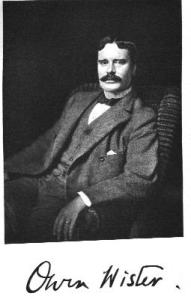
wisterowen1Owen Wister, The Virginian: A Horseman of the Plains (1902) — I started reading this novel January 8, 2009. I was hooked by the first paragraph. I suppose some ‘hawsses’ really are giddy pranksters. Wister’s book is a classic, the first in the western genre, and unexcelled. Humor I can appreciate appears on every page. Bits are stories in their own right, and fun to read aloud. You can hear how the Virginian sounds from the way the author crafts his dialogue. Wister and Theodore Roosevelt were close friends. The complete text of the novel is available online at Project Gutenberg. You could have a look there, then decide whether to get a hard copy. It can be ordered at Amazon here.

Excerpt from Chapter 5—”Enter the Woman”

“We are taking steps,” said Mr. Taylor. “Bear Creek isn’t going to be hasty about a schoolmarm.”

“Sure,” assented the Virginian. “The children wouldn’t want yu’ to hurry.”

But Mr. Taylor was, as I’ve indicated, a serious family man. The problem of educating his children could appear to him in no light except a sober one.

“Bear Creek,” he said, “don’t want the experience they had over at Calef. We must not hire an ignoramus.”

“Sure!” assented the Virginian again.

“Nor we don’t want no gad-a-way flirt,” said Mr. Taylor.

“She must keep her eyes on the blackboa’d,” said the Virginian, gently.

“Well, we can wait till we get a guaranteed article,” said Mr. Taylor.

. . . . The Virginian was now looking over the letter musingly, and with awakened attention.

“‘Your very sincere spinster,'” he read aloud and slowly.

“I guess that means she’s forty,” said Mr. Taylor.

“I reckon she is about twenty,” said the Virginian. And again he fell to musing over the paper that he held.

“Her handwriting ain’t like any I’ve saw,” pursued Mr. Taylor. “But Bear Creek would not object to that, provided she knows ‘rithmetic and George Washington, and them kind of things.”

“I expect she is not an awful sincere spinster,” surmised the Virginian, still looking at the letter, still holding it as if it were some token.”

Quotations: God and Evil


“It is our habit to dismiss the Old Testament altogether because Jehovah, or Jahve, does not think or behave like a social worker.”

—Doris Lessing, Shikasta

Quotations: On Poetry


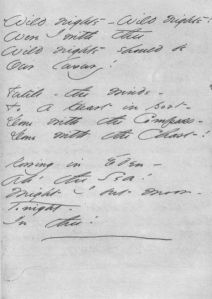
Emily Dickinson Script

Emily Dickinson Script

“. . . you can’t force a poem.” —Elizabeth Jennings, quoted in The Poetry of Piety, edited by Ben Witherington III and Christopher Mead Armitage

“It takes a grateful audience to keep a poem alive.” —Ted Kooser, The Poetry Home Repair Manual

“Another note to tack up over your desk: Too much cleverness in poetry can be a real killer.” —Ted Kooser, The Poetry Home Repair Manual

“Poetry, even the poetry of humor and delight, is an agent of the imagination pressing back, in Wallace Stevens’s phrase, against the pressure of reality.” —David Lehman, Forward to The Best American Poetry 2006, edited by Billy Collins

On Christology


John Donne

John Donne

“Twas much that man was made like God before;/But that God should be made like man—much more.” —John Donne

“The central miracle asserted by Christians is the Incarnation. . . . If the thing happened, it was the central event in the history of the Earth—the very thing that the whole story has been about.” —C. S. Lewis, Miracles (chapter xiv)

Quotations: On Death and Immortality


Ted Kooser, Poet

“When the heart stops, my contemporaries say,/Shrugging their shoulders, that’s it.”

—Czeslaw Milosz’s poem “Treatise on Theology,” in his collection Second Space

“. . . after all, the manner in which a person dies, the little details of an autopsy, say, whether the corpse has spots on its liver or lungs, doesn’t in any way cancel the loss.”

—Ted Kooser, The Poetry Home Repair Manual

Writing about an important passage in Joseph Conrad’s canonical work Heart of Darkness, David Denby says, “It is perhaps the most famous death scene written after Shakespeare.” He then quotes at length in demonstration of his claim:

“Anything approaching the change that came over his [Mr. Kurtz’s] features I have never seen before and hope never to see again. Oh, I wasn’t touched. I was fascinated. It was as though a veil had been rent. I saw on that ivory face the expression of somber pride, of ruthless power, of craven terror—of an intense and hopeless despair. Did he live his life again in every detail of desire, temptation, and surrender during that brief moment of complete knowledge? He cried in a whisper at some image, at some vision—he cried out twice, a cry that was no more than a breath:

“‘The horror! The horror!’ . . .”

—David Denby, Great Books

“I think, just as you do Socrates, that although it is very difficult if not impossible in this life to achieve certainty about these questions, at the same time it is utterly feeble not to use every effort in testing the available theories, or to leave off until we have considered them in every way, and come to the end of our resources. It is our duty to do one of two things, either to ascertain the facts, whether by seeking instruction or by personal discovery, or, if this is impossible, to select the best and most dependable theory which human intelligence can supply, and use it as a raft to ride the seas of life—that is, assuming that we cannot make our journey with greater confidence and security by the surer means of a divine revelation.”

—Simmias, in Plato’s dialogue Phaedo 85 c-d

“A man should be mourned at his birth, not his death.”

—Charles de Montesquieu, Lettres Persanes (1721)
On Biography


“The history of my stupidity would fill many volumes./. . . . The history of my stupidity will not be written./For one thing, it’s late. And the truth is laborious.” —From Czeslaw Milosz’s poem, “Account,” in New and Collected Poems, 1931-2001
Quotations: On Love


“. . . it ought to make us feel ashamed when we talk like we know what we’re talking about when we talk about love.” —Raymond Carver, “What We Talk About When We Talk About Love,” a short story in What We Talk About When We Talk About Love

“Love is so short, forgetting is so long.” —From Pablo Neruda’s poem, “Tonight I Can Write”

Quotations: On Cognition and Thinking


“I don’t have to be drunk to say what I think.” —Raymond Carver, “What We Talk About When We Talk About Love,” a short story in What We Talk About When We Talk About Love

Quotations: On Suicide


“I’ve seen a lot of suicides, and I couldn’t say anyone ever knew what they did it for.” —Raymond Carver, “What We Talk About When We Talk About Love,” a short story in What We Talk About When We Talk About Love

Quotations: On Reading


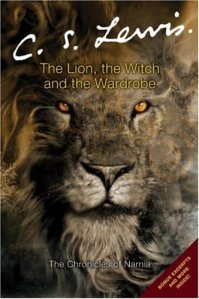
“Some day you will be old enough to start reading fairy tales again.” —C. S. Lewis to his godchild, Lucy Barfield, to whom he dedicated The Lion, the Witch and the Wardrobe

“Don’t . . . be stingy with your underlining, because if you don’t save the book’s vibrant material now, it’ll be dead to you once you shut the cover. I’m being realistic. There’s too much to read, learn, and do in this life, and unless a volume stands out as particularly worthy, you’ll probably only thumb through it again to consult your highlights. The rest of the text might as well not be there.” —Mark Levy, Accidental Genius

“Rereading is often a shock, an encounter with an earlier self that has been revised . . . .” —David Denby, Great Books

Quotations: On Wisdom & Folly


“A word to the wise is always infuriating.” —Hunter S. Thompson

Quotations: On Angels


“Angels fly because they take themselves lightly.” —G. K. Chesterton

Quotations: On Atheism


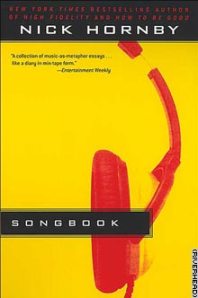
“I try not to believe in God, of course, but sometimes things happen in music, in songs, that bring me up short, make me do a double take. When things add up to more than the sum of their parts, when the effects achieved are inexplicable, then atheists like me start to get into difficult territory.” —Nick Hornby, Songbook

“Agnosticism is not a state in which the mind of an intelligent being can permanently rest. It is essentially a condition of suspense—a confession of ignorance—an abdication of thought on the highest subjects. Generally, however, under the surface of professed Agnosticism, there will be found some more or less positive opinions about the origin and nature of things all of them agreeing in this, that they negate the belief in God. It is not, in the nature of things, possible for the mind to remain persistently in this neutral, passive attitude. It will press on perforce to one or other of the views which present themselves as alternatives—either to Theism, or to Materialism and dogmatic Atheism.” —James Orr, The Christian View of God and the Word

“The number of reasonable atheist questions versus condescending atheist sneers that I have run across just directed at me in [sic] less than one in four.” —SF writer, and former atheist, John C. Wright