Why Does John McCain Look Like He’s 72 Years Old?
September 8, 2008 Leave a comment
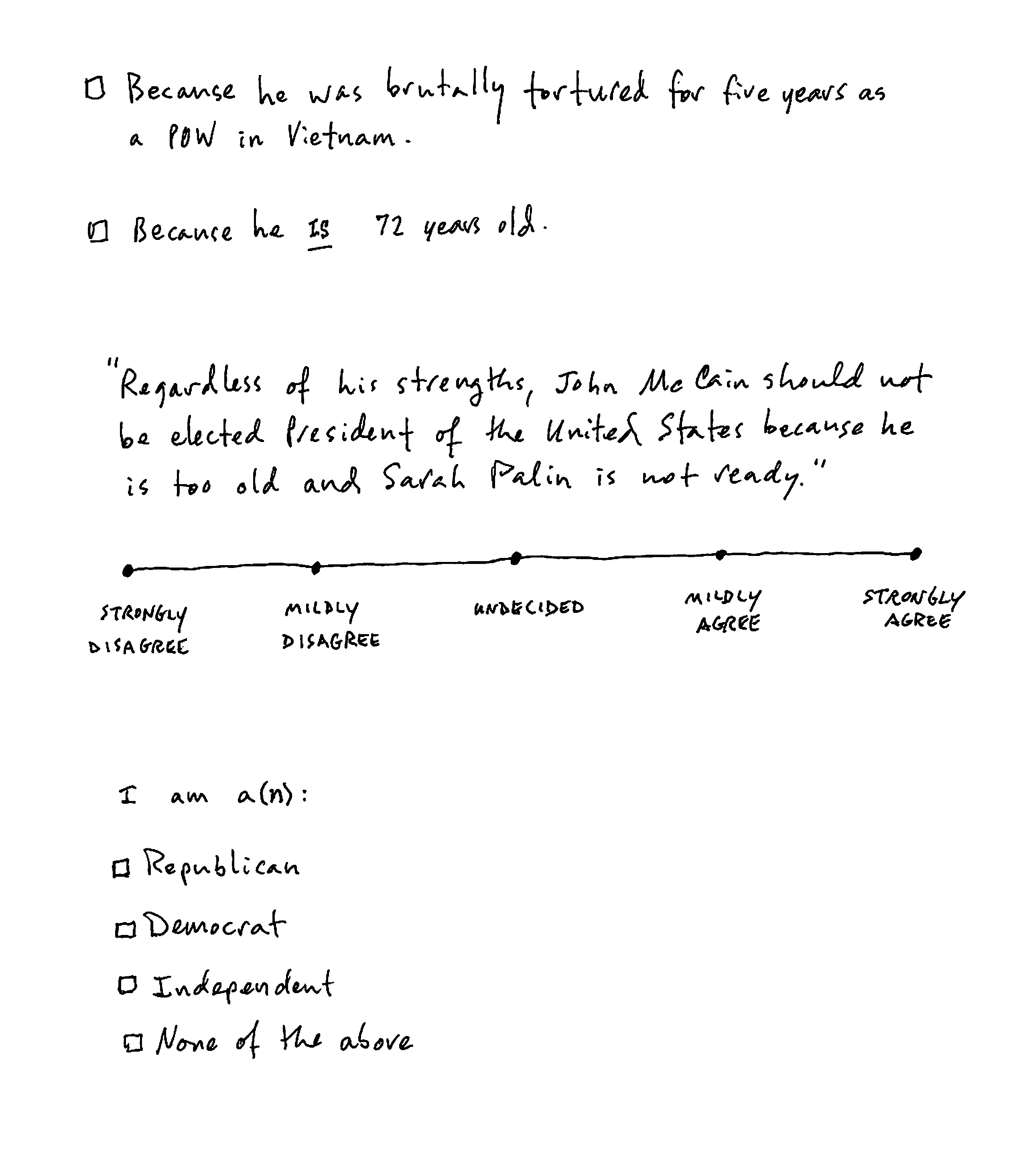
Are you good at believing the things you believe? Does it show in the way you live?
September 3, 2008 2 Comments
 John McCain cancelled a scheduled interview today with Larry King, of CNN. Why? Word is that McCain campaign staffers believe an earlier CNN interview with spokesman Tucker Bounds signaled the wrong kind of attitude for a fair-handed interview. During her interview with Tucker Bounds yesterday (September 1, 2008), news anchor Campbell Brown pressed the McCain representative with questions about Governor Palin’s readiness for the VP slot, given her level of experience. Brown was especially energetic in her effort to get Bounds to name a single specific example of some decision or action of consequence by Sarah Palin as commander-in-chief of the National Guard in Alaska.
Bounds was, I think, caught off guard (unfortunate pun). He didn’t give a specific example. Instead he tried to describe the nature of a governor’s responsibilities vis-a-vis the National Guard. He remarked that governors have the authority to deploy the Guard in various circumstances. At that point, Campbell Brown challenged him and stated unequivocally that governors do not have that kind of authority. She flatly contradicted him about a factual matter.
Since Campbell Brown knew she was going to ask her question, and Tucker Bounds apparently did not, Brown seemed to be in the winner’s corner in this dispute. She was so insistent that Bounds answer the question that it seemed she knew the answer before she asked it. It looked as if Brown had set the trap for poor Tucker: state governors do not deploy the national guard. Brown suggested that governors play almost no role in determining the activities of the National Guard.
I suspect that TV viewers often give news anchors the benefit of doubt when they make factual claims that can be corroborated using a laptop and a link to Wikipedia. But Campbell goofed. She was wrong about the National Guard and wrong about the responsibilities of state governors. (For a helpful explanation of the complicated relationship between state governors and the president regarding deployment of the Guard, see Kavan Peterson’s article here.)
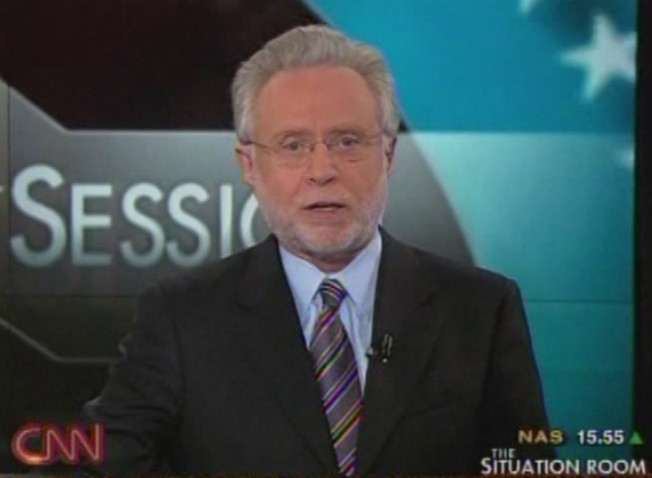 Tonight, Brown’s colleague Wolf Blitzer praised her handling of the interview. Brown and Blitzer described how dumbfounded they were that the McCain camp had cancelled Larry King. But Campbell Brown isn’t vindicated by the facts. So maybe a little self-examination is appropriate here. Maybe she should apologize for trying to corner her guest with a false statement that she probably believed was true.
What say you?
August 30, 2008 21 Comments
 In the world of politics, complexities are often encapsulated in squat phrases and nimble sentences. And when it comes to selecting a Vice Presidential running mate, the mantra has long been primum non nocere—”first, do no harm.” The principle is borrowed from the world of medicine and medical ethics. It’s been applied in situations where medical intervention poses considerable risk to a patient with an unknown or comparatively small margin for benefit. I guess it makes sense, especially during Presidential election campaigns, to liken major political decisions to life-and-death challenges in medical decision making.
When picking a running mate, what does it mean to Do No Harm? Earlier this month, William Kristol spelled out four criteria for choosing a vice president, and evaluated McCain’s options in terms of those criteria. (See “How to pick a vice president.”) Here were McCain’s basic options:
If do no harm was uppermost in McCain’s mind, then criteria (1) and (2) should have been the determining factors. Judging by the shock registered in the media yesterday when McCain announced his choice of Alaska governor Sarah Palin, the first criterion was pretty low on his list of guidelines. Since the shock was proportionate to the perceived inexperience (measured in age and time served in elected office) of McCain’s choice, the second criterion doesn’t seem to have influenced McCain. So Do No Harm, by Kristol’s reckoning, wasn’t McCain’s chief concern.
Let’s consider two questions.
Was McCain right to ignore the Do No Harm principle in selecting Palin to be his running mate?
Had McCain been far behind Obama in polling, especially in the most contested states, the political value of the Do No Harm principle would have been more salient. The gap in support between Barack Obama and John McCain was negligible at the time of McCain’s selection of Palin.
A politician has to be practical—or pragmatic, if you will. But much of the pragmatism exhibited by our politicians is befogged with cynicism. It is permeated with jaded negativity, which leads to posturing and snarky rhetoric. And this translates into a malaise of cynicism among the electorate. Exasperated, would-be voters lose interest and stay home on election day. Many of those who make their way to the polls buy into this jadedness and cast their vote for the angry candidate, or the candidate who represents the angry party. It’s a bad omen for a democracy when its elected officials rise to power on a wave of angry sentiment.
It would be most refreshing to see America’s leading candidates demonstrate real-world understanding without the baggage of cynical pragmatism. The Do No Harm principle is naturally attractive to the cynical. It is a sign of McCain’s governing optimism that he did not let the political appeal of such a principle determine his choice of running mate.
Politics is full of ironies. One of the great ironies of the current election season is that the Democrat party, led by Senator Obama, has mounted a campaign rooted in anger, warning a cowering sector of the electorate to forego “four more years of George Bush,” while suggesting, at the same time, that McCain is the one with a jaded view of the world, as indicated by his approach to Iraq and Iran. George Bush has been demonized by pundits on the far left of the Democrat party as “the worst President ever” and “a moron.” These pundits have tutored Obama to exploit this caricature and emphasize that John McCain has voted in sync with President Bush 90% of the time. So electing John McCain would be like relecting Bush, and that means perpetuating the worst thing that ever happened to America. (Never mind that Obama has voted 97% of the time in league with his own party, which happens to be at the helm of a Do Nothing Congress.)
McCain was right to ignore the beckoning spirit of cynical pragmatism in his choice of a running mate. Maybe it’s a symptom of the audacity of his hope for this nation.
What is the risk potential of McCain’s choice of Palin?
Let’s assume that Sarah Palin’s only liability is the electorate’s perception of her readiness for the job relative to her age and experience.
When it comes to experience and getting elected to executive office, Sarah Palin’s record is more impressive than Barack Obama’s, Joe Biden’s, and even John McCain’s. Most noteworthy is the comparison with Joe Biden, who began running for President twenty years ago and has never been nominated by his party. This year he turned in a lackluster performance with around 7% of the vote in the Democrat primary. If it was executive experience that Obama wanted to complement his perceived gross inexperience, why didn’t he pick Hillary Clinton? Could it be that he didn’t want to be overshadowed by experience?
When it comes to real political change and reformation, Sarah Palin’s record, again, dwarfs anything Obama has accomplished. As suggested by David Brooks in yesterday’s editorial for The New York Times, Obama loves the future because “that’s where all his accomplishments are.” If Obama’s message is A Message of Change, then why select a career politician, an old boy from inside the beltway—Joseph Biden?
Together, McCain and Palin look bouyant and centered. In a single day since McCain’s announcement that Palin is his running mate, $4 million dollars have been contributed to the Republican campaign. And the Republican National Convention hasn’t even begun yet. Meanwhile, Obama stuttered in his customary way through an impromptu response to McCain’s announcement and looked, I thought, like a deer caught in the headlights. I’m talking about the guy at the top of the Democrat ticket who gave his acceptance speech before 85,000 people just the day before Sarah Palin was announced.
And that leads to a third question: Is there a new rock star in town?
***
Related Post:
August 29, 2008 12 Comments
The next Vice President of the United States.

America turns its attention to the natural resources of Alaska.
***
Related Posts:
August 25, 2008 12 Comments
pH for America will soon be running a TV ad featuring comments by Barack Obama about the proper use of the Bible in American politics. The ad is slated for release shortly after the Democratic National Convention is over. But you can see the complete video of the forthcoming ad now.
If you want to see the video, click here:

Here are a few discussion questions:
What say you?
July 31, 2008 Leave a comment
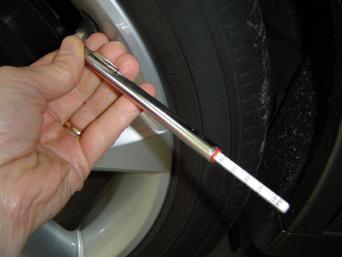 Not long ago the late-night comedians were “complaining” that there just isn’t enough material to poke fun at Barack Obama. There’s a joke for you.
In the news today was a real screamer. Obama says we don’t need to drill to solve the energy crisis. We can get the same result if we all just inflate our tires and get regular tune-ups. He was talking about our cars . . . I think. Can’t be sure since he doesn’t seem to know much about them.
There are lots of reasons to keep your tires properly inflated. But solving the energy crisis isn’t one of them. It’s safer, you get a better ride, and, yes, you can save a bit on gas mileage. And getting regular tune-ups, where you change the spark plugs and all that, just isn’t what it used to be . . . say twenty years ago when you could actually work on your own car.
Where did Obama come up with this clever idea? Surely not all by himself. But was it someone who really likes Obama and wants him to get elected? That doesn’t compute, either. Maybe the guy, whoever it is, is laughing up his sleeve in disbelief that the senator actually built this nonsense into official policy during a campaign speech.
The audio feed on this speech reveals that people in the audience were amused. Their response can only be interpreted as snickers (if you’re not pro-Obama) or nervous laughter (if you are pro-Obama). This must have taken the candidate by surprise. It’s not the kind of line he could pass off as intended humor. He must have known that his audience knew something he didn’t know. It isn’t the first time; and it probably won’t be the last.

 OK, this is funny! Thanks, TPM.
 Doug Geivett's Blog
Recent Comments