Never Say “Lipstick”


Barack Obama’s supporters recognized a smear that he didn’t intend. When he spoke of putting lipstick on a pig, the house exploded with laughter. Talk about red meat.

Only problem is, Obama didn’t mean it “that way.” And that’s Barack’s problem, not McCain’s, or Sarah Palin’s. Barack said it, paused (as he is wont to do), and his audience punctuated his remark with wild enthusiasm as if they believed it was about Sarah Palin. And right at that moment it became about Sarah Palin. And there was almost nothing Barack Obama could do about it.

The McCain campaign posted a web ad exploiting Obama’s slip. Big mistake, if you ask me. Or maybe not so big if the real “catnip for the media” (Obama’s estimation of his comment) continues to be the video of Obama’s slip and not the McCain ad.

Dennis Miller has an interesting theory about what happened. “Lady Palin,” he said, “is deep inside Obama’s mellon.” I’m from California, so let me translate. The esteemed governor Palin has become so popular and has so effectively derailed the Obama campaign that Obama can’t get her out of his head and he doesn’t know what to do.

What’s this got to do with the lipstick gaffe? Ms. Palin’s most memorable remark during her convention speech was the alleged extempore joke about the difference between a hocky mom and a pitbull. She pointed to her mouth and said, “Lipstick.” America liked that, and they liked Sarah Palin. Still do.

So the lipstick motif became a fixture of the McCain camp. Miller speculates that this motif took subliminal root in Obama’s consciousness. Without malice or forethought, the motif surfaced in the form of a long-standing aphorism. Obama’s problem is that this aphorism had never before been used in this peculiar political context.

People are beginning to speculate that Obama has a liability that could injure him in his upcoming debate with John McCain. He seems constitutionally incapable of packaging his ideas in the form of a sound byte. When commenting without a script, his statements are neither crisp nor compact. (In this respect, he is more like President Bush than John McCain is.) Obama may be thinking now that going for the spontaneous repartee may be more dangerous than his typically long-winded answers to questions he could answer with a simple “yes” or “no.”

***

By the way, suppose Obama was actually intentionally ambiguous when he said what he did. Would that really be sexist?

What say you?

Why Does John McCain Look Like He’s 72 Years Old?


The Easy Ethics of the Liberal Left


The latest media debacle surrounding Sarah Palin’s candidacy for the Vice Presidency brings to mind the easy ethics of the Liberal Left. Read more of this post

What If the Palin Family Had Taken the Low Road?


Let’s imagine that Bristol Palin, in consultation with her family, had decided to have an abortion. The single most talked-about controversy regarding Palin’s VP nomination would be no controversy at all. And there certainly wouldn’t be any talk of “scandal.”

The Palins have not taken the politically expedient path of aborting a child. Can there be any doubt that others have taken the low road, found relief in a woman’s legal right to choose, and avoided a spectacle altogether? It’s possible that for some, political calculation was the most critical factor in a decision to have an abortion.

Wouldn’t it be interesting to know how many candidates for high office have had unmarried daughters who elected to have an abortion (sons responsible for the pregnancy of an unmarried woman should be included in this thought experiment)? But that’s something we’ll never know.

Sarah Palin and the Abuse of Blog Power


The social media that permeate the blogosphere have changed the way politics unfolds in this country. It is more difficult now than ever before to get solid, reliable information about the character of presidential candidates, for example. Today, rumors about Sarah Palin are flying with fury and labels are being applied as if these are factually established and relevant.

Anti-Palin bloggers are pumping out bile with the unrelenting force of an Alaskan gusher. These people are using their blog-power to influence voters. Nothing wrong with that. But fomenting discontent on the basis of rumor alone is an abuse of that power.

We need an example. One blogger who illustrates this obsessive, vicious lampooning of Sarah Palin (and John McCain) is “AKMuckraker” at Mudflats. On one post she insinuates that Sarah Palin is John McCain’s latest “trophy girl.” In another, she rolls out all the labels she can contrive—”Trooper-Gate,” “Baby-Gate,” “Bridge-Gate,” and “Veep-Gate”—and wails to the world that the GOP campaign will come unraveled in the days left before the election. Many who chime in with comments at her posts exhibit an astonishing willingness to believe on the basis of ethereal fumes. (One shining exception is Gerri; she candidly states that she’s pro-Obama, but says she wants proof because she doesn’t like rumors and blatant lies. Way to go, Gerri.)

I have four guidelines to recommend to blog browsers whose eyes are burning from all this smoke. If you find that rumor is beginning to influence your outlook, you might find these helpful.

1. Chase the rumor to its source and investigate the source.

The “scandal” that’s all the rage today swirls around allegations that Sarah Palin’s youngest child, an infant with Downe syndrome, is not her own child but the child of her 17-year-old daughter, and the spectacle of much handwringing about the news that Palin’s daughter is pregnant now and will soon marry the father.

Who’s behind the effort to bring this to national attention? The advertised culprit is Andrew Sullivan, of TheAtlantic.com, a leftist blogger and adoring fan of Obama, who seems to have proven that he can be truly unscrupulous if it will help the liberal cause. Norman Podhoretz explains what is worse than despicable about Sullivan’s behaviour here and here. This criticism extends to Sullivan’s channelers throughout the blogosphere.

2. Listen carefully to the tone of the blogger.

Is the blogger being sarcastic? Does the blogger rely on sarcasm to make the “argument”? Is it plausible to suppose that the blogger is being objective? That the blogger is willing to give the candidate the benefit of the doubt? That the blogger is sincere about relying on bullet-proof evidence when evaluating the candidate’s character and motives?

Does the blogger consider counter-evidence or counterarguments? Are these treated fairly?

Does it sound like the blogger is preaching to the converted? If so, then she probably is.

A muckraker is someone seeks out and publishes alleged scandals in an underhanded way. The writer at Mudflats calls herself “AKMuckraker.” Enough said?

3. Step back and remember what governing this country is about.

Don’t lose sight of the issues. This goes to the question, How relevant is the rumor, even if true? What aspect of prudent national leadership is threatened? Make a list the most important foreign and domestic policy issues facing this country. Then ask, How will the candidate who’s been smeared address those issues? Does the candidate act consistently with his or her declared principles?

4. Don’t expect the candidate to answer every scandalous charge of scandal with counter-evidence.

Putting an opponent on the defensive by making frivolous charges is one of the oldest tricks in the book. If Sullivan or someone else broadcasts an allegation, forbear not to believe it, or even to give it another thought, unless and until the sponsor of the claim presents compelling evidence. That is his or her responsibility, if a case can be made.

No one should be distracted by, and still less should one believe, a baseless allegation made by a scurrilous troublemaker who is ultimately indifferent about truth.

***

Bottom Line: It’s time to shut the Rumor-Gate and get down to the business of sorting out the kind of national leadership, in both foreign and domestic policy areas, that is really needed. Maybe the concentration of muckraking in one party gives us a clue.

Related Posts:

Biography of Sarah Palin


Lot’s of people want to know about Sarah Palin, John McCain’s VP choice. Her biographer, Kaylene Johnson, must be pleased with the timing of her book, released in April.

Sarah: How a Hockey Mom Turned Alaska’s Political Establishment on Its Ear

159 pages/retails for $19.95

Books by Kalene Johnson

Related Posts:

John McCain Cartoon


OK, this is funny! Thanks, TPM.

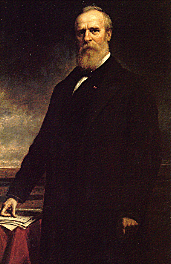
Presidential History: Rutherford B. Hayes


Presidential biography is a long-standing interest of mine. I’ve read more about Theodore Roosevelt than any other historical figure. He would be my favorite in many respects. But I also especially enjoy learning about lesser-known Presidents, like Chester Arthur and Rutherford B. Hayes. Since my Reading Jags often include forays into the arena of Presidential history, I’ll include periodic posts about these jags. This post is dedicated to the nineteenth President of the United States, Rutherford B. Hayes (1822-1893).

Jag for July 23, 2008

Jenny Drapkin posted her blog at http://www.mentalfloss.com today. She acknowledges that Hayes was widely known as a man of integrity. But she attributes considerable responsibility surrounding his controversial election to the man himself. This is probably unfair. Hayes went to bed on the night of the election expecting his opponent to win. His opponent expected the same result. Drapkin recounts a few of the details that determined the somewhat shocking outcome. To say the least, close elections raise special problems.

The Hayes vs. Tilden horse-race was made more complicated by the continued festering of North/South relations. It was still a period of reconstruction, and there were no easy solutions. Who can say what a Tilden presidency would have been like? As it was, the Hayes presidency lasted for only a single term. (The Wikipedia entry on Hayes indicates that Hayes had promised to serve for one term only and had advocated for one-term presidencies of six years. It might be enjoyable to hear a conversation between Rutherford B. Hayes and Franklin Roosevelt on that point—and why not include George Washington, for good measure?)

The White House Biography points out that Hayes, who was from Ohio, sought to establish stronger support for the Republican party in the South. But those with Republican sensibilities considered it too risky to exhibit public sympathy for this effort. (Some will be surprised to learn that Mark Twain campaigned for Hayes, the Republican who wrote in his diary, “the best religion the world has ever had is the religion of Christ.”)

Drapkin’s article comes at an interesting time, in the pre-convention days of the contest between senators John McCain (Republican) and Barack Obama (Democrat). She alludes to “the current political process,” and mentions the “chad debacle of years past,” but she doesn’t explicitly reference the current contestants. Her brief article is a reminder that intrigue has marred presidential politics for a good long while. She suggests that what our generation has witnessed is comparatively benign.

It is useful to sober up on the smelling salts of history when we are in the midst of an election period with so much at stake and such partisan division.

Does Barack Obama Speak Spanish?


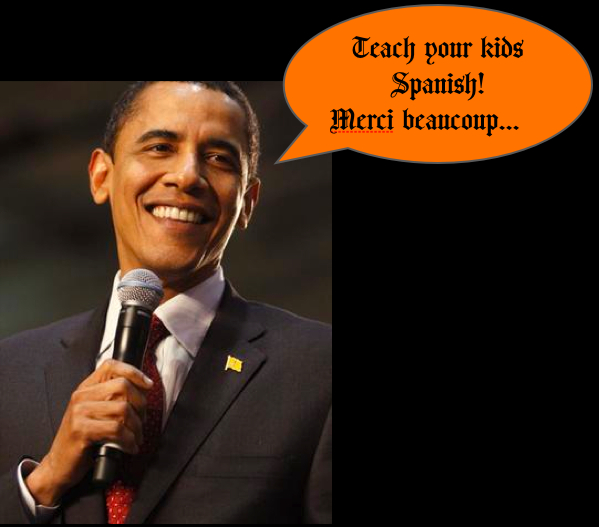
Barack Obama wants everyone to learn Spanish. He announced in Georgia yesterday that he agrees that immigrants to the United States should learn English. That’s a relief. Maybe he’s taken a stand that will hold firm for the duration of his campaign. But this was merely a prelude to his main point. Obama also thinks that every child in America needs to learn Spanish.

What tortured logic leads him to this conclusion? Reconstructed in the form of an argument, here’s the way he reasoned:

  1. If I, Barack Obama, am embarrassed by the fact that most Americans speak only one language, then all Americans should learn Spanish.
  2. I, Barack Obama, am embarrassed by the fact that most Americans speak only one language.
  3. Therefore, all Americans should learn Spanish.

Obama is embarrassed; so I should be teaching my children to speak Spanish. Interesting. I’m starting to feel embarrassed by the logic exhibited by the presidential nominee of a major American party.

Of course, Obama thinks we all should be embarrassed about our monolingualism. Why? Because, as he put it, “when Europeans come over here, they all speak English, they speak French, they speak German, but when we go over there, all we can say is ‘merci beaucoup.'” This got him some laughs from some people in the audience, maybe because they share in his embarrassment.

I’m not sure we should feel embarrassed. At any rate, maybe we should be proud of America’s influence in the world, an influence that has been so positive that people all over the world desire to learn English.

I, frankly, would be just as pleased to be as fluent in German or French as I am in Spanish (having lived in Mexico for six years). I’ve studied German, French, Swedish, and Russian, with mixed results. (I’ve visited China twice, but there’s little hope of my learning Mandarin.) So put me down in support of foreign language learning.

Still, I can’t join Obama in saying that American parents “need to make sure” that their children can speak Spanish. Here’s one reason. If a friend made this proposal in the course of casual conversation, I would think it a little exaggerated. But I’d take seriously the spirit of his admonition, because it would most naturally mean, in that context, that the responsibility to educate children to learn Spanish belongs to their parents. Obama, however, is a politician running for high office. So when he declares, during a campaign speech, that parents “need to make sure” that their children speak Spanish, he means something stronger. He means that if parents don’t ensure that their children speak Spanish, then the federal government may have to step in to make it happen.

This is rich. Tell parents what they should be doing as parents, as if it’s entirely up to them whether to go with his advice. But that’s not what Obama really has in mind. He was speaking as a politician. His words even had a totalitarian tone. If he’s serious, what he said is an indication of how he would reform education in America.

Of course, Obama may not be any more sincere than most politicians. I don’t know when he got this idea that American children should all be learning Spanish. Maybe it occurred to him over the weekend while he was meeting with strategists about how to attract the hispanic vote. There’s an easy way to find out. Just ask Obama’s children a few questions in Spanish.

An even better test would be to check up on Obama’s own proficiency in Spanish. I’d like to hear him give one speech in Spanish, without the use of a teleprompter or a manuscript. I suspect that would be more entertaining than any speech he’s given in English.

***

Here’s an irony for you. Obama mentions the Europeans who come over here and speak English in addition to German and French. I’ve traveled extensively in Europe. The English spoken in western Europe is not uniformly top-notch, although the scope of English-speaking proficiency is impressive. Now, Obama wants us to learn Spanish. Why? Because so many people south of the border have emigrated to the United States, and they don’t speak English. So maybe it’s not los Norteamericanos that Obama should be comparing with Europeans. He may think that Americans are dolts because they’re not bilingual. But at least they speak English!

The irony deepens. Most Europeans come over to visit, practice their English with us, and then return home, happy as clams. In contrast, hoards of Spanish-only speakers stream across our borders, not to visit, but to live and work here illegally. And we’re expected to learn Spanish for their sake!

Most legal immigrants from Mexico, Central America and South America have adopted the U.S. as their new home with a deep desire to assimilate. They have sought to learn English and taken pains to ensure that their children learn English. And opportunities for them to learn English have been made conveniently available. So it isn’t for their sake that every other American needs to learn Spanish.

Drill Now, or Pay More Later


I used to wonder why the United States didn’t work vigorously to free itself from dependence on “foreign oil.” It seemed like a good idea to me “back then”—during Jimmy Carter’s presidency. Popular opinion was that there wasn’t much oil to be found outside the OPEC region. After all, “OPEC” is the acronym for “the Organization of the Petroleum Exporting Countries.” And who were the petroleum exporting countries? The original five members of OPEC were Iran, Iraq, Kuwait, Saudia Arabia, and . . . Venezuela.
Do you see a pattern here? Four of these countries were and are dominant Middle East players. Venezuela, it should be recalled, is the heavy in South America, led today by Hugo Chavez—no friend to the United States. And Venezuela took the initiative originally to establish OPEC, by approaching the just-mentioned nations of the Middle East.

There are now thirteen member states in OPEC. Guess who’s not on the list? The United States. And why not? Because the United States does not export oil. On the contrary, for decades, the United States has been the chief importer of oil.

Why doesn’t the United States export oil? Because it doesn’t have enough oil to export. It doesn’t even have enough oil to meet its own demand. That makes us dependent on foreign oil. And that’s reason enough for us to be entangled in Middle Eastern politics and subject to the whims of blame-America-first terrorists born and bred in the Middle East.

At the outset of the war in Iraq, there was loud speculation that President Bush was making a grab for Iraqi oil. This speculation was interlarded with denouncements of the merit of such a motive.
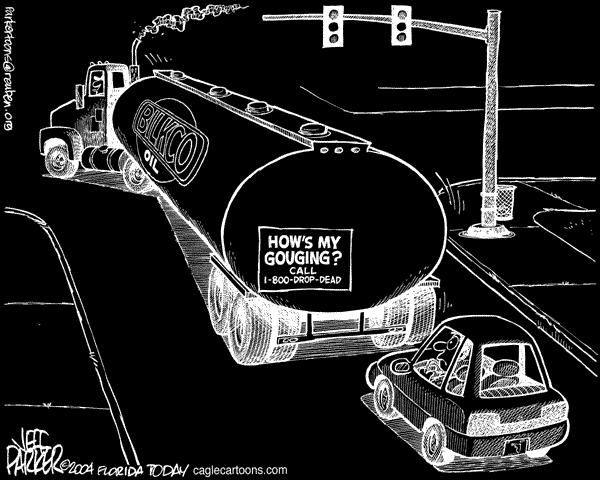
And where do we find ourselves today? Gas at the pump where I live in southern California is very near the $5 mark, and the price of oil has just topped $140 a barrel, a new high. Market watchers are hyper-ventilating this afternoon. At CNBC, Maria Bartiromo is high on adrenalin as she reports the news.

What’s wrong with this picture? The United States has waited too long to tap its own oil resources. Do we have oil? Yes. And, no. We don’t have much oil for use, much less for export. But there’s oil out there, on the continental shelf and in ANWR. And it’s been there throughout our dependence on oil. And there’s lots of it. Enough there for us to tell OPEC we don’t need them anymore.

Imagine what it would mean geopolitically if we ended our dependence on oil in the Middle East. Setting aside the legitimate interest we have in protecting Israel, we might be able to sustain a responsible form of “protectionism.” As long as our economy runs on oil, we’ll continue to be enmeshed in worldwide conflicts that are fueled by oil dependence.

What are the primary objections to drilling the oil resources we have?

First, we’re being told that “we can’t drill our way out of the current crisis.” One element in this rhetoric is right: we are in crisis. The crisis goes deeper than the prospect of paying $5 and more per gallon of gasoline.
But that prospect is the sort of crisis that has Americans paying more than the usual degree of attention to political maneuvering in Congress and among the presumptive nominees for President, Barack Obama and John McCain.

Obama is the most visible opponent of drilling. He talks about developing alternative forms of energy. But that won’t address the crisis, either. Why? Because the crisis is at the pump. And most of us are stuck with pumping gas for the foreseeable future. It will take a few years to begin extracting crude oil from the ground. Will it take longer than the development of alternative energy forms? Almost certainly not.

Any major delays to drilling going forward will be due to obstructionist politics, mostly on the part of Democrats, and chiefly on the part of Barack Obama, if elected President. Obama could not now reverse his view about the wisdom of drilling without appearing to be the worst kind of flip-flopper. So he’s backed himself into a corner. What’s in the economic interests of the country is at odds with Obama’s interest in becoming President. Whose interests will command his attention? You know the answer. So ask yourself if that’s the sort of person you want to have as President.

What most Americans want is short-term relief at the pump and a long-term solution to our energy crisis. If the establishment of a drilling infrastructure—directed at the most promising locations off-shore and in ANWR—were to begin in earnest by the end of this year or early next year, we wouldn’t have to wait for the oil to make it to the corner gas station for prices to come down. The prospect of such a radical change in supply and demand within three to five years would place immediate pressure on current suppliers (i.e., OPEC) to do something about prices. John McCain has started making this point, and he’s right. How does Obama respond to that? If Americans elect John McCain, who favors drilling, OPEC will get the message before the end of the year. We’re only about four months away from sending that message.

Second, there’s the green-jerk reaction to drilling. “Drilling offshore and in ANWR is going to be environmentally catastrophic.” Show me the evidence.

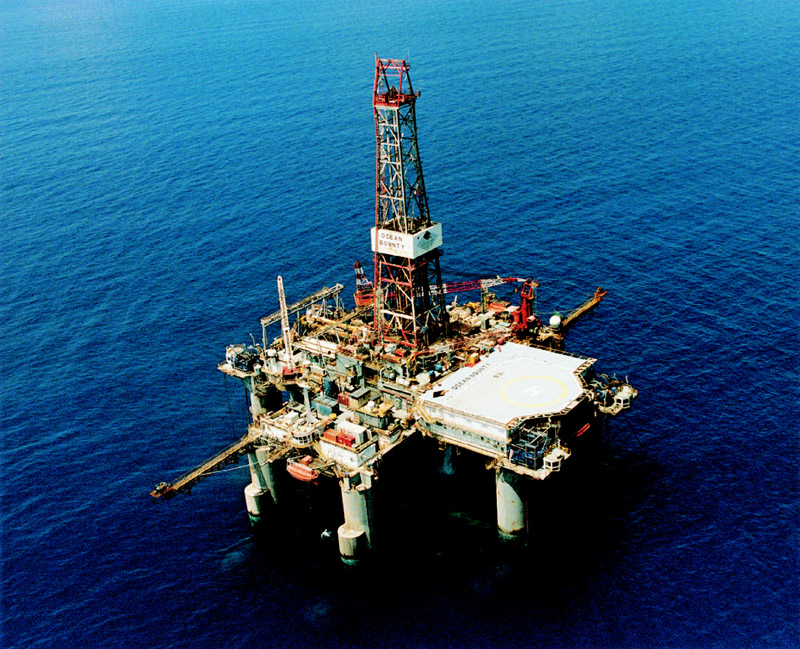
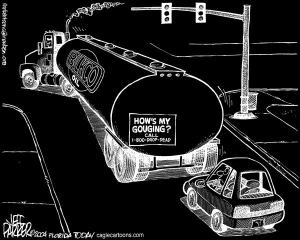
Opponents of offshore drilling exploit vernacular associations with the word “offshore,” as if America’s beaches will be cluttered with unsightly oil rigs. What’s the truth? Deep-water oil and gas platforms will be so far offshore that they couldn’t be seen from our beaches. We’re talking fifty to two hundred miles offshore. I could kayak the entire California shoreline and not be able to plot a single oil drilling site offshore. It would take an hour or longer to travel by helicopter to a typical offshore platform.

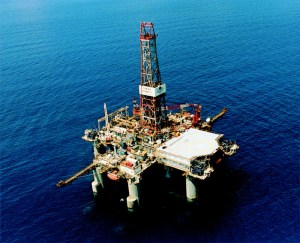
ANWR is another acronym (pronounced “Anwar”), short for “Arctic National Wildlife Refuge.” It’s located in the extreme northeastern region of Alaska and encompasses some 19 million acres. It includes what is literally the most remote territory in the United States. A portion of the region contains rich sources of petroleum. In contention is the effect drilling there would have on the habitat of diverse forms of animal life. ANWR is remarkable for its inclusion of six distinct biozones. But the petroleum rich subsection of ANWR is part of a 1.5 million acre extension of the refuge made in 1980. The move appears to have been as much an effort to protect this resource for possible future drilling as it was for any other environmental objective.
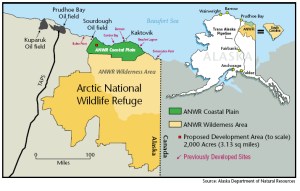
A very small percent, then, of ANWR is even considered attractive for oil-production purposes. And yet the resource is thought to be incredibly rich. And though approval by Congress is required to begin drilling in that area, it has, from the beginning, been regarded a potential source of oil production to be used under the right conditions.

Americans need to be educated about the potential for oil production in ANWR, the politics surrounding the possible use of this resource, and alternatives to drilling in ANWR. For the time-being, offshore drilling appears to be more imminent than drilling in ANWR. This is in part due to political vicissitudes. But off-shore production may also be more cost-effective. In any case, ANWR need not be the bone of contention that it has been, with such impressive resources closer to hand, both geographically and politically.

The emerging market demand for oil worldwide could position the United States to be a major exporter of oil. This demand will be so substantial by 2030 that prices for a barrel of oil could inflate to unimaginable levels. But by then, the United States could be online as a major oil producing country.

Meanwhile, by all means, we should be heavily invested in research and development for alternative forms of energy. And Americans should become better informed about the affordability, safety, and cleanliness of nuclear energy.
“John McCain Owes Michelle Obama an Apology”—Not


Barack Obama is disappointed in John McCain. In the ensuing months, he may have to get used to disappointment. Especially if he’s going to use his media opportunities to demand apologies from McCain for things he hasn’t done. First time at bat in this game, Senator Obama is disappointed that Senator McCain has not denounced the rumor and innuendo that Mrs. Obama (do we still call our First Ladies “Mrs.”?) used the racist word “whitey” in a speech some years ago. But rumor has it that it was someone close to Hillary Clinton who threw the first pitch, presumably in an effort to discredit Senator Obama during the Democrat primaries.

So what has Senator McCain done wrong in this inning? His sin is one of omission rather than commission: he hasn’t had the decency to denounce the scurrilous rumor. Must McCain now monitor every negative thing that’s said about the Obamas and use his own media opportunities to distance himself from the source of each rumor? Come on—this is the Big Leagues. Champions don’t play ball in the sandbox.

Whether he should be the next President or not, it surely is clear that McCain does not owe the Obamas a public expression of sympathy in this matter. McCain should ignore the other Senator’s challenge. Here’s why:

First, McCain’s credentials as a man of fairness do not depend on what other people say about his political opponents, unless those other people speak in some suitably official sense on his behalf.

Second, Mr. Obama has insinuated that Mr. McCain is comfortable with putting families under the microscope during Presidential campaigns, and Obama assumes that this is a no-no. But this tactic is misleading. Certainly, there is a tradition of respecting the privacy of a candidate’s children, especially if they are young children. Older children who campaign for a parent deservedly come under closer scrutiny. But in Big League campaigns—like campaigning for President of the United States—spouses naturally come under public scrutiny. There are several legitimate and important reasons for this:

  • A President’s spouse is, presumably, an intimate life-partner and a reflection on the President’s values and wisdom when making substantive decisions.
  • In recent years, it’s come to light that Presidential wives influence policy through their relationships with their husbands. (We’ve also seen the potential for a Presidential spouse to blackmail her high-profile and politically powerful mate, should he violate a sacred trust.)
  • Presidential wives have exercised considerable independent leadership on issues of national interest, exploiting (rightly or wrongly) the opportunity created by virtue of nuptial relations with the President.
  • A President’s spouse is a key ambassador to the world and a barometer of what is best about America. American citizens have a vested interest in how their First Lady represents them.

That last point leads to a third reason why McCain should not swing at Obama’s pitch. It’s likely that a non-trivial number of Americans would like to know whether Michelle Obama actually spoke (or mis-spoke) as alleged. And public opinion has to be respected by candidates for high office.

The influential role of public opinion isn’t some necessary evil made inevitable by democracy. The influence of public opinion is a public good, especially when it is well-informed opinion. It is one of the few means available for the electorate to hold its leaders (or would-be leaders) accountable. Some political leaders have been remarkably obtuse about this. Ours is an open society in ways unimaginable just decades ago. Still, an astonishing number of politicians today behave in an impolitic manner, as if no one will notice.

Barack Obama’s decision to bait John McCain may prove to be a strategic error, for it’s likely to encourage the electorate to make more deliberate comparisons between Michelle Obama and Cindy McCain. Who can be predict what that will mean? The two woman are conspicuously different in many respects. Polling the electorate on this point probably won’t be very illuminating, since many people would consider questions about potential First Ladies to be indelicate, even if their Presidential preference is influenced by impressions they have of candidates’ wives. And Obama’s recent comments suggest that he prefers to re-direct focus on his wife.