Quotations: On Film
July 19, 2008 Leave a comment
“Even the objects in a fictional world are shot through with meaning and philosophical significance.” —Charles Johnson, in his interview with Diane Osen for The Book That Changed My Life
Are you good at believing the things you believe? Does it show in the way you live?
July 19, 2008 Leave a comment
“Even the objects in a fictional world are shot through with meaning and philosophical significance.” —Charles Johnson, in his interview with Diane Osen for The Book That Changed My Life
July 12, 2008 51 Comments
 If you’re a Jason Bourne movie fan, please let me know here. Do you prefer Bourne over Bond? If so, why? If not, why not? How many of the films have you seen in each series (estimate, at least)? Which would you rather see, another James Bond movie, or another Jason Bourne movie?
 I’m just doing an informal poll here.
* * *
Update for 16 November 2008: James Bond has multiple problems. As a film icon, his biggest problem is a dilemma: “Do I play Bond with the key historic links that make this a Bond movie, or do I shake off the clichéd persona of a day gone by?”
Bond is an anachronism. He can’t exist in today’s world. Adapt the storyline to match current events all you like; if Bond is going to be “Bond, James Bond,” he’s going to look like a dinosaur in bow tie and cufflinks. But if he calls himself James Bond without really being James Bond, then he looks like a caricature, like someone who began admiring the real James Bond when he was twelve years old and always wanted to be him.
I think this answers Joel Ryan’s question, over at E!Online: “Why Can’t James Bond Catch Jason Bourne?”
Personal note to Daniel Craig: Please don’t take this personally. But a quantum of solace is about all you have in the day of Jason Bourne. I’m sure you’ll find someone to enjoy the moment with you.
Update for 11 August 2010:
In a 2007 post called “The Best and Worst of James Bond Films,” Webomatica ranks the Bond movies and the Bond actors. Daniel Craig is omitted. Here’s my ranking:
What about you?
June 19, 2008 3 Comments
As I learn of online sources posting discussion guides for specific films, I’ll list them here.
Here are sites that feature movie guides:
Residence Life Cinema has created film clips to help college and university students manage residence life. One section of the site is titled Movie Discussion Guides, where discussion guides are organized into categories of general interest to students. On this page there’s also a link to a complete alphabetical list of films for which there are discussion guides. To download discussion guides in PDF format, you have to have an account with Residence Life Cinema.
teach with movies is another site that specializes in the use of film to educate. Access to discussion guides requires a subscription that costs $11.95 per year (as of August 2008). But one page—here—that is accessible for free lists excellent questions for exploring ethical issues in almost any film.
Movie Learning Guides provides discussion guides for parents and teachers, focusing on character development.
June 19, 2008 6 Comments
More and more college and university professors are using film in their courses. Makes sense. Students like film, and film can be an exceptionally stimulating way to introduce students to complex issues in the various disciplines.
My field is philosophy, with specializations in epistemology (the theory of knowledge) and philosophy of religion. I use film in my courses in two ways. In some courses I use film to illustrate concepts, arguments, and the popular expression of “big ideas.” I also teach a course on faith, film and philosophy, which is all about the intersection of these three things. My primary textbook for that course is my own edited book Faith, Film and Philosophy: Big Ideas on the Big Screen (2007). But I’m always trawling for new film connections for my courses and public lectures.
Today I read Chris Panza’s plea for suggestions for a philosophy course that he’s been planning. His question is very specific: What films from an Asian perspective would complement a course on Asian Ethics? My first thought, naturally, was to recommend a chapter in my book. Chapter 13, written by Winfried Corduan, is called “Bottled Water from the Fragrant Harbor: The Diluted Spiritual Elements of Hong Kong Films.” Win writes about specific films in this genre, and his analysis of spirituality portrayed in representative films touches on ethical issues. But Chris’s question is a special case of a more general question: How does one find films that serve the specific purposes of a course? Here are a few suggestions.
Since I know others who teach using film, I ask them about their practices and experiences. I also have a growing library of useful books:
It goes without saying that search engines will turn up valuable resources on the web. I’ve been collecting URLs for websites and blogs about film and films.
I also keep track of my own associations between philosophical themes and the films I watch. While viewing a film, I’ll often make notes in the small Moleskine notebook that I always keep handy (using my Bullet Space Pen, of course). With a little practice, I’ve even been able to make notes in the darkness of a movie theatre and find them legible later in the light of day. And I don’t mind pausing a DVD to make a note now and then.
I store my notes using a software application called Scrivener. For Mac users it’s a great improvement over word processors (like MS Word) for this sort of thing. With the application open to my film file, I can enter notes on separate “pages” under different headings that I can later arrange in any order I like. (The virtues of Scrivener deserve praise in a separate blog some other time.) In my Scrivener film file I have folders for individual films, and in each folder are individual notes of various kinds. Additions to existing notes and the creation of new notes are simple activities. Note categories include: General Impressions, Themes, Quotes/Favorite Lines, Pedagogical Ideas, etc. I’m not limited to my own observations when making notes with Scrivener. I can add anything that has turned up in my research, including informal film discussions, lecture ideas, class activities, contributions by students, recommendations by colleagues, web links, and citations from books, journals, and magazines.
Because of my book on film, people often ask, “Have you seen such-and-such a film? It’s loaded with philosophically interesting ideas.” When that happens, I encourage them to write a short piece that I can add to the website for my book: www.faith-film-philosophy.com. Now I find myself with essays to edit for eventual posting there.
Our students have fertile imaginations. They frequently come up with philosophy-film connections that I wouldn’t have dreamed of. For a paper assignment earlier this year, one student told me he wanted to write about the film Ratatouille. I asked him what kind of philosophical essay he thought he could write about this entertaining animated film. He made a compelling case that the film expressed deep ideas in the realm of taste and aesthetics. I approved, he wrote a great essay, and I learned something valuable from what he had to say.
I can’t conclude this post without inviting you to post comments with (a) your own methods of dredging up films that complement the goals of higher education (beyond the film studies department), and (2) specific suggestions for films and their philosophical content. And I want to thank Chris Panza, whom I’ve never met, for raising the question that became the subject of this post.
April 25, 2008 8 Comments
Ben Stein’s movie Expelled opened last weekend. I’ve got a question for those who have seen it and liked some things about it, but are reluctant to give it an unqualified endorsement:
What are its major strengths and its major weaknesses?
April 16, 2008 Leave a comment
“How do you help your children to be discerning and pick up themes and messages inherent in the movies, books, and visual arts?” Thank you, Cindy Gould, for another great question.
Just today I was talking with a screenwriter friend of mine about the kinds of movies producers like to make. For the fast buck, they favor films for teens. And let’s face it, most films targeting the teen market aren’t all that “intellectually meaty.”
That doesn’t mean, though, that teen films are ideologically vacuous. And some teens actually like sophisticated movies intended for a more specialized audience. Is it possible to equip them to be reflective about their film experiences without ruining their enjoyment of film? Absolutely.
Here are a few suggestions:
This is pretty general advice. Much depends on a child’s age and the relationship you have with your child. I hope readers will share their thoughts and experiences in the comments box below.
April 16, 2008 Leave a comment
A book I did with James Spiegel, Faith, Film and Philosophy: Big Ideas on the Big Screen, was released late last fall by InterVarsity Press. Today I heard from Cindy Gould, leader of a reading group called “Verbivores” (suggesting an appetite for words). Cindy asked about the origin of the book, how we decided on films to write about and how we selected contributors. Here’s the answer to that question.
Jim and I are college professors who teach philosophy and enjoy film. We decided we wanted to bring these interests together into a book. When big ideas are packaged in a compelling film, they have great potential to influence culture. We wanted to test this thesis by inviting other philosophers who like film to share their perspectives. We wanted this to be fun, so we thought about friends of ours who share this interest and asked them to participate.
We had an idea how long we wanted the book to be and decided we could manage about a dozen chapters. We ended up with fourteen. We didn’t start with a detailed structure for the book and then recruit authors to fit into that structure. Instead, we began with a list of people we knew we would enjoy working with. They also had to be people with talent for thinking about cultural trends and a gift for writing with wisdom and an engaging style. With list in hand, we approached each one with the basic idea and asked this question, “If you were to write a chapter for this book, what film or films would you want to write about, and what ideas would you like to discuss?” We picked the authors; they picked the films.
Now I have to qualify. We knew that if we were going to do a book of this kind, we had to include a chapter on The Matrix. Some people think of this film and its sequels as the most philosophical of relatively recent films. A potential reader couldn’t pick the book up expecting to find a discussion of The Matrix and be disappointed. Instantly we knew who we needed to get for this chapter. We just hoped he would agree. He did.
When we had chapter proposals from everyone, we recognized there was this remarkable range of film coverage that included the classic and the contemporary, the familiar and the intriguing, the safe and the edgy. On top of that, our hoped-for contributors had all settled on different topics and issues, resulting in a surprising balance of treatment of themes in philosophy. With chapter ideas set side-by-side, a natural structure for the book emerged. People who liked film could read this book and learn more than a smattering of philosophy—philosophy made (almost) painless.
I’m anxious to hear how the Verbivores respond to the book during their discussion on Wednesday. Maybe some of them will post their comments here.
April 15, 2008 4 Comments
The Truman Show (USA, 1998); directed by Peter Weir
Chapter 4 of my book, Faith, Film and Philosophy, is titled “Escaping Into Reality: What We Can Learn from The Truman Show about the Knowledge Enterprise.” Here are discussion questions for the film The Truman Show that I’ve used in conjunction with this chapter.
April 15, 2008 3 Comments
Run Lola Run (Germany, 1998); directed by Tom Tykwer
Chapter 7 of my book, Faith, Film and Philosophy, is titled “What Would Have Been and What Could Be: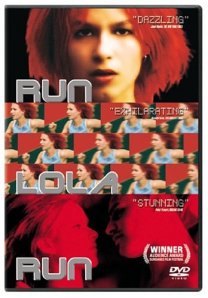 Counterfactuals in It’s a Wonderful Life and Run Lola Run. The author is Jim Spiegel. Here are discussion questions for the film Run Lola Run that I’ve used in conjunction with his chapter.
April 15, 2008 2 Comments
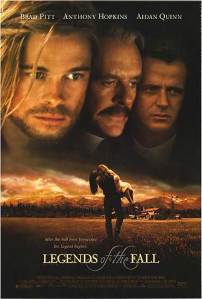
Legends of the Fall (USA, 1994); directed by Edward Zwick
Chapter 4 of my book, Faith, Film and Philosophy, is titled “Defining Love through the Eye of the Lens: Romance, Sex, and the Human Condition in Pretty Woman, Legends of the Fall, and The Bridges of Madison County.” The author is Greg Jesson. Here are discussion questions for the film Legends of the Fall that I’ve used in conjunction with his chapter.


 Doug Geivett's Blog
Recent Comments