Lead-Up to “The Unnecessary War”


I was in Boston last week, hanging out with a friend and fellow-philosopher. He gave me two book recommendations:

and

I’ve read the first four chapters of Dubay, but that isn’t enough to have a firm opinion about it yet. I’m halfway through Buchanan and I’m prepared to recommend it for its carefully documented but iconoclastic interpretation of the lead-up to World War 2.
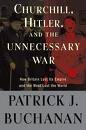
buchanan-unnecessary-warThe verdict on Hitler is pretty well-established, I’d say. Buchanan doesn’t veer from that. But Winston Churchill may have been a more dangerous war-monger than most would think. The evidence of Churchill’s predilections for military engagement, and for shifting blame for the war’s outcome, casts a pall over the received view of his leadership through “inevitable crisis.” David Lloyd George has become a person of interest to me. And I now know more about Chamberlain than before. Lord Balfour is a puzzle to me. These are achievements of the author. They reflect his success in stirring my interest and leaving clues to follow for further study.

Buchanan is not a professional historian; but he is a provocative interpreter. His thesis is controversial and has already been challenged by aficionados. He could get to the point more quickly. But he’s determined to support his claims with statements made by the players themselves and by sharp historians of the period. He quotes someone on virtually every page, sometimes at length. In every case, however, his choice of quotes is a valuable contribution. Each remark helps to capture the mood of the figures who made the critical decisions and altered the course of history.

Buchanan’s chief objective is to explain how World War 2 might have been averted, if it hadn’t been for vanity, or incompetence, or misinformation at numerous turns and among numerous parties. This story has no doubt been told before. But only here is it told in Buchanan’s style, and with his perspective on current events.

My thoughts about the war, its lead-up, its aftermath, and its present significance have been enriched:

  • I can now entertain the possibility that the Kaiser’s war (i.e., World War 1) was a war of German survival without imperialist ambitions.
  • I think I understand better how Hitler managed his coup and led a demoralized people into unwelcome conflict with the European powers.
  • I hadn’t known of Mussolini’s disgust toward Hitler and of Hitler’s almost obsequious admiration for Mussolini.
  • The hypnotic effect of Hitler on Western leaders who knew of his diabolical behavior (who were even, at times, on the receiving end of it) never ceases to astonish. This mystery is compounded by Buchanan’s telling of the story.
  • Ever since my visit to the Brenner Pass in the majestic Italian alps I’ve wondered how it came about that this region, formerly a precinct of Austria, had been handed over.
  • The roles played by Czechoslovakia and Poland impress me as much more significant now.

I could go on. Instead, I’ll read on, and probably learn more about how America came to abandon its protectionism and make war on the continent (I suspect it has something to do with the Japanese, who had been disenfranchised by the British), the mystery of alliance with Stalin’s regime, and much more. I expect—I hope—I’ll have more questions when I’m done reading. But before the book is closed, I feel comfortable already recommending it to others.

Note: There’s a Kindle version of Buchanan’s book. If there wasn’t, I might never have gotten round to reading it. Learn about Kindle here.
Be a Good Student—Best Book in This Category


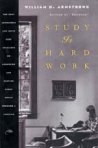
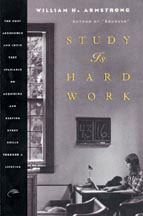
armstrongstudy-is-hard-workIt’s brief, it’s well-organized, and it’s full of sane advice. It’s a book called Study Is Hard Work. The author, William H. Armstrong, explains all the fundamental skills needed to be a successful lifelong learner. Here are the chapter titles:

  1. Learning to Listen
  2. The Desire to Learn
  3. Using the Tools
  4. Getting More From What You Read
  5. Developing a Vocabulary
  6. Putting Ideas in Order
  7. Books and the Library
  8. Written Work
  9. Acquiring Skill in Methods
  10. How to Study Languages
  11. Letting Mathematics Serve You
  12. How to Study Science
  13. Getting the Most Out of History
  14. Tests and Examinations

All of this in 143 pages. Each chapter begins with an Interest Measurement Test and ends with five Review Questions. Each “Interest Measurement Test” is a set of five questions that get readers to think about their current experiences and skill level in some category of study. Here are a few samples:

  • “Have you ever stopped to think what your life would be like if there were no books?”
  • “Do you believe that you really have a desire to learn, or would you, had you been left alone from birth, be totally primitive and beastlike in your thoughts and feelings?”
  • “Do you believe that, other than your parents, the people who will most influence your life for good are your teachers?”
  • “When you have read a book do you feel that you have talked with, and come to know, the author?”
  • “Do you know certain traits of your own mind that lend themselves to some methods of study more effectively than others?”
  • “Would you agree that there is much of the poet in all great mathematicians?”
  • “Do you believe that your life will be influenced by your interpretation of history?”
  • “Are you afraid of tests, or do you consider them a challenge?”

Chapters are loaded with numbered tips, steps, strategies, for doing all the things a college or university student must do to succeed, all showing students how to achieve real success by learning with pleasure and good work management. My students are exceptional graduate students, and every one of them could benefit from practicing the methods set forth here.

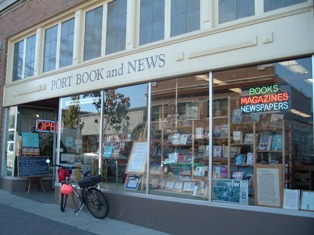
bookstoreport-book-newsI came across this book at a charming little bookshop we visit when we’re in Port Angeles, Washington. One tip for studying foreign languages struck me right away as eminently sensible and yet generally unknown.

“Make your own vocabulary cards, writing the word to be learned on one side and the English meaning on the other. If you are lucky enough to be studying two languages, write the meaning in the second language on the back also.”

The second sentence is simply brilliant. It makes a truly powerful suggestion, and it strikes a positive chord about foreign language study. My first thought was, “If you’re going to learn a foreign language, why not make it two?”

If you aren’t officially a student and you read this book out of curiosity, you may feel a strong desire to sign on for a class at your local college or university. I say, go for it! But if for some reason you aren’t able to take a class, Armstrong is still an excellent guide through the steps to independent learning. It all begins with a desire to learn (chapter 2).

Note: There are two other groups who would be helped by this book. First, high school students, especially those who plan to go on to higher education. Why not learn how to learn before learning gets even harder? Second, home school parents. These heroic people know what lifelong learning means, and welcome suggestions for organizing the learning process into manageable steps. I believe that practicing the principles presented in this handy book will shave hours of labor from the task of home schooling, make the whole experience more enjoyable, and result in much less stress.

From Amazon:

armstrongstudy-is-hard-work1

From “That Bookstore in Portland”:

armstrongstudy-is-hard-work1

Leave your comments about this book in the reply box below!

The Religious Lives—and Questions—of Children


I know from experience that children think deep thoughts and come up with the most difficult questions. Throughout their childhood, my daughters plied me with questions about the nature of the universe, the existence of God, whether we have souls—that sort of thing. I have always been amazed by two things as a parent and a university professor. First, grad students in philosophy ask questions they probably had when they were three to five years old. They had’t forgotten the answers; they had forgotten the questions. Second, the quirky solutions young kids reach in answer to deep intellectual challenges are seldom more quirky than the ideas of philosophers and theologians about the same things. Come to think of it, their answers often bear a remarkable resemblance!

I’m not the first to marvel at this. My friend Jim Spiegel also teaches philosophy. He has twice as many children as I do, and they’re about half the ages of my kids. And his kids don’t let him relax from doing philosophy when he comes home from work. Fortunately for us, he’s written a spanking new book about his experiences in this arena.

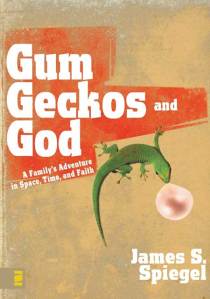
It’s called Gum, Geckos and God: A Family’s Adventure in Space, Time, and Faith. My copy just arrived and already I’ve read the first forty pages. Jim is a talented writer and an insightful parent. He can tell a good story, and this book is loaded with them. He’s funny, too, and self-effacing. If you have children or grandchildren, or know someone who does, and you haven’t given up asking questions about faith, I think you might enjoy and grow wiser reading this book.

Critical Thinking—Best Book in This Category


Amazon

Amazon

I teach philosophy to graduate students. Many of these men and women are married. Wives of the married men often invite me to speak to their group. Some have told me how much they desire to understand what their husbands are studying, and, frankly, to be able to hold their own in argument when their husbands, by dint of their occupation, have a seeming advantage.

There’s one book I’ve been recommending to them. It’s an excellent general introduction to the skills we all need—both for gentle sparring and for serious debate, but also just for organizing our beliefs into cogent perspectives.

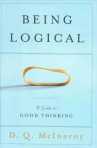
Written by D. Q. McInerny, it’s called Being Logical: A Guide to Good Thinking (2005). (I see that it’s also now available in a Kindle edition.)

Charles Osgood offers this poetic endorsement:

Given the shortage of logical thinking,

And the fact that mankind is adrift, if not sinking,

It is vital that all of us learn to think straight.

And this small book by D.Q. McInerny is great.

It follows therefore since we so badly need it,

Everybody should not only buy it, but read it.

That Bookshop in Portland

That Bookshop in Portland

* * *

What Others Are Saying:

What Good Writers Do—Best Book in This Category


To be a good writer, you must be able to select the best words, craft sentences, and build paragraphs. This is more than a matter of knowing the rules of punctuation and having a strong vocabulary. Read more of this post

Stuff I Have to Read (Not That I Don’t Want To)


<script type=”text/javascript” src=”http://www.assoc-amazon.com/s/impression-counter?tag=faifilandphi-20&o=1″></script&gt;
<noscript><img src=”http://www.assoc-amazon.com/s/noscript?tag=faifilandphi-20&#8243; alt=”” /></noscript>

How To Cultivate the Reading Habit


Reading takes effort. But with the right habits and tools, it is richly rewarding. Here’s a list of tips for improve your reading skills and achieving more of your reading goals.

  1. Relate your reading goals to your larger goals. If you’re powerfully motivated to achieve some larger goal, try thinking about reading as a component in achieving that goal. One goal will fuel another.
  2. Understand that you don’t have to read everything on your list to benefit from the reading habit.
  3. Set specific reading goals. How many books do you want to read in the next year, or month? What kinds of books do you want to read? Make a note of the specific reasons you want to read these books.
  4. Select several books to have on hand to read at the same time.
  5. Use procrastination to your advantage. If you’re procrastinating about reading a particular book in your pile, use that procrastination to read another book in the pile.
  6. Select books that are practical and books that are theoretical. Books of the practical sort recommend solutions to interesting problems, provide guidance for self improvement, or explain how to do something. Books of a theoretical nature expand your knowledge base and enlarge your powers of critical thinking.
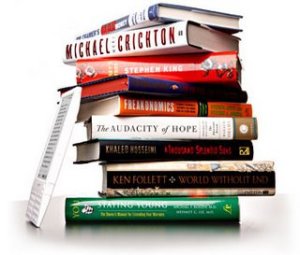
  7. In each broad category—the practical and the theoretical—include books that fit different subcategories. You might pick one book from each of ten subcategories: literary fiction (a novel), light fiction (another novel), short fiction (a collection of short stories), poetry (an anthology of works from a specific period, or on a common theme, or by the same writer), biography, history, inspirational literature, cultural commentary, and two practical books (for example, a book that will help you improve your writing and a book about sea kayaking).
  8. Make a note of the primary reasons you have for reading each of the books you’ve selected. Don’t settle for mere enjoyment. Assume that you’re going to enjoy the books you’ve compiled and refine your reasons for reading each book. Is one book in your pile because you want to improve your motorcycling skills? Is a book in the history category going to help you understand some event in the present? Will a particular novel enlighten you about a personally puzzling aspect of the human condition? Will the poetry you’ve picked improve your powers of imagination, or help you see the ordinary in extraordinary ways? Are you reading this book on cosmology in order learn the latest theories about the origin of the universe? Is that book about the narcissistic personality disorder going to help you understand a difficult colleague at work? Write these aims into each book.
  9. Keep these books together in a place where you feel relaxed and are most likely to have the inclination to read. This may be a cabinet next to your bed. Otherwise, use your imagination.
  10. Develop the habit of reading whenever your book stash in nearby. If you have a varied selection of books in different categories, just read what most suits your mood at the time.
  11. Pre-read each book to get an idea what it’s is about and how it’s organized. This will save time in the long run. It will help you decide whether to read the book more carefully, how to re-read the book to achieve your specific goals, and how much time to allocate for a closer read.
  12. Guard against time consuming eye movements. Keep your eyes moving from left to right, without regressing (even if you feel you’ve missed something). Train your eyes to “land” (ever so briefly) on points along the trajectory of your reading path, without moving your head. Work at reducing the number of “landings” for each line as you subconsciously scan for key words and phrases in the line.
  13. Separate the wheat from the chaff. Based on your pre-reading, decide which books deserve to be read more closely.
  14. While reading more analytically, pace yourself to fit the specific goals of your reading and the nature of the material as it changes from one passage to another. Skip over the bits that you already understand, or are repetitive, or don’t serve your reading objectives. Slow down for the complex parts, where key concepts are explained, or crucial details of a plot are revealed, or the line of a major argument is delineated.
  15. Mark your book in pencil as you read. Underline, circle, add symbols in the margins to identify a feature of special significance (for example, asterisks, question marks, explanation marks, bracketed numerals for lists or numbered items, arrows, horizontal lines for significant but unmarked breaks in the progression, check marks, squares, triangles). Create a simple shorthand system with letters of the alphabet for frequent kinds of marking. (If a passage is quotable, I draw a ‘Q’ in the margin. If it should be noted elsewhere in my files, I draw a cursive ‘f’.) Use vertical lines. Bracket sections with corner marks. Experiment with squiggly lines, double lines, light lines and heavy lines, and lines that are mostly light with brief stretches of heavy lines.
  16. Write unfamiliar words in the top or bottom margins—and look them up in a dictionary. This is the best way to improve your vocabulary. Over time, you’ll write fewer words and have a record of the growth of your vocabulary.
  17. Write out questions that come to mind—questions stimulated by what you’re reading. Interrogate the author. (Or, if you prefer, have a “conversation.”)
  18. Draw simple charts to show relationships that have been describe.
  19. Create your own index to the book, using the back endpages. Index key terms and concepts. If necessary, invent names for concepts.
  20. Reserve space in the back endpages to index passages that relate to research, writing, or speaking you may be doing. If you have an abbreviated title for each project, you can use this title for indexing purposes. Later, you’ll be able to return to these notes and enter them elsewhere as needed.
  21. Keep track of the structure and progression of the book.
  22. Write a summary and/or general outline of the entire book into the front endpages, and make a note about the general value of the book relative to your purposes. You may want to draft this on separate paper or with a word processor, and then transfer your final version into the pages of the book. Another option is to use Post-It notes that are nearly the size of a trade book and stick them into the front of the book with these notes and comments.
  23. For maximum portability and time management in pursuit of your reading goals, buy a Kindle and learn how to use it efficiently. (See separate posts with Kindle Tips on this blog.)

***

NOTE: Some of the ideas described in this post can also be found in How to Read a Book, by Mortimer Adler and Charles Van Doren. As the subtitle says, this is The Classic Guide to Intelligent Reading.

Bedside Books—The Stuff I Don’t Have to Read


6 September 2008

7 September 2008

14 September 2008

1 October 2008

My Bookshelf of Best Books


Click here for a list of 100 books of virtually every kind that have given me the most pleasure, and have been the most personally useful, spiritually uplifting, and intellectually stimulating.

Related Posts:

<script type=”text/javascript” src=”http://www.assoc-amazon.com/s/impression-counter?tag=faifilandphi-20&o=1″></script&gt;
<noscript><img src=”http://www.assoc-amazon.com/s/noscript?tag=faifilandphi-20&#8243; alt=”” /></noscript>

Biography of Sarah Palin


Lot’s of people want to know about Sarah Palin, John McCain’s VP choice. Her biographer, Kaylene Johnson, must be pleased with the timing of her book, released in April.

Sarah: How a Hockey Mom Turned Alaska’s Political Establishment on Its Ear

159 pages/retails for $19.95

Books by Kalene Johnson

Related Posts:

Getting the Most Out of Your Kindle—Tip #1


“Bibliophile” isn’t a strong enough label for my affection for books. “Bibliophiliac” is probably more accurate. One symptom is my habit of cruising bookstores. But as much as I like the brick and mortar shops, they have two limitations: price and selection. Three out of four times they don’t have a book I’m there to find, and the one out of four times they do I usually have to pay full price. So I resort to browsing, which is dangerous. The temptation to buy, even if it’s something I wasn’t looking for, can be overpowering. You know the drill.

But I have a Kindle, and I (almost) never leave home without it. And my Kindle is very handy when I’m in browse mode.

Suppose my arms are laden with books that beckon. I go to the most inconspicuous bench or chair in the store, turn on my Kindle, and flip the switch for Whispernet. Within a few seconds I have a wireless connection to the Kindle store. I type in the title for one of the books I’ve gathered and let my Kindle search for it. If the title isn’t yet available on Kindle, I set the book aside and repeat the process for the next one, working my way through the stack.

It really gets interesting when I find that a Kindle version of the book is available. I have a choice. I can order it and have it on my Kindle within moments, usually at a deep discount, OR I can download a selection from the book . . . for FREE. Since I can always buy the book later, and I may decide I want a physical copy rather than the Kindle edition, I download the free selection and move on to the next book.

Later, when my pulse has slowed, I read the selections I’ve downloaded. I now have a good idea whether I want to spend my money, and whether I want the Kindle version or a physical copy of any item. Bottom line? I make better decisions about the books I buy, I spend less, and I enjoy greater mental health. All because my companionable Kindle has kept me from compulsive spending and buyer’s remorse. And eventually, my Kindle pays for itself! How great is that?

***

The Get Rich Slowly blog has posted “Six Steps to Curbing Compulsive Spending.” They’re good ideas. Let me add one more, specially suited to the bibliophiliac:

7. Don’t shop bookstores without your Kindle.

Related Posts:

Show Your Appreciation to Those Who Blog Books


Some of the best blogs are “Book Blogs,” and My Friend Amy is hosting Book Blogger Appreciation Week for September 15-19.

I blog books and enjoy finding consistently classy book blogs. So I’ll be making my own nominations in a few of the twenty-four categories Amy has set up.

Meanwhile, here are some award categories Amy might consider adding:

  • Best Philosophy Book Blog
  • Best Science Fiction Blog
  • Best Biography Blog
  • Best Science Writing Blog
  • Best Writing about Writing Blog

Be Still and Know that I Am an Artist


Margaret Atwood tells a joke:

The Devil comes to the writer and says, “I will make you the best writer of your generation. Never mind generation—of this century. No—this millennium! Not only the best, but the most famous, and also the richest; in addition to that, you will be very influential and your glory will endure for ever. All you have to do is sell me your grandmother, your mother, your wife, your kids, your dog and your soul.”

“Sure,” says the writer, “Absolutely—give me the pen, where do I sign?” Then he hesitates. “Just a minute,” he says. “What’s the catch?”

Atwood uses this fictional exchange to explore “the problem of moral and social responsibility in relation to the content of a work of art.” The passage appears in chapter four of her 2002 book Negotiating with the Dead: A Writer on Writing. I’m still in chapter three, but I skipped ahead.

Negotiating with the Dead is a literary essay on the writer as artist. At least, that’s true of the half I’ve read so far. Chapter 3, titled “The Great God Pen,” traces the Art Wars generally, and the world of poetry and fiction as a theatre of war in particular. And she examines an interesting argument—strictly syllogistic, mind you—that “we should devote ourselves to beauty-worship.” An unexpected but crucial premise in this argument is Jesus’ declaration, “The truth shall make you free.”

The interesting story here is that art has displaced religion in a secular society. Atwood isn’t all that explicit about this. But what she says is suggestive. Her chapter begins with clichéd questions about literary worth and money. Since writers are warned against unrealistic expectations of monetary gain, they must come to grips with deeper incentives. One possibility commends “the social usefulness of art.” But writers beguiled by this idyllic motive are victims of censorship, often inflicted by themselves. “Thus, the heroes of Art became those who were willing, as they say, to push the envelope.”

In due course, this pushed artists in the direction of a “pure aesthetic” that pitted art against moral purpose. The upshot, in the words of Ralph Waldo Emerson, is that beauty, rather like God, “is its own excuse for being.”

Oscar Wilde drew out religious parallels with art that imitate the language of Christianity, says Atwood. In his preface to The Picture of Dorian Gray Wilde wrote, “No artist has ethical sympathies.” He added, “Those who find beautiful meanings in beautiful things are the cultivated. For these there is hope. They are the elect to whom beautiful things mean only Beauty.”

The artist is a high priest of the imagination. But this does not require scruples. When it comes to Art, some get it and some don’t. Art for art’s sake is non-utilitarian. It disdains mammon and turns a blind eye to social responsibility. For a writer of this persuasion, there is no accountability. The only ultimate is the instinct of the artist.

Atwood explores this theme without committing herself to its creed. But she does seem to think that there are only two other motives for writing. They are writing for monetary gain and writing to fulfill a social responsibility of one sort or another.

***

Atwood is probably best known for her novel The Handmaid’s Tale (1985), depicting an apocalyptic future with the world’s women in subjection to a theocracy run by fanatical devotees of the Bible. The film adaptation appeared in 1990, starring Faye Dunnaway, Natasha Richardson, and Robert Duvall.

Kindle Your Reading Habits


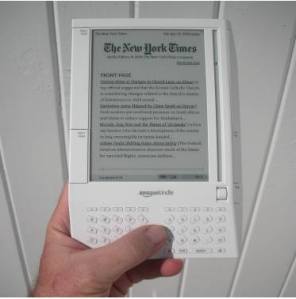
The Kindle is a thin, book-sized reading device that holds innumerable e-books and other digital reading material that can be downloaded in an instant using wireless technology almost anywhere in the U.S. Wow! Amazon boasts a Kindle library of over 160,000 items. And the inventory continues to grow.

The Kindle came out fall 2007. My gadget-guy instincts kicked in immediately. But I held off buying. I thought the price might go down (it did), that the wait period for it to come in the mail would shorten (it did), and that my “need” for a Kindle would increase (it did).

I ordered my Kindle from Amazon in March so I would have it in time for my trip to Europe in May. It’s the only thing I took for reading material during my trip. And it’s one of the reasons why I was able to travel extremely light using carry-on baggage only.

So now I can get my reading fix no matter where I happen to be. And if I just want to read today’s issue of The New York Times, or I don’t have a book that suits my mood, I can download what I want no matter where I am. The technology is wireless.

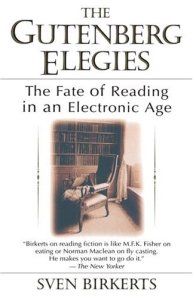
A few years ago, I read The Gutenberg Elegies, by Sven Birkerts. Like Birkerts, I believe it would be a tragedy if books—I mean real books—became a thing of the past because they all went digital. I’m a hardcore advocate for having a houseful of books. To me, books—books on shelves, books in piles—are the ultimate in home decorating options. Books speak to me even when I’m not reading. There’s nothing quite like being in the presence of books.

Still, I welcome the arrival of the digital version of reading material. While an e-book can’t replace the role of a real book, there are things it can do for readers that the traditional book can’t. And Kindle is the way to go in this arena.

Here are seven of the main reasons why I now own and use a Kindle:

  1. I can go anywhere and read what I want while I wait.
  2. I can go anywhere in the U.S. and download books for instant reading.
  3. I can subscribe to newspapers and magazines without having them pile up around the house.
  4. I can pack light when I travel and still bring a huge library with me.
  5. I save space on my shelves for physical copies of books I really must have.
  6. I save money when I order books for my Kindle.
  7. It’s the easiest way to read in bed.

The Kindle is the perfect complement to my other hobbies. I can fit a whole library in the saddle on my motorcycle, or carry it in a small book bag on my back. The Kindle goes with me when I’m kayak touring. Traveling is a greater pleasure now that I can haul all the books I want on my Kindle. I can practice foreign languages as long as I have the right tools on my Kindle.

Yes, I can mark my Kindle books, bookmark them, and take unlimited notes that are linked to specific passages in them.

Then there’s the cool factor. A woman and her daughter saw me reading on my Kindle at a Starbucks; seeing mine convinced them to get one for themselves. On a recent trip to Europe, nearby passengers asked about it. On the train between Stuttgart and Zurich an engineering student who had never heard of the Kindle decided within a few minutes that he had to have one.

***

For Discussion:

  • Had you heard of the Kindle before now?
  • Are you interested in becoming a Kindle user?
  • Are you a Kindle user?
  • If so, what would you say are the best reasons to have a Kindle?
  • What are some of the things you’ve downloaded to your Kindle?
  • What is your evaluation of the Kindle?

Related Posts:

Remains of the Day


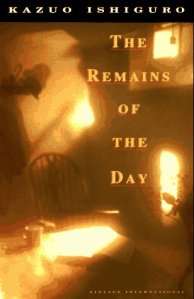
The Remains of the Day, published in 1989, is Kazuo Ishiguro’s third novel. Born in Nagasaki, Japan in 1954, Ishiguro lived in Great Britain from age five and is a British citizen. And there can be no question that he is a British novelist.

This novel won him the Booker Prize. In an interview at the time of his award, Ishguro explained that he wanted to explore two themes, how ordinary people relate to people of influence and the effects of sublimating one’s own feelings for an ill-conceived ideal. His vehicle for this is a series of brooding ruminations by a British butler who has dedicated his best years in service to a wealthy Brit who was a naive Nazi sympathizer in the years leading up to World War 2. Read more of this post