The President a Lame Duck Incumbent?


It’s a rare phenomenon when an incumbent seeking re-election is faced with the prospect of being a lame duck on the very eve of the election. President Obama is the incumbent in this race. He is a sitting president seeking re-election. As the incumbent, he is eligible to run for a second term and may well win a second term. He is not, in the usual sense, a lame duck president.

A lame duck holds office during the relatively brief interval between an election, when it is determined that someone else will be the next president, and the moment when the new president assumes office at his inauguration. A politician in this position is called a “lame duck” because he or she has comparatively little influence as the clock simply runs out on his or her term.

If a president has completed two terms, then he will not be an incumbent seeking re-election. His party will nominate a different candidate to run in the general election. In this case, the outgoing president will automatically be a lame duck. He will hold office until the new president-elect is sworn in.

If an incumbent president seeking re-election loses the election, then he becomes a lame duck president until the new president-elect is sworn in. He is no longer the incumbent because the election has been decided. He is still president, but his days are numbered.

An incumbent may become a lame duck, but only after the election returns. At least, that is technically the case. But the term “lame duck” is a metaphor for a president whose power is ineffectual because his term is about to run out. But does it stretch the metaphor to say that a president is a lame duck if his power is bound to be ineffectual until his term runs out, even if that won’t happen for another four years? And what if there are strong indicators, prior to a general election, that this will be the case if the incumbent wins the election? He might then that be called a “lame duck incumbent.”

This, I believe, could be President Obama’s situation. He is now the incumbent and may win a second term. If he does, he will not be a lame duck in the usual sense until the next general election four years hence. But there are indicators that Obama’s leadership, should he be allowed a second term, will be threatened by grave difficulties of his own making that could seriously curtail his executive influence, however long his second term lasts. And most recently the most severe challenge has emerged in the form of the massacre that took place at our embassy in Libya in September and the growing impression that the President shirked responsibility, both during the horrific attack and afterward during his effort to manage the flow of information until the election clock runs down.

Here’s the point: if it turns out that a thorough investigation of the facts, called for by the President and the Democrat party, reveals a demoralizing leadership failure and deception by his administration, and this investigation cannot be concluded until a few weeks after the election, and the President wins re-election, then the President will have to face a nation in shock after learning definitively of his dereliction of duty, now compounded by the fact that he was just re-elected and the electorate is stuck with him for four more years. If his popularity has been slipping in the polls during the past few weeks, his approval rating would surely plummet dramatically following the election and detailed knowledge of the events in Libya—if the President has goofed.

This would not be the most auspicious beginning to the President’s second term. And it would not bode well for the future of this country if that should happen.

Still, why think of the President in these final days before the election as a “lame duck incumbent”? That depends on what you make of the evidence against his claim to be oblivious of events occurring at the embassy in Libya when four Americans, including our ambassador, were lost. If you think that he’s disqualified himself already for enjoyment of a second term, then you may think that if he wins he will start his second term in deep trouble that will be a distraction from all else that requires presidential leadership. You may think that, given his incumbency status now, and assuming that he wins re-election, Obama is, even now, a “lame duck incumbent.”

If you think that, you may be right. And if you’re right, then Obama’s in big trouble soon after the election, trouble that will plague his second term as long as it lasts. Not only that, America’s in big trouble. Don’t be surprised if  a predominantly Republican congress calls for impeachment proceedings as soon as the investigation is concluded.

Doug to Speak at the 2012 National Apologetics Conference “To Everyone an Answer”


Doug will be speaking November 3 at the 2012 National Apologetics Conference in Santa Ana, California.

  • Conference theme & dates: “To Everyone an Answer”—November 3 & 4
  • Doug’s assigned presentation title: “Can Man Live without God?”
  • Date and time of Doug’s presentation: Friday, November 3, 8:30-9:15 p.m.
  • Other speakers include Josh McDowell, Walter Kaiser, Jr., Erwin Lutzer, Norman Geisler, David Geisler, John Sanford, and Ed Hindson
  • Location: Calvary Chapel Costa Mesa, 3800 South Fairview Street, Santa Ana, CA 92704

Admission is free.

For additional details, see www.veritasseminary.com or call (951) 698-6389.

“There You Go Again”?


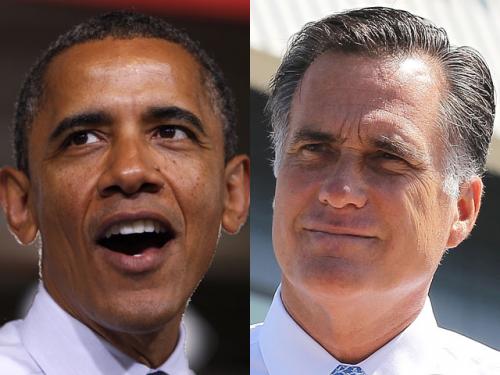
Pundits seem almost universally agreed that Mitt Romney needs to have a “Reagan moment” in his first debate with President Obama, now just two days away. The moment they have in mind is when Ronald Reagan said, in response to incumbent Jimmy Carter about misrepresentations of Reagan’s record and platform, “There you go again.” I remember that moment. It was timely and it was compelling.

Now, several decades later, Reagan’s words probably don’t have quite the ringing effect for young adults born since then. I myself have to recall the political climate at the time and Reagan’s uncommon demeanor in the moment to appreciate how effective those words were. (Reference to Reagan’s thumping of Carter has become something of a nostalgic rostrum. Many have probably over-rated that particular moment in judging that it was the turning point, very late in the campaign, giving Reagan an advantage over Carter. I think people felt, in the last analysis, that Jimmy Carter just couldn’t be trusted with a second term. Sound familiar?)

What matters in the immediate political climate—infused with media “coverage”—is that the stakes have been raised for Romney in the upcoming debate. He has to convince people that he can walk on water. Better yet if he can demonstrate his power to walk on water by doing it onstage. That’s all we ask. If he can manage that, then he might get our attention, we might think about voting for him, and a few of us might even actually vote for him.

This is silly. But it’s reality.

So I’ve been thinking about what Romney could say that would achieve the expected (or desired) effect. But is this the right concern? Let’s remember that Reagan spoke with apparent spontaneity in his remark. And it may well have been spontaneous. If so, Reagan had to have enjoined the debate with such a frame of mind that he could say, with such intensity and frankness, what he did when Carter kept up the spin.

Maybe the lesson to be learned, then, is that Romney needs to have the right instincts, cultivated by months of campaigning and by his knowledge of current events and Obama’s response, as he walks onto the dais to go toe-to-toe with the President.

One risk for any debater is a kind of “over-preparation.” In one sense, you can never over-prepare. But it is possible for a debater’s extensive preparation to hamstring his performance during a debate. One reason is that spontaneity may be compromised. And spontaneity, when well-timed delivery is good, is powerfully persuasive.

Romney needs, at least, to do two things during his preparation. First, he needs to be prepared for whatever can reasonably be expected from Obama, both in terms of his attack on Romney and in terms of his defense of his own Presidency. Second, he needs to be clear about what he can do to control the agenda and get the upper hand during the debate. (Of course, Obama needs to prepare in the same way, but there are reasons to think that Obama is at a disadvantage if Romney is effective. If Romney presents well, and Obama struts the usual stuff, there is the possibility that Obama’s presumed presentation skills will appear to be a dance around the tough issues. In other words, speaking in his usual formidable style may, ironically, cause Obama trouble. It may be observers’ perception, “There he goes again!”)

Reagan said, “There you go again.” Romney doesn’t need a cute, canned sound bite that could be his undoing if it isn’t delivered properly. He needs to be relaxed and comfortable with himself, unintimidated by the President. If he rehearses what he believes deep down to be Obama’s greatest vulnerabilities, if he is in touch with his deepest  convictions about the risks we face and what needs to be done about them, then he won’t be intimidated. Nothing is more effective than the courage of one’s convictions.

Nevertheless, Romney could be effective if he finds a way to say, not “There you go again,” but “Here we go again,” in reference to the pile-up of unpalatable effects of Obama-style leadership. Romney should be able to recite what many perceive to be mistakes made during the past four years. The most recent event in the litany is the recent debacle in the Middle East, including the murder of an under-protected American Ambassador and the conflagration that threatens to worsen. “Here we go again. And we, the American people, can’t take much more of this.” This is what we should be thinking after this first debate, and Romney has a prime-time opportunity to make it happen. We should be wondering, “Does anybody really know what an Obama second term would be like?” The first term wasn’t like many who voted for him expected. Have they learned that they still have no idea what to expect?

Finding the Missing Pieces That Make Sense of Life: A Book Notice


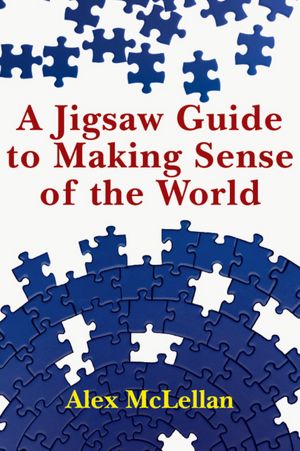
I just read a pre-publication copy of the book A Jigsaw Guide to Making Sense of the World, by Alex McLellan. If you’re looking for a practical but reliable guide to engaging others in the great conversation about truth, I encourage you to pre-order your copy from Amazon here.

Alex draws from his extensive experience making bold forays into the jungles of relativism and the deserts of indifference. Though his aims are broader, I believe this book has especially helpful words for Christian believers dealing with doubt or have deep reservations about talking with others about their faith.

This is not an academic treatise; it is a stimulating guide to building on what you already know so that you might come to know more about the things that matter most—and so that you might act with greater confidence on the basis of what you know.
I know Alex well, and I can recommend him as a speaker for your next event on these topics.

Alex has worked closely with Ravi Zacharias and is now Executive Director of Reason Why International.

Problem Solved: Note-Taking While Surfing Amazon


What do you do when you’re surfing Amazon and you want to keep records of your valuable findings, especially when you follow the serendipitous trail from topic to topic that is so typical of the Amazon “research” experience? You know how it is—you start off in single-minded search of a specific title and before long you’re cavorting through an endless array of tantalizing titles, completely unrelated to your immediate objectives, but somehow pertinent to other interests and projects.

Here’s a simple, low-tech solution that I use:

  1. Orient a few sheets of legal size paper (8 1/2″ x 14″) horizontally and fold them in half from left to right. The resulting dimensions are 5 1/2 inches along the top and bottom edges and 8 1/2 inches along the sides. You now have four “pages” on each sheet to write on. This should be ample space for any single note-taking session.
  2. On one sheet, with the folded edge on the left, write in capital letters a brief title (one to three words) for the first note you’re taking. This label should reflect the kind of note you’re taking, which will depend on the occasion for taking notes. In this example, you’re surfing pages on Amazon for books of interest. You’re guided to some degree by a definite purpose, but you’re also letting yourself trip along new pathways. Your first note, let’s say, is to be a list of titles on a related topic or theme. Or maybe it pertains to a project you have in progress. You write the theme or the name of the project in capital letters at the top and to the left.
  3. Write the date of your note-taking in the top right-hand corner of the sheet. This will be useful for arching and retrieval. [See below.]
  4. Use bullet points for each entry on your notes page. In our example, many of these entries will be titles of books found on Amazon, so you’ll be creating a bulleted list of titles. Suppose you’re looking for sources on SCIENCE AWARENESS. You come across a couple of promising titles. You scroll down to the Amazon section titled “Customers Who Bought This Item Also Bought,” where other titles are listed horizontally across the page, often with a navigation button for scrolling through several “pages” of items in this category. Since you’re looking for titles related to your theme, you work your way across the list and note as a separate bulleted item on your first notes page anything that you may want to pursue later. As you scroll across, however, you encounter an unlikely entry for a book of poems. It looks interesting. What do you do? At this point, create a new notes sheet like the first folded sheet and enter the title POETRY, then create a bulleted entry for the book of poems. At some point, if things go contrary to plan, you’ll click on one of these titles for more information, and you’ll be presented with additional titles that other customers have bought. This can go on endlessly. Your curiosity about the poetry book has take you to its main page, where, for some reason, you see a title about writing memoirs which, for some reason, interests you. Now you create a third notes sheet with an appropriate title, WRITING or WRITING: MEMOIR. (Note the utility of colons to punctuate designations for your notes pages). By a similarly haphazard process, you’re dazzled by yet another title, one about BOOKS & READING. And so it goes.
  5. Meanwhile, you find that you can’t resist peeking “Inside the Book” now and then. This is a great, but potentially hazardous, feature on Amazon. For a title on CARTOGRAPHY, a subject that came up in that serendipitous way so characteristic of Amazon surfing, you dip into the sample pages and start reading. Now your note-taking follows a different trajectory. You begin making a list of QUOTATIONS, each one with its own bullet point and the author’s name, book title, and page number. After the quotation and source information, you add in [brackets] a brief label for the quotation. Or something about the organization of a page is striking to you and you think it might be useful for one of your own writing projects. So you create a new notes sheet (same as before) and give it a label. This label will be the WORKING TITLE of your project. On the first page you draw in outline form a template that resembles the page layout in the book on cartography that you’re examining.
  6. As you collect notes sheets, take care to write the page number on each of the four “pages” of the sheet. Because the sheet is folded and you may collect a dozen or more of these sheets during a single note-taking session, you may have trouble—as you turn the pages—remembering the topic or theme of a particular notes sheet. In that case, write the label for that sheet at the top of each page. Continue making your bulleted list as before.
  7. During almost all of my own note-taking sessions, I end up creating a sheet for QUOTATIONS and one for PHRASES that eventually go into a database I keep for that sort of thing. This is useful in my writing, teaching, and public speaking.
  8. As note sheets accumulate, stack them in alphabetical order according to the labels you’ve given them. As you make entries you’ll be adding notes to one themed sheet at one moment, then another note to another themed sheet, then returning to a previous sheet, hopscotching around as topics intersect. Having your sheets in order will make it easy to find a particular one that is to receive a new entry at a later time in the session.

Some questions answered:

  1. “What counts as a note-taking session?” Because I date my notes, I consider any note-taking I do on a given day to be a single “session.” Sometimes this will be one stint of 90 minutes. Sometimes it will be 30 minutes in the morning, 15 minutes during lunch, another 45 minutes in the late afternoon, and so on. I simply add newly themed sheets and bulleted notes to existing sheets with the same date, picking up the process where I left off earlier in the day.
  2. “What should I do with the notes after each session?” At the end of the day, I have several options for filing my notes. Everything depends on time and timeliness. If one sheet of notes will be useful for a current project (during my next writing session for a book or article, for example), I’ll file that sheet where it will be ready to hand as soon as I’m back to work on that project. If a note sheet relates to a topic I’m researching, I archive that sheet in a folder designated and labeled for that project. For all of my note-taking, I generally think in term of projects and topics, so I have project files and topical files. My project-management protocol includes scanning some hard copy notes into files on my computer or directly into project management databases I use (for example, in Scrivener and in OmniOutliner Pro). So some notes will be archived in long-term files and others for near-term use, either as hard copies or in electronic format.
  3. “What’s so special about legal size paper?” This is a matter of preference. Feel free to use standard 8 1/2″ x 11″ paper if you prefer. I find the legal size, folded the way I do, provides ideal dimensions and page proportions for my handwriting and aesthetic sensibilities. I keep a sheaf of un-ruled, white, legal-size paper close by my desk just for this purpose. I can stash a few folded sheets in a large envelop if I’m traveling and plan to work. [Note: If you’re traveling and running low on paper, just tear the sheets in half along the folded line and label them individually by theme or project. This still leaves you with two sides to write on, which may be sufficient in a pinch when your sessions are short anyway.]
  4. “What are some alternatives (besides software) to using the folded legal-size sheets?” You can use smaller (or larger) sheets of paper. You can go as small as you like. But you need room for writing and for taking sufficient notes without thickening the stack of pages too greatly. Index cards provide another option. But 3″ x 5″ cards are too small, in my judgment. The 5″ x 8″ cards accommodate more note-taking, but in their typical orientation (long edges at the top and bottom, short edges on the sides) they just aren’t proportioned to my liking. One solution would be to write notes in two columns; another would be to turn the card into vertical (or “portrait”) position and take notes down the length, instead of across the width, of the card. The proportions of the writing space are key. I don’t care for anything too wide since it often results in wasted space on the right-hand side. Another option is some kind of notebook. See next point.
  5. “Why not use a Moleskine?” For paper notebook purposes, my favorite is the Moleskine. I use Moleskines for all sorts of note-taking. They are especially useful for writing lengthy notes on a single topic, first drafts of portions of essays, note-taking during a lecture, or outlining for a writing or speaking topic. I’ve written other posts about the uses of Moleskines. The size I use measures approximately 7 1/2″ x 10″. This is only a little larger than a folded sheet of legal size paper. So I can insert my legal paper note sheets into my Moleskines as need. The Moleskines have just the right amount of paper firmly stitched together between stiff covers to last during most of my travels. And all the pages are kept together. They have one drawback: because the pages are bound together, a miscellany of writings (characteristic of a chapbook) must be indexed for each Moleskine if entries are to be found when they’re most useful at a later time. Loose pages, like the ones described in this post, can be filed immediately into labeled folders. [Note: You could follow the same procedure with pages in a Moleskine, reserving each sheet (on both sides) for a single theme, topic, or project, then tear the sheets out for archiving according to their respective purposes. But this sort of defeats the purpose of having an attractive—and comparatively costly—bound notebook like a Moleskine. Nevertheless, to each his own!]
  6. “Why not just enter your notes electronically in the first place?” This is fine when it’s convenient. But it’s not always convenient. If you depend exclusively on your computer or iPad for note-taking, a great deal of valuable material will slip through your hands, never to be retrieved again. Also, it’s easier to move quickly from note sheet to note sheet on different topics for different projects if you have them in alphabetical order in a stack as you make entries back and forth.
  7. “Are there good software options that can be adapted to this same method?” Yes. For example, I use Scrivener to manage writing projects. Each Scrivener file is dedicated to a unique project. In a single file I can manage “folders” and “documents” (more or less the way playlists are organized in iTunes). So I can create a folder for “Dated Notes” and then add to that folder individual documents labeled with the date for notes taken on that date. So, following the scheme I’ve described in this post, I would open the “Dated Notes” folder in my Scrivener file for a specific project and create a document within that folder that is labeled with the current date. I would then enter my bulleted notes in that document. There are all sorts of advantages to using Scrivener for this sort of thing. But the same thing could be done with OmniOutliner Pro or some other similar software package. (I stay away from standard word processors, like MS Word and Pages, for this sort of thing. They aren’t effective project management tools, and word processing is handled very neatly in Scrivener.) I could write a separate post about how to use Scrivener for note-taking across projects during a single session of writing or note-taking. But the basic idea is simple: just keep each relevant Scrivener project open while doing your work, each with its own dated note-taking document open, and switch between files with simple keyboard strokes as you make entries. You replicate nearly exactly the process described in this post, but in electronic files instead of on paper.
  8. “What are the special virtues of using paper?” The chief virtue with real paper is that you can usually get your hands on some no matter where you happen to be. I like the physical process of writing by hand. I remember things better because they have a physical location that I associate with the notes I take (like being able to recall where a line of text appeared in a book I’ve read). And for some of us, “out of sight is out of mind,” and researchers can’t afford to be out of their minds!
  9. “What if I need more sheets for the same topic?” This seldom happens in my experience, but the solution is simple: add a sheet with the same designation and place it inside the first notes sheet on that topic.
  10. “Does this hack for note-taking while on Amazon have other applications?” Yes! The simple method I’ve described can be adapted for use anytime you find yourself pin-balling off of different topics. You may brainstorming, watching TV, or “listening” to your spouse recount the day’s events. Ideas for sundry projects are flooding your mind. This might be your solution. You get an idea for one project, then something else on another. Just note them down on separate sheets, properly labeled and titled. You’re watching your favorite sitcom and a character finally says something that is actually funny, useful, and memorable. Except that you probably won’t remember it, so it probably won’t be useful. Give it a label and write it down on one of those folded sheets of paper that you always have handy. Your spouse is re-gailing you with the woes of the day, or ticking off a long list of things to keep your weekend busy. As you think about more important things and write them down, the usual glazed look will be gone and you’ll appear to be taking her so seriously that you’re actually taking notes! Yes, the possibilities (and concomitant advantages) are endless. I use the technique to manage my daily and weekly To Do lists. It isn’t the only tool I use, but for especially complex stretches of time, I take a single folded sheet and put activity labels (“Errands,” “Calls,” “Home Projects,” “Computer Tasks,” “Email,” “Writing,” “Motorcycle Trip”) on each page, then note individual things that need doing. Because the categories are unrelated, I have one per page; that way I can have as many folded sheets as necessary and simply insert sheets between the pages of other sheets in random order. I tick items off for each category as they’re completed. I often plan my week that way.
  11. “Why do you write about these things?” I write about them because I’m interested in solving problems with organization and getting things done. I write about them because I then have a record of methods I’ve found useful and I can return to this record to fine-tune the technique and remind myself how it works (yes, I’m that old). I write about them to be of help to other anal-retentive researchers. And I write about them hoping that if you have something to contribute on the topic you’ll leave a comment that will be helpful to me and other readers!

Additional Resources:

Doug’s Related Posts:

“What Books Are a Good Investment for Scholars?”


A former student of mine, now a colleague in the field of philosophy, has asked the following question:

I have some (limited) funds available for buying academic books. This is a new experience for me; I have relied on the library for almost all my books so far in my academic career. But since the funds are limited, I need to carefully prioritize how I use them, and I don’t want to buy books I’ll look at once and never again. Since my dissertation is in epistemology . . . I want to prioritize epistemology texts. So here’s the question: given the above about my priorities, what philosophy texts, especially epistemology texts, do you recommend? (I will probably be able to buy no more than 10 books.)

This is an excellent question. Over the past thirty years, I’ve built a library of nearly 8,000 books. You might think this disqualifies me from commenting on proper stewardship of assets and shelf space. But I have learned a few things along the way. Here’s my response to this specific question:

Given your practice of using the library so effectively, I’m not sure I’d recommend that you buy books on your dissertation topic. I’ll come back to that in a moment. But I would consider the following general guidelines:

  1. ‎Invest in the best reference works, whether in epistemology or more generally.
  2. Consider those anthologies that contain classic works and seminal essays on new developments, perhaps in epistemology. There are some excellent anthologies today that focus exclusively on epistemology.
  3. For monographs and other works on your dissertation topic, stick with those that you’re likely to mark up the most during your research and writing, by authors who have the most to contribute (whether or not you agree with them).
  4. Don’t forget to consider the quality of the writing itself when selecting books for permanent residence in your library. The company you keep will rub off on you (see Psalm 1). Search out the authors who are also good stylists from whom you can learn as you improve your own writing craft. In other words, read as a writer!

On some of the topics I’ve written about, some few have been addressed in a uniquely influential way by a particular thinker. For example, I first began writing serious philosophy for publication on the problem of evil and selected John Hick’s work as a foil for what I had to say at the time. His book Evil and the God of Love was already being excerpted in anthologies and has proven to be a classic. This is, among other reasons, because John was such a clear writer, he surveyed the whole history of Christian treatments of the problem, and he contributed significantly to updating and developing the minority position (which he called the “Soul-Making” or “Irenaean” tradition).

Also, you may find that your current research links up with older works that are more difficult to come by now. These might be worth owning. Much depends on how much you expect to remain focused on your topic for the next decade or two. Since you’re pursuing an academic career, you will probably have an extensive university library at your disposal pretty much at all times. And you may have a research assistant some of that time, in which case you can send out to collect things for you!

ABC Interview with Geivett and Craig in Tulsa, Oklahoma


This morning, the ABC affiliate in Tulsa, OK interviewed Doug Geivett and William Lane Craig to talk about the On Guard Conference where they’ll be speaking tonight and all day tomorrow. To see the interview, click here.
If you happen to be in the Tulsa area, try to make it to this conference. Six scholars have come together to offer practical and informative sessions on the evidence for Christian belief:

  • Paul Copan
  • William Lane Craig
  • R. Douglas Geivett
  • Guillermo Gonzalez
  • Gary R. Habermas
  • Mike Licona

Details about time, place, and cost are provided in this brief interview. More information is available at the conference website here.

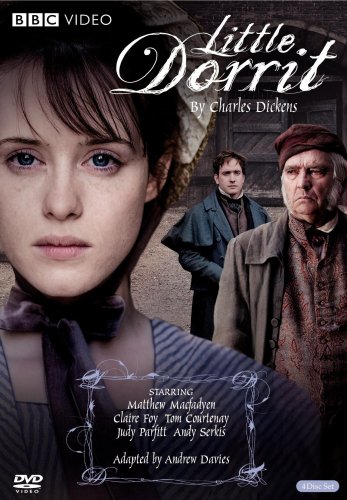
Paul Theroux and Little Dorrit at the Crossroads—Another Coincidence


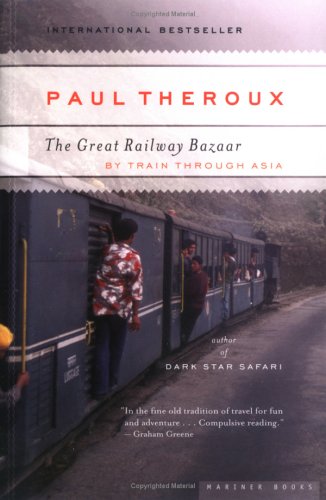
This evening the three of us (my wife, our older daughter, and I) were engaged in that familiar challenge of agreeing on a movie to watch. My wife cautiously proposed “Little Dorrit.” I was glad to let our daughter veto this one. As they contemplated the remaining possibilities, which did not seem to improve, I settled into a chair and resumed my reading of Paul Theroux’s celebrated travelogue The Great Railway Bazaar. Soon I was sufficiently reconciled to this alternative, and I hardly noticed when the ladies went downstairs and got their movie on.

The early pages of Theroux recount his ride on the Orient Express, setting out in Switzerland and making his way, with stops at Milan and Venice, to Yugoslavia. Within a few minutes of reading, it occurred to me that the tunnel called “the Simplon,” described on page 17, greatly resembles the tunnel we passed through by train some years ago, going from Grenoble through the alps into Italy to make a connection in Milan. I savored these pages with greater pleasure, thinking of that trip we so enjoyed (on a more satisfactory train, I believe).

A few pages later Theroux was reporting his observations about passengers as they boarded and de-boarded at various stations. On page 24 he explains how he managed to extricate himself from the pleasantries of conversation with a ragtag group of fellow travelers and retire to his cabin. He writes, “I said good night and went to bed to read Little Dorrit.”

The coincidence is notable, don’t you think? Not significant, but notable. Little Dorrit has seldom made an appearance in any of my reading or conversation with others. But tonight she strikes twice, in the most unlikely of ways. What does she conspire to accomplish by her double-appearance?

I only hope the coincidence does not augur financial ruin in our household. (You may need to refresh your memory of the plot in Charles Dickens’ novel.) It does remind me of Arthur Clenham’s curious experience at the “Circumlocution Office,” where the story’s hero seeks to find answers within a hopelessly confused tangle of papers. In chapter 10 of Little Dorrit, Arthur is referred to this Office with these words: “The question may have been, in the course of official business, referred to the Circumlocution Department for its consideration.” One knows immediately that Arthur’s prospects for finding the answer to his burning question are not promising.

The Tale of the Missing iPhone


JetBlue Tail (N556JB; "Betty Blue")

JetBlue Tail (N556JB; "Betty Blue") (Photo credit: Wikipedia)

Act I

I was returning home from a speaking trip on JetBlue Airways (Seattle to Long Beach) yesterday when my iPhone went missing. On the plane I switched off the phone before the plane pulled away from the gate. During the flight I managed to get some sleep and do some reading on my iPad. When our plane landed in Long Beach I prepared to stuff my phone and iPad into my carry-on and discovered that my phone was missing. I did all the searching that was possible in the cramped quarters of a plane-load of people as we taxied to the terminal. No luck. (Or, as some in England would say, “No joy.” In military air intercept, “no joy” is code meaning “I have been unsuccesful.”)

I resolved to wait until we reached the gate, and everyone else had de-planed, before resuming my search. I mentioned to the passengers adjacent to me that I couldn’t find my phone. They wished me luck and joined the ranks of exiting passengers.

Now I was confident I would find the phone. I checked under the seats, under the cushions, in the seat-back pocket (again). I went through all of my on-flight gear. I re-checked my pockets. Flight attendants came offering their assistance. The captain of the flight joined us in our search. He called my number to see if that would help us locate the phone, but I was sure I had turned it completely off. (Imagine being busted by the flight’s captain under these circumstances!) The cleaning crew boarded the plane, and they joined our search. Nothing. Nada. Zilch.

They suggested that I go directly to the baggage claim service office and file a missing item claim. I left, finally, and they, I suspect, breathed a sigh of relief to be done with me. Before going to the baggage service office I found a JetBlue agent at the gate and described my plight. She got on her radio and asked somebody important to get on the plane check once more for me. We heard back that it was not to be found. (No surprise there.)

Long Beach Airport

Long Beach Airport (Photo credit: Konabish)

So I made my way to baggage service. The kind lady in the office took down my information. But by this time I had reluctantly concluded that my phone had been taken by someone on the plane. The captain himself had told me, “It happens.”

As we concluded the paperwork, which was surprisingly uncomplicated, the service agent suggested that I call the baggage claim for JetBlue at the Portland airport sometime around 9:30 p.m., when the same plane was scheduled to land there. It was possible, she said, that my iPhone would be discovered during the next flight and be turned in by some conscientious passenger or a flight attendant. As a philosopher, I’m well aware of logical possibilities. But I wasn’t sure that this was physically possible (or sociologically likely).

Act II

I drove home and made the call at 9:30. No one answered, so I left a message. I had now resigned myself to the fact that my phone was gone forever and that I would now need to sort out what to do about the data on the phone and arrange to get a new phone.

Of course, I was tired from the weekend and the journey home. So I flopped down in front of the TV in search of something to watch for an hour or so. I recalled seeing on JetBlue television during our flight that Kiefer Sutherland was in a new TV series called “Touch.” For some reason this was news to me. So I flipped over to my Apple TV and searched for the series. Behold, there it was. So I downloaded the first episode and put my feet up to watch “Touch” for the first time.

I’m used to odd coincidences happening with remarkable frequency in my life. Another one soon presented itself. The show began with a businessman looking frantically for his lost phone—at an airport. (I’m pretty sure it was not the Long Beach airport.) I said to my wife, “I just started watching this show and it begins with a man who lost his phone at an airport. And the whole TV series is about coincidences!”

Act III

Shortly into the episode I got a phone call from JetBlue in Portland responding to my message. I was surprised that I would hear from them when my phone was actually permanently lost. (I shouldn’t have been so surprised, since I was now very impressed with their customer service.) The agent there asked me a couple of questions, like “What kind of phone did you lose?” “What seat were you in?” Then she said, “We have it here.”

Before, I was baffled. But now I was dumbfounded.

I asked her where exactly they had found it, and she said she didn’t know. “Somewhere on the plane.”

We then made arrangements to FedEx the silly thing back to me. Of course, this would cost me about $30. Too bad none of us could locate the phone before it left Long Beach. But at least I’m not blaming an anonymous passenger for stealing my phone. And I’m not spending my day cancelling the data and getting a new phone.

***

It was a little unusual that I couldn’t find the phone before landing. It was baffling when a half dozen people looking for it with considerable zeal could not find it. But what do you call it when it turns up in Portland?

And what do you call it when you just happen to switch on a TV show that depicts a passenger frantic about finding his lost smart phone?

A coincidence? Hmm.

Mark Twain said that the chief difference between writing fiction and non-fiction is that fiction has to be believable. I heard that on the radio . . . while driving home from the airport last night.

Rev. Giles Fraser Catches Out Richard Dawkins in Dispute about Christianity in Britain


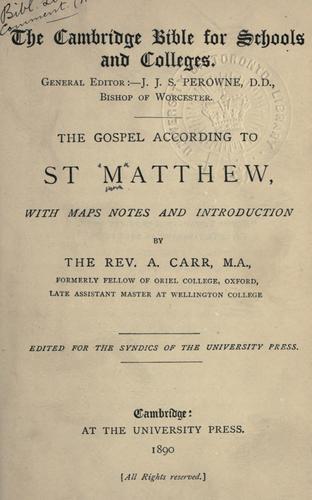
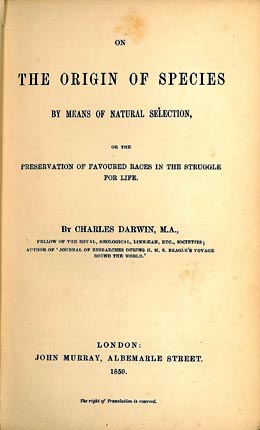
On Tuesday, BBC 4 hosted an occasionally heated exchange between Richard Dawkins and Rev. Giles Fraser. In their exchange, Fraser takes exception to the design of a survey conducted by the Richard Dawkins Foundation for Reason and Science. He suggests that the survey, which purports to establish that Christianity is rare in Britain, shows no such thing. The Dawkins survey revealed that nearly two out of three who consider themselves Christians were unable to name the first book of the New Testament. (The correct answer is supposed to be the Gospel According to St. Matthew, but that depends on what you mean by “first”!) Fraser put the Dawkins test to work on Dawkins himself and asked if he could name the full title of The Origin of Species, by Charles Darwin. Though he said he could, Dawkins stumbled when trying to quote the full title of his own secular Bible. Some British journalists are having laugh at Dawkins’s expense.

For audio of the interview (less than 7 minutes) click here. The story is reported at the Huff Post, with a transcript of the embarrassing bit, here.

Many, no doubt, will remark with glee on the embarrassing incident. But this isn’t quite fair, in my opinion. True, Dawkins should know the full title of Darwin’s seminal work. Dawkins is, after all, a former Oxford University professor who has published extensively in defense of Darwinian evolution. He is also the author of a 23-page Introduction to the Everyman’s Library edition of The Origin of Species and the Voyage of the Beagle, published by Alfred A. Knopf. But it surely is a sad commentary on the state of literacy in Britain that so few who call themselves Christians can name the book that appears first in most copies of the New Testament.

There is a larger point that should not be missed. There was a time when knowing that sort of thing was widespread among believers and non-believers alike. But the fund of “common knowledge” has been compressed to the dimensions of a thimble so that now what counts as literacy is up for grabs. Christian or not, shouldn’t a literate person know enough about the world’s great literature to be able to declare with confidence the name of the first Gospel of the New Testament?

Face the Fear—Peter Bregman’s Advice for Procrastinators


“Failure in a long-term project isn’t just a work issue; it’s an identity issue. Is it any wonder that we procrastinate?” This simple insight lies at the heart of Peter Bregman’s excellent counsel for those who have trouble getting started on BIG PROJECTS. You know who you are:

  • first-time book authors
  • second-, third-, and fourth-time book authors
  • PhD candidates confronted with writing a dissertation
  • public speakers
  • athletes
  • those who aspire to developing a new hobby
  • parents
  • generals of armies
  • book keepers
  • bloggers

Yep. Pretty much anyone who ever wanted to do something of value.

Bregman recognizes that the salami technique is useful, but he notes that it doesn’t deal directly with our “issues” as procrastinators on large undertakings. (The salami technique consists in slicing the biggies into smaller, more digestible sizes, then acting on each, one at a time, gradually making forward progress until the end is in sight.)

No need to repeat what Bregman says. Just visit his post for the Harvard Business Review here.

In Memoriam—John Hick (1922-2012)


John Hick, the eminent scholar in the world of religion, died at the age of 90 on Thursday, February 9, 2012. Many will mourn the loss of this gentle man and incisive thinker. But we will also count ourselves blessed to have known him, and celebrate his work among us for so many decades of fruitful scholarship.

I first met John Hick in 1985 or 1986 following a lecture he delivered at the Claremont Colleges, in southern California. I had just written my M.A. thesis (for Gonzaga University) on his treatment of the problem of evil. When I shared this with him, he said he would be interested in reading it. After he had read it, he wanted to meet. So we scheduled a get-together at the colleges and talked about my project. I will always remember two things he said to me at this meeting. The first thing he said, once we got down to business, was that, in my exposition of his position, I had gotten it right. He added that this was unusual for critics of his various views. This put me at ease immediately. We may have met for an hour. Toward the end John asked me what plans I had for publishing my thesis. I had no plans. But John urged me to seek a publisher for it, and offered his assistance.

This was indeed an auspicious beginning to a long-term friendship with one of the world’s foremost religious scholars of the 20th century. It led, eventually, to the publication of my first book, Evil and the Evidence for God: The Challenge of John Hick’s Theodicy (Temple University Press, 1993), with an Afterword by John himself.

A few years later, John’s book, An Interpretation of Religion: Human Responses to the Transcendent (Yale University Press, 1989) was released. This book was the publication, in expanded form, of his Gifford Lectures, delivered at the University of Edinburgh, 1986-1987. The book earned him the prestigious Grawemeyer Award for Religion. Shortly after its release, the Claremont Graduate School hosted a major conference, with scholars from various places around the world present to discuss his sophisticated defense of religious pluralism. I was a graduate student in philosophy at the University of Southern California at the time, and I was surprised by the invitation I received, with John’s support, to participate in the proceedings and present a paper of my own.

In this way I was drawn into the discussion of religious pluralism. Shortly after I was appointed to my first teaching post at Taylor University (Upland, Indiana), Wheaton College issued a call for papers for a conference on religious pluralism. I sent a brief proposal for a paper evaluating John Hick’s position. Because it was one of very few proposals for a direct discussion of Hick’s important contribution to the topic, I was told, I was invited to deliver my proposed paper.

Dennis Okholm and Timothy Phillips, who had hosted the conference, eventually developed the idea for a book that was to be called More Than One Way? Four Views on Salvation in a Pluralistic World (first published by Zondervan in 1995 and later reissued under the moderately abbreviated title Four Views on Salvation in a Pluralistic World in 1996). Again, I was invited to participate, and I was asked if I might contact John Hick to request his participation, as well. He agreed. The two other contributors were Alistair McGrath and Clark Pinnock. Gary Phillips was co-author with me for a chapter we titled “A Particularist View: An Evidentialist Approach.” John’s chapter was called, sensibly and simply enough, “A Pluralist View.” The most illustrious contributor, of course, was John Hick. And it’s very possible that the book remains in print on account of his contribution.

These are the only projects in which I partnered, after a fashion, with John Hick. But we had many get-togethers over the years. Most of these happened during the years he was at Claremont, where he held the Danforth Chair in the Philosophy of Religion from 1979 to 1992. At other times we would meet when we happened to be at the same professional conference. The second most memorable occasion of our meeting was long after he had retired and I visited him at his home at the end of Seeley Oak in Birmingham, England.

John Hick was a brilliant communicator, in print and with a microphone. He was a gracious scholar who respected would-be scholars 40 years his junior. He was tenacious in defense of his many controversial positions, and friendly and tolerant toward those who disagreed. Always fair-minded and even-handed in his dealings with me, he marked my life in ways no other scholar of similar repute has (or could have), and he steered me in ways he would never have known.

John was Irenaean as opposed to Augustinian in his theodicy, a universalist and a pluralist in soteriology, a kind of Kantian anti-realist regarding the existence and nature of God—all things that I am not. But there are two reasons why he could not be ignored. First, he reasoned his way to his positions with great care and he could articulate them with great clarity. Second, he had begun his theological odyssey as an evangelical of more-or-less the sort that I am, but had gradually and in nearly step-wise fashion moved further and further away from this starting point in his career as a professing Christian. His kindness toward me would naturally count as a third reason to engage and evaluate his work with the same care that he exemplified as book after book flowed from his pen.

When I last saw John Hick, I suspected that we would not see each other again. He had ceased traveling across the pond, and I had no immediate plans to return to England. But we remained in touch over many years. I will miss his Christmas cards. And I will miss him.

For more on John Hick:

I wish to thank Fred Sanders, writer for The Scriptorium, who encouraged me to post about my experiences with John Hick. See Fred’s post here.

Poll: 2012 Oscar Nominations


The 2012 Oscar Nominations for the 84th Academy Awards were announced earlier this week. Here are the nominees for Best Picture, with links to their official websites, are:

Here are two polls: (A) Which film do you think will win the award for Best Picture? and (B) which film do you think should win the award for Best Picture? You can add detail in support of your answer in the comment box for this post.

Live Tweeting Tonight’s Republican Presidential Debate


Doug will be live tweeting tonight’s Republican presidential debate, hosted in Jacksonville, Florida by CNN. People may be indifferent about Doug’s tweeting hobby, but he hopes you aren’t indifferent about the political future of the United States, and that you are attending to the political scene as you are able.

A decision to ignore political news until election day should be a decision not to vote on election day. Unfortunately, many who vote are uninformed or misinformed. This is a travesty against responsible citizenship in a democratic republics like ours. Those who will be debating tonight are after your vote. Watching the debate and talking with others about it is one way to stock up on the knowledge needed for responsible citizenship.

So, by tweeting the debates, Doug hopes to motivate some to join the great political conversation!

Tonight’s debate, hosted by CNN in Jacksonville, Florida is the final debate before the Florida primary on Tuesday. Many believe that Newt Gingrich clinched a major victory in South Carolina because of his performance in the debates leading up to it. Some prognosticators speculate that a bold, fresh approach tonight will signal the victor next week, and that strong or tepid performances by both Newt Gingrich and Mitt Romney will make it a real horse race. The New York Times reported today that the two “are each signalling a willingness to go nuclear” tonight. If that happens, it could even be fun to watch!

To follow Doug’s live tweets, click here. The debate begins at 8:00 p.m. Eastern Standard Time.

Gingrich Lesson in Debate Technique: “Repeat Changers”


With so much talk about how great a debater New Gingrich is, why not watch to learn a little about rhetoric and style from the gentleman from Georgia?

Today’s lesson comes from a recent Republican presidential debate in which Rick Santorum accused Newt Gingrich of being a little grandiose at times. The key word here is “grandiose,” and it was meant to sting.

A skilled debater listens carefully for an opportunity to use a rhetorical device that Jay Heinrichs calls the “repeat changer.” Sometimes that opportunity looks and sounds more like a grave misfortune—worthy of a grunt at best, and a look of terror at worst. The repeat changer repeats the key word or phrase that was used to demean and changes its sense to reflect favorably on the original target.

When Rick Santorum described Newt as someone who can be a bit grandiose at times, he meant that Newt often exaggerates to an absurd extent and often thinks of himself in exaggerated terms. He thus sought to tap into public consciousness, shaped to a degree by recent media focus on . . . . well, Newt’s occasional grandiosity.

How did Newt respond? He did the best thing anyone can do under the circumstance: he repeated the accusation, then switched its sense, suggesting that someone may be considered grandiose because he has grand ideas, and lots of them, for improving things for the American people.

Now this may sound like equivocation. To be sure, the repeat changer does often trade on ambiguity. When it does, it is less effective. But if the shift in sense is mild—as opposed to sharp—there is no harm and no foul. In other words, no fallacy has been committed.

This can be illustrated on one interpretation of Newt Gingrich’s clever rejoinder to Rick Santorum. The basic sense of Santorum’s jibe is preserved, but Newt suggests that Santorum only thinks that Newt is grandiose because Rick is uncomfortable with the grandeur of Newt’s ideas. “Grandiosity” and “grandeur” do differ. But “grandeur” may be mistaken for “grandiosity” by someone who can’t tell the difference. If this is what Newt was getting at, his move was not merely clever, it was ingenious. He might be asking voters, in effect, “Do you want a president who has grand ideas that some confuse with grandiosity, or do you want a president who can’t tell the difference between grand and grandiose?”

In my book, rhetoric has its proper place, especially in public discourse. But it must always be tempered by virtue. So I commend the “repeat changer” when it can be managed without violating the moral and intellectual virtues.

Here’s a poll for you to register your opinion: