Sources for Film Discussion Guides


As I learn of online sources posting discussion guides for specific films, I’ll list them here.

Here are sites that feature movie guides:

Residence Life Cinema has created film clips to help college and university students manage residence life. One section of the site is titled Movie Discussion Guides, where discussion guides are organized into categories of general interest to students. On this page there’s also a link to a complete alphabetical list of films for which there are discussion guides. To download discussion guides in PDF format, you have to have an account with Residence Life Cinema.

teach with movies is another site that specializes in the use of film to educate. Access to discussion guides requires a subscription that costs $11.95 per year (as of August 2008). But one page—here—that is accessible for free lists excellent questions for exploring ethical issues in almost any film.

Movie Learning Guides provides discussion guides for parents and teachers, focusing on character development.

Quotations: On Writing


“If you don’t feel like writing, you can always read about it.”

—Doug Geivett (title of my post here)

“All the valuable writing I’ve done in the last ten years has been done in the first twenty minutes after the first time I’ve wanted to leave the room.”

—Ron Carlson, Ron Carlson Writes a Story

“The process of writing is an adventure; you never know how things are going to configure themselves. When I begin a book, I know it’s going to transform my life.”

—Charles Johnson, in his interview with Diane Osen for The Book That Changed My Life

“Writers write for two reasons. One is that they have something they want to say. The other, equally compelling motive is that they have something they want to find out. Writing is a mode of exploration.”

—Margaret Lucke, Writing Great Short Stories Read more of this post

Quotes on Fiction


“. . . one discovers that an authentic sermon even within the confines of fiction [as in John Updike’s novel Of the Farm] can have a kerygmatic quality: one feels addressed, in a fairly direct way that collapses in part the illusions of fiction. Updike is able here to fix a receptive mood in which the reader is led to respond to the message as well as to the fictive situation.” —Robert Detweiler, “John Updike’s Sermons,” chapter in Breaking the Fall: Religious Readings of Contemporary Fiction

Quotes on Culture Warfare


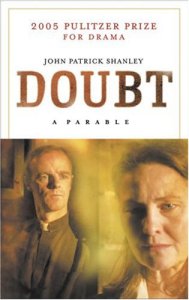
“We are living in a culture of extreme advocacy, of confrontation, of judgment, and of verdict. Discussion has given way to debate. Communication has become a contest of wills. Public talking has become obnoxious and insincere. Why? Maybe it’s because deep down under the chatter we have come to a place where we know that we don’t know . . . anything. But nobody’s willing to say that.” —John Patrick Shanley, Preface to his play Doubt: A Parable.

“No matter what side of an argument you’re on, you always find some people on your side that you wish were on the other side.” —Jascha Heifetz

Quotations: On Pain and Suffering


“No, God does not give us explanations; we do not comprehend the world, and we are not going to. It is, and it remains for us, a confused mystery of bright and dark. God does not give us explanations; he gives us a Son. . . . A Son is better than an explanation.”

—Austin Farrer, “The Country Doctor”

“Every war movie, good or bad, is an antiwar movie.” —Steven Spielberg, “Of Guts and Glory”

“. . . after all, the manner in which a person dies, the little details of an autopsy, say, whether the corpse has spots on its liver or lungs, doesn’t in any way cancel the loss.”

—Ted Kooser, The Poetry Home Repair Manual

A high station in life is earned by the gallantry with which appalling experiences are survived with grace.”

—Tennessee Williams

Football and Philosophy: The Book


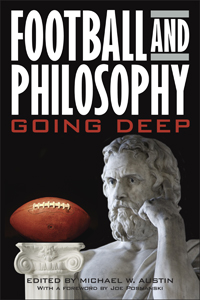
My friend, Michael Austin, has just announced at his blog that his latest book is now available. This is an edited book called Football and Philosophy: Going Deep (University Press of Kentucky). Congratulations Mike! I’m pleased to have a chapter in the book, titled “Inside the Helmet: What Do Football Players Know?” A look at the list of contributors and the chapter titles has me anxious to get my hands on a copy.

Finding Films for Courses


More and more college and university professors are using film in their courses. Makes sense. Students like film, and film can be an exceptionally stimulating way to introduce students to complex issues in the various disciplines.

My field is philosophy, with specializations in epistemology (the theory of knowledge) and philosophy of religion. I use film in my courses in two ways. In some courses I use film to illustrate concepts, arguments, and the popular expression of “big ideas.” I also teach a course on faith, film and philosophy, which is all about the intersection of these three things. My primary textbook for that course is my own edited book Faith, Film and Philosophy: Big Ideas on the Big Screen (2007). But I’m always trawling for new film connections for my courses and public lectures.

Today I read Chris Panza’s plea for suggestions for a philosophy course that he’s been planning. His question is very specific: What films from an Asian perspective would complement a course on Asian Ethics? My first thought, naturally, was to recommend a chapter in my book. Chapter 13, written by Winfried Corduan, is called “Bottled Water from the Fragrant Harbor: The Diluted Spiritual Elements of Hong Kong Films.” Win writes about specific films in this genre, and his analysis of spirituality portrayed in representative films touches on ethical issues. But Chris’s question is a special case of a more general question: How does one find films that serve the specific purposes of a course? Here are a few suggestions.

Since I know others who teach using film, I ask them about their practices and experiences. I also have a growing library of useful books:

  1. There are several books on film with material by philosophers or on philosophical topics. My own library includes the following examples: Philosophy Through Film, by Mary M. Litch, and Movies and the Meaning of Life, edited by Kimberly Blessing and Paul Tudico.
  2. St. Martin’s Griffin publishes an annual collection of essays on The Best American Movie Writing. The essays tend to be written by popular film critics and journalists of various types. Some are filmmakers. The 1999 volume was edited by Peter Bogdanovich and contains essays by Martin Scorcese, David Denby, Molly Haskell, Gore Vidal, Douglas Brinkley, Steven Spielberg, Phillip Lopate, Andrew Sarris, William Zinsser, Roger Ebert, E. L. Doctorow, and others. Titles sometimes provide clues about the potential philosophical relevance of specific essays and the films they discuss.
  3. Some books deal with a specific film or range of films from a philosophical perspective. A noteworthy example is the book Mel Gibson’s Passion and Philosophy: The Cross, the Questions, the Controversy. Open Court and Blackwell have published popular culture book series with other titles like this one dealing with a specific film or film series.
  4. For films on religious themes with philosophical overtones, there is, for example, Catherine Barsotti and Robert Johnston’s Finding God in the Movies: 33 Films of Reel Faith. The authors are Protestant ministers and theologians, with interests that overlap those of philosophers. Several books fall into this category.
  5. Some textbooks make use of film as a complement to the exposition of philosophical themes. Dean Kowalski has composed a textbook that is part exposition, part anthology, and part film criticism: Classic Questions and Contemporary Film: An Introduction to Philosophy. Nancy Wood makes topical film suggestions in her textbook (designed chiefly for nursing students) Perspectives on Argument.

It goes without saying that search engines will turn up valuable resources on the web. I’ve been collecting URLs for websites and blogs about film and films.

I also keep track of my own associations between philosophical themes and the films I watch. While viewing a film, I’ll often make notes in the small Moleskine notebook that I always keep handy (using my Bullet Space Pen, of course). With a little practice, I’ve even been able to make notes in the darkness of a movie theatre and find them legible later in the light of day. And I don’t mind pausing a DVD to make a note now and then.

I store my notes using a software application called Scrivener. For Mac users it’s a great improvement over word processors (like MS Word) for this sort of thing. With the application open to my film file, I can enter notes on separate “pages” under different headings that I can later arrange in any order I like. (The virtues of Scrivener deserve praise in a separate blog some other time.) In my Scrivener film file I have folders for individual films, and in each folder are individual notes of various kinds. Additions to existing notes and the creation of new notes are simple activities. Note categories include: General Impressions, Themes, Quotes/Favorite Lines, Pedagogical Ideas, etc. I’m not limited to my own observations when making notes with Scrivener. I can add anything that has turned up in my research, including informal film discussions, lecture ideas, class activities, contributions by students, recommendations by colleagues, web links, and citations from books, journals, and magazines.

Because of my book on film, people often ask, “Have you seen such-and-such a film? It’s loaded with philosophically interesting ideas.” When that happens, I encourage them to write a short piece that I can add to the website for my book: www.faith-film-philosophy.com. Now I find myself with essays to edit for eventual posting there.

Our students have fertile imaginations. They frequently come up with philosophy-film connections that I wouldn’t have dreamed of. For a paper assignment earlier this year, one student told me he wanted to write about the film Ratatouille. I asked him what kind of philosophical essay he thought he could write about this entertaining animated film. He made a compelling case that the film expressed deep ideas in the realm of taste and aesthetics. I approved, he wrote a great essay, and I learned something valuable from what he had to say.

I can’t conclude this post without inviting you to post comments with (a) your own methods of dredging up films that complement the goals of higher education (beyond the film studies department), and (2) specific suggestions for films and their philosophical content. And I want to thank Chris Panza, whom I’ve never met, for raising the question that became the subject of this post.


“John McCain Owes Michelle Obama an Apology”—Not


Barack Obama is disappointed in John McCain. In the ensuing months, he may have to get used to disappointment. Especially if he’s going to use his media opportunities to demand apologies from McCain for things he hasn’t done. First time at bat in this game, Senator Obama is disappointed that Senator McCain has not denounced the rumor and innuendo that Mrs. Obama (do we still call our First Ladies “Mrs.”?) used the racist word “whitey” in a speech some years ago. But rumor has it that it was someone close to Hillary Clinton who threw the first pitch, presumably in an effort to discredit Senator Obama during the Democrat primaries.

So what has Senator McCain done wrong in this inning? His sin is one of omission rather than commission: he hasn’t had the decency to denounce the scurrilous rumor. Must McCain now monitor every negative thing that’s said about the Obamas and use his own media opportunities to distance himself from the source of each rumor? Come on—this is the Big Leagues. Champions don’t play ball in the sandbox.

Whether he should be the next President or not, it surely is clear that McCain does not owe the Obamas a public expression of sympathy in this matter. McCain should ignore the other Senator’s challenge. Here’s why:

First, McCain’s credentials as a man of fairness do not depend on what other people say about his political opponents, unless those other people speak in some suitably official sense on his behalf.

Second, Mr. Obama has insinuated that Mr. McCain is comfortable with putting families under the microscope during Presidential campaigns, and Obama assumes that this is a no-no. But this tactic is misleading. Certainly, there is a tradition of respecting the privacy of a candidate’s children, especially if they are young children. Older children who campaign for a parent deservedly come under closer scrutiny. But in Big League campaigns—like campaigning for President of the United States—spouses naturally come under public scrutiny. There are several legitimate and important reasons for this:

  • A President’s spouse is, presumably, an intimate life-partner and a reflection on the President’s values and wisdom when making substantive decisions.
  • In recent years, it’s come to light that Presidential wives influence policy through their relationships with their husbands. (We’ve also seen the potential for a Presidential spouse to blackmail her high-profile and politically powerful mate, should he violate a sacred trust.)
  • Presidential wives have exercised considerable independent leadership on issues of national interest, exploiting (rightly or wrongly) the opportunity created by virtue of nuptial relations with the President.
  • A President’s spouse is a key ambassador to the world and a barometer of what is best about America. American citizens have a vested interest in how their First Lady represents them.

That last point leads to a third reason why McCain should not swing at Obama’s pitch. It’s likely that a non-trivial number of Americans would like to know whether Michelle Obama actually spoke (or mis-spoke) as alleged. And public opinion has to be respected by candidates for high office.

The influential role of public opinion isn’t some necessary evil made inevitable by democracy. The influence of public opinion is a public good, especially when it is well-informed opinion. It is one of the few means available for the electorate to hold its leaders (or would-be leaders) accountable. Some political leaders have been remarkably obtuse about this. Ours is an open society in ways unimaginable just decades ago. Still, an astonishing number of politicians today behave in an impolitic manner, as if no one will notice.

Barack Obama’s decision to bait John McCain may prove to be a strategic error, for it’s likely to encourage the electorate to make more deliberate comparisons between Michelle Obama and Cindy McCain. Who can be predict what that will mean? The two woman are conspicuously different in many respects. Polling the electorate on this point probably won’t be very illuminating, since many people would consider questions about potential First Ladies to be indelicate, even if their Presidential preference is influenced by impressions they have of candidates’ wives. And Obama’s recent comments suggest that he prefers to re-direct focus on his wife.

MSNBC Reports on the Todd Bentley “Revival”


On May 29, 2008, in an article titled “Revivalist Claims Hundreds of Healings,” MSNBC reported on Todd Bentley and the alleged revival happening in Florida. I was interviewed for this article. Almost instantly, reader responses came pouring in about my comments in the article. And most of them expressed some degree of irritation with me. They weren’t happy with my statement that “Mr. Bentley’s worldview appears to be a mixture of New Age notions, an obsession with the paranormal, and an untutored grasp of Christian theology.” In addition to the readers’ comments at the end of the article, I have so far received one letter by regular mail and an abundance of email messages expressing disagreement and concern.

Eventually, I may respond from this blog to some of the more interesting objections that have been made. In this post, I simply want to give brief answers to a few questions some might have about the Todd Bentley phenomenon.

1. Is there biblical support for the events associated with the “Bentley revival”? Many of this movement’s alleged miracles diverge from the pattern of miracles recounted in the New Testament (in the Book of Acts, for example). Several of Mr. Bentley’s “prophetic utterances” frankly resemble occultic practices, quite in contrast with the biblical prophets.

2. How would you describe this branch of Christianity? As I say in the MSNBC article, the Bentley phenomenon doesn’t it fit neatly into any branch of Christianity. Mr. Bentley’s worldview does indeed appear to be “an admixture of New Age notions, an obsession with the paranormal, and an untutored grasp of Christian theology.” His core message is a vague conception of life-transforming power, rather than the clear message of salvation from sin and revival of the soul through faith in Jesus Christ.

3. How “mainstream” are these beliefs among the mainstream evangelical Christian population in America? The Bentley phenomenon is better known for spectacle than for doctrine. Mr. Bentley’s website stresses the continuation of divine revelation in our time, in manifest tension with its own statement that “Scripture is our source of revelation of God . . . the final Court of Appeal on all points of doctrine, life and godliness.”

4. What should non-Christians make of these meetings? If people have no way of confirming his claims or the authenticity of his “powers,” they are better off simply ignoring Todd Bentley. This is true for Christians and non-Christians alike. In my view, there is no evidence that he is a legitimate heir to apostolic authority.

***

There has been quite of lot of blog action about Todd Bentley and his “revival.” Most of it is either supremely sympathetic or relentlessly critical. And almost all that I’ve seen has been more emotional than thoughtful. But there is one blog entry that I recommend: Dan Phillips, “What I Think of ‘the Florida Revival,'” at the PyroManiacs blog. Check it out—and let me know what you think.

Doug’s other posts on the subject of miracles:

Do You Have Mixed Feelings About ‘Expelled’?


Ben Stein’s movie Expelled opened last weekend. I’ve got a question for those who have seen it and liked some things about it, but are reluctant to give it an unqualified endorsement:

What are its major strengths and its major weaknesses?

Reading Groups: Bring the Kids


How do you encourage your kids to read? How do you find friends for your kids who read? What can you learn from your kids who read? How do you train your kids to think and talk about what they read?

There are many answers to these questions. But there’s one answer that covers them all: If you’re part of a reading group, schedule one meeting each year or every six months to include the kids.

I got this idea from a blog post by Kyle Design, who writes about how to start a reading group. Kyle says, “Include the Kids: Once a year we select a book that we will read to our kids, then bring our kids to our book group to discuss it. We all really want to instill our own love of reading to our children.”

I like this concept. This may even be a reason for parents of young children to get involved in a reading club. By participating in a reading group event with their parents, kids will learn new ways to think about reading. Parents will get insights from their children about the reading they do. And because other kids of about the same age will be at the meeting to talk about the same book, the kids will have the opportunity to make friends with peers who read. This is one way for parents to put the power of peer pressure to work for a good cause—on the principle that friends who read don’t let friends who read lose interest in reading.

Film and Parental Discretion


“How do you help your children to be discerning and pick up themes and messages inherent in the movies, books, and visual arts?” Thank you, Cindy Gould, for another great question.

Just today I was talking with a screenwriter friend of mine about the kinds of movies producers like to make. For the fast buck, they favor films for teens. And let’s face it, most films targeting the teen market aren’t all that “intellectually meaty.”

That doesn’t mean, though, that teen films are ideologically vacuous. And some teens actually like sophisticated movies intended for a more specialized audience. Is it possible to equip them to be reflective about their film experiences without ruining their enjoyment of film? Absolutely.

Here are a few suggestions:

  1. Start young. Be selective about the films your children see early on. Watch them together. Afterward, probe with questions about what they thought or felt. To get specific answers ask specific questions. Remember that one scene in Shrek when the princess is singing and, just when she hits a really high note, the bird that was singing with her literally explodes? Here are some questions to ask: “Was it funny when this happened? Was it tragic? Was it both? How could it be both?” In The Lion King, the treacherous uncle looks the part. You could get some good discussion about that. “Do the bad guys always look like bad guys? How can you tell when someone might be trying to trick you into doing something you shouldn’t do? How do you know when to trust someone?”
  2. Let children express themselves fully. Ask questions about what they say. Show sincere interest in their answers. But be careful not to “cross-examine.”
  3. Affirm them for the good ideas they have and the reasonable ways they come up with those ideas. If you love the way they think, tell them, “I love the way you think!” If we’re going to raise a generation of thinkers, they have to know we value thinking. This brings us to a final point.
  4. Share your own ideas with your children. If you’ve asked for their point of view, you’ve earned the privilege of sharing your point of view and there’s a real chance they’ll listen because you’ve listened. Be careful about the tone of your contribution, though. Try not to sound too dogmatic and authoritative. Be a model of intellectual curiosity. Encourage your children to respond to your ideas with their own evaluation.

This is pretty general advice. Much depends on a child’s age and the relationship you have with your child. I hope readers will share their thoughts and experiences in the comments box below.

Faith, Film and Philosophy—The Evolution of an Idea


A book I did with James Spiegel, Faith, Film and Philosophy: Big Ideas on the Big Screen, was released late last fall by InterVarsity Press. Today I heard from Cindy Gould, leader of a reading group called “Verbivores” (suggesting an appetite for words). Cindy asked about the origin of the book, how we decided on films to write about and how we selected contributors. Here’s the answer to that question.

Jim and I are college professors who teach philosophy and enjoy film. We decided we wanted to bring these interests together into a book. When big ideas are packaged in a compelling film, they have great potential to influence culture. We wanted to test this thesis by inviting other philosophers who like film to share their perspectives. We wanted this to be fun, so we thought about friends of ours who share this interest and asked them to participate.

We had an idea how long we wanted the book to be and decided we could manage about a dozen chapters. We ended up with fourteen. We didn’t start with a detailed structure for the book and then recruit authors to fit into that structure. Instead, we began with a list of people we knew we would enjoy working with. They also had to be people with talent for thinking about cultural trends and a gift for writing with wisdom and an engaging style. With list in hand, we approached each one with the basic idea and asked this question, “If you were to write a chapter for this book, what film or films would you want to write about, and what ideas would you like to discuss?” We picked the authors; they picked the films.

Now I have to qualify. We knew that if we were going to do a book of this kind, we had to include a chapter on The Matrix. Some people think of this film and its sequels as the most philosophical of relatively recent films. A potential reader couldn’t pick the book up expecting to find a discussion of The Matrix and be disappointed. Instantly we knew who we needed to get for this chapter. We just hoped he would agree. He did.

When we had chapter proposals from everyone, we recognized there was this remarkable range of film coverage that included the classic and the contemporary, the familiar and the intriguing, the safe and the edgy. On top of that, our hoped-for contributors had all settled on different topics and issues, resulting in a surprising balance of treatment of themes in philosophy. With chapter ideas set side-by-side, a natural structure for the book emerged. People who liked film could read this book and learn more than a smattering of philosophy—philosophy made (almost) painless.

I’m anxious to hear how the Verbivores respond to the book during their discussion on Wednesday. Maybe some of them will post their comments here.

The Truman Show: A Discussion Guide


The Truman Show (USA, 1998); directed by Peter Weir

Chapter 4 of my book, Faith, Film and Philosophy, is titled “Escaping Into Reality: What We Can Learn from The Truman Show about the Knowledge Enterprise.” Here are discussion questions for the film The Truman Show that I’ve used in conjunction with this chapter.

  1. What is Christof’s purpose in “designing” a life for Truman? What kind of life does he want for Truman? And what is Christof’s purpose in televising Truman’s life?
  2. There’s The Truman Show that is the TV show the movie is about, and there’s the movie called The Truman Show that we see in the theatre or on DVD. We’ll call the TV show TS-1 and the movie TS-2. In TS-2, viewers of TS-1 are depicted in various ways. Presumably, they enjoy watching TS-1. What is it about TS-1 that keeps them watching? Why do they like watching? What does this say about them?
  3. Those watching TS-1 seem to have opinions about the quality of life Truman has on “Seahaven.” What are they supposed to think about Truman and his quality of life? How does this compare with Christof’s attitude about Truman’s quality of life? Now think about how we are supposed to regard Truman’s life as we view the film, TS-2. Is there a difference between what we’re supposed to think or feel as we watch the movie and what the TV viewers are supposed to think and feel as they watch the TV show? Describe whatever differences you think of.
  4. Truman falls in love with Sylvia, who is kicked off the show (TS-1). Later she calls in to speak with Christof during a rare interview on television. What is her thesis about what Christof is doing? Do you agree with her? Are we supposed to agree with her? Does she make a good argument? Can you think of ways to strengthen her argument?
  5. What is this movie about? Do you think the filmmakers are making an argument? If so, what is that argument? What is the thesis and what evidence is presented in support of that thesis?
  6. What kinds of freedom does Truman exercise while living in Seahaven? What kinds of freedom is he lacking? How is he presented from exercising these freedoms?
  7. Are you more free than Truman? In what ways? Are you sure about this? Can you be sure? [This question was suggested to me by David Hunt, a contributor to Faith, Film and Philosophy.]
  8. Some critics see Christof as a god-figure in this film and suggest that the film is actually a critique of the Christian worldview. If that’s true, what do the filmmakers assume about the Christian worldview, and especially about the Christian or biblical conception of divine sovereignty and human freedom? Based on your understanding of what the Bible teaches about such things, how is Truman’s life in Seahaven like, and how is it unlike, human existence in the actual world? Support your answer from the Bible and from evidence in the film.
  9. In his chapter in Faith, Film and Philosophy, Geivett claims that this film illustrates how a person may be able to acquire knowledge that is important, even when much of his community is determined to deceive him or her. Is this a plausible claim about the film? How could this claim be challenged?
  10. What does this film “say” about the responsibilities people have toward each other when it comes to seeking the truth and tracking the evidence? Can you describe some contemporary attitudes about truth, the objectivity of truth, and the possibility of knowing truth? How are these attitudes reinforced socially?

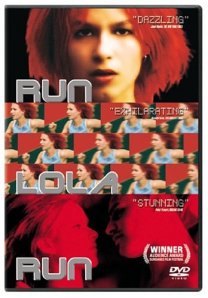
Run Lola Run: A Discussion Guide


Run Lola Run (Germany, 1998); directed by Tom Tykwer

Chapter 7 of my book, Faith, Film and Philosophy, is titled “What Would Have Been and What Could Be: Counterfactuals in It’s a Wonderful Life and Run Lola Run. The author is Jim Spiegel. Here are discussion questions for the film Run Lola Run that I’ve used in conjunction with his chapter.

  1. Are there any elements in the film that you didn’t understand or can’t explain? Write down what comes to mind?
  2. How would you explain the following: (a) the red hair, (b) the use of black and white, (c) the use of animation, (d) the rapid-fire photo shoots of people Lola encounters, (c) the breaking glass when she screams at different times
  3. The film depicts three possible scenarios. Between the first scenario and the second is a scene when Lola asks Manni a series of questions. She begins with the question, “Do you love me?” What is funny about this scene? What is the logic of her questioning? How does Manni respond? Do you think he should have answered her differently?
  4. Who are the people that Lola encounters during her race to catch up with Manni? What technique is used to portray their respective futures? Why are they portrayed in different ways from one scenario to another? What bearing does this have on the message of the film?
  5. Is there humor in this film? If so, what is its significance, if any, for the message of the film? Is this a comedy? If not, is the humor accidental (not intended by the producers or director) or incidental (not salient to the main message of the film)? Explain your answer.
  6. Between the second scenario and the third, Manni asks Lola, “What would you do if I died?” She thinks his question is stupid. Do you agree with Lola? Why would Manni ask such a thing? How is this bit of dialogue appropriate to the film? Is there anything significant about placing this scene here, rather than between the first and second scenarios?
  7. Does the fact that this movie is in German make the movie more enjoyable, or less? Explain your answer. What would be lost, if anything, if it was in English? Do you think you would enjoy it more, or understand it better, if you understood German?
  8. In the last scenario, while Lola is running with her eyes closed, and she doesn’t have the money, what is she saying? Whom is she addressing? Think about what happens next. Is this supposed to be related to her plea while running? If so, how?
  9. At the Casino, Lola gets incredibly lucky. At this point in the film, is that a surprise? Why or why not?
  10. There are places in the film where a group audience tends to respond with laughter. It’s as if there are cues in the film to laugh at these moments, and most people respond on cue. How does experience of a film in a group situation help in the process of understanding what a film is about, or what a viewer is supposed to believe or feel in response to a scene?