Patrick Henry vs. Bruce Willis


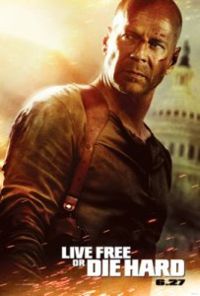
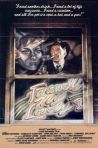
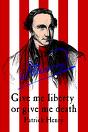
Who said, “Give me liberty, or give me death”? No, it wasn’t Bruce Willis, though the actor did star in Live Free or Die Hard. Same thing, right? Tomorrow is Independence Day. The “Best Quote Challenge” for this week is still in effect through Sunday. Topic? “On Freedom.” Help me out here. Go to my June 29th post titled “Best Quote Challenge—On Freedom” and share your favorite quotation.

Movie trailer for Live Free or Die Hard.

The Sign of the Book, by John Dunning


Years ago I read John Dunning’s detective novel Booked to Die and realized I’d found a new author to stalk during my reading jags. The novel was the first installment in Dunning’s series featuring Cliff Janeway, ex-cop and second-hand bookseller, living, reading, and sleuthing in Denver. I watched for the sequel, The Bookman’s Wake, but somehow missed it (if memory serves). Almost ten years went by before there was a third installment. By then I had stopped monitoring Dunning’s authorial movements.

About seven months ago I stumbled across The Sign of the Book, #4 in the series. I reckoned I could get away with reading it without playing catch-up on #2 and #3. I was right. But I didn’t put this theory to the test until recently. Saturday was my first beach day of the summer. I brought the Dunning novel with me to Corona del Mar and enjoyed my re-introduction to the author and his detective.

To the degree that I can recall, Dunning is true to form in #4. I still like his style and will eventually get to his other series books. Dunning adopts the first person point of view, probably the trickiest POV out there. When reading fiction written in the first person, I have the tendency to ask periodically why the fictional narrator is telling me his or her story. First person point of view doesn’t work for me if there aren’t any clues about the speaker’s motive. The first-person novel is, after all, one long monologue—in this case, 513 pages worth.

Dunning makes it work. Only rarely did I take exception to the way he handled the speaker’s perspective on the mental states of other characters in the story. This novel impresses me as an exemplary specimen of first-person narration. It’s fitting that in the final sentence of the novel, Cliff Janeway remarks, “The mysteries of the human mind are far beyond my comprehension.” (I’m confident that quoting the last sentence is not a spoiler.)

The writing is intelligent, but The Sign of the Book is not literary fiction in the hifalutin sense. Each character speaks in a distinctive fashion that is consistent throughout. The best bit of dialog occurs in a courtroom scene. I was a little confused about the floor plan of an important building at one point in the story. But this was not as much of a handicap for Janeway as it was for me.

This isn’t comic fiction, but Dunning manages to amuse with his choice of words and the dialog at which he excels. Suspense comes in two forms. First there’s the plot and the mystery about who dunnit. But frequently along the way there are stretches of suspenseful action . . . or inaction . . . as well. And that’s critical to the success of a detective novel (in contrast, for example, to the sort of mystery fiction so masterfully crafted by P. D. James).

One more thing. Janeway taught me a new way to survive the monotony of waiting for countless hours with nothing to do. This could come in handy if I’m ever on a stakeout without my Kindle.

***

John Dunning is a distinguished author. Booked to Die won him the Nero Wolfe Award, and The Bookman’s Wake appeared on the New York Times list of Notable Books. Other detective novels of his have been nominated for the Edgar Award. In addition to awards, Dunning has readers. Drew Goodman, book sales manager at the University of Utah campus store, has gone so far as to include two of Dunning’s Janeway novels on his “Sacred Shelf of 10,” as of October 25, 2007.

Classic Mystery Reads:

The Films:

For the preview and Unbox rental for The Maltese Falcon, go here.

Faith-Based Initiatives and Religious Pluralism


Government support for “faith-based initiatives” has been one of the most visible of George W. Bush’s initiatives during his two-term presidency.

This program was welcomed by many religious believers, especially Christians and most especially socially conservative Christians. Many of these Christians have been theologically conservative, as well. One implication of this is that many Christians in favor of faith-based initiatives object to religious pluralism.

Because so much support for faith-based initiatives comes from socially and theologically conservative Christians, some opponents of Bush’s policy have directed one particular argument against this constituency. They have argued that—under the government program—nonChristian institutions of faith must be allowed equal opportunity to participate in the program. They have then assumed that Christian entities in support of the policy would object to nonChristian participation. This would mean one that Christian supporters of the Bush policy have a double standard, one for themselves and another for nonChristian entities. And this is both offensive and non-viable in a socially and politically pluralistic environment such as we have in the United States. The alternative is for Christian groups to withhold support for faith-based initiatives. Without their support, one might imagine, the policy would die on the vine.

What should we make of this argument?

First, we must distinguish between religious pluralism, in the theological sense, and social and political pluralism. In the Christian theological tradition, “religious pluralism” is a term for broad approval of the view that salvation is available in the context of a variety of religions, rather than through Christ alone. Opposition to this kind of religious pluralism is compatible with acceptance of social and political pluralism; it’s even compatible with the sort of social and political toleration that is considered such a virtue.

In a modern democracy, there are bound to be many different kinds of religious communities, members of which have equal entitlement to participation in government arrangements. All have the same rights, freedoms and responsibilities. Christian advocates of faith-based initiatives are free to support nonChristian institutional participation in faith-based initiatives.

In fact, one expression of Christian charity would be to welcome the aid of nonChristian groups in the effort to assist members of society most in need of assistance.

We come to the second point. The objection to Christian support for faith-based initiatives, outlined above, may prove too much. It assumes that, apart from support by Christian conservatives, the faith-based Bush plan would lose traction. Let’s assume this is true. Why would that be?

I’m sure the answer is complicated. But part of the answer may have to do with how Christian institutions, among faith-based organizations, provide assistance to those in need. It may happen that a significant majority of faith-based assistance work is handled by Christian organizations. There are, after all, many more Christians in the United States than there are members of other faiths or secularists. But it would be of much more interest to learn about any differences there might be between Christian and nonChristian programs of assistance, in terms of theological motivation, organizational infrastructure, efficiency, lay participation, and so forth.

Christianity stresses “good Samaritan” behavior. It would be interesting to compare nonChristian faiths, and also secularism, on this point. Of course, organized groups of secularists are not faith-based entities, in the traditional sense. So, though they might support faith-based initiatives, in the interests of assisting by all means those in need, they would not qualify for participation in faith-based initiatives. At any rate, non-sectarian societies that exist to help others have long been supported in various ways with government aid.

We should recall another feature of the “good Samaritan” practice within Christianity. In his parable of the good Samaritan, Jesus instructed his audience to provide self-sacrificing assistance to those in need, even when those in need are not members of one’s own community—including one’s own community of faith. This perhaps explains why so many institutions (for example, hospitals and world relief organizations) have been the legacy of Christian social activism.

Studying the ways in which, and even the extent to which, different religious faiths conceive of their role in assisting the needy could contribute mightily to inter-faith understanding. It could also provide useful perspective for evaluating the objection to faith-based initiatives described above. Are Christian organizations the primary vehicles for the distribution of faith-based aid? If so, we might look to the social practices of nonChristian faith groups for a deep explanation.

Quotes on Parenting


“I would my father looked but with my eyes.” —Hermia, daughter of Egeu, in Shakespeare’s A Midsummer Night’s Dream

Egeus was determined to wed his daughter to Demetrius, a man of his own choosing and against the wishes of Hermia to marry Lysander, the man she loved. The play depicts the tension between a father, who demands submission to his authority, and his tenderhearted daughter. The artwork here was discovered by Bill Huntley
in a children’s book during a visit to Greece.

When one has not had a good father, one must create one. —Friedrich Nietzsche

To bring up a child in the way he should go, travel that way yourself once in a while. —Josh Billings

A mother who is really a mother is never free. —Honoré de Balzac

The first half of our lives is ruined by our parents and the second half by our children.” —Clarence Darrow

The fundamental defect of fathers is that they want their children to be a credit to them. —Bertrand Russell

Don’t limit your child to your own learning, for he was born in a different time. —Rabbinical saying

No matter how old a mother is, she watches her middle-aged children for signs of improvement. —Florida Scott-Maxwell

Insanity is hereditary—you can get it from your children. —Sam Levinson

People should be free to find or make for themselves the kinds of educational experiences they want their children to have. —John Holt

Best Quote Challenge—On Freedom (June 29, 2008)


Patrick Henry said, “Give me liberty, or give me death.” This Friday is Independence Day. The Best Quote Challenge for this week—June 29 to July 5—is “On Freedom.”

Here are the rules:

  1. Submit your quotation no later than July 5, 2008.
  2. Submit no more than one quotation for this challenge.
  3. Identify the source for the quotation you submit.
  4. Feel free to quote yourself; that is, you’re welcome to submit a quote of your own invention.
  5. Use the “Leave a Comment” link below this post to enter your submission.
  6. All submissions will be screened and must be consistent with the general guidelines for posting comments at this blog. (See the “Comments Policy” page.)

On Sunday, July 6, a new Best Quote Challenge will be set at this blog. During the week of July 6-12, votes will be taken for the “Best Quote on Freedom” submitted this week. So be sure to come back to this post then to cast your vote using the “Leave a Comment” link below.

Poem in Need of a Title


Poetry

Is not for me.

I wrote “this little ditty,” as they say, earlier this year. Imagine the exertion!

I’m now taking suggestions for a title. I’ve had two nominations, so far: “The Poet,” and “Poet Wannabe.”

For the time being

And maybe in perpetuity,

“Poetry

Is not for me,”

Will have to idle

As “Poem In Need of a Title.”

The Stuff Growing on the Bark


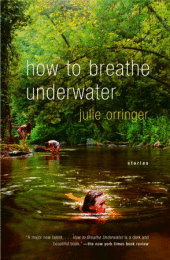
Nick Hornby, a.k.a. Nick Jagger, was induced to read this volume of short stories by a friend, Johanna. Agreeing to do so, with the usual reluctance he reserves for books recommended by friends, Hornby found himself buying up first editions for his other friends. “It’s that sort of book,” he says, in The Polysyllabic Spree.

The book is How to Breathe Underwater, by Julie Orringer. One year after reading Hornby’s endorsement—today, in fact—I sampled two of the stories. First I read “Stations of the Cross,” the last in the book, and not mentioned by Hornby. It reminded me of a film I saw recently, where the son of an Irish Catholic fireman sets out to convert the ailing son of the local rabbi. I could see immediately that Orringer can write. But she hadn’t convinced me yet that her writing was for me.

So I turned to the first story in the book, called “Pilgrims.” It was this story that had single-handedly compelled Hornby to grab up copies. This story, he promised, “makes you feel panicky and breathless.” That sounded like a rewarding experience, so I dipped into it. I didn’t feel panicky and breathless. Still, I could see why I might if I hadn’t been led to expect it.

For me, there are a couple of crucial tests of a good short story. These are utterly subjective. First, I have to be tempted, if not driven, to find more by the same author. Second, I have to believe that the story is one I would return to periodically. “Pilgrims” passes these tests. But I can’t say I “liked” the story. Like “Stations of the Cross,” “Pilgrims” has that artsy unfinished feel to it. This authorial penchant is fine with me, if it’s handled properly. I want to have some idea how my train of thought can proceed—not to say, should proceed—without the author’s assistance, when the sentences have run out. My limitation, I suppose.

Hornby generalizes in this way about Orringer’s ouvre: “while her themes are as solid and recognizable as oak trees, the stuff growing on the bark you’ve never seen before.” Now I’ve read two of her stories, I think maybe I know what he means. Maybe.

Nick Jagger


Nick Hornby

For another example of an author who writes about his reading jags—and who is the source for this phrase—check out Nick Hornby, who writes the “Stuff I’ve Been Reading Column” for The Believer magazine. My first encounter with Nick Hornby was through a couple of his novels. Later, during a bookstore browse, I came across The Polysyllabic Spree, a collection of fourteen of his “Been Reading” essays. This began a Nick Hornby spree of my own, leading next to Housekeeping vs. the Dirt, a kind of sequel.

In appreciation for his artful writing in this genre, I’ve taken to calling Hornby “Nick Jagger.” He contributes an essay at a pace of one entry per month. Each entry begins with two columns, the left column listing “Books Bought” and the right column listing “Books Read.” In the essay that follows, Hornby charts his reflections on items in the right-hand column.

It’s not unusual for my own reading jags to take a new turn because of an item on the Hornby list.

Nick Hornby Interviews

New Page and Post Category


Today I’ve created a new blog category called “Reading Jags.” I’ve written a page that describes the aims that guide my posts to this category.

Get Thee to the Novel!


This is Cynthia Ozick’s advice. It’s a vital antidote to the crowding of the mind by the . . . well, by the crowd. Ozick values “The Din in the Head,” the title of her essay in defense of the novel.

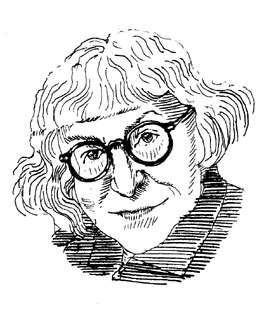
Cynthia Ozick

Cynthia Ozick

Problem? That special form of consciousness that is the unconstrained play of the mind is overwhelmed with noise from the outside world. The crowd, the human community, is her metaphor for this noise, because it is such a typical source of the noise. The problem has worsened with “the ratcheting up of technology.” So many things contrive to sublimate the maelstrom of the heart, “that relentless inner hum of fragility and hope and transcendence and dread.”

Solution? Reading that returns one to interiority. Two forms of literature have this power, and both are sadly neglected and increasingly hard to come by: the personal essay and the literary novel. “Literary grandeur is out of style.”

Why does Ozick value the din in the head over the din of the crowd? Din—defined by Merriam-Webster as “a welter of discordant sounds.” Who wants that going on in his head?

It may be that our self-saturation with inputs from a manufactured world is welcome precisely for its power to silence the din in the head. Ozick believes we need rest stops along the information highway. Our obsession with the delivery system of one kind of knowledge deafens us to another source of knowledge. Yes, knowledge. The literary novel imparts knowledge, but not systematically. Thus, it is not a delivery system. But there is truth in fiction, truth that surfaces through varied “cobwebby knowings.”

There are truths that have that cobwebby texture in our minds. It can’t be helped. And there’s no knowing them, at least initially, without this sort of acquaintance. But do we prize this sort of knowledge? Arguably, we do not. It is more likely that we are confounded by the claim that this is a kind of knowledge.

I believe that there is such knowledge and that it is foundational to the knowledge enterprise. Our reasons for believing so much of what we believe are often beyond articulation. And yet they are sound. They ground much of what we know through a peculiar form of consciousness, experience that is possible only under conditions of quietude. But what’s the novel got to do with that? The novel is the distillation of imagined experience. By reading I am able to experience what is otherwise beyond my frame of reference. And this puts me in cognitive contact with truths whose nature determines how they can be known. I concur with Ozick; reading carefully crafted fiction is one way they can be known.

Cynthia Ozick’s essay can be found in One Hundred Great Essays, edited by Robert Diyanni.

Cynthia Ozick Links:

Quotations: The Intellectual Life


“. . . the history of thought is the laboratory of the thinker . . . .”

—Eugene R. Fairweather

“So I’m not educated. I learned my stuff. I’m a heart surgeon, sure, but I’m just a mechanic.”

—Character named Mel, in Raymond Carver’s short story “What We Talk About When We Talk About Love,” in What We Talk About When We Talk About Love

“The history of my stupidity would fill many volumes./. . . . The history of my stupidity will not be written./For one thing, it’s late. And the truth is laborious.”

—From Czeslaw Milosz’s poem, “Account,” in New and Collected Poems, 1931-2001

“Most of us hate to think. Five minutes of thought can be more terrifying, more energy-draining than days and days of routine or habitual activity. Your mind is intrinsically thrifty, and prefers to do things the way it has done them before. It sees its primary business as establishing effective channels for action, and resists altering a channel that has become established, to say nothing of constructing a new one that causes anxiety.”

—Kenneth Atchity, A Writer’s Time

“I’m a stenographer of my mind.”

—Allen Ginsberg, poet (1926-1997)

“Your best thought is imbedded [sic] in chunks of your worst thought.”

—Mark Levy, Accidental Genius

“Friends of the human race and of what is holiest to it! Accept what appears to you most worthy of belief after careful and sincere examination, whether of facts or rational grounds; only do not dispute that prerogative of reason which makes it the highest good on earth, the prerogative of being the final touchstone of truth.”

—Immanuel Kant, “What Does It Mean to Orient Oneself in Thinking?”

“Most evidently, we cannot give up on the principle of non-contradiction, bold but wayward logicians notwithstanding.”

—Sandra Menssen and Thomas D. Sullivan, The Agnostic Inquirer: Revelation from a Philosophical Standpoint

Truly Cultured


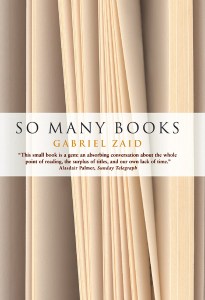
What does it mean to be “truly cultured”? Here’s what Zaid said, or wrote, in his book So Many Books: “. . . the truly cultured are capable of owning thousands of unread books without losing their composure or their desire for more.” (That’s Gabriel Zaid, by the way.)

Heartened by this keen observation, and taking the point further, Nick Hornby writes that “with each passing year, and with each whimsical purchase, our libraries become more and more able to articulate who we are, whether we read the books or not.”

So if you need to streamline your holdings because you’ve long since run out of room for new volumes, one rule may be to ask of a given book, “What does your presence in my library say about me? Is that who I am? And whether it is or not, is that how I want to be known?”

Book and Briar


The second stanza of the five-stanza poem, “I Have a Few Friends,” by Canadian Poet Robert Service [1874-1958] elebrates the friendship of book and briar:

I have some friends, some honest friends,

And honest friends are few;

My pipe of briar, my open fire,

A book that’s not too new;

My bed so warm, the nights of storm

I love to listen to.

Source: Collected Poems of Robert Service

Dedication to Idle Thoughts of an Idle Fellow


Here is the unabridged dedication Jerome K. Jerome (1859-1927) wrote for his book The Idle Thoughts of an Idle Fellow (published 1886):

THE VERY DEAR AND WELL-BELOVED

FRIEND

OF MY PROSPEROUS AND EVIL DAYS—

TO THE FRIEND

WHO, THOUGH, IN THE EARLY STAGES OF OUR ACQUAINT-

ANCESHIP, DID OFTTIMES DISAGREE WITH ME, HAS

SINCE BECOME TO BE MY VERY WARMEST

COMRADE—

TO THE FRIEND

WHO, HOWEVER, OFTEN I MAY PUT HIM OUT, NEVER (NOW)

UPSETS ME IN REVENGE—

TO THE FRIEND

WHO, TREATED WITH MARKED COOLNESS BY ALL THE FEMALE

MEMBERS OF MY HOUSEHOLD, AND REGARDED WITH

SUSPICION BY MY VERY DOG, NEVERTHELESS,

SEEMS DAY BY DAY TO BE MORE DRAWN

BY ME, AND IN RETURN, TO MORE

AND MORE IMPREGNATE ME

WITH THE ODOR OF HIS

FRIENDSHIP—

TO THE FRIEND

WHO NEVER TELLS ME OF MY FAULTS, NEVER WANTS TO

BORROW MONEY, AND NEVER TALKS ABOUT HIMSELF—

TO THE COMPANION

OF MY IDLE HOURS, THE SOOTHER OF MY SORROWS,

THE CONFIDANT OF MY JOYS AND HOPES—

MY OLDEST AND STRONGEST

PIPE,

THIS LITTLE VOLUME

IS

GRATEFULLY AND AFFECTIONATELY

DEDICATED

Drill Now, or Pay More Later


I used to wonder why the United States didn’t work vigorously to free itself from dependence on “foreign oil.” It seemed like a good idea to me “back then”—during Jimmy Carter’s presidency. Popular opinion was that there wasn’t much oil to be found outside the OPEC region. After all, “OPEC” is the acronym for “the Organization of the Petroleum Exporting Countries.” And who were the petroleum exporting countries? The original five members of OPEC were Iran, Iraq, Kuwait, Saudia Arabia, and . . . Venezuela.

Do you see a pattern here? Four of these countries were and are dominant Middle East players. Venezuela, it should be recalled, is the heavy in South America, led today by Hugo Chavez—no friend to the United States. And Venezuela took the initiative originally to establish OPEC, by approaching the just-mentioned nations of the Middle East.

There are now thirteen member states in OPEC. Guess who’s not on the list? The United States. And why not? Because the United States does not export oil. On the contrary, for decades, the United States has been the chief importer of oil.

Why doesn’t the United States export oil? Because it doesn’t have enough oil to export. It doesn’t even have enough oil to meet its own demand. That makes us dependent on foreign oil. And that’s reason enough for us to be entangled in Middle Eastern politics and subject to the whims of blame-America-first terrorists born and bred in the Middle East.

At the outset of the war in Iraq, there was loud speculation that President Bush was making a grab for Iraqi oil. This speculation was interlarded with denouncements of the merit of such a motive.
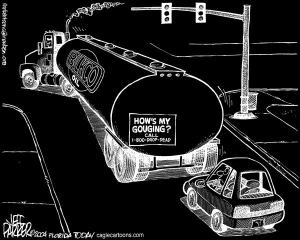
And where do we find ourselves today? Gas at the pump where I live in southern California is very near the $5 mark, and the price of oil has just topped $140 a barrel, a new high. Market watchers are hyper-ventilating this afternoon. At CNBC, Maria Bartiromo is high on adrenalin as she reports the news.

What’s wrong with this picture? The United States has waited too long to tap its own oil resources. Do we have oil? Yes. And, no. We don’t have much oil for use, much less for export. But there’s oil out there, on the continental shelf and in ANWR. And it’s been there throughout our dependence on oil. And there’s lots of it. Enough there for us to tell OPEC we don’t need them anymore.

Imagine what it would mean geopolitically if we ended our dependence on oil in the Middle East. Setting aside the legitimate interest we have in protecting Israel, we might be able to sustain a responsible form of “protectionism.” As long as our economy runs on oil, we’ll continue to be enmeshed in worldwide conflicts that are fueled by oil dependence.

What are the primary objections to drilling the oil resources we have?

First, we’re being told that “we can’t drill our way out of the current crisis.” One element in this rhetoric is right: we are in crisis. The crisis goes deeper than the prospect of paying $5 and more per gallon of gasoline.
But that prospect is the sort of crisis that has Americans paying more than the usual degree of attention to political maneuvering in Congress and among the presumptive nominees for President, Barack Obama and John McCain.

Obama is the most visible opponent of drilling. He talks about developing alternative forms of energy. But that won’t address the crisis, either. Why? Because the crisis is at the pump. And most of us are stuck with pumping gas for the foreseeable future. It will take a few years to begin extracting crude oil from the ground. Will it take longer than the development of alternative energy forms? Almost certainly not.

Any major delays to drilling going forward will be due to obstructionist politics, mostly on the part of Democrats, and chiefly on the part of Barack Obama, if elected President. Obama could not now reverse his view about the wisdom of drilling without appearing to be the worst kind of flip-flopper. So he’s backed himself into a corner. What’s in the economic interests of the country is at odds with Obama’s interest in becoming President. Whose interests will command his attention? You know the answer. So ask yourself if that’s the sort of person you want to have as President.

What most Americans want is short-term relief at the pump and a long-term solution to our energy crisis. If the establishment of a drilling infrastructure—directed at the most promising locations off-shore and in ANWR—were to begin in earnest by the end of this year or early next year, we wouldn’t have to wait for the oil to make it to the corner gas station for prices to come down. The prospect of such a radical change in supply and demand within three to five years would place immediate pressure on current suppliers (i.e., OPEC) to do something about prices. John McCain has started making this point, and he’s right. How does Obama respond to that? If Americans elect John McCain, who favors drilling, OPEC will get the message before the end of the year. We’re only about four months away from sending that message.

Second, there’s the green-jerk reaction to drilling. “Drilling offshore and in ANWR is going to be environmentally catastrophic.” Show me the evidence.

Opponents of offshore drilling exploit vernacular associations with the word “offshore,” as if America’s beaches will be cluttered with unsightly oil rigs. What’s the truth? Deep-water oil and gas platforms will be so far offshore that they couldn’t be seen from our beaches. We’re talking fifty to two hundred miles offshore. I could kayak the entire California shoreline and not be able to plot a single oil drilling site offshore. It would take an hour or longer to travel by helicopter to a typical offshore platform.

ANWR is another acronym (pronounced “Anwar”), short for “Arctic National Wildlife Refuge.” It’s located in the extreme northeastern region of Alaska and encompasses some 19 million acres. It includes what is literally the most remote territory in the United States. A portion of the region contains rich sources of petroleum. In contention is the effect drilling there would have on the habitat of diverse forms of animal life. ANWR is remarkable for its inclusion of six distinct biozones. But the petroleum rich subsection of ANWR is part of a 1.5 million acre extension of the refuge made in 1980. The move appears to have been as much an effort to protect this resource for possible future drilling as it was for any other environmental objective.

A very small percent, then, of ANWR is even considered attractive for oil-production purposes. And yet the resource is thought to be incredibly rich. And though approval by Congress is required to begin drilling in that area, it has, from the beginning, been regarded a potential source of oil production to be used under the right conditions.

Americans need to be educated about the potential for oil production in ANWR, the politics surrounding the possible use of this resource, and alternatives to drilling in ANWR. For the time-being, offshore drilling appears to be more imminent than drilling in ANWR. This is in part due to political vicissitudes. But off-shore production may also be more cost-effective. In any case, ANWR need not be the bone of contention that it has been, with such impressive resources closer to hand, both geographically and politically.

The emerging market demand for oil worldwide could position the United States to be a major exporter of oil. This demand will be so substantial by 2030 that prices for a barrel of oil could inflate to unimaginable levels. But by then, the United States could be online as a major oil producing country.

Meanwhile, by all means, we should be heavily invested in research and development for alternative forms of energy. And Americans should become better informed about the affordability, safety, and cleanliness of nuclear energy.