Poll: “I Started Feeling Old . . .”


In response to the question, “When will you start to feel old?” I’m sometimes told, “I already feel old.” That’s when I ask, “When did you start feeling old? Here are some responses.

“I started feeling old . . .

  • . . . this year” (DDG, 50, August 7, 2008)
  • . . . when I turned 30″ (DLP, 49, August 8, 2008)

What Say You? China, Human Rights, and American Business


The Beijing Olympics have raised awareness of the ongoing trampling of human rights by the Chinese government. Some have suggested ways of using this occasion to send a message to China. But the Chinese government knows of our disapproval. So the problem is not awareness but action. At the same time, American corporations, large and small, have invested heavily in China.

The United States government has not imposed an embargo on American business activity in China. And maybe that’s best. But here’s an alternative. Suppose the U.S. government stipulated that American companies are free to do business in China as long as they discontinue business in the United States, until human rights grievances in China are addressed. American companies would then be in the position of making the decision about whether to do business in China. As a result, free market activity would create pressure on China to move toward real democracy, without direct government action on the part of the United States.

  1. Could the United States government actually impose and enforce such a restriction?
  2. Would this sort of restriction be compatible with American democratic values?
  3. Would a restriction of this kind be an effective deterrent of human rights violations (the idea being that American corporations would put pressure on China to revise its practices as a condition for doing business there)?

What say you?

My Idle Banjo


We’ve had family visits from out-of-state this summer, and we’ve celebrated our 25th wedding anniversary. This has called for hauling out ancient video for the “entertainment” of one and all. During one of these forays into the past, my daughters were remarking about some video of me with a Christmas gift some years ago. It was a banjo—something I had long wanted to try. I can be very distinctly heard saying, “Now I’ll have to learn to play the banjo.”

I did make an attempt for several months, maybe even a year. And I enjoyed it. I made encouraging progress, up to a point, at which time I found I was simply “too busy” to keep at it. I continue to be proud of my banjo, carefully selected for me by my wife and children, if not my playing. But every time I glance at it now, or see another banjo (which isn’t often), or hear bluegrass music (which isn’t much more often), I get that guilty sensation and I half-heartedly remind myself to get back to playing (which would mean starting from the beginning).

As a result of this blog, I’ve made a number of friends in recent months. Today I learned that one of them, Carol Woodside, has a shared interest in bluegrass. I replied to a comment she left at one of my posts, then learned of her blog, Woodside Roots and Branches, where her home page makes it pretty obvious that she’s a fan of Earl Scruggs and company. (You should check out the blog and the related website.)

I can listen to Earl Scruggs, if I don’t get him in out-sized doses. I’m more of a Bela Fleck listener. But I don’t enjoy guilt, and it always mixes with the joy of listening. So I don’t listen much. All because of my idle banjo.

***

Update

The Washington Pugilist, having read this post, recommended a book and a CD to get me back into the banjo groove. The book is Old and In the Way Banjo Songbook. That pretty much says it all, doesn’t it? It includes tablature for Jerry Garcia riffs. The CD is called Old and In the Way. At Amazon as of right now, this CD has 34 customer reviews, with an average of 5 stars. I’ve just added the book to my Amazon shopping cart. Thanks, my friend at The Washington Pugilist.

Inflate Your Tires . . . with Hot Air


Not long ago the late-night comedians were “complaining” that there just isn’t enough material to poke fun at Barack Obama. There’s a joke for you.

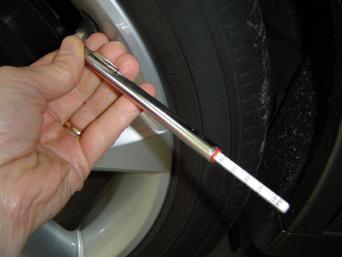
In the news today was a real screamer. Obama says we don’t need to drill to solve the energy crisis. We can get the same result if we all just inflate our tires and get regular tune-ups. He was talking about our cars . . . I think. Can’t be sure since he doesn’t seem to know much about them.

There are lots of reasons to keep your tires properly inflated. But solving the energy crisis isn’t one of them. It’s safer, you get a better ride, and, yes, you can save a bit on gas mileage. And getting regular tune-ups, where you change the spark plugs and all that, just isn’t what it used to be . . . say twenty years ago when you could actually work on your own car.

Where did Obama come up with this clever idea? Surely not all by himself. But was it someone who really likes Obama and wants him to get elected? That doesn’t compute, either. Maybe the guy, whoever it is, is laughing up his sleeve in disbelief that the senator actually built this nonsense into official policy during a campaign speech.

The audio feed on this speech reveals that people in the audience were amused. Their response can only be interpreted as snickers (if you’re not pro-Obama) or nervous laughter (if you are pro-Obama). This must have taken the candidate by surprise. It’s not the kind of line he could pass off as intended humor. He must have known that his audience knew something he didn’t know. It isn’t the first time; and it probably won’t be the last.

Starry, Starry Night


When you look into the night sky, do you see stars against a dark background, or do you see space speckled with stars? And does it matter?

What say you?

Note: This question is inspired by a passage in Isaac Asimov’s novel I, Robot. The chapter titled “Reason” features a robot called QT-1, whom his builders call “Cutie.” It’s Cutie’s perspective on the stars and his view of creation and intelligence that draws attention to the difference alluded to in my question for this post. Asimov, who is generally fun to read, is in rare form in this SF novel. Will Smith starred (no pun intended) in a film based on this novel.

Quotations: On Reading


“Some day you will be old enough to start reading fairy tales again.” —C. S. Lewis to his godchild, Lucy Barfield, to whom he dedicated The Lion, the Witch and the Wardrobe

“Don’t . . . be stingy with your underlining, because if you don’t save the book’s vibrant material now, it’ll be dead to you once you shut the cover. I’m being realistic. There’s too much to read, learn, and do in this life, and unless a volume stands out as particularly worthy, you’ll probably only thumb through it again to consult your highlights. The rest of the text might as well not be there.” —Mark Levy, Accidental Genius

“Rereading is often a shock, an encounter with an earlier self that has been revised . . . .” —David Denby, Great Books

Quotations: On Wisdom & Folly


“A word to the wise is always infuriating.” —Hunter S. Thompson

Quotations: On Angels


“Angels fly because they take themselves lightly.” —G. K. Chesterton

Quotations: On Atheism


“I try not to believe in God, of course, but sometimes things happen in music, in songs, that bring me up short, make me do a double take. When things add up to more than the sum of their parts, when the effects achieved are inexplicable, then atheists like me start to get into difficult territory.” —Nick Hornby, Songbook

“Agnosticism is not a state in which the mind of an intelligent being can permanently rest. It is essentially a condition of suspense—a confession of ignorance—an abdication of thought on the highest subjects. Generally, however, under the surface of professed Agnosticism, there will be found some more or less positive opinions about the origin and nature of things all of them agreeing in this, that they negate the belief in God. It is not, in the nature of things, possible for the mind to remain persistently in this neutral, passive attitude. It will press on perforce to one or other of the views which present themselves as alternatives—either to Theism, or to Materialism and dogmatic Atheism.” —James Orr, The Christian View of God and the Word

“The number of reasonable atheist questions versus condescending atheist sneers that I have run across just directed at me in [sic] less than one in four.” —SF writer, and former atheist, John C. Wright

Quotations to Live By


“The less routine the more life.” —Amos Bronson Alcott

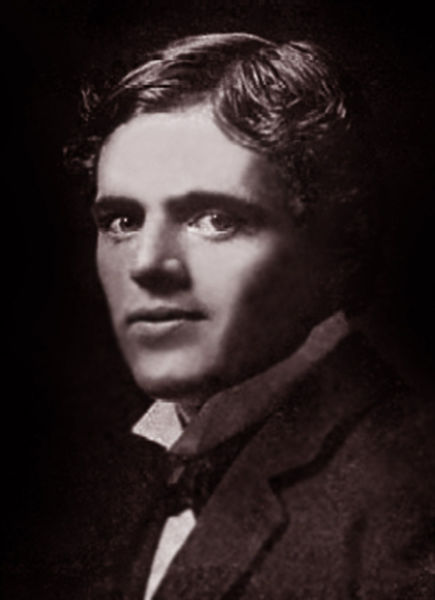
Jack London, 1900

“I would rather be ashes than dust! I would rather that my spark should burn out in a brilliant blaze than it should be stifled by dryrot. I would rather be a superb meteor, every atom of me in magnificent glow, than a sleepy and permanent planet. The proper function of man is to live, not to exist. I shall not waste my days in trying to prolong them. I shall use my time.” —Jack London

“Old age should burn and rave at close of day;
Rage, rage, against the dying of the light.”
—Dylan Thomas, “Do not go gentle into that good night”

Get with the Flow


You may have trouble pronouncing his name, but Mihaly Csikszentmihaly is the guru when it comes to “the psychology of optimal experience.” FLOW is one of those books you might want to read once every year or so and dip into periodically for the juicy bits that you’ve marked.

Flow is that state of consciousness when you are contentedly living in the moment, experiencing that energizing balance of three factors: a worthwhile task, significant challenge in performing the task, and the capacity and resources to complete the task.

The book is Csikszentmihaly’s answer to the question, “When do people feel most happy?” He answers:

. . . the best moments in our lives are not the passive, receptive, relaxing times—although such experiences can also be enjoyable, if we have worked hard to attain them. The best moments usually occur when a person’s body or mind is stretched to its limits in a voluntary effort to accomplish something difficult and worthwhile. (p. 3)

The message is that we don’t have to wait for the best moments in life to come to us. We can arrange for their occurrence and increase their frequency. This involves calculated risk. It begins with the identification of some task-related goal that we care about. The task must be challenging; it must tax our physical or mental resources (or both). But achieving our goal must be within reach. Ideally, this goal will be attainable along a growth curve, with stages of challenge representing significant accomplishments toward the realization of the ultimate objective.

I’ve experienced this with downhill skiing, sea kayaking, sailing, and motorcycling. These are physical activities that involve a definite mental component. Foreign travel produces a similar effect for me as I navigate the challenges of unfamiliar languages, foreign currency, and methods of transportation. Public speaking is another arena for the experience of flow, since each engagement is unique, and each form of presentation presents special challenges. For example, public debate on the question of God’s existence is different that a radio interview about the Academy Awards.

Csikszentmihaly is especially good on how to create flow in the ordinary activities of work and family life. At one point he writes,

People are the most flexible, the most changeable aspect of the environment we have to deal with. The same person can make the morning wonderful and the evening miserable. (pp. 166-67)

The principles developed in this book also apply to our experiences of adversity. Even tragic events can be seen as positive. Csikszentmihaly distinguishes between positive and negative responses to stress, between “transformational coping” and “regressive coping,” and develops strategies for “cheating chaos” through transformational coping. Would you like to know how to “transform adversity into an enjoyable challenge”? See Chapter 9 of Flow.

In his more recent book, Csikszentmihaly has focused on the relationship between flow and creativity.
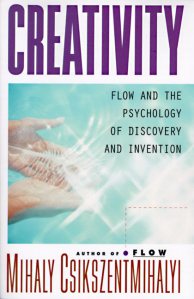
If you’ve read Csikszentmihaly, share what you think of his work. Do you have any favorite passages? When have you experienced “flow”? Have you discovered ways to experience adversity as meaningful opportunity?

Eyewitness Earthquake Report


It’s all over the news. An earthquake of moderate magnitude occurred shortly before noon today in the Los Angeles area. I was at home in Brea working at my desk. The quake is said to have centered in Chino Hills, about 12 miles by road from where I live. As the crow flies, we’re within 10 miles of the epicenter.

My two daughters and our niece were here with me, upstairs from my study. My first reaction was to get to them and gather everyone together.

I’d say the quake was felt at our house for about 20-30 seconds. Some minutes later we felt a distinct but brief aftershock. This quake produced a general shake of our house, and I did wonder while it was happening how long it could continue without causing severe damage to our home. There was a lot of creaking and things were falling from walls and shelves. But we don’t have any visible damage. Most impressive was the sloshing of the water in our in-ground pool.

The initial report was that the earthquake was of a 5.8 magnitude. It’s now been officially designated a 5.4 quake. There are TV news reports of numerous ongoing aftershocks in the Chino Hills area. But we’ve only felt the one. There’s also a report of a fire caused by the quake in the nearby town of La Habra Heights. A Ralph’s market in Diamond Bar, also close by, has closed to assess damage to products and restore order.

News coverage of the event has been interesting. Some of it has been a little melodramatic. But it does inform people about the behavior of earthquakes and remind them of the need for preparedness should there be a more sizable quake in the future.

Now might be a good time to enjoy an earthquake movie! Grab the popcorn and relax while you watch the 1974 film Earthquake, starring Charleton Heston and Ava Gardner, about a quake in Los Angeles that wreaks unimaginable havoc.

Child Crusaders in the Anthropogenic Global Warming Campaign


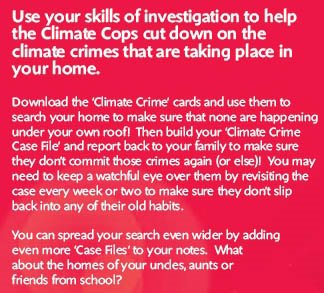
Sometime soon, the Climate Cops may be pounding on your door, if not breaking your windows, to make you answer for your anthropogenic global warming (AGW) misdeeds. Who are these Climate Cops? Three animated kids named Skye, Will, and Oscar, and a polar bear called K’eyush—together with their recruits from the world of real children.

To join the Climate Cops Academy, your children are urged to go to climatecops.com. There they will meet Charlie, Chief Instructor of New Recruits. To become a member of the elite group of cadets, they must first complete three missions. As the Training Site says, “Only the best make it into the Academy. Prove

your worth by completing these three missions.” Each mission is played online.

I learned about this from a post by Anthony Watts, titled “Hey Kids! Be a ‘Climate Cop’—rat on your family, friends, and classmates.” Watts re-posts an item from the EU Referendum blogspot. This item, titled “Climate Nazis,” reports on full-page ads that appeared in Britain’s Sunday papers yesterday.

To their credit, the EU Referendum and Anthony Watts have posted these items to make people more aware of the ludicrous, and indeed shameful, effort to lure children into a campaign to spy on family members and others. They are truly alarmed by this, drawing analogies with Hitler’s propaganda campaign Deutsches Jungfolk. And the folks at the EU Referendum are answering the newspaper ads with an official complaint to the Advertising Standards Authority (ASA) in the UK.

The ASA describes its mission as follows:

“The ASA is here to make sure all advertising, wherever it appears, meets the high standards laid down in the advertising codes. Our website will tell you more about the rules for advertising, let you complain online, and explain how the ASA is working to keep UK advertising standards as high as possible.”

It is heartening to see the many comments responding to these posts by Anthony Watts and the EU Referendum. Most express disenchantment with the Climate Cop concept and the whole AGW paranoia for which we can thank former Vice President Al Gore.

I believe our schools are deliberate accomplices in the effort to stigmatize the behavior of parents. This is a serious matter. It requires the substitution of education with indoctrination. It feigns respect for critical thinking, but reinforces sloppy and irresponsible judgment.

This presents parents with an unprecedented responsibility and a severe dilemma. Parents cannot count on the schools to educate children in the skills of critical thinking. It is now their responsibility to instill virtues of the intellect, without the help of our educational institutions. Here’s the dilemma. If parents educate their children to be critical thinkers, their children will begin to wonder why they’re being sent off to school, where the values of critical thought are disregarded, if not distorted.

What Say You?


What Say You? is a new category of posts where I invite responses to questions of interest to me and those who visit my blog.

No Evil in Heaven?


Philosopher Graham Oppy writes:

. . . if it is part of the essence of heaven that it should be a place in which there is no evil, then there is at least some reason to think that heaven must also be a place in which human beings have severely limited freedom of action. . . . [For] no agents are free to perform evil actions in heaven.*

What say you?

*Graham Oppy, Arguing about Gods (Cambridge, 2006), 315