Quotations: On Poetry


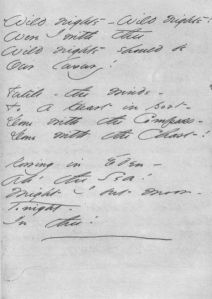
Emily Dickinson Script

Emily Dickinson Script

“. . . you can’t force a poem.” —Elizabeth Jennings, quoted in The Poetry of Piety, edited by Ben Witherington III and Christopher Mead Armitage

“It takes a grateful audience to keep a poem alive.” —Ted Kooser, The Poetry Home Repair Manual

“Another note to tack up over your desk: Too much cleverness in poetry can be a real killer.” —Ted Kooser, The Poetry Home Repair Manual

“Poetry, even the poetry of humor and delight, is an agent of the imagination pressing back, in Wallace Stevens’s phrase, against the pressure of reality.” —David Lehman, Forward to The Best American Poetry 2006, edited by Billy Collins

On Christology


John Donne

John Donne

“Twas much that man was made like God before;/But that God should be made like man—much more.” —John Donne

“The central miracle asserted by Christians is the Incarnation. . . . If the thing happened, it was the central event in the history of the Earth—the very thing that the whole story has been about.” —C. S. Lewis, Miracles (chapter xiv)

Quotations: On Death and Immortality


Ted Kooser, Poet

“When the heart stops, my contemporaries say,/Shrugging their shoulders, that’s it.”

—Czeslaw Milosz’s poem “Treatise on Theology,” in his collection Second Space

“. . . after all, the manner in which a person dies, the little details of an autopsy, say, whether the corpse has spots on its liver or lungs, doesn’t in any way cancel the loss.”

—Ted Kooser, The Poetry Home Repair Manual

Writing about an important passage in Joseph Conrad’s canonical work Heart of Darkness, David Denby says, “It is perhaps the most famous death scene written after Shakespeare.” He then quotes at length in demonstration of his claim:

“Anything approaching the change that came over his [Mr. Kurtz’s] features I have never seen before and hope never to see again. Oh, I wasn’t touched. I was fascinated. It was as though a veil had been rent. I saw on that ivory face the expression of somber pride, of ruthless power, of craven terror—of an intense and hopeless despair. Did he live his life again in every detail of desire, temptation, and surrender during that brief moment of complete knowledge? He cried in a whisper at some image, at some vision—he cried out twice, a cry that was no more than a breath:

“‘The horror! The horror!’ . . .”

—David Denby, Great Books

“I think, just as you do Socrates, that although it is very difficult if not impossible in this life to achieve certainty about these questions, at the same time it is utterly feeble not to use every effort in testing the available theories, or to leave off until we have considered them in every way, and come to the end of our resources. It is our duty to do one of two things, either to ascertain the facts, whether by seeking instruction or by personal discovery, or, if this is impossible, to select the best and most dependable theory which human intelligence can supply, and use it as a raft to ride the seas of life—that is, assuming that we cannot make our journey with greater confidence and security by the surer means of a divine revelation.”

—Simmias, in Plato’s dialogue Phaedo 85 c-d

“A man should be mourned at his birth, not his death.”

—Charles de Montesquieu, Lettres Persanes (1721)

On Biography


“The history of my stupidity would fill many volumes./. . . . The history of my stupidity will not be written./For one thing, it’s late. And the truth is laborious.” —From Czeslaw Milosz’s poem, “Account,” in New and Collected Poems, 1931-2001
Reviews of Football and Philosophy


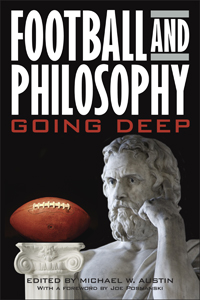
The book Football and Philosophy: Going Deep (University Press of Kentucky), edited by Mike Austin, is now garnering reviews. Here’s a very favorable review from the Lexington Herald-Leader“Tackling big ideas,” by Chris Collins.

Beyond the Sounds of Poetry


In a separate post, I’ve recommended Robert Pinsky’s little book The Sounds of Poetry. So maybe you’ve jumped in and grabbed your own copy of the book to get yourself educated in the values of poetry. What comes after Pinsky’s guide? Here are a few suggestions that vaguely parallel my own path toward greater understanding and appreciation of the riches of poetry. Read more of this post

Don’t Like Poetry? Start Here


How often have you read a poem and thought, “I don’t get it”? I can relate. How about this one: “I don’t get it; but I wish I could”? That was me, too. And it kept me away from poetry. Then I discovered Robert Pinsky’s little book The Sounds of Poetry: A Brief Guide. Pinsky helped me get it, and made me a believer in poetry.

There are several reasons why I wanted a deeper appreciation of the poetry I didn’t understand. Read more of this post

Quotations: On Love


“. . . it ought to make us feel ashamed when we talk like we know what we’re talking about when we talk about love.” —Raymond Carver, “What We Talk About When We Talk About Love,” a short story in What We Talk About When We Talk About Love

“Love is so short, forgetting is so long.” —From Pablo Neruda’s poem, “Tonight I Can Write”

Quotations: On Cognition and Thinking


“I don’t have to be drunk to say what I think.” —Raymond Carver, “What We Talk About When We Talk About Love,” a short story in What We Talk About When We Talk About Love

Quotations: On Suicide


“I’ve seen a lot of suicides, and I couldn’t say anyone ever knew what they did it for.” —Raymond Carver, “What We Talk About When We Talk About Love,” a short story in What We Talk About When We Talk About Love

Quotations: From Fiction


These are quotations culled from my reading of fiction, not easily categorized. If you can think of a good category for any of these quotations, please let me know using the Comment box below.

“I don’t think he hunted. But he could talk on any subject. In this regard, he was a good barber.” —Raymond Carver, “The Calm,” a short story in What We Talk About When We Talk About Love

Resurrection Belief Discussed by Scott at Serene Musings


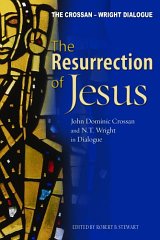
“The Epistemology of Resurrection Belief” is the title of an essay I wrote for the book The Resurrection of Jesus: John Dominic Crossan and N. T. Wright in Dialogue. Scott, over at Serene Musings, has read my essay carefully and made a couple of critical comments that I thought I might respond to here.

I want to say, first, that I appreciate the respectful tone of Scott’s comments. He doesn’t hesitate to say where he agrees with me, and he disagrees in a spirit of good will.

I argue in my essay that N. T. Wright, a Christian theist, aims for methodological neutrality in his historical analysis of the evidence for and against a literal bodily resurrection of Jesus in the first century; in contrast, Dom Crossan’s methodology is inherently naturalistic. Whereas Wright explicitly endorses classical Christian theism, Crossan explicitly denies classical Christian theism. Their metaphysical commitments are quite different. Crossan’s metaphysical commitments play a greater role in his analysis of the historical evidence than do Wright’s metaphysical commitments in his analysis of the same evidence. I believe that Wright’s method is more properly historical than Crossan’s, though I’m less confident than Wright that the historical evidence alone warrants belief in the resurrection of Jesus. Scott argues that Wright and Crossan are equally biased by their respective metaphysical commitments in their appraisal of the historical evidence.

Wright believes that the historical evidence strongly indicates that Jesus died, was buried in a tomb, and rose again. Crossan believes that Jesus died by crucifixion, was not entombed, and did not rise from the dead. Wright and Crossan agree that first century believers affirmed the literal bodily resurrection of Jesus and that a significant number of them also claimed to have seen Jesus alive again following his death and burial. Wright and Crossan also agree that these would-be eyewitnesses were sincere in their testimony and were not hallucinating.

So what explains the difference in their respective conclusions about the resurrection of Jesus? The answer lies in Crossan’s explanation of the facts agreed upon. Crossan maintains that those who claimed to see Jesus alive again were actually having apparitional experiences, typical of those who grieve at the loss of a loved one. In other words, Crossan extrapolates from recent cases of this type of experience to the nature of the experiences by those who believed they had seen Jesus alive again after his crucifixion.

There are a number of problems with Crossan’s proposal that I don’t get into in my essay. A special psychological phenomenon plays a key role in his explanation of the testimonial evidence. But Crossan’s description of this phenomenon is sketchy. More important, Crossan fails to acknowledge the relevance of the fact that this phenomenon does not occur in all instances of grief over the loss of a loved one. It is far more likely that it will not be experienced than that it will. Those who attest to having “apparitional” experiences of a deceased person do not generally conclude that the person had literally risen from the dead. Apparitional experiences of the kind Crossan attributes to alleged eyewitnesses of the resurrected Jesus would differ in detail from one person to the next, if they were to happen to several individuals at the same time and in the same place (which is unlikely in itself). Also, since it is reported that many were witnesses to the resurrected Jesus, it is likely that some, at least, were less intimately acquainted with Jesus prior to his crucifixion, and so were unlikely candidates for apparitional experiences of him following his death. Finally, there is no special evidence that what the alleged eyewitnesses actually experienced was apparitional in character. People of that time period were no strangers to death, and many of those who claimed to see Jesus alive would have been intimately acquainted with others who had died. This makes it very unlikely that they mistook an apparitional experience for a literal resurrection, and continued to believe in a literal resurrection for the rest of their days.

So why does Crossan find his explanation so attractive? The main point I make against Crossan is that his explanation of the agreed upon facts is motivated by a kind of naturalism. He can think of no other possible explanation because he denies theism.

In contrast, Wright, who is a theist, is open to a fuller range of possibilities. This need not be because he is a theist. Any historian who sought to investigate the evidence for and against the resurrection might conclude that it is likely that Jesus rose from the dead. Even a naturalist might come to such a conclusion. Of course, the question arises, What is the best explanation for the resurrection, if Jesus did in fact rise from the dead? Some Christian theists, as I note in my essay, argue that the best explanation is that God raised Jesus from the dead. I myself believe this would be the best explanation, unless there was strong independent evidence for the non-existence of God.

But I argue further in my essay that, because the event of the resurrection of Jesus would be a historical singularity, it would be difficult to settle the matter in favor of a literal resurrection on the basis of historical evidence alone. So on the basis of such evidence, a historian might acknowledge that there is considerable evidence that a resurrection occurred, but remain agnostic unless and until evidence of some other kind could warrant belief in the occurrence of such a singularity. Thus, if there was strong evidence for the existence of God, and especially of a kind that suggested that God might favor Jesus in some special way, then the historical evidence, in combination with this evidence for theism, might justify belief in the resurrection for people living in the modern era.

Oddly, I think, Wright does not consider theism to be such a superior explanation for the resurrection of Jesus that one who believes Jesus rose from the dead should also believe in God. Conceding the first, one should, I think, infer the other. But a confident judgment regarding the actual occurrence of the resurrection, however strong the historical evidence may be, may depend on the availability of independent evidence for the existence of God. It is on this point that Wright and I disagree.

***

In response to Scott’s blog, a comment was posted by someone identified as “G.P.” That person seems to have explained my position remarkably well, without having read my essay. Thank you, G.P., whoever you are!

And thank you, Scott, for getting the discussion going!

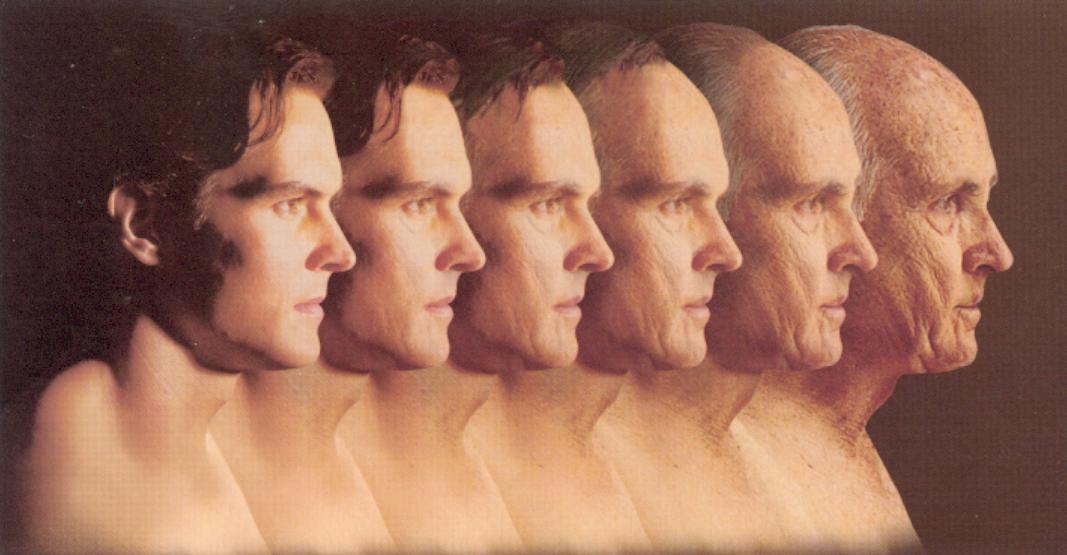
Poll: “I’ll Start to Feel Old When I’m . . .”


  • . . . in my late thirties” (EMG, age 15, August 7, 2008)
  • . . . in my mid-twenties” (KBG, age 18, August 7, 2008)

Poll: “I Started Feeling Old . . .”


In response to the question, “When will you start to feel old?” I’m sometimes told, “I already feel old.” That’s when I ask, “When did you start feeling old? Here are some responses.

“I started feeling old . . .

  • . . . this year” (DDG, 50, August 7, 2008)
  • . . . when I turned 30″ (DLP, 49, August 8, 2008)

What Say You? China, Human Rights, and American Business


The Beijing Olympics have raised awareness of the ongoing trampling of human rights by the Chinese government. Some have suggested ways of using this occasion to send a message to China. But the Chinese government knows of our disapproval. So the problem is not awareness but action. At the same time, American corporations, large and small, have invested heavily in China.

The United States government has not imposed an embargo on American business activity in China. And maybe that’s best. But here’s an alternative. Suppose the U.S. government stipulated that American companies are free to do business in China as long as they discontinue business in the United States, until human rights grievances in China are addressed. American companies would then be in the position of making the decision about whether to do business in China. As a result, free market activity would create pressure on China to move toward real democracy, without direct government action on the part of the United States.

  1. Could the United States government actually impose and enforce such a restriction?
  2. Would this sort of restriction be compatible with American democratic values?
  3. Would a restriction of this kind be an effective deterrent of human rights violations (the idea being that American corporations would put pressure on China to revise its practices as a condition for doing business there)?

What say you?