The Pope’s Support for Immigration and His Tacit Approval of Free Market Enterprise


Pope Francis is visiting the United States. He’s made several appearances, including a White House visit and an address before the United States Congress. His criticism of free market enterprise, of a capitalist economy, is well-known. Some have wondered whether he fully understands the unique expression of capitalism in the United States. It’s true, his views have been shaped by his experience coming from Argentina, which could not differ more extremely from political and economic arrangements in the U.S. But I wonder if he understands more than these commentators think.
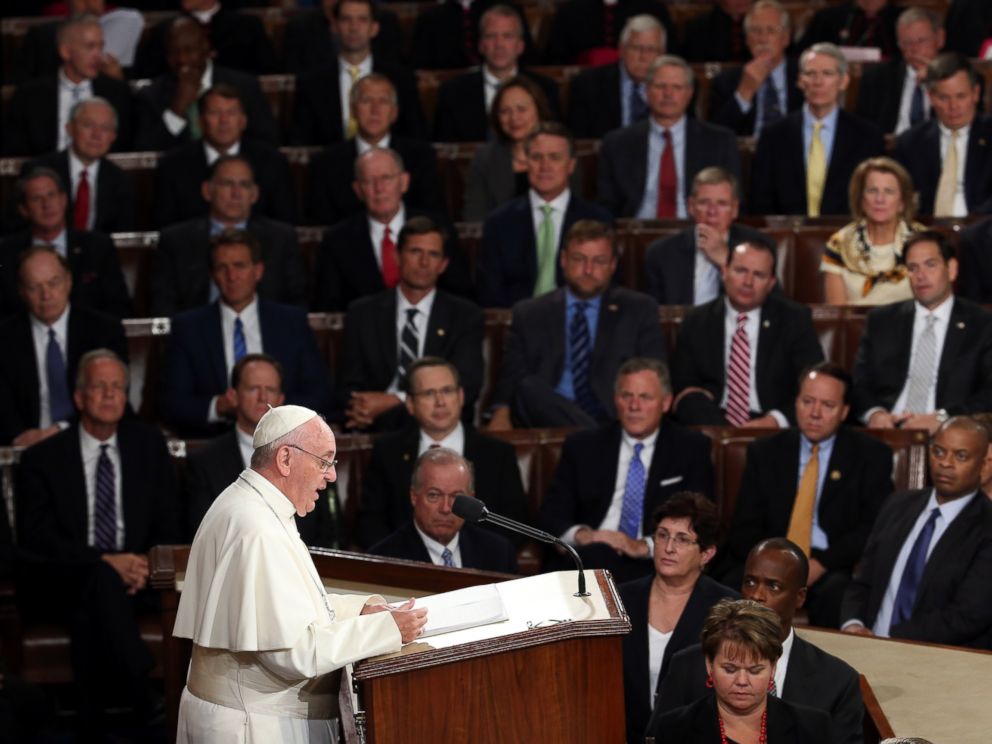
Pope Francis Addresses Congress-2015.09Today, while speaking before Congress, Francis lauded the importance of an immigration policy that welcomes those seeking to improve their life circumstances. He called for, or commended, a humane and just policy that would allow movement across our borders. He was speaking to the U.S. Congress where the debate about immigration and border control is intense. The Pope weighed in on that debate. While his remarks were delicate and deferential, he did encourage adoption of an immigration policy that is welcoming.

Of course, he offered no detailed proposal for our border policy. Nor did he even hint at one. That would be a form of meddling that would be politically disruptive and unbecoming of a prominent religious leader who is visiting from outside the United States and enjoying the hospitality of gracious hosts. At any rate, there is little fodder here for left-leaning politicians to exploit in support of their open-borders preference. There’s nothing in his remarks to suggest that we should adopt this or that particular policy about border control.

What I find it interesting is this. The Pope urges hospitality toward those who simply wish to make a better life for themselves, while also adopting a negative posture toward a free market economy. The Pope recognizes the advantages that life in the U.S. affords those seeking greater economic opportunity. For the most part, immigrants from the south aren’t seeking political asylum; rather, they desire economic prosperity that is not available to them in their home countries. Capitalism, despite its shortcomings, is the engine that drives prosperity in this country. And the idea that a capitalist society such as ours should, as a matter of justice and hospitality, find ways to assimilate immigrants looking for a better life is tacit approval of capitalism.

This approval goes deeper even. For the Pope considers it morally commendable for this capitalist society, which has so much to offer legitimate immigrants, to share the fruit of an economy that increases opportunities for prosperity. This is tacit agreement that capitalism is not intrinsically motivated by greed, or essentially dependent on greed for its sustenance.

In addition, it is not accidental that the desirable fruit of our economy is the product of a free market system. I believe such a system is the only system that could bear such fruit. The alternatives, especially Marxist alternatives, are barren in this regard. The gross failure of economies south of our border explains why there is such a flood of immigrants into the United States.

The Pope’s concern for the poor and his efforts to galvanize collective efforts aimed at eradicating poverty is admirable. Free market enthusiasts argue that capitalism offers the greatest hope for achieving this ambitious goal. I concur. I suggest that the Pope, perhaps unwittingly, advocates for a qualified version capitalism when he urges us to share the fruit of our economy with those seeking a better life for themselves.

I would add that what is good for our economy is good for any economy. In fact, the poor of Central and South America would benefit even more fully if they could enjoy the fruit of a growing economy such as ours—without leaving their own countries. The Pope is uniquely positioned to work toward this goal. He hails from Argentina and is head of a church that dominates that part of the world that lies south of our borders.

The Pope has urged humane acceptance of immigrants. It is at least as humane to create opportunities for them that do not depend on immigration. And a successful policy for border control should include measures that would encourage the spread of capitalism from Mexicali to Tierra del Fuego.
Prince of Peace—Jesus, or Pope Francis?


On Fox News Sunday today, Chris Wallace interviewed Father Thomas Rosica, Advisor to the Vatican. This was prompted by the upcoming visit to the U.S. by Pope Francis. Here’s what Rosica said about the importance of this visit:

The visit to the White House, the President and his wife, and the whole team at the White House, are doing a very good job, and they have a certain decorum that’s required of them at that stage, to welcome the Pope as the great, greatest, I should say—not just the great, the greatest—the greatest moral leader in the world right now. And this is an opportunity for the President and his whole team to welcome him and to listen to the message of a peacemaker. The backdrop of this whole visit is not what’s happening in American politics, or a presidential campaign; the backdrop is a world steeped in violence, and bloodshed, and rancor, and hatred. And here we have, coming to your city [New York], to your diocese, a real prince of peace. If there’s any princely title that should be associated with Francis, it’s a prince of peace, it’s a bringer of peace. And when peacemakers come, they upset those who are not at peace. So [if] people are going to be upset, on any side of the spectrum here, let them look inside themselves and see what those issues are first, because in the presence of Francis, as you know and as I know, you’re in the presence of extraordinary goodness, of kindness, of intelligence, and of humanity. So humanity is coming to teach us how to be more human.

“Prince of peace” is biblical language. In other words, it derives from its use in the Bible as a descriptive title with a very specific context. The title “Prince of Peace” is used of the Messiah in Isaiah 9:6. It is, therefore—according to Christian orthodoxy—a reference to Jesus Christ. This is an extraordinarily honorific title. It denotes the full realization of messianic hope. In the Christian Scriptures it alludes to human reconciliation with God, and only by extension to the realization of peace within the human community. The agent, of course, is the Prince of Peace.

This agent is described in a series of four titles. The passage reads:

For to us a child is born, to us a son is given; and the government shall be upon his shoulder; and his name shall be called Wonderful Counselor, Mighty God, Everlasting Father, Prince of Peace.

Notice:

  1. This passage is prophetic.
  2. It refers to the messiah by “name.” This name is captured by four descriptive titles. They are combined to express complementary and mutually reinforcing attributes of the messiah.
  3. Within this complex of titles are the superlative designations “Mighty God” and “Eternal Father.” The Prince of Peace, then, is the almighty God, creator of the universe, the beginning and the end. As “Mighty Counselor,” he is wise without limit and all-knowing.
  4. This prophecy will be fulfilled with the coming of the messiah, the incarnate son of God to be born into this world.
  5. The name of this son—denoted by this magnificent fourfold description—is linked to the role he is to play: the government will rest on his shoulders.
  6. The implication is that those who are governed will declare this figure to be the “Wonderful Counselor, Mighty God, Eternal Father, Prince of Peace.” These are the titles they will use when speaking of him.

Verse 7 enriches the sense of things:

Of the increase of his government and of peace there will be no end, on the throne of David and over his kingdom, to establish it and to uphold it with justice and with righteousness from this time forth and forevermore. The zeal of the Lord of hosts will do this.

It is striking, then, that Father Thomas Rosica adopts this title when speaking of Pope Francis. In its biblical setting, which surely is Rosica’s source for the language he uses, “prince of peace” is an honorific title reserved for a specific individual who acts with uniquely divine authority. In a daring move, Rosica deploys the biblical language to express this pope’s gravitas as a peacemaker and as “the greatest moral leader” in the world today.

Rosica does not say that Francis comes as an emissary of the Prince Peace, the Lord of hosts. He simply calls him a prince of peace. In his defense, we might think that, in calling Francis a prince of peace, he does think of him as an emissary of peace. If asked, Rosica might explain that Francis is an emissary of the God who desires peace, an emissary of the Prince of Peace, as it were. In that respect, Francis would be an emissary of the Emissary of Peace!

But will this do as an explanation? There is overt and intentional grandeur in Isaiah’s use of the title for the messiah. This messiah, the Pope would no doubt agree, is none other than Jesus Christ. Christians boldly proclaim that Jesus is the incarnate son. He reconciles the world to Himself, and in this way he brings peace. He alone is worthy of the exalted titles ascribed to him in Isaiah 9:6. These titles should be reserved for the Lord of hosts who accomplishes these things, though he accomplishes them in part through the sons and daughters he has redeemed.

Therefore, if anyone is in Christ, he is a new creation. the old has passed away; behold, the new has come. All this is from God, who through Christ reconciled us to himself, and gave us the ministry of reconciliation; that is, in Christ God was reconciling the world to himself, not counting their trespasses against them, and entrusting to us the message of reconciliation. – 2 Corinthians 5:17-19

The New Testament emphasizes the peacemaking role of individual believers in Christ. It’s called “the ministry of reconciliation.” Reconciliation here must be understood in the most basic sense; it is reconciliation between God and human persons. When a person is reconciled with God, He no longer counts their trespasses against them. Harmony with God is restored. That is true peace. And it falls to those who are in Christ, who are themselves restored creatures, who have been reconciled to God, to bear the “word of reconciliation” throughout the world.

There are two dimensions to peacemaking. The first and most fundamental is reconciliation with God so that personal sin is no longer a barrier to fellowship with God. The second dimension builds on this, pointing men and women to their need for fellowship with God through reconciliation with Him and making peace with others on that basis.

As I reflect on these things, it seems fitting to call the pope a peacemaker. That surely is one of his goals. And he has a useful platform for acting as a peacemaker. I would hope that both dimensions of peacemaking, carried out in their proper order, will be exhibited during the pope’s visit. But I would reserve the title “prince of peace” for him alone who has purchased peace between almighty God and human persons, namely, Jesus Christ. Is the pope a “peacemaker”? Yes. “Prince of peace”? I think not.

Good Quote—Josh McDowell


“Having convictions can be defined as being so thoroughly convinced that Christ and His Word are both objectively true and relationally meaningful that you act on your beliefs regardless of the consequences.”

Josh McDowell’s birthday today

Name This Object


,(____),
(o\_|_/o)

Should Christians Renounce Donald Trump?


“Can anyone stop Trump?”

Since Donald Trump’s performance at the first Republican presidential debate, broadcast by Fox News August 6 (2015), there has been much braying, blasting, and boosting about his candidacy. The braying and blasting come mostly from establishment Republicans (for example, Charles Krauthammer and George Will) and a few of his Republican opponents. Boosting is heard from the likes of Anne Coulter and many in the electorate who are just plain angry with “the way business is done in Washington.”

  • I get the anger.
  • I get the desire for a non-politician politician.
  • I get the intrigue with Donald Trump’s candidacy.

And I’ve kept an open mind and hoped that Trump would inject some energy into public discourse about several urgent issues facing Americans today.

What I did not expect—and what is shocking—is Trump’s invective against women. He has made a number of demeaning public remarks about women that he has singled out for ridicule in the crassest of terms. Early in the debate, Meghan Kelly drew attention to these well-documented remarks and invited him to explain how he could say such things and expect to get elected. In response, Trump came very close to calling Kelly a bimbo; and in the aftermath he attacked her with scandalous language that really has no place in public discourse, least of all among presidential candidates.

Oddly, polls reflect continued enthusiasm for Trump. Some speculate that his harsh language is part of the reason. Political “experts” have been scratching their heads—and wistfully predicting that “Teflon Don’s” sizzle will fizzle. Some are beginning to doubt a future fall from grace.

So who are the people expressing such support for Donald Trump? Why are his poll numbers so high and still rising? My hunch is that Trump would not be polling so well without enthusiasm among conservative Christians.

If true, this is troubling.

Jesus said to his disciples, “The things that proceed from the mouth come from the heart, and those defile the man” (Matthew 15:18). How a person speaks, what he says, the words he uses, expose the condition of his heart. This is a warning because the heart is the core of a person’s being. And it is this core that determines how a man will conduct himself, what kind of a leader he will be. A person’s speech is a public means of assessing a person’s character.

This is why the apostle Paul admonished believers, “Let no unwholesome word proceed from your mouth, but only such a word as is good for edification, according to the need of the moment, that it may give grace to those who hear” (Ephesians 4:29). “But,” you may say, “what Paul expects of Christians does not apply to unbelievers.” But this would be a mistake.

First, Scripture expresses truths that are also good common sense and beneficial to the health of human society. Here we have an example of wisdom for nonsectarian circumstances confirmed by explicit Christian teaching.

Second, Christians are to be an example to unbelievers in every domain that involves attitudes toward others. Our public witness on behalf of wholesome speech is compromised when we celebrate the indecent speech of public personalities and cheer for their success as it impinges on our shared human concerns.

And third, Christians surely believe that both wisdom and grace are needed in the formation of policy by our elected officials. We may not insist on voting exclusively for those who share our religious convictions. But should we turn a blind eye to egregious spewing of venom against others?

In the New Testament letter of James we’re reminded that the tongue is a fire. It is a small organ of the body, but “it boasts of great things.” “Behold,” says James, “how great a forest is set aflame by such a small fire.” What does he mean when using the metaphor of fire for the tongue? “It is a restless evil, and full of deadly poison.” Sometimes we encounter clear cases of this, and we should dread the consequences, for the tongue “sets on fire the course of our lives.” James even says, in direct connection with this, that the same tongue is used “to bless our Lord and Father” and also to “curse men, who have been made in the likeness of God.” This includes words that intentionally demean the dignity of human persons. And this includes cheap shots against women made to garner public attention. (See James 3:5-11.)

One other passage is telling in this regard. It speaks to the issue of solidarity with others. God’s people, those who fear Him, are warned against consorting with scoffers: How blessed is the man who does not walk in the counsel of the wicked, nor stand in the path of sinners, nor sit in the seat of scoffers! (Psalm 1:1). This is relevant, for enthusiasm in the polls expresses solidarity with Trump. This solidarity, I fear, blinds supporters to the shamefulness of his public conduct.

Again, my focus is Trump’s alarming habit of lacing his speech with demeaning words that directly attack the dignity of individual persons—in this case especially, women.

You may like what Trump says about border control or taking a hard line with despots worldwide. You may imagine that a self-made man (who boasts of this at every opportunity) can reverse the downward spiral of our economy. And you may fear that no other candidate, Republican or Democrat, shares your sentiments and feeling of urgency about such things. But can you really be indifferent about what words reveal about a person? And can you ignore the implications this might have for leading a nation that desperately needs God’s blessing? And how are we to explain our professed interest in divine blessing if we temper our objections to Trump’s speech with a rationale that gets things backwards?

I’m writing this for Christians who take seriously their role in human society, who would stand for the right and the good in the public domain. And I urge all believers who are drawn to Donald Trump’s candidacy to consider the possibility that touting Trump approves and encourages shameful behavior.

“Who can stop Donald Trump?” If I’m right about Trump’s support among conservative Christians, they can make a big difference by shifting their support to a more respectable candidate. This answer to the question deserves greater attention.

Here are three suggestions for Christians reading this post:

  1. Circulate this post through Facebook and on your blog to encourage discussion of this issue.
  2. Leave your own evaluation of this post here.
  3. If you’re ever polled about Donald Trump, say you’re concerned about the coarsening of American culture and that you would be uncomfortable supporting his candidacy.

If Christians take a stand against what is sordid and vulgar in public debate, Trump’s numbers might decline dramatically.

* * *

Other blog posts that speak to this general problem:

Smile, Somebody Needs You!


A few weeks ago I visited a couple in a hospital in Los Angeles. They were friends of friends of mine, and they were in Los Angeles because the wife required treatment for a very rare condition. They had traveled many miles from their home state and really didn’t have close ties with people in my area.

I went to the hospital mainly to meet and visit with the husband. I imagined that his sadness and uncertainty would be compounded by loneliness and isolation. We talked in the courtyard of a small hotel connected to the hospital. As so often in my experience, I was amazed and blessed by this man’s faith and joy, all the more compelling because of his family’s uncertain future and confusion about God’s intentions. Their young children were at home with their loving grandparents, so he was missing them and thinking about how they were managing their own uncertainty.

As I learned more about his wife’s condition and what he told me about her spirit, he mentioned that she was concerned that her smile would be erased from her countenance by the surgery that had been done. He said that her smile was her trademark feature. Many would comment on the effect it had on them when she met them. Would that change? he wondered. This moved me deeply.

After some time, this adoring husband invited me to go to her room to meet her—assuming, of course, that she would be awake and willing to entertain a visitor, someone she had never met and who was not there in any official capacity.

When we reached the entrance to her room, he went in, then came out to say that she would be pleased to meet me. “Pleased” to meet me?

She had only recently had the major surgery that had caused some paralysis in her face. She was weak. But she reached out to shake my hand. Her right eye was bandaged. And sure enough, her face was somewhat contorted. There was no evidence, though, that she was uncomfortable to have me there.

Two things struck me. First, she was more concerned for the hospital staff—the doctors and nurses around her—than she was with own situation. This was a deep spiritual concern that was clearly genuine. She was ministering to them. Talk about a patient’s beside manner! And second, she had this wonderful smile.

This young couple has since returned home. I hear that she’s convalescing well. Today I got a text message from our mutual friends, relaying thanks for my hospital visit. I had to say that it was my joy to meet her and that her smile is wonderful. All by itself it is a ministry to others.

Of course, as time passes, the paralysis may subside and her countenance return to normal. But her joy and concern for others has not lapsed. And people who meet her will feel that a need in their own soul has been touched—even by something as simple as a smile.

St. Ephraem—Syrian Apologist of the Fourth Century?


Students of the life and work of Ephraem the Syriac agree that he died on this date in 373 A.D. He wrote hymns, poems, sermons, and biblical commentary. His style and the tenor of his theology was a blend of the mystical and the intellectually staid.

In Theandros, the online journal of Orthodox Christian theology and philosophy, Mary C. Sheridan recounts his huge significance for the Syriac church. Her essay is interesting both for its insight into the life and work of Ephraem and for its discussion of the historical context of his activity.

In my series of posts on Christianity and its tradition of apologetics (see links below), I’ve introduced lesser-known figures and highlighted their contributions. I’m pleased to add this brief post about St. Ephraem (ca. 306-373). In his case, we find a fascinating reflection on apologetic themes in ancient poetry. I don’t know much about his work. But Mary Sheridan includes in her article a sample of his poetry where he acknowledges the value of nature as a source of revelation and places it in relation to Scripture as revelation. The medium of poetry may here be specially valuable for showing how natural theology draws men and women into contact with special revelation.

Ephraem considered both nature and Scripture the “twin sources of revelation.”

Once Nature and Scripture had cleaned the land
–they sowed in it new commandments
in the land of the heart, so that it might bear fruit,
praise for the Lord of Nature
glory for the Lord of Scripture.

He called Nature, the Old Testament, and the New Testament three lyres used in singing the Word of God. He says:

The Word of the Most High came down
      and clothed himself in
a weak body with two hands.
He took up and balanced two lyres,
one in his right hand and one in his left.
A third he put in front of him,
to be a witness for the other two;
for it was the middle lyre corroborating
that their Lord was singing to their accompaniment.

I encourage you to visit Sheridan’s page for more about St. Ephraem.

◊ ◊ ◊

Other posts in this series . . .

Conrad Emil Lindberg—On God and Revelation


On this date in 1852, Lutheran theologian Conrad Emil Lindberg was born at Jönköping, Sweden. In 1871, Lindberg (1852-1930) moved to the United States to attend Augustana College and Theological Seminary. In due course, he was ordained and appointed to ministry in American churches serving Swedish immigrants. Later he returned to Augustana College where he was professor of theology. At Augustana, Lindberg taught systematic theology, hermeneutics, apologetics, dogmatics, ethics, liturgics, and church polity. Lindberg’s Christian Dogmatics (published first in 1898 in Swedish, and in English in 1922) includes material of interest to the Christian apologist.

Conrad Emil Lindberg

Conrad Emil Lindberg

Concerning the Existence of God

Inasmuch as it cannot be proved that man and the world are not eternal, they must have had a beginning and in such case necessarily a cause. The concept of causality has therefore great weight in proving God’s existence. . . . In accordance with the concept of causality as a proof of God’s existence we consider God as a cause by reason of the fact that we know ourselves as causes. We know ourselves as causes because we are conscious of our will. To will is to cause. (19)

The Value of Theistic Arguments

Generally speaking, a Christian needs no such proofs, but in the hour of doubt and spiritual assault they become of great value and help. (20)

Arguments Without Force

In presenting arguments to prove the existence of God the following methods must be rejected: 1) When men essay to prove God’s existence as they would that of a material object; 2) when proofs are asserted to be based on direct or intuitive experience; 3) argumentum a tuto, which implies that it is doubtful whether or not God exists, but that it is safer to assume His existence and does no harm, while it may be dangerous to deny His existence, if He does exist; 4) argumentum ab utili, which sets forth the great benefit of faith in a personal God.

The Ethico-Theological Proof for God’s Existence It is not Lindberg’s aim to advance arguments for God’s existence, but only to present brief statements of the basic thrust of each of the main “ordinary” arguments. Here is his statement of the ethico-theological proof;

The will of man cannot be ethically determined by any human will, nor in the last instance can it be determined by impersonal nature. The human will points to a personal God by whom it is materially determined so that the formal freedom receives its proper content. This proof has two forms or names: 1) Argumentum ad conscientia recti or the proof of conscience, which implies that conscience is aware of the moral law and that man perceives an inner voice which convinces him of the existence of a higher being. 2) Argumentum morale or the moral proof by which man, conscious of the union of virtue and blessedness, draws the conclusion that a higher being must exist who shall reward the virtuous and punish the unrighteous. (24)

Lindberg attributes arguments of this general form to Cicero and Seneca, Abelard and Raimund of Sabunde, and Immanuel Kant. On General and Supernatural Revelation Lindberg asserts that “if a God exists, He must reveal Himself in some way” (28). There are two main modalities of divine revelation, the “general,” or revelatio generalis, and the “supernatural,” or revelatio speciales.

Revelatio generalis . . . is that natural revelation of God through which He reveals Himself in the conscience of man, in the kingdom of nature, and in history. (28) Revelatio speciales . . . is that external act of God by which He reveals Himself to man through the Logos, the personal Word, and through the Holy Scriptures, so that all men may receive saving knowledge of Him. (30)

Lindberg’s discussion of supernatural, or special, revelation is divided into four sections: (1) the possibility of revelation, (2) the necessity of revelation, (3) the reality of revelation, and (4) the relation between reason and revelation (pp. 31-34). The conditions for the possibility of revelation are set forth. Objections come from deists and pantheists. Deists interject that for God to reveal himself by some external means would disturb the natural order of things determined by the Creator. In addition, it would reflect negatively on the supposed power and intelligence of God to create a universe that reflects his genius. Lindberg answers that:

All nature is permeated by spiritual power and God is ever active in sustaining the universe in never-ceasing creational activity. (31)

The Necessity of Special Divine Revelation Lindberg’s two paragraphs on the necessity of revelation are especially good:

The necessity of a special revelation was recognized even by the heathens, such as Plato. The history of religion clearly demonstrates this necessity. The founder of every religion has claimed a special revelation. The history of philosophy itself reveals the need of a special revelation when we consider the contradictions and conflicts that have arisen on all the most important subjects. The necessity of a special revelation is grounded in the need of salvation, the occasion for it being the Fall into sin. This revelation was accidental on the ground of sin as a presupposition, but it was not accidental in the sense that it could have been inhibited after sin had entered the world. Revelation was necessary from the divine viewpoint in order that the design and purpose of creation and salvation might be realized. Revelation was necessary for man because he was powerless to save himself from the power and condemnation of sin. (32)

I concur with this general statement of the need for revelation. A complete Apologetic should include a description of the need for revelation. If revelation is possible, as it seems easy to establish, then we should first consider whether to expect any further special revelation in the interest of determining whether God has in fact produced a revelation of himself that goes beyond what is learned from general revelation. There is strong independent support for the claim that God has produced a revelation, and for the specifically Christian revelation claim. But remembering (a) what is revealed about God by natural means, (b) the probability this lends to the supposition that God both could and would produce a revelation, and (c) the independent human need for revelation, does two things for us when we ask whether God has produced further special revelation. First, we are made to expect additional revelation from God; second, we are provided some means of identifying appropriate criteria for (a) recognizing what should be included as content of any revelation claim, and (b) confirming the authenticity of a particular revelation claim by means of a suitable miracle. With these elements in place and logically-ordered, presentation of evidence for the Christian revelation claim should enjoy a more positive reception.

◊ ◊ ◊

Other posts in this series . . .

The Weight of Glory—C. S. Lewis Speaks to “Ordinary” People


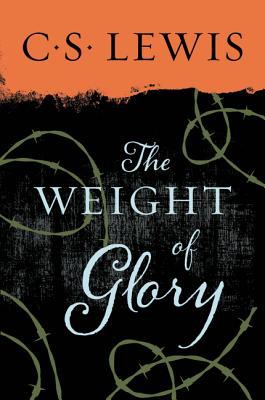
Peter Kreeft has called it C. S. Lewis’s “golden sermon.” Walter Hooper places it first in an otherwise chronologically-ordered series of addresses by C. S. Lewis, saying that “The Weight of Glory” is “so magnificent that not only do I dare to consider it worthy of a place with some of the Church Fathers, but I fear I should be hanged by Lewis’s admirers if it were not given primacy of place.” This is high praise. And the sermon rises to the high expectations created by such praise.Book Cover-CSLewis-Weight of Glory The sermon was preached June 8, 1941 and published a few months later in the 43rd volume of the journal Theology. Because today’s date is June 8, it’s fitting to recall some cherished lines from this oration that centers on the Christian conception of love and its relation to heaven’s future rewards:

. . . if we consider the unblushing nature of the rewards promised in the Gospels, it would seem that our Lord finds our desires not too strong, but too weak. . . . We are far too easily pleased.

Lewis means that we settle for the satisfaction of desires that seem grand to us from the limited perspective of our current lives. Heaven’s rewards outstrip whatever else we could possibly imagine. Some criticize the Christian religion for its mercenary appeal to heavenly rewards as an incentive to Christian conversion and Christian living. But Lewis sorts out this confusion with a comparison to do with marriage. Some men marry for money; others for love. In the first instance, the act is unquestionably mercenary. Not so when a “real lover” enters into marriage. Some rewards are proper to the acts that bring them to fruition. Acting for the sake of our heavenly reward is like this. It is, in fact, the paradigm case of this. There is also this difference. When the saints’ reward is received, it will not be viewed as the effect of a bribe. It will, rather, be experienced “as the very consummation of their discipleship.” In the meantime, when the reward is an expected rather than a lived experience, disciples cannot yet know the fulfillment of the desire natural to it. We can only approximate what it is like to live in possession of our future reward if we obey the revealed will of our Lord. This, I believe, is what the New Testament means by “the obedience of faith.” The faith is rooted in a promise, already the present experience of saints past, and the obedience is a consequence of that faith, an act we perform in the here and now.

. . . longing transforms obedience, as gradually as the tide lifts a grounded ship.

Lewis can write with uncanny clarity when he wants to. And he can write with mystifying creativity when it best serves his purpose.

Now, if we are made for heaven, the desire for our proper place will be already in us, but not yet attached to the true object, and will even appear as the rival of that object.

Does Lewis mean that our highest finite aspirations—even when these are absurd, shortsighted, or inimical to the fear of God—are signs of a deeper desire we deny or believe does not exist, namely, a desire for God? In this context we come to a wonderfully disturbing paragraph:

In speaking of this desire for our own far-off country, which we find in ourselves even now, I feel a certain shyness. I am almost committing an indecency. I am trying to rip open the inconsolable secret in each one of you—the secret which hurts so much that you take your revenge on it by calling it names like Nostalgia and Romanticism and Adolescence; the secret also which pierces with such sweetness that when, in very intimate conversation, the mention of it becomes imminent, we grow awkward and affect to laugh at ourselves; the secret we cannot hide and cannot tell, though we desire to do both. We cannot tell it because it is a desire for something that has never actually appeared in our experience. We cannot hide it because our experience is constantly suggesting it, and we betray ourselves like lovers at the mention of a name. Our commonest expedient is to call it beauty and behave as if that settled the matter.

What a description of our common experience. Lewis draws out, through his close attention to the facts of our inner life, what we scarcely know to be there. When it is described with such care and accuracy, we finally recognize it. It is a kind of discovery of our true self. What do we do with this new self-awareness? Action of some kind must be proper to this realization. But what action, exactly? And how do we know that we’re not fooling ourselves when we think this very real desire latches onto what really will satisfy? Aren’t we accustomed to the disappointment of our longings? Why should it be any different with this yearning that defines our very selves? Lewis argues from the reality of this desire to the reality of the thing desired. It is a specimen of apologetics that does not feel like an argument. It is, in other words, the best sort of apologetic there is. Some paragraphs further into his message, Lewis contemplates the “idea of glory.”

Glory suggests two ideas to me, of which one seems wicked and the other ridiculous. Either glory means fame, or it means luminosity.

How simple is that? And yet, how true? Fame. A “competitive passion” among those who desire to be better known than other people. Lewis does not say that they desire to be better than other people. No, they want to be better known. This is a kind of glory. This is wickedness. What about luminosity? It is ridiculous. “Who wishes to become a kind of living light bulb?” Lewis’s exploration of the Christian ideal of glory brings together a conception of fame and the absence of vanity. For the details, you must read the sermon for yourself. But here is a morsel to whet your appetite:

Perhaps it seems rather crude to describe glory as the fact of being ‘noticed’ by God. But this is almost the language of the New Testament. St. Paul promises to those who love God not, as we should expect, that they will know God, but that they will be known by Him (1 Cor. 8:3).

To quote one of my seminary profs, Howard Hendricks, “If that doesn’t light your fire, your wood is wet!” Toward the end of his sermon, Lewis circles back round to the idea of reward and the kind of reward the disciple of Jesus can look forward to.

Nature is mortal; we shall outlive her. When all the suns and nebulae have passed away, each one of you will still be alive. . . . Meanwhile the cross comes before the crown and tomorrow is a Monday morning.

Today, the 8th of July 2015, is indeed a Monday! But the seeming dreariness of the weekly recycling of things we do and crave and pursue is overcome with hope. And what seems so routine and ordinary is ignited with purpose.

There are no ordinary people. You have never talked to a mere mortal. Nations, cultures, arts, civilisations—these are mortal, and their life is to ours as the life of a gnat. But it is immortals whom we joke with, work with, marry, snub, and exploit—immortal horrors or everlasting splendors.

We do not construct a world of “everlasting splendors” by thinking positive thoughts. It is there before us, ready to behold, if we have eyes to see.

◊ ◊ ◊

Other posts in this series . . .

Great Dates in the Apologetics Calendar—June 8


June 8 is unusual for the many dates bearing some relation to Christian apologetics.

1686 – Humphrey Prideaux graduated with D.D. from Christ Church, Oxford (installed as Dean of Norwich on this date in 1702)

1809 – Death of Thomas Paine, antagonist against Christianity and author of The Age of Reason (published in three installments: 1794, 1795, 1807)

1810 – Death of William Finch, whose 1797 Bampton lectureship was titled “The Objections of Infidel Historians and other writers against Christianity” (eight sermons)

1889 – Death of Christian metaphysical poet Gerard Manley Hopkins, famous for “Pied Beauty” (written in 1877, and published in 1918) and “God’s Grandeur” (also composed in 1877); also the sonnet “Thou art indeed just, Lord, if I conted”

1894 – Birth of Wilbur M. Smith, author of the thick volume of Christian evidences called Therefore Stand

1903 – Birth of G. C. Berkouwer, theologian in the Dutch Reformed tradition, whose many books include The Providence of God (1952) and General Revelation (1955)

1941 – C. S. Lewis preached his sermon “The Weight of Glory”

1954 – Death of Kenneth Escott Kirk, bishop of Oxford who wrote in defense of Christian moral philosophy

2007 – Death of Richard Rorty, postmodernist critic of religion

◊ ◊ ◊

Other posts in this series . . .

The Quick Write for the Uptight—Speed-Drafting with a Purpose


IMG_4356This morning I wrote a 700-page document that will be part of a book I’m working on. I wrote quick, as the ideas kept flowing, one point leading to another. When this happens, digression inevitably happens. During a quick-write, I manage that by putting the detour in brackets and pressing on. I stop when the flow dries up, or something more urgent claims my time. How this works depends on the tool I’m using. Sometimes it’s a basic analog option: a page of paper. This may be a loose page of typing paper or a page in a Moleskine notebook. Sometimes I use an iOS app, like Notability. There are times when I write directly into an email message from my iPhone and then send it to myself. On my laptop, I’m most likely to use Scrivener. I almost never use a conventional word processor, especially Microsoft Word. If my scribblings are in notes to myself sent to my email box, I’ll try to grab a few minutes as soon as possible to copy and paste them into something more permanent and better organized among my other work on the project. I may paste them into MS Word, or Apple Pages (which I like better), or Scrivener (which is where I want them to end up anyway). If my quick-write is on paper, I can scan it and copy the PDF file over into Scrivener. What I use for speed-drafting depends on two things. First, and most basically, convenience. What do I have to work with in the moment? What I’m addressing in this post is, after all, in-the-moment writing. I’m not talking about rough drafts that fit into scheduled writing time. I’m talking about spontaneous writing. I’m talking about writing that happens in your head when you aren’t expecting it. I’m talking about ready-made writing that presses you with urgency at the most inconvenient times. Second, my ever-present intention to be prepared for making the most of these speed-write occasions with the greatest convenience. That means having a plan. Not a detailed plan. Just something as simple as keeping the tools I use close to hand. I almost always have my iPad handy. And I do always have my iPhone with me. But in my truck I have 3 x 5 index cards, spiral-bound so they don’t take flight when I swerve to avoid a driver texting her boyfriend. If I’m carrying a daypack or messenger bag, I have a few other conveniences ready: pens and mechanical pencils, a book I’m reading, and a sheef of blank typing paper. Or maybe a Moleskine notebook. I’m partial to the Moleskine tradition. So I’m pretty much ready for anything anytime, even if it’s just reaching for my smart phone. So far, what I’ve said only speaks to the need for readiness and the most basic things to keep in mind. But now comes the trickier question: How do I do it? That is, how does the writing itself actually proceed and get processed? On this I follow two guiding principles. I’m including them here for two reasons. The first is that they may be helpful to someone else. But there’s also my desire to improve my writing workflow, and someone reading this may have a tweak to suggest in the comments section of this post. Your suggestions are welcome! Principle #1: Write quickly first, as thoughts and provisional words and word order come to mind. This principle is not ground-breaking news that I’ve received from some Oracle. It’s common sense and it’s been said before. But keep in mind, you’re not practicing your writing using someone else’s prompt. In this scenario, the prompt comes from your own mind. Usually it’s related to a project you’re working on, something you’ve been thinking and writing about already. Maybe you haven’t gotten out of bed yet. At this moment, something has happened to set off a chain reaction of thoughts ready for the page. The time is now and you won’t get them back. Not in this form, anyway, and maybe not ever with as much ease and clarity. Principle #2: Later, but not too much later—maybe that day or the next—re-read what you’ve written and make simple improvements. The point is not to wait for some kind of breathing spell to transpire so that things percolate and you can write to perfection. The point is that it usually won’t be convenient to do a major re-write. The aim is to re-read immediately following your spontaneous speed-writing session. You really do want to get to this as soon as you can. But at this stage you still must be careful not to labor over what you’ve written. That will come later. The goal for the time being is to clean up what you were in a rush to write when the words were coming at you fast and furious. This is an initial straightening up, akin to the sort of thing you might do when you’re expecting company in the next few minutes. It’s the second principle that isn’t as well-understood or routinely practiced. So why is Principle #2 so important? It comes down to this: Since you want to follow up your quick-write using Principle #2 as soon as possible, the timing still might not be all that convenient, even for this. You may only have a few moments available. But in the typical case, where you’ve written only a few hundred words, a few moments is all you’ll need for this intermediate step in your writing workflow. But you make those moments count. You press out the most obvious wrinkles, you unkink the knotted branches, you replace a word or phrase with a better one, but only if it immediately comes to mind. While you’re busy ironing out the most conspicuous bits, there may be some actual clothes ironing waiting to be done—before that company arrives in the next quarter hour! Principle #2 is counsel for when the earliest opportunity to edit or re-write presents itself. Some clarifying points about Principle #2:

  • This is not a leisurely activity. You don’t have to carve out large chunks of time for it. You’re getting to it as soon as possible, and this may mean that you don’t have the time just then to massage the piece into perfection.
  • This is not a burdensome activity. It won’t take long. All you need is a few minutes to re-read and make the most obvious changes. What we’re talking about goes quickly and can fit into a relentlessly fast-paced schedule.
  • This is not a substitute for conventional re-writing and editing. Think of it as fast editing. Real re-writing comes later, when you can put it all into proper context alongside other writing you’ve done on the same project.
  • This is not more writing. You’re sticking strictly to what you already have on the page. You’re not making the piece longer or shorter, unless an addition or subtraction strikes you immediately and with irresistible force.

There are two residual benefits:

  • It’s easy and natural, almost effortless.
  • It prepares the way for the work of re-writing and editing, and makes that work easier to get to and easier to do.

So it keeps the writing momentum going. You’re a writer. You’re a writer who writes. You’re a writer who writes when it doesn’t feel like writing. You’re a writer who writes when it doesn’t feel like writing because it happens when you aren’t even trying.

* * *

So what about that 700-page thing I wrote this morning? Well, it happened because of something I was thinking and reading about last night. It led to other things, this post, for example, which itself exceeds 1300 words. And in between the two, because of a text message I received from a friend, I wrote another 500-word post that I’ll publish later. So that makes 2500 words of scratch in various degrees of publicly consumable material. Even I’m surprised by this.

But there’s one last point I want to stress—the simple touching up recommended in Principle #2 sometimes does result in a ready-for publication piece, especially if it’s relatively brief and self-contained. Like this post.

William Warburton’s 18th-Century Defense of Christianity


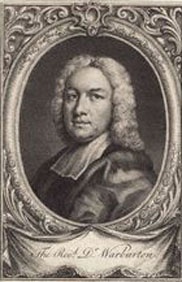
The 18th century produced a great many thinkers who made lasting contributions to the study of Christianity’s credentials. On the skeptical side, David Hume has been most significant. William Paley and Bishop Butler have had the greatest enduring influence on behalf of Christianity. Lesser lights from today’s vantage point were leading figures in their time. Among them, William Warburton, who died June 7, 1779—236 years ago today. Warburton’s greatest work was the nine-volume treatise with the odd title The Divine Legation of Moses. The full title was The Divine Legation of Moses, demonstrated on the principles of a Religious Deist. Deist contemporaries, who claimed they believed the doctrine of immortality, argued against the divine authorship of the “Law of Moses.” They reasoned that if the Law of Moses was divine, it would propound the doctrine of an afterlife, which it does not.

  1. Any divinely authored text will affirm a doctrine of immortality.
  2. The Law of Moses does not affirm a doctrine of immortality.
  3. Therefore, the Law of Moses is not a divinely authored text.

The argument has an odd appearance. It isn’t immediately obvious why deist writers, or anyone else for that matter, would think that a divinely inspired text must teach a doctrine of immortality. But, of course, the books of Moses were all there was of the Bible for generations of God’s people. As the source of their knowledge of God’s ways and plans for humanity, it may seem odd, if it is of divine origin, that nothing is ever said for immortality of the self in that source. Surely, if men and women are immortal, and this is by God’s design, then God’s revelation to humanity would indicate that this is so. Men and women are immortal, said these deists, but the Law of Moses says nothing about this. The implication is that the Law of Moses could not have been written under God’s own guidance.

William Warburton

William Warburton (1698-1779)

You don’t come across an argument of this sort much these days. And you don’t encounter the sort of argument Warburton made in direct response. Warburton turned the deistic argument on its head, arguing that silence on the question of immortality was actually evidence of divine authorship. The Law of Mose was the “Divine Legation,” and the absence of any direct reference to life after death is evidence of this. If the deist argument seems at all strange, Warburton’s reply seems more so. But the strategy intrigues. Ancient religions contemporaneous with the Jewish religion were unanimous in affirming an afterlife. These were, all of them, manufactured religions. The Jewish religion differed in this one striking respect: no doctrine of an afterlife. This anomaly in the history and sociology of religious belief invites explanation. For Warburton, the best explanation is that the Jewish religious system, rooted in the Pentateuch, was of divine origin. Warburton’s argument was sufficiently compelling that many critics took pains to respond. But this isn’t only because of the core argument. Into the Divine Legation, Warburton squeezed a host of other evidences for Christianity. Among them was the argument from prophecy, which he considered sufficient in itself to establish the truth of Christianity with moral certainty. Warburton was a colorful figure, with many enemies and some surprising friends. He crossed swords with the famed Conyers Middleton in public, but got on well with him personally. The story of Warburton’s life is told with candor, in the Preface to the Divine Legation, by his friend, agent, and executor, R. Worcester (signed at Hartlebury Castle, August 12, 1794). For a catalog of Warburton’s writings, available in PDF, click here.

◊ ◊ ◊

Other posts in this series . . .

Teaching Philosophy of Religion to Junior High Kids


Yesterday I spoke in two classes, a 7th-grade class and an 8th-grade class, at Vineyard Christian School in Anaheim. Our topic? The Existence of God. I had a 2-page handout for them, and in 45 minutes we examined the value of evidence for what we believe, what it means to have evidence, and what sort of evidence there might be for the existence of God. This is not my usual audience and my biggest concern was that it would all seem boring and over their heads. I was mistaken. Here are three lessons I learned:

  1. Our kids care about these questions. They want to know what to believe.
  2. Our kids want evidence for the things they’re asked to believe.
  3. Our kids have natural strengths in assessing evidence about things that matter, but these strength need to be cultivated and tutored.

It was with some trepidation that I handed my outline to the office assistant for duplicating. I worried that she would take one look at the detail and sophistication and be hard-pressed not to snicker. She was more confident than I that it would work. The kids proved me wrong. We need to expect more from our young people, urge them to keep the questions coming, and invite them into a vigorous life of the mind. Let us not underestimate their interest and capacity. They are the next generation. And we are responsible for their nurture.

Related posts:

The Campus Crusaders – NYTimes.com


For some much-needed moral clarity about activist crusaders at colleges and universities today, here’s an article I recommend:

The Campus Crusaders – NYTimes.com

One goal here at my website is to cultivate the kind of “worldly philosophers” David Brooks alludes to at the end of his post.

* * *

Kirsten Power’s book The Siliencing is now on my reading list. It has been for a week or so as I’ve heard her speak to this issue in interviews. It’s refreshing to hear an advocate on the liberal end of the political spectrum offer sanity in a victimization culture fueled by youthful idealism and encuraged by an intellectual class that exploits students for their own purposes.

W. H. Griffith Thomas (1861-1924) – How We Got Our Bible


Born in 1861, W. H. Griffith Thomas died on this date in 1924. His greatest and most sophisticated work is his book The Principles of Theology, a commentary on the Thirty-Nine Articles of the Anglican Church. But one short and reader-friendly book that should interest students of Christian apologetics is How We Got Our Bible. (Note: The full text of this book is available online here.) Here are some themes discussed in this fine little book:W. H. Griffith Thomas The Canonicity of the Bible On the question of which books are to be recognized as divinely inspired and constitutive of God’s written revelation, Thomas writes:

The answer is that it is quite easy to prove that our Bible is the same as the church has had through the centuries. We start with the printed Bibles of today and it is obviously easy to show that they correspond with the printed Bibles of the sixteenth century, or the time when printing was invented. From these we can go back through the English and Latin versions until we reach to the great manuscripts of the fourth century as represented by the three outstanding codices known as the Codex Sinaiticus (in Petrograd), the Codex Vaticanus (in Rome), and the Codex Alexandrinus (in the British Museum). Then we can go back still farther and compare the use of Scripture in the writings of the Fathers of the third century, and from these work back to the second century when versions in several languages are found. From this it is but a short step to the time of the apostles and the actual composition of the New Testament writings. There is no reasonable doubt that we possess today what has always been regarded as the Scriptures of the Christian church. (15-16)

As to the Old Testament,

The proof . . . can be shown along similar lines. Our Old Testament is identical with the Bible of the Jews at the present time. This is the translation of Hebrew manuscripts dating from several centuries past, and the fact of the Jews always having used the same Bible as they do today is a proof that all through the ages the Christian Church has not been mistaken in its inclusion of the Old Testament in its Bible. An additional evidence of great value is the fact that the Hebrew Bible was translated into Greek about two centuries before Christ, and this translation is essentially the same as the Hebrew text from which we get our Old Testament. (16)

Details of this proposal are elaborated in chapter 2, where Thomas states that “the basis of our acceptance of the New Testament is what is called in technical language ‘Apostolicity’; because the books came either from Apostolic authors, or through Apostolic sanction. Our view of the Old Testament corresponds to this” (23). The Inspiration of the Bible Thomas first approaches questions about the grounds for belief in the inspiration of Scripture in a natural but often neglected way. He reasons that the fundamental question is whether the Bible has divine authority. If there is good reason to think so, then we can ask how its authority was ensured. And the answer to that is given in the doctrine of inspiration. So his discussion begins with an argument for the need for a religious authority in the conduct of our lives and for the authority of the Bible as the answer to this need. He then expounds on the doctrine of biblical inspiration in chapters 9 and 10. But his stress is on the first point.

At the outset, two things should be said: (1) If we accept the Authority of Scripture we really need not trouble about any particular theory of Inspiration, but (2) if we seek to know as fully as we can what Inspiration means we should confine ourselves strictly to facts, since Inspiration when properly understood is not a theory, but a fact. It is something we accept, whether we can explain it or not. (86)

The facts considered in the development of a theory of inspiration are those that are presented in the Scriptures themselves, as these witness to their own nature and production. Thomas rehearses the familiar data of specific passages on this question. Judaism and the Christian Doctrine of the Trinity

In the Old Testament emphasis is rightly placed on the unity of the Godhead as against the ‘gods many’ of heathenism. But in the New Testament there is the additional revelation of the Trinity, which is not only not contradictory of the Unity, but is based on it and developed out of it. Every one knows that the Christian doctrine of the Trinity never had the slightest connection with polytheism, but grew out of Jewish monotheism. It is significant that with all the Jewish objections to Christianity in Paul’s time, no trace can be found of any opposition to his doctrine of a distinction between the Deity of the Father and the Deity of the Son, which was the germ of the fully-developed doctrine of the Trinity. (79-80)

He then adds:

The explanation of this was that the Jewish believers, having been led by experience into an acceptance of Christ as a divine Redeemer (and thereby to a distinction in the Deity) found in their Old Testament anticipatory hints of the Trinity. They realized that the unity of the Godhead was compound not simple, as the Hebrew words for ‘one’ clearly indicate (Deut. 6:4; Exod. 26:6-11; Ezek. 37:16-19). (80)

Here we see sensitivity to a problem that would later arise with contact between Christianity and Islam. Whereas the Hebrew doctrine of God propounded in the Old Testament is not explicitly revealed as a Trinity, what is said of God there is (1) compatible with the Christian doctrine, and (2) revealed in anticipation of more to come. Faith and Reason For all of his emphasis on the requirement of faith and the authority of the Bible, Thomas is no fideist.

The Bible is supreme over reason. It is the light of reason and of human thought. Revelation, because it comes from God, cannot possibly dishonor reason, which also is from God. Reason is the judge of our need of revelation. It examines the claims of revelation; but once those claims are accepted, reason takes a subordinate place, and revelation is supreme. Reason examines, tests, sifts, inquires, but the moment it has become convinced that this or that comes from God, then, like Joshua of old, it says: ‘What saith my Lord unto his servant?’ So, though revelation is supreme over reason, reason examines the credentials of revelation and then submits to them. Since Christ is our Authority, what we need is the rational conviction that the Bible is the best form in which his Word reaches us, and then we submit to it, and it becomes supreme over our reason and life. (38-39)

There is always the theme of practical concern in this book about How We Got Our Bible. is not a technical treatise. It is quite intentionally written for easy accessibility. In his conclusion to chapter 10, on the inspiration of the Bible, W. H. Griffith Thomas warns against an overly-intellectualized approach to the questions he treats.

A great number of our problems are theoretical. They come from places where people spin theories absolutely remote from human life. But if we go out into the world and tell a man of the Lord Jesus Christ, and get that man to ask, ‘What must I do to be saved?’ we shall very soon get verification of the Word of God; and when we have that, we shall not need much, if any, further testimony to its inspiration. (105)

He means that commendation of the faith, when it issues in persuasion on the basis of good evidence, produces confidence in the Bible’s claim to be the Word of God.

◊ ◊ ◊

Other posts in this series . . .