American Religion and the Loss of Community


What is the future of religion in America? That depends on the twenty-somethings and the thirty-somethings of today.

Robert Wuthnow, a sociologist at Princeton University, has sifted through a complex tangle of data about the religious outlook of Americans between the ages of 21 and 45. In his book After the Baby Boomers: How Twenty- and Thirty-Somethings Are Shaping the Future of American Religion, Wuthnow shares his findings about this generation’s perspective on organized religion, worship, the plurality of faiths, the intersection of faith and politics, and the nature of spirituality.

This book presents the case that the 20s and 30s are experiencing a unique form of social isolation. It’s tied, in part, to their tendency to postpone marriage. This influences their relationship to faith and traditional faith communities. But more important, I think, is the disaffection this generation feels in relation to the structured faith of their fathers and mothers.

This generation is no different than any other in its need to experience social integration and cohesion. But the opportunities for authentic participation in community have shifted. Old frameworks are disappearing and new structures are taking their place. Youth programs at traditional churches are still “youth programs”—that is, they enjoin young adults to participate on terms that might have been effective a generation ago but seem to be slipping today. More and more social networking is happening through computers and tools like MySpace, FaceBook, and LinkedIn.

Genuine interpersonal contact relates the souls of persons to each other. But our techno-world literally short circuits the spiritual dimension of soul-to-soul relationship. The result is a kind of spiritual exhaustion that comes, not from over-use, but from atrophy.

The religious life is a communal life. As the nature of community is reconfigured, religious belief and practice is bound to be ordered along a dramatically different trajectory.

What Former Aide to Sarah Palin Told CNN


CNN correspondent Christine Romans checked up on some of the bravado expressed by an exuberant Sarah Palin during her speech at the Republican National Convention. You’ll recall that Governor Palin said she had put her predecessor’s luxury airplane on eBay.

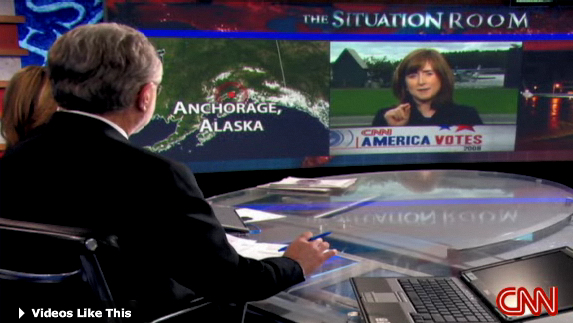
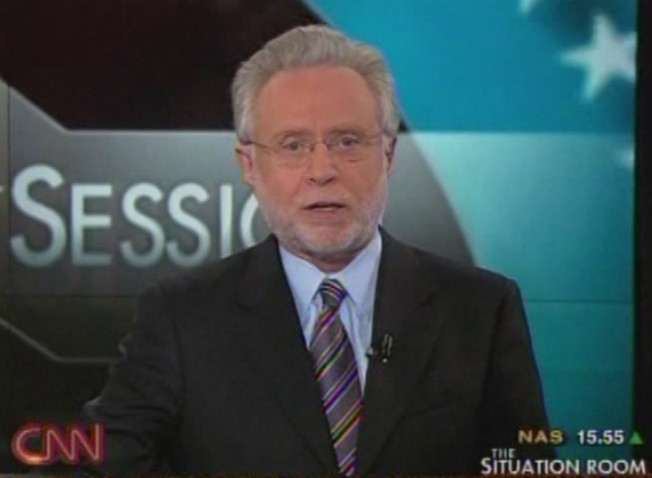
CNN thought they should look into that. So they arranged an interview between Wolf Blitzer and Meg Stapleton, former aide to Governor Palin. Stapleton spoke from Anchorage, Alaska. The official CNN version of this interview is recounted with utmost brevity by Romans in her online article “Alaska state jet didn’t fly on eBay”:

“Upon taking office, she [i.e., Governor Palin] wanted to unload what former aide Meg Stapleton called ‘a symbol of corruption.’

“Stapleton told CNN that Murkowski paid too much for the jet, and that it was costing taxpayers money just sitting in the hangar.”

CNN Political Ticker: All politics, all the time – Blogs from CNN.com.

The real story is that, while it’s true that the Governor had the plane listed on auction at eBay, it wasn’t actually sold on eBay, but through a broker, after eBay bids came in too low.

The subtext here is that Palin might have fibbed just a little, or exaggerated the facts . . . or something.

But the real story reported by Christine Romans of CNN is not the whole story. She doesn’t even indicate that Meg Stapleton’s remarks were made during a live and compelling interview she gave with Wolf Blitzer on television today.

You really should see it. I can only imagine what the sophisticates at CNN were expecting from a former aide to Sarah Palin, ensconced in the chilly and woodsy frontier of Alaska. But Ms. Stapleton was impressive. She answered all of Blitzer’s questions about a full range of possible problems candidly and professionally. Every insinuation of possible wrong-doing by Palin was corrected with an articulate and plausible response. And Ms. Stapleton demonstrated unqualified admiration for Sarah Palin that only complemented the favorable impression that Palin herself has made since she was first introduced by John McCain as his running-mate.

Stapleton also demonstrated that Sarah Palin had very capable people working for her in Alaska, and that the big-shot media in the Lower 48 are mistaken if they think their experience and style will intimidate Sarah Palin and the likes of her remarkable associates.

***

For a transcript of Wolf Blitzer’s broadcast from the CNN “Situation Room,” check here. For the complete video of the interview, go here.

Is Barack Obama an Ingenue?


That’s what Dick Morris and Eileen McGann seem to be saying, all right:

“Now the Republicans must battle to underscore the threats this country faces, economically and internationally, and that we can’t let an ingenue take over.”

Dick Morris and Eileen McGann :: Townhall.com :: Democrats in Trouble (September 5, 2008)

So what exactly is an “ingenue”?

A reliable authority, The Concise Oxford Dictionary, defines the word this way:

“an innocent or unsophisticated woman,” or an “actress who plays this part”

Barack Obama has been called a lot of things, perhaps including “innocent” and “unsophisticated.” But an “innocent or unsophisticated woman“? That’s one for the records.

Understanding RSS Feeds


What the Heck is RSS? And why should I care?

Good questions. First, here’s why you should care. Read more of this post

Babies, Lies & Scandal?


What in the world has happened to journalism in America? US Magazine’s new issue features a picture of Sarah Palin and this essay title in large, bold letters: “Babies, Lies & Scandal.” Read more of this post

Is Joe Biden the Best Person Obama Could Have Picked as His Running-Mate?


I’m just asking because that’s the question everybody’s been asking about McCain’s choice. Read more of this post

Was It Sarah Palin’s Speech or Not?


“Of course, Sarah Palin’s speech was written by someone else.”

How many times did we hear that from the media last night? I lost count. Keith Olbermann will say anything to make sure people know he’s on the far end of the liberal left. So when he said it, it really didn’t count. But others chimed in. Read more of this post

The Easy Ethics of the Liberal Left


The latest media debacle surrounding Sarah Palin’s candidacy for the Vice Presidency brings to mind the easy ethics of the Liberal Left. Read more of this post

What If the Palin Family Had Taken the Low Road?


Let’s imagine that Bristol Palin, in consultation with her family, had decided to have an abortion. The single most talked-about controversy regarding Palin’s VP nomination would be no controversy at all. And there certainly wouldn’t be any talk of “scandal.”

The Palins have not taken the politically expedient path of aborting a child. Can there be any doubt that others have taken the low road, found relief in a woman’s legal right to choose, and avoided a spectacle altogether? It’s possible that for some, political calculation was the most critical factor in a decision to have an abortion.

Wouldn’t it be interesting to know how many candidates for high office have had unmarried daughters who elected to have an abortion (sons responsible for the pregnancy of an unmarried woman should be included in this thought experiment)? But that’s something we’ll never know.

What Campbell Brown doesn’t know about the National Guard


John McCain cancelled a scheduled interview today with Larry King, of CNN. Why? Word is that McCain campaign staffers believe an earlier CNN interview with spokesman Tucker Bounds signaled the wrong kind of attitude for a fair-handed interview. During her interview with Tucker Bounds yesterday (September 1, 2008), news anchor Campbell Brown pressed the McCain representative with questions about Governor Palin’s readiness for the VP slot, given her level of experience. Brown was especially energetic in her effort to get Bounds to name a single specific example of some decision or action of consequence by Sarah Palin as commander-in-chief of the National Guard in Alaska.

Bounds was, I think, caught off guard (unfortunate pun). He didn’t give a specific example. Instead he tried to describe the nature of a governor’s responsibilities vis-a-vis the National Guard. He remarked that governors have the authority to deploy the Guard in various circumstances. At that point, Campbell Brown challenged him and stated unequivocally that governors do not have that kind of authority. She flatly contradicted him about a factual matter.

Since Campbell Brown knew she was going to ask her question, and Tucker Bounds apparently did not, Brown seemed to be in the winner’s corner in this dispute. She was so insistent that Bounds answer the question that it seemed she knew the answer before she asked it. It looked as if Brown had set the trap for poor Tucker: state governors do not deploy the national guard. Brown suggested that governors play almost no role in determining the activities of the National Guard.

I suspect that TV viewers often give news anchors the benefit of doubt when they make factual claims that can be corroborated using a laptop and a link to Wikipedia. But Campbell goofed. She was wrong about the National Guard and wrong about the responsibilities of state governors. (For a helpful explanation of the complicated relationship between state governors and the president regarding deployment of the Guard, see Kavan Peterson’s article here.)

Tonight, Brown’s colleague Wolf Blitzer praised her handling of the interview. Brown and Blitzer described how dumbfounded they were that the McCain camp had cancelled Larry King. But Campbell Brown isn’t vindicated by the facts. So maybe a little self-examination is appropriate here. Maybe she should apologize for trying to corner her guest with a false statement that she probably believed was true.

What say you?

Sarah Palin and the Abuse of Blog Power


The social media that permeate the blogosphere have changed the way politics unfolds in this country. It is more difficult now than ever before to get solid, reliable information about the character of presidential candidates, for example. Today, rumors about Sarah Palin are flying with fury and labels are being applied as if these are factually established and relevant.

Anti-Palin bloggers are pumping out bile with the unrelenting force of an Alaskan gusher. These people are using their blog-power to influence voters. Nothing wrong with that. But fomenting discontent on the basis of rumor alone is an abuse of that power.

We need an example. One blogger who illustrates this obsessive, vicious lampooning of Sarah Palin (and John McCain) is “AKMuckraker” at Mudflats. On one post she insinuates that Sarah Palin is John McCain’s latest “trophy girl.” In another, she rolls out all the labels she can contrive—”Trooper-Gate,” “Baby-Gate,” “Bridge-Gate,” and “Veep-Gate”—and wails to the world that the GOP campaign will come unraveled in the days left before the election. Many who chime in with comments at her posts exhibit an astonishing willingness to believe on the basis of ethereal fumes. (One shining exception is Gerri; she candidly states that she’s pro-Obama, but says she wants proof because she doesn’t like rumors and blatant lies. Way to go, Gerri.)

I have four guidelines to recommend to blog browsers whose eyes are burning from all this smoke. If you find that rumor is beginning to influence your outlook, you might find these helpful.

1. Chase the rumor to its source and investigate the source.

The “scandal” that’s all the rage today swirls around allegations that Sarah Palin’s youngest child, an infant with Downe syndrome, is not her own child but the child of her 17-year-old daughter, and the spectacle of much handwringing about the news that Palin’s daughter is pregnant now and will soon marry the father.

Who’s behind the effort to bring this to national attention? The advertised culprit is Andrew Sullivan, of TheAtlantic.com, a leftist blogger and adoring fan of Obama, who seems to have proven that he can be truly unscrupulous if it will help the liberal cause. Norman Podhoretz explains what is worse than despicable about Sullivan’s behaviour here and here. This criticism extends to Sullivan’s channelers throughout the blogosphere.

2. Listen carefully to the tone of the blogger.

Is the blogger being sarcastic? Does the blogger rely on sarcasm to make the “argument”? Is it plausible to suppose that the blogger is being objective? That the blogger is willing to give the candidate the benefit of the doubt? That the blogger is sincere about relying on bullet-proof evidence when evaluating the candidate’s character and motives?

Does the blogger consider counter-evidence or counterarguments? Are these treated fairly?

Does it sound like the blogger is preaching to the converted? If so, then she probably is.

A muckraker is someone seeks out and publishes alleged scandals in an underhanded way. The writer at Mudflats calls herself “AKMuckraker.” Enough said?

3. Step back and remember what governing this country is about.

Don’t lose sight of the issues. This goes to the question, How relevant is the rumor, even if true? What aspect of prudent national leadership is threatened? Make a list the most important foreign and domestic policy issues facing this country. Then ask, How will the candidate who’s been smeared address those issues? Does the candidate act consistently with his or her declared principles?

4. Don’t expect the candidate to answer every scandalous charge of scandal with counter-evidence.

Putting an opponent on the defensive by making frivolous charges is one of the oldest tricks in the book. If Sullivan or someone else broadcasts an allegation, forbear not to believe it, or even to give it another thought, unless and until the sponsor of the claim presents compelling evidence. That is his or her responsibility, if a case can be made.

No one should be distracted by, and still less should one believe, a baseless allegation made by a scurrilous troublemaker who is ultimately indifferent about truth.

***

Bottom Line: It’s time to shut the Rumor-Gate and get down to the business of sorting out the kind of national leadership, in both foreign and domestic policy areas, that is really needed. Maybe the concentration of muckraking in one party gives us a clue.

Related Posts:

My Bookshelf of Best Books


Click here for a list of 100 books of virtually every kind that have given me the most pleasure, and have been the most personally useful, spiritually uplifting, and intellectually stimulating.

Related Posts:

<script type=”text/javascript” src=”http://www.assoc-amazon.com/s/impression-counter?tag=faifilandphi-20&o=1″></script&gt;
<noscript><img src=”http://www.assoc-amazon.com/s/noscript?tag=faifilandphi-20&#8243; alt=”” /></noscript>

Biography of Sarah Palin


Lot’s of people want to know about Sarah Palin, John McCain’s VP choice. Her biographer, Kaylene Johnson, must be pleased with the timing of her book, released in April.

Sarah: How a Hockey Mom Turned Alaska’s Political Establishment on Its Ear

159 pages/retails for $19.95

Books by Kalene Johnson

Related Posts:

Do No Harm—John McCain’s Choice of Sarah Palin


In the world of politics, complexities are often encapsulated in squat phrases and nimble sentences. And when it comes to selecting a Vice Presidential running mate, the mantra has long been primum non nocere—”first, do no harm.” The principle is borrowed from the world of medicine and medical ethics. It’s been applied in situations where medical intervention poses considerable risk to a patient with an unknown or comparatively small margin for benefit. I guess it makes sense, especially during Presidential election campaigns, to liken major political decisions to life-and-death challenges in medical decision making.

When picking a running mate, what does it mean to Do No Harm? Earlier this month, William Kristol spelled out four criteria for choosing a vice president, and evaluated McCain’s options in terms of those criteria. (See “How to pick a vice president.”) Here were McCain’s basic options:

  1. Go with someone safe and predictable.
  2. Pick someone whose strengths will accentuate the opposing candidate’s weaknesses.
  3. Co-opt the public desire for change.
  4. Pledge to serve for a single term and stress the need for radical change in Washington politics.

If do no harm was uppermost in McCain’s mind, then criteria (1) and (2) should have been the determining factors. Judging by the shock registered in the media yesterday when McCain announced his choice of Alaska governor Sarah Palin, the first criterion was pretty low on his list of guidelines. Since the shock was proportionate to the perceived inexperience (measured in age and time served in elected office) of McCain’s choice, the second criterion doesn’t seem to have influenced McCain. So Do No Harm, by Kristol’s reckoning, wasn’t McCain’s chief concern.

Let’s consider two questions.

Was McCain right to ignore the Do No Harm principle in selecting Palin to be his running mate?

Had McCain been far behind Obama in polling, especially in the most contested states, the political value of the Do No Harm principle would have been more salient. The gap in support between Barack Obama and John McCain was negligible at the time of McCain’s selection of Palin.

A politician has to be practical—or pragmatic, if you will. But much of the pragmatism exhibited by our politicians is befogged with cynicism. It is permeated with jaded negativity, which leads to posturing and snarky rhetoric. And this translates into a malaise of cynicism among the electorate. Exasperated, would-be voters lose interest and stay home on election day. Many of those who make their way to the polls buy into this jadedness and cast their vote for the angry candidate, or the candidate who represents the angry party. It’s a bad omen for a democracy when its elected officials rise to power on a wave of angry sentiment.

It would be most refreshing to see America’s leading candidates demonstrate real-world understanding without the baggage of cynical pragmatism. The Do No Harm principle is naturally attractive to the cynical. It is a sign of McCain’s governing optimism that he did not let the political appeal of such a principle determine his choice of running mate.

Politics is full of ironies. One of the great ironies of the current election season is that the Democrat party, led by Senator Obama, has mounted a campaign rooted in anger, warning a cowering sector of the electorate to forego “four more years of George Bush,” while suggesting, at the same time, that McCain is the one with a jaded view of the world, as indicated by his approach to Iraq and Iran. George Bush has been demonized by pundits on the far left of the Democrat party as “the worst President ever” and “a moron.” These pundits have tutored Obama to exploit this caricature and emphasize that John McCain has voted in sync with President Bush 90% of the time. So electing John McCain would be like relecting Bush, and that means perpetuating the worst thing that ever happened to America. (Never mind that Obama has voted 97% of the time in league with his own party, which happens to be at the helm of a Do Nothing Congress.)

McCain was right to ignore the beckoning spirit of cynical pragmatism in his choice of a running mate. Maybe it’s a symptom of the audacity of his hope for this nation.

What is the risk potential of McCain’s choice of Palin?

Let’s assume that Sarah Palin’s only liability is the electorate’s perception of her readiness for the job relative to her age and experience.

When it comes to experience and getting elected to executive office, Sarah Palin’s record is more impressive than Barack Obama’s, Joe Biden’s, and even John McCain’s. Most noteworthy is the comparison with Joe Biden, who began running for President twenty years ago and has never been nominated by his party. This year he turned in a lackluster performance with around 7% of the vote in the Democrat primary. If it was executive experience that Obama wanted to complement his perceived gross inexperience, why didn’t he pick Hillary Clinton? Could it be that he didn’t want to be overshadowed by experience?

When it comes to real political change and reformation, Sarah Palin’s record, again, dwarfs anything Obama has accomplished. As suggested by David Brooks in yesterday’s editorial for The New York Times, Obama loves the future because “that’s where all his accomplishments are.” If Obama’s message is A Message of Change, then why select a career politician, an old boy from inside the beltway—Joseph Biden?

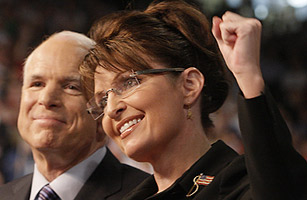
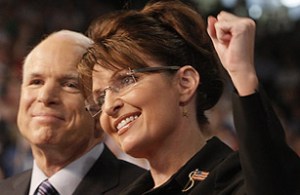
Together, McCain and Palin look bouyant and centered. In a single day since McCain’s announcement that Palin is his running mate, $4 million dollars have been contributed to the Republican campaign. And the Republican National Convention hasn’t even begun yet. Meanwhile, Obama stuttered in his customary way through an impromptu response to McCain’s announcement and looked, I thought, like a deer caught in the headlights. I’m talking about the guy at the top of the Democrat ticket who gave his acceptance speech before 85,000 people just the day before Sarah Palin was announced.

And that leads to a third question: Is there a new rock star in town?

***

Related Post:

Who Is Sarah Palin?


The next Vice President of the United States.

America turns its attention to the natural resources of Alaska.

***

Related Posts: