Army of Shadows: A Film Discussion Guide


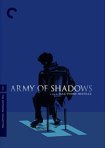
army_of_shadows_1shThe French film L’Armée des Ombres (“Army of Shadows”) is an adaptation of the 1943 book (same title) by Joseph Kessel, who participated in the French Resistance. Whether you know little or much about the Resistance, if you want a realistic film portrayal of a critical aspect of the Second World War, this is a film to rent or buy. I can’t imagine a more effective vehicle for presenting an insider’s view of the movement.

The film is expertly cast and paced with precision. But the action is subdued, so don’t expect a Jason-Bourne-meets-James-Bond kind of experience. Army of Shadows offers a tight shot of espionage—plotting with limited resources, the paltry odds of success, endless psychological misgivings, and complex interpersonal dynamics.

The movie is filled with tension. But it’s the kind of tension that invites serious consideration of difficult questions:

  • What does it really mean to be courageous?
  • Is it possible to exercise genuine freedom of self-determination in the very moment you are about to be executed by a firing squad?
  • Can a cause be so just that killing an innocent co-belligerent is justified if letting her live could compromise the mission?
  • On what basis can you entrust your life to someone you’ve never met?
  • Should a woman with the skills needed to execute a tactically sophisticated and personally dangerous mission be enlisted if she has a husband and children who know nothing of her activities?
  • Does it ever make sense to engage in a fatal rescue operation if no one will know of your valor?
  • Why does the simple offer of a cigarette enable some men to face certain death with dignity?
  • Was the French Resistance a prudent response to the Nazi occupation of France?

This film churns the emotions and the mind. The Resistance is testimony to the indomitable spirit of human beings guided by commitment to a high ideal. I saw  Army of Shadows soon after seeing the Angelina Jolie film Changling. The similarities are unmistakable. Both are based on actual events. In both cases individuals pursuing righteous causes suffer terrible indignities. In both, success seems humanly impossible. Hope wells up from a secret place and keeps men and women in the game, even when the game is almost certainly lost. These are remarkable parallels, parallels I would have missed if I had not seen the two films in the same week.

As these films end and the credits roll, some viewers will be stuck to their seats with feelings of sadness mixed with cheer. The sadness explains itself. The cheer is unexpected. But the cheer is solidly grounded. It rises in response to the failed heroism of Christine Collins, the mother in Changling, and of Phillipe Gerbier, the head of a Resistance network in L’Armée des Ombres. Because the heroism is real, though it is not rewarded with complete success (or perhaps because it is not rewarded with complete success), our own dignity is affirmed.

I’m ususally content to see a movie once, even a very good movie. But soon I’ll be downloading L’Armée des Ombres from Amazon to my TiVo. This one is worth owning and re-viewing.

Amazon DVD

Amazon DVD

Amazon Video on Demand

Amazon Video on Demand

The Book by Joseph Kessel

The Book by Joseph Kessel

John Updike as Book Reviewer


Encountering John Updike as book reviewer is to witness something akin to the 8th wonder of the world. I calculate that the time it takes for him to write as much as he dupdikedue-considerationsoes (speaking here of volume) leaves no time for reading, much less reviewing, books written by other people. My calculations have to be pretty far off the mark. He reviews like a fiend. (I mean this in the most positive sense of the term.) And reviewing is but one of the many grooves his writing follows. Is there any form he does not indulge?
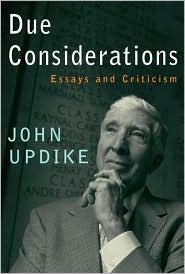
I might not be so impressed by the monumental volume of his output if it were not for the other, more fundamental impression Updike makes. He is a master writer. People who write better than I, and not nearly as well as Updike (by their own confession), have been saying this about him for decades. With Updike, you need not begin with an interest in any topic he takes up to be delighted with his perspective.

For example, in an essay titled “Groaning Shelves,” he reviews the book The Book on the Bookshelf, by Henry Petroski. A book with a title like that would tempt me. In the scope of five pages—seven paragraphs—by Updike, I experience at least as much pleasure and add every bit as much to my fund of knowledge as I would expect from reading Petroski himself (279 pages). Come to think of it, the relish of reading Petroski firsthand is converted to relish in not having to read it because of the relish of reading Updike on Petroski.

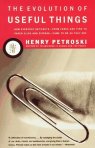
In the first paragraph, Updike describes the publishing niche of this professor of civil engineering and history, mentions two of his previous books, The Pencil (1990) and The Evolution of Useful Things (1992), identifies the primary sources for Petroski’s third work, here under review, and demonstrates that The Book on the Bookshelf (1999) would not have been much of a book without the use of stretching devices, since the territory (“the history of book housing”) has been pretty thoroughly scampered over by others before Petroski.
petroskithe-pencilpetroskibookonthebookshelf

petroskievolution-of-useful-things2What we learn from Updike in this first paragraph is technique in the art of book reviewing that requires having something to say about a book that says little more on its topic than what others have already said in earlier books. We also learn something about Updike—that this is no reason to leave the book alone or end a review having said as much. Something else about Updike: he judges that arranging the books in one’s personal library in accord with the Dewey decimal system is “whimsical” rather than “obvious.” (It seemed obvious to me several years ago when I adopted the system. Ironically, perhaps, this gentle chastening by Updike, for being whimsical when I thought I was being practical, was reinforced the day before reading his review; I learned with mixed emotion that the latest version of bibliographical software I use—namely, Bookends—enters the Library of Congress call number in the designated field for each new book reference. I’m now in engaged in a tedious cost-benefits analysis of switching over to the LC system from this point forward.)

The second paragraph begins with a sentence that must have been a relief to Petroski: “Nevertheless, we need to be reminded that people did not always live surrounded by books arranged on shelves, with their spines outward and stamped with the title, author, and publisher.” On this point, I take issue with Updike. I’m not sure we “need” to be reminded of such things, or even that we ever “needed” to learn such things. This may be Updike’s way of persuading himself that Petroski’s book is worthy of review. He surely needs to convince his readers, given the mediocre assessment implied in Updike’s first paragraph.

The balance of paragraph two re-traces the earliest stage of “book” production (papyrus rolls) and the practical solutions that were devised for the problem of their convenient storage. One sentence, albeit parenthetical, glistens: “In truth, only in certain circles, smaller than academics like Petroski might imagine, could people be said [even today] to be surrounded [by books]; I am frequently struck by how many otherwise handsomely accoutered middle-class American homes have not a book in sight.” I know that experience—the experience of not only seeing this to be the case, but also the experience of being “struck” by the fact. I am, of course, an academic. (Not that being struck by the absence of books in the homes of other people is a sufficient condition for being an academic, except in that “special” sense of being eccentric.)

The next four paragraphs carry on the exposition, in chronological sequence, of book production and storage adjustments, leading up to the present, when the volume of books at institutional libraries, it is estimated, doubles about every sixteen years. Updike boils down, in five paragraphs, the history of this transmigration of the souls of books. Even to the layman, it is an interesting history, if told well and in no more than five paragraphs.

I knew nothing before of “chained libraries.” I’m not sure I quite have an adequate picture in mind of this invention that served for several centuries. The most interesting fact I learned is that “even after books came to rest on shelves, their spines were unlabelled and faced inward.” Updike surmises that “when books were few, they did not need to be labelled, any more than do familiar people.” I’m not about to experiment with this technique of book arranging with my several thousand volumes (although the storage of many hundreds in boxes is hardly more satisfactory).
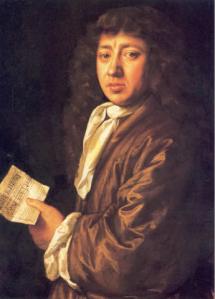
pepys1The eighteenth-century member of Parliament, Samuel Pepys (pronounced “Peeps”), most famous for his Diary, was apparently compelled (by his wife?) to constant winnowing of his own book collection, so that it never exceeded the manageable limit of 3000 volumes. He ensured efficient use of space for his books by arranging them in two rows, tall books in front, shorter books behind on raised shelves, a strategy that is “impressively harmonious, though somewhat forbidding to a would-be browser.” You can see this for yourself at Magdalen College in Cambridge, where twelve cases of the Pepys collection are preserved.

As always, after reading Updike, my vocabulary is much improved. I now know how to identify the “fore edges” (not “four edges”) of a book. I’ve got a sprinkling of new Latin terms under my belt, which should come in handy next time I cross paths with Seneca: volumina, capsae, armarium commune. Speaking of Seneca, he opined that those who ostentatiously surround themselves with books as mere ornamentations of their digs make themselves ridiculous, or something to that effect.

“Groaning Shelves” appears in a 700-page collection of John Updike’s writings over a period of eight years, third in a series of such collections. This volume is called Due Considerations: Essays and Criticism (2007). It contains nearly 150 brief essays. Since yesterday, I’ve read eight of them, including: “On Literary Biography”; “A Case for Books”; “Looking Back to Now” (not unlike Jorge Luis Borges); “Against Angelolatry”; a tribute to Eudora Welty; Updike’s Introduction to Seven Men, by Max Beerbohm; “Groaning Shelves”; and one other whose title I’ll withhold, lest you infer something disagreeable and false about my (or Updike’s) character.

I purchased my copy yesterday, after browsing the entry on “The Future of Faith” (pp. 27-41). I excluded this from my count in the previous paragraph because I haven’t yet read it closely. But I know that I will, and soon.
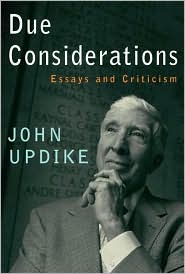
updikedue-considerations1

Amazon Paperback

“My Heart Belongs to Edward”?


twilight_book_coverI know you’ve been wondering why teenage girls have crushes on vampires. After all, the four-installment Twilight series is the latest reading sensation for that social niche. And some of you have teenage daughters whose fancy for the undead has you flummoxed.

Well, if you really must know, Caitlin Flanagan may be the place to turn. In her recent Atlantic essay “What Girls Want” she explains how Twilight taps into “the complexities of female adolescent desire.” I sincerely hope there are exceptions to her generalizations. But her multifacted theory is as plausible as any we’re likely to encounter.

Is Living High Pie in the Sky?


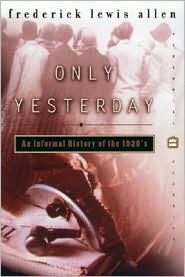
Despite the ouch-factor of the economic downtown, Michael Shaffer’s hand-wringing seems a tad over-wrought. Click here for his article titled “Only Yesterday,” where he invokes the motif of FrederiOnly-Yesterdayck Lewis Allen’s 1930s bestseller to draw dire parallels between the stark days of October 29, 1929 and our recent decent into economic chaos.

Yes, many 401(k)s have been depleted by 25-50%, and home equity has followed suit. True, the worst may not be over. I’ve joked without feeling humored that I might be working for the rest of my life. Fewer Americans are eating out, having their cars washed, or seeing a movie on a Friday night. Some have all but abandoned aspirations for a leisurely retirement, a college-education for their high school kids, or mortgage-free ownership of their home. Last night on main street in Yorba Linda, California, for the annual holiday festivities, classic cars were lined up along both sides of the street; but this time, an alarming number of the spiffy machines was for sale. We’re being squeezed and we don’t know when it will be safe to loosen the tourniquet.

Still, it’s too early to draw confident conclusions that happy days are gone for good. We need the reminder that wealth is no guarantee of satisfaction. But there also are reasons to expect reversals in the other direction. Home prices will plateau at a level that’s more realistic, and then rise from there. The stock market will bottom out and trend upwards as always. Paying into a 401(k) hasn’t been this cheap in ages. Colleges and universities have to have students, so prices will adjust, as their administrators take stock of their priorities. Heck, they might even devote more effort to delivering an education, something parents will want to be sure their dollars are paying for when money is in short supply.

And, of course, the government will start printing money. How else are they going bail out every ailing mega-company in America? The value of that money should hold up for awhile, since we’re hardly facing inflation at the moment.

I doubt if anybody really understands how the bottom rusted out of our giant economy while nobody was looking. But what happened this fall is different than what happened the fall of 1929. This time around, one man pulled the fire alarm and scared the bajeebers out of everyone. That man was Hank Paulson, Secretary of the Treasury. The most incompetent action of his career was his inexplicable announcement that the sky would be falling effectively immediately. He was right. And with that announcement he helped bring it to pass. Dumb, dumb, and more dumb. Would it have happened anyway? Not the way it did. That much is for sure.

We can’t predict the fallout of this numbscull decision. We should be wary of our elected officials and their appointees. Who doesn’t know that now? But let’s hang in there and keep our prophetic powder dry. I believe Michael Schaffer’s jeremiad is premature . . . even if we’re all unlucky enough for him to be right when the time comes.

Note: Frederick Lewis Allen’s book Only Yesterday is a good read. Schaffer is right about that. You can enjoy it here for free. Or, you can buy it here. There’s a Kindle version, too, for a couple bucks less right here.

Why Winning a Presidential Election Is No Big Deal


Of course, being the President of the United States is a big deal. For one thing, you get to sit behind a cool desk and look powerful. (Apparently, however, it does’t take long to discover that even a president-elect has limited powers. Our current PE, Mr. Barack Obama, has already revealed plans to be more realistic than his campaign promises.) You get to travel the world and talk to all the other really important people. You get to live in the Big White House. And someday, you’ll have a giant library with your own name on it, dedicated to reminding everyone of your past greatness.

Still, there’s a sense in which winning an election, even a presidential election, is no big deal. It may attest to your campaign prowess, your ability to raise more money than you can spend, and your ability to look presidential. But does it establish that you are the rightful heir to presidential power? Constitutionally it does, certainly. But is this the only sense that matters, in a democracy? It shouldn’t be. A citizen becomes President by garnishing a sufficient amount of support from voters. And it’s the constitution of today’s voter, not the Constitution of the United States, that requires chastened realism about the significance of an electoral victory.

Since the voters decide who is to be president, the quality of the decision correlates with the quality of the electorate’s decision making powers. With this in mind, I’m led directly to wonder: how does it feel to win an election, knowing that those who voted for you, as a block, have no idea why you deserve to be President? Fortunately, with all the preparations before Inaguration Day, there is precious little time for sobering thoughts along these lines. Unless you’re not the president-elect and you don’t have such great matters to distract you. Then you can ponder the wisdom of the electorate—if you have the stomach for it.

There’s a common form of argument called modus tollens. It goes like this:

  1. If P, then Q.
  2. Not-Q.
  3. Therefore, not-P.

If P stands for “The majority of the electorate in the 2008 general election voted wisely,” and Q represents “The decision to elect Barack Obama as the the 44th President of the United States was a wise decision,” then we get the following argument, using the above schema:

  1. If the majority of the electorate in the 2008 general election voted wisely, then the decision to elect Barack Obama as the the 44th President of the United States was a wise decision.”
  2. The decision to elect Barack Obama as the the 44th President of the United States was not a wise decision.
  3. Therefore, majority of the electorate in the 2008 general election did not vote wisely.

I don’t think we need such an argument to establish the conclusion in statement (3). That’s because there is plenty of independent evidence that the electorate did not vote wisely, and, strange as it may sound, this has almost nothing to do with Barack Obama. The most salient evidence has to do with the appalling illiteracy of the American electorate, about history and economics, about values and political theory, and a host of other things.

Some who voted in the recent election believe that the Revolutionary War was won at the Battle of Gettysburg, that the Holocaust is a Jewish holiday, and that Lithuania is stored in a bottle in mother’s medicine cabinet. Suppose we subtract from the electorate any person who believes any one of these things, or anything else akin to such things. Why would we do that? Not simply because their beliefs are silly in the sense of being mistaken, but because they are silly in the sense of being believed for the reasons people who believe such things believe such things. Wouldn’t that be a step in the right direction, a kind of minimalist step, to get decision makers with a modicum of knowledge and knowledge-acquisition skills, capable of making wise decisions about who gets to sit behind the Big Desk?

To be sure, the intelligence test I’ve just proposed is pretty minimalist. It doesn’t account for level of reasoning ability. We should want our voting citizens to be well-informed and capable of basic critical reflection. Two of my examples of “silly beliefs” are taken from Lewis H. Lapham’s article “Playing with Fire” (Lapham’s Quarterly, Fall 2008). Lapham writes, “Why would any politician in his or her right mind wish to confront an informed citizenry capable of breaking down the campaign speeches into their subsets of supporting lies?” That’s an excellent question. It’s meant to be rhetorical: no politician today would wish such a thing. If Lapham is right about that, then we need different politicians. But then they might not be the politicians we deserve.

Lead-Up to “The Unnecessary War”


I was in Boston last week, hanging out with a friend and fellow-philosopher. He gave me two book recommendations:

and

I’ve read the first four chapters of Dubay, but that isn’t enough to have a firm opinion about it yet. I’m halfway through Buchanan and I’m prepared to recommend it for its carefully documented but iconoclastic interpretation of the lead-up to World War 2.

buchanan-unnecessary-warThe verdict on Hitler is pretty well-established, I’d say. Buchanan doesn’t veer from that. But Winston Churchill may have been a more dangerous war-monger than most would think. The evidence of Churchill’s predilections for military engagement, and for shifting blame for the war’s outcome, casts a pall over the received view of his leadership through “inevitable crisis.” David Lloyd George has become a person of interest to me. And I now know more about Chamberlain than before. Lord Balfour is a puzzle to me. These are achievements of the author. They reflect his success in stirring my interest and leaving clues to follow for further study.

Buchanan is not a professional historian; but he is a provocative interpreter. His thesis is controversial and has already been challenged by aficionados. He could get to the point more quickly. But he’s determined to support his claims with statements made by the players themselves and by sharp historians of the period. He quotes someone on virtually every page, sometimes at length. In every case, however, his choice of quotes is a valuable contribution. Each remark helps to capture the mood of the figures who made the critical decisions and altered the course of history.

Buchanan’s chief objective is to explain how World War 2 might have been averted, if it hadn’t been for vanity, or incompetence, or misinformation at numerous turns and among numerous parties. This story has no doubt been told before. But only here is it told in Buchanan’s style, and with his perspective on current events.

My thoughts about the war, its lead-up, its aftermath, and its present significance have been enriched:

  • I can now entertain the possibility that the Kaiser’s war (i.e., World War 1) was a war of German survival without imperialist ambitions.
  • I think I understand better how Hitler managed his coup and led a demoralized people into unwelcome conflict with the European powers.
  • I hadn’t known of Mussolini’s disgust toward Hitler and of Hitler’s almost obsequious admiration for Mussolini.
  • The hypnotic effect of Hitler on Western leaders who knew of his diabolical behavior (who were even, at times, on the receiving end of it) never ceases to astonish. This mystery is compounded by Buchanan’s telling of the story.
  • Ever since my visit to the Brenner Pass in the majestic Italian alps I’ve wondered how it came about that this region, formerly a precinct of Austria, had been handed over.
  • The roles played by Czechoslovakia and Poland impress me as much more significant now.

I could go on. Instead, I’ll read on, and probably learn more about how America came to abandon its protectionism and make war on the continent (I suspect it has something to do with the Japanese, who had been disenfranchised by the British), the mystery of alliance with Stalin’s regime, and much more. I expect—I hope—I’ll have more questions when I’m done reading. But before the book is closed, I feel comfortable already recommending it to others.

Note: There’s a Kindle version of Buchanan’s book. If there wasn’t, I might never have gotten round to reading it. Learn about Kindle here.

Jesus and the Democratic Process


“WakeUpAmerica,” a welcome visitor to this blog, recently made an interesting suggestion. I liked the suggestion and decided to create a post that might encourage readers to think about the issue and post their comments.

If Jesus was living in America in the 21st century, what would his politics be? Would he be registered with a political party? If so, which one? Would he start his own party? Would he run for office? Would Jesus vote? What issues would matter to him most? Would he campaign for a political candidate? In the most recent general election, is there a candidate he would have voted for? Would Jesus favor a democracy, or some other form of government? In other words, how would Jesus participate, if at all, in the political process if he was a 21st-century American citizen?

Here are three questions about the questions listed above:

  1. What difference does it make what Jesus would do? What’s the point in asking?
  2. Is what Jesus would do what we should do?
  3. Is it any different to ask, “What would Jesus do if, instead of being Jesus, he was one of us?”

Here’s one more question, for good measure: On what basis can we speculate how Jesus would conduct himself if he lived in a democracy like ours?

I Want a Bailout


Suppose it’s August 2007. You apply for a line of credit against the equity in your existing home. CitiBank approves a line of credit that allows you to invest in some undeveloped property and still have something left for building a modest vacation home where you can be near your family for part of the year.

Fast forward to November 2008. CitiBank sends you a letter. It claims that the venerable financial institution has reviewed your assets and concluded that you are no longer in a position financially to meet payments on the balance of your line of credit, should you wish to borrow that money. They’ve decided to zero out your balance, effective November 5. The letter you hold in your hands arrived by regular mail on November 6.

You’re stuck. You have a piece of property with no prospect now of building. It’s unlikely that you could sell it for what you paid for it a year ago. And, in any case, you don’t want to sell it; you want to pursue your dream. But CitiBank has revoked your line of credit. This despite the fact that you’ve made all your monthly payments on schedule for over a year.

You wonder what changes in your financial situation could have reversed CitiBank’s kind disposition toward you. And then it occurs to you. Maybe it’s not your financial condition that has them worried, but their own financial condition that has them over the barrel. Maybe they’re afraid you’ll write a check against your line of credit and they won’t be able to cover it.

Sure enough, a week later you learn that CitiBank has recently laid off tens of thousands of employees and that they lost billions of dollars during the past twelve months. “Aha!” you think. “So that’s what happened!”

Is it any consolation to know that they freaked, and then dissembled? Of course not. You’re still stuck. You secretly hope that CitiBank will be held accountable, that maybe the CEO will have to look for work.

And then you learn today that CitiBank has been offered a bailout, because the economy needs it. Isn’ that nice?

The above scenario has been played out for countless customers of CitiBank. The details vary but the shenanigans are the same. Some customers “took out” a line of credit to have greater security for a rainy day. Others to meet expenses for children in college. And others to make essential repairs on the only home they’ll ever own. Every one of the customers victimized by CitiBank’s recklessness deserves a bailout as much as CitiBank. But what are the chances they’ll be getting a letter in the next week saying, “We’re happy to announce that your original line of credit has been reinstated?”

Update for “Jason Bourne vs. James Bond”


Now that Bond has made another appearance recently, in A Quantum of Solace, I’ve updated my post of four months ago on “Jason Bourne vs. James Bond.” Click here.

The Brea Fire—15 November 2008


We’re monitoring the Brea fire very closely here. It concerned us when it jumped the 57 freeway in a westerly direction. We live about two miles from that spot. The Brea-Olinda High School was a base station for firefighters to keep the school buildings protected. I think they were successful in that endeavor.

There’s a spot up the road in our neighborhood that I’ve been visiting periodically for a good view. If, from that location, I see fire, we’ll be heaving things into our vehicles and “taking our leave.” We have our things gathered in case that becomes necessary.

20081115brea-fire-mapI’ve attached a fire map that’s about six hours old at this point — 10:15 p.m. (click image to enlarge). If you’re interested in our location on this map, visualize a vertical axis extending north directly above the “t” in the street name “W. Lambert Rd,” and a horizontal axis extending east along Whittier Blvd (seen on the left side of the image). Where these two axes meet is right on our spot.

My vista point to keep track of its proximity to us is north from that point along the same vertical axis, and then east about the same distance. At the end of that road there’s a large undeveloped area with a tall hill. I’m watching the crest of that hill.

As a point of reference for people who don’t know the area, Carbon Canyon is the spot of greatest concern nearest to us. That will be watched throughout the night and covered on television. In the early hours of the morning there’s the significant possibility of high winds like we had earlier today. That would not be good.

I’d rather not evac. And it looks like a long night of staying alert. But I’m optimistic.

* * *

Note: While our Brea PD is busy with the fire activity, I’ve seen police patrol vehicles from distant places. I spoke with an officer who came up from San Clement to provide backup duty. So the coordination has been excellent.

Update:

Here’s the map after the events of today, twenty-four hours later:

Bold red lines are road current road closures

Bold red lines are current road closures

Be a Good Student—Best Book in This Category


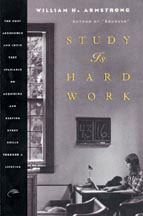
armstrongstudy-is-hard-workIt’s brief, it’s well-organized, and it’s full of sane advice. It’s a book called Study Is Hard Work. The author, William H. Armstrong, explains all the fundamental skills needed to be a successful lifelong learner. Here are the chapter titles:

  1. Learning to Listen
  2. The Desire to Learn
  3. Using the Tools
  4. Getting More From What You Read
  5. Developing a Vocabulary
  6. Putting Ideas in Order
  7. Books and the Library
  8. Written Work
  9. Acquiring Skill in Methods
  10. How to Study Languages
  11. Letting Mathematics Serve You
  12. How to Study Science
  13. Getting the Most Out of History
  14. Tests and Examinations

All of this in 143 pages. Each chapter begins with an Interest Measurement Test and ends with five Review Questions. Each “Interest Measurement Test” is a set of five questions that get readers to think about their current experiences and skill level in some category of study. Here are a few samples:

  • “Have you ever stopped to think what your life would be like if there were no books?”
  • “Do you believe that you really have a desire to learn, or would you, had you been left alone from birth, be totally primitive and beastlike in your thoughts and feelings?”
  • “Do you believe that, other than your parents, the people who will most influence your life for good are your teachers?”
  • “When you have read a book do you feel that you have talked with, and come to know, the author?”
  • “Do you know certain traits of your own mind that lend themselves to some methods of study more effectively than others?”
  • “Would you agree that there is much of the poet in all great mathematicians?”
  • “Do you believe that your life will be influenced by your interpretation of history?”
  • “Are you afraid of tests, or do you consider them a challenge?”

Chapters are loaded with numbered tips, steps, strategies, for doing all the things a college or university student must do to succeed, all showing students how to achieve real success by learning with pleasure and good work management. My students are exceptional graduate students, and every one of them could benefit from practicing the methods set forth here.

bookstoreport-book-newsI came across this book at a charming little bookshop we visit when we’re in Port Angeles, Washington. One tip for studying foreign languages struck me right away as eminently sensible and yet generally unknown.

“Make your own vocabulary cards, writing the word to be learned on one side and the English meaning on the other. If you are lucky enough to be studying two languages, write the meaning in the second language on the back also.”

The second sentence is simply brilliant. It makes a truly powerful suggestion, and it strikes a positive chord about foreign language study. My first thought was, “If you’re going to learn a foreign language, why not make it two?”

If you aren’t officially a student and you read this book out of curiosity, you may feel a strong desire to sign on for a class at your local college or university. I say, go for it! But if for some reason you aren’t able to take a class, Armstrong is still an excellent guide through the steps to independent learning. It all begins with a desire to learn (chapter 2).

Note: There are two other groups who would be helped by this book. First, high school students, especially those who plan to go on to higher education. Why not learn how to learn before learning gets even harder? Second, home school parents. These heroic people know what lifelong learning means, and welcome suggestions for organizing the learning process into manageable steps. I believe that practicing the principles presented in this handy book will shave hours of labor from the task of home schooling, make the whole experience more enjoyable, and result in much less stress.

From Amazon:

armstrongstudy-is-hard-work1

From “That Bookstore in Portland”:

armstrongstudy-is-hard-work1

Leave your comments about this book in the reply box below!

Eric Chartman Charts the Political Age of Sarah Palin


Eric Chartman, over at American Heartland Bar and Grill, explains why Sarah Palin has plenty of time to return to the national scene in politics. Click here for his chart analysis of “political aging.”

Then come on back to this post and place your bet on Palin’s future:

  1. She will go back to Alaska as governor and never rise to a higher level of political leadership.
  2. She will go back to Alaska as governor and deliberately position herself to return to the national spotlight in 2012.
  3. She will go back to Alaska as governor and seek election to the U. S. Senate at the earliest opportunity.
  4. She will eventually run for President of the U.S. and win.
  5. She will eventually run for President of the U.S. and lose.
  6. She will become the CEO of the largest American oil company.
  7. She will spend the rest of her evenings watching Star Trek re-runs.
  8. Other: __________________________________________.

Nominate Your Favorite Blog or Blog Post for Post-Election Obama Coverage


Question #1—What is the best conservative blog or blog post for post-election Obama coverage?

Question #2—What is the best liberal blog or blog post for post-election Obama coverage?

Don’t analyze this too carefully. If you’ve seen interesting and worthwhile general coverage or an especially good post, just let me know about it in the reply box!

Would You Like to Be Called a Family Friend by Bill Ayers?


So Bill Ayers was this morning’s Good Morning America celebrity. What a way to say “Good Morning” to America!

In the course of the interview, which lasted for quite awhile, Ayers was asked about a remark in his new book. In the book he refers to Barack Obama as “a family friend.” What’s that supposed to mean?

How would you like to be called a family friend by Bill Ayers? And if you really are a family friend of Bill Ayers, and now you’re also the United States President-elect, how do you respond to this bit of news?

What say you?

Oh, one more thing. How does Obama the “Elect One” respond without making it look like he’s trying to fool the American people about whatever relationship he may have had with Bill Ayers?

Back in the Saddle


For the past two weeks I’ve been off-blog. Two weeks ago I was in Birmingham, Alabama to debate Michael Shermer on the question, “Does God exist?” Then I travelled to Spokane, Washington for a conference on “Faith, Film and Philosophy,” co-hosted by Gonzaga and Whitworth Universities. The title of my presentation was “Big Ideas on the Big Screen—How Arguments Work in Film.”

When the conference ended, my daughter caught up with me and we flew over to Seattle, then drove to the Olympic Peninsula to do some writing without distraction. I worked on an essay on “Death and Immortality.” She worked on two novels she’s been drafting.

Today was the first day back on my motorcycle, a ritual that comes before blogging. With that out of the way, I’m ready to log on.

With the election past, and the unctuous posturing of the media, I think my blogging in the immediate future will move into other areas. I’ll still find it irresistable to post comments on the media, political happenings, and media coverage of political happenings. But there’s so much more to think about!

Catch ya later!