Republican Party Chaos & Third Party Prospects


The Trump revolution revved up last night with the Donald’s Super Tuesday victories. As a consequence, the so-called Republican “establishment” is in a tizzy. They are revealed to be “even more incompetent” than was first believed. As of today, they are “waging war on their own base.” In other words, we are witnessing the Great Republican Crack-up.

Never mind that there continues to be—in the Republican base—many who consider the Trump insurrection to be scandalous. They voted for one or the other of the non-Trump candidates last night. And there were a lot of them. And now, some of them threaten to vote for anyone but Trump. This escapes the attention of the media.

There have been calls for a third party for quite some time. Experiments that have been tried have been conspicuous failures. (The Libertarian party, for example, has melded with the Republican party to the point that libertarian politicians who aspire to the presidency pledge allegiance to the Republican party—most recently, Ron Paul.) The “Tea Party” wasn’t really a party. It was a remarkably organized, but still unofficial, movement within the Republican party, which fizzled out when Obama came to power in the executive branch of government and Republicans “took control” of both houses of Congress. “Tea partiers” pinned their hopes on the Republicans “they” had elected—by the thinnest of margins in the Senate—and have been so angered by their “passivity” (if not outright betrayal) that it’s now time for a revolution. Donald Trump recognized an opportunity to exploit this angst and finagle his way into the Republican party and, he hopes and believes, into the Oval Office.

Seeds of the Trump revolution were sown in the Republican party among some elements within its base. As just noted, Trump’s numbers on Super Tuesday came from a minority of Republican voters. In addition, an astonishing number of voters turned out in states like Virginia. Some say they turned out for Trump. But it has to be said that if they hadn’t turned out in such numbers, then Trump would not have done as well, and neither would the other candidates.

So what’s with all this talk about disenfranchising “the base” by the “establishment’s” effort to upset the Trump momentum? Why are those who support Trump considered the base while those who do not support Trump are not considered part of the base? This Trump-friendly narrative, perpetuated by the media (from Fox, to CNN, to MSNBC), is flat-out false.

But the narrative is powerful. And it compounds confusion about the crisis now facing the Republican party.

So where are we headed? The short-term worry is that Hilary Clinton wins regardless of what the party does about Trump. If they back Trump, while pinching their noses, they still fear a Clinton victory. If they find some way to edge Trump off-stage, the worry is that the Trump devotees will revolt, and that Trump may even sabotage the party by running as an Independent. Again, Hilary wins.

This short-term worry may be short-sighted. We may be witnessing the “crack-up” of a venerable party that is resolved with the painful and torturous emergence of a third party. But whose party would a third party be? Would the Republican “establishment” be forced out? Or would Trump emerge as the leader of a new party? Neither scenario would happen quickly. And neither is especially appealing, from any point of view (unless you’re a devoted Democrat voter).

Suppose “establishment Republicans” seek to force Trump and his revolutionaries out of the party. Trump may win in this election cycle. (Or he may lose to Clinton.) But they would get their party back, and that would be good news to the party faithful in the base who have never taken to Trump. All things considered, this could be a temporary setback for the party. It would be a shock. It would be an unwelcome consequence of Trump’s shenanigans. But it could have healthy consequences long-term.

Suppose Trump and his cadre attempt a full-on “hostile takeover” of the party that forces the “establishment” out of the party, or completely neutralizes their influence within the party. This doesn’t look like a promising move. Could Trump mount that level of an insurrection so single-handedly? Would he be able to keep the likes of Chris Christie and Jeff Sessions at his side if Trump were to go this far? Maybe. But so what? It’s doubtful that all the Republican politicians who have “endorsed” Trump in this cycle would be enthusiastic about a Trump party (the “Trumpist Party” or an American “Labor Party”?). That would really be sticking their neck out. And it goes against the survival instincts of most politicians. (Christie may have nothing to lose at this point.)

One big worry on either scenario is that the Democrat party would benefit by a parting of the ways. Set that aside for the time being. How and when could the so-called establishment effect an ouster of the Trump interlopers? They could try (as they seem intent on doing) to get the nomination for a non-Trump choice. Failing that, they could attempt some unprecedented maneuver during the Republican convention to seize the nomination from Trump.

Here’s another option: Turn Trump loose and let him sink or swim in the general election, with or without their vote, and wager that if Trump—by hook or by crook—wins the election, it will be a failed presidency that barely survives a full term. There is good reason to think that Trump cannot fulfill the specific promises that will get him the nomination. He may not even intend to. If you think his supporters are angry now, imagine their ire if Trump lets them down or turns on them. They might well pull a Trump on Trump and abandon him as soon as they have no further use for him. Could he get re-elected? (I have uncharacteristically staked a bet with a friend who likes Trump that Trump will not have a wall built on the Mexican border by the end of his second year, fully paid for by Mexico. I think the odds are heavily in my favor.)

This scenario may be preferable to a Clinton presidency that could go for eight years. But could it happen if the true Republicans (yes, that’s what I called them) stand on the sidelines and let Trump get elected on his own steam? Does Trump need the establishment—which may need Trump, so they can get their party back?

This option puts the eventual emergence of a third party in doubt. But it also leaves presently unanswerable questions about long-term grassroots support for the Republican party. The ascendancy of the Democrat party may be ensured by the crisis, at just the time when the party was poised to seize control from Democrats. And nobody in the Republican base wants that.

Super Tuesday and the “Cult of Trump”


Here are a few things to consider if you’re thinking of voting for Donald Trump on Super Tuesday. I posted this on Facebook a few weeks ago.

Trump enthusiasts shouldn’t go along with everything he says or does just because it has shock value. Do you disagree? This isn’t a game or one of Trump’s “beauty pageants” where he should be able to “strut the runway” without accountability. His supporters, especially, have the opportunity and the responsibility to hold him accountable. That’s the most significant contribution you can make, as an individual, in this election—compel your candidate to face the music, whatever it is, whatever it’s source. Wouldn’t you like to know what he’s really made of, and who he is behind the bluster?

No one denies that Trump is full of bluster. That’s what many like about him. So let’s include that in the mix, for argument’s sake. A voter who’s mad about what’s going on may like the sound of Trump’s brass. But is bluster all that matters to Trump fans? Is that all it takes to convince them that he’s The Man? What about substance? Talking tough without showing courage is revealing. Do you disagree?

Wouldn’t you like to know how Trump would hold up under the most intense scrutiny? I know I would, no matter what candidate in any election.

Here’s something to consider. Donald Trump may be the ultimate “insider.” This possibility should not be taken lightly, since it contradicts what his fans would like to think about him. He’s master of the sound byte. He makes big promises to woo conservatives, but without a conservative track record. He’s an opportunist, something he tacitly admits when he says he “gets along with everybody.” This is code for, “I can buy whoever I want to get whatever I want.” That’s what I’ve done (“had to do”) as a business man. How about this? He’s paying His own way for his campaign, right? So he’s buying your vote. He hopes it will get him what he wants. (And he criticizes fellow candidates for depending on the support of others who raise money for them. The implication is that you aren’t a worthy candidate for the presidency unless you’re a billionaire. That’s a convenient way to narrow the field!)

Talking so glibly about getting along with everybody “to get things done” is Trump’s diversionary way of explaining his generous donations to liberal politicians and liberal causes. He did it to get something out of it. He admits it. Fine. Maybe that has gotten him where he is as a business man. But should it qualify him for the presidency? Should it even qualify him as a man of integrity in the world of business? At the very least, this is a question worth asking. A man of integrity in the world of commerce would want you to know such a thing.

In any case, Trump has made deals with insiders to get where he is. That makes him an insider. But is that what you want?

Trump supporters, how do you know Trump isn’t selling you a bill of goods to get what he wants? How do you know he’s being honest about what he wants? Hasn’t he proven that he’s an arch manipulator? Ask yourself, is there any evidence for that?

I understand people want an activist, someone who will “get things done.” I also understand people wanting what Trump promises. And I understand the temptation to think he’ll get it done because of his track record as a corporate kingpin. But will he be your friend after he wins and has no use for you any more? When he’s done with people who get him what he wants, he’s been known for throwing them under the bus. (How does he feel about Hillary now?) This is Trump’s M.O. But isn’t that what has turned you off about other candidates? So why give him a pass?

(Did you catch what Trump said when he was asked why he gave to the Clinton Foundation, which was using their finds dishonestly? He said he didn’t know how they were using their money. Do you believe that? He wrote the book on the art of the deal. No prudent donor would give to an organization without scrutinizing their practices. A responsible donor investigates an organization that asks for money. He has to be convinced that his money will be handled responsibly. So either Trump did not exercise due diligence or he knew more than what he wants you to know he knew. If he knew, then he’s been dishonest with you (to keep your vote). If he didn’t know, then he’s not as savvy as he says he is (and he hopes you won’t consider that possibility, again, so he can keep your vote). Hasn’t Trump admitted, in a sly sort of way, either that he didn’t act wisely, or that he knew all along and didn’t care? You be the judge. But it’s a good question, don’t you think?)

How do we know this is Trump’s M.O.? Have you read his book? Have you ever wondered how he made his billions? Have you watched his campaign strategy closely and his media appearances? One day he likes Fox. The next day he despises them. One day he’s devoted to the Republican Party and willing to accept the results of the nominating process. The next day he’s threatening to go his own way if “he isn’t treated right.” One day he wants to please you, the avid supporter, the next day . . . .

Trump supporters, do you have such admiration for Donald Trump that you would like to be the kind of person he is? How about this: Would you like your children to emulate him? If you reflect unqualified zeal for Trump in your home, aren’t you representing him as a role model to your children? How do you feel about that? Do you want to teach your children that getting ahead is the main thing to shoot for, and that this end justifies any means? (Can you convince me that’s not the way Trump operates? Again, have you read his book?)

And has it occurred to you that maybe you’ve accepted the relativism of the age, and bought the same line: “The end justifies the means.” Have you decided that a vote for Trump, whatever reservations you have about his character and reliability, is the means that is justified by your desire to “Make America Great Again”? Is this the right way to do that? In other words, do YOU believe the end justifies the means?

Is it possible that you’re making an emotional decision about something that requires rational deliberation? Is it possible that the way you justify your choice of a candidate is no different than what drives those you consider mindless zealots for Obama? Do you believe that Obama fans have abandoned the tools of critical reasoning? Can you honestly say you’re different?

If you think you’re different, a model of critical thinking and rational deliberation, how do you convince others that you are? How many of his other supporters are being properly critical in their support? Does Donald Trump want you to reflect carefully and examine his detailed arguments for his proposals? (Right now you should be wondering, “What arguments?”) Is it just possible that Trump is counting on an emotional frenzy to get you jazzed up and wired to vote for him?

Have you joined the cult of Trump? Or is there something different about your support for him, compared with all the others out there that you know are not exercising due diligence?

Donald Trump and the Nationalist Christian Movement


Without the support of Christians across the nation—without the support of evangelical Christians—Donald Trump would long ago have cancelled his candidacy. He could not have achieved his monumental success without them. Christians must urgently consider whether they may now be complicit in the future demise of the America they say they love.

This will sound alarmist to some. But Donald Trump’s own campaign slogan is “Make America Great Again.” What he envisions, without much in the way of specifics, is a New America. His critics have commented on the negative and bombastic tone of his campaign, and his supporters have either ignored or celebrated this aspect of the demagogue’s character. But few have commented on the crassly Nationalist sentiment he trumpets.

Nationalism must not be confused with patriotism. The Nationalism I speak of raises national interests to the level of idolatry in the name of patriotism. Patriotism reflects a spirit of pride in the benefits of one’s country. Nationalism is a political ideology. It defers to the charismatic whims of a demagogue whose rhetoric is sometimes subtly, and sometimes blatantly, seditious. It derives its energy from intense emotion that is manufactured through mass manipulation. It plays on the anger of citizens who feel they have been disenfranchised and want to take their country back. Often it results in fascism, of one form or another.

With the rise of Trump there has arisen an almost militant nationalist sentiment among Christians. We may actually be witnessing the emergence of a Nationalist Christian Movement. The Trump phenomenon is strong indication of this. And it is cause for concern. If I’m right, Trump isn’t the problem. The problem is that so many Christians are willing to follow an unprincipled, morally bankrupt, ambitious, and egomaniacal character along the path to imagined bliss. His character, which is no secret, says something about what he thinks is good for this country, what it would mean to make America great again.

Socially conservative Christians have long complained that their cultural influence has been compromised. But today, on the eve of Super Tuesday 2016, they have it within their power to stop Donald Trump in his tracks overnight. This is because without them he wouldn’t be where he is in the polls. And as long as they are with him, as long as they zealously trumpet his persona and uncertain promises, they are responsible for his meteoric rise, and they will be responsible for whatever version of America he considers “great,” if he wins the general election. Christians have never been better positioned to make a difference—for better or for worse.

Less than a hundred years ago, Christians in Germany faced a parallel situation. Angered by their military, economic, and cultural marginalization, many forged an alliance with a Nationalist regime that resulted in Nazi fascism. For them at the time, German Nationalism was Christian Nationalism at its best. Nationalism has often been a stepping stone to diverse forms of fascism.

Don’t think it can’t happen here. Don’t think Christians would never fall for that sort of thing. And don’t think that a Christian Nationalist Movement isn’t already gaining momentum. Someday we may even witness the sad emergence of a Christian Nationalist Party.


What’s to Like about the Seahawks?


Sehawks Logo

Today the Seattle Seahawks play in the wild card game against the Vikings—in Minnesota, where the weather is sub-zero. I’ll be watching from the comfort of my home, where it’s too warm for hot chocolate.

“Dad, why are you such a big Seahawks fan? Just askin’.” My daughter is well-practiced in asking good questions.

What’s not to like? They’ve won six of their last seven games to win a wild card berth. Two in a row Superbowl appearances in the past two years. (Yeah, I know about the final play, and I still think it may have been a good call from Pete Carroll. But that’s the way fans think, isn’t it?)

Here are the reasons I gave my daughter:

  • Pete Carroll. I’m a USC Trojan. Enough said. Actually, there’s plenty to say. He’s without a doubt a great coach. One who’s fun to play for and fun to watch on the sidelines. A class act. And he has a career trajectory that surprises folks who only know his successes at USC and in Seattle. For example, he coached defensive backs for the Vikings from 1985-1989. And then he was “sacked”. (Legendary Vikings coach, Bud Grant, says Carroll should have been hired as his successor. Easy to say now. I wonder how Zimmer feels about that.)
  • They win games. Everyone likes a winner. Except if you have to play the Seahawks this season. (Was that a sigh of relief whooshing out of Green Bay when they were slated to play the Redskins instead of Seattle?) The Hawks lose games, too. Which is why they’re playing a wild card game against Minnesota. And even though the Vikings are the underdogs at home today, a win will be tough for Seattle, especially in this weather.
  • Team chaplain. My good friend Karl Payne is team chaplain. (“Pro teams still have chaplains?”)
  • The fun factor. The Seahawks are fun to watch. Who can disagree? Yes, other quarterbacks make you perk up and take notice (Aaron Rodgers, Tom Brady, Ben Roethlisberger, Andrew Luck, old man Peyton Manning, and even younger Eli Manning—and I guess you have to include that guy who plays in North Carolina). But you just can’t compare them with Russell Wilson. Am I right? This is only his fourth year in the league! He plays well out of the pocket, both literally and figuratively. Understatement. And did I mention the two Superbowl contests?
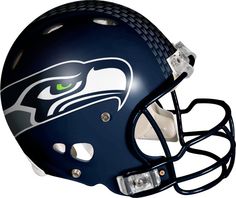
  • The aesthetics factor. They have the best-looking home-field Seahawks Helmetjerseys and helmets. Okay, that’s a subjective point. And not the most important point in their favor. But it’s true for me.
  • Fan participation. Seattle knows how to galvanize their fans—collectively known as “the 12th man.” CenturyLink Field is the noisiest in the league. The fans make a difference to games.
  • The Northwest is our home. We don’t live there. But we’re there in spirit. My wife is from Spokane. We both went to university in Washington, we were married there. We could retire there without regret. And we live in sunny California; so that’s saying something.

Naturally, it helps that the Seahawks are winners. But there are plenty of other reasons to like them. And like them a lot.

The Rittenhouse Coincidence


Here’s another one for the books. When things like this happen, I have to wonder, is there a conspiracy of coincidences?

Last night I saw the movie The Martian. I liked it, but this post is not about potatoes and slingshots (you’ll have to see the movie). It’s about what happened later, in a sequence of events leading up to tonight.

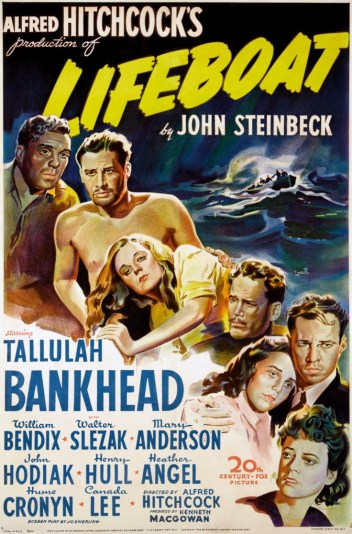
b29f467fef4559042e682c14b9ea8fffAfter the movie last night, I did some of the usual post-movie internet surfing and landed on the odd story of Tallulah Bankhead. Her best film performance, it was said, was in the under-rated Alfred Hitchcock film Lifeboat. So I read about Lifeboat. The story for the film was written by John Steinbeck. The film was released in 1944.

So tonight I thought I’d see if I can rent Lifeboat through my cable service. Turns out I can. I watched the trailer. In the brief clip viewers are meant to notice that the guy who’s appointed himself in charge is a “Mr. Rittenhouse.” One guy remarks to another, with sarcasm, that he should call Mr Rittenhouse “Rit.” Not too remarkable. So far.

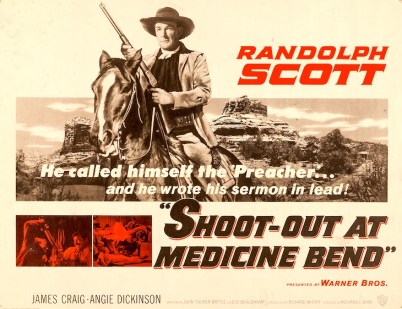
As often happens, I clicked some more, looking for other classic movies. In less than a minute I came across the Randolph Scott movie Shoot-Out at Medicine Bend. This caught my attention because it features Scott and two other actors I like: James Garner (of “The Rockford Files”) and Angie Dickinson (you know, “Police Woman”).


So I played the two-minute trailer for Shoot-Out at Medicine Bend.

The clip doesn’t reveal much of the story line. Randolph Scott is Captain Buck Devlin, recently mustered out of the cavalry. Sgt. John Maitland (played by James Garner) appears to be his sidekick. Devlin rides out of a small town heading west, with plans to return. Mshootout-medicine-bend-hs-sizedaitland stays behind for the time being.

After Devlin leaves, Maitland is seen managing some sort of transaction with the townspeople—swapping trinkets and such for weapons and ammo, it appears. A minor character steps up to the table where this is happening. He’s familiar to Sgt. Maitland. His name? “Mr. Rittenhouse.”

What are the chances that within two minutes of each other, I’d see brief clips of two completely unrelated movies, where in both a “Mr. Rittenhouse” is addressed by another character?

Maybe I have a name, finally, for the kinds of coincidences I sometimes write about here: “The Rittenhouse Coincidence.”

Will the Movie “13 Hours” Undermine Hillary Clinton’s Credibility about Benghazi?


In less than ten days the movie “13 Hours: The Secret Soldiers of Benghazi” will be released. There’s chatter that this will lend credence to the already credible claim that Hillary Clinton is not an admirably honest person.

Still, you have to ask, “Who should you believe? A former First Lady, New York Senator, and Secretary of State, or three guys named Tonto, Tig, and Oz?”

13-hours-movie-poster

***

The movie’s website and movie trailer: http://www.thirteenhoursmovie.com/

IMDb description: http://www.imdb.com/title/tt4172430/

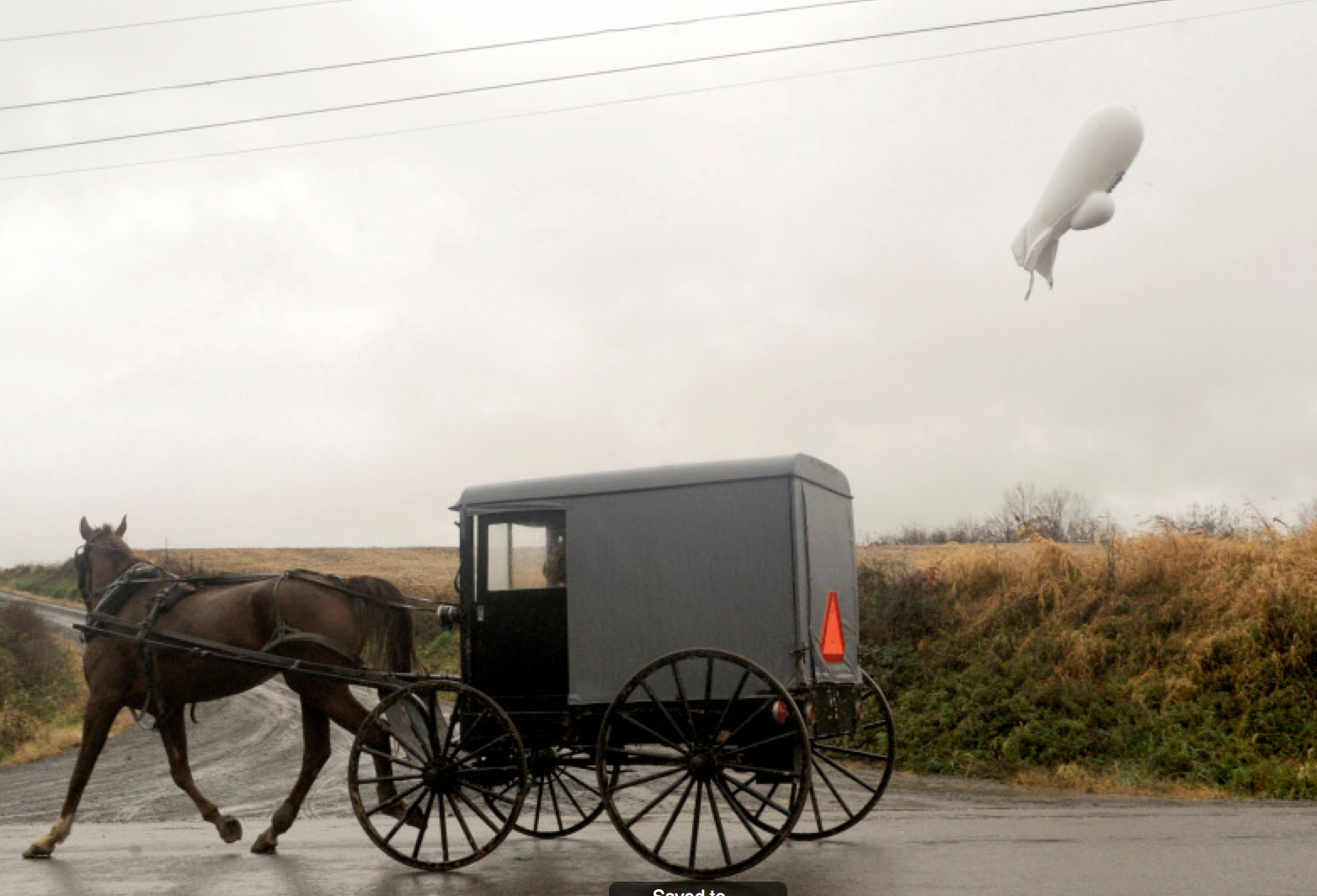
How’s This for Irony? American Blimps and Amish Buggies


Screen Shot 2015-10-28 at 3.19.00 PM

Questions for Democrats Watching Republican Debate #3


Here are three questions for Democrats to ask themselves as they watch the third Republican debate tonight:Republican Logo

  • “Among the top five contenders, who has the best chance of beating the Democrat nominee in the general election?”
  • “Among the top five contenders, who has the best chance of losing to the Democrat nominee in the general election?”
  • “Which Republican would I be most open to voting for if he of she wins the nomination?”
  • “Would I be likely to vote for one of these Republican candidates instead of the Democrat nominee?”

I hope to see your responses here.

Related links:

Shopping for a President: Republican Debate #3


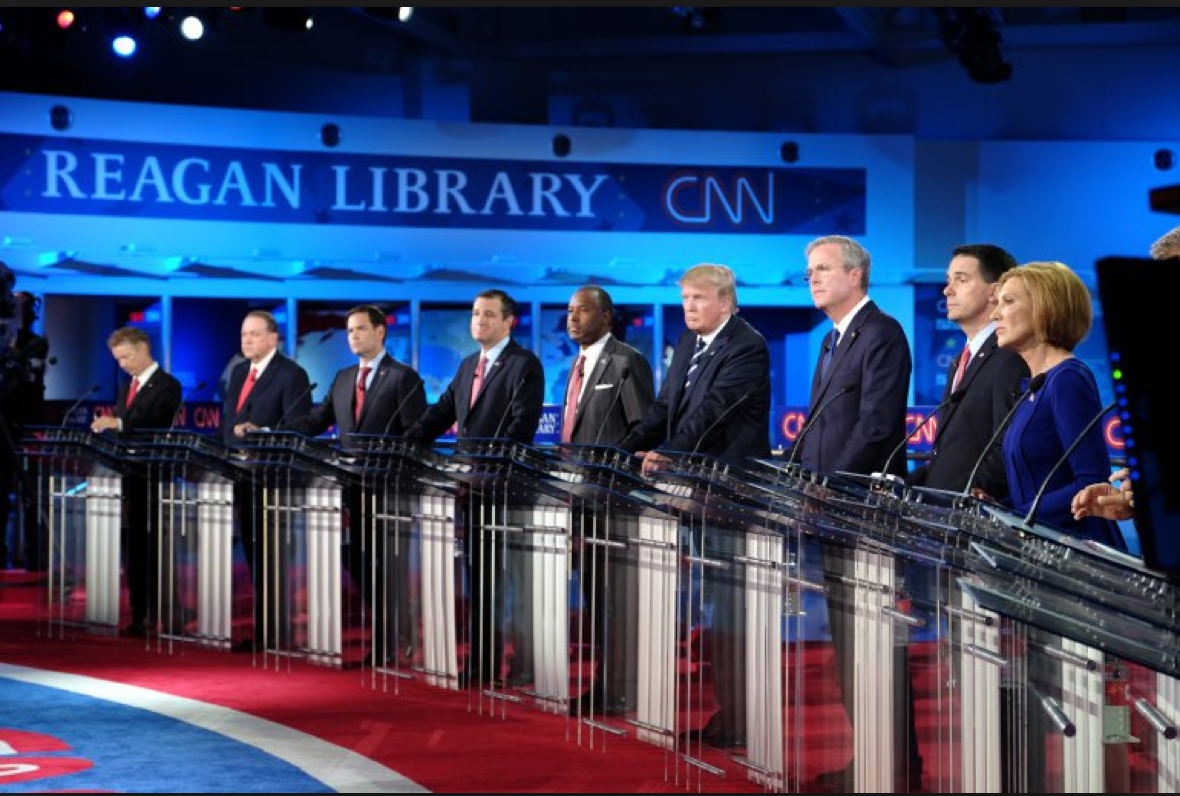
Screen Shot 2015-10-28 at 12.51.21 PMThe top ten contenders for the Republican nomination gather tonight for their third presidential debate. It will be aired on CNBC at 8:00 pm ET.

These debates offer the electorate one of the best vantage points for peering into the character and policy plans of the candidates. Many expect the field of serious contenders to be winnowed after tonight.

I hope you’ll be watching.

But what should we be watching for? What questions will inform our observations as the event unfolds? Here are some things that will have my attention:

  • There will be the usual one-upmanship on display. Look for the contest between Donald Trump and Ben Carson. Does the “religion issue” come up? How does that play out? How will their inevitable sparring affect their post-debate poll numbers?
  • Who apart from Trump and Carson do well? I expect Marco Rubio and Carly Fiorina will, and maybe Ted Cruz. They’ve all demonstrated tenacity.
  • I’m looking for Fiorina to do well. Hillary Clinton has made the fact that she’s a woman a central feature of her campaign. How would that play if the Republican nominee is also a woman? Fiorina needs to perform well again if she’s to gain more traction in the media.
  • Anticipate how the media will cover the debate in the days ahead. Fiorina has exceeded expectations in each debate so far. And she’s a woman. This should have attracted lasting media interest. So the shortage of media uptake has been puzzling. Maybe it has to do with the Trump vs. Carson obsession. I have a theory. Democrats care about who wins the Republican nomination. They’ve thought about the field of candidates and scored each one for his or her potential to defeat their own candidate. I think Ben Carson looks like an easy target. I think Ben Carson is an easy target. What about Trump? He has terrific potential to self-destruct and alienate people, if he can even win the nomination. If I’m right, the Dems have a vested interest in a Trump or Carson victory. That’s what I would be hoping for if I was Hillary Clinton. So if you’re a Republican, think of media attention as a weather vane. And consider the possibility that a left-leaning media will seek to control the buzz following the debate. Will they want a strong candidate to gain traction? Or will they continue promoting a national obsession with Trump and his closest contenders, whoever they may be at any given time?
  • As you listen to each debater, whose ideas have the most cogency? Who speaks persuasively about the most urgent domestic and foreign policy problems facing the nation? How specific is their plan? Do they know what they’re talking about? Have they done their homework? Are they focused on high priorities that matter to most of the electorate, including Republicans and Democrats?
  • Ask yourself, “Do I want to hear from this person for four to eight years if he or she becomes the next president?”
  • Ask yourself, “Would this person galvanize a nation with strength at home and abroad, with a winning persona, with an inspiring vision for the future?”
  • Ronald Reagan’s legacy has long been a reference point for Republican aspirations. As you watch the debate, does anyone sound most Reaganesque, in message and in tone.

You don’t have to be a Republican to play this game. You don’t have to be a Republican to have a stake in the outcome. If you’re a registered Democrat, you may want to consider the merits of a Republican candidate for the presidency.

What will you be watching for? Share your responses here.

Related links:

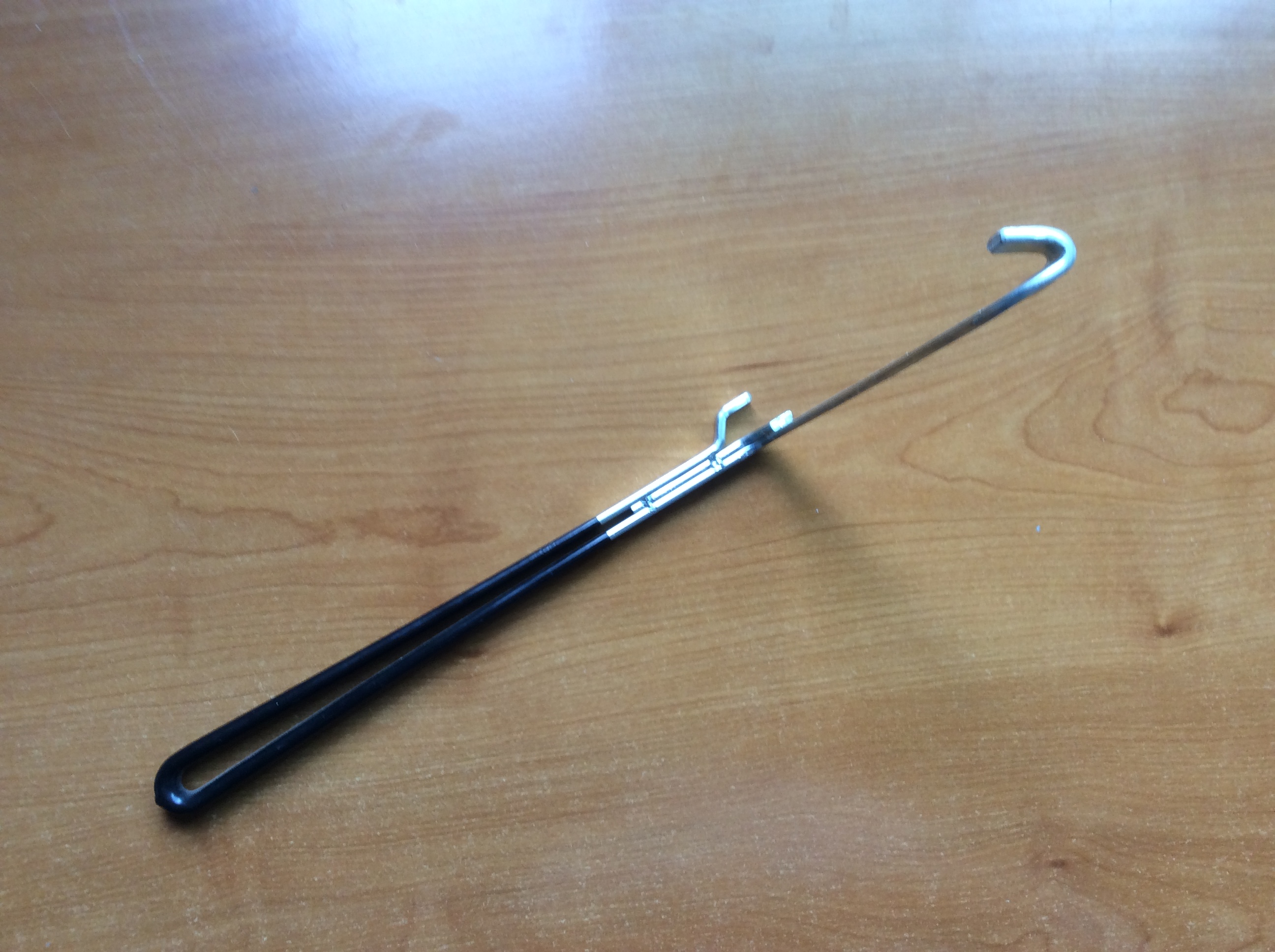
Thingamajig #3 – What Is This Object?


Here are three views of the same object.

View #1

Thingamajig-IMG_2904

View #2

Thingamajig-IMG_2905

View #3

Thingamajig-IMG_2906

Share your brilliance and answer these three questions:

  • What is it called?
  • What is it for?
  • How is it used?

Bonus question:

  • What creative uses for it can you think of?

What Kind of Presbyterian is Donald Trump?


Trump has lately been shouting that he is a Presbyterian, as if the only one who has trouble believing it is himself. This is not to say that most people believe it. But Trump needs to convince himself if he hopes to convince everyone else.

But what kind of Presbyterian is Donald Trump?

His claim might mean something if he would simply answer a few straightforward questions. For example: “Which ‘version’ of Presbyterian are you, Mr Trump? Are you PC USA (Presbyterian Church USA)? Are you PCA (Presbyterian Church in America)? Do you know the difference?” The PC USA is much larger, but only marginally theologically orthodox (to put it gently). The PCA is broadly evangelical and much closer to the tradition of Presbyterianism influenced from the outset by John Calvin, who was active during the European Reformation of the 16th century.

There are many other smaller branches of Presbyterianism spread out across the U.S. and Canada. Most of these are broadly evangelical. Is Trump the evangelical kind of Presbyterian?

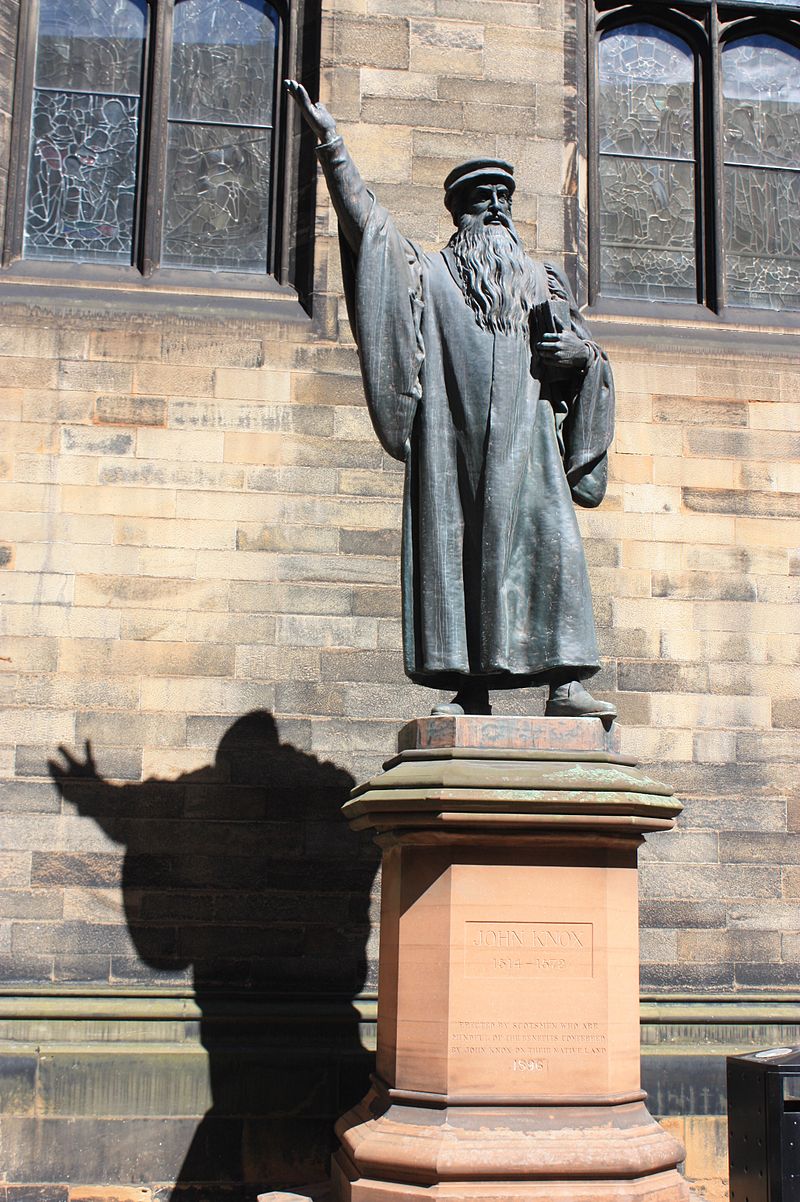
John Knox-New College EdinburghNow if Trump thinks he will recruit scores of evangelicals to his cause simply by calling himself a Presbyterian, then maybe he doesn’t know what a Presbyterian is. Or maybe he doesn’t get evangelicals. Or maybe he doesn’t credit the intelligence and discernment of evangelicals, including those who are Presbyterians.

Here’s another question for Trump: “What is the name of the Confession of Faith historically affirmed by Presbyterians?” I would be surprised if he could answer this question without prompting from his handlers. (Yes, Donald Trump has “handlers.”)

Suppose Trump can name that Confession. Then he should be asked if he can complete this sentence from the Confession: “The chief end of man is to ____________________ and ____________________.”

If Trump can’t answer that question, he may know less about Presbyterianism than he does about Seventh-day Adventism. If he can answer that question, then he should ask himself how his campaign rhetoric holds up in light of its standard.

***

Bonus Question: Whose statue is pictured here and what does this guy have to do with Presbyterianism?

Triumph Thunderbird 1600 Service Manual


At the Triumph Motorcycle Rat Forum there’s a thread discussing the possibility of purchasing a service manual for the Triumph Thunderbird 1600. While those who have purchased the manual say they’re glad they did, even at a cost of $45-$138. But there’s a better option: a downloadable PDF file of the manual that Triumph Thunderbird med 1600 Twin(a) costs nothing, (b) is searchable, (c) can be saved to any computer or iOS device, and (4) can be printed, in whole or in part, as needed. Does it really get any better than that?

I went looking for the manual in order to troubleshoot a leak from under the fuel tank. The PDF file includes everything needed for this, including a detailed step-wise description and a series of parts diagrams. (It even notes the placement of the fuel tank support tool—part no. T3880806. Alas, this tool is longer available from Triumph. Probably because it really isn’t needed.)

“Where Is Everybody?”—Exploring the First Episode of “The Twilight Zone”—Part 2


The popular TV series The Twilight Zone was first broadcast in 1959. “Where Is Everybody?” is the first episode of the series. It was broadcast October 2, 1959. I’ve used it in philosophy classes to foster discussion about knowledge and justified belief.

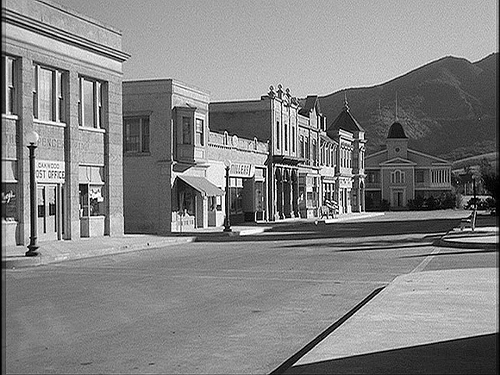
The Twilight Zone-Where Is EverybodyI use a two-part handout with questions for guided discussion. In an earlier post, I listed the questions in Part 1. Those questions are designed to draw viewers into the story and help them recall and think about the events that transpire. In this post I list the questions used in Part 2 to facilitate reflection and discussion of themes in philosophy.

I screen the episode in class, then lead discussion around a selection of these questions. There are more questions here than can be used during a class period. So I encourage students to take some time with the rest of the questions on their own. I mix it up a little by having students get into small groups to share ideas that are prompted by two or three of the questions. Then we discuss a few of the more philosophically technical aspects of the story as a whole group. This allows me to include some lecturing. At the end I may allow time for students to write their thoughts about a wrap-up question. Students then turn in their notes, taken while viewing the story and during discussion.

You’re welcome to experiment with this exercise in your own teaching. Or you may want to view this episode of The Twilight Zone with some friends, then have a discussion around the issues raised in these questions. If you have suggestions of your own, feel free to write them in the comments box for this post. And if you do try these out in class, let us know how it goes.

Rod Serling-The Twilight Zone-image

Part II – Some Philosophical Questions

  1. At one point the main character says he has the strange feeling of being watched. Why does he think this? First, when he says this, what evidence does he have? Later it turns out that he is being watched. Does this explain why he thinks he’s being watched? And do those who are watching know what he is experiencing? Support your answers with evidence from the story.
  2. Why does the man think he’s suffering from amnesia? Is he suffering from amnesia? He thinks he might be dreaming? Is he dreaming? Explain your answers with evidence from the story.
  3. In the soda shop the man spins three bookracks. The fourth one he comes to is already spinning. What is significant about this? What is displayed on the rack? What does he make of it? Why, given how the story ends, would he have this particular experience?
  4. How does the man conclude that he’s in the US Air Force? Is he justified in believing this? Is his judgment based on memory? If so, what accounts for his remembering this? Does he have evidence? If he does have evidence, is it sufficient to justify his belief that he’s in the Air Force? Is he instead being caused somehow to believe that he’s in the Air Force? At this point in the episode, are we supposed to be convinced that he’s in the Air Force? Support your answers with evidence from the story.
  5. How does this story compare with the Brain in a Vat thought experiment? What are some key parallels? What are the most significant differences? Could this episode be used to make the same point intended by the BIV argument for skepticism? Why or why not? Does the story raise any other epistemological questions? What are they? (See below for Brain in a Vat argument.)
  6. At one point the man says, “I must be a very imaginative guy. Nobody in the whole bloody world can have a dream as complete as mine.” And his “dream” is remarkably vivid. But there are no other people in his dream. Why wouldn’t such a complete dream world include people, especially if there are signs of recent human activity all around him? How does this eventually connect with the theme of the story? Think about how this might make sense in the final scene and when the narrator says, “Up there, up there in the vastness of space, and the void that is the sky, up there is an enemy known as isolation. It sits there in the stars waiting, waiting with the patience of eons, forever waiting, in the Twilight Zone”?

Brain in a Vat Argument for Skepticism

“The Brain in a Vat thought-experiment is most commonly used to illustrate global or Cartesian skepticism. You are told to imagine the possibility that at this very moment you are actually a brain hooked up to a sophisticated computer program that can perfectly simulate experiences of the outside world. Here is the skeptical argument. If you cannot now be sure that you are not a brain in a vat, then you cannot rule out the possibility that all of your beliefs about the external world are false. Or, to put it in terms of knowledge claims, we can construct the following skeptical argument. Let “P” stand for any belief or claim about the external world, say, that snow is white.

  1. If I know that P, then I know that I am not a brain in a vat
  2. I do not know that I am not a brain in a vat
  3. Thus, I do not know that P.”

– Lance P. Hickey, Internet Encyclopedia of Philosophy (http://www.iep.utm.edu/brainvat/; viewed 23 September 2015)

Click here for discussion questions in Part 1.

“Where Is Everybody?”—Exploring the First Episode of “The Twilight Zone”—Part 1


The popular TV series The Twilight Zone was first broadcast in 1959. “Where Is Everybody?” is the first episode of the series. It was broadcast October 2, 1959. This story takes a fascinating look at themes of interest even today. I’ve used it in philosophy classes to foster discussion about knowledge and justified belief.

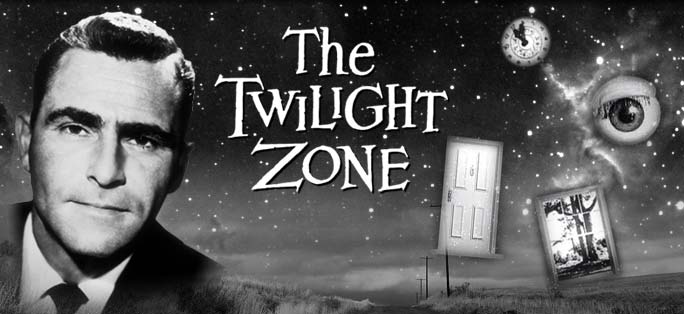
Rod Serling-The Twilight Zone-imageI use a two-part handout with questions for guided discussion. The questions in Part 1, reproduced in this post, draw viewers into the story and help them recall and think about the events that transpire. In a separate post I’ll list the questions used in Part 2 to facilitate reflection and discussion of themes in philosophy.

I screen the episode in class, then lead discussion around a selection of these questions. There are more questions here than can be used during a class period. So I encourage students to take some time with the rest of the questions on their own. I mix it up a little by having students get into small groups to share ideas that are prompted by two or three of the questions. Then we discuss a few of the more philosophically technical aspects of the story as a whole group. This allows me to include some lecturing. At the end I may allow time for students to write their thoughts about a wrap-up question. Students then turn in their notes, taken while viewing the story and during discussion.

You’re welcome to experiment with this exercise in your own teaching. Or you may want to view this episode of The Twilight Zone with some friends, then have a discussion around the issues raised in these questions. If you have suggestions of your own, feel free to write them in the comments box for this post. And if you do try these out in class, let us know how it goes.

Part I – Questions about Your Experience and Evaluation of this Episode

  1. The story begins with a man walking along a dusty road. The narrator says, “the journey we are about to watch could be our” What does this mean? How does this personalize the story? Notice, the narrator uses the first person plural (“we” and “our”), not the third person (“you” and “your”). Why might this matter?
  2. The man hears music playing and walks into a coffee shop. Thinking there’s someone in the back room, he calls out, “Say, I noticed there’s a town just up the road. What’s the name of it?” These are his first words in the story. Why would he ask this? Does it have anything to do with what he later begins to experience? Why would he want to know the name of the town? Does he ever learn its name? Why not? Later we find out that he can’t remember his own name. What is significant about this being a town with no name and his inability to remember his own name? (When does he realize that he can’t remember his name?)
  3. During the coffee shop scene, the man begins talking to himself. This happens when he pulls out a wad of cash and notices that it’s American money. When he then says, “I’m not sure who I am,” he’s still talking to whoever might be around. But we realize he’s actually talking to himself. This shift between direct address and self-address happens repeatedly throughout the story. For the story to work, we have to know what the man is experiencing. The episode depends on narration by the character himself, speaking aloud about what he’s experiencing. He’s reporting his thoughts and responses to what he encounters. But he transitions back and forth between talking to others and talking to himself. These transitions back and forth need to be smooth to move the story along and to keep us informed about what’s going on in the mind of this man. How effective is this device?
  4. What is significant about the following events:
  • breaking the clock in the coffee shop?
  • crashing into a mirror in the theater?
  • discovering that the “woman” in the passenger seat is a mannequin?Twilight Zone-Oakwood Telephone Booth-image
  • the man’s conversation with the mannequin when she tumbles into the street?
  • the telephone ringing?
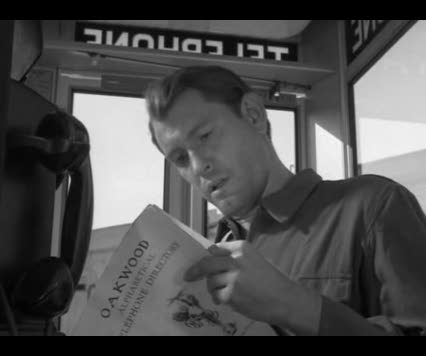
  • getting trapped in the telephone booth?
  • the gong of the clock in the church tower?
  • the film clip scene in the movie theater?
  • the cigar still burning in the ashtray?

Is there any symbolism here? What do these events reveal about the character, once we know the real nature of the experiment? What would you add to this list?

  1. At the outset of the story, the man is relaxed and casual. When he discovers there are no people in the town he’s mystified. At times he seems to be humored by his circumstances. There’s his encounter with the mannequin, and the moment when he’s stuck in the phone booth and says, “This is an absolutely hysterical town, and I’m growing very fond of it.” In due course, however, his experience is increasingly disturbing, until he reaches the heights of desperation. What is happening to him? What is your sense of the explanation for this as things unfold? Does your understanding of his plight change at all by what is revealed at the end?
  2. How is the character delivered from his artificially manufactured experience? In his imagination he’s pressing a button labeled WALK, but in reality he seems to be pushing an actual button. What purpose is served by this button?
  3. Eventually we learn that the man’s name is Mike Ferris. And we learn the backstory. Why has Ferris been kept in an isolation booth? What was the purpose of the experiment?
  4. What did you experience as you watched this story unfold? When the man first discovered there was no one in the town, what did you think would happen next? Were you right? As the story went on, did you expect something dreadful might eventually happen to him? What did you think might happen?
  5. Describe what you were feeling as the man noticed there was a “woman” in the passenger seat of a car and he began to shout out to her? How did it make you feel when he opened the door and the mannequin tumbled out onto the street? Why would Ferris have imagined this?
  6. Movies often begin by giving viewers a reliable sense of what the story is about. This story doesn’t do that until the end, with only five minutes remaining. But the progression of events shapes our beliefs about the story and its meaning. Based on the clues provided in the story, we naturally seek to make sense of what is happening and what will happen next. How did your beliefs about these things shift as time went on? What did you think this episode was about when the man first walked into town? What did you think when he went looking for someone to find out what was going on? When he walked into the coffee shop and there was coffee brewing, but no one was around? When he ran into the jail? When the phone started ringing? When he got stuck in the phone booth? When he went into a movie theater and a film was playing, though no one was there? Why did you feel and believe the things you did? What elements of the story were the basis of your beliefs as they shifted over time?

Reading Up on Argentina, Birthplace of Pope Francis


With the Pope’s visit to the U.S. this week, now is a good time to add a few choice items to your reading list.

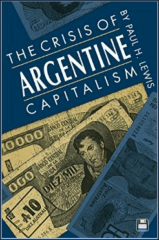
Pope Francis is from Argentina, a country in crisis. That includes economic crisis. For background to the history of capitalism and free enterprise in Argentina, have a look at The Crisis of Argentine Capitalism, by Paul H. Lewis. Paul Lewis-Crisis Argentine Capitalism-book coverArgentina once boasted a vital economy. Today it struggles under a regime that has frittered away the capital of a storied nation and crippled economic opportunity among the rank and file. Lewis documents the history of this condition and explains the unique story of economic decline in Argentina. In the same vein is Vito Tanzi’s informed on-the-ground account in Argentina: An Economic Chronicle—How One of the Richest Countries in the World Lost Its Wealth. Tanzi, an Italian, spent three decades working in various roles for the International Monetary Fund.

For those seeking a travelogue, Bruce Chatwin’s In Patagonia is the celebrated gold standard. Condé Nast, a travel journal, ranks it among “The 86 Greatest Travel Books of All Time”. The London newspaper Telegraph includes it among “The 20 Best Travel Books of All Time”. William Dalrymple, writing for The Guardian, proclaims it his favorite book in the category of travel literature. He judges that it is probably the most influential travelogue since World War II.

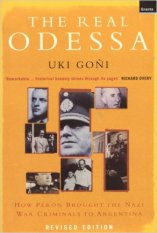
Uki Goñi-Real Odessa-Nazi War Criminals to Argentina-Book CoverMany have forgotten, or never knew, that Nazi war criminals found safe have in Argentina under Juan Perón. Uki Goñi narrates this story in his book The Real Odessa: How Perón Brought the Nazi War Criminals to Argentina. He documents collaboration between Perón and the Vatican. Kenneth Maxwell reviews the book in the journal Foreign Affairs. For a fuller description and evaluation of Goñi, see Richard Gott’s review in The Guardian. Gott doesn’t dispute the evidence of Catholic collusion.

Altogether incidentally, one of my favorite films, Butch Cassidy and the Sundance Kid, starring Paul Newman and Robert Redford (1969), recalls the demise of these affable ruffians in a hail of bullets while hiding out in Argentina.

Note: All links are to Kindle editions at Amazon.com