Why Are Academics Such Bad Writers?


Medieval illustration of a Christian scribe wr...

Image via Wikipedia

“Our academic journals radiate bad writing—I store my journals on the shelf farthest from my desk to avoid the fallout.” This is Paul Silvia’s take on the modus operandi of far too many academic writers.

What is “bad writing”?

It’s writing that …

  • uses impenetrable English;
  • revels in ambiguity;
  • requires backtracking just to follow the point;
  • ensures a slight readership by the specialization of its vocabulary;
  • deploys arcane symbolism that intimidates readers;
  • can be recommended as a soporific, even to specialists in the same field.

That’s my list.

Paul Silvia believes there are three reasons for bad writing among academic authors:

1. They want to sound smart.
2. They never learned how to write well.
3. They don’t spend enough time writing.

My list would be longer and more focused:

1. They don’t know good writing from bad writing. If all they read are journal articles and academic monographs, then they’re on a steady diet of poor writing. The best writing is nourished by close reading of the best of writers, both inside and outside one’s discipline.

2. They don’t believe that good writing matters. “Academic writing gets published without concern for stylistic quality, so why bother?” There are two reasons to bother. First, the academic writer should pursue excellence, rather than what is commonplace. Second, the best writing attracts more readers. The ratio of readers to authors of journal essays is appalling. Monographs are pricey because the expected readership is low. But the best writers within a discipline, because they reward their readers with more than originality of content, are read by more people, and they are read more faithfully by people who like their writing.

3. They believe that good writing will reduce their publication prospects. More academic authors are looking for opportunities to publish in the broader market. Their prospects are dim if they can’t write with style. Those who are content to write as academics for academics should understand that quality of writing that does not compromise quality of scholarship has a better chance of publication. And for those who write for interdisciplinary journals, the need is even greater, since non-specialists will need more help in their reading and more reasons to keep on reading.

4. They confuse good writing with casual writing, or popularizing. Writing with style means one thing when writing for peers, and something else when writing to inform or persuade Joe Six-Pack. A good writer understands this and adjusts her style accordingly.

5. They don’t realize that good writing can be learned. I have three suggestions for those who wish to improve their writing style.

First, read others who write with style. Observe their practices. Notice how they employ metaphors and similes. Look for sharp and arresting turns of phrase. Study transitions from paragraph to paragraph and from section to section. Look for patterns that explain their capacity to sustain interest. Think of this as a component in the research you do for your writing projects.

Second, spend time in carefully-selected books that point the way to improved style. Books of this kind should practice what they preach. Here are a few that I recommend:

Third, write more—with deliberate attention to style. Be patient with the process. Don’t expect too much too soon. Write a little everyday.

6. They’re impatient in their writing. Writing well, with style, takes more time and effort. Many writers simply don’t want to spend the time. They’re undisciplined writers who fancy themselves sufficiently productive simply because they have countless publications to their credit.

7. They think that to be a good writer you have to be a perfectionist. Not true. What you have to be is patient, persistent, and prioritized. Only the writer with meager styling skills believes that perfectionism is required. But a practiced writer, who habitually attends to matters of style, comes to write more naturally and comfortably. I venture to say that the best stylists have the easiest time of it and have the most fun doing it.

Source:

More good reading about bad writing:

Doug’s related posts:

Other:

Why Should the Devil Have All the Good Music?


I discovered the music of Larry Norman through a friend in 1979. I never made it to a concert, but I’ve listened to his music for 30 years. And I’ve introduced others along the way. (I play his song “The Outlaw” in my course on Christian apologetics.)

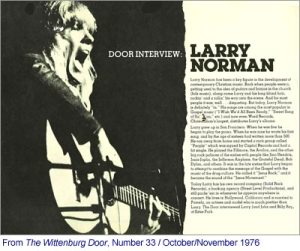
Today I came across an interview he did with a magazine called The Wittenberg Door, published in 1976.

In the interview, Larry talks about the Jesus Movement, “Jesus Rock,” Christian music, signing autographs, being a celebrity, and having heroes. There’s a lot there for Christians to chew on today. I’m not a musician, but my world, what you might call the “Christian knowledge industry,” has its own problems with integrity.

Larry’s perspective applies at all levels of Christian engagement with culture. I encourage thoughtful consideration of what he had to say in 1976.

Note: The title of this post comes from Larry Norman’s song “Why Should the Devil Have All the Good Music?”

The Official Larry Norman Web Site

Is Witchcraft Merely a Passing Fancy among Emerging Adults?


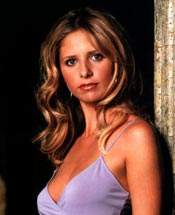
Buffy

As a university professor, I have a deep interest in the lives of “emerging adults” and trends occurring among them. Today, one such trend is commitment to Witchcraft.

A popular website, TeenWitch.com, claims that

Witchcraft is the fastest growing belief system in the U.S. and the second largest religion in the U.S. Witchcraft (including Wicca) passed Buddhism in 2005, passed Hinduism in 2007, passed Islam in 2008, and passed Judaism in March of 2009.

More young women than men are attracted to Witchcraft. Often, their initial introduction to the Witchcraft movement is through popular media: TV shows like Buffy the Vampire Slayer and feature films like the Harry Potter series. Initial curiosity is often fed by internet searches that put young adults in possession of more information and in contact with established members of the Witchcraft community.

Many emerging adults simply accept the neopagan interests of their peers without seeking inclusion. Others, who investigate a little more fully, lose interest quickly. But a marked number take to Witchcraft quite seriously.

The movement deserves greater attention and more sensitive understanding. It’s tied to a worldview that looks particularly attractive to a group of today’s emerging adults who seek to make sense of their experiences—disappointments, spiritual needs, loneliness, quest for meaning, social dissonance, etc.—on a deep level.

Witchcraft’s associated worldview is supported in various ways by a general culture of relativism and experience-based conviction (over rational inquiry and the assessment of evidence). I believe the Witchcraft movement has real staying power, that it will endure as the stabilizing center for many young people now being initiated into its sensibilities. In other words, it’s more than a passing fancy or form of teenage rebellion or angst.

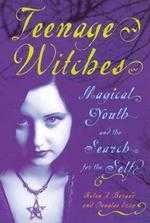
A good place to begin understanding the movement is with a book by sociologists Helen A. Berger and Douglas Ezzy: Teenage Witches: Magical Youth and the Search for the Self. Berger and Ezzy conducted intensive interviews with self-identified witches in the U.S., Great Britain, and Australia. Their book describes their findings. It includes transcripts of several interviews.

Compared with other literature I’ve read, this book by Berger and Ezzy is most helpful as an introduction to the movement among young people. Their conclusions are tied to specific empirical data. They describe the pathways by which young witches often become committed to Witchcraft. They recount the experiences and practices of young witches, and explain the notions behind them. They relate the Witchcraft movement to broader cultural sensibilities, especially (and most helpfully) in connection with the effects of postmodernism.

(Another book to make this connection is Pagan Theology: Paganism as a World Religion, by neopagan Michael York.)

Berger and Ezzy take care to describe the elements of an individual’s experience that dispose him or her to the blandishments of Witchcraft. They explore the ways family and friends have responded or reacted to the revelation that a son or daughter, friend or neighbor, has become a witch. And they describe how these responses have affected young people who consider themselves witches.

Berger and Ezzy are reluctant to criticize the movement, and they are remiss, I believe, in their conclusion that young adults are not injured by commitment to Witchcraft. They believe that for some young people, Witchcraft is a viable way of making sense of their world and living with greater purpose and satisfaction. They do not critically examine the worldview components of Witchcraft, in the interest of assessing their truth value. They seem themselves to be heavily influenced by relativizing tendencies in Western culture.

But their research and clear exposition have great value, whatever your view of these shortcomings. The authors are, after all, examining the movement as interested sociologists. Value judgments, whether positive or negative, are deliberately kept to a minimum. My impression is that this book could be read by emerging adults who are either fascinated with or already committed to Witchcraft, without causing them to feel misunderstood or prematurely judged.

More important, the book is an excellent entry point for parents, teachers, church leaders, and any others who are confused by the Witchcraft movement and concerned about the involvement of young people they know.

Did Dr. Laura Use the N-Word?


It’s all over the media. Dr. Laura Schlesinger has left radio, over a dust-up over her alleged use—eleven times (!)—of the so-called “n-word” in conversation with a black female caller.

Notice I said “alleged.” The fact is, Dr. Laura did not use the “n-word” at all. Nope, not even once. She said the word, but she did not use it. How do I know? Because if the word she said had been put in writing, as she said it, it would have been placed in quotation marks, indicating that she was not employing the word to refer to something or someone or some class of people, but to speak about the word itself. This is known as mention. It is fundamentally different than use. In mention, a word is singled out for direct consideration.

The caller now says she has absolutely no respect for Dr. Laura. This is nuts. I watched in shock as Dr. Laura, who obviously agreed to appear on the show, was grilled by a CNN anchor for her wrongful action. What wrongful action?

Let’s be clear. Dr. Laura is not being arraigned because she used the n-word, but because she said the n-word.

* * *

The distinction between use and mention is well-known in philosophy and deserves greater respect. Consider this way of explaining the point from an excellent reference work in philosophy.

  • Sentence 1: The Nile is longer than the Murrumbidgee.
  • Sentence 2: The Nile is shorter than the Murrumbidgee.

The Nile and the Murrumbidgee are rivers. Which sentence, (1) or (2), is true? Answer: (1). The correct answer is determined by the comparative lengths of the two rivers. The Nile is the longest river in the world, around 4000 miles. The Murrumbidgee River of New South Wales is much shorter, at about 870 miles.

Now consider:

  • Sentence 3: “The Nile” is longer than “the Murrumbidgee.”
  • Sentence 4: “The Nile” is shorter than “the Murrumbidgee.”

Which sentence, (3) or (4), is true. Answer: (4). Why? The correct answer here is determined by the lengths of the phrases “the Nile” and “the Murrumbidgee” in sentences (3) and (4). “The Nile” (8 characters, if we include one space) is shorter than “the Murrumbidgee” (16 characters, if we include one space). “The Murrumbidgee” is twice as long as “The Nile.” So (4) is true and (3) is false. The lengths of the rivers has no bearing on the question.

[See A. W. Sparkes, Talking Philosophy: A Wordbook, p. 8.]

* * *

I have a question for readers. How are we supposed to talk about concepts without words, and about words without the words themselves? Today, apparently, you can’t even say the “n-word” for the purposes of mention and analysis. So how are people supposed to know what word the term “n-word” refers to? (You can say “the n-word” but you cannot say the word that “the n-word” stands in for.)

Outrage over an exaggerated sense of meanness in Dr. Laura’s radio counsel is another move toward the coarsening of culture in the direction of a culture of vicitimization. The poor woman who called Dr. Laura for her advice in a matter was poised to be offended. She’s been conditioned by shabby thinking and a form of racism that continues to poison public discourse.

* * *

If I say that I don’t like the “n-word,” what do you suppose I mean by that? Do I mean that I don’t like the six-letter word that is signaled by the hyphenated word? Or does it mean that I don’t like the hyphenated word?

Frankly, I don’t like either one. The first I don’t like because it is pejorative when used, and obviously (but inexplicably) dangerous even to mention. The second I don’t much like because it’s just plain stupid. It’s the only word currently tolerated for the purposes of referring to the altogether different six-letter word that starts with an “n” and is rightly offensive when it is used.

So here’s another question. What’s the difference between using the phrase “the n-word” to refer to, you know, the n-word, and mentioning (as opposed to using) the n-word itself?

Oh, and why should Dr. Laura have to leave radio over something like this?

Best Reason for Homeschooling


“Homeschooling” is a noun; “homeschool” is sometimes a noun, sometimes a verb. “We homeschooled our daughters”—verb, past tense. Also, a true sentence.

This week we move our second daughter to university. She, like her older sister did, begins one year sooner than she would have if she had not been homeschooled. But this is not why she was homeschooled.

We began homeschooling in 1998, in part as a convenience for our family while I enjoyed a sabbatical at the University of Oxford. Homeschooling was portable. It was a reasonable experiment. Also a successful experiment.

At that point, our older daughter had been to public school for kindergarten and first and second grades. These were not bad experiences. But there was something missing. Later, she experimented with a return to public school in high school and changed her mind after one semester.

Our younger daughter was homeschooled from the beginning, but attended junior high for two years at an excellent private school. Then it was back to homeschooling.

Each year, and for each of our daughters, we made the best decision we could about their education. This is a parent’s responsibility. Thankfully, it is a freedom we still enjoy.

With each decision we considered several things:

  1. Where could they be taught what they needed to know?
  2. How would they be taught what they needed to know?
  3. Would the things they would be taught be true?
  4. Would they be taught how to think intelligently for themselves?
  5. Would they eventually be able to teach themselves the truth about things yet to be learned?
  6. Would they be treated fairly and respectfully by their teaching authorities?
  7. Would they be learning in a physically safe environment?
  8. Would they be learning in an emotionally healthy environment?

These were our major questions. Athletic programs, music programs, theater programs, and the like, were important but secondary. Whatever talent they had for any of these things deserved development, but not at the risk of shrinking—or, God forbid, losing—their souls.

Now I think of it, much of our concern reduced to three basic things, revolving round one major concept: (1) proper respect for truth; (2) effectual methods of obtaining truth; and, (3) behavior in accordance with truth.

The second of these depends on growth in reasoning powers and skill in assessing evidence. It’s here where many educational options in the United States prove so terribly inadequate.

I was reminded of this today when I came across a nice little article by Susan Wise Bauer, called “Dodging the Homeschool Stereotype.” She explains why she opted for homeschooling in the style of classical education:

Classical education leans heavily on the evaluation of evidence: The educated child learns to avoid logical fallacies, to decide whether arguments are trustworthy or flawed.

I believe she’s right when she adds:

And both secular and religious classrooms are prone to simplistic thinking.

The reasons why traditional classrooms, whether secular or religious, are prone to simplistic thinking deserves development in other posts. But I stress the point that simplistic thinking is the blight of current cultural discourse, infecting all of our institutions—political, educational, ecclesiastical—and methods of knowledge management—schools, media, church, and home.

It happens that homeschooling is susceptible to the same infection. But it need not be. And parents have more direct control over this dimension of childhood education if they do not rely on traditional classrooms.

Homeschooling is a choice. Parents must be free to exercise the option. The future of our culture, the outlook for the common good, may depend on the success of homeschooling.

Dodgy Ruminations about an Afterlife


“God bless non-scientific narratives,” writes Jacques Belinerblau, a professor at Georgetown University. Of course, this is with tongue in cheek, since, though he’s Jewish, Berlinerblau is an atheist.

He speaks sincerely, however, about a hopefulness grounded in certain non-scientific narratives, for he’d like to believe that there’s an afterlife. Actually, he finds it hard to believe that there is not an afterlife of some kind.

So he believes that God does not exist, and sorta-kinda believes that there is an afterlife.

This lede sets the context for Berlinerblau’s review, titled “You’re Dead. Now What?” of four books on the topic:

Berlinblau is a touch dismissive of D’Souza. But Berlinblau, I believe, is right that there really isn’t good strictly scientific evidence for an afterlife.

If Berlinerblau’s review of Frohock is rooted in a reliable summary of the book, I’d say it’s worth a look. But it sounds like Frohock is working from some sort of pantheist or neo-pagan metaphysics (or worldview). I wish Berlinerblau had said more about this.

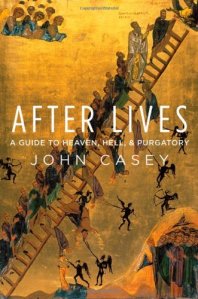
This reviewer makes Casey’s book sounds especially dull. But he has positive things to say about it. And I must say that the pages of this book are cloaked in the most impressive cover of the bunch.

Johnston appears to be one of those philosophers who has to be brilliant simply because it’s frequently impossible to understand what he’s saying. I suspect he’s of the “continental” variety. Berlinerblau’s sample quote from the book is almost a dead give-away.

I probably will read Frohock, eventually. He’s supposed to be ambivalent about whether science could yield evidence for an afterlife. And yet, says Berlinerblau, he’s a materialist. Like Berlinerblau, I find this confusing. If an individual person is completely constituted by material stuff and its physical organization, and this stuff dissolves—or its structure breaks down—following death, then what is the nature of the life beyond death?

The review is published in The Chronicle of Higher Education, of all places. This indicates re-entry of the possibility of an afterlife into academic surmise. Until recently, most scholars would rather die than enter a conversation about such things. Possibly, most scholars still have this preference. (It has not always been so.)

It’s equally fascinating that the traditional Christian doctrine of the afterlife is waved off with an almost pious flick of the wrist. (Check out the review and see if you agree.)

Berlinerblau’s book review enters a general conversation that is cautiously making its way back into serious discourse. But this discourse is dominated by a distinctly secular hope for a pleasant afterlife. Does this sound to anyone else like whistling past the graveyard?

Afternotes:

1. Berlinerblau adorns his essay with a choice literary quote:

The flesh would shrink and go, the blood would dry, but no one believes in his mind of minds or heart of hearts that the pictures do stop.

—Saul Bellow, Ravelstei

2. Christopher Benson reviews the Casey book, together with A Very Brief History of Eternity, by Carlos Eire, for the Christian periodical Books and Culture. Benson titles his review “Without End—Changing conceptions of the afterlife.” Indeed.

***

What do you think?

  1. What is the best evidence for an afterlife?
  2. If you believe in an afterlife, what will it be like?
  3. What is the best argument that there is no afterlife?
  4. Would there have to be a God for there to be an afterlife?
  5. Are you hoping for an afterlife?
  6. Are you expecting an afterlife?

Interview with Brian Auten


I was interviewed recently by Brian Auten. Most of Brian’s questions concern the topic of miracles. Today Brian has posted this audio interview at his website and can be heard here.

Doug’s other posts on the subject of miracles:

Mysterious Opening Lines: Le Carré, Ludlum, and Others


GIGA Quotes, an online source for quotations, has listed 43 pages of first lines from books, beginning with Merrian-Webster’s Collegiate Dictionary. This amounts to more than 2300 first-line excerpts from “classical, notable and bestselling books” (here).

First lines interest me. They interest me as an author, and as a reader. Read more of this post

“If God, Why Evil?” Presentation Slides


Today I participated in the “Always Be Ready” conference in Downey, CA. The title of my presentation was “If God, Why Evil?”

You’re welcome to view the Keynote slides I used for this presentation. Just click on the following link:

Doug Geivett, “If God Why Evil” (2010.07.31)

Related post here.

Audio Post: A Commentary on Four Novels


This is my first podcast or audio post. It’s kind of an experiment—a discussion of four novels that I read the past week during a refreshing vacation in Washington and Idaho.

Here are the books with links to Amazon:

Doug to Speak at the “Always Be Ready” Conference July 31


Doug will be speaking at the “Always Be Ready” conference at Calvary Chapel, Downey, CA—July 31, 2010—2:00-2:55 pm. Topic: “If God, Why Evil?”

For registration information and other details:

“Always Be Ready” Conference—Calvary Chapel Downey

This conference is sponsored by the Veritas Evangelical Seminary.

Update (1 August 2010):

Keynote slides for this presentation can be viewed here.

You, Me, the Cat . . . and the Patio Umbrella


Source: Graphjam.com

Feminist Sensibilities as an Issue for Christian Apologists


Blaise Pascal (1623-1662) wrote that Christians should “make good men wish that Christianity is true, and then show them that it is.” Both tasks are severely neglected by the Church.

It seems we’re surrounded by people who hope that Christianity is not true. The major media, at least, often express suspicion of Christianity. Sometimes, to be sure, the media go further and deride Christianity. But they seldom deride Christianity with arguments that its central truth claims are false. Rather, they deride its attitudes and practices.

Attitudes differ from beliefs (except in the technical philosophical sense that a belief is a “propositional attitude”). What, for example, do Christians believe about the status of women—in society, at the workplace, at home, in marriage? To be candid, Christians don’t agree in their beliefs about these matters. Read more of this post

My Right to Park My Car in Front of My House


There’s a debate in my town about whether residents should be free to park their vehicles in the street in front of their homes, without threat of getting a parking ticket.

Last weekend, The Orange County Register published a story about this— Read more of this post

Proficient Motorcycling


The Ultimate Guide to Riding Well—That’s exactly what this book is. Proficient Motorcycling, by David L. Hough, is good in so many ways. My copy arrived from Amazon yesterday and I’ve read about 100 of its nearly 300 pages. Everyone who rides should own this book and refer to it often. Read more of this post