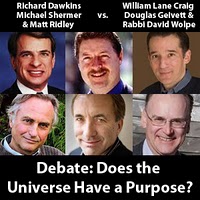
Shermer, Ridley, and Dawkins vs. Craig, Wolpe, and Geivett: Retrospective on the Debate


I’ve finally returned home after two weeks of travel and speaking, which included a debate in Puebla Mexico. I posted details about the event here prior to leaving for Mexico. There you’ll find links to English and Spanish versions of YouTube recordings of the debate.

I’ve had the chance to read some reactions posted in the blogosphere about this debate. I now want to list some specific points and observations of my own, partly to add clarity and partly to set the record straight about some things I’ve seen written.

I hope you’ll watch the debate and leave your objective evaluation in the comments box of this post.

  1. Usually, a debate question features one side taking the affirmative and the other side taking the negative. Here, the question for debate was “Does the universe have a purpose?” It was obvious from the correspondence I received from the debate organizers that I was to team with two individuals who agreed in taking the affirmative, and that the other three would take the negative—that is, they would deny that the universe has a purpose.
  2. The three of us on the affirmative side—William Lane Craig, David Wolpe, and Doug Geivett—all believe that whether the universe has a purpose depends on whether or not God exists. So we could argue that the universe does have a purpose if God exists, even if time did not allow for detailed arguments that God in fact exists. It would be up to the others—Matt Ridley, Michael Shermer, and Richard Dawkins—to argue that the universe does not have a purpose. Presumably, they would have to include arguments that God does not exist, since that would be crucial to their claim that the universe does not have a purpose. Or, they might argue that even if God exists, the universe does not have a purpose.
  3. The moderator introduced us as “theists” and “atheists,” and framed the debate as a debate between theists, who affirm the existence of God, and atheists, who deny the existence of God. Thus, two questions were conflated from the beginning: (1) “Does the universe have a purpose?” and (2) “Does God exist?” The question for any participant, then, was whether to focus on question (1) or question (2).
  4. Each of the six of us was allotted exactly six minutes for initial arguments. We were timed and stopped at six minutes. Strict enforcement of time limits is characteristic of debates, but not always understood by observers. I’ve noticed that some who’ve commented on the debate at various blogs have remarked that the moderator should not have interrupted debaters when they were about to make an important point. (The debate was part of a larger conference program.)
  5. Rebuttals were limited to three minutes each. Following rebuttals, Michio Kaku was permitted time for a few comments on the debate through that point. His remarks were followed by 90-second closing statements.
  6. The decision about which side would go first was determined by a coin toss. The atheist side won the coin toss and Matt Ridley went first. Each team was permitted to sequence its presenters in the order they preferred. Our side followed the order Craig-Wolpe-Geivett for all three components of the debate. We made our decision based on the tasks we each had agreed to perform during the debate. In my judgment, this sequence proved to be effective.
  7. How did the opposing teams work together as teams? It should be obvious that our team of theists worked very closely together. Our individual presentations complemented each other neatly and intentionally. We provided a united front in our presentation of evidence and response to objections. We worked together across the board. To illustrate, in his rebuttal, Bill Craig used a brief that I had prepared in response to the problem of evil, should it come up. Collectively, we argued for two main contentions: (1) If God exists, then the universe has a purpose, and (2) If God does not exist, then the universe does not have a purpose.
  8. Close observers will understand that our two main contentions directly addressed the published topic of the debate: “Does the universe have a purpose?” Further, they speak to the question of God’s existence in a direct manner. Third, as conditional statements, they do not require for their support any argument that God does, in fact, exist. Fourth, we repeated these two contentions for two primary reasons. First, to remind the audience of our claims, as debaters on both sides took turns speaking. This is a matter of effective communication. Second, to remind the atheist team that this was our position and that it was this that they must address in their response to us. This is a matter of holding the other side accountable to the actual arguments we mustered during the debate. I’ve seen some in the blogosphere complain that I repeated our two fundamental claims in my opening statement. But this was after David Wolpe’s opening statement, which did not repeat the claims, and three opening statements by the atheists. Nearly half an hour had passed since the two claims had been explicitly stated.
  9. In his opening statement, Bill Craig explained why the universe would have purpose if God exists, thus supporting our first contention. He then acknowledged that whether the universe actually does have purpose, supposing our two contentions are true, depends on the existence of God. So he used the balance of his six minutes to list several arguments for the existence of God, which all have been developed in detail in his books. In effect, he placed them on the table for the atheist side to refute.
  10. In his opening statement, David Wolpe developed the argument from fine-tuning for the existence of God, and hence of purpose for the universe. He then drew a close existential connection between this argument and the human quest for meaning and purpose.
  11. I my opening statement, then, I—Doug Geivett—recalled our two main contentions, then addressed the possibility that some on the other side would argue that the universe has purpose even if God does not exist. Following that, I developed an argument, not often heard in debates, that our very interest in the question of the debate is evidence that God does exist.
  12. So the trajectory of our three arguments on the theist side was itself purposeful and progressive. Together they represented an eighteen-minute opening argument for theism and purpose. If you put these together in the order in which they were presented, you’ll see that they made for a natural progression, with a build-up along the way toward a climax.
  13. It would be absurd, then, to expect any one of us to “carry the day” within the narrow scope of our individual presentations. For example, it’s ridiculous to scold Bill Craig for failing to develop theistic arguments more fully. Considered as a unified whole, our three opening statements complement and serve each other.
  14. Now what about the atheist side? This is my opinion and people are free to disagree, but I believe the atheists operated much more independently of each other, and even contradicted each other. In his opening statement, Matt Ridley argued against the idea that the universe has a purpose. Michael Shermer, on the other hand, argued for purpose, precisely as I predicted he would when Bill Craig and David Wolpe and I discussed strategy prior to the debate. This is why my opening statement includes a response to this type of claim with a special argument for the existence of God (see description above), and why my opening statement was third in the series. The atheists struggled to clarify the distinction between purpose in the universe and purpose on the level of human existence. Thus, they seemed sometimes to be arguing against purpose and sometimes to be arguing for purpose.
  15. While the atheists alluded to the argument from evil against theism, no one developed the argument in any detail. This was quite surprising and seemed to me a missed opportunity for their side. Of course, we were prepared for something more strenuous, and Bill Craig did address the argument, even more fully than it had been presented. Notice, too, that Craig’s response compounded the evidence we presented for the existence of God, since it embedded an argument from evil for theism. The atheists never had another word to say about this. Nor did the atheists answer my argument for theism. And in response the Wolpe’s fine-tuning argument, they simply mentioned the possibility of multiple universes and the like.
  16. Richard Dawkins is hero to many atheists today. So his participation and relation to the other two atheists deserves special notice. You’ll find that Dawkins made numerous assertions and almost no arguments. If you disagree, you should be able to reconstruct his arguments by identifying individual premises and specific conclusions. So far, those who have praised Dawkins’s performance in the debate, all of whom have been atheists themselves, have not attempted this reconstruction. I urge them to try. I will gladly address carefully reconstructed arguments in the comments section of this post. Dawkins called religious belief “pathetic” and accused Bill Craig of making an emotional argument. As I stated in my brief closing statement, it was Dawkins, more than anyone else, who made an “emotional argument.” First, he gave no arguments against the existence of God. Second, he offered no rebuttals of the arguments we presented, and third, he dismissed religious belief as pathetic without argument. If I’m wrong about any of this, I would be happy to see evidence of my error and respond to whatever arguments he did present.
  17. There has been considerable commentary about the “Craig vs. Dawkins debate” as a result of this event. Prior to this debate, Richard Dawkins had refused all invitations to debate Bill Craig. It’s for this reason that Bill was surprised to learn that Dawkins had agreed to participate in this debate. This, clearly, was the safest venue for Dawkins to appear in debate with Craig, since it was a three-on-three debate with unusually brief allocations of time for each speaker. But Dawkins was not debating Bill Craig only. He was in debate with three theists, in partnership with two fellow atheists. There was nothing the least bit threatening or intimidating about Dawkins on this occasion. I would happily debate him in a one-on-one situation. So if he prefers not to debate Bill Craig, for whatever reason, he’s welcome to debate with me.
  18. Some have criticized the moderator of the debate for the style of his facilitation. But people fail to consider the total context of the debate. This was but one of many events scheduled in a three-day conference. Also, the debate was aired at the end of the day following the much-watched boxing match between Manny Pacquiao and Antonio Margarito. Hence, the pugilism metaphor so emphasized during the debate. I happen to know that some who watched the boxing match on Mexican television stayed tuned to channel 7 and watched the debate. I’ve heard it estimated that around 2 million viewers have seen the debate as a result. Andreas Roemer seems to have good instincts about how to raise public awareness of an event worthy of more attention.

Again, I hope to hear from you with your reflections about the debate. Before leaving comments, you may want to review the comments policy for this blog here.

Other places where the debate is being discussed:

Twitter Tip for November 16, 2010


http://mobile.twitter.com/statuses/4398283879354369/compose_reply

Whittier Pregnancy Care Clinic—21st Annual Banquet


Tonight—4 November 2010—is the 21st Annual Banquet for the Whittier Pregnancy Care Clinic. I’ll be attending with my family to support this vital service to the southern California community. My family had the privilege of acting in a short film that has been produced for tonight’s event. Our home was used for filming, as well.

For details about the event, click here.

“Does God Exist?”—A Debate at Penn State, Fayette, November 11, 2010


Doug will debate Michael Shermer at Penn State Fayette, November 11, 2010.

Topic: “Does God Exist?”

For details, go here and here.

If you plan to attend the conference, Doug welcomes the opportunity to meet you and to hear from you in the comments box of this post.

“Does the Universe Have a Purpose?”—A Debate in Mexico, November 13, 2010


November 13, 2010, Doug participated in a three-on-three debate on the question “Does the Universe Have a Purpose?” Location: Puebla, Mexico Venue: BUAP Benemerita Universidad Autónoma De Puebla Address: Vía Atlixcáyotl No. 2499, San Andrés Cholula. C.P. 72810. Puebla This debate was part of the third annual Festival Internacional de Mentes Brillantes (English: International Festival of Great Minds). The general theme of the conference was: “The Origins of the Future—A Life Experience: Rebirth.” Debate participants: Matt Ridley, Michael Shermer, and Richard Dawkins vs. Rabbi David Wolpe, William Lane Craig, and R. Douglas Geivett, with comments by Michio Kaku. Date: Saturday, November 13, 2010 Time: 10:00 a.m. – 12:00 p.m. For program details, go here and here. The conference began November 11 and concluded November 13. Other conference speakers included: Malcolm Gladwell, Sheena Iyengar, Elizabeth Pisani, Nancy Lee Etcoff, David M. Buss, Steven Pinker, Nancy Segal, Jared Diamond, and others. If you plan to attend the conference, Doug welcomes the opportunity to meet you and to hear from you in the comments box of this post. Post-debate update: A couple of changes were made to the debate format. Richard Dawkins took the place of Michio Kaku on the atheist side, and Michio Kaku was given the opportunity to speak from the position of declaring the question of God’s existence “undecidable.” The entire debate can now be seen and heard on YouTube here (in English) and here (in Spanish). It’s estimated that some 3,000 people attended the debate. At the end of the day, the debate was broadcast on Mexican national television, with an estimated two million viewers. Doug looks forward to hearing from anyone who was at the debate or has seen it on television or YouTube. Please leave your comments in the comments box for this post! Post-Debate Reflections: I’ve recorded a number of my own reflections about the debate here. Other Posts about this Debate:

Debate with Michael Shermer at Northern Arizona University


If you attended tonight’s debate at Northern Arizona University, I want to thank you for coming, and let you know that I welcome your comments or questions.

Please feel free to post them here in the comments box.

The Adventurous Reader


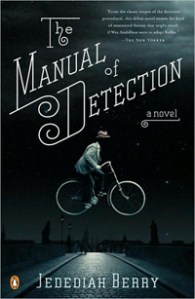
What is an “adventurous reader”? I’m two chapters into a novel by Jedediah Berry, titled The Manual of Detection. The CIP data on the copyright page indicate that subjects for this work of fiction include (1) private investigators, (2) femmes fatales, and (3) criminals.

Inside the front cover are three pages of accolades, many of them praising the book for its departure from conventions and its playful spirit. The Wall Street Journal says that the author “defies mystery novel conventions, but adventurous readers who stay with his strange and fabulous debut work will be handsomely rewarded.”

I wonder, what is an “adventurous reader”?

Here are some possibilities. An “adventurous reader” is someone who:

  1. reads literature in any genre that contains adventure: fantasy, science fiction, the detective procedural, etc.;
  2. steps outside his normal reading habits or patterns to read beyond “other stuff”;
  3. lives more fully within the pages of books he reads;
  4. reads what others in his field, or in his peer group, or in his circle of friends do not read;
  5. takes on authors who are challenging, difficult, mind-stretching;
  6. devotes much of his reading time to authors with whom he disagrees
  7. reads backwards, starting with the last word on the last page;
  8. reads only every other page.

There must be other possibilities. Is the adventure to be found in the act of reading—its how—or in the object read? Both?

I guess I consider myself an adventurous reader—though I think “adventuresome” might be the better word. But why? I read “broadly.” I’m patient about finding “just the right book.” But I will sometimes take a chance on something with little to go on.

Does the adventuresome reader read slowly, or quickly? Is speed irrelevant? Or has speed got to do with being one kind of adventuresome reader? Wouldn’t it be an adventure to read five novels in a day, allowing only thirty minutes for each? Or to pick slowly through a complex text, in an effort to notice everything worthwhile—what is written, how it is composed, the contribution it makes to our knowledge or a fulfilled life?

Adventure is a pretty pliable concept. Applied to the reader, it has interesting possibilities.

Are you an “adventurous reader”? Why would you say so? Do you know someone how is more adventurous than yourself?

Chances Are, You’re Married to the Wrong Person


Romeo and Juliet.

Image via Wikipedia

Actually, it should be said, “Chances are 100% that you’re married to the wrong person” (assuming you are married).

You may not be surprised to hear that you’re married to the wrong person. You’ve believed this for a long time, so it resonates. But you are a little troubled, possibly even vexed, that I know this about you. And you’re aghast at the very suggestion that it was bound to be so, that, whoever you are, you married the wrong person.

If this sounds wildly implausible to you, then I recommend reading a post by Lori Lowe, titled “We All Married the Wrong Person”—at her Marriage Gems blog.

In her post, Lori recounts the high points in her interview with Dr. Scott Haltzman, a psychiatrist whose books focus on marriage and family dynamics. Haltzman explains why we should acknowledge that we’ve married the wrong person. For that, we should consider the evidence that it’s true.

  • We never know a person completely when we step into marriage with him or her.
  • Marriage frequently begins with star-crossed lovers, blind to each other’s faults or limitations.
  • We bring unrealistic expectations into our marriages, expectations that cannot be fulfilled by anyone.
  • We all change with time and circumstance, so that we find we’re married to a different person over time.
  • The frequency of divorce is alarmingly high.
  • Couples that remain married acknowledge that they are not always completely happy in their marriages.
  • The pool of marriage candidates may be so large that the odds of choosing the right person are low to begin with.

Lori’s excellent post surfaces many valuable points. There are others to consider.

First, the whole concept of a right person to marry needs to be examined. Even if we allow that more than one person could be right for us, we should wonder:

  1. What does it mean for a person to be right for me?
  2. How would I know that a certain person is right for me?
  3. How would I know later that the person I married is not right for me after all?
  4. And what if every “right person” marries the wrong person—that is, marries someone other than me?

Second, suppose there is no “right person” for anyone to marry, at least in the sense that so many hope for. Anyone you marry will, sooner or later, disappoint. But this does not mean:

  1. You should never marry.
  2. Your marriage to the wrong person cannot succeed.

And it definitely does not mean that:

  1. Any person you marry is good enough.
  2. There is no person who is wrong for you.

Third, some readers will argue from a religious point of view that for those people who should marry, there is always the right person. This, they may say, is tied to the sovereignty of God and God’s special means of guidance for individual believers.

Even if this is true, the questions raised here are still vital. They translate into questions about what God desires for us, how we know what God desires for us, and how we know when we’ve found what God desires for us.

Fourth, we should commit to having a successful marriage, and let go any idealistic notion of being married to just the right person and having a perfect marriage.

Fifth, we should welcome a different conception of the values and rewards of marriage than what is so widely assumed today.

Scott Haltzman’s books:

A book I recommend on decision making for the Christian, and its wisdom approach to marriage decisions, is Decision Making and the Will of God, by Garry Friesen.

Two Bad Ideas—Building a Mosque & Burning the Qur’an


Two big items in the news today: first, Imam Feisal Abdul’s article congratulating America on its religious tolerance of Islam; second, an American pastor’s plans to burn copies of the Qur’an on the anniversary of 9/11.

Building a mosque at Ground Zero is a bad idea. So is burning the Qur’an.

The media and politicians on the Left are obsessed with the differences between the two intentions. Putting it mildly, they condone the erection of the controversial mosque. But let’s be honest. Those who haven’t been silent—including President Obama and NYC mayor Bloomberg—have expressed unequivocal support for building the mosque (even though they have equivocated following their unequivocal expressions of support).

What about the pastor, with plans of his own? He is angrily denounced.

Ahem. What about the striking similarity between the two men and their “projects”?

Whatever else can be said about their true intentions, their plans appear to be deliberately provocative. That’s the point that ought to be stressed in the great conversation we’re having about “tolerance” and “rights.”

Within the framework of this likeness—that is, both are deliberately provocative—we can make more useful distinctions between the men and their plans. We should acknowledge their similarity, then ask: as deliberately provocative acts, how do they differ?

Here’s one salient difference. A mosque will have a longer term effect, with direct bearing on more people, than the singular act of burning copies of the Qur’an on 9/11. The minister’s action, if he goes through with it in a few days, will soon be forgotten—even by Muslims, I dare say. But if the mosque is built, it will stand as a permanent monument to—well, what?

For non-muslims, the mosque would not be a monument to anything at all. But can this be said of Muslims? Hmm?

How to Write a Lot—A Review


Cover of "How to Write a Lot: A Practical...

Cover via Amazon

Maybe you’d like to write a lot. Maybe you have to write a lot. Here’s a book you may like a lot.

The book is published by the American Psychological Association. Silvia, a relatively young scholar, teaches and writes about psychology. In this book, he applies his own eclectic method in  psychology to the ordeal of writing as an academic.

I say eclectic because Silvia expects his counsel to be congenial to psychologists of various stripes:

  • developmental psychologists
  • cognitive psychologists
  • clinical psychologists
  • emotion psychologists
  • psychologists with interdisciplinary interests

What he writes is for all academics who wish to be more productive writers. But he does advise his peers in psychology a little more directly on occasion. When he says, “Our academic journals radiate bad writing,” he means journals in his discipline. But scholars across the disciplines will recognize the sort.

Silvia pokes fun in good humor. He notes that “psychologists love bad words,” then points out that “they call them deficient or suboptimal instead of bad.” He means, of course, that words like “deficient” and “suboptimal” are often needlessly “erudite,” and therefore bad for good writing.

“Psychologists like writing about the existing literature. Is there a nonexistent literature that I should be reading and referencing?” It’s nice to hear a psychologist asking such a philosophical question. (I’m afraid that some philosophers, in response, will get caught up in analyzing “should” and explaining the scope of relevant research literature in terms of counterfactuals and alternative worlds.)

There are chapters here on:

  • Writing articles—”Your paper might be rejected once or twice before it finds a good home, but a good paper will always find a home.”
  • Writing books—”If you have something to say, write a book.”
  • Writing with style—”Your first drafts should sound like they were hastily translated from Icelandic by a nonnative speaker.”

But the crucial chapters are two, three, and four (pp. 11-57):

  • Chapter 2: “Specious Barriers to Writing a Lot”
  • Chapter 3: “Motivational Tools”
  • Chapter 4: “Starting Your Own Agraphia Group”

Silvia’s aim is to introduce the reader to “a practical system for becoming a productive academic writer.” He acknowledges the irony of writing such a short book on how to write a lot. But, he says, “there isn’t much to say. The system is simple.”

The “system” is indeed simple. It comes down to this. Create a manageable writing routine and stick to it. Specifics include:

  • Follow a schedule (a little writing every weekday, if possible).
  • Set long-term goals for completing writing projects.
  • Set concrete goals for each scheduled writing session.
  • Prioritize your writing.
  • Avoid binge writing.
  • Monitor your progress.
  • Permit yourself a measure of “windfall writing” when it comes naturally.
  • Always engage in some writing-related task during the scheduled writing session.
  • Settle for the simplest of writing implements to be sure you’re always able to write on schedule.
  • Be content with whatever writing environment you’re permitted by your circumstances.
  • Expect a flood of quality writing ideas as a result of regular writing.
  • Join an “agraphia” group.

All of this is excellent advice. Much of it is common sense, often repeated in “the literature” on writing. But such common sense is seldom practiced.

Here are three areas where Silvia’s book might have been stronger:

  1. His comments on writer’s block are slight and mildly dismissive. He’s onto something when he says that “scheduled writers don’t get writer’s block.” But even scheduled writers can be unproductive. This relates to my next point.
  2. He could say more about how to plan scheduled work so that it is completed on schedule. It isn’t enough to (a) decide on a project to be completed, (b) sit down to write regularly about that topic, and (c) set concrete goals for each writing session. Even if every concrete goal is mission critical, regular writing will not ensure project completion. A disciplined writer doesn’t just write daily (or whatever “regularly” means in his case). He writes towards completion of a project.
  3. He understates the value of style in academic writing. This is a bit surprising. Silvia himself writes with engaging style. And he devotes a chapter to style. But oddly, the chapter dedicated to the topic is preoccupied with aids to writing strong, clear sentences. This is a minimalist approach to style. It derives from the notion that “as academics, we’re not creating high literature” (p. 26). This outlook may enable the blocked academic writer. But I’m a strong advocate for writing that engages as it informs.

Most scholars, even the most-published ones I imagine, would like to be more productive writers. Paul Silvia presents a method that works. The book moves chapter by chapter through the standard barriers to productive, anxiety-free academic writing. It’s a quick read with much practical advice, some of it on points not mentioned here.

The Serious Business of Lying and the Enterprise of Fiction


Battle of Borodino

Image via Wikipedia

Ursula Le Guin objects to the idea that science fiction is predictive. In 1976, she wrote:

Science fiction is not predictive; it is descriptive.

Predictions are uttered by prophets (free of charge); by clairvoyants (who usually charge a fee, and are therefore more honored in their day than prophets); and by futurologists (salaried). Prediction is the business of prophets, clairvoyants, and futurologists. It is not the business of novelists. A novelist’s business is lying.

— Ursula K. Le Guin, Introduction to The Left Hand of Darkness

Lying, you might say, is serious business. Even when it comes to fiction, when we like to be lied to. But why do we like to be lied to, those of us who read fiction and pay good money to see movies?

There’s a clue in the title of John Dufresne’s guide to writing fiction: The Lie That Tells a Truth. Fiction and film, at their best, package important truths in a tissue of lies. Some of these truths we already know before our fictive experience of them. Others we learn, if we trust the lies, when fiction happens to us. And often it is our capacity to trust the lie that makes us vulnerable to truths.

Some will protest that the novelist and the screenwriter do not lie. After all, we know “it’s only a story.” But since when has this stopped us from believing what we know isn’t so? Isn’t Le Guin onto something when she says,

In fact, while we read a novel, we are insane—bonkers. We believe in the existence of people who aren’t there, we hear their voices, we watch the battle of Borodino with them, we may even become Napolean. Sanity returns (in most cases) when the book is closed.

And in the thick of our believing, we don’t want to be reminded that “it’s only a story.” We’re like the lad whose grandfather reads to him in the movie The Princess Bride. He’s not as ambivalent as he pretends. And neither are we. If it’s a really good story.

Ranking Three Summer 2010 Action Movies


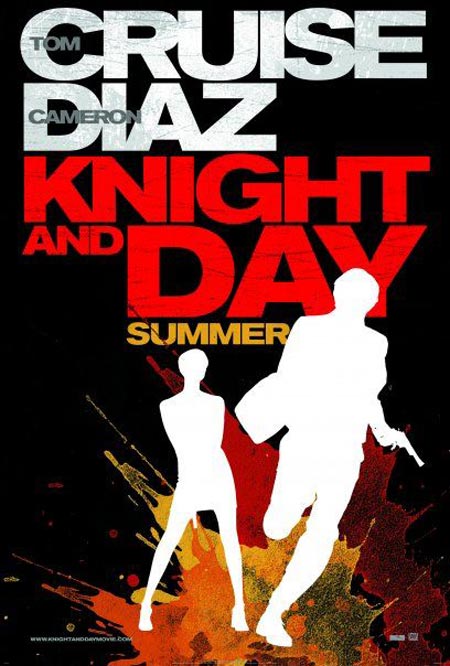
First Place: Knight and Day

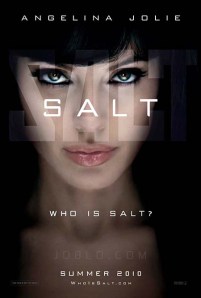
Second Place: SALT

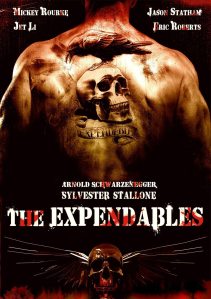
Third Place: The Expendables

Knight and Day are a romantic duo. Salt is a solo maverick. The Expendables? They’re a team . . . sorta. Neither Knight and Day nor The Expendables is serious; but Knight and Day is funny, and The Expendables isn’t. Knight and Day entertains on many levels, and has something for most audiences. The Expendables entertains on pretty much one frequency—violent action peppered with salty language.

Salt is less memorable weeks after seeing it, but engaging at the time. There are real surprises that swing this movie into the range of genuine suspense.

There is one salvageable line in The Expendables: “I’m Buddha; he’s Pest.” Sylvester Stallone is a smart guy, and he could have (should have) written and directed a better movie than this. The abiding question for audiences will be, “How old can you be and still do action figures?”

Most important prop in:

My choice of best actor for these three movies may surprise: Mickey O’Rourke, in . . . The Expendables. And it’s not because I’m a big O’Rourke fan. I’d have to confess to being more of an Angelina Jolie fan, though Cameron Diaz is pretty endearing opposite Tom Cruz. And Tom Cruz is the funniest he’s been, without stepping out of character, in Knight and Day.

Women can stay home from The Expendables, unless they really want to see what grown—and old—men look like playing the good bad guys against the odds. I will say that I’d rank The Expendables over Ghost Rider, which somehow comes to mind for comparison purposes. Go figure. The Expendables is more of a contemporary version of Sam Peckinpah’s The Wild Bunch. ‘Nuff said?

What is it about them philosophers?


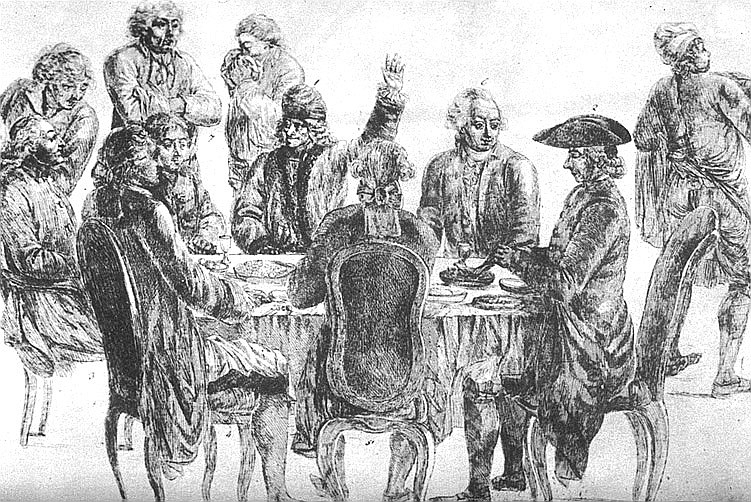
Voltaire and Diderot at the Cafe Procope

Do philosophers today

know what they say;

or do they conspire

to make us tire

of frumpery and fog,

to feel like a cog

and slip a gear

from some primal fear

that every word

is genuinely dear

—or simply absurd?

– RDG

Oprah on My Mind


Winfrey on the first national broadcast of The...

Image via Wikipedia

Time Warner was at my house today to troubleshoot instability and speed problems with our internet connectivity. After the fix, we tested the speed at speakeasy.net and speedtest.net. The technician then suggested that I open YouTube for a real world test.

I cranked up the ole’ YouTube and the first thing that popped up was a six-minute video titled “The Church of Oprah Exposed.” We watched the whole thing.

It reminded me of a lecture I heard a few weeks ago by a Christian woman with a far more sophisticated exposé of Oprah’s religion.

Then I was reminded that I had agreed to review a book called “O” God: A Dialogue on Truth and Oprah’s Spirituality, by Josh McDowell and Dave Sterrett.

The most limited encounter with Oprah reveals at least the following few facts:

  1. The turning point in Oprah’s spiritual odyssey was when, as a young woman, she heard the preacher in her Baptist church speak of God as “a jealous God.” Until that moment, she says, she was pretty traditional in her Christian beliefs. But the idea that God was jealous offended her sensibilities, and off she went in search of a new form of spirituality.
  2. Eventually, Oprah concluded that spirituality is not about belief but about experience. You would think that she has no definite religious beliefs, but that she only expounds on spiritual technologies that bring people together. She does, however, assert that God is in everything. From this she divines many other “truths.”
  3. Oprah uses her media venues for the overt dissemination of her religious notions. Oprah is an evangelist, with an evangelist’s fervor. You might say that she’s the single most successful “television evangelist.”
  4. Oprah emphatically denies the uniqueness of Jesus Christ, and extols the wisdom of Eckhart Tolle, author of The Power of Now and A New Earth. The Power of Now, published in 2004, just now has 1,166 customer reviews at Amazon.com, and boasts 4 and 1/2 stars and an Amazon Bestseller Rank of 263. A New Earth garners 4 stars, 1531 customer reviews, and a Bestseller Rank of 370.

Oprah enjoys enormous popularity and her influence in the lives of individuals is considerable. There clearly is a need for sober reflection on Oprah’s significance as a spiritual guru.

Even cursory exposure to her teachings is unsettling. Her claim that religious or spiritual reality is not really about believing anything is self-defeating, since the technologies she promotes are rooted in certain definite beliefs. By denying the significance to true belief, Oprah takes the important role of evidence off the table and promises a set of attractive experiences. Meanwhile, her avid disciples or “fans,” if you prefer) abandon their more traditional beliefs, or try somehow to line them up with the principles of “the power of now.”

Oprah believes that Jesus Christ was not the unique savior of the world. That’s a pretty fundamental belief. It’s no use denying that she has control beliefs. The question is whether her beliefs are adequately grounded in evidence and whether her beliefs are true.

Here are some suggested principles for evaluating Oprah’s claims, or anyone else’s for that matter (including the preacher at your neighborhood church):

  1. If she denies that beliefs are important to her spiritual outlook, she’s being dishonest, or else she has deceived herself.
  2. If experience is promoted over truth, then there is no way to gauge the validity of the experience. Does it connect with reality, or is it a counterfeit of reality?
  3. If Oprah’s entire odyssey in the direction of a New Age religion was prompted by an altogether naive understanding of the claim that God is a jealous God, then expect the rest of her perspective to be riddled with equally naive holes.
  4. If you accept Oprah’s claim that Christianity can be harmonized with Oprah’s gospel, then count yourself a convert from Christianity to something that isn’t Christianity.
  5. If Oprah has made herself wealthy and politically influential, take special care to examine her claims, lest you be snookered by a media pro taking selfish advantage of others who aren’t sure what they believe.
  6. If Oprah’s success is owing to her media skills, then understand that she is no more credible than any other television evangelist who is known solely as a public persona.
  7. If you’re going to read Eckhart Tolle’s books, check each of his claims against reasonable standards of truth and evidence.
  8. If Oprah and Tolle make statements about what Jesus really taught, or what the Bible really means, take care to examine their statements for yourself to see if their interpretations are accurate.
  9. If you’re a Christian, check the fundamental claims of Christianity against reasonable standards of truth and evidence.
  10. Whatever it is you belief about the things that matter most, check your beliefs against reasonable standards of truth and evidence.

Using “Google Sites” for a Course Project


Image representing Google as depicted in Crunc...

Image via CrunchBase

Today TOMD73’s blog has a post that explores the possibility of using blog assignments as part of a course.

I did something very like this with a class of about 75 university students, mostly juniors and sophomores.

Instead of calling it a blog, I called it a website. I had all of them use the Google website app so that (1) everyone was required to follow the same steps and (2) they could very easily create access to each other without “going public.”

With so many students, I formed the group into teams. Students would comment on the websites of those in their team. I gave very specific instructions about the kinds of comments they were to make, and explained that the quality of their comments would be a variable in their final grade evaluation.

Building a website of 5-7 linked pages was the major course project. Students could select their own topics, with two provisos: (1) the topic had to be related to the course topic; (2) I had to approve their selection.

Class met weekly. Each week students were given a series of steps to be completed by the next class period. These steps moved them gradually to completion of their website projects by the end of the semester.

The course was a philosophy of religion course for non-philosophy majors, with special focus on the New Atheism.

Many of the students produced excellent websites that they could be proud to make available to the public.

On the whole, I was pleased with the results. Most difficulties related to the size of the class. This type of assignment would have been much easier for me to manage with fewer students.

Here are some of the more significant challenges I encountered:

  1. Mastering the technology so that I knew what I was asking of the students and so that I could explain it to even the most technologically timid.
  2. Getting teams to work with so many students. There was considerable troubleshooting early on while students were learning the steps to get up and running. But more important, some students simply didn’t participate. I hadn’t counted on this since they were required to. This complicated things for the conscientious students, since part of their assignment was to respond to the comments they received.
  3. Helping the students work within a template of 5-7 pages that would do justice to their topics. Creating website pages differs from writing a paper. Developing and linking ideas is handled differently. Ideally, a decision to create a website rather than to write a paper should be grounded in the conviction that a website better serves the purposes of the project—especially because of the way material can be packaged (e.g., audio and visual tools can be included, and convenient links to other valuable items can be made).
  4. This project required more assistance from me than many other assignments. The student-teacher ratio made this a challenge. But one advantage is that I did get better acquainted with many of the students.
  5. Grading these assignments proved to be time intensive. This isn’t a bad thing. But you need to expect this when planning a course that includes this type of project.

Would I do it again? Absolutely! It would be much easier the next time around. But it has to be the right kind of course for this to count as a suitable assignment. I especially like it that students that have excelled have something to offer the rest of the world the moment the course is over!