Elizabeth Anscombe on the Hebrew-Christian Ethic and Utilitarianism


After my post of yesterday about Dietrich Bonhoeffer, Alex Plato tipped me off about this passage from philosopher Elizabeth Anscombe (1919-2001):

Now this is a significant thing: for it means that all these philosophies [i.e., of English thinkers from Sidgwick to the present] are quite incompatible with the Hebrew-Christian ethic.  For it has been characteristic of that ethic to teach that there are certain things forbidden whatever consequences threaten, such as: choosing to kill the innocent for any purpose, however good; vicarious punishment; treachery (by which I mean obtaining a man’s confidence in a grave matter by promises of trustworthy friendship and then betraying him to his enemies); idolatry; sodomy; adultery; making a false profession of faith.  The prohibition of certain things simply in virtue of their description as such-and-such identifiable kinds of action, regardless of any further consequences, is certainly not the whole of the Hebrew-Christian ethic; but it is a noteworthy feature of it; and, if every academic philosopher since Sidgwick has written in such a way as to exclude this ethic, it would argue a certain provinciality of mind not to see this incompatibility as the most important fact about these philosophers, and the differences between them as somewhat trifling by comparison.

—From “Modern Moral Philosophy,” 1958

Thanks, Alex!

Points of Interest:

Books of Interest:

Note: Anscombe first presented her essay, “Modern Moral Philosophy,” to the Voltaire Society in Oxford. It was published in the journal Philosophy, vol. 33 (1958): 1-19.

Dietrich Bonhoeffer’s Birthday Today


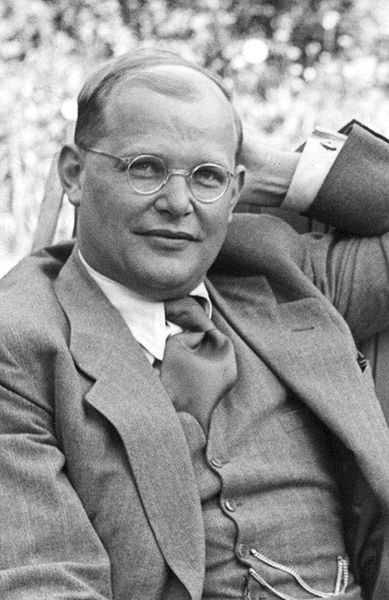
Dietrich Bonhoeffer (1906-1945)

Today we are witnessing the throes of political unrest in an important part of the world. Cries of revolution are all over the news.

Today, it happens, is also the 104th anniversary of Dietrich Bonhoeffer’s birthday. Bonhoeffer famously and courageously determined to participate in a plot to assassinate Hitler. He and his co-conspirators failed. They were arrested and executed. Their execution occurred just 23 days before the Allied victory in World War 2. And do you know, Bonhoeffer did not have a high expectation that their plan would succeed? Rather, he believed he was under an obligation, that it was the right thing to do, even should the effort fail. In his case, the verdict of obligation was worked out in thoughtful consideration of the authoritative will of the loving God of the Christian Bible. Not everyone agreed with him then (most disagreed), and many would disagree still. But the point is simply that he acted from a sense of duty and deep moral principle informed by a close study of God’s revealed purposes.

The moral justification of a political revolution, on my view, must be justified on grounds that do not depend on the actual outcome. What do you think?

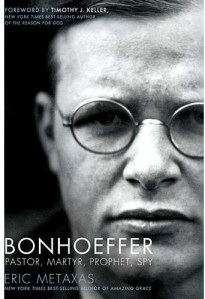
Note: Today I attended a luncheon at my university where the author of a new biography of Bonhoeffer spoke about the great man’s conviction and self-sacrifice. The biography is Bonhoeffer: Pastor, Prophet, Martyr, Spy, by Eric Metaxas.

Democratic Terrorists in Egypt?


I’ve been watching coverage of the mess in Egypt and have not commented here until now. I’m stunned by what I’m hearing . . . and not hearing.

TV commentator Rich Lowry spoke tonight as if the Obama administration had only two choices. He could support Hosni Mubarak, the evil dictator, and watch the Egyptian President shoot down the demonstrators in the streets. Or, he could support the “democratic demonstrators” in the streets of Cairo. Obama, he thinks, rightly chose to support the democratic demonstrators.

Where does Lowry get the ridiculous idea that the protesters are “democratic”? Their demonstrations have hardly been peaceful.

And who are the Muslim Brotherhood? They sound like barbarians, and the likely heirs to the evil Mubarak regime.

John McCain said it well yesterday. Mubarak has been a friend to the United States for many years, and he has helped to keep some stability in the Middle East—which is otherwise hell-bent on the extermination of Israel. But Mubarak stayed too long and did not use his position to institute a democratic government in Egypt.

After watching the mess on the streets every night from the comfort of my living room, I’d like to know what democratic measures anyone, Mubarak included, could have introduced. I can’t visualize these people stowing their molotov cocktails the day after tomorrow and going peacefully to the polls to elect a respectable government in a free election.

The Egyptians are making a spectacle of themselves in front of the rest of the world. Their actions have galvanized dispirited citizens in countries elsewhere in the region. What exactly is their message, and why should we care what they want if all they can say is that Mubarak has to go?

Mubarak says he would like to leave, but believes the country would descend into greater chaos if he just walked away right now. Maybe people should consider the possibility that he’s right.

Here’s another possibility. Our president has been telling us, the American people, that he’s been talking tough to Mubarak on the phone. When our president announces this on television, then it doesn’t matter what he said on the phone. The world has heard Obama scold Mubarak and tell him what to do about the mess.

So what’s Mubarak supposed to do in response? Is he supposed to let Obama dictate to him what he should do? What if Mubarak is as vainglorious as Obama?

Does Obama really understand “the democratic process”? He seems to think that the process begins with a free election. This is simply naive. A “free election” isn’t an important step in a democratic process if that election results in a fascist government. And it looks like that’s the result we should expect. Dana Perino told Greta tonight, “Democracies take time.” Obama doesn’t know that?

What’s really going on in Egypt? Everybody is guessing here, including our officials. They’ve made that pretty obvious. Shame on them for being so out of touch with world realities. And shame on us if we stand by and watch without criticism the naive, oddly paranoid and aggressive response of our government to a complex conflagration.

We’ve ostracized a valuable ally. Israel is mystified by our response. Things aren’t getting better on the streets of Cairo. The Muslim Brotherhood lurks in the background. Obama chastens a proud dictator who no doubt has his own ideas about what he should do. Mubarak won’t budge (as of today). Western reporters are crying foul for the mistreatment they’re receiving in their efforts to scoop the story.

I would like a clear and detailed statement from Mr. Obama that explains his view of our relationship with Egypt, and how it will improve if Mubarak walks away and the people participate in the kind of free election he has goaded them to demand.

Write More and Better Blog Posts in 2011


Erica Johnson, who writes for WordPress, posts some helpful and encouraging tips for those who want to boost their blog activity this year. She links to a few other sites that generate prompts for writing ideas.

Follow this link.

Michael Shermer on the Mexico Debate


In November, I participated in a three-on-three debate with three atheists, Richard Dawkins, Michael Shermer, and Michael Ridley. This was part of an international conference held in Puebla, Mexico. (See my account here.)

On January 17, 2011, Michael Shermer offered his take on our debate.

I’m inclined to comment briefly on a few of his remarks. Here are ten distinct points to consider.

First, in describing the debate, Michael refers to me and to William Lane Craig as theologians. Just for the record, my field is philosophy. My theology friends would no doubt want people to be clear about that.

On to more substantive points in Michael’s commentary:

Second, Michael argues in his review of the debate that arguments for the existence of God are irrelevant to the question, “Does the universe have a purpose?” This is a hard sell, for several reasons: (1) during the debate, the atheists wanted to be known as atheists who had a different conception of the purpose of the universe than we, the theists—so by their own testimony, what one believes about the existence of God makes a difference to what one thinks about the purpose of the universe; (2) the atheists took pains to repudiate our arguments for the existence of God (though they did not offer substantive objections to the arguments we presented); (3) the atheists were in disagreement with each other about whether the universe has a purpose; (4) of course the universe has a deep purpose if it was purposively created by God (as we argued), and does not have a deep purpose if its existence is not grounded in purposeful agency (as they believe).

Third, Michael has to state a very qualified sense in which the universe does not have a purpose, even if God does exist. He says, “whether there is a God or not, the universe per se cannot have a purpose in any anthropomorphic sense for which that term is usually employed.” This is a pretty baffling remark. Michael seems to confuse two senses of purpose, one where the universe has a purpose per se, and another where the universe has a purpose in some anthropomorphic sense. Since these two apparently separable senses are conflated by the grammar of his sentence, it’s nigh impossible to know what Michael is saying.

As a naturalist, and consistent with how he argued in the debate and has usually argued in debates with me, Michael must deny that the universe has a purpose in any ultimate sense. This may be what he means by his use of “per se.” So if the universe has a purpose at all, it will be relative to human interests. That is, the universe will have a purpose in a strictly “anthropomorphic” sense.

But this is what you have to say if you are a naturalist. It is not what theist’s believe. Again, Michael is mistaken. By his own conception of what “purpose” means, the existence or non-existence of God makes a difference to whether the universe has a deep, transcendent purpose. The theist says it does, and the naturalist says it does not.

Fourth, there is a practical difference, as well. A theist who believes that the universe has a purpose that is determined by God’s own purposes as Creator of the universe will want to know what this means for his own existence, so that he might live wisely and welcome human flourishing on God’s own terms.

Fifth, the atheists we debated have a stake in maintaining that it really makes no difference what one believes about God, since life is meaningful in any case. But whatever meaning the atheist wants to attribute to human existence, it will be whatever meaning humans can make of life without reference to God’s providential purposes. I can admire the moxie of such humanistic optimists. But I cannot agree that the meaning they manufacture in their way is the same meaning that my life has if God exists and if obedience to God’s loving will is the great condition for transcendent human significance.

Sixth, Michael asserts, without argument or evidence, that the laws of nature “have no purpose other than what they dictate matter and energy to do.” Here he betrays that he is a determinist. So I do not know what purpose could even be freely imagined, adopted, and pursued by human persons. After all, on his view, we are but by-products of the swirling mass of matter and energy that, in accordance with the laws of nature, dictate everything that happens.

Here again, Michael assumes that naturalism is true, and then infers that it must therefore make no difference whether there is a God when we ask whether the universe has a purpose. But what explains the existence of laws of nature? He may think there is no explanation. But the theist attributes their existence to the purposeful decision by God to create a universe that functions in accordance with such laws. These laws owe their existence and operation to God, and are operable only insofar as God deigns to leave them alone in their ordering of physical events. A supernatural being is sovereign over the natural laws. Hence, non-natural events are possible and will occur if God chooses to act supernaturally in the world of physical events.

Further, God has created human purposes, in God’s own likeness, with powers of self-determination, so that laws of nature do not strictly determine everything that happens.

Seventh, Michael mocks the notion that stellar stuff ponders its own purpose, as if this ludicrous notion would have to be true in order for the universe to have a purpose. This odd move invites four comments: (1) none of us suggested such a thing, nor is there any basis for thinking that we did, would, or should hold to such nonsense; (2) on Shermer’s view, human beings are little different than star stuff, and it would be as odd to attribute genuine thoughts and deliberations about purpose to humans as it would be to attribute such activities to stars; (3) but of course, we do attribute genuine thoughts, deliberations, and concerns about purpose to human persons, and this is evidence that Shermer’s general worldview is mistaken and that there are “objects in the universe” that have these powers; (4) while stars are naturally indifferent about the purposes they serve, that they serve a divine purpose is of real consequence for us.

Eighth, Michael boldly asserts that “life began with the most basic purpose of all,” that of “survival and reproduction.” How does he know this? Can he tell us how life began? If he cannot—and I’m sure he cannot, otherwise he would have told us by now—then how does he know what “purpose” is served by the existence of life?

Ninth, Michael contradicts himself when he says in one paragraph that even H. sapiens (that’s us!) do not sit around thinking about the purpose of things, and then says in the next paragraph that we are imbued “with a sense of cosmic purpose.” The paragraph after that begins, “Human beings have an evolved sense of purpose—a psychological desire to accomplish a goal.” Hmm. Then we come to the next paragraph: “How we define our purposeful lives may be personal . . . .” So we do define our “purposeful lives” personally. But how, if all is dictated by the laws of nature?

A couple paragraphs later, Michael compounds his inconsistency, admonishing us about how we should live. In answer to the question, “What type of purposefulness should we practice?” he describes specific purposes that he values. But why should anyone value these things? And what, in any case, could we really do to advance them—again, if all is determined?

Tenth, Michael concludes his article with the same proposal that ended his remarks at the debate. He invites theists and other non-atheists to try being an atheist “for an hour,” so that we all may see how little difference it would make to our lives. He has this backwards. Anyone who tries to be a genuine atheist without noticing a difference in his life either must not have oriented his life to the principles of theism, or he has failed to be an atheist, even for an hour.

I encourage you to read Michael Shermer’s account for yourself here. If I have erred in my understanding of his argument, feel free to comment on this post.

Related Links:

My Oscar Picks


Oscar Nominations are in. Here are my picks for seven categories.

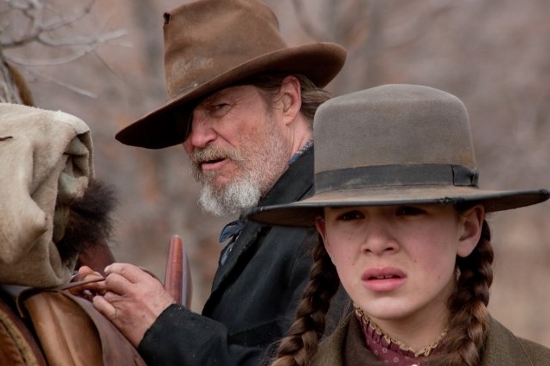
Best Picture: “True Grit” (runner-up: “Inception”)

Best Actor: Jeff Bridges, for “True Grit” (runner-up: Colin Firth, for The King’s Speech)

Best Actress: no opinion

Best Supporting Actor: Geoffrey Rush, “The King’s Speech” (runner-up: Christian Bale, for “The Fighter”)

Best Supporting Actress: Melissa Leo, for “The Fighter” (runner-up: Hailee Steinfeld, for “True Grit”)

Film Editing: “The Fighter”

Special Effects: “Inception”

What are your picks?

Rear View Motorcycle Helmet


A rear-end collision in a cage isn’t pretty, but on a motorcycle it’s pretty unsightly. And this is one concern I have waiting at a busy intersection, with traffic all around me. Which is 75% of the time in Southern California.

So the idea of a rear-view motorcycle helmet sounds like a good idea, if it works.

Apparently, Reevu is the company that has figured out how to make it work. They have a slick-looking helmet called the MSX1 that’s getting favorable reviews.

I haven’t seen one yet, and I have a few questions about its utility. But I’m interested. If you’ve converted to one, I’d like to hear from you. Here are a few questions:

  1. How does it handle bright headlights behind you at night?
  2. Are you tempted to rely excessively and dangerously on it?
  3. What is its greatest advantage?
  4. Are you satisfied with the other safety features of this helmet?
  5. How is focus handled for people who require reading glasses?

I like the concept. For a good YouTube review of this innovative design in helmets, click here. For the company’s website, click here.

Clever Edit of Mexico Debate a Challenge to Richard Dawkins


Apparently, Birdie.com has edited the YouTube video made of the debate in Mexico from November 2010, in which I, Bill Craig, and David Wolpe debated Richard Dawkins, Michael Shermer, and Matt Ridley. The aim of this 6 minute feature is to show the mistakes that Richard Dawkins made in understanding and assessing our case in that debate.

If you wish to see this clip, click here.

Classic Films for Commemorating Pearl Harbor and a Nation at War During Christmas


Today we commemorate “Pearl Harbor Day.” Sixty-nine years ago, “Battleship Row,” in Pearl Harbor, Hawaii, was attacked with vehement force and incomprehensible destruction by the Imperial Japanese Navy. The next day, in his address to Congress and an anxious nation, President Franklin D. Roosevelt called December 7, 1941 “a date which will live in infamy.” And thus we were drawn into fatal conflict with Japan, and soon after, with Germany.

And it is fitting that we should remember America’s war effort, even during this Christmas season.

  • It was during this season that the United States entered the war with Japan, in direct response to the attack on Pearl Harbor.
  • American service men and women engaged the enemy for several consecutive Christmases during World War II.
  • Notable events of the Second War happened during the Christmas season.
  • Today, the United States is engaged in war in the Middle East, and many American men and women will be far from home at Christmas, while others prepare to be deployed.

Film provides us with a unique way to remember. Here is a list of a few films that recall Pearl Harbor and Christmas during wartime:

Tora! Tora! Tora! (1970)

This is the classic reenactment of events during the attack on Pearl Harbor. It re-tells what happened, from both the American and the Japanese perspectives.

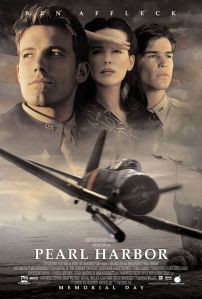
Pearl Harbor (2001)

Two boyhood friends, Navy pilots stationed at Pearl Harbor, endure the trauma of the attack.

Joyeux Noël (2005)

I first recommended this film last year. It recalls a most unusual Christmas eve encounter—called “the Christmas Truce”on the World War I German front, between the Germans on the one side and the French and Scottish forces on the other. Joyeux Noël is on my list of movies to see again each Christmas season.

For other posts I’ve written about this film, see Favorite Christmas Movie for 2009 and Joyeux Noël: A Film Discussion Guide.

Stalag 17 (1953)

This may seem an odd entry. First, Christmas plays an understated role in the film. Second, this is a Billy Wilder comedy. Third, it is an older movie, filmed in black and white. But in its defense, note that Stalag 17 was one of the first films to join laughter with the ignominy of war. In it we observe a group of men courageously, though often raucously, making the best of a bad situation. Yes, there is comedy, some of it (okay, much of it) silly. This is, after all, a Billy Wilder product. But there also is pathos and suspense.

On close inspection, many people today, with no war experience at all, can relate to the diverse feelings exhibited by these men, feelings that are compounded during the holidays. Loneliness. Unrequited love. Disillusionment. Alienation.

Wilder was an intelligent director. He was interested in far more than the easy laugh. You see this in Stalag 17 when you pay close attention. Grown men revert to childishness to comfort themselves. They are resourceful, both at play and in the attempt to re-gain their freedom. Group dynamics are explored with sensitivity to how leadership and courage are perceived by others, what happens when the wrong person is blamed for serious misconduct, how trust is built up, then dissolved, and what people are willing to sacrifice for the good of others.

Stalag 17 stars William Holden, Otto Preminger, and Peter Graves (of the original Mission Impossible TV series). The movie was the “inspiration” for the TV series Hogan’s Heroe’s, which even “borrowed” the Sergeant Schultz character.

I saw this movie for the first time last night, and I recommend it.

Recommended links related to the attack on Pearl Harbor:

Links related to Christmas during World War I and World War II:

Do you have a movie to recommend that fits the category of this post? Of so, please let us know in the comment box.

The movies mentioned here:

Permanently Lost in Digital Reality?


Technology addiction is a serious affliction today. But how serious?

Matt Richtel, writing for The New York Times, examines the possibility that the brains of today’s young people are being wired to function differently, if not better, than the brains of all previous generations of humanity. The critical difference is the use of technology to process information. His article “Growing Up Digital, Wired for Distraction” makes a convincing case. And the picture he paints isn’t uniformly attractive.

I recommend Richtel’s article to parents, educators, and even teenagers. If teenagers can read to the end of the article and comprehend its basic message, then things may not be as dire as they seem.

Matt Richtel’s website.

Perfecting Your Prose—Part 1: Richard Lanham and the Paramedic Method


Prose writing is no less an art than any other kind of writing. Getting it right requires a mastery of grammar and punctuation, syntax and diction, paragraph arrangement and style. Some elements of writing can be learned from a book. Grammar and punctuation, for example. Syntax concerns the proper arrangement of words to make coherent phrases, and the organization of phrases to make legitimate sentences, or sentence fragments that work. Diction is all about choosing the best words for the job.

Some of these elements shade into more subjective dimensions having to do with style. Style is person-relative. Individual style is desirable. But there is a bottom floor that any stylist should start with. And this is about the most difficult thing to explain to prose writers intent on improving their work.

I don’t teach composition—at least not officially. Most of my students are graduate students majoring in philosophy. They understand that writing effective prose is crucial to their development as professional philosophers. Their prospects for further graduate research, full-time employment, and publication depend on their writing prowess. For my courses, I’ve developed a sequence of writing exercises that lead ultimately to a term paper that might eventually be worked into something publishable. I emphasize the craft of writing no less than the organization of ideas. I return papers to students pretty thoroughly marked up, with suggestions of every kind. Most of my students appreciate this.

Still, I’ve wished for a book to complement these efforts. With the right resource on hand, students could experiment with alternative techniques and practice good habits of stylization while writing their papers and before submitting them for my evaluation. I’ve despaired, though, thinking that the the steps involved simply cannot be reduced to a formula that could be learned and followed. I was wrong.

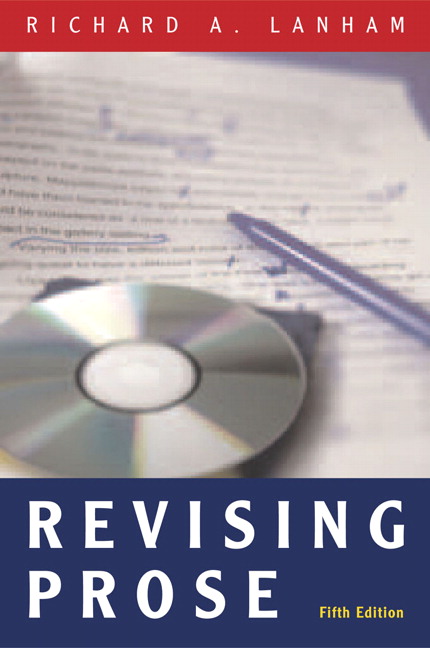
Well, mostly wrong. Style is idiosyncratic and evolves, often mysteriously, with much practice writing and re-writing. But there is a blueprint for the bottom floor, and it can be found in Richard A. Lanham’s book Revising Prose. For all the pains I’ve taken to build a library of writing resources, I have no idea how I could have overlooked this gem for so many years. The first edition was issued in 1979, when I was halfway through my college education. I could have used this book then, and I find that I can use it now.

Lanham calls his basic procedure for revision the “Paramedic Method.” This because it serves in emergency situations. This parallels my metaphor of “the ground floor” of writing style. In the first chapter, Lanham addresses the lard factor, and demonstrates how so much writing that looks innocent nearly collapses of its own weight. Whereas I’ve shown students in my mark-ups of their papers that nearly every sentence they write can be paired down without loss of information and with improved effect, Lanham explains how a writer can do this himself. There’s a recipe for this sort of thing.

Here is my adaptation of Lanham’s method of minimal revision, with tasks listed in step-wise fashion:

  1. Circle all prepositions in all of your sentences.
  2. Circle all instances of the infinitive verb “to be” (i.e., “is,”are,” “was,” “were”).
  3. Using the prepositional phrases as clues, ask, “Who is performing whatever action is implied in each sentence?”
  4. Convert this action into a simple active verb and substitute it for the verbs you’ve circled, making whatever additional changes that are required by this substitution.
  5. Collapse compound verbs into simple verbs.
  6. Eliminate mindless introductions to sentences.
  7. Read each sentence aloud with emphasis and feeling.
  8. Re-shape your prose so that it can be read aloud with the expressive emphasis you intend.
  9. Mark the basic rhythmic units of each sentence with a “/”.
  10. Mark off sentence lengths.
  11. Vary the lengths of your sentences to improve cadence, rhythm, and “sound.”

Lanham calls this process “translating into plain English.” It sucks out the “prose sludge” that plagues customary writing. Every step is explained in detail and thoroughly illustrated in Revising Prose. Practice exercises are provided along the way. The result should be about a 50% reduction of lard in ordinary prose writing and more energetic sentences throughout.

Related links:

Trailer for the Movie “Shields”


A short trailer for the movie Shields, featuring my daughter Erin Geivett, has just been released on the director’s Facebook page. This is Erin’s debut in a live-action role. Hope you enjoy!

Shields, the Movie

The Christian Introvert


Adam S. McHugh has written a wise book of guidance for the Christian introvert. I’m convinced by his argument that the Christian church in the West is, by and large, an “extrovert church,” and that this has stifled and confused many members of the church and enervated the church’s influence in the world.

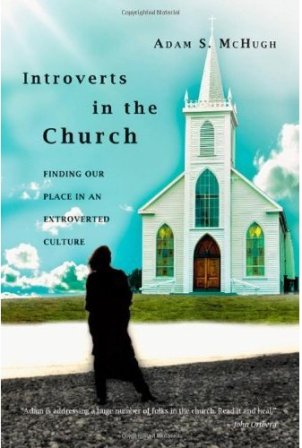
Here’s my chapter-by-chapter review of Introverts in the Church: Finding Our Place in an Extroverted Culture, by Adam S. McHugh.

Chapter 1, “The Extroverted Church,” documents the extroverted tone of the Christian church today. The author’s citation from Eugene Peterson gets right to the point: “American religion is conspicuous for its messianically pretentious energy, its embarrassingly banal prose, and its impatiently hustling ambition.”  Such “hustling ambition” is part of the legacy of the first and second Great Awakenings. I would add that it is also a capitulation to modern western culture. Approximately half of the church’s demographic is temperamentally introverted, and so a large sector of the church is made to feel alienated and inadequate to the call of God in their lives.

Chapter 2, “The Introverted Difference,” helpfully describes the differences between two temperaments, the extrovert and the introvert. Any Christian reader will probably know whether she is an extrovert believer or an introvert believer after reading this chapter. And if she is an introvert, she will probably feel considerable relief that someone understands her. McHugh’s affirmation of the introvert temperament begets inspiration to own your introvert temperament and re-engage with the church and the culture in ways that draw on your strengths as an introvert.

The fundamental difference concerns the direction of energy flow in the life of the individual, especially in relation to social interaction. The extrovert, of course, seeks out and is energized by interaction with others. The introvert, though capable of participation, feels the energy drain away as a result too much interaction. This affects her perception of herself as a member of an extroverted culture. And it can be misunderstood by the extroverts who set the tone for this culture of extroversion.

Note: Being an introvert doesn’t make you shy, or inhibited, or anti-social. And being an introvert is no better or worse than being an extrovert.

Chapter 3, “Finding Healing,” addresses the need of so many introverts for healing from the wounds inflicted by the exclusivity of our extroverted culture. Often lonely and confused about the role they should play within the church and the world leads, introverts are vulnerable to depression, isolation, and despondency. McHugh distinguishes between introversion and shyness, and helps the introvert reader understand how participation in communal life is possible and why it is necessary.

The next few chapters explore ways the Christian introvert may thrive as a disciple of Jesus Christ.

Chapter 4, “Introverted Spirituality,” introduces ways that Christian introverts may deepen their relationship with God. These ways complement the introverted temperament. McHugh describes contemplative spirituality. His outline of the examen on page 74, though concise, is practical. And his counsel to adopt a “rule of life” is especially good. He speaks several times of learning to discern the voice of God. Though I would gloss this differently, what he says is consistent with my own take on divine guidance.

Chapter 5, “Introverted Community and Relationships,” admonishes the introvert to re-engage in communal life and offers practical suggestions for doing this, consistent with the introvert temperament. McHugh speaks as an introvert who has practiced what he preaches. He attests to the refreshment that becomes possible for the introvert in community, and to the joy that accompanies meaningful participation.

Chapter 6, “The Ability to Lead,” speaks to me. On the Myers-Briggs personality evaluation, I’m an INTJ. Translated, this means I have stronger tendencies to probe below the surface for what is important, rather than seek out concrete experiences, to make decisions based on deliberation, and to prefer structure over spontaneity in many (though certainly not all) areas of my life. For all of my adult life I’ve had a leadership role of some kind within the church and within society. Leadership feels and looks different for the introvert. But the introvert leader brings important skills to the table. Models of introverted leadership include Mother Teresa, Martin Luther King Jr., and Jonathan Edwards. Old Testament saints Moses and Jacob probably were introverts. The young pastor Timothy, so important to the ministry of St. Paul, may have been an introvert (see 2 Timothy 1:7). Then there’s Mary, the mother of Jesus, and Mary, who was Martha’s sister (see Luke 10:38-42). I suppose Esther, the Old Testament figure who changed the course of history for Israel, was an introvert. Not bad company, really.

(Diane Hamilton offers a sample list of celebrities, showing some famous extroverts and some famous introverts.)

Chapter 7, “Leading as Ourselves,” is one of the longest and most valuable chapters. McHugh extends his treatment of leadership and gets into specific details of preaching as an introvert, functioning as a spiritual director, the differences in leading extroverts and leading other introverts. He writes very candidly on this subject.

A consistent critique of my ministry has been a lack of communication. What people sometimes consider to be my flaws betrays their extroverted expectations for communication.

Speaking from experience, I can say that there is real lived wisdom in that statement. University students, for example, expect—and often prefer—extrovert communication. This is reinforced in countless ways. At the graduate level, many of them aspire to be the kind of teacher that they expect their teachers to be. Which is to say: extroverts (in the Jungian sense). But they are not all extroverts themselves, and they never will be. So they need models of introvert leadership in teaching and mentoring. Also, they might benefit from considering what an introvert teacher offers that most extrovert teachers do not, because of how they’re wired. (This topic deserves several posts at another time!)

Chapter 8, “Introverted Evangelism,” begins, “An introverted evangelist? Isn’t that an oxymoron?” Very little has been written about personal evangelism that doesn’t assume a extrovert personality. This chapter is an exception. McHugh stresses that evangelism is needed and occurs in different contexts. Many contexts—some of them very natural and routine—are overlooked. And these often are contexts where introverts thrive. Here’s one tidbit that may interest you in this aspect of evangelism:

My evangelistic conversations these days resemble spiritual direction more than they do preaching. . . . Because introverts process internally, we can offer a nonjudgmental posture and others will be comfortable opening up their lives to us.

I’m a big fan of “conversational evangelism.” But many extroverts are clumsy in their use of this approach.

Note: McHugh and I differ about how rational argumentation and lifestyle persuasion relate to each other. Whereas he places them in tension with each other, I see them as complementary, no matter who we happen to be conversing with.

Suggestion: For more on conversational and lifestyle evangelism, I recommend the book Lifestyle Evangelism: Learning to Open Your Life to Those Around You, by Joe Aldrich, and Conversational Evangelism: How to Listen and Speak So You Can Be Heard, by Norman Geisler and David Geisler.

Chapter 9, “Introverts in Church,” surveys the diverse ways that Christians do church, and relates each of these to the interaction styles of introverts, who may or may not be Christians. McHugh describes some wonderfully creative ways to energize the worship experience and communal life for the many introverts who are otherwise neglected by standard protocols. I know of Christians who have never felt at home in churches they’ve attended. After awhile, many of them begin to feel that something is wrong with them. Some even begin looking beyond Christianity for spiritual sustenance. It is a grievous error of the church to miss what’s being done to these dear believers.

Introverts in the Church includes “Questions for Reflection and Discussion” for each chapter. How fitting it is, in a book for and about the Christian introvert’s discipleship, to place reflection and discussion in that order! These are not perfunctory questions. They probe and delve deeply in ways that will help the introvert understand herself more fully and will inspire new ways of being in community with and leadership among other believers.

There pages of “Further Reading” include categorized lists of other resources. On evangelism, McHugh recommends Mike Bechtle, Rebecca Manley Pippert, and Rick Richardson. He lists three memoirs by “introverted authors,” Anne Lamont, Donald Miller, and Lauren Winner. For more detailed study of introversion, he suggests Susan Cain, Laurie A. Helgoe, and Marti Olsen Laney. There are other recommendations for “Community and Relationships,” “General Personality Type,” “Leadership,” “Spiritual Direction,” and “Spirituality.”

The book I’ve found most useful for delineating personality theory and personality types is Please Understand Me II: Character, Temperament, Intelligence, by David Keirsey. Basic to the theory is Isabel Briggs Myers, Gifts Differing: Understanding Personality Type. McHugh also recommends and frequently cites Type-Talk: The 16 Personality Types That Determine How We Live, by Otto Kroeger and Jane M. Theusen.

Two books I would add to McHugh’s list are:

Other links:
Get a Grip on Greek


In the 1970s and 1980s I took several courses on New Testament Greek, at both grad and undergrad levels. I don’t need reminding how long ago that was! Like so many others, I “let my Greek go.” So my proficiency dropped dramatically. Call it my own personal “Greek tragedy.”

After investing the effort in studying Greek, I hated to see it go to waste. I’ve made good use of my knowledge at times, but I haven’t been very deliberate about sustaining and improving my grip on Greek. Now I’ve come across a little book that addresses this very typical reality—Keep Your Greek: Strategies for Busy People, by Constantine R. Campbell.

Campbell’s book of 90 pages is organized into ten mini-chapters.

  1. Read Every Day
  2. Burn Your Interlinear
  3. Use Software Tools Wisely
  4. Make Vocabulary Your Friend
  5. Practice Your Parsing
  6. Read Fast
  7. Read Slow
  8. Use Your Senses
  9. Get Your Greek Back
  10. Putting It All Together

There’s advice in an appendix on getting it right the first time, for those who are just now beginning to learn NT Greek. The book ends with a list of resources truly useful to the person who would follow the practical advice that Campbell gives.

There are no stunning new revelations here about how to stay on top of a language you’ve learned. It’s mostly common sense—but it’s wise and inspiring common sense.

The author maintains a blog—Read Better, Preach Better—where he offers practical advice on biblical study and Bible-based preaching. The chapters of his book are adapted from a series of blog posts about keeping your Greek skills intact. Each chapter concludes with a few comments or “blog responses” from his readers. It’s a clever idea whose potential, I think, is never fully exploited. The value of including these responses depends, of course, on the value of the responses themselves.

Campbell uses Accordance software in his own regimen of Greek review and New Testament study. I’ve used this tool myself. It is powerful and convenient.

Two resources especially recommended by Campbell are:

I concur with these recommendations.

If you need brushing up, or you have the inclination to teach yourself New Testament Greek, I strongly recommend the published work of my friend Bill Mounce:

Mounce provides a wealth of additional tools, including his FlashWorks vocabulary drilling program, at his Teknia website.

For audio assistance with Greek study and review, these tools will prove useful:

Cover of "Sing and Learn New Testament Gr...

Cover via Amazon

Finally, you must poke around at the Institute of Biblical Greek website.

At least twice monthly, I teach an adult Bible study. Lately I’ve been introducing group members to the benefits of Greek study. We are currently studying 1 John, with an emphasis on Bible study technique. If you happen to live in North Orange County, California, you’re welcome to join us!

Mophie Has Improved My Relationship with My iPhone


Much as I’ve enjoyed using my iPhone for the past 18 months, the comparatively brief battery life has often proved inconvenient for me. I use my phone enough to require a re-charge every night. And there are days, especially when I’m traveling, that require an additional boost before the end of the day. Sometimes it’s enough to use the car adapter while driving. But that’s a slower process and not always what’s really needed. And when I’m hoofing it, using the car adapter is not an option.

I recently returned from a two-week speaking tour that took me to Pittsburgh, Puebla Mexico, and Atlanta. In preparation for my trip, I researched technology that extends the life of an iPhone battery between charges. Thankfully, I discovered the Mophie.

The Mophie Juice Pack Air Case and Rechargeable Battery for iPhone is pretty slick. It comes in two parts that slide onto the ends of the iPhone. The bottom portion plugs into the iPhone’s power port and has a small, inconspicuous on-off switch. The Mophie provides protection for the iPhone while supplementing the iPhone’s battery with an additional battery. If the Mophie switch is on, its battery is used first. If the switch is off, the iPhone battery is used in the usual way. When the iPhone battery runs low, switching the Mophie to on begins recharging the iPhone. The phone works during the charging process. And it’s easy to tell how much charge is left in the Mophie battery, since an indicator lights up on the back when a small button, flush with the case, is pressed.

The Mophie never has to be removed from the iPhone. Both can be charged at the same time, using either the outlet cord or the USB cord to your laptop.

I was initially reluctant to buy this gizmo because of its price of about $80. Having used the Mophie for two weeks while traveling nationally and internationally, I’m happy to say that I have no regrets. Throughout my journey, I was relieved to have the additional battery life, and to know that it would last me to the end of a long day of frequent use.

If you think this might be the solution to your own needs for extended battery life on your iPhone, I encourage you to check it out at Amazon here.

Reviews:

There’s an excellent review of the Mophie at iPhone Spies.