“My Daddy Killed Pluto”


Buy on Amazon

A year or so ago, I was lecturing in my graduate seminar in epistemology. To illustrate a point, I brought up the recent fate of the ninth planet—Pluto. This was spontaneous. I hadn’t thought about the example before. But I knew that astronomers/astrophysicists had determined that Pluto was not, after all, a planet.

“How was it decided that Pluto was not a planet?” I wondered out loud. One possibility is that our scientists, working with a definite conception of what makes a planet a planet, had discovered that the stellar object we call “Pluto” does not satisfy the conditions for being a planet. Hence, it had to be demoted from planetary status to something else—an “ice ball,” perhaps.

Alternatively, our scientists may have known of Pluto’s properties and recently decided that the concept of a planet should be refined. With a refined conception of planethood, it would turn out that Pluto could no longer be considered a planet.

Which of these is the actual story? Did scientists discover something about Pluto that violated the standard conception of planethood, or did scientists revise their concept of planethood, knowing that Pluto’s claim to planethood would thereby be precluded?

I didn’t know the answer to the question at the time, my knowledge of the demoted status of Pluto being embarrassingly anecdotal. I was less embarrassed, though, when I asked a physicist acquaintance if he knew the answer. He didn’t.

So what is the answer?

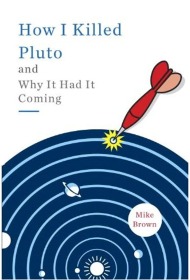
Mike Brown, astronomer at the California Institute of Technology, narrates the answer in his recent book How I Killed Pluto and Why It Had It Coming. The Amazon page for this book includes “A Letter from Author Mike Brown” that recounts the author’s PR problem with his own daughter. “Daddy,” she said to him, “I know you had to kill Pluto, but will you promise me one thing?” He told her that he would. To find out what she asked him to promise, visit this page.

Related:


Order from Amazon


Trailer for Biola Student Film “Lockhaven”


In November, I posted a link to the trailer for a Biola student film featuring my daughter Erin. Today, the trailer for a new student film was released, this time featuring Erin’s older sister, Kaitlyn. The film, called “Lockhaven,” is Kaitlyn’s debut in the Action/Thriller genre. Here’s a link. The film is directed by Kyle Chezum.

"Lockhaven" Film Trailer (2011)

The Perils of Multiculturalism


British Prime Minister David Cameron

One of the most important speeches of the year—and it’s only February now—was delivered by British Prime Minister David Cameron a few days ago at the Munich Security Conference. In his speech he focused, in laser-beam fashion that is unusual for a politician, on the perils of multiculturalism. I urge you to read or view his speech.

Cameron links “Islamist extremism” to the “British experience” of multiculturalism, and argues that, if only for security purposes, multiculturalism must be reversed in his country.

Here are a few questions we all should be considering:

  1. What is “multiculturalism”?
  2. What’s the difference between multiculturalism and a policy of multiculturalism?
  3. Does Great Britain have a policy of multiculturalism? Does the United States?
  4. What are the virtues of multiculturalism?
  5. What are the perils of multiculturalism?
  6. Should the British government halt multiculturalism?
  7. Can the British government halt multiculturalism?

I’m especially interested in two other questions:

  1. How are you affected by multiculturalism?
  2. Do you agree with David Cameron’s general position on the issue?

Update:

This post was referenced in the “Roundup for Week 7” at the The Naked Listener’s Weblog. Thanks, Robert Lee, for the notice!

Amazon Deal on iHome iH51


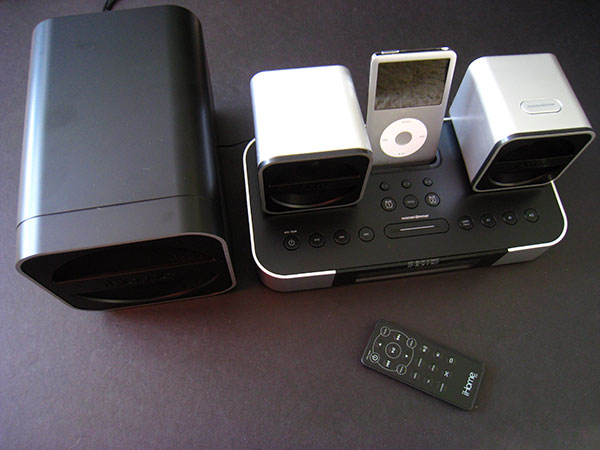
I don’t have an iHome. I’ve never used one. But it looks like a good device for producing quality sound from an iPhone or iPod and for use as a pleasant alarm clock. The iH51 is on a 47% discount for the next few hours at Amazon here, as long as they last.

Do you recommend this device?

I guess it’s possible that the i51 is about to be replaced by a new model. And that would raise questions about compatibility with the very latest Apple iTunes units, or forthcoming iPhones, iPods, and iPads.

For a 2008 review of the iH51, check this post at iLounge.

Temporary Facelift to Doug’s Blog


A couple of days ago I posted about the appearance of this blog and invited readers to comment on what could be improved. Thanks to all of you who responded. As you can see, I am making dramatic changes. But this “new look” is temporary. I’ve been working on an entirely new webpage design that I hope to unveil soon.

Stayed tuned!

Eternally Vexing Words


The Apathy of a Cow

I have several dictionaries, some at home and some at my office. The one I consult with the greatest satisfaction is The New Merriam-Webster Dictionary of 1989. I recommend Merriam-Webster’s Collegiate Dictionary, 11th edition (available at a stunning discount at Amazon just now).

I also like the Merriam-Webster website. And one thing I like best is their “Top 10 Lists” feature. Today they presented the “Top 10 Words for Valentine’s Day”—not synonyms for “Valentine’s Day,” but words with special significance on this day of love, romance, and infatuation (three of the words on their list).

These “Top 10 Lists” follow a pattern. The word entry includes by a definition or two. Then there’s an example of the word in use, or a little background about the word—sometimes both. Each word entry is accompanied by a graphic, usually a photograph. This is an interesting element. I often wonder how the picture came to be associated with the particular word they are defining.

What do you suppose are the words most searched for on merriam-webster.com? Well, they have a “Top 10 Most Frequently Searched Words on M-W.com”—of course.

Here’s the list of “eternally vexing words”:

#1: Pretentious

#2: Ubiquitous

#3: Love

#4: Cynical

#5: Apathetic

#6: Conundrum

#7: Albeit

#8: Ambiguous

#9: Integrity

#10: Affect/Effect

Obviously, these words vex for different reasons. Item #10 is a pair of words that are easily confused with each other. Hence the need to consult a dictionary. The meanings for two of the words, “love” and “integrity,” seem clear enough. But maybe they’re looked up because they are words for abstract concepts of traits that matter deeply to us. The rest may simply be words whose meaning is easily forgotten, or words used with remarkable frequency given the comparative minority of English-speakers who actually know what they mean.

I’m intrigued by the choice of graphic for the word “cynical” on this list. The pic choice for “apathetic” is fun-clever. And why they have a photo of three YAs looking at a laptop screen for the word “conundrum” is a conundrum for me.

When learning a list of new words, it can be good practice to use them all together in a few sentences that form a short and coherent paragraph.

For example:

Pretentious people love to sprinkle their conversation with large words—or I should say, with unfamiliar, albeit short, words. The cynical person may note that ambiguous words are ubiquitous among the most pretentious pontificators, who affect apathy about the effect of their speech and, so doing, compromise their integrity. It’s a conundrum.

* * *

For the word enthusiast: If you’ve checked the link for the word “cynical” here, what do you think explains the choice of image to go with that word?

Does This Blog Need a New Look?


I’ve been blogging here now for nearly three years. So it’s time to ask, Does this blog need a new look?

I want to hear from you . . .

  • if you’ve ever thought, “This site looks _________,” where the blank is filled in with some expression of disappointment, disapproval, or disgust;
  • if you’ve ever thought, more vaguely, “Why in the world did Geivett create this look for himself?”
  • if you can recommend improvements in the look or organization of this site;
  • if you think it looks just fine and should be left alone.

No one has ever said, “You need to change the look of your website.” On the other hand, no one has ever told me, “Wow! You have such a brilliant looking website! I’m so jealous.”

So how about it, friends? What improvements can you suggest?

If I don’t hear from you, I’ll have to assume that you like it just the way it is.

Christians Who Behave Like Atheists


Augustine

Image via Wikipedia

In my recent post Are Atheists Haunted by the Possibility of Being Mistaken?, I suggested that it may be common for atheists to entertain severe doubts about their atheism, and contemplate the possibility that God does exist and is worthy of belief and even worship.

It would be easy for Christians to explain atheistic belief in terms of rebellion against a God whose existence is only too obvious and personally offensive. But I would encourage Christians to consider that something resembling this may be found among believers, as well.

Any refusal to face the facts about God in the light of ample evidence is rebellion and idolatry. So one may believe that God exists, but refuse to believe certain things about God. Or one may believe certain things about God but then act in defiance of such a God. And one may assert the existence of God, even argue vehemently that God exists, and yet remain indifferent toward God on the personal level.

A believer, then, should be careful not to apply a double standard in comparing himself with nonbelievers. He should reflect on the possibility that he is like the typical skeptic in fundamental ways.

There are varieties of triumphalist apologetics. One form chastens nonbelievers for attitudes that one would find in oneself if one simply looked closely enough.

Are Atheists Haunted by the Possibility of Being Mistaken?


Archibald Alexander (1772-1851)

Image via Wikipedia

Archibald Alexander, who was the first professor of Princeton Theological Seminary, wrote in the 18th century:

Whatever may be the truth in regard to religion, it must be admitted to be the most important subject which can possibly occupy the thoughts of a rational creature. It cannot be wise to treat it, as many have done, with levity and ridicule: for even on the supposition that there is no true religion, it is a serious thing that it has got such a hold of the mind, that it cannot be shaken off; so that men of the noblest powers of intellect and the highest moral courage have been subdued and led captive by its impressions. And they who boast a complete exemption from its influence, and glory in the name of atheist or sceptic, do nevertheless often betray a mind ill at ease, and in the extremity of their distress are sometimes heard to call upon that God whose existence they have denied, and to implore that mercy which they have been accustomed to deride. . . . They seem to be haunted with a secret apprehension that the reality of religion will at some moment flash upon their conviction. It is with them a common saying, that ‘fear made the gods;’ but it would be much more true to assert, that fear made atheists; for what but the dread of a Supreme Being could be a motive strong enough to lead men to contend so earnestly against the existence of God? . . . . Indeed, a man should first take leave of his reason before he advocates an opinion demonstrated to be false by everything which we behold.

Alexander suggests that atheists and religious skeptics often are haunted by the possibility of being mistaken. One good reason for this is that there is good evidence for the existence of God.

I’ve noticed that some of the most public and argumentative atheists today deny that there is any good reason at all to believe there’s a God. This, surely, is over-stating the case, even if you think that, on balance, the case against the existence of God is stronger than the case for God’s existence.

Another feature of Alexander’s statement has continuing relevance. The atheist who campaigns for his worldview in a public way today attests to the importance of the question of God’s existence by his vigorous efforts in the marketplace of ideas. And this, too, confirms the claim that religious concern is, for all intents and purposes, a universal concern.

Some who are agnostic about God’s existence may be understandably reluctant to deride religious belief, lest it turn out that God does exist. But if it should turn out that God exists, will it be so much better to have been an agnostic than an atheist?

Wistful for Whist


A leather Whist marker produced by the English...

Image via Wikipedia

My grandparents used to play a card game called Canasta. They hosted Canasta parties one night a week. As a kid, I enjoyed being at their house, with all their friends, and substituting in for someone who needed a partner.

I never knew anyone else who played the game. And I haven’t played Canasta since those days when I was eight or ten years old. It was kind of strange that the only card game I really knew was a game no one else had even heard of.

Of course, I eventually learned other card games. But one game I’ve never played and have never known others to play is the game of Whist. I first heard of Whist reading a biography of my favorite American President, Theodore Roosevelt. He played Whist. Knowing him, I’m convinced it must be a card game worth playing. So, though I’ve never played, I am sort of “wistful for Whist.”

A little Googling reveals that there are Whist games for play on the internet, and software versions of the game. I’d like to know whether any of my readers:

  1. have heard of Whist;
  2. have played Whist;
  3. like the game of Whist;
  4. have a favorite card game other than Whist;
  5. have played Whist online;
  6. have played a software version of Whist;
  7. have played Canasta.

From the Kindle to the iPad?


various e-book readers. From right to left iPa...

Image via Wikipedia

I have a first-generation Kindle and have written about it here before. I bought it when I was about to travel overseas and wanted the convenience of carrying lots of interesting reading without packing any books.

Things have changed pretty dramatically since then. The $400 Kindle of that day has been superseded by the $139 basic Kindle of today. And now there are other models to choose from, featuring 3G and a choice of screen sizes. For details, click here.

Kindle stills rules the world of e-Book technology. But it’s met with vigorous competition. Its greatest competition is the Apple iPad. And the main reason for that is that the iPad is so much more than an e-Book reader.

So I’ve come to the point where I’m tempted to upgrade my Kindle, or else switch over to the iPad. Now’s a good time since Kindle has improved its device, lowered the price point, and garnered my support based on a happy experience. On the other hand, Apple is about to release its iPad 2, and there are rumors of a September release of an iPad 3. (I’ve learned to wait for 2nd-generation products from Apple.) One way or the other, I feel ready to retire my original Kindle—though there’s nothing wrong with it.

If I’ve settled the question of whether to upgrade, I’m not yet settled about which upgrade to go with. I truly like the Kindle and I know I’d like the new versions even better. But what about the iPad? I’m an Apple fan who uses a Powerbook Pro, an iMac, and an iPhone. Why not an iPad, then? It’s far more versatile than a Kindle, and is nearly as compact.

Here’s the best case I can make for sticking with the Kindle and simply upgrading to its latest model:

  1. It has a more attractive price point.
  2. For reading books and documents, the Kindle is still a superior experience. It uses electronic ink technology that is easy on the eyes under all reading conditions.
  3. The iPad is no use for outdoors. The bright natural light washes out the screen. Not so for the Kindle.
  4. The Kindle is very light-weight and compact.
  5. The Kindle battery will hold a charge for an impressive length of time. Not so for the iPad.

Here’s the case for an iPad instead:

  1. For a few more dollars than it costs for the 9-inch Kindle, you get the full versatility of the iPad, with all of its countless apps.
  2. The iPad is good for reading at night, since it’s backlit.
  3. E-books on the iPad can be marked more quickly and conveniently.

Here are the reasons why I lean toward getting both, a new Kindle and the iPad (when it’s been refreshed):

  1. For most reading, I would prefer the Kindle. I do a lot of reading, and I like the convenience of being able to read while on the go. For regular reading that doesn’t require extensive note-taking and highlighting, the kindle is my first choice.
  2. For reading that requires mark-ups, the iPad seems the obvious choice.
  3. While I don’t actually need all the features of an iPad, it would be an improvement over my iPhone for on-the-go email, internet look-ups, working on presentations, etc. I might be able to leave my laptop at home when I travel.
  4. I could justify the added cost of an iPad if Dianne would be interested in using it, too.

The outlay of cash would be greater, of course. So the advantages of a dual approach have to be weighed against the combined price of a new Kindle and an iPad.

But which iPad? If iPad 2 is about to come out in the next few weeks, but an iPad 3 is slated for release as early as September, should I wait it out?

Here are some reasons to jump into the iPad with version 2:

  1. There’s really no telling for sure whether an iPad 3 will come out so soon.
  2. There’s no telling what an iPad 3 will cost if and when it’s released. The iPad 2 is supposed to be priced about like the current iPad.
  3. iPad 2 features may be perfectly adequate for my purposes.
  4. Technology becomes obsolete so quickly that waiting for the iPad 3 probably wouldn’t mean that I would be using a device with a longer shelf life if I waited and got the 3.

Maybe you can help me with this decision. Have you decided between a Kindle and an iPad? How did you make up your mind? Are you happy with your decision? Do you have both? If so, do you use both?

Are God’s Mental States All in Your Mind?


Where do we get our concept of God? I ask in the first person plural “we” because there is something pervasive and shared about “the concept of God” that we manage to think and talk about with each other.

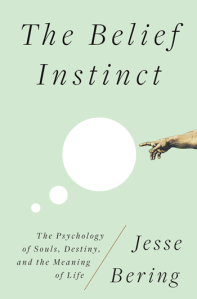
This is illustrated by the Slate article of a week ago titled “Are You There, God? It’s Me, Brain.” The author, Jesse Bering, aims to explain “how our innate theory of mind gives rise to the divine creator.” Click here to read the article.

The article begins by noting the uniquely well-developed capacity we have to attribute mental states to others of our species, then present evidence that we also attribute mental states to inanimate entities. On this basis, Bering hopes to make a natural inference to the claim that in our thinking about God we are projecting a mental life onto an object that is neither animate nor inanimate, but unreal.

So it would appear that having a theory of mind was so useful for our ancestors in explaining and predicting other people’s behaviors that it has completely flooded our evolved social brains. As a result, today we overshoot our mental-state attributions to things that are, in reality, completely mindless. And all of this leads us, rather inevitably, to a very important question: What if I were to tell you that God’s mental states, too, were all in your mind? That God, like a tiny speck floating at the edge of your cornea producing the image of a hazy, out-of-reach orb accompanying your every turn, was in fact a psychological illusion, a sort of evolved blemish etched onto the core cognitive substrate of your brain? It may feel as if there is something grander out there . . . watching, knowing, caring. Perhaps even judging. But, in fact, that’s just your overactive theory of mind. In reality, there is only the air you breathe.

“What if I were to tell you that God’s mental states, too, were all in your mind?” Great question! I would say, “That sounds like wishful thinking on your part. Show me the evidence.”

Of course, Jesse Bering doesn’t present any evidence. Our capacity to ascribe mental lives to members of our species seems, from Bering’s point of view, to be legitimate. That much is a relief. But our tendency, as Bering would put it, to do the same for inanimate objects suggests that we are somehow hard-wired to err in doing this.

Now, it doesn’t really matter that the evidence Bering presents for our supposed projection of mental lives onto inanimate objects is very weak, because even if Bering is right about that, it doesn’t count as evidence that that’s more-or-less what we’re doing when we think about God. But the evidence that we routinely project mental lives onto the inanimate doesn’t bear the weight of Bering’s conclusion. There are plausible alternative explanations for our behavior toward physical objects when we’re angry and for our talk about objects as if they were personal entities. I don’t slam the car door because I hold my car personally responsible for “refusing” to start and “making” me late to work. But I do slam the door and I do speak this way. The action is expressive of my frustration, if only to myself, and the speech is metaphorical.

When I think and talk about God, my acting and speaking is completely unlike my acting and speaking when my car won’t start. I believe that God is real, is a person, hears and responds to me, and so forth. Unaccountably, Bering doesn’t acknowledge this difference in my so-called “intentional-state attributions.” I only appear, through my behavior, to attribute intentions to my stupid car. But I do not actually attribute intentions to the thing. My behavior does not tell the whole story, a story that I know from the inside, as the person engaged in that behavior. But I do attribute intentions to a divine creator. In fact, I see evidence all around me of a creator’s existence and intentions.

If time allowed, I would show how the reality of our mental lives—acknowledged by Bering—is itself evidence for the reality of God, a supreme being with a real mental life. That will have to be for another time. Meanwhile, I encourage you to read the charming but misguided article by Jesse Bering. It neatly exhibits a pervasive confusion—one that nurtures a very real illusion about God.
Linked to Amazon
Bill O’Reilly’s Brilliant Interview with President Obama


Bill O’Reilly interviewed our president on Sunday morning for about fifteen minutes of live television. Bill (it’s all first-name basis these days) has been collecting reactions from “the regular folk” and from everyone else who will favor him with an evaluation. Some of his guests have been on his show to talk directly about his interview performance: Brit Hume, Bernie, and Charles Krauthammer.

This seems very odd to me. O’Reilly comes across like a giddy kid who just returned from the candy shop with pockets full of free confection. The last thing he wants to hear is that his interview was inconsequential. Notice how he talks about it. He asserts that probably no live TV interview has been so widely disseminated. (That may be true.)

And notice how he interprets what the president said. He asked whether Obama agreed that he had moved toward the political center since the November election, when so many Democrats were turned out of Congress. Obama said he hasn’t moved. O’Reilly keeps saying that he (O’Reilly) believes the president “really thinks” he has not moved toward the center.

I doubt that Bill O’Reilly knows better than the rest of us what the president believes. I can’t tell from the interview that O’Reilly is in a better position to know than we are. And from what the president said in the interview, I can’t say with confidence what the president believes—certainly not with O’Reilly-styled bravado. I feel more confident saying what the president wants us to believe. And he wants us to believe that he hasn’t moved politically. After all, that’s what he said. What he said is what he wants us to believe.

Of course, as long as it’s unclear what Obama meant by what he said it will be to that extent unclear what we are supposed to believe. The politician’s specialty is to answer a direct question ambiguously, but to disguise its ambiguity so that it is confidently interpreted one way by one group of constituents and is confidently interpreted another way by another group of constituents. If you can get disagreeing constituents to believe they have the correct interpretation of your words and they happen to like what you say on that interpretation, then you have acted the political genius.

The evidence of Obama’s political genius is that O’Reilly thinks he knows what the president believes based on what the president said.

What Obama said is probably supposed to mean one thing to those of us who are troubled by his leftist political outlook, and something else to those of us who are cheered by his leftist political stance. (It may not mean anything to those of us who think he isn’t a leftist.) To the first cohort, it should mean that he has never been the insufferable leftist that many have feared. To the second cohort, it should mean that he is every bit the leftist that many have hoped, and that he will continue to resist insufferable conservatives.

I can’t take seriously any interview where a politician makes it necessary for me to read between the lines in order to “know” what the politician believes or means. This is because one can’t really know what a politician means when what he says is ambiguous—and hence deniable. When the ambiguity is evident, then we should know that we don’t know, and we should know better than to think that we do know. But skillful ambiguity may fool us into thinking that we do know what we don’t know.

So, did O-Reilly discharge his duty as a journalist and press for the kind of clarity needed for his interview to matter? That’s for you to decide.

Henry Boynton Smith (1815-1876)


February 7

On this date in 1877, Henry Boynton Smith died in New York City, age 61. This theologian, who was born in Portland, Maine, studied at Bowdoin College and at Andover and Bangor theological seminaries. Later, he studied in Germany, getting to know Friedrich Tholuck and Hermann Ulrici at Halle, and August Neander and Ernst Wilhelm Hengstenberg at Berlin.

I have long had an interest in Tholuck (1799-1877) for his work in Christian apologetics as a German evangelical. Henry B. Smith lectured in apologetics at Union Theological Seminary during the academic years 1874-1875 and 1875-1876. His course of lectures was published in 1882 by A. C. Armstrong & Son.

Smith adopted a three-fold division of Christian apologetics:

  1. Fundamental Apologetics
  2. Historical Apologetics
  3. Philosophical Apologetics

His system is sophisticated and worthy of close study. He begins with the question whether the supernatural can be known (considering first general questions of epistemology) then moves on to “the proof of the Being of God” (p. 46).

Here is how he begins to address the question, “How can we know God?”

The very question implies some knowledge. Unless we had some conception of God we could and would nevermore ask, How can and do we know God? Unless man had some belief in God he would not ask, any more than an animal, Can you prove His being—can you demonstrate His existence?

The questions implies a need, a craving—seeks for an answer to a demand of our rational and moral being. This is the very least that can be said. There is a strong subjective belief—that is the starting-point; and the question is, Is there a corresponding objective reality? Are there sufficient grounds for full belief, binding on all rational and moral beings?

Hence the question is not at all about knowing some unknown thing, about proving the existence of a mere abstraction—as a theorem in geometry. It is as to the proving the existence of a being in whom, somehow, in some wise, we already believe. It is not going from the known to the unknown—but showing that there are valid and final reasons for a strong, universal, native, human belief.

—Smith, Apologetics: A Course of Lectures (1882), pp. 71-72

Later, Smith writes:

  1. As the starting-point show that man’s whole nature and man’s whole history prove the need to him of a God; that man by nature and reason is irresistibly prompted to seek for Deity, and cannot else be satisfied. This is not the proof of God’s being, but the basis of proof.
  2. That all the phenomena and facts of the universe (so far as known) demand the recognition of a God as their source and unity—a personal God, the necessary complement of the world.
  3. That man’s reason (a priori) demonstrates the existence of a real, infinite, absolute being.
  4. The combination of 2 and 3 gives is the result and proof.

In its ultimate philosophical principles the proof for the being of God consists of three arguments resting upon three ideas:

(a) The ontological argument, on the idea of being.

(b) The cosmological argument, on the idea of cause.

(c) The teleological argument, on the idea of design.

—Smith, Apologetics, p. 87

In chapter 4, Smith distinguishes between “the Supernatural” and “the Miraculous.” He develops the case for Christian miracles against pantheism and materialism, which both consider the impossibility of miracles to be an axiom. Not only are miracles possible, but on sufficient evidence, it is reasonable to believe that miracles have happened.

Smith says, “Besides having an adequate cause, miracles have also a sufficient end or object, and are never to be considered apart from, or dissociated from that” (p. 102).

Miracles are:

possible, if there is a God;

probable, if a positive revelation is needed; and

they have been [i.e., they have happened], if Christ and his apostles can be believed.

(p. 104)

Smith held that “Christian Apologetics is essentially Vindication. It seeks to vindicate, and in vindicating to establish, the value and authority of the Christian faith” (p. 118). His published lectures are a credit to his effort to do just that.

Note: It was also on this date, in 1664, that Gottfried Leibniz completed his master’s degree in philosophy.


Gottfried Leibniz

Superbowl Sunday or Ronald Reagan’s 100th Birthday Anniversary?


Official Portrait of President Ronald Reagan

Image via Wikipedia

Both, of course.

People today are obsessed, as always, with the Superbowl. But many will remember Ronald Reagan on this, his 100th, birthday. I returned home from church this morning just in time to watch and hear the 21-gun salute to our 40th president.

The remarkable ceremony honoring his memory at the Ronald Reagan Presidential Library continues as I write this post. Nancy Reagan has greeted the audience of distinguished guests, and actor Gary Sinise has given a brief and moving tribute. James Baker, Reagan’s Chief of Staff during his presidency, has just now been introduced as the main speaker of the event.

How will you remember Reagan today?

There are many ways that you might remember the man, all of which will leave you feeling personally inspired. Read a biography, sift through his influential speeches, watch one of the movies in which he starred, view a documentary of his life and administration, pore over fotos of Reagan from different periods of his life, Google quotations for which he is well-known, find and watch a re-play of today’s tribute to Reagan that is now being broadcast from Simi Valley, CA.

Movies to see:

Documentaries:

Books:

Related posts: