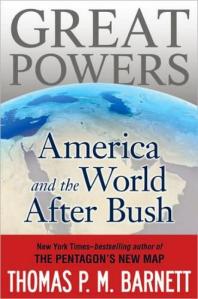
Thomas Barnett Decodes Obama’s Speech Defending His Libya “Policy”


Americans have been pleading with the President to explain his rationale for engaging our military in fighting action in Libya. Yesterday, March 28, President Obama gave the speech that was supposed to sell us on the decisions he’s been making, and to prepare us for decisions he’ll continue to make.

Obama must be afflicted with misgivings, hearing as he no doubt has, that people from across the political spectrum are less than impressed with his leadership.

To hear the President’s speech, and to hear it decoded, feel free to visit Thomas P. M. Barnett’s post for Esquire‘s “The Politics Blog.” Barnett revisits the President’s speech and offers a line-for-line translation of what Obama actually said. It would be hard to find a more plausible interpretation than Barnett’s.

Notes:

Is Donald Trump a “Birther”?


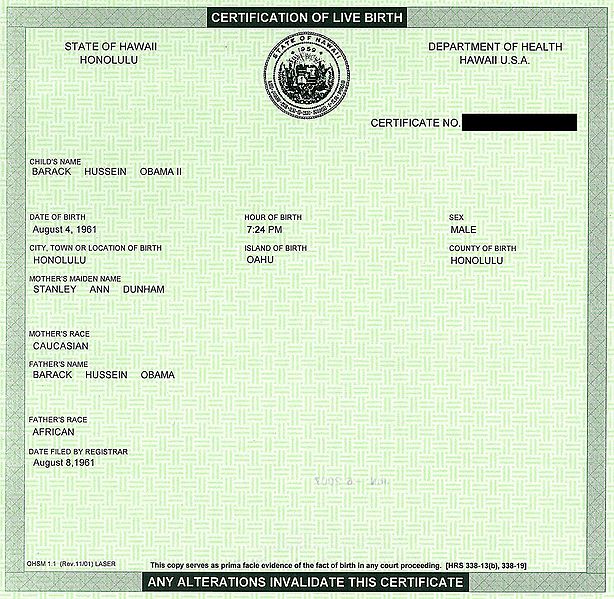
Donald Trump has been making a very publicly visible appeal to President Obama to settle the matter once and for all and make his birth certificate public. Does this make Trump a “birther”?

First, keep in mind that the term “birther” has been used by the media to stigmatize a portion of the American electorate as right-wing kooks. Some media outlets seem to have calculated that by calling these American citizens by this epithet it will eventually embarrass and silence them, or at least contain their influence.

This appears to be a clear effort to defend the President. But defend him from what? Apparently, the President’s stubborn refusal to publish his birth certificate is viewed even by his defenders as a posture that is worthy of media defense. But why?

And what exactly is a birther? You’re definitely supposed to be a birther if you actually believe that Obama was not born in the United States. There are people in this country who believe this. So they have the clearest claim to the epithet. And maybe some of these “true believers” wear the epithet with pride.

Are you a birther if you are genuinely concerned about the possibility that Obama was not born in this country, and would simply like for him to step up and prove that he was? I wouldn’t say so. And this seems to be Donald Trump’s attitude. Trump, as far as I can tell, is not a birther. He has said that he hopes Obama was born in this country. Would a real birther hope for this?

With Trump’s recent appeal to Obama to take the very simple step of proving his citizenship, I’ve thought about the issue a bit more than in the past. It now seems to me that Obama has repudiated an opportunity to demonstrate good will toward all Americans, including those who would like to have clarity about this matter. What possible harm can there be in accommodating a reasonable request for such information? What past American President would refuse to make his birth certificate public if there was such a broad interest in seeing his American citizenship demonstrated?

Many who are not generally considered birthers have enjoined Obama to produce his certificate. In response, challengers often say, “Do you believe that Obama was not born in the United States?” And if the answer is, “No,” then challengers think it’s stupid to ask the President for his birth certificate. But it isn’t stupid. If there is enough concern among the American people to see this demonstrated, then that should be reason enough for the President to accommodate them.

That’s my view, then. Without believing that Obama was born outside the United States, I do believe he very simply ought to make his birth certificate public. I believe this because his refusal to do so has revealed a stubbornness that is unbecoming of the leader of our nation. There’s some reason why he does not wish to give satisfaction to those who have called for it. Those reasons create suspicion and escalate discord about the matter. Why not “bring the country together” on such a small point?

Trump alleges that Obama has spent quite a bit of money to ensure that his birth certificate does not come to light. If that’s true, I’d like to know why. Does it lead me to believe that Obama was not born in the U.S.? No.

Others have said that media outlets are so thorough in their scrutiny of a presidential candidate that if Obama was not born in the United States, then this would have been exposed during Obama’s candidacy. But doesn’t this argument cut the other way just as well? Doesn’t it stand to reason that if Obama was born in the United States—given the huge controversy concerning the President’s citizenship—compelling evidence that he was born in the U.S. would have come to light via media scrutiny? The evidence, apparently, hasn’t been conclusive either way.

The issue hasn’t subsided and there’s reason to think it will haunt the President in the future. It’s looking now like Obama will be confronted with this issue again as he campaigns for a second term. Will the pressure be great enough this time round for him to capitulate and make his birth certificate public? Who can say? If the President was not born in the U.S., then, by Article 2 of the U.S. Constitution, Obama is not the legitimate President of the United States. That would provide motive for refusing to go public. But if that’s true, how long can the truth be suppressed? I imagine that sooner or later, even if Obama is elected for a second term, actual dissembling about his citizenship would come to light eventually. And that would not be good for Obama.

Here’s something to consider. There’s a good chance that the history books will note the issue and document Obama’s determination not to publicize his birth certificate. Readers will not have the benefit of observing his charisma and judge his likeability. If the President isn’t eventually forthcoming, perhaps a majority of Americans a couple generations from now will be birthers. That would not be good for Obama, either. What President would wish to go down in history as very possibly the only “American President” who was never really a legitimate President? The only way for Obama to ensure that that never happens is for him to produce his birth certificate.

Notes:

  • FactCheck.com concluded that an alleged digital copy of the certificate, released by the Obama 2008 Campaign, is of an authentic certificate for Obama from Hawaii. The story features a foto with the caption “The Obama birth certificate, held by FactCheck writer Joe Miller.”
  • Snopes.com also has written in defense of this perspective.
  • See Wikipedia articles on conspiracy theories about the Obama birth certificate and about Article 2 of the U.S. Constitution.
  • Donald Trump appears to be testing the water for a run at the presidency in 2012. Could this be why he has re-introduced the topic of Obama’s birth certificate into the national discussion?
  • Chester Arthur, 21st President of the U.S., has gone down in history with doubts about his citizenship still lingering. Vice President Arthur succeeded President James Garfield after Garfield died of gunshot wounds caused by an assassin.

Related Post:
Doug Interviewed by the Religious News Service about God’s Role in Japan’s Earthquake and Tsunami


Tuesday, March 22, I was interviewed by Nicole Neroulias about God’s role in Japan’s earthquake and tsunami. Neroulias blogs for Beliefnet and writes for Religion News Service. She is a graduate of Cornell University and the Columbia University Graduate School of Journalism, and she has written for The New York Times and other media.

Our conversation of about 40 minutes focused on a poll just conducted by Public Religion Research Institute in partnership with Religion News Service. The institute and news service polled Americans for beliefs about God’s role in natural disasters. Neroulias recounted the results of the poll for me and asked for my reaction. Today her story went online here. Portions of our interview are summarized near the end of her article.

We discussed far more than could be included in her story. So I may be posting further about this interesting and important topic.

I welcome your reaction to the poll and comments on the article by Neroulias.

Notes & Updates:

  • Nicole Neroulias can be followed on twitter here.
  • The Religion News Service claims to be “the only secular news and photo service devoted to unbiased coverage of religion and ethics.”
  • The poll has also been noticed by CNN here.
  • Neroulias has also posted at Beliefnet here.
  • The Huffington Post is carrying the story by Neroulias here.

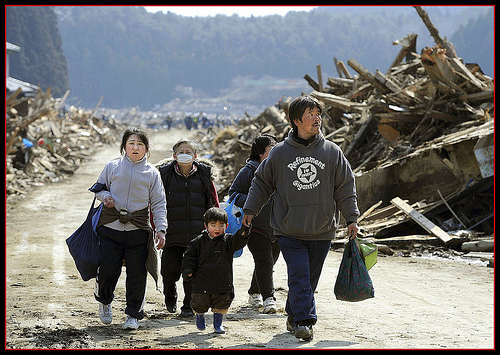
How Families Can Support Japan and Its People


Smart donors with deep pockets have a practice of matching donors’ gifts dollar-for-dollar. This is something parents can do with their children, no matter the ages of their children. If you have kids, they probably know about recent events in Japan. And they probably are concerned about the trials people are suffering. But is there anything they can do about it?

There is!

Young kids have great attitudes. They don’t often worry that their efforts, however small, are insignificant. This should inspire parents. And parents can build on the charitable inclinations of their kids. They can talk about concrete needs and specific organizations that are in the best position to assist with those needs. They can support their kids’ desire to help by offering to match their contributions by some multiple of every dollar they give or raise for charitable support.

Two organizations impress me as most worthy because they are best organized, most experienced, and most fiscally responsible and efficient. They are Samaritan’s Purse and the American Red Cross. So one option is for parents to invite their children to consider what they can give and tell them that whatever they give will be matched by five or ten or twenty or a hundred additional dollars.

If you have a seven-year-old who is prepared to sacrifice $5.00 he’s saved for something else, then you might offer to match it with $100 for each dollar. Explain to him how each dollar he donates creates an additional $100 of support to meet needs in Japan. This can sound a little abstract if you don’t illustrate with concrete goods that will be supplied or numbers of people who will be helped. So you’ll need to do your homework. Try to determine what your $100 will cover and communicate this to your kids in ways that will make sense to them.

Challenge your older children to give more. You may have to match their contributions with fewer dollars because of your budget.

Here’s another idea. Begin setting a portion of your charitable giving aside for emergencies that arise. Place this portion in a fund that will accrue interest or in a stock portfolio. As emergencies arise, you will already have available a measure of money designated for giving in times of emergency.

Fidelity Investments, for example, has a Charitable Gift Fund. You can open a Charitable Gift account, select the type of portfolio you wish to contribute to, then make deposits to this account according to your own schedule. The funds you deposit will rise and fall with the vagaries of the market and the portfolio you adopt. Your tax deduction for charitable giving is for the year in which you make the deposit. Once the money is deposited, it cannot be withdrawn. At the time of your choice, you decide whom to support and for how much. You then authorize Fidelity to post a check to the designee, charging your Charitable Gift account for the amount you have designated. It’s pretty simple and a great way to apportion your giving for special needs, whatever they may be.

Of course, you can combine this idea with the matching idea, and get your children involved in regular giving. They can help you decide when it’s time to give to a particular cause. And they will, no doubt, be sensitive to needs that aren’t on your radar.

If you have other ideas about how families can join in efforts to assist with emergency needs, especially during this time of trial for people in Japan, I welcome your suggestions.

By the way—I think this is also a way to inculcate your values into your family culture. Love, self-sacrifice, patriotism, and other values can be reinforced with careful attention to the motives that lie behind our concern for others less fortunate or differently blessed than ourselves.

Dick Morris Reports Popular Support for Controversial Governors


Events in Japan have caused a nearly total news blackout on everything else. But things continue to happen elsewhere in the world. For instance, in Wisconsin, the Republican Governor Scott Walker is still threatened by angry Democrat leaders, and a few Republican state senators are being challenged with recall efforts by Democrat senators who boycotted passage of a bill they didn’t like by leaving the state.

Dick Morris, a very smart political strategist, has polled Americans for their attitudes about these happenings. The strong more popular support for bold challenges to public employee unions surprised me.

One of the most interesting sections of Morris’s report says this:

Absentee State Legislators

Voters reacted strongly against state legislators who boycott their legislatures to stop the passage of labor legislation. By 25-61 they rejected the idea that it is “necessary” for Democrats to boycott the legislature so as to deny the majority a quorum “to stop legislation restricting unions from being passed.” The majority agreed that the legislators “should return to the legislature and respect the decisions the voters have made in the last election.”

See the full report here.

Stock Market Responding to Japan’s Nuclear Crisis—The Role of American Media


The stock market is responding to Japan’s nuclear crisis, and the picture isn’t pretty. The Dow Jones Industrial Average finished down 242 points today. The Nasdaq dropped by 51 points.

This is because the stock market doesn’t like uncertainty. And uncertainty is the hallmark of the current situation. Japan is in crisis. The American media are trying get to the bottom of things. But they have resorted to sheer speculation on the basis of doubtful evidence. I hold the irresponsible media partly responsible for our stock market malaise.

Japanese officials are holding their cards close to the vest. Is this because the news about their damaged nuclear reactors is far worse than they want the world to know? Or is it because the Japanese culture favors patient and cautious reporting rather than minute-by-minute, blow-by-blow updating? Who knows?

Here’s something we do know. When the American media bring the experts in to speculate about events unfolding in Japan, they are compelled to reflect “two sides” to the “issue.” (Maxim: “There https://douggeivett.wordpress.com/wp-admin/post-new.phpare two sides to every issue.”) What’s the issue? “Just how bad is the situation and how much risk of spreading radiation is there right now?” So one expert is selected precisely for his relative optimism and another is selected for her more negative outlook. This does not ensure that the media retain individuals on each side who are equally competent to evaluate what little is known.

Case in point: Bill O-Reilly (Fox News) interviewed Professor Richard Muller, a physicist at UC Berkeley, and Rita King who, bless her heart, is a “former nuclear industry journalist.” Speculation without benefit of good data is bad enough. But speculation from a former journalist is painfully specious.

Gunther Oettinger

Cameras with direct feed into some American broadcast studio are an invitation to loose lips. Have you heard what Gunther Oettinger said today? Who’s Gunther Oettinger, you ask. He’s the European Union Energy Chief. Gunther said that Japan’s nuclear plant crisis is “out of control.” This was during a European Parliament committee meeting in Brussels. The stock market went nuclear; the sell-off in equities plunged deeper. Read about this here, where we’re told:

The EU energy commissioner’s spokeswoman, however, later clarified that Oettinger did not have any special or extra information on the situation in Japan.

There you have it. An escalation in alarmist talk with no correlative change in data.

Let’s face it. We don’t know what’s happening on the ground in Japan. Our typically American demand for immediate information and quick fixes isn’t getting us anywhere. Poor Shepard Smith, of Fox News, flew out to Japan to get first-hand information, and he’s learning more about what’s happening in Japan during his conversations with Fox anchors at home than he is from officials in Japan.

In American news reporting, there’s no such thing as keeping your powder dry and your mouth shut. But if there isn’t any more specific real news from Japan soon, the media may have to start covering other important issues and events happening in the world, like our national debt and the Congressional failure to produce a budget, the war in Afghanistan, and Muammar Gaddafi’s goofy and perilous antics in Libya.

Nuke Media Distortion with Facts—What to Believe about the Dangers of Japan’s Nuclear Reactors


Are you good at believing the things you believe? That’s my motto. So what are we supposed to believe about the danger of nuclear radiation following Japan’s recent 9.0 earthquake and damage to nuclear reactors at two locations?

Satellite view of Fukushima Daiichi Nuclear Power Plant

First, why we need to know what is happening:

  • We care about the safety of the Japanese people.
  • We care about the safety about the world population.
  • We care about radiation drift toward North America.
  • We have energy needs that may be met with new reactors in the U.S., but only if they’re safe.

Second, why the mainstream media cannot be trusted for knowledge of what is happening:

  • The media are prone to sensationalize the “news” in order to boost their ratings.
  • The media have a liberal bias, which is already heavily invested in opposition to nuclear energy.
  • The media have no idea what a reactor is, how one works, and what terms mean when used to described behavior at a nuclear plant (e.g., “meltdown).
  • The media, even if they try for “balanced coverage” by “experts” with opposing views, are as likely to get crackpots having their own meltdown over what’s happening in Japan.

Third, the only way to nuke media distortion (whether deliberate or not) is with facts and critical reflection.

For facts, the internet is probably your best guide.

The most valuable report I’ve read so far comes from Dr. Josef Oehman, a research scientist in mechanical engineering and engineering systems at MIT. Read his analysis “Why I am not worried about Japan’s nuclear reactors”. The cost of being well-informed is the effort of becoming informed. Oehman’s article is lengthy, but accessible. You can settle for sound bytes or get the facts in clear and cogent detail.

Oehman captures the threat level with this advice:

If you were sitting on top of the plants’ chimney when they were venting, you should probably give up smoking to return to your former life expectancy.

I’ve started following Oehman on Twitter.

Of course, you want more than one doctor’s opinion. So switch off your TV and search out other reliable sources of real information. If you must monitor the TV coverage, be sure to note the names of specialists and experts who are interviewed, find out who they work for, and examine their credentials.

And listen carefully to the naive questions the journalists are asking. Watch for their own off-hand comments and simplistic reactions. Last night I watched Geraldo interview specialists about the news out of Japan. Geraldo marveled with near-panic that engineers had resorted to flooding their reactors with sea water in order to cool the over-heated reactors. Apparently he didn’t know that this is backup protocol when disaster strikes. (See the article by Oehman.)

Critics of nuclear energy will be sorely tempted to make good use of the disaster in Japan. But this could backfire on them if it turns out that the 9.0 earthquake demonstrates the safety and viability of nuclear power plants, even when disaster strikes.

Time will tell.

Radio Interview: The Janet Mefferd Show


Beginning at 11:00 a.m. CT today, Doug will be interviewed on the Janet Mefferd Show.

What Is Modus Tollens?


Modus tollens is a valid argument form. Because the form is deductive and has two premises and a conclusion, modus tollens is an example of a syllogism. (A syllogism is any  deductive argument with two premises and a conclusion.)

The Latin phrase ‘modus tollens‘, translated literally, means ‘mode of denying’.

Shown schematically, this form of argument looks like this:

Premise 1: If A then B.

Premise 2: Not-B.

Conclusion: Therefore, not-A.

Arguments of this form are produced by substituting statements in English for A and for B. For example, suppose A = ‘Casey is a dog’ and B = ‘Casey has four legs.’ We can substitute as follows, for a valid argument:

Premise 1: If Casey is a dog, then Casey has four legs.

Premise 2: Casey does not have four legs.

Conclusion: Therefore, Casey is not a dog.

Any argument of this form is valid. But not every argument of this form is sound. For an argument to be sound, it must meet two requirements. First, it must be valid; second, it must have true premises. The above argument about Casey is valid, but it’s not sound. Why? Because the first premise is false. It implies that all dogs have four legs. But this generalization, unfortunately, is not true. (It also turns out that Casey does have four legs; so premise 2 is false, also.)

Because modus tollens arguments are always valid, we may extrapolate from this argument form a rule of inference as follows:

“Always infer not-A from the conjunction of two premises, if one premise is a conditional statement of the form ‘If A, then B,’ and the other premise denies B.” (The order of the premises doesn’t matter.)

Caveat:

Be careful not to confuse modus ponens with modus tolendo ponens. Modus tolendo ponens is an argument of the following form:

Premise 1: Either A or B.

Premise 2: Not-A.

Therefore, B.

See also “What Is What Is Modus Ponens?”

What Is Modus Ponens?


Modus ponens is a valid argument form. Because the form is deductive and has two premises and a conclusion, modus pones is an example of a syllogism. (A syllogism is any  deductive argument with two premises and a conclusion.)

The Latin phrase ‘modus ponens‘, translated literally, means ‘mode of affirming’.

Shown schematically, this form of argument looks like this:

Premise 1: If A then B.

Premise 2: A.

Conclusion: Therefore, B.

Arguments of this form are produced by substituting statements in English for A and for B. For example, suppose A = ‘Casey is a dog’ and B = ‘Casey has four legs.’ We can substitute as follows, for a valid argument:

Premise 1: If Casey is a dog, then Casey has four legs.

Premise 2: Casey is a dog.

Conclusion: Therefore, Casey has four legs.

Any argument of this form is valid. But not every argument of this form is sound. For an argument to be sound, it must meet two requirements. First, it must be valid; second, it must have true premises. The above argument about Casey is valid, but it’s not sound. Why? Because the first premise is false. It implies that all dogs have four legs. But this generalization, unfortunately, is not true.

Because modus ponens arguments are always valid, we may extrapolate from this argument form a rule of inference as follows:

“Always infer B from the conjunction of two premises, if one premise is a conditional statement of the form ‘If A, then B,’ and the other premise affirms A.” (The order of the premises doesn’t matter.)

Caveat:

Be careful not to confuse modus ponens with modus tolendo ponens. Modus tolendo ponens is an argument of the following form:

Premise 1: Either A or B.

Premise 2: Not-A.

Therefore, B.

See also “What Is Modus Tollens?”

Teaching Logic & Critical Thinking to Your Kids


Cover of

Cover of Being Logical: A Guide to Good Thinking

It’s pleasing to know that parents are taking a more proactive role in the education of their children, whether or not they are homeschooling. I’ve been asked if I can recommend tools that could be used to teach children the elements of logic and critical thinking.

  1. My first suggestion is that the best way to teach children how to think critically is to be a visible model of critical thinking. Children have a far greater aptitude for critical thinking than adults credit them for. They tend to be good at inferential reasoning. Their powers are limited in part by their limited storehouse of information from which to make inferences.
  2. Modeling excellence in critical thinking presupposes skill in critical thinking. So parents need to be students of logic and critical thinking themselves. Unfortunately, most have not had the opportunity for formal education in these skills. But there are accessible books to consider. I’ll add a list of recommendations at the end of this post.
  3. If your children see you making the attempt to sharpen your skills in reasoning, this will itself be a good example to them. You can tell them what you’re learning.
  4. Learn the names of basic inferential moves (for example modus ponens, modus tollens) and use these labels with your children when they demonstrate their own ability to make such moves. This should reinforce their awareness of the significance of their mental powers, and affirm them in the use of their powers.
  5. Encourage your children to think about the implications of something they have said or heard. You’ll have to be alert to opportunities for this. But once you’ve been at it for awhile, you’ll get into a natural groove. It will eventually become a part of your routine interaction with your kids. How to do this? I’ll save that for another post sometime.
  6. Get your children reading at their grade level (or above!) books that exemplify and encourage critical thinking. Mystery and suspense novels, carefully selected for their sophistication and interest, can be useful. I read the Hardy Boys as a kid. I also liked the stories of the Sugar Creek Gang.
  7. If you’re home schooling (or not), you can include in the curriculum some materials that teach critical thinking. The Fallacy Detective is a good source for this. (See below.)

Recommendations:

So, here are a few of the many resources available. I’m recommending those that provide a good place to start. Each title is linked to its Amazon page.

Books that inspire parents and other educators to teach children these skills:

Books for self-education in logic and critical thinking:

With adequate preparation in the early years, children in junior high and high school may be ready to work through these books themselves. They don’t provide a complete education in logic, but they are satisfactory for pre-college preparation. For more rigorous study in high school, I recommend using one of two textbooks:

Like most textbooks, Copi and Hurley are pricey. So you may want to settle for a second-hand copy. The illustrations and exposition of old editions will be dated, but the logic will be the same! I shop for second-hand books at AbeBooks.com.

For grade school and up:

Fiction classics for youth:

This post is cross-referenced in an interesting post here.

Related Posts by Doug Geivett:

400th Anniversary of the King James Version of the Bible


The first page of the Book of Genesis from the...

Image via Wikipedia

The world’s best-selling book of all time, the King James Version of the Bible, is 400 years old this year. Introduced in 1611, this elegant English translation has a storied history, and an influence on Western culture beyond that of any person or object.

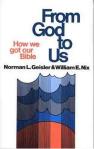
Today, a friend and colleague of mine gave a brief presentation on the history and influence of the KJV to the faculty at my university. Dr. Clinton Arnold is a New Testament scholar with numerous books to his credit. For a beautiful book that surveys the history of the English Bible, I recommend his neatly organized and amply illustrated book How We Got Our Bible.

If you want to read up on the King James Bible, I recommend two books:

The general topic matters for two basic reasons:

  1. Some uninformed critics think that the existence of diverse English translations counts against the divine origin of the original manuscripts of the Bible.
  2. Many, believers and nonbelievers, are not familiar with the history of the “canon” of the Bible. They do not know how the various books of the Bible, written by many individuals over a period of centuries, came to be regarded together as the written word of God.

Whether or not you use the King James Version, whether or not you read the Bible, I encourage you to commemorate this anniversary of the KJV with a little study of the history of the Bible. Here are some sources for that purpose:

Related:

Protesting Governor Scott Walker May Backfire on Liberals


Wisconsin Budget Repair Bill Protest: Scott Wa...

Image by mrbula via Flickr

There’s turmoil in Madison, Wisconsin, as some public school teachers and others protest the efforts of Governor Scott Walker to curtail excessive state spending on state employee benefits. From a distance, this looks like a bad play by liberal Democrats.

  • Teachers who have left their jobs to protest at the state’s capitol may be breaking the law and may pay a price for doing so.
  • 14 Democrat legislators who have left the state in order to prevent a vote on the Governor’s proposals may not last long in their elected positions.
  • The antics of protesters in Wisconsin have brought national attention to the debacle, and these protesters are at risk of a backlash in public sentiment across the nation.
  • With the substantial visibility of Governor Walker’s boldness, and the prospects for his success, other states in fiscal trouble may be emboldened to adopt similar measures.

These probably would not be welcome effects of the protest movement in Wisconsin, among those actually protesting. But there is an even more significant possibility they may not have anticipated.

  • Governor Scott Walker has been propelled to national attention and has become a symbol of broad national support for greater fiscal responsibility and bolder leadership to achieve that end. Protesters have generated greater interest in Governor Walker as an icon of conservative politics. A figure who was unknown outside Wisconsin only a week ago is now a national icon. If he succeeds in Wisconsin, he may be a compelling candidate for national leadership. He may even be scrutinized as possible presidential timber. Imagine that! With every ounce of continued protest, the governor’s critics run a greater risk of showcasing the governor’s achievement if he prevails.

If the governor of Wisconsin prevails, his example may galvanize a cadre of conservative politicians to step up with ever bolder measures. The conservative movement could be on the cusp of new energy, so far unprecedented. That would truly be significant, given the already substantial inroads that have been made by conservatives among the electorate.

Scripture Memory Made Easy


Scripture Memory Made Easy is the title of a little book by Mark Waters. The method resembles the approach I was taught by Garry Friesen as a college student in the late 1970s. The 64-page booklet, dubbed an “easy-to-understand pocket reference guide,” is both a guide to Scripture memorization and “a plan for learning one hundred Bible verses in fifty-two weeks.”

The author stresses the importance of review and has built this crucial element into the method. He also advises the excellent practice of memorizing verses topically. Both of these components of a sound Scripture memory plan were part of the Navigator’s “Topical Memory System” that I used when I was a teenager.

I have always believed in the value of Scripture memorization. It’s never too early to begin. Nor is it ever too late. For all the enthusiasm we see today for new techniques of “spiritual formation,” there is almost no emphasis on the memorization of carefully selected passages from the Bible.

Scripture Memory Made Easy, by Mark Waters, is a useful remedy.

Order at Amazon

Happily, the Topical Memory System, by the Navigators, continues to be published. Today’s kit includes 60 verses cards with passages from several familiar English translations, a workbook, and a verse card holder.

If Scripture memorization is new to you, I urge you to begin now. God will reward your efforts with the supply of wisdom for life’s small and major moments.

Note: I welcome your response to this post. Other readers may be encouraged to know of how your own experience with Scripture memory has increased your faith, enabled you to follow God’s will, and fostered greater boldness as a believer living in a secular society.

This website is read by people of differing beliefs. This particular post is primarily for those who believe the Bible is the greatest source for wise living. Anyone who believes this should be especially open to the value of Scripture memorization.

Again, I look forward to hearing from you!

Page Numbers in Kindle


Cover of "Kindle Wireless Reading Device,...

Cover via Amazon

This week I ordered the new Kindle, upgrading from the original Kindle that I bought a few years ago. My new Kindle arrived in the mail today. I’ve already enjoyed its improved features.

Amazon has recently created a new firmware version that includes several new features. The most welcome feature is the possibility of determining the page numbers in hard copy for the Kindle ebook version of a book you happen to be reading. This is critical to readers like me who write and lecture and need to be able to document references to the reading we site.

There are things to know about this new feature and its availability:

  1. Even my brand new Kindle came with version 3.0.2 of the firmware. This was superseded by 3.0.3. Why my new Kindle is loaded with the older firmware is unclear to me. But more important, my new Kindle should have the very latest firmware—3.1. Why doesn’t it?
  2. Amazon provides a page of instructions about how to upgrade your Kindle firmware to version 3.1. But I found today that the link for downloading the software is not working. So for the time being, I’m not able to upgrade to 3.1. (This may have something to do with the browser I’m using, which is Firefox. I’ll try this download with a different browser later.)
  3. Not every book purchased for Kindle makes use of the page numbers feature.
  4. When you use the page numbers feature with your Kindle, the way to be sure which physical copy it corresponds with is to go to the product detail page for that book at Amazon and scroll down to find a line that gives the “Page Numbers Source ISBN” under the “Product Details” section of the page.

For Amazon’s own information about the page numbers feature on the Kindle, go here and here.