On This Date in 431: The Council of Ephesus
June 23, 2010 8 Comments
Today is an apt day for reflecting on the Christian doctrine of the two natures of Christ. Read more of this post
Are you good at believing the things you believe? Does it show in the way you live?
June 23, 2010 8 Comments
Today is an apt day for reflecting on the Christian doctrine of the two natures of Christ. Read more of this post
January 27, 2010 14 Comments
In the comments section of a post I made some months ago, I was recently asked if I believe that a severely damaged eye could be restored immediately following a Christian prayer meeting.
Here’s my reply, made more accessible with a separate and exclusive post. Read more of this post
December 4, 2009 3 Comments
What would Jesus do if he was alive on the earth now and facing the skeptics of our day? The same thing he did in the first century. And what was that?
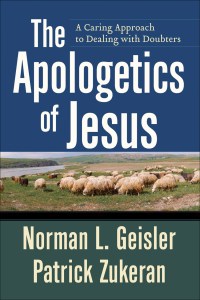 This question is answered with great clarity in the new book by Norman Geisler and Patrick Zukeran—The Apologetics of Jesus: A Caring Approach to Dealing with Doubters.
I want to recommend this book for several reasons: Read more of this post
June 13, 2009 10 Comments
Twitter led me to a blog called My Friend Amy, where there’s an interesting take on speculative fiction in today’s “Faith ‘n Fiction Saturdays” category. The post addresses several questions:
This short post got me thinking about these and related questions. The result is a longer post sketching some of my thoughts about the general topic.
What Is Speculative about ‘Speculative Fiction’?
My Friend Amy quotes Wikipedia for an answer to this question:
Speculative fiction is a fiction genre speculating about worlds that are unlike the real world in various important ways. In these contexts, it generally overlaps one or more of the following: science fiction, fantasy fiction, horror fiction, supernatural fiction, superhero fiction, utopian and dystopian fiction, apocalyptic and post-apocalyptic fiction, and alternate history. (Click here for the complete Wikipedia entry for “Speculative fiction.)
The term is of relatively recent vintage. It doesn’t appear in any of the three handbooks I consult for such things:
I once read an essay on speculative fiction that developed a convincing account of the form. Unfortunately, I don’t remember the author or where I came across the item. But I do remember thinking then that “speculative fiction” is an apt label for fiction that explores counterfactuals—ways things might have been but weren’t, or ways things might yet be but won’t. [FN: For more about counterfactuals at this website, “Run Lola Run—A Discussion Guide.”]
The interesting examples of counterfactuals are worlds very close to this, the actual world. “What if, instead of X happening at time t, something else that could easily have happened, Y, had happened at t? How would things have turned out then?” (One serious philosophical problem with speculation of this sort is that the sequel to any counterfactual at time t—the succession of events following Y, for example—may itself vary in numerous counterfactual ways. There may be many ways things might have turned out if Y had happened rather than X at t. And it’s puzzling to think that there is just one way things would have turned out in such a counterfactual setup. But I digress.)
The better fictional depictions of counterexamples would be at least minimally ‘literary.’ And they would explore themes of enduring human interest.
Could a Christian author write speculative fiction? Of course. The author at My Friend Amy’s blog alludes to several. The most obvious examples are ones that are most obviously ‘Christian.’ They broadcast a Christian message so overtly that it cannot be missed. For example, as noted in the blog post over at My Friend Amy, much Christian fiction depicts battles in the spirit world between angels and demons and the role of intercessory prayer by humans caught in the conflict. This kind of speculative fiction will appeal mostly to Christian readers, and then only to a certain kind of Christian reader. They don’t appeal to My Friend Amy for example. [FN: Some Christians, you may be surprised to hear, would argue that many such specimens of fiction are not properly Christian.]
C. S. Lewis and Others
It is interesting to me that C. S. Lewis is not mentioned. In addition to his cherished Narnia series of fantasy novels, Lewis wrote a very sophisticated series of three novels in what might be called the category of ‘space fiction.’ These are Out of the Silent Planet, Perelandra, and That Hideous Strength. Lewis wrote with subtlty and grace. It’s well-known that he wrote from a Christian worldview. But these novels do not ‘preach.’
Lewis also wrote The Screwtape Letters and The Great Divorce. These must surely count as paradigm cases of ‘speculative fiction.’ Next time you read them, consider this question: “What sort of ‘what-if’ question is Lewis endeavoring to answer in this book?”
I think that’s the question to put to any book if you want to be sure it counts as ‘speculative fiction.’ This opens the way for ostensive definition of the term. That is, it facilitates understanding of the term ‘speculative fiction’ by pointing to clear cases of it. Two examples that come immediately to mind are Shikasta, by Doris Lessing (1979), and The Children of Men, by P. D. James (1992).
It’s interesting to consider these examples in connection with questions raised by My Friend Amy. My view is that speculative fiction is a particularly congenial form for writing from a distinctive worldview, be it Christian or otherwise. It is congenial in part because it permits experimentation with the implications of a worldview without wearing that worldview on its sleeve. Doris Lessing and P. D. James both write with religious sensibilities—Lessing with the perspective of Sufism, James with a Christian worldview. [FN: Lessing was once offered the honorific title of “Dame” by Queen of England. Lessing declined the honor. James was created Baroness James of Holland Park in 1991.] The guiding perspective in each case, though often discernible, is subtly layered into the narrative. This is akin to what the great authors Flannery O’Connor and Graham Greene accomplished in their more ‘realist fiction.’ [FN: See for example, and the short stories of Flannery O’Connor, and The End of the Affair, by Graham Greene.]
For many readers of this post, the film adaptation of The Children of Men will be better known than the book. While watching the first few scenes, I thought about how this darkly apocalyptic film might render the religious component of the human condition when humanity is faced with extinction. My guess was that it would represent society as completely secular, and that any portrayal of religious people would characterize them as the kind who stand on street corners warning passersby of imminent divine judgment, in a tone that betrays their conviction that ‘none who hear will convert, and it’s just as well anyway, since they deserve to go to hell.’ That pretty much is how religion was ‘treated’ in the film.
That last statement needs qualification. What I should say is that religion, imagined under the conditions described in the film, is presented a certain way. This may be a commentary on how religion is manifest in the world today. But it’s pretty striking that no one I would call a ‘serious believer’ shows up in the movie. I imagine they don’t exist, or, if they do, they are marginally significant to the storyline. But then what would account for their nonexistence? Or what would explain their insignificance to the unfolding story? It is precisely the apocalyptic character of the story that makes their absence conspicuous. And that is interesting.
So a film or a novel may have something to say about religion even when it makes no direct reference to anything explicitly religious.
Vampires
The Amy post also asks whether fiction featuring vampires might be a venue for developing Christian themes. I’ve thought about this myself. That would be an excellent question for Anne Rice, the bestselling author of vampire fiction, and an adult convert to Christianity. Books in her newer series based on the gospel narratives has not been quite as successful as Interview with the Vampire. They are, to be sure, friendly presentations of the life and influence of Jesus. I suspect they have generated a new set of fans.
Susan Howatch
Another contemporary author known for her Christian worldview is Susan Howatch. Also a bestselling author (and British), Howatch composes stories with a realist cast. They take place in our world, you might say. See, for example, her acclaimed series beginning with the novel Glittering Images. One of her best is The High Flyer, which can be recommended to any reader with a taste for literary fiction set in the contemporary context.
* * *
A blog permits the expression of random thoughts during idle moments. I’ve exploited that opportunity here. As often happens, the flood of thoughts swelled to the point of necessary expression because of a bit of reading. This time I happened to be reading another blogger who reads.
Thank you, Amy my friend—whoever you are.
Related Posts by Doug Geivett:
June 1, 2009 7 Comments
It would happen at The Huffington Post. Contributor Shannyn Moore shocks the world today with her post warning us all about “Christian fundamentalist terrorists.” Her contention is that Jim D. Adkisson is a Christian fundamentalist terrorist. He’s the scurrilous individual who killed 2 people at the Tennessee Valley Unitarian Universalist Church as a result of firing 76 rounds and a shotgun.
Her complaint is that this Adkisson guy, who was charged with murder, “should have been charged with terrorism.” This suggests that she believes that terrorist acts are distinguishable from murder in general, that terrorist acts are in the category of worse or worst, and that perpetrators of such acts should be regarded and treated differently, i.e., more severely.
On the face of it, this is an odd thing for someone on the far left to say. Liberals on the far left are better known for rubbing out such distinctions. So it is initially heartening to see one of their own take up this cause.
It is disconcerting, on second thought, that this apparent shift is more likely an expression of the left’s characteristic animosity toward a certain brand of Christianity—the “fundamentalist” brand.
Moore thinks she’s making a sound argument for a definite position. But really she sounds angry, rather than calmly rational. In her post for today she spools out another specimen of BlogLogic. “BlogLogic” is the endearing term I use to denote digitally viral fallacious reasoning spread by bloggers and infecting unsuspecting readers who are ill-equipped to pick out the flaws.
The first problem with Moore’s argument is that her conclusion is too vague to be useful. She doesn’t define this term that she’s applying with such gusto to specific individuals: “Christian fundamentalist terrorist.” Maybe she thinks the meaning of her label is obvious—a Christian fundamentalist terrorist is a Christian fundamentalist who happens to be a terrorist; or maybe a Christian fundamentalist terrorist is a terrorist who happens to be a fundamentalist Christian.
It’s doubtful that this is quite what Moore means. She seems to be plugging for a stronger link between terrorism and Christian fundamentalism. Part of what makes this murderer, Adkisson, a terrorist is that he is a fundamentalist Christian. Otherwise, he would simply be a murderer. It’s as if he killed in the name of, or for the sake of, or out of commitment to Christian fundamentalism.
I’m not sure this is quite a strong enough link to satisfy Moore. Adkisson could be more of a nutcase than a Christian fundamentalist, and still kill in the name of, or for the sake of, or even out of (fanciful) commitment to Christian fundamentalism.
It seems, then, that Shannyn Moore deliberately employs the phrase “Christian fundamentalism” in connection with terrorism in order to shame Christian fundamentalists. And this, it has to be said, is itself shameful. Moore is simply poisoning the well against a block of conservative Christians who do not, as a group, sanction the heinous crimes of Adkisson and others. If she thinks there is something inherent in the belief system of people broadly considered Christian fundamentalists that incites the exceptional and incalculably immoral behavior of persons such as Adkisson, then she needs to demonstrate that with evidence. She, of course, cannot.
So Moore’s conclusion is vague because her use of the phrase “Christian fundamentalist terrorist” is vague—or not. If not, then her reasoning is specious and onerous, because it is maliciously ad hominem.
There are more problems with Moore’s thesis. She does not say precisely what distinguishes an act of terror from any other murderous act. There’s also a confusion in her understanding, both of the law and of ordinary application of the concept of terrorism. Clearly she believes that Adkisson should be tried as a terrorist. But one need not commit a murder to perform an act of terrorism. There are terrorists who do not commit murder, nor even conspire to commit murder. And whether or not Adkisson’s action was a form of terrorism, it was an act of murder. He can and should be tried for murder; he almost certainly will be found guilty.
Moore isn’t satisfied with the charges. They don’t go far enough. Why? Surely things wouldn’t be any worse for Adkisson if he was tried for terrorism rather than murder. So how does Moore calculate that more would be accomplished, as she seems to think? Well, for starters, it would stigmatize a large segment of the Amerian population. It would place them under suspicion. Is that really what Moore wants?
Shannyn Moore seems to confuse hate crimes with terrorism. She should consider the difference. Terrorism, as that concept is applied most broadly today, constitutes a threat to national security. Terrorist acts may be motivated by hatred, but they are not merely “hate crimes.” They usually involve conspirators whose ideology entails a denunciation of all other ideologies, and violent action against those ideologies.
Use of the term “terrorist” has evolved considerably since 9/11. Shannyn Moore would like to see the concept stretched even more broadly to encompass those she calls “Christian fundamentalist terrorists.” If she wants to make her case rsponsibly, she’ll need to tidy up her definitions of key terms, locate incentives to perform acts of terrorism within an ideology that can justly be called “Christian fundamentalism,” demonstrate that Adkisson and similar characters are appropriately affiliated with Christian fundamentalists and not lunatics who can call themselves whatever they want, and establish her generalizations on the basis of a sufficient (i.e., far greater, number of cases).
Meanwhile, she should cease and desist her use of the phrase “Christian fundamentalist” in connection with terrorism. And, consistent with the culture of the left, it seems reasonable to ask that she apologize to Christian fundamentalists nationwide for carelessness in her use of this phrase.
* * *
Note to Shannyn Moore: I’ve linked this post to the comment section of your post with a trackback. If I’ve misrepresented your position, or you wish to add the clarification that I claim is needed for your argument to work, I welcome your response.
May 29, 2009 5 Comments
There are varieties of atheists. Some manifest symptoms of paranoia about the vigor of religion in the Western world. They decry everything about religion and are determined to curb its altogether negative social effects. A good example is Christopher Hitchens, whose book is titled god Is Not Great: How Religion Poisons Everything. Their publications, blogs, speeches, radio and TV appearances are rants against religion, litanies of what is dangerously wrong with religion. The paranoid atheists are not discriminating. And they are loud and vociferous.
Then there are atheists who are reconciled to the fact that religion is here to stay, and even believe that positive goods have been produced by religion—social goods that would not exist but for religion. They see religion as neither good nor bad, as such, but as something capable of extraordinary good and unparalleled evil. They are discriminating. They are willing to cheer what is good about some manifestations of religion. And now they are calmly entering the fray with a distinctively different and refreshing tone.
Excellent examples are the authors John Mickelthwaite and Adrian Wooldridge. Their new book, God Is Back: How the Revival of Religion Is Changing the World, is a kind of protest against the excesses of paranoid atheism. They argue that modernity is a boon to religion, and that more of religion in certain of its forms, especially as it is exhibited in America, should be encouraged. Mickelthwaite and Wooldridge cannot be ignored. They are prominent journalists who write for the prestigious British periodical The Economist. Their message of good news about religion is bad news for scoffers like Christopher Hitchens, Richard Dawkins, Sam Harris, and Bill Maher.
God Is Back is a book for your summer reading list. With 400+ pages, it may be the only summer reading you do. But the price is right and the balanced consideration of religion as a social good is timely
Helpful reviews of God Is Back, by John Mickelthwaite and Adrian Wooldridge:
May 4, 2009 3 Comments
Recently I received this note from a friend on Facebook:
Dr. Geivett,
What is your view on Calvinism, election, and free will? Do you have any good resources you could recommend?
Since I am occasionally asked this question, I thought it might be helpful to others to post my reply here, together with Amazon links for the reading I recommend:
Hi . . . ,
I’m not a Calvinist. I’m a libertarian regarding human freedom, and I reconcile human freedom and divine sovereignty on the basis of the doctrine of divine middle knowledge. I can recommend several books on this:
(1) Luis de Molina, On Divine Foreknowledge
This is an early primary source for the doctrine of divine middle knowledge. Luis de Molina was the first to develop the doctrine systematically. This is Alfred J. Freddoso’s translation from the Latin text. Freddoso’s lengthy introduction to the volume is an excellent sympathetic introduction to the doctrine. This is the ideal place to begin your study of middle knowledge if you’re prepared to read a fairly sophisticated treatment of the topic.
(2) William Lane Craig, The Only Wise God
William Lane Craig is an evangelical Christian apologist and a leading proponent of the doctrine of divine middle knowledge. This book explains the doctrine, contrasts it with alternative views of the relation between divine sovereignty and human freedom (e.g., Calvinist views), and includes careful examination of the relevant texts of Scripture. If you read only one book on this topic, this is the book to study. The topic is complex, so any exposition of the doctrine and related issues will generally be written above the popular level. This is the most accessible detailed treatment of the topic (at a very reasonable price).
(3) Thomas P. Flint, Divine Providence: The Molinist Account
This is an exceptional treatment of the doctrine of divine middle knowledge by a prominent Catholic philosopher of religion. Exposition and defense of the doctrine is more developed here than in William Lane Craig’s book, so it’s a good place to go next if you plan further study of the topic.
(4) Dennis L. Okholm and Timothy R. Phillips, eds., View Views on Salvation in a Pluralistic World
For an application of the doctrine of divine middle knowledge to the question of the fate of the unevangelized, see the contributions in this book that I co-authored with Gary Phillips. Another source for this material is my chapter in the book Jesus Under Fire (see below).
(5) Michael J. Wilkins and JP Moreland, Jesus Under Fire
My concluding chapter to this volume presents the same material contained in my contribution to the book Four Views on Salvation in a Pluralistic World, on the fate of the unevangelized (see above).
April 5, 2009 316 Comments
Tonight, Biola University hosted a debate between William Lane Craig and Christopher Hitchens on the question “Does God Exist?” The debate was moderated by Hugh Hewitt and seen live by several thousand in attendance at Biola and many more at remote locations in 30 states and several countries.
I’ve just returned home from the event and will record a number of my observations as a first report from the front lines.
Much more can be said about the debate. I’m confident that it will elicit much discussion worldwide. Viewers and listeners will draw their own conclusions. But after tonight, there is reason to think—as Bill Craig suggested—that we may soon witness a great renaissance of Christianity.
Recommended Reading:
For details on the 2010 debate between Richard Dawkins, Michael Shermer, and Matt Ridley on the atheist side, and William Lane Craig, Doug Geivett, and David Wolpe on the theist side, go here.
September 23, 2008 1 Comment
“It is our habit to dismiss the Old Testament altogether because Jehovah, or Jahve, does not think or behave like a social worker.”
—Doris Lessing, Shikasta
September 6, 2008 Leave a comment
What is the future of religion in America? That depends on the twenty-somethings and the thirty-somethings of today.
 Robert Wuthnow, a sociologist at Princeton University, has sifted through a complex tangle of data about the religious outlook of Americans between the ages of 21 and 45. In his book After the Baby Boomers: How Twenty- and Thirty-Somethings Are Shaping the Future of American Religion, Wuthnow shares his findings about this generation’s perspective on organized religion, worship, the plurality of faiths, the intersection of faith and politics, and the nature of spirituality.
This book presents the case that the 20s and 30s are experiencing a unique form of social isolation. It’s tied, in part, to their tendency to postpone marriage. This influences their relationship to faith and traditional faith communities. But more important, I think, is the disaffection this generation feels in relation to the structured faith of their fathers and mothers.
This generation is no different than any other in its need to experience social integration and cohesion. But the opportunities for authentic participation in community have shifted. Old frameworks are disappearing and new structures are taking their place. Youth programs at traditional churches are still “youth programs”—that is, they enjoin young adults to participate on terms that might have been effective a generation ago but seem to be slipping today. More and more social networking is happening through computers and tools like MySpace, FaceBook, and LinkedIn.
Genuine interpersonal contact relates the souls of persons to each other. But our techno-world literally short circuits the spiritual dimension of soul-to-soul relationship. The result is a kind of spiritual exhaustion that comes, not from over-use, but from atrophy.
The religious life is a communal life. As the nature of community is reconfigured, religious belief and practice is bound to be ordered along a dramatically different trajectory.
August 25, 2008 12 Comments
pH for America will soon be running a TV ad featuring comments by Barack Obama about the proper use of the Bible in American politics. The ad is slated for release shortly after the Democratic National Convention is over. But you can see the complete video of the forthcoming ad now.
If you want to see the video, click here:

Here are a few discussion questions:
What say you?
August 12, 2008 4 Comments
 I’ve just learned of a reading group that has spent the past several months going chapter-by-chapter through the book Passionate Conviction: Contemporary Discourses on Christian Apologetics. The group moderator contacted me with two questions about my chapter. They’re great questions and I’d like to answer them here, for the benefit of others who might be interested (and in case the questions come up again). Read more of this post
August 12, 2008 3 Comments

John Donne
“Twas much that man was made like God before;/But that God should be made like man—much more.” —John Donne
“The central miracle asserted by Christians is the Incarnation. . . . If the thing happened, it was the central event in the history of the Earth—the very thing that the whole story has been about.” —C. S. Lewis, Miracles (chapter xiv)
August 10, 2008 6 Comments
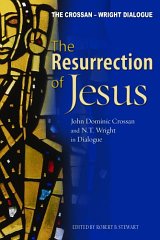 “The Epistemology of Resurrection Belief” is the title of an essay I wrote for the book The Resurrection of Jesus: John Dominic Crossan and N. T. Wright in Dialogue. Scott, over at Serene Musings, has read my essay carefully and made a couple of critical comments that I thought I might respond to here.
I want to say, first, that I appreciate the respectful tone of Scott’s comments. He doesn’t hesitate to say where he agrees with me, and he disagrees in a spirit of good will.
I argue in my essay that N. T. Wright, a Christian theist, aims for methodological neutrality in his historical analysis of the evidence for and against a literal bodily resurrection of Jesus in the first century; in contrast, Dom Crossan’s methodology is inherently naturalistic. Whereas Wright explicitly endorses classical Christian theism, Crossan explicitly denies classical Christian theism. Their metaphysical commitments are quite different. Crossan’s metaphysical commitments play a greater role in his analysis of the historical evidence than do Wright’s metaphysical commitments in his analysis of the same evidence. I believe that Wright’s method is more properly historical than Crossan’s, though I’m less confident than Wright that the historical evidence alone warrants belief in the resurrection of Jesus. Scott argues that Wright and Crossan are equally biased by their respective metaphysical commitments in their appraisal of the historical evidence.
Wright believes that the historical evidence strongly indicates that Jesus died, was buried in a tomb, and rose again. Crossan believes that Jesus died by crucifixion, was not entombed, and did not rise from the dead. Wright and Crossan agree that first century believers affirmed the literal bodily resurrection of Jesus and that a significant number of them also claimed to have seen Jesus alive again following his death and burial. Wright and Crossan also agree that these would-be eyewitnesses were sincere in their testimony and were not hallucinating.
So what explains the difference in their respective conclusions about the resurrection of Jesus? The answer lies in Crossan’s explanation of the facts agreed upon. Crossan maintains that those who claimed to see Jesus alive again were actually having apparitional experiences, typical of those who grieve at the loss of a loved one. In other words, Crossan extrapolates from recent cases of this type of experience to the nature of the experiences by those who believed they had seen Jesus alive again after his crucifixion.
There are a number of problems with Crossan’s proposal that I don’t get into in my essay. A special psychological phenomenon plays a key role in his explanation of the testimonial evidence. But Crossan’s description of this phenomenon is sketchy. More important, Crossan fails to acknowledge the relevance of the fact that this phenomenon does not occur in all instances of grief over the loss of a loved one. It is far more likely that it will not be experienced than that it will. Those who attest to having “apparitional” experiences of a deceased person do not generally conclude that the person had literally risen from the dead. Apparitional experiences of the kind Crossan attributes to alleged eyewitnesses of the resurrected Jesus would differ in detail from one person to the next, if they were to happen to several individuals at the same time and in the same place (which is unlikely in itself). Also, since it is reported that many were witnesses to the resurrected Jesus, it is likely that some, at least, were less intimately acquainted with Jesus prior to his crucifixion, and so were unlikely candidates for apparitional experiences of him following his death. Finally, there is no special evidence that what the alleged eyewitnesses actually experienced was apparitional in character. People of that time period were no strangers to death, and many of those who claimed to see Jesus alive would have been intimately acquainted with others who had died. This makes it very unlikely that they mistook an apparitional experience for a literal resurrection, and continued to believe in a literal resurrection for the rest of their days.
So why does Crossan find his explanation so attractive? The main point I make against Crossan is that his explanation of the agreed upon facts is motivated by a kind of naturalism. He can think of no other possible explanation because he denies theism.
In contrast, Wright, who is a theist, is open to a fuller range of possibilities. This need not be because he is a theist. Any historian who sought to investigate the evidence for and against the resurrection might conclude that it is likely that Jesus rose from the dead. Even a naturalist might come to such a conclusion. Of course, the question arises, What is the best explanation for the resurrection, if Jesus did in fact rise from the dead? Some Christian theists, as I note in my essay, argue that the best explanation is that God raised Jesus from the dead. I myself believe this would be the best explanation, unless there was strong independent evidence for the non-existence of God.
But I argue further in my essay that, because the event of the resurrection of Jesus would be a historical singularity, it would be difficult to settle the matter in favor of a literal resurrection on the basis of historical evidence alone. So on the basis of such evidence, a historian might acknowledge that there is considerable evidence that a resurrection occurred, but remain agnostic unless and until evidence of some other kind could warrant belief in the occurrence of such a singularity. Thus, if there was strong evidence for the existence of God, and especially of a kind that suggested that God might favor Jesus in some special way, then the historical evidence, in combination with this evidence for theism, might justify belief in the resurrection for people living in the modern era.
Oddly, I think, Wright does not consider theism to be such a superior explanation for the resurrection of Jesus that one who believes Jesus rose from the dead should also believe in God. Conceding the first, one should, I think, infer the other. But a confident judgment regarding the actual occurrence of the resurrection, however strong the historical evidence may be, may depend on the availability of independent evidence for the existence of God. It is on this point that Wright and I disagree.
***
In response to Scott’s blog, a comment was posted by someone identified as “G.P.” That person seems to have explained my position remarkably well, without having read my essay. Thank you, G.P., whoever you are!
And thank you, Scott, for getting the discussion going!


 Doug Geivett's Blog
Recent Comments