Beyond the Sounds of Poetry


In a separate post, I’ve recommended Robert Pinsky’s little book The Sounds of Poetry. So maybe you’ve jumped in and grabbed your own copy of the book to get yourself educated in the values of poetry. What comes after Pinsky’s guide? Here are a few suggestions that vaguely parallel my own path toward greater understanding and appreciation of the riches of poetry. Read more of this post

Get Thee to the Novel!


This is Cynthia Ozick’s advice. It’s a vital antidote to the crowding of the mind by the . . . well, by the crowd. Ozick values “The Din in the Head,” the title of her essay in defense of the novel.
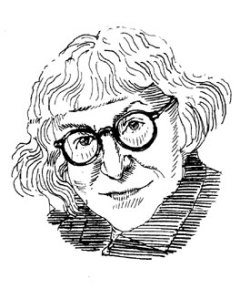
Cynthia Ozick

Cynthia Ozick

Problem? That special form of consciousness that is the unconstrained play of the mind is overwhelmed with noise from the outside world. The crowd, the human community, is her metaphor for this noise, because it is such a typical source of the noise. The problem has worsened with “the ratcheting up of technology.” So many things contrive to sublimate the maelstrom of the heart, “that relentless inner hum of fragility and hope and transcendence and dread.”

Solution? Reading that returns one to interiority. Two forms of literature have this power, and both are sadly neglected and increasingly hard to come by: the personal essay and the literary novel. “Literary grandeur is out of style.”

Why does Ozick value the din in the head over the din of the crowd? Din—defined by Merriam-Webster as “a welter of discordant sounds.” Who wants that going on in his head?

It may be that our self-saturation with inputs from a manufactured world is welcome precisely for its power to silence the din in the head. Ozick believes we need rest stops along the information highway. Our obsession with the delivery system of one kind of knowledge deafens us to another source of knowledge. Yes, knowledge. The literary novel imparts knowledge, but not systematically. Thus, it is not a delivery system. But there is truth in fiction, truth that surfaces through varied “cobwebby knowings.”

There are truths that have that cobwebby texture in our minds. It can’t be helped. And there’s no knowing them, at least initially, without this sort of acquaintance. But do we prize this sort of knowledge? Arguably, we do not. It is more likely that we are confounded by the claim that this is a kind of knowledge.

I believe that there is such knowledge and that it is foundational to the knowledge enterprise. Our reasons for believing so much of what we believe are often beyond articulation. And yet they are sound. They ground much of what we know through a peculiar form of consciousness, experience that is possible only under conditions of quietude. But what’s the novel got to do with that? The novel is the distillation of imagined experience. By reading I am able to experience what is otherwise beyond my frame of reference. And this puts me in cognitive contact with truths whose nature determines how they can be known. I concur with Ozick; reading carefully crafted fiction is one way they can be known.

Cynthia Ozick’s essay can be found in One Hundred Great Essays, edited by Robert Diyanni.

Cynthia Ozick Links:
Reading Groups: Bring the Kids


How do you encourage your kids to read? How do you find friends for your kids who read? What can you learn from your kids who read? How do you train your kids to think and talk about what they read?

There are many answers to these questions. But there’s one answer that covers them all: If you’re part of a reading group, schedule one meeting each year or every six months to include the kids.

I got this idea from a blog post by Kyle Design, who writes about how to start a reading group. Kyle says, “Include the Kids: Once a year we select a book that we will read to our kids, then bring our kids to our book group to discuss it. We all really want to instill our own love of reading to our children.”

I like this concept. This may even be a reason for parents of young children to get involved in a reading club. By participating in a reading group event with their parents, kids will learn new ways to think about reading. Parents will get insights from their children about the reading they do. And because other kids of about the same age will be at the meeting to talk about the same book, the kids will have the opportunity to make friends with peers who read. This is one way for parents to put the power of peer pressure to work for a good cause—on the principle that friends who read don’t let friends who read lose interest in reading.

Faith, Film and Philosophy—The Evolution of an Idea


A book I did with James Spiegel, Faith, Film and Philosophy: Big Ideas on the Big Screen, was released late last fall by InterVarsity Press. Today I heard from Cindy Gould, leader of a reading group called “Verbivores” (suggesting an appetite for words). Cindy asked about the origin of the book, how we decided on films to write about and how we selected contributors. Here’s the answer to that question.

Jim and I are college professors who teach philosophy and enjoy film. We decided we wanted to bring these interests together into a book. When big ideas are packaged in a compelling film, they have great potential to influence culture. We wanted to test this thesis by inviting other philosophers who like film to share their perspectives. We wanted this to be fun, so we thought about friends of ours who share this interest and asked them to participate.

We had an idea how long we wanted the book to be and decided we could manage about a dozen chapters. We ended up with fourteen. We didn’t start with a detailed structure for the book and then recruit authors to fit into that structure. Instead, we began with a list of people we knew we would enjoy working with. They also had to be people with talent for thinking about cultural trends and a gift for writing with wisdom and an engaging style. With list in hand, we approached each one with the basic idea and asked this question, “If you were to write a chapter for this book, what film or films would you want to write about, and what ideas would you like to discuss?” We picked the authors; they picked the films.

Now I have to qualify. We knew that if we were going to do a book of this kind, we had to include a chapter on The Matrix. Some people think of this film and its sequels as the most philosophical of relatively recent films. A potential reader couldn’t pick the book up expecting to find a discussion of The Matrix and be disappointed. Instantly we knew who we needed to get for this chapter. We just hoped he would agree. He did.

When we had chapter proposals from everyone, we recognized there was this remarkable range of film coverage that included the classic and the contemporary, the familiar and the intriguing, the safe and the edgy. On top of that, our hoped-for contributors had all settled on different topics and issues, resulting in a surprising balance of treatment of themes in philosophy. With chapter ideas set side-by-side, a natural structure for the book emerged. People who liked film could read this book and learn more than a smattering of philosophy—philosophy made (almost) painless.

I’m anxious to hear how the Verbivores respond to the book during their discussion on Wednesday. Maybe some of them will post their comments here.

LibriVox: Never Pay for an Audiobook Again


Audiobooks are great for life hackers who want their time to be productive while driving, jogging, or weeding the garden. It used to be you had to buy or rent CDs to listen to audiobooks. Now you can download them to your laptop or MP3 player from iTunes. Audible.com currently has over 40,000 titles. If you subscribe to their email updates, you’ll get notices of special pricing on items that may interest you.

Audio.com is the place to turn for books that are still protected by copyright. But now you can listen to works that are in the public domain . . . for free. LibriVox has an ambitious goal—”to make all public domain books available as free audio books.”

Copyrights last for a limited period of time. Original copyrights for books published in the U.S. prior to 1923 have all expired. Unless those copyrights are renewed, the titles are in “the public domain.” That means they can be copied by any means, without permission, and pretty much for any purpose. Project Gutenberg makes titles that are in the public domain available as e-books. Now we can get many of the same titles in audio format from LibriVox.

Volume IV of Edward Gibbon’s History of the Decline and Fall of the Roman Empire went online today. G. K. Chesterton’s book of detective stories, The Club of Queer Trades, has been available since Sunday. If you’re into Chesterton, you’ll be glad to know that his justly famous book Orthodoxy is there waiting for you.

The LibriVox website is neatly organized and user-friendly. Searching the catalog is a snap. Pages for specific audiobooks feature a number of useful resources: including written summaries of the book, links to pertinent pages in Wikipedia (for background) and Gutenberg.org (for the e-book version, if available), RSS feeds, and iTunes subscriptions. The total running time and reader’s name are indicated. Books can be downloaded as a whole or in sections.

Voice actors who aspire to voice-over or audiobook narration may want to get some practice and work on their portfolios. You can volunteer to be a reader for this service.