Our Role in the Appointment of a Supreme Court Justice


A few days ago, President Obama announced his first nominee for Supreme Court Justice. Among the various tools the President has used to get his message out is his website, where a 4-minute video announcement is posted here. I encourage you to view this video. I also encourage you to think carefully about what the President says at each stage in his announcement.

We live in a democracy. We have the opportunity and the responsibility to pay attention to major developments occurring in the executive, congressional, and judicial branches of our federal government. We should not simply elect a new President and our congressional representatives, and then forget about it. We have a duty to unceasing vigilance. The survival of democracy depends upon it.

The appointment of a new justice to the United States Supreme Court involves all three branches of our government, starting with the executive branch and the President’s nomination of the person he or she believes is best suited to the role. Congress then deliberates and votes up or down on the President’s nomination. If the nominee is approved, he or she steps into the vaunted role of applying the United States Constitution to the most sensitive legal cases of the age. If Congress does not approve the nominee, then the whole process begins again, with the President’s selection of a new nominee.

Now is a good time to consider why so much circumspection is required—required by the Constitution. When drafting the Constitution, the founders of our nation recognized that the degree of authority vested in justices of the Supreme Court is, well, supreme. What they say goes. Each appointment is a life appointment. It ends only when an individual justice decides to retire or that justice dies—whichever comes first. It is not unusual for justices to sit on the highest court for several decades. Except in very rare cases, a justice’s tenure on the Supreme Court is years and years longer than the maximum eight years any person can serve consecutively as President of the United States.

In addition, the decisions made by our Supreme Court justices outlive the justices themselves and stand indefinitely. Reversing the effects of a Supreme Court decision is far more complicated than appointing justices to the Court. It is probably the most unlikely action our federal government can make.

Finally, decisions made by the Supreme Court are compelling for all 50 of the United States.

You may wonder what difference ordinary citizens can make in the process of appointing justices to the Supreme Court. Here are a few key opportunities:

  1. Our responsibility begins with the election of a President.
  2. We then are free to follow the nomination and confirmation process. This is mostly a matter of staying informed. This takes some skill, since media outlets themselves have political agendas.
  3. Being informed is not enough. We must be thoughtful about what we hear. We must consider how a nominee is being pitched to “we, the People.” This requires skills of another kind, the skills associated with critical thinking.
  4. We are represented by elected officials in Congress. Our representatives are sensitive to our expressed will to be heard. Citizens hold some power, then, in influencing the approval process.

The single most significant aspect of our duty as citizens is vigilance and critical thinking.

This post reveals nothing about my response to President Obama’s nomination. I may add posts about that later. Meanwhile, I’m especially interested in the way the nominee is being presented to “the public.” That’s us. Except that we aren’t “the public.” We are the People. And We the People must do our part.

To that end, I’ll be adding posts that encourage critical reflection on aspects of the media coverage. My first post about this can be found here. It begins at the beginning with the President’s announcement.

Geivett’s Book Recommendations:

Paranoid Atheists, Take Note


There are varieties of atheists. Some manifest symptoms of paranoia about the vigor of religion in the Western world. They decry everything about religion and are determined to curb its altogether negative social effects. A good example is Christopher Hitchens, whose book is titled god Is Not Great: How Religion Poisons Everything. Their publications, blogs, speeches, radio and TV appearances are rants against religion, litanies of what is dangerously wrong with religion. The paranoid atheists are not discriminating. And they are loud and vociferous.

Then there are atheists who are reconciled to the fact that religion is here to stay, and even believe that positive goods have been produced by religion—social goods that would not exist but for religion. They see religion as neither good nor bad, as such, but as something capable of extraordinary good and unparalleled evil. They are discriminating. They are willing to cheer what is good about some manifestations of religion. And now they are calmly entering the fray with a distinctively different and refreshing tone.

Excellent examples are the authors John Mickelthwaite and Adrian Wooldridge. Their new book, God Is Back: How the Revival of Religion Is Changing the World, is a kind of protest against the excesses of paranoid atheism. They argue that modernity is a boon to religion, and that more of religion in certain of its forms, especially as it is exhibited in America, should be encouraged. Mickelthwaite and Wooldridge cannot be ignored. They are prominent journalists who write for the prestigious British periodical The Economist. Their message of good news about religion is bad news for scoffers like Christopher Hitchens, Richard Dawkins, Sam Harris, and Bill Maher.

God Is Back is a book for your summer reading list. With 400+ pages, it may be the only summer reading you do. But the price is right and the balanced consideration of religion as a social good is timely

Helpful reviews of God Is Back, by John Mickelthwaite and Adrian Wooldridge:

Gearhead Philosophers


Book Cover.Crawford.Shop ClassWhat would you expect from a book by a trained philosopher who quit his job as a Washington think tank shill (I almost said “tankard”) to work as a motorcycle mechanic?

If you know anything about the academic job market, you might think I have things backwards. It wouldn’t surprise to hear that a professional philosopher ended up—or rather, started out—rebuilding motorcycle engines. But philosophers do strange things. And Matthew Crawford, with a Ph.D. in political philosophy, is a good example.

Crawford is the author of  a new book called Shop Class as Soulcraft: An Inquiry into the Value of Work. I learned about his book from a “Tweet” (i.e., a Twitter post) linking to a review of the book by a  Slate contributor named Michael Agger. The article, titled “Heidegger and the Art of Motorcycle Maintenance,” praises the book and suggests that a copy be given to everyone you know who is graduating from college and about to “commence real life.” (Never mind that a majority of college graduates postpone commencing real life, some of them indefinitely.)

Every year, grads take jobs they’ve dreamed about, then become so absorbed in them that they are absorbed by them, little noticing that their work is not particularly absorbing in the sense that matters most. Crawford’s book is supposed to get office grunts, from secretaries to CEO’s, to consider more carefully the work they’re doing.

Of course, this year a much higher percentage of college graduates will look in vain for jobs that they believe will satisfy. Maybe that’s a good thing. Maybe they’ll have time for some profitable reading. A book like this could help them get their heads together. Soulcraft versus bank draft. It’s an interesting contrast. Leave it to a philosopher to subvert the values of our age.

Two questions. What does any of this have to do with motorcycle maintenance? And what does it have to do with Heidegger?

The first question, presumably, is answered in the book. Crawford the philosopher became Crawford the disillusioned “knowledge worker,” which led him to become Crawford the motorcycle mechanic. And Crawford the motorcycle mechanic, who had apparently dropped out of the knowledge enterprise, learned what was of real value where life intersects work.

The answer to the second question isn’t obvious from reading the Slate article. There’s no attempt in the article to tie Crawford’s ideas and conclusions to the work of any philosopher named Heidegger. One naurally assumes that Agger is thinking of the Heidegger, as in German philosopher Martin Heidegger (1889-1976). But Agger doesn’t connect the dots. Maybe he just latched onto the name of the first philosopher he thought of. Heidegger is not known for his luminosity—nor for motorcycle expertise. So Agger’s choice of a title may be bad in more ways than one. On the other hand, there’s the possibility (admittedly remote) that Crawford draws valuable concrete lessons for life from one of the most austere philosophers of the past 100 years.

So far I’ve only read about the book. But I’m definitely interested. And if Crawford leaves Heidegger out of it, even more so.

***

Notes:

  1. Michael Agger is also playing off the title of Robert Pirsig’s 1973 classic Zen and the Art of Motorcycle Maintenance. Maybe there’s a subtle connection between Heidegger, Zen, and motorcycle maintenance that escapes me just now. If so, my apologies to Michael Agger.
  2. As I write this, Shop Class as Soulcraft is #30 in sales rank at Amazon.
  3. Kudos for Crawford’s book include the following by Harvard professor of government, Harvey Mansfield: “Matt Crawford’s remarkable book on the morality and metaphysics of the repairman looks into the reality of practical activity. It is a superb combination of testimony and reflection, and you can’t put it down.” (Source: Amazon.com)
  4. As long as we’re onto Heidegger here, I should note that there’s an interesting BBC documentary on the man that’s available on YouTube, starting with this 8-minute installment here.

Related Posts:

Recommended Reading for Doing Apologetics in Your Home


My lecture on “Apologetics in Your Home” has been popular at conferences. During this presentation, I recommend the following books to parents:

Isaac Watts (1674-1748) is best known as a great hymn writer. But his two books contain much timeless advice for the education of children in piety and critical thinking.

J. Budziszewski is a Christian author and professor of government and philosophy at the University of Texas. He converted from Marxism to Christianity and has written these two books to guide Christian university students through the thickets of their “higher” educational experience.

American philosopher John Dewey (1859-1952) was a leading figure in the pragmatist movement in philosophy, and is well-known for his work on the philosophy of education. If used with caution, parents will find much wisdom in his book on How We Think.

Three books are listed here for the exceptional value they offer in areas related to logic and critical thinking. I recommend beginning with D. J. McInerny for an overview of issues related to the nature of truth, evidence, logic, and good judgment. The book by Bowell and Kemp is an excellent textbook—the best of breed, in my opinion. Parents should learn this material early, and lead their children through a close study of its principles before graduation from high school. The book by C. Allen and M. Hand is a useful reference work.

The book by Norman Geisler and David Geisler explains the challenges of relativism and postmodernism and offers practical advice for combining critical thinking with conversational skill in dialogue with nonbelievers.

Here are two additional books to consider: How to Read a Book, by Mortimer Adler, and Study Is Hard Work, by William Howard Armstrong.

Finally, for general wisdom on the cultivation of the mind, I highly recommend the classic by A. G. Sertillanges, The Intellectual Life.

Jack Bauer’s Creators, We Need You—Mid-season Ruminations on 24


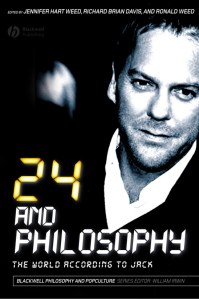
24-philosphyIf you’re a 24 fan and you haven’t yet seen tonight’s episode, you better save this post for later. It might reveal more than you want to know, which is ironic, given what I’m about to say.

This has been a remarkably engaging season, given the challenge its writers have faced to be fresh and unpredictable. Even more so given some other challenges it has set for itself. Some of these have to do with the writing, some have to do with the marketing.

The writing. Is the FBI really as inept as it’s portrayed here? Tactical differences between Jack Bauer and FBI personnel have made sense. Larry fits the stereotype. His objectivity is fogged by his interest in an admittedly attractive agent who’s working a little too closely with Bauer, but he hangs in there pretty well. His capacity for rage hints that he’s not altogether unlike Bauer, whom he so patently loathes. Tonight, though, I think the script may have dropped a couple of points on the credibility score. Larry’s real life counterpart wouldn’t have been so clumsy about tightening the net on FBI infiltrators . . . would he? Wouldn’t that seedy-looking Shawn—or Sean—chap have been a possible? You would think. But not Larry. At least not soon enough. Even for the FBI. I hope.

Next, Rosa’s death. This was predictable. How it would happen wasn’t. That was a good story thread. We’ve known of innocent, uncomplicated civilians acting with valor at personal risk to thwart terrorism. Rosa’s desperate attack on the driver, causing a fatal accident, is believable. Remember 9/11? But is she the completely sympathetic character she needs to be for us, the viewers, to relate vitally to the angst played out so elaborately by agent what’s-her-name (the one who looks like she could be Jaclyn Smith redivivus, . . . or Jaclyn Smith’s daughter)? The pretty and gritty agent’s sentiments are realistic enough. But what do they do to advance the plot? Isn’t it a little smarmy?

Finally, why the silly stock antics by Tony when he appears on the steps next to Jack at the end of tonight’s episode? He steps down, removes his shades, and tells Jack that “it’s not over.” Once he’s satisfied that he’s nearly convinced Jack, he dons the glasses and says, “I need you, Jack.” Very original.

Point being—the writers are much too clever to settle for these derivatives. The sensational TV series still works for me. I’ll be tuning in next week. But something’s crept in here that has nothing to do with exhausting the storyline potential of the show.

The marketing. Here I’m talking about the way the series is played up by the show’s engineers between episodes. Tonight we were told to expect, before the episode began, that this hour would provide some significant closure. This was risky. And it worked, I think. There was closure, which is unusual for the series. But it didn’t ruin the effect. Let’s hope it doesn’t happen often. But it was refreshing to experience it on this segment. Did it have to be pre-announced? I think it may have been constructive, since most of us probably watched with wariness about that prospect, and thus experienced a heightened sense of tension.

So what’s the problem? After watching a fully riveting episode, the producers think we have to be told virtually everything that will happen next week to get us to come back. I don’t care what happens in the next episode—I know they revealed too much at the conclusion of tonight’s show. It’s anticlimactic—unless you have short-term memory loss, in which case you probably aren’t sure what’s going on from one week to the next and aren’t tuning in for that reason.

It’s been rumored, maybe for marketing effect, that the writers work inside the series close to the release of each episode, not knowing all that much about where they’re headed from episode to episode. Their spectacular series 24 is more believable than that. But let’s pretend there’s still time for tinkering. I have a selfish request—ligthen up on the shibboleths and can the forecasting. Your program has attracted an intelligent audience. They’re your core. Don’t let them down.

In case you couldn’t resist reading this post before seeing tonight’s episode, awaiting playback on your Tivo, here’s my advice: stop watching immediately after Tony walks away toward Constitution and First. I think you’ll enjoy the next week’s installment more than I will.

Note: Evidence of my enthusiasm for 24 can be found in my chapter in the book 24 and Philosophy.

This is Conjecture, You Understand?


Robert Harris is one of my new favorite authors. His genre? Literary fiction in the thriller/suspense vein. Fatherland is his most celebrated work. But I first read The Ghost.

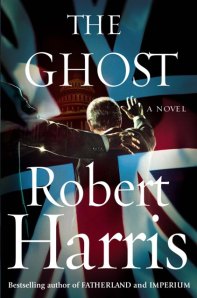
book-coverthe-ghostThe Ghost is written in the first person by a ghostwriter who is commissioned by his publisher to help a former British prime minister draft his memoirs. The project has to be completed within a few weeks to meet the publisher’s deadline. Our man, the ghostwriter, must scramble to repair an initial and very unsatisfactory draft, because the first ghostwriter has died—under mysterious circumstances, of course.

The Ghost reads well from the start. It’s immediately engrossing, for someone who likes this sort of thing. The plot is intricate and plausible. The finale is realistic but unpredictable. The narrator is the hero, and since it’s narrated in the first person, that means Harris has to be careful how the hero defines himself for his reader. It turns out, the protagonist is pretty human. He writes books that others get credit for. He’s intelligent but self-effacing. He makes dangerous mistakes, but works his way through trouble. His life is transformed by the events he narrates, but we’re not entirely sure what that means as the story comes to an end. One thing we do know—he doesn’t get the girl. This doesn’t matter. What matters is that readers will not forget what they’ve read.

Ditto for Fatherland. But the possibilities turned up here are more disturbing.

I classify this novel as a counterfactual historical novel. What does that mean? First, it’s based on historical events and real people. The setting is 1960s Berlin. The counterfactual conceit is that Hitler is still in power and is about to celebrate his 75th birthday. Harris considers what might have been, had Hitler survived the Allied invasion.

book-coverfatherlandOn the scenario he envisions, the Reich encompasses all of Europe, including England and France. Hitler’s military continues to battle the Russians on the eastern front. He’s negotiated a détente with the United States. President Kennedy—that’s Joseph P. Kennedy, father of John F. Kenney—is paying the Fürher a personal visit to commemorate his birthday. Hitler’s solution to “the Jewish problem” has been almost completely successful, and yet the details about what has happened to the Jewish population of Europe are known only to a handful of high-level members of the Nazi regime.

The story begins with an apparently routine crime scene investigation. Xavier March, of the kriminalpolizei, is dispatched to head the investigation. A corpse has been discovered on the forested edge of the river Havel. The deceased may have drowned accidentally. It may, somehow, have been suicide. The trail of clues suggests homicide.

Homicide it is. But by whom and for what reason? March is determined to find out. Soon he’s embroiled in a plot to cover up dangerous truths. Each turn in the investigation leads to further complication, confusion, and risk to Sturmbannfürher March himself.

Harris’s carefully researched novel reveals the Führer’s ghastly strategy to eliminate the Jewish race. It describes the practical difficulties that had to be overcome in order to make it work. And it envisions a horrific post-war outcome that may well have been realized if Hitler had had his way.

An American journalist collaborates with March. She believes that a public revelation of the facts would lead, sooner or later, to the collapse of a regime built “on a mass grave.” She’s confident that human beings, possessed with the knowledge of what had really happened, would not let it stand. The protagonist, Herr March, is skeptical. But he does know how, as a homicide investigator, to “turn suspicion into evidence.” And he’s compelled to do his part to sort out the nasty business. Whether the damning evidence he finds could change history is another matter.

At one point, March is explaining his theory about what the evidence means. He says, “This is conjecture, you understand?” Robert Harris has given us a suspenseful novel of counterfactual history that is filled with plausible conjecture. The last page ends with a fitting quote from Dante Gabriel Rossetti: “Look in my face; my name is Might-have-been.”

Michael Dirda on “The Knowledge Most Worth Having”


My education in the value of the personal essay probably began in a time and space I don’t recall. But I was compelled to appreciate this specialized form of literature most memorably during my reading of Philip Lopate’s collection The Art of the Personal Essay. The enthusiasm inspired by his anthology resulted in a welcome appetite for more of the same. Lopate’s genius for selecting the best of the breed was proven by the difficulty I experienced during my search for collections of comparable value. The annual publication of books in The Best American Essays series, edited by Robert Atwan, sometimes approximates the Lopate standard. And there are other worthy collections. Thankfully, my quest for the best has put me in touch with individual authors, contemporary essayists of the first rank, whose writing is consistently creative, wise, and ennobling.

My favorite contemporary essayists include Michael Dirda, Joseph Epstein, John Updike, and many others. This post loiters in one section of one essay from Michael dirdabook-by-bookDirda’s book Book by Book: Notes on Reading and Life. The essay is titled “The Pleasures of Learning,” and the section I’ve isolated for consideration here is called “The Knowledge Most Worth Having.” This section consists of seven sentences, followed by a list of sixteen items, and a concluding sentence that reads:
Know these well, and nearly all of world literature will be an open book to you.

Clearly, Dirda’s reference to “the knowledge most worth having” is circumscribed by a specific purpose. He doesn’t mean to catalog all that it is most important to know. More precisely, he asks, “What should a person know of the world’s literature?” This question presupposes that some works are more worthy of our time and meditation than others, and that if we are to have a “structured reading program” we must have a criterion for determining which works are most deserving. Dirda gives us a criterion and then “a roughly chronological short  list of those that the diligent might read in a year or two.” Both the criterion and the list are interesting.

Dirda’s criterion—the test he uses in deciding which authors and which works are most rewarding for the reader who would attain a knowledge of the world’s literature—is simple. Devote yourself to those works “that later authors regularly build on, allude to, work against.”  Dirda does not elaborate on the principle, except to bestow a name on works that meet this condition; they are “the great patterning works.”

For further insight into the principle, we might consider Dirda’s list. He does not claim that it’s exhaustive. Actually, he implies that it is not. It’s a place to begin. Still, it’s a comfort to hear that “there aren’t many of these key books,” and it’s enticing to be told that “they aren’t all obvious classics.” One might spend a year or two in the company of these books, and then move on to others.

Before I reveal the list, I want to ask, again, what is the point of the list? It is to commend works with the potential to crack open the world of great literature. These works have this power because other authors have built on them, alluded to them, and worked against them. They are, in other words, touchstones for so much great literature that our capacity to appreciate and know the greatness of other works is unlocked by our acquaintance with these.

Now to the list. It is no surprise that it begins with

  • The Bible (Old and New Testaments)

Dirda recommends the Authorized, or King James, Version because it’s “the one that has most influenced the diction and imagery of English prose.” As a kid, I attended a Baptist Sunday School that used the King James Bible in Bible lessons, Scripture memory, and “sword drills.” (Incidentally, I never heard anyone seriously proffer a defense of the KJV on the grounds that “if it was good enough for Saint Paul, it’s good enough for me.” My Sunday school teachers were far more sophisticated than that.) In the third grade, taught by my mother, we children were awarded Bibles of our own—the King James Version, of course. Shortly after that, the production of new English translations began in earnest, and today the original KJV of 1611 is little known, even by those who know the Bible. I’m a proponent of the multiple versions doctrine, that individual versions or translations have their distinctive virtues, and that more than one should be consulted in the serious study of the Bible. But Dirda is hardly alone in proclaiming the incomparable linguistic beauty and legendary influence of the KJV, and I do not disagree. (For those interested in the translation debate, I recommend D. A. Carson’s book The King James Version Debate: A Plea for Realism.)

Next on the list:

The items listed by Dirda are not annotated. He doesn’t say why an entry meets the criterion he’s adopted. But some source containing the ancient myths of Greek, Roman, and Norse provenance is a no-brainer, and Bulfinch’s is the industry standard. Oddly, my copy of the generally reliable Benét’s Reader’s Encyclopedia (mine is the 3rd edition) has no entry for this classic collection. But then, neither does my handy paperback copy of The Reader’s Companion to World Literature. No matter. The important thing is that allusions to mythologies abound in acknowledged “great literature.” The reason for this is worthy of contemplation, but beyond the scope of this post.

Fine. If ancient mythologies must be known on the grounds that they are sources for innumerable allusions, then Homer’s influence is no less significant. The Ionian poet as a man is a mystery. Even his actual existence is doubted. The story of the composition, preservation, and function of “Homer” among the ancient Greeks is interesting in its own right, and is told with clarity uncompromised by brevity in . . . Benét’s.

We begin to suspect that the influence of the ancients runs deep in our literature. Plutarch, who lived in the first century of the Common Era, is best known as a biographer. It’s an irony of history and of literature that little is known about Plutarch himself—no biographer for the biographer. Shakespeare made use of Plutarch in two of his great plays. (Plutarch was, by the way, a master of the personal essay, and his compendium, the Moralia, has survived to please readers to this day.)

So far, Dirda’s choices are obvious. Of course Dante. But why the Inferno and not the whole the the Divine Comedy? Dirda doesn’t declare. So let’s speculate. The Inferno is the first part of the Divine Comedy. So maybe you read the first part and can’t put it down. Or you do put it down, but you’ve had enough Dante for the purposes envisioned by Dirda. Imaginative writing about hell does make for scintillating writing. For some, heaven is boring in comparison, and a proffered reason for indifference about the soul’s destiny. Strange logic.

Next in line:

I confess that I was initially surprised by this entry from the early Middle Ages. But I shouldn’t have been. This is our source for Ali Baba, Aladdin and his Magic Lamp, Sinbad the Sailor, and the phrase “Open Sesame” (which appeals to our get-rich-quick aspirations). The story of Sultan Shahriar and his clever wife Shaharazad is endlessly intriguing. But a guide to The Arabian Nights would be useful, if only because of its length.

The Middle Ages brings to mind the next fairly obvious choice:

  • Thomas Malory, Le Morte D’Arthur (tales of King Arthur and his knights)

Seeing the Monty Python movie is no substitute for reading the book. Take my word for it. But it does give a sense of the book that is somewhat surprising. (Take that with a grain of salt.) The written tales were probably composed in prison by a chap who commended the ideals  of chivalry and was notorious for violating those same ideals. Alfred, Lord Tennyson, was very much taken with these tales, and transcribed them into epic poetry in his Idylls of the King. Here is a clear case where one legendary author, the Victorian poet Tennyson, is understood better against background knowledge of a 15th century author of legend.

You knew he had to show up on the list eventually, and if you’ve been following the chronology, you may have suspected his appearance at any moment—William Shakespeare.

Some of these have been quite respectably adapted for film. Hamlet, starring Mel Gibson (1990) finally made sense of “words, words, words” to me. The Orson Welles film Chimes at Midnight (1965), featuring Welles as Falstaff and John Gielgud as Henry IV, was a favorite of Welles and is generally thought to be one of his greatest movies.

There have been a dozen or more adaptations of King Lear. Most celebrated is the 1983 version starring Laurence Olivier and Dianna Rigg. Another cinematic reprise is planned. How would you like to see Naomi Watts, Keira Knightley, and Gwyneth Paltrow as the three daughters of King Lear, played by Anthony Hopkins? It’s in the works. So now is an especially auspicious time to have a read of the original King Lear.

Film or television adaptations of A Midsummer Night’s Dream were released in 1935, 1968, 1996, 1999, 2002, and 2005. Enough said.

An adaptation of The Tempest is said to be in production. It won’t be the first. The Tempest was first “screened” in 1905, in a two-and-a-half minute production. The play enjoyed a science fiction adaptation in 1956 in the film The Forbidden Planet. Other adaptations were screened in 1982, 1991, 1992 (in animation that is faithful to Shakespeare).

These works by Shakespeare are immortal. The enjoyment of a worthy film adaptation is enriched by a reading of Shakepeare himself.

Michael Dirda’s list continues. But here the entries shade into the controversial.

Miguel de Cervantes Saavedra introduced his dubious but endearing hero, the Man of La Mancha, in two volumes (1605 and 1616). Cervantes is credited by many as the first modern novelist. Since he died in 1616, that’s quite a distinction. The only thing controversial about including Don Quixote on Dirda’s short list is that the list is so short. Some would argue that the inclusion of Don Quixote obliges the inclusion of some other great work not on the list. But the fact is, this grand novel supremely fits Dirda’s criterion. If you disagree, you’re tilting at windmills.

A shade more controversial are

and

Defoe wrote something like 250 works. They call that prolific. Businessman, journalist, government representative, spy, possibly even double agent, but best known for his novel Robinson Crusoe, or The Life and Strange Surprising Adventures of Robinson Crusoe, of York, Mariner. Through this depiction of a solitary figure stranded on an island, we learn how noble men might conduct themselves under such conditions. Crusoe is an admirable figure, with lessons to teach us all. Who hasn’t imagined what it would be like, what we would do, what we would become, if we were to live in such forced seclusion?

Swift was a genius. As evidence for this, I take the liberty of quoting:

Gulliver’s Travels is perhaps the sole major work in all English literature that has continuously led a double life: it has been at once one of the most glamorous of children’s adventure stories and one of the most pungent critiques of humanity addressed to the mature imagination. This almost incredible marriage of opposites is possible because in the main the disturbing satire for adults lurks inconspicuously behind the pleasantly exciting façade of the explorer’s tale; the child can rarely see behind the façade, and the adult can never cease seeing behind it or trying to pierce through it. Further, there are times when Swift is entirely concerned with the façade—of the elaboration of the details of the story for its own sake . . . and the presence of such passages assists the young reader—or the unperceptive reader generally—to take the whole story at the simplest level of meaning. . . . Swift’s obvious enjoyment of playing the game—of unusual sizes, mysterious phenomena, and strangely shaped creatures—gives zest to his narrative without in any way impeding him when he chooses to make the game philosophical. (The Reader’s Companion to World Literature, 226)

Dirda’s inclusion of Gulliver’s Travels is vindicted by the suggestion that this satire “draws upon at least five traditions of world literature,” and the claim that “the use of fantasy for serious statement, virtually eliminated by two centuries of emphasis upon realism, is reappearing in our own day” (The Reader’s Companion to World Literature, 229).

Dirda goes on to add items undeniably suited to his premise. But these, I confess, lie at the periphery of my own reading interests:

and

Fairy tales and folk tales. Their influence has been great. My interest is negligible. For the record, the noted study of folklore and human society is James Frazer’s The Golden Bough.

The final three works are perhaps the most controversial choices. Again, one could argue that some other work is more worthy of inclusion on such a list.

I believe a rationale may be built for each of these entries. Notice, Jane Austin is the only woman to be valorized on the basis of Dirda’s criterion. Some readers might object to this. I know some writers would have filled in with other great female authors just to avoid the appearance of impropriety and escape censure by enforcers of political correctness. But this is Dirda’s list.

There should be considerable pride in and no prejudice against the admission of Jane Austin to the august company of writers of seminal importance. (I hope that doesn’t sound like a bad pun or a contradiction in terms.) In 2003, the BBC sponsored a program called The Big Read, in quest of “the nation’s best-loved novel.” Pride and Prejudice was voted #2, after Tolkien’s Lord of the Rings. I suspect many titles voted onto the Top 100 list for The Big Read found their way there with the help of recent cinematic adaptations. But Dirda’s basis for including Jane Austin’s novel isn’t current popularity but lasting influence in the field of literature.

Lewis Carroll has to be acknowledged, even by someone without predilections for his plotting and style. Alice in Wonderland falls into that class of fairy tales and folklore that have little appeal for me.

As for The Adventures of Sherlock Holmes, I’m completely sympathetic with ranking it high on a list of entertaining and well-crafted fiction. I would even consider bringing Holmes along for my island exile. I’m less sure of the application of Michael Dirda’s criterion for educating ourselves in preparation for mastery of the world’s great literature. Doyle’s imagination, plotting, and writing style are both creditable and inimitable. But there are others. Agatha Christie has sold better—much better, in fact. Edgar Allen Poe is the acknowledged inventor of the mystery story, and is the namesake for the Edgar Award in mystery fiction. I suppose that Doyle gets the nod because Sherlock Holmes is the paradigmatic sleuth, the one who comes to mind first when that special expertise is needed. Fair enough.

So there you have it. A criterion and a list. I’ve tried to make sense of Dirda’s choices. Using his criterion, and limited to sixteen items, I think he succeeds.

Related Posts by Doug Geivett:
“Batman and Friends”: A Discussion Guide


morrissuperheroes-and-philosophyTom Morris and Matt Morris are the editors of a a book called Superheroes and Philosophy: Truth, Justice, and the Socratic Way (Open Court 2005). Matt’s own chapter (pages 102-117) is titled “Batman and Friends: Aristotle and the Dark Knight’s Inner Circle.” I created this discussion guide, based on Matt’s chapter, for my course on Faith, Film and Philosophy.

Read pages 102-105 and answer questions (1) through (4):

  1. What explains the main title of this essay, “Batman and Friends”?
  2. Morris writes that “Batman is often thought of as the most solitary superhero.” Do you agree with this assessment? How does this set things up for the main theme of Morris’s chapter?
  3. The chapter sketches Aristotle’s three-fold analysis of friendship as developed in the Nichomachean Ethics. What three types of friendship does Aristotle describe? What is your assessment of Aristotle’s analysis? Is it plausible? Is it comprehensive? Do you have friendships of each kind?
  4. Morris uses the Aristotelian analysis of friendship as a template for studying Batman’s closest relationships. Before reading Morris’s discussion of Batman’s relationships, write down your own thoughts about Batman’s relationships. What are his primary relationships? How would you describe each relationship in terms of Aristotle’s three-fold analysis of friendship?

aristotleRead pages 105-115 and answer these questions:

  1. Which of Batman’s relationships does Morris consider in terms of the Aristotelian account of friendship? How does Morris classify each relationship? Do you agree with his classification? If you disagree, explain.
  2. Is there anyone else who is closely related to Batman who is not considered by Morris in this essay? If so, identify the person or people you’re thinking of. What does Aristotle’s analysis of friendship imply about the relationship(s) you have in mind?
  3. What is Morris’s primary thesis in this essay? What is your evaluation of Morris’s thesis?

Now read pages 115-117 and answer the following questions:

  1. In this section of his essay, Morris writes about the “elusiveness” of a certain kind of friendship. How does he explain this elusiveness in Batman’s case? Do you agree that Batman is incapable of this kind of friendship? Explain your answer.
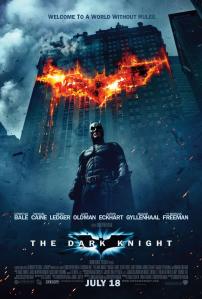
  2. If you’ve seen one or both of the most recent Batman movies, Batman Begins (2005) and The Dark Knight (2008), what features of these films support or conflict with Morris’s analysis of Batman’s friendships?posterbatman-beginsthe_dark_knight_poster
  3. Who has more or less authentic relationships with others, Batman or Bruce Wayne? Explain your answer.
  4. Would it ever be possible for Batman to have the kind of friendship that Aristotle admires most? Explain your answer.
  5. Morris identifies three things that can happen when we “philosophically address art, whether it’s a novel, a comic, a painting, or a film” (see pp. 116-17). What are these three things? What does Morris say is the most important contribution philosophical analysis of art can make? Do you believe that philosophy can play this role? In his use of philosophy to analyze Batman’s character and relationships, does Morris succeed in showing that philosophy can make this kind of contribution?
  6. Morris concludes with an admonition. Think about your own ambitions and sense of calling. If you were to follow Morris’s admonition, what would it mean for you? Be as specific as possible. Does Morris’s counsel seem like good advice to you? Explain your answer.

Copyright © 2009 by R. Douglas Geivett

Reading Owen Wister


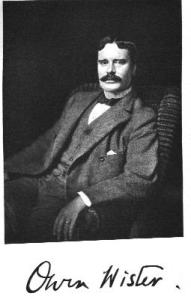
wisterowen1Owen Wister, The Virginian: A Horseman of the Plains (1902) — I started reading this novel January 8, 2009. I was hooked by the first paragraph. I suppose some ‘hawsses’ really are giddy pranksters. Wister’s book is a classic, the first in the western genre, and unexcelled. Humor I can appreciate appears on every page. Bits are stories in their own right, and fun to read aloud. You can hear how the Virginian sounds from the way the author crafts his dialogue. Wister and Theodore Roosevelt were close friends. The complete text of the novel is available online at Project Gutenberg. You could have a look there, then decide whether to get a hard copy. It can be ordered at Amazon here.
Excerpt from Chapter 5—”Enter the Woman”

“We are taking steps,” said Mr. Taylor. “Bear Creek isn’t going to be hasty about a schoolmarm.”

“Sure,” assented the Virginian. “The children wouldn’t want yu’ to hurry.”

But Mr. Taylor was, as I’ve indicated, a serious family man. The problem of educating his children could appear to him in no light except a sober one.

“Bear Creek,” he said, “don’t want the experience they had over at Calef. We must not hire an ignoramus.”

“Sure!” assented the Virginian again.

“Nor we don’t want no gad-a-way flirt,” said Mr. Taylor.

“She must keep her eyes on the blackboa’d,” said the Virginian, gently.

“Well, we can wait till we get a guaranteed article,” said Mr. Taylor.

. . . . The Virginian was now looking over the letter musingly, and with awakened attention.

“‘Your very sincere spinster,'” he read aloud and slowly.

“I guess that means she’s forty,” said Mr. Taylor.

“I reckon she is about twenty,” said the Virginian. And again he fell to musing over the paper that he held.

“Her handwriting ain’t like any I’ve saw,” pursued Mr. Taylor. “But Bear Creek would not object to that, provided she knows ‘rithmetic and George Washington, and them kind of things.”

“I expect she is not an awful sincere spinster,” surmised the Virginian, still looking at the letter, still holding it as if it were some token.”

John Updike as Book Reviewer


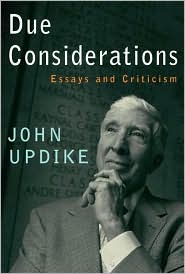
Encountering John Updike as book reviewer is to witness something akin to the 8th wonder of the world. I calculate that the time it takes for him to write as much as he dupdikedue-considerationsoes (speaking here of volume) leaves no time for reading, much less reviewing, books written by other people. My calculations have to be pretty far off the mark. He reviews like a fiend. (I mean this in the most positive sense of the term.) And reviewing is but one of the many grooves his writing follows. Is there any form he does not indulge?

I might not be so impressed by the monumental volume of his output if it were not for the other, more fundamental impression Updike makes. He is a master writer. People who write better than I, and not nearly as well as Updike (by their own confession), have been saying this about him for decades. With Updike, you need not begin with an interest in any topic he takes up to be delighted with his perspective.

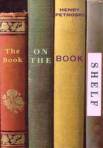
For example, in an essay titled “Groaning Shelves,” he reviews the book The Book on the Bookshelf, by Henry Petroski. A book with a title like that would tempt me. In the scope of five pages—seven paragraphs—by Updike, I experience at least as much pleasure and add every bit as much to my fund of knowledge as I would expect from reading Petroski himself (279 pages). Come to think of it, the relish of reading Petroski firsthand is converted to relish in not having to read it because of the relish of reading Updike on Petroski.

In the first paragraph, Updike describes the publishing niche of this professor of civil engineering and history, mentions two of his previous books, The Pencil (1990) and The Evolution of Useful Things (1992), identifies the primary sources for Petroski’s third work, here under review, and demonstrates that The Book on the Bookshelf (1999) would not have been much of a book without the use of stretching devices, since the territory (“the history of book housing”) has been pretty thoroughly scampered over by others before Petroski.

petroskithe-pencilpetroskibookonthebookshelf

petroskievolution-of-useful-things2What we learn from Updike in this first paragraph is technique in the art of book reviewing that requires having something to say about a book that says little more on its topic than what others have already said in earlier books. We also learn something about Updike—that this is no reason to leave the book alone or end a review having said as much. Something else about Updike: he judges that arranging the books in one’s personal library in accord with the Dewey decimal system is “whimsical” rather than “obvious.” (It seemed obvious to me several years ago when I adopted the system. Ironically, perhaps, this gentle chastening by Updike, for being whimsical when I thought I was being practical, was reinforced the day before reading his review; I learned with mixed emotion that the latest version of bibliographical software I use—namely, Bookends—enters the Library of Congress call number in the designated field for each new book reference. I’m now in engaged in a tedious cost-benefits analysis of switching over to the LC system from this point forward.)

The second paragraph begins with a sentence that must have been a relief to Petroski: “Nevertheless, we need to be reminded that people did not always live surrounded by books arranged on shelves, with their spines outward and stamped with the title, author, and publisher.” On this point, I take issue with Updike. I’m not sure we “need” to be reminded of such things, or even that we ever “needed” to learn such things. This may be Updike’s way of persuading himself that Petroski’s book is worthy of review. He surely needs to convince his readers, given the mediocre assessment implied in Updike’s first paragraph.

The balance of paragraph two re-traces the earliest stage of “book” production (papyrus rolls) and the practical solutions that were devised for the problem of their convenient storage. One sentence, albeit parenthetical, glistens: “In truth, only in certain circles, smaller than academics like Petroski might imagine, could people be said [even today] to be surrounded [by books]; I am frequently struck by how many otherwise handsomely accoutered middle-class American homes have not a book in sight.” I know that experience—the experience of not only seeing this to be the case, but also the experience of being “struck” by the fact. I am, of course, an academic. (Not that being struck by the absence of books in the homes of other people is a sufficient condition for being an academic, except in that “special” sense of being eccentric.)

The next four paragraphs carry on the exposition, in chronological sequence, of book production and storage adjustments, leading up to the present, when the volume of books at institutional libraries, it is estimated, doubles about every sixteen years. Updike boils down, in five paragraphs, the history of this transmigration of the souls of books. Even to the layman, it is an interesting history, if told well and in no more than five paragraphs.

I knew nothing before of “chained libraries.” I’m not sure I quite have an adequate picture in mind of this invention that served for several centuries. The most interesting fact I learned is that “even after books came to rest on shelves, their spines were unlabelled and faced inward.” Updike surmises that “when books were few, they did not need to be labelled, any more than do familiar people.” I’m not about to experiment with this technique of book arranging with my several thousand volumes (although the storage of many hundreds in boxes is hardly more satisfactory).

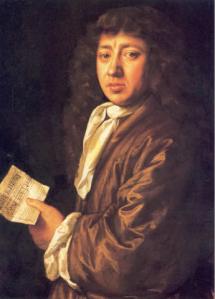
pepys1The eighteenth-century member of Parliament, Samuel Pepys (pronounced “Peeps”), most famous for his Diary, was apparently compelled (by his wife?) to constant winnowing of his own book collection, so that it never exceeded the manageable limit of 3000 volumes. He ensured efficient use of space for his books by arranging them in two rows, tall books in front, shorter books behind on raised shelves, a strategy that is “impressively harmonious, though somewhat forbidding to a would-be browser.” You can see this for yourself at Magdalen College in Cambridge, where twelve cases of the Pepys collection are preserved.

As always, after reading Updike, my vocabulary is much improved. I now know how to identify the “fore edges” (not “four edges”) of a book. I’ve got a sprinkling of new Latin terms under my belt, which should come in handy next time I cross paths with Seneca: volumina, capsae, armarium commune. Speaking of Seneca, he opined that those who ostentatiously surround themselves with books as mere ornamentations of their digs make themselves ridiculous, or something to that effect.

“Groaning Shelves” appears in a 700-page collection of John Updike’s writings over a period of eight years, third in a series of such collections. This volume is called Due Considerations: Essays and Criticism (2007). It contains nearly 150 brief essays. Since yesterday, I’ve read eight of them, including: “On Literary Biography”; “A Case for Books”; “Looking Back to Now” (not unlike Jorge Luis Borges); “Against Angelolatry”; a tribute to Eudora Welty; Updike’s Introduction to Seven Men, by Max Beerbohm; “Groaning Shelves”; and one other whose title I’ll withhold, lest you infer something disagreeable and false about my (or Updike’s) character.

I purchased my copy yesterday, after browsing the entry on “The Future of Faith” (pp. 27-41). I excluded this from my count in the previous paragraph because I haven’t yet read it closely. But I know that I will, and soon.

updikedue-considerations1

Amazon Paperback

Be a Good Student—Best Book in This Category


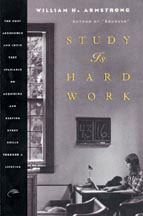
armstrongstudy-is-hard-workIt’s brief, it’s well-organized, and it’s full of sane advice. It’s a book called Study Is Hard Work. The author, William H. Armstrong, explains all the fundamental skills needed to be a successful lifelong learner. Here are the chapter titles:

  1. Learning to Listen
  2. The Desire to Learn
  3. Using the Tools
  4. Getting More From What You Read
  5. Developing a Vocabulary
  6. Putting Ideas in Order
  7. Books and the Library
  8. Written Work
  9. Acquiring Skill in Methods
  10. How to Study Languages
  11. Letting Mathematics Serve You
  12. How to Study Science
  13. Getting the Most Out of History
  14. Tests and Examinations

All of this in 143 pages. Each chapter begins with an Interest Measurement Test and ends with five Review Questions. Each “Interest Measurement Test” is a set of five questions that get readers to think about their current experiences and skill level in some category of study. Here are a few samples:

  • “Have you ever stopped to think what your life would be like if there were no books?”
  • “Do you believe that you really have a desire to learn, or would you, had you been left alone from birth, be totally primitive and beastlike in your thoughts and feelings?”
  • “Do you believe that, other than your parents, the people who will most influence your life for good are your teachers?”
  • “When you have read a book do you feel that you have talked with, and come to know, the author?”
  • “Do you know certain traits of your own mind that lend themselves to some methods of study more effectively than others?”
  • “Would you agree that there is much of the poet in all great mathematicians?”
  • “Do you believe that your life will be influenced by your interpretation of history?”
  • “Are you afraid of tests, or do you consider them a challenge?”

Chapters are loaded with numbered tips, steps, strategies, for doing all the things a college or university student must do to succeed, all showing students how to achieve real success by learning with pleasure and good work management. My students are exceptional graduate students, and every one of them could benefit from practicing the methods set forth here.

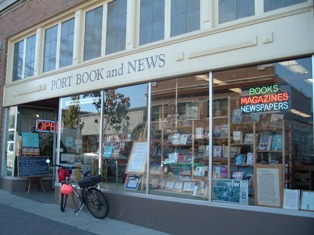
bookstoreport-book-newsI came across this book at a charming little bookshop we visit when we’re in Port Angeles, Washington. One tip for studying foreign languages struck me right away as eminently sensible and yet generally unknown.

“Make your own vocabulary cards, writing the word to be learned on one side and the English meaning on the other. If you are lucky enough to be studying two languages, write the meaning in the second language on the back also.”

The second sentence is simply brilliant. It makes a truly powerful suggestion, and it strikes a positive chord about foreign language study. My first thought was, “If you’re going to learn a foreign language, why not make it two?”

If you aren’t officially a student and you read this book out of curiosity, you may feel a strong desire to sign on for a class at your local college or university. I say, go for it! But if for some reason you aren’t able to take a class, Armstrong is still an excellent guide through the steps to independent learning. It all begins with a desire to learn (chapter 2).

Note: There are two other groups who would be helped by this book. First, high school students, especially those who plan to go on to higher education. Why not learn how to learn before learning gets even harder? Second, home school parents. These heroic people know what lifelong learning means, and welcome suggestions for organizing the learning process into manageable steps. I believe that practicing the principles presented in this handy book will shave hours of labor from the task of home schooling, make the whole experience more enjoyable, and result in much less stress.

From Amazon:

armstrongstudy-is-hard-work1

From “That Bookstore in Portland”:

armstrongstudy-is-hard-work1

Leave your comments about this book in the reply box below!

The Religious Lives—and Questions—of Children


I know from experience that children think deep thoughts and come up with the most difficult questions. Throughout their childhood, my daughters plied me with questions about the nature of the universe, the existence of God, whether we have souls—that sort of thing. I have always been amazed by two things as a parent and a university professor. First, grad students in philosophy ask questions they probably had when they were three to five years old. They had’t forgotten the answers; they had forgotten the questions. Second, the quirky solutions young kids reach in answer to deep intellectual challenges are seldom more quirky than the ideas of philosophers and theologians about the same things. Come to think of it, their answers often bear a remarkable resemblance!

I’m not the first to marvel at this. My friend Jim Spiegel also teaches philosophy. He has twice as many children as I do, and they’re about half the ages of my kids. And his kids don’t let him relax from doing philosophy when he comes home from work. Fortunately for us, he’s written a spanking new book about his experiences in this arena.

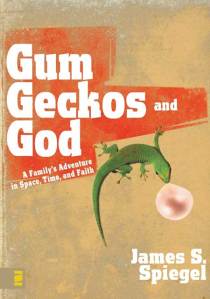
It’s called Gum, Geckos and God: A Family’s Adventure in Space, Time, and Faith. My copy just arrived and already I’ve read the first forty pages. Jim is a talented writer and an insightful parent. He can tell a good story, and this book is loaded with them. He’s funny, too, and self-effacing. If you have children or grandchildren, or know someone who does, and you haven’t given up asking questions about faith, I think you might enjoy and grow wiser reading this book.

Critical Thinking—Best Book in This Category


Amazon

Amazon

I teach philosophy to graduate students. Many of these men and women are married. Wives of the married men often invite me to speak to their group. Some have told me how much they desire to understand what their husbands are studying, and, frankly, to be able to hold their own in argument when their husbands, by dint of their occupation, have a seeming advantage.

There’s one book I’ve been recommending to them. It’s an excellent general introduction to the skills we all need—both for gentle sparring and for serious debate, but also just for organizing our beliefs into cogent perspectives.

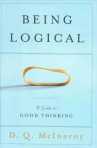
Written by D. Q. McInerny, it’s called Being Logical: A Guide to Good Thinking (2005). (I see that it’s also now available in a Kindle edition.)

Charles Osgood offers this poetic endorsement:

Given the shortage of logical thinking,

And the fact that mankind is adrift, if not sinking,

It is vital that all of us learn to think straight.

And this small book by D.Q. McInerny is great.

It follows therefore since we so badly need it,

Everybody should not only buy it, but read it.

That Bookshop in Portland

That Bookshop in Portland

* * *

What Others Are Saying:

David Foster Wallace


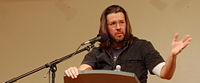
He was someone I thought it would be great to meet sometime. Had I known he was living and working only a stone’s throw away, it might have been arranged.

Unfortunately, that won’t be possible. David Foster Wallace hanged himself and was found by his wife when she returned home Friday night, September 12, 2008. He was 46.

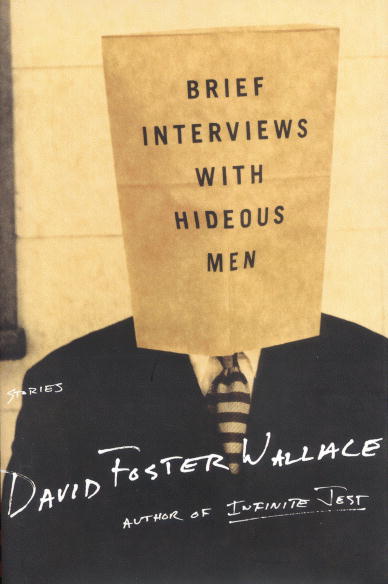
Wallace was clever with words. He was inventive. He employed extensive footnotes in his fiction. And he was candid. He went naked onto the page and exposed his soul in ways few novelists do.

His parents were university professors, his father in the department of philosophy at the University of Illinois (Urbana-Champaign). David Foster Wallace himself majored in English and philosophy at Amherst College. And it shows in his writings.

His writings reveal something else, too. In his tribute to Wallace, David Gates writes that “we’ll surely be spotting more and more of these clues in his work,” clues of his long-standing depression and contemplation of suicide. I find it hard to believe that Wallace’s readers didn’t suspect it already, because the clues are littered everywhere.

While reading Wallace myself, I would recall the thesis that genius and great art are often accompanied by threatened madness, that great talent and erudition can only be managed with a colossal effort of self-possession that no one else but the artist can know.

In her book, The Midnight Disease, neurologist Alice Flaherty examines the mental disorders that frequently haunt the most creative writers. She develops an illuminating theory of “manic hypergraphia.” Kay Redfield Jamison, whose work I’ve recommended on this blog, explores the culverts of this condition in a wonderful book called Touched with Fire: Manic Depressive Illness and the Artistic Temperament. The treasure of a gifted man’s labor is more precious when understood in the light of this fire.

***

As it happens, David Foster Wallace travelled with John McCain’s presidential campaign in 2000. He wrote a book about it that came out this past summer. It’s hailed as a journalistic tour de force by someone other than your typical political journalist. It’s called:

McCain’s Promise: Aboard the Straight Talk Express with John McCain and a Whole Bunch of Actual Reporters, Thinking about Hope.

Kindle edition

What Good Writers Do—Best Book in This Category


To be a good writer, you must be able to select the best words, craft sentences, and build paragraphs. This is more than a matter of knowing the rules of punctuation and having a strong vocabulary. Read more of this post