Proficient Motorcycling


The Ultimate Guide to Riding Well—That’s exactly what this book is. Proficient Motorcycling, by David L. Hough, is good in so many ways. My copy arrived from Amazon yesterday and I’ve read about 100 of its nearly 300 pages. Everyone who rides should own this book and refer to it often. Read more of this post

Do You Read Me?


Reading glasses. I didn’t think I’d ever have a use for them, except maybe to burn bugs by focusing the sun’s rays on their exoskeletons.

Today, I own and use several pairs . . . for reading. Read more of this post

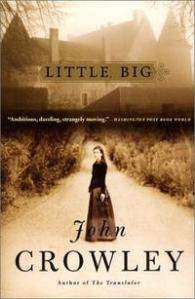
Now Reading “Little, Big,” by John Crowley


If you know the name Smoky Barnable, it’s because you’ve read all or part of John Crowley’s fantasy novel Little, Big, or, The Fairies’ Parliament. Or—less likely—you’ve only read about it. I suggest this is unlikely because you probably haven’t read about the novel unless you are a reader, like fantasy fiction, and can’t resist when the accolades for a book are in the order of: Read more of this post

Amazon Search Link


To search Amazon for any product, including the books, films, and various tools discussed in these pages, click on the Amazon icon:

amazon_icon

More Christmas Reading


In my recent post “‘Tis the Season for Christmas Reading,” I included titles to consider in the days leading up to Christmas. But there are many more to know about.

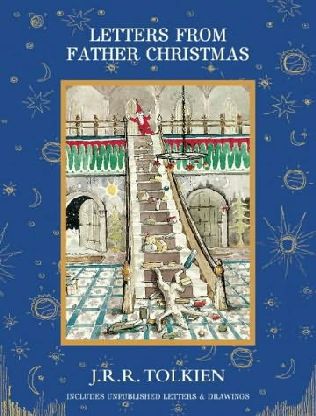
One I should have included comes from the category of fantasy, by one of fantasy fictions greatest practitioners, J. R. R. Tolkien. For twenty years Tolkien wrote and illustrated letters from Father Christmas, delivered from the North Pole to his own children. So here is my entry for best fantasy fiction for this year: Letters from Father Christmas, by J. R. R. Tolkien (in hardback or paperback). You may be inspired to write your own letters from Santa or Father Christmas to children (your own, or someone else’s).

The rest of this post will be updated as I’m able, with More Christmas Reading:

Fantasy Fiction

General Fiction

Humorous Fiction

Hymns and Carols

Miscellany

Mystery & Suspense

Non-fiction—Social Commentary

Poetry

Thematic

Note: Though I’ve been careful in selecting these titles, I haven’t read all of them myself.

Original Post: ‘Tis the Season for Christmas Reading

Related Posts by Doug Geivett:

‘Tis the Season for Christmas Reading


There’s so much great Christmas-related fiction that you have to start January 1 to get it all in before Christmas. But the best time to dive into Christmas stories, large and small, is during the Christmas “season.” That starts earlier for some people than others. But within ten days of December 25 you should be into the spirit of things. Some good reading can help.

Here are a few tips, including some suggested reading: Read more of this post

Don’t Fool Yourself


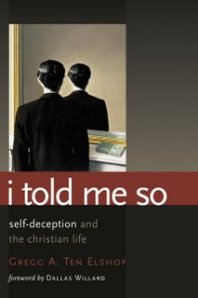
If you think you don’t need to read this book, you’re probably fooling yourself. I Told Me So: Self-Deception and the Christian Life—by my friend and colleague, Gregg Ten Elshof—may get you thinking about all those people you know who deceive themselves. It should be obvious that that’s not the goal of the book. But because what Gregg says in his book is so on target, I’m afraid it won’t be obvious to everyone.

Forward by Dallas Willard. For more details on this new title, click here for the Amazon description.

Edgar Allan Poe and “The Facts in the Case of M. Valdemar”


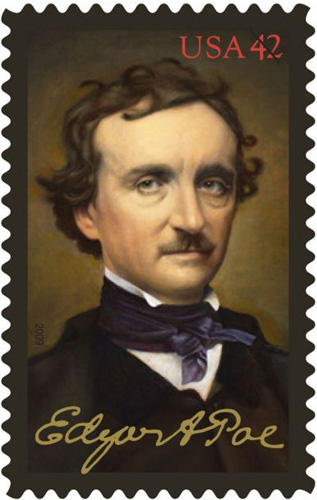
Occasionally I dip into my copy of Edgar Allan Poe’s Tales of Mystery and Imagination, a compact and inexpensive, but moderately elegant, hard copy edition in the Barnes and Noble “Collector’s Library.” It measures 4 inches by 6 inches, is not quite an inch thick, has gilt edges, and a wine-colored ribbon.

The collection includes Poe’s story “The Facts in the Case of M. Valdemar,” a story ostensibly about the effects of mesmerism (the precursor to hypnotism) on an individual who is about to die.

Though not obvious to everyone when first published 20 December 1845, the story is pure fabrication. Read more of this post

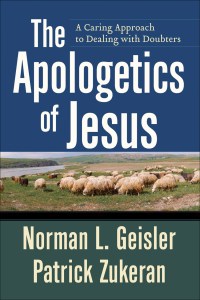
The Apologetics of Jesus


What would Jesus do if he was alive on the earth now and facing the skeptics of our day? The same thing he did in the first century. And what was that?

This question is answered with great clarity in the new book by Norman Geisler and Patrick Zukeran—The Apologetics of Jesus: A Caring Approach to Dealing with Doubters.

I want to recommend this book for several reasons: Read more of this post

Sixteen Works of Creative Nonfiction


Here are sixteen works classified as “creative nonfiction” and called “superlatively entertaining and artful” by Michael Dirda, in loose chronological order: Read more of this post

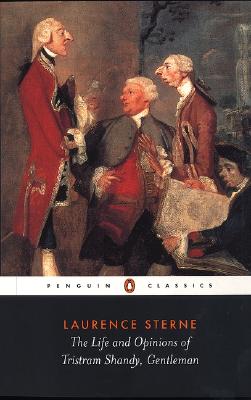
First Lines: The Life and Opinions of Tristram Shandy


9780141439778Laurence Sterne’s ironical work of fiction, The Life and Opinions of Tristram Shandy, Gentleman, was first published in 1759. It baffled and intrigued Sterne’s contemporaries. You may feel the same way after reading the opening sentence:

I wish either my father or my mother, or indeed both of them, as they were in duty both equally bound to it, had duly considered how much depended upon what they were then doing;—that not only the production of a rational Being was concerned in it, but that possibly the happy formation and temperature of his body, perhaps his genius and the very cast of his mind;—and, for aught they knew to the contrary, even the fortunes of his whole house might take their turn from the humours and dispositions that were then uppermost;—Had they duly weighed and considered all this, and proceeded accordingly,—I am verily persuaded that I should have made a quite different figure in the world, from that in which the reader is likely to see me.

Come again? Read more of this post

Bearing Books from New England


A week ago I returned from a New England holiday with my family. We journeyed to Maine and New Hampshire in quest of respite from the cacophony of California. We found it. Harbor views, the Maine woods, marine vessels, lobsters, crisp air, and fall leaves.

And I found bookshops—with mountains of second-hand books—ranging from the maximally disheveled to the customary semi-organized to the immaculate (for example, The Old Professor’s Bookshop in Camden, ME). Read more of this post

Speculative Fiction by and for Christians


Twitter led me to a blog called My Friend Amy, where there’s an interesting take on speculative fiction in today’s “Faith ‘n Fiction Saturdays” category. The post addresses several questions:

  1. What is speculative fiction?
  2. What is “Christian speculative fiction”?
  3. What are the standards for high quality Christian speculative fiction?

This short post got me thinking about these and related questions. The result is a longer post sketching some of my thoughts about the general topic.

What Is Speculative about ‘Speculative Fiction’?

My Friend Amy quotes Wikipedia for an answer to this question:

Speculative fiction is a fiction genre speculating about worlds that are unlike the real world in various important ways. In these contexts, it generally overlaps one or more of the following: science fiction, fantasy fiction, horror fiction, supernatural fiction, superhero fiction, utopian and dystopian fiction, apocalyptic and post-apocalyptic fiction, and alternate history. (Click here for the complete Wikipedia entry for “Speculative fiction.)

The term is of relatively recent vintage. It doesn’t appear in any of the three handbooks I consult for such things:

  • Benet’s Reader’s Encyclopedia, 4th edition published in 1996. A new edition was published in 2008, and no doubt includes novel entries (no pun intended).
  • The Reader’s Companion to World Literature, 2nd edition published in 1984. This edition was updated in 2002. Of the three books listed here, this is the best value—very affordable and reliable, with excellent coverage of authors, titles, literary movements, historical periods, terms and phrases.
  • Kathleen Morner and Ralph Rausch, From Absurd to Zeitgeist: The Compact Guide to Literary Terms (1997). I believe this book is out of print, but I see that (at the time of this post) one copy is in stock at Powell’s Books.

I once read an essay on speculative fiction that developed a convincing account of the form. Unfortunately, I don’t remember the author or where I came across the item. But I do remember thinking then that “speculative fiction” is an apt label for fiction that explores counterfactuals—ways things might have been but weren’t, or ways things might yet be but won’t. [FN: For more about counterfactuals at this website, “Run Lola Run—A Discussion Guide.”]

The interesting examples of counterfactuals are worlds very close to this, the actual world. “What if, instead of X happening at time t, something else that could easily have happened, Y, had happened at t? How would things have turned out then?” (One serious philosophical problem with speculation of this sort is that the sequel to any counterfactual at time t—the succession of events following Y, for example—may itself vary in numerous counterfactual ways. There may be many ways things might have turned out if Y had happened rather than X at t. And it’s puzzling to think that there is just one way things would have turned out in such a counterfactual setup. But I digress.)

The better fictional depictions of counterexamples would be at least minimally ‘literary.’ And they would explore themes of enduring human interest.

Could a Christian author write speculative fiction? Of course. The author at My Friend Amy’s blog alludes to several. The most obvious examples are ones that are most obviously ‘Christian.’ They broadcast a Christian message so overtly that it cannot be missed. For example, as noted in the blog post over at My Friend Amy, much Christian fiction depicts battles in the spirit world between angels and demons and the role of intercessory prayer by humans caught in the conflict. This kind of speculative fiction will appeal mostly to Christian readers, and then only to a certain kind of Christian reader. They don’t appeal to My Friend Amy for example. [FN: Some Christians, you may be surprised to hear, would argue that many such specimens of fiction are not properly Christian.]

C. S. Lewis and Others

It is interesting to me that C. S. Lewis is not mentioned. In addition to his cherished Narnia series of fantasy novels, Lewis wrote a very sophisticated series of three novels in what might be called the category of ‘space fiction.’ These are Out of the Silent Planet, Perelandra, and That Hideous Strength. Lewis wrote with subtlty and grace. It’s well-known that he wrote from a Christian worldview. But these novels do not ‘preach.’

Lewis also wrote The Screwtape Letters and The Great Divorce. These must surely count as paradigm cases of ‘speculative fiction.’ Next time you read them, consider this question: “What sort of ‘what-if’ question is Lewis endeavoring to answer in this book?”

I think that’s the question to put to any book if you want to be sure it counts as ‘speculative fiction.’ This opens the way for ostensive definition of the term. That is, it facilitates understanding of the term ‘speculative fiction’ by pointing to clear cases of it. Two examples that come immediately to mind are Shikasta, by Doris Lessing (1979), and The Children of Men, by P. D. James (1992).

It’s interesting to consider these examples in connection with questions raised by My Friend Amy. My view is that speculative fiction is a particularly congenial form for writing from a distinctive worldview, be it Christian or otherwise. It is congenial in part because it permits experimentation with the implications of a worldview without wearing that worldview on its sleeve. Doris Lessing and P. D. James both write with religious sensibilities—Lessing with the perspective of Sufism, James with a Christian worldview. [FN: Lessing was once offered the honorific title of “Dame” by Queen  of England. Lessing declined the honor. James was created Baroness James of Holland Park in 1991.] The guiding perspective in each case, though often discernible, is subtly layered into the narrative. This is akin to what the great authors Flannery O’Connor and Graham Greene accomplished in their more ‘realist fiction.’ [FN: See for example, and the short stories of Flannery O’Connor, and The End of the Affair, by Graham Greene.]

For many readers of this post, the film adaptation of The Children of Men will be better known than the book. While watching the first few scenes, I thought about how this darkly apocalyptic film might render the religious component of the human condition when humanity is faced with extinction. My guess was that it would represent society as completely secular, and that any portrayal of religious people would characterize them as the kind who stand on street corners warning passersby of imminent divine judgment, in a tone that betrays their conviction that ‘none who hear will convert, and it’s just as well anyway, since they deserve to go to hell.’ That pretty much is how religion was ‘treated’ in the film.

That last statement needs qualification. What I should say is that religion, imagined under the conditions described in the film, is presented a certain way. This may be a commentary on how religion is manifest in the world today. But it’s pretty striking that no one I would call a ‘serious believer’ shows up in the movie. I imagine they don’t exist, or, if they do, they are marginally significant to the storyline. But then what would account for their nonexistence? Or what would explain their insignificance to the unfolding story? It is precisely the apocalyptic character of the story that makes their absence conspicuous. And that is interesting.

So a film or a novel may have something to say about religion even when it makes no direct reference to anything explicitly religious.

Vampires

The Amy post also asks whether fiction featuring vampires might be a venue for developing Christian themes. I’ve thought about this myself. That would be an excellent question for Anne Rice, the bestselling author of vampire fiction, and an adult convert to Christianity. Books in her newer series based on the gospel narratives has not been quite as successful as Interview with the Vampire. They are, to be sure, friendly presentations of the life and influence of Jesus. I suspect they have generated a new set of fans.

Susan Howatch

Another contemporary author known for her Christian worldview is Susan Howatch. Also a bestselling author (and British), Howatch composes stories with a realist cast. They take place in our world, you might say. See, for example, her acclaimed series beginning with the novel Glittering Images. One of her best is The High Flyer, which can be recommended to any reader with a taste for literary fiction set in the contemporary context.

* * *

A blog permits the expression of random thoughts during idle moments. I’ve exploited that opportunity here. As often happens, the flood of thoughts swelled to the point of necessary expression because of a bit of reading. This time I happened to be reading another blogger who reads.

Thank you, Amy my friend—whoever you are.

Related Posts by Doug Geivett:

Teach Yourself Epistemology


Epistemology is the branch of philosophy devoted especially to study of the concepts of knowledge and justified belief. The name for this discipline, epistemology, comes from the Greek word episteme, signifying “knowledge.” This is why epistemology is sometimes called “the theory of knowledge.” Unfortunately, this designation leads to a truncated view of a complex subject matter ranging over a wide variety of issues having to do with the status of belief.

The study of epistemology is notoriously difficult. It is also difficult to teach. Most university professors in the Anglo-American analytic tradition present the subject as a series of problem-solving ventures. The most persistent theories addressing these problems are presented and compared. Sometimes the teacher favors a general approach in epistemology and gives special attention to explaining and defending that approach and spelling out its implications.

One of the great problems of epistemology is how to think about the subject matter. This is the most fundamental problem for the enterprise of epistemology (which I distinguish from the enterprise of knowing and responsible believing). And yet this problem is often passed over, not only in the classroom, but by epistemologists in their own systematic work.

In my view, this places the student at risk. The student new to epistemology is liable to learn epistemology second-hand, taking as given the various problems and their proposed solutions, arranged in whatever order suits the professor or textbook writer. One very common approach is to begin with the threat of skepticism, which hangs as an ominous spectre over the whole enterprise—and is perhaps never completely exorcised.

A proper approach to “doing epistemology” would have to be delineated with great care and in more space than I have here. But there is a sense in which the self-educated have an advantage when coming to this subject matter. They are more likely to embark upon the enterprise of epistemology with that sense of wonder that is characteristically Aristotelian. In this case, the wonder is that we are capable of knowing so many things in such diverse areas of investigation, and that we move confidently through the world believing much that we do not know or would claim to know.

Still, the student needs a guide to such a complex subject. And while no text can serve in place of careful reflection on aspects of knowing and believing as they present themselves, there are a few very good books to guide the student and prompt examination of long-standing issues in epistemology.

In my own teaching, I have favored three books on the subject:

These books complement each other nicely. The book by Robert Audi will require a tutor for most who are new to the subject. It is rich and comprehensive, and, most important, very sensible about the topics it addresses. Better than any other book I know of, this book presents the subject in a natural order that is conducive to proper progress through to thorny issues it addresses.

To anchor a course in epistemology, I’ve found that the books by Feldman and Bon Jour complement each other neatly. They are concise and readable surveys of major topics. Laurence Bon Jour adopts a method of presentation that he explains clearly at the outset. While I think the method he adopts is unfortunate, it does give readers a sense of the rootedness of trends in contemporary epistemology in the influential work of the great 17th-century philosopher René Descartes. Of special value is Bon Jour’s treatment of the contest between foundationalists and coherentists in epistemology. A convert from coherentism to foundationalism, Bon Jour excels in his exposition of this debate; yet he is also realistic about the persistent philosophical challenges raised by foundationalism.

Richard Feldman demonstrates the exacting technique of analytic philosophy in a way that is accessible and interesting to newcomers. His book is a pleasure to recommend for that reason alone. But it is strong in many other respects. Feldman selects only the most fundamental issues in epistemology, and his book is a natural choice for someone with my anti-skeptical predilections for foundationalism and internalism in epistemology. His juxtaposition of evidentialism on the one hand and internalism and externalism on the other hand is initially puzzling. The presentation of evidentialism is a model of exposition at the introductory level.

Neither Feldman nor Bon Jour does justice to the problems associated with sensory perception. This large area of study in epistemology is set aside by Feldman, perhaps in the interests of conserving space. I think the decision to postpone consideration of the theory of perception can be defended. Feldman simply ignores the topic. Bon Jour, on the other hand, takes pains to explore the theory of perception. He defends a position called indirect or representative realism. As a direct realist, I believe this is a mistake. The presentation is well-organized and focused. And, in my judgment, Bon Jour’s development and defense of indirect realism creates opportunities to indicate significant problems for his position, which is part of any thorough defense of direct realism.

Several other books make useful companions to the ones I’ve recommended above:

The student also needs a collection, or anthology, of readings in epistemology. The best anthologies include selections from influential thinkers going back to Plato, as well as seminal essays by more recent philosophers. Among the best are:

Epistemology, like all professional philosophy, is “trendy.” The serious student of the discipline must understand these trends, even at the risk of being misled about their importance or being distracted from the real business of epistemology. The books I’ve described and recommended here contribute greatly to that task.

Postscript

While I strongly recommend the books by Rober Audi, Richard Feldman, and Laurence Bon Jour as places to begin the systematic study of contemporary analytic epistemology, several other introductory texts make excellent ancillary reading:

A Plan for the Study of Epistemology

  1. Read the three introductory texts recommended at the beginning, by Robert Audi, Richard Feldman, and Bon Jour. Sketch a plan to read them simultaneously, following the topical sequence in Audi.
  2. Read a sample of classic and contemporary essays from one of the anthologies listed above. Read according to interest and accessibility and note those authors who are mentioned in Audi, Feldman, and Bon Jour. Follow the order of coverage by topic in your reading of Audi and the others.
  3. Use Jonathan Dancy’s Companion to Epistemology as a quick reference on sundry topics in epistemology.
  4. Consult the other companion volumes for more detail and discussion.
  5. Survey several other introductions listed in the Postscript above. Especially deserving of careful study are Chisholm, Lehrer, and Pollock.
  6. Begin reading on topics of special interest to you, in books and essays that focus especially on those topics.
  7. Think about issues in meta-epistemology, or the study of the proper study of epistemology. On this topic I especially recommend Chisholm, Theory of Knowledge (already listed) and his essay on “The Problem of the Criterion,” George Chatalian, Epistemology and Skepticism: An Enquiry into the Nature of Epistemology, and P. Coffey, Epistemology, or the Theory of Knowledge (1917).
  8. For a realist approach to epistemology, I suggest reading seminal essays by the so-called “New Realists” in 20-century American philosophy.

TR on Reading Fiction for Personal Improvement


Book Cover.TR's Letters to His SonsThe American President that most fascinates and inspires me is Theodore Roosevelt. I’ve read several biographies, the best of which is by Texas A & M historian H. W. Brands. I also enjoy collections of TR’s essays and letters.
In a letter to his son Kermit, written from the White House February 3, 1906, the President reveals something of the way he viewed fiction:

Dear Kermit:

I agree pretty well with your views of David Copperfield. Dora was very cunning and attractive, but I am not sure that the husband would retain enough respect for her to make life quite what it ought to be with her. This is a harsh criticism and I have known plenty of women of the Dora type whom I have felt were a good deal better than the men they married, and I have seen them sometimes make very happy homes. I also feel as you do that if a man had to struggle on and make his way it would be a great deal better to have someone like Sophie. Do you recollect the dinner at which David Copperfield and Traddles were, where they are described as seated at the dinner, one “in the glare of the red velvet lady’ and the other “gloom of Hamlet’s aunt”? I am so glad you like Thackeray. “Pendennis” and “The Newcomes” and “Vanity Fair” I can read over and over again.

If TR felt he could read such titles by Thackery over and over again, it is because he did. Thackery is mentioned in many of his letters. Here the father takes pleasure in a shared enthusiasm with his son. And why is he so pleased with the boy’s reading predilections? Apparently because of the power fiction has to form character, to provoke thought about values and truth, and to encourage wise decisions in life.

Evidence for this dominates the quotation. Notice that TR is, in effect, counseling his son about choices in marriage. He is very subtle in this.

It’s pleasing to see that this accomplished public figure had such a relationship with his children that he would write about such things in his letters from the White House.

From the quoted portion of Roosevelt’s letter to Kermit, there is much of positive value to glean:

  • He takes time for his children in the midst of major official responsibilities.
  • He writes in a slow, reflective pace.
  • He guides by example.
  • He engages his son in discussion of ideas and values on the basis of a shared interest.
  • He shows genuine enthusiasm for great literature outside his range of responsibilities.
  • He exemplifies a manner of reading fiction that is directed by the desire to grow in wisdom.
  • He advises the young without preaching at them in any condescending fashion.
  • He regards his son as a peer in the realm of ideas.
  • He looks for points of contact between the fictional characters he meets with in reading and living individuals he knows personally.

It’s enough to make you want to go back and read David Copperfield, and check out the works he cites by William Thackeray.

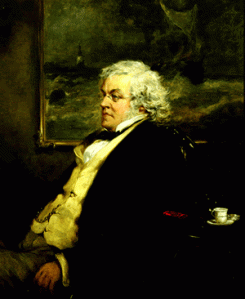
William Makepeace Thackery, Painted by Sir John Gilbert

William Makepeace Thackery, Painted by Sir John Gilbert

Works mentioned in this post:

Kindle users should know that there is a Kindle collection of over 100 of Thackery’s publications (including the three mentioned in this post) that you can get with a single purchase (cost: $4.79 at the time of this post). Click here. I like the Kindle!

Book Cover.TR's Letters to His Sons.2The quotation is from page 80 in The Letters and Lessons of Theodore Roosevelt for His Sons, edited and compiled by Doug Phillips.