Quotations: On Film
July 19, 2008 Leave a comment
“Even the objects in a fictional world are shot through with meaning and philosophical significance.” —Charles Johnson, in his interview with Diane Osen for The Book That Changed My Life
Are you good at believing the things you believe? Does it show in the way you live?
July 19, 2008 Leave a comment
“Even the objects in a fictional world are shot through with meaning and philosophical significance.” —Charles Johnson, in his interview with Diane Osen for The Book That Changed My Life
July 19, 2008 Leave a comment
“Even the objects in a fictional world are shot through with meaning and philosophical significance.” —Charles Johnson, in his interview with Diane Osen for The Book That Changed My Life
“I think that a good work of fiction is comparable to a good work of philosophy. That means it must engage the life of the spirit as well as the life of the intellect. I don’t want the characters to just talk the ideas; I want them grounded in the drama they find themselves in, in the world of action. Philosophy doesn’t begin in some abstract realm; the questions that philosophers concern themselves with begin in human experience.” —Charles Johnson, in his interview with Diane Osen for The Book That Changed My Life
July 19, 2008 Leave a comment
“. . . there is a tremendous social responsibility that comes with any public act we do, and that includes creative acts, as well.” —Charles Johnson, in his interview with Diane Osen for The Book That Changed My Life
“. . . Mozart sits down at the pianoforte/And composes music which had been ready/Before he himself was born in Salzburg.” —From Czeslaw Milosz’s poem, “Creating the World,” in New and Collected Poems, 1931-2001
“Form is an integral part of any art because art affirms order . . . .” —Ted Kooser, The Poetry Home Repair Manual
July 7, 2008 Leave a comment
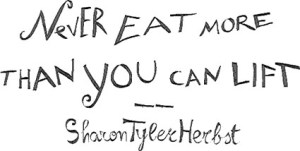
A Meal Without Wine Is Breakfast
—Title of a book by Sharon Tyler Herbst
Sources for Quotations about Food and Beverages
July 6, 2008 Leave a comment
Lytton Strachey (1880-1932) broke new ground as a biographer committed to describing the psychology of each subject he wrote about. His most familiar work is a set of chapter-length biographies called Eminent Victorians (1918). Strachey’s close study of the human condition led him to conclude that “happiness is the perpetual possession of being well deceived.” It’s doubtful that anyone who believed such a thing could be happy.
Born to privilege and suffering great reversals later in life, François de la Rochefoucauld (1613-1680) was not quite as pessimistic. He wrote, “We are never so happy nor so unhappy as we imagine.” If he’s right, one has to wonder how he knew.
The Best Quote Challenge for this week—July 6 to July 12—is “On Happiness.”
Here are the rules:
On Sunday, July 13, a new Best Quote Challenge will be set at this blog. During the week of July 13-19, votes will be taken for the “Best Quote on Freedom” submitted this week. So be sure to come back to this post then to cast your vote using the “Leave a Comment” link below.
July 1, 2008 3 Comments
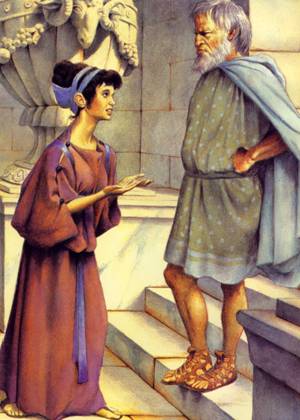 “I would my father looked but with my eyes.” —Hermia, daughter of Egeu, in Shakespeare’s A Midsummer Night’s Dream
Egeus was determined to wed his daughter to Demetrius, a man of his own choosing and against the wishes of Hermia to marry Lysander, the man she loved. The play depicts the tension between a father, who demands submission to his authority, and his tenderhearted daughter. The artwork here was discovered by Bill Huntley
in a children’s book during a visit to Greece.
When one has not had a good father, one must create one. —Friedrich Nietzsche
To bring up a child in the way he should go, travel that way yourself once in a while. —Josh Billings
A mother who is really a mother is never free. —Honoré de Balzac
The first half of our lives is ruined by our parents and the second half by our children.” —Clarence Darrow
The fundamental defect of fathers is that they want their children to be a credit to them. —Bertrand Russell
Don’t limit your child to your own learning, for he was born in a different time. —Rabbinical saying
No matter how old a mother is, she watches her middle-aged children for signs of improvement. —Florida Scott-Maxwell
Insanity is hereditary—you can get it from your children. —Sam Levinson
People should be free to find or make for themselves the kinds of educational experiences they want their children to have. —John Holt
June 29, 2008 3 Comments
Patrick Henry said, “Give me liberty, or give me death.” This Friday is Independence Day. The Best Quote Challenge for this week—June 29 to July 5—is “On Freedom.”
Here are the rules:
On Sunday, July 6, a new Best Quote Challenge will be set at this blog. During the week of July 6-12, votes will be taken for the “Best Quote on Freedom” submitted this week. So be sure to come back to this post then to cast your vote using the “Leave a Comment” link below.
June 27, 2008 Leave a comment
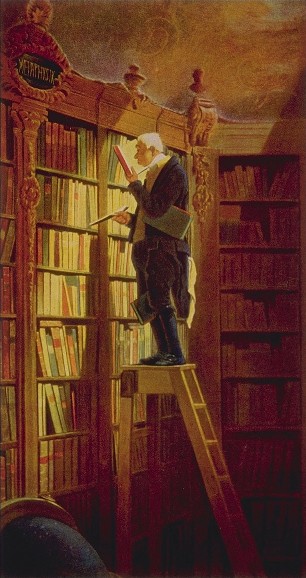 “. . . the history of thought is the laboratory of the thinker . . . .”
—Eugene R. Fairweather
“So I’m not educated. I learned my stuff. I’m a heart surgeon, sure, but I’m just a mechanic.”
—Character named Mel, in Raymond Carver’s short story “What We Talk About When We Talk About Love,” in What We Talk About When We Talk About Love
“The history of my stupidity would fill many volumes./. . . . The history of my stupidity will not be written./For one thing, it’s late. And the truth is laborious.”
—From Czeslaw Milosz’s poem, “Account,” in New and Collected Poems, 1931-2001
“Most of us hate to think. Five minutes of thought can be more terrifying, more energy-draining than days and days of routine or habitual activity. Your mind is intrinsically thrifty, and prefers to do things the way it has done them before. It sees its primary business as establishing effective channels for action, and resists altering a channel that has become established, to say nothing of constructing a new one that causes anxiety.”
—Kenneth Atchity, A Writer’s Time
“I’m a stenographer of my mind.”
—Allen Ginsberg, poet (1926-1997)
“Your best thought is imbedded [sic] in chunks of your worst thought.”
—Mark Levy, Accidental Genius
“Friends of the human race and of what is holiest to it! Accept what appears to you most worthy of belief after careful and sincere examination, whether of facts or rational grounds; only do not dispute that prerogative of reason which makes it the highest good on earth, the prerogative of being the final touchstone of truth.”
—Immanuel Kant, “What Does It Mean to Orient Oneself in Thinking?”
“Most evidently, we cannot give up on the principle of non-contradiction, bold but wayward logicians notwithstanding.”
—Sandra Menssen and Thomas D. Sullivan, The Agnostic Inquirer: Revelation from a Philosophical Standpoint
June 27, 2008 Leave a comment
What does it mean to be “truly cultured”? Here’s what Zaid said, or wrote, in his book So Many Books: “. . . the truly cultured are capable of owning thousands of unread books without losing their composure or their desire for more.” (That’s Gabriel Zaid, by the way.)
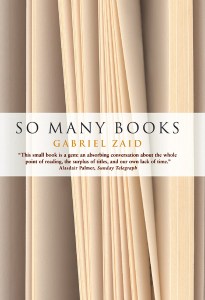
Heartened by this keen observation, and taking the point further, Nick Hornby writes that “with each passing year, and with each whimsical purchase, our libraries become more and more able to articulate who we are, whether we read the books or not.”
So if you need to streamline your holdings because you’ve long since run out of room for new volumes, one rule may be to ask of a given book, “What does your presence in my library say about me? Is that who I am? And whether it is or not, is that how I want to be known?”
June 27, 2008 Leave a comment
The second stanza of the five-stanza poem, “I Have a Few Friends,” by Canadian Poet Robert Service [1874-1958] elebrates the friendship of book and briar:
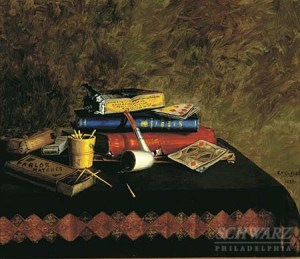 I have some friends, some honest friends,
And honest friends are few;
My pipe of briar, my open fire,
A book that’s not too new;
My bed so warm, the nights of storm
I love to listen to.
Source: Collected Poems of Robert Service
June 26, 2008 Leave a comment
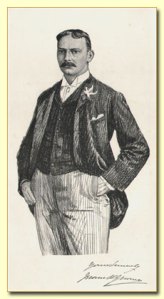
Here is the unabridged dedication Jerome K. Jerome (1859-1927) wrote for his book The Idle Thoughts of an Idle Fellow (published 1886):
THE VERY DEAR AND WELL-BELOVED
FRIEND
OF MY PROSPEROUS AND EVIL DAYS—
TO THE FRIEND
WHO, THOUGH, IN THE EARLY STAGES OF OUR ACQUAINT-
ANCESHIP, DID OFTTIMES DISAGREE WITH ME, HAS
SINCE BECOME TO BE MY VERY WARMEST
COMRADE—
TO THE FRIEND
WHO, HOWEVER, OFTEN I MAY PUT HIM OUT, NEVER (NOW)
UPSETS ME IN REVENGE—
TO THE FRIEND
WHO, TREATED WITH MARKED COOLNESS BY ALL THE FEMALE
MEMBERS OF MY HOUSEHOLD, AND REGARDED WITH
SUSPICION BY MY VERY DOG, NEVERTHELESS,
SEEMS DAY BY DAY TO BE MORE DRAWN
BY ME, AND IN RETURN, TO MORE
AND MORE IMPREGNATE ME
WITH THE ODOR OF HIS
FRIENDSHIP—
TO THE FRIEND
WHO NEVER TELLS ME OF MY FAULTS, NEVER WANTS TO
BORROW MONEY, AND NEVER TALKS ABOUT HIMSELF—
TO THE COMPANION
OF MY IDLE HOURS, THE SOOTHER OF MY SORROWS,
THE CONFIDANT OF MY JOYS AND HOPES—
MY OLDEST AND STRONGEST
PIPE,
THIS LITTLE VOLUME
IS
GRATEFULLY AND AFFECTIONATELY
DEDICATED

June 19, 2008 1 Comment
“If you don’t feel like writing, you can always read about it.”
—Doug Geivett (title of my post here)
“All the valuable writing I’ve done in the last ten years has been done in the first twenty minutes after the first time I’ve wanted to leave the room.”
—Ron Carlson, Ron Carlson Writes a Story
“The process of writing is an adventure; you never know how things are going to configure themselves. When I begin a book, I know it’s going to transform my life.”
—Charles Johnson, in his interview with Diane Osen for The Book That Changed My Life
“Writers write for two reasons. One is that they have something they want to say. The other, equally compelling motive is that they have something they want to find out. Writing is a mode of exploration.”
—Margaret Lucke, Writing Great Short Stories Read more of this post
June 19, 2008 Leave a comment
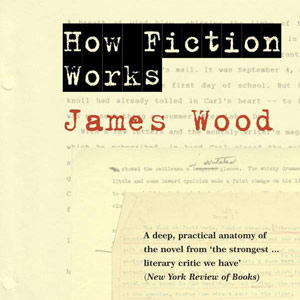 “. . . one discovers that an authentic sermon even within the confines of fiction [as in John Updike’s novel Of the Farm] can have a kerygmatic quality: one feels addressed, in a fairly direct way that collapses in part the illusions of fiction. Updike is able here to fix a receptive mood in which the reader is led to respond to the message as well as to the fictive situation.” —Robert Detweiler, “John Updike’s Sermons,” chapter in Breaking the Fall: Religious Readings of Contemporary Fiction
June 19, 2008 1 Comment
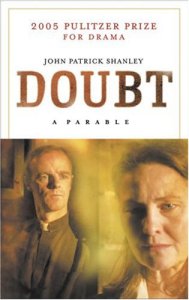
“We are living in a culture of extreme advocacy, of confrontation, of judgment, and of verdict. Discussion has given way to debate. Communication has become a contest of wills. Public talking has become obnoxious and insincere. Why? Maybe it’s because deep down under the chatter we have come to a place where we know that we don’t know . . . anything. But nobody’s willing to say that.” —John Patrick Shanley, Preface to his play Doubt: A Parable.
“No matter what side of an argument you’re on, you always find some people on your side that you wish were on the other side.” —Jascha Heifetz
June 19, 2008 Leave a comment

“No, God does not give us explanations; we do not comprehend the world, and we are not going to. It is, and it remains for us, a confused mystery of bright and dark. God does not give us explanations; he gives us a Son. . . . A Son is better than an explanation.”
—Austin Farrer, “The Country Doctor”
“Every war movie, good or bad, is an antiwar movie.” —Steven Spielberg, “Of Guts and Glory”
“. . . after all, the manner in which a person dies, the little details of an autopsy, say, whether the corpse has spots on its liver or lungs, doesn’t in any way cancel the loss.”
—Ted Kooser, The Poetry Home Repair Manual
“A high station in life is earned by the gallantry with which appalling experiences are survived with grace.”
—Tennessee Williams


 Doug Geivett's Blog
Recent Comments