Do No Harm—John McCain’s Choice of Sarah Palin


In the world of politics, complexities are often encapsulated in squat phrases and nimble sentences. And when it comes to selecting a Vice Presidential running mate, the mantra has long been primum non nocere—”first, do no harm.” The principle is borrowed from the world of medicine and medical ethics. It’s been applied in situations where medical intervention poses considerable risk to a patient with an unknown or comparatively small margin for benefit. I guess it makes sense, especially during Presidential election campaigns, to liken major political decisions to life-and-death challenges in medical decision making.

When picking a running mate, what does it mean to Do No Harm? Earlier this month, William Kristol spelled out four criteria for choosing a vice president, and evaluated McCain’s options in terms of those criteria. (See “How to pick a vice president.”) Here were McCain’s basic options:

  1. Go with someone safe and predictable.
  2. Pick someone whose strengths will accentuate the opposing candidate’s weaknesses.
  3. Co-opt the public desire for change.
  4. Pledge to serve for a single term and stress the need for radical change in Washington politics.

If do no harm was uppermost in McCain’s mind, then criteria (1) and (2) should have been the determining factors. Judging by the shock registered in the media yesterday when McCain announced his choice of Alaska governor Sarah Palin, the first criterion was pretty low on his list of guidelines. Since the shock was proportionate to the perceived inexperience (measured in age and time served in elected office) of McCain’s choice, the second criterion doesn’t seem to have influenced McCain. So Do No Harm, by Kristol’s reckoning, wasn’t McCain’s chief concern.

Let’s consider two questions.

Was McCain right to ignore the Do No Harm principle in selecting Palin to be his running mate?

Had McCain been far behind Obama in polling, especially in the most contested states, the political value of the Do No Harm principle would have been more salient. The gap in support between Barack Obama and John McCain was negligible at the time of McCain’s selection of Palin.

A politician has to be practical—or pragmatic, if you will. But much of the pragmatism exhibited by our politicians is befogged with cynicism. It is permeated with jaded negativity, which leads to posturing and snarky rhetoric. And this translates into a malaise of cynicism among the electorate. Exasperated, would-be voters lose interest and stay home on election day. Many of those who make their way to the polls buy into this jadedness and cast their vote for the angry candidate, or the candidate who represents the angry party. It’s a bad omen for a democracy when its elected officials rise to power on a wave of angry sentiment.

It would be most refreshing to see America’s leading candidates demonstrate real-world understanding without the baggage of cynical pragmatism. The Do No Harm principle is naturally attractive to the cynical. It is a sign of McCain’s governing optimism that he did not let the political appeal of such a principle determine his choice of running mate.

Politics is full of ironies. One of the great ironies of the current election season is that the Democrat party, led by Senator Obama, has mounted a campaign rooted in anger, warning a cowering sector of the electorate to forego “four more years of George Bush,” while suggesting, at the same time, that McCain is the one with a jaded view of the world, as indicated by his approach to Iraq and Iran. George Bush has been demonized by pundits on the far left of the Democrat party as “the worst President ever” and “a moron.” These pundits have tutored Obama to exploit this caricature and emphasize that John McCain has voted in sync with President Bush 90% of the time. So electing John McCain would be like relecting Bush, and that means perpetuating the worst thing that ever happened to America. (Never mind that Obama has voted 97% of the time in league with his own party, which happens to be at the helm of a Do Nothing Congress.)

McCain was right to ignore the beckoning spirit of cynical pragmatism in his choice of a running mate. Maybe it’s a symptom of the audacity of his hope for this nation.

What is the risk potential of McCain’s choice of Palin?

Let’s assume that Sarah Palin’s only liability is the electorate’s perception of her readiness for the job relative to her age and experience.

When it comes to experience and getting elected to executive office, Sarah Palin’s record is more impressive than Barack Obama’s, Joe Biden’s, and even John McCain’s. Most noteworthy is the comparison with Joe Biden, who began running for President twenty years ago and has never been nominated by his party. This year he turned in a lackluster performance with around 7% of the vote in the Democrat primary. If it was executive experience that Obama wanted to complement his perceived gross inexperience, why didn’t he pick Hillary Clinton? Could it be that he didn’t want to be overshadowed by experience?

When it comes to real political change and reformation, Sarah Palin’s record, again, dwarfs anything Obama has accomplished. As suggested by David Brooks in yesterday’s editorial for The New York Times, Obama loves the future because “that’s where all his accomplishments are.” If Obama’s message is A Message of Change, then why select a career politician, an old boy from inside the beltway—Joseph Biden?

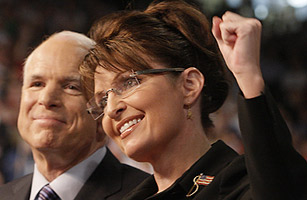
Together, McCain and Palin look bouyant and centered. In a single day since McCain’s announcement that Palin is his running mate, $4 million dollars have been contributed to the Republican campaign. And the Republican National Convention hasn’t even begun yet. Meanwhile, Obama stuttered in his customary way through an impromptu response to McCain’s announcement and looked, I thought, like a deer caught in the headlights. I’m talking about the guy at the top of the Democrat ticket who gave his acceptance speech before 85,000 people just the day before Sarah Palin was announced.

And that leads to a third question: Is there a new rock star in town?

***

Related Post:
Who Is Sarah Palin?


The next Vice President of the United States.

America turns its attention to the natural resources of Alaska.

***

Related Posts:

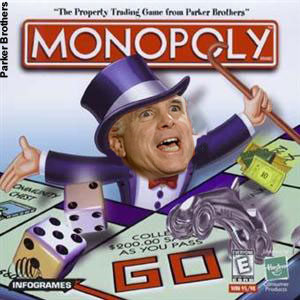
John McCain Cartoon


OK, this is funny! Thanks, TPM.
Watch for this TV Ad about Barack Obama after the DNC Convention


pH for America will soon be running a TV ad featuring comments by Barack Obama about the proper use of the Bible in American politics. The ad is slated for release shortly after the Democratic National Convention is over. But you can see the complete video of the forthcoming ad now.

If you want to see the video, click here:

Here are a few discussion questions:

  1. What is the primary thesis of this ad?
  2. How is this thesis supported?
  3. What seems to be Obama’s approach to interpreting the Bible?
  4. Do you agree with this approach?
  5. What are the strengths and weaknesses of this particular ad?
  6. Will this ad influence voters? Do you think it should?

What say you?

Should Chelsea Green Be Ashamed?


“Who’s Chelsea Green?” you ask. Chelsea Green is a small, third-rate publishing house that has confirmed its third-rate status with its recent snub of independent booksellers by making a new pro-Obama book available through Amazon and at a special discount before it becomes available in bookstores. The book is Obama’s Challenge, by Robert Kuttner. Read the story here. Read more of this post

What Say You? China, Human Rights, and American Business


The Beijing Olympics have raised awareness of the ongoing trampling of human rights by the Chinese government. Some have suggested ways of using this occasion to send a message to China. But the Chinese government knows of our disapproval. So the problem is not awareness but action. At the same time, American corporations, large and small, have invested heavily in China.

The United States government has not imposed an embargo on American business activity in China. And maybe that’s best. But here’s an alternative. Suppose the U.S. government stipulated that American companies are free to do business in China as long as they discontinue business in the United States, until human rights grievances in China are addressed. American companies would then be in the position of making the decision about whether to do business in China. As a result, free market activity would create pressure on China to move toward real democracy, without direct government action on the part of the United States.

  1. Could the United States government actually impose and enforce such a restriction?
  2. Would this sort of restriction be compatible with American democratic values?
  3. Would a restriction of this kind be an effective deterrent of human rights violations (the idea being that American corporations would put pressure on China to revise its practices as a condition for doing business there)?

What say you?

Inflate Your Tires . . . with Hot Air


Not long ago the late-night comedians were “complaining” that there just isn’t enough material to poke fun at Barack Obama. There’s a joke for you.

In the news today was a real screamer. Obama says we don’t need to drill to solve the energy crisis. We can get the same result if we all just inflate our tires and get regular tune-ups. He was talking about our cars . . . I think. Can’t be sure since he doesn’t seem to know much about them.

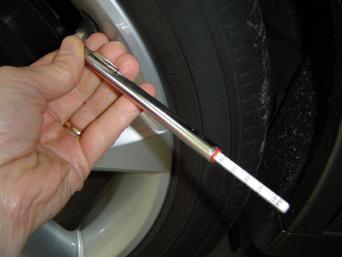
There are lots of reasons to keep your tires properly inflated. But solving the energy crisis isn’t one of them. It’s safer, you get a better ride, and, yes, you can save a bit on gas mileage. And getting regular tune-ups, where you change the spark plugs and all that, just isn’t what it used to be . . . say twenty years ago when you could actually work on your own car.

Where did Obama come up with this clever idea? Surely not all by himself. But was it someone who really likes Obama and wants him to get elected? That doesn’t compute, either. Maybe the guy, whoever it is, is laughing up his sleeve in disbelief that the senator actually built this nonsense into official policy during a campaign speech.

The audio feed on this speech reveals that people in the audience were amused. Their response can only be interpreted as snickers (if you’re not pro-Obama) or nervous laughter (if you are pro-Obama). This must have taken the candidate by surprise. It’s not the kind of line he could pass off as intended humor. He must have known that his audience knew something he didn’t know. It isn’t the first time; and it probably won’t be the last.

Child Crusaders in the Anthropogenic Global Warming Campaign


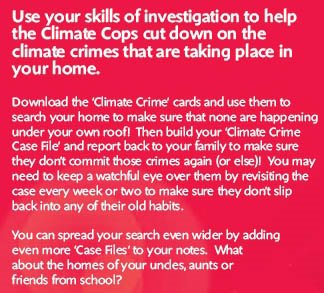
Sometime soon, the Climate Cops may be pounding on your door, if not breaking your windows, to make you answer for your anthropogenic global warming (AGW) misdeeds. Who are these Climate Cops? Three animated kids named Skye, Will, and Oscar, and a polar bear called K’eyush—together with their recruits from the world of real children.

To join the Climate Cops Academy, your children are urged to go to climatecops.com. There they will meet Charlie, Chief Instructor of New Recruits. To become a member of the elite group of cadets, they must first complete three missions. As the Training Site says, “Only the best make it into the Academy. Prove

your worth by completing these three missions.” Each mission is played online.

I learned about this from a post by Anthony Watts, titled “Hey Kids! Be a ‘Climate Cop’—rat on your family, friends, and classmates.” Watts re-posts an item from the EU Referendum blogspot. This item, titled “Climate Nazis,” reports on full-page ads that appeared in Britain’s Sunday papers yesterday.

To their credit, the EU Referendum and Anthony Watts have posted these items to make people more aware of the ludicrous, and indeed shameful, effort to lure children into a campaign to spy on family members and others. They are truly alarmed by this, drawing analogies with Hitler’s propaganda campaign Deutsches Jungfolk. And the folks at the EU Referendum are answering the newspaper ads with an official complaint to the Advertising Standards Authority (ASA) in the UK.

The ASA describes its mission as follows:

“The ASA is here to make sure all advertising, wherever it appears, meets the high standards laid down in the advertising codes. Our website will tell you more about the rules for advertising, let you complain online, and explain how the ASA is working to keep UK advertising standards as high as possible.”

It is heartening to see the many comments responding to these posts by Anthony Watts and the EU Referendum. Most express disenchantment with the Climate Cop concept and the whole AGW paranoia for which we can thank former Vice President Al Gore.

I believe our schools are deliberate accomplices in the effort to stigmatize the behavior of parents. This is a serious matter. It requires the substitution of education with indoctrination. It feigns respect for critical thinking, but reinforces sloppy and irresponsible judgment.

This presents parents with an unprecedented responsibility and a severe dilemma. Parents cannot count on the schools to educate children in the skills of critical thinking. It is now their responsibility to instill virtues of the intellect, without the help of our educational institutions. Here’s the dilemma. If parents educate their children to be critical thinkers, their children will begin to wonder why they’re being sent off to school, where the values of critical thought are disregarded, if not distorted.

European Fuss Over Obama


Just curious. Do Europeans know better than Americans what’s best for Americans? Or is there something Americans know that Europeans don’t? There are things Americans want to know about Obama but can’t seem to find out, despite all of his mugging for the world. Do Europeans know what those things are? Do they care?

Barack Obama has been enjoying a rock star reception in Germany and elsewhere—so they say. That’s nice. Maybe he missed his calling. At least he knows where he’ll be most welcome if John McCain “steals” the election.

Some Obama supporters seem to think that European fandom is a reason for us to elect Obama. I’ve just returned from a visit over at the Dancing with Fire blog, and Kurt, there, hints at such a thing in a piece titled “Best Defense?”

Obama certainly wants Americans to notice the fanfare, and he hopes this will make him more electable. But there are two questions we need to ask:

  1. What difference does it make whether Obama is a celebrity in Europe?
  2. Why is Obama a celebrity in Europe?

If Americans had solid answers to these questions, European sentiment might actually be a reason to question Obama’s fitness for the job. And Obama has given us more reason to doubt by trotting around Europe instead of joining the debate at home to answer questions that matter to Americans.

What Kirsten Doesn’t Get (or Acknowledge) about Media Bias for Obama


Fox News Watch today focused on questions about media bias and its influence on the campaigns for President. Host, John Scott, showed the results of a Fox News Opinion Dynamics Poll, saying that “67% of Americans think the media want Obama to win the election.”

None of the panelists—Jane Hall, Cal Thomas, Jim Pinkerton, and Kirsten Powers—disagreed. As Kirsten Powers said, “most reporters are registered Democrats, so it’s not surprising that they might be voting for the Democratic candidate.” She went on to say, though, that “at the end of the day it doesn’t matter.” Why? “Because no voter is going to go in and make a vote on election day” based on what the press is doing.

Come again? This sounds like a flat out denial of media influence on voting outcomes. John Scott seemed surprised and said you have to believe that media affection for a single candidate makes a difference. Kirsten’s response was to ask, “Then how did Bush get elected two times?”

This is another example of goofy pundit logic. Yes, George Bush was elected twice, and true, this obviously wasn’t the outcome preferred by a liberal press. But this does not mean that voters were not influenced by the media. After all, there were people who voted for Al Gore in the first election and for John Kerry in the second. How does Kirsten know that none of those people were influenced by the pro-Democrat media?

I think she does know that the media played a role. In the first election, you’ll recall, the final vote tally was close. Al Gore still thinks he won. But the margin may have been greater in favor of Bush if the media had been completely opaque about its preferences. Kirsten Powers and others like her have to know this. So their fawning over candidate Obama during his “European Vacation” may well be calculated to trim those margins a smidgen more. And a smidgen may be all it takes.

***

If you can catch him in a moment of candor, ask Barack Obama how he feels about the media coverage he’s getting. He has to like it, since garnering coverage seems to be a primary reason for his junket (supported, by the way, with taxpayer money).

Presidential History: Rutherford B. Hayes


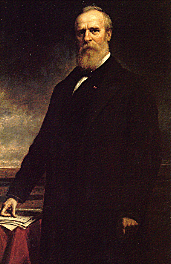
Presidential biography is a long-standing interest of mine. I’ve read more about Theodore Roosevelt than any other historical figure. He would be my favorite in many respects. But I also especially enjoy learning about lesser-known Presidents, like Chester Arthur and Rutherford B. Hayes. Since my Reading Jags often include forays into the arena of Presidential history, I’ll include periodic posts about these jags. This post is dedicated to the nineteenth President of the United States, Rutherford B. Hayes (1822-1893).

Jag for July 23, 2008

Jenny Drapkin posted her blog at http://www.mentalfloss.com today. She acknowledges that Hayes was widely known as a man of integrity. But she attributes considerable responsibility surrounding his controversial election to the man himself. This is probably unfair. Hayes went to bed on the night of the election expecting his opponent to win. His opponent expected the same result. Drapkin recounts a few of the details that determined the somewhat shocking outcome. To say the least, close elections raise special problems.

The Hayes vs. Tilden horse-race was made more complicated by the continued festering of North/South relations. It was still a period of reconstruction, and there were no easy solutions. Who can say what a Tilden presidency would have been like? As it was, the Hayes presidency lasted for only a single term. (The Wikipedia entry on Hayes indicates that Hayes had promised to serve for one term only and had advocated for one-term presidencies of six years. It might be enjoyable to hear a conversation between Rutherford B. Hayes and Franklin Roosevelt on that point—and why not include George Washington, for good measure?)

The White House Biography points out that Hayes, who was from Ohio, sought to establish stronger support for the Republican party in the South. But those with Republican sensibilities considered it too risky to exhibit public sympathy for this effort. (Some will be surprised to learn that Mark Twain campaigned for Hayes, the Republican who wrote in his diary, “the best religion the world has ever had is the religion of Christ.”)

Drapkin’s article comes at an interesting time, in the pre-convention days of the contest between senators John McCain (Republican) and Barack Obama (Democrat). She alludes to “the current political process,” and mentions the “chad debacle of years past,” but she doesn’t explicitly reference the current contestants. Her brief article is a reminder that intrigue has marred presidential politics for a good long while. She suggests that what our generation has witnessed is comparatively benign.

It is useful to sober up on the smelling salts of history when we are in the midst of an election period with so much at stake and such partisan division.

Is the New Yorker Obama Cover a Parody of Itself?


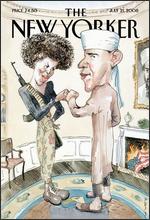
The New Yorker is a high-brow, literary magazine prominently displayed at bookstores everywhere. Its cover art is often eye-catching, a boon to sales, perhaps. But this time the editors at the magazine may have miscalculated. The July 21, 2008 cover features cartoonish renditions of Barack Obama and his wife, Michelle. Barack is portrayed as a stereotypical Muslim and Michelle is decked out in terrorist fatigues and assault weaponry. They seem to be standing in one of America’s iconic centers of political power and they’re doing a fist bump in expression of their solidarity. The American flag is in blazes. Even the afro is portentous.

What’s the message? Well, it’s a parody. That much is clear. A parody, as we all know, is the deliberate exaggeration of something for comic effect. But what does this image parody? The answer to that question lies at the center of a media storm, a controversy that has editors at The New Yorker engaged in feverish damage control.

There are two possibilities. The cover is a parody of Barack Obama’s background and ideology, or it is a parody of popular distortions of Obama’s background and ideology. If it’s the former, it’s an unprecedented expression of affinity for some fringe version of political conservatism and therefore . . . not likely. The New Yorker does not, in general, grandstand for conservative causes. Anyone familiar with the magazine would therefore assume that the cover is a deliberate a parody of popular distortions, mocking the suspicions of Obama’s more radical opponents. But the highbrow subtlety of this issue’s cover art may have backfired by reinforcing those suspicions.

This is what worries the Obama campaign, individual supporters of Obama, and the so-called mainstream media types who regard the cover as a kind of betrayal of liberal values. The cover shocks. That is often the intended effect of parody. The problem for the New Yorker is that this image of the Obamas does not have the right kind of shock value. Superficially, it appears to be an expression of suspicions about Obama, portrayed with exaggeration and comic effect, but with the hint of a genuine warning. Understood in that way, the shock value would be its evocation of fears about who Obama really is, what he really stands for, and where he might lead this nation if he becomes President. But the image isn’t meant to be an expression of suspicion; rather, it’s supposed to be a depiction of unwarranted suspicion. Understood in that way, however, the image itself has almost no shock “value.” What is shocking is that The New Yorker would run the risk of reinforcing a stereotype of Obama that is objectionable to the mainstream media, of which The New Yorker is perceived to be a member in good standing.

To be sure, many media commentators have been shocked by The New Yorker’s choice of artwork. In that respect, the Obama cover has become a parody of itself. And there’s nothing The New Yorker can do about it.

Does Barack Obama Speak Spanish?


Barack Obama wants everyone to learn Spanish. He announced in Georgia yesterday that he agrees that immigrants to the United States should learn English. That’s a relief. Maybe he’s taken a stand that will hold firm for the duration of his campaign. But this was merely a prelude to his main point. Obama also thinks that every child in America needs to learn Spanish.

What tortured logic leads him to this conclusion? Reconstructed in the form of an argument, here’s the way he reasoned:

  1. If I, Barack Obama, am embarrassed by the fact that most Americans speak only one language, then all Americans should learn Spanish.
  2. I, Barack Obama, am embarrassed by the fact that most Americans speak only one language.
  3. Therefore, all Americans should learn Spanish.

Obama is embarrassed; so I should be teaching my children to speak Spanish. Interesting. I’m starting to feel embarrassed by the logic exhibited by the presidential nominee of a major American party.

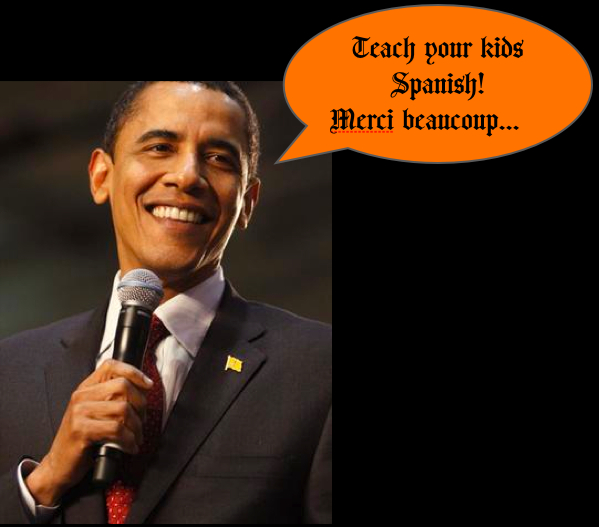
Of course, Obama thinks we all should be embarrassed about our monolingualism. Why? Because, as he put it, “when Europeans come over here, they all speak English, they speak French, they speak German, but when we go over there, all we can say is ‘merci beaucoup.'” This got him some laughs from some people in the audience, maybe because they share in his embarrassment.

I’m not sure we should feel embarrassed. At any rate, maybe we should be proud of America’s influence in the world, an influence that has been so positive that people all over the world desire to learn English.

I, frankly, would be just as pleased to be as fluent in German or French as I am in Spanish (having lived in Mexico for six years). I’ve studied German, French, Swedish, and Russian, with mixed results. (I’ve visited China twice, but there’s little hope of my learning Mandarin.) So put me down in support of foreign language learning.

Still, I can’t join Obama in saying that American parents “need to make sure” that their children can speak Spanish. Here’s one reason. If a friend made this proposal in the course of casual conversation, I would think it a little exaggerated. But I’d take seriously the spirit of his admonition, because it would most naturally mean, in that context, that the responsibility to educate children to learn Spanish belongs to their parents. Obama, however, is a politician running for high office. So when he declares, during a campaign speech, that parents “need to make sure” that their children speak Spanish, he means something stronger. He means that if parents don’t ensure that their children speak Spanish, then the federal government may have to step in to make it happen.

This is rich. Tell parents what they should be doing as parents, as if it’s entirely up to them whether to go with his advice. But that’s not what Obama really has in mind. He was speaking as a politician. His words even had a totalitarian tone. If he’s serious, what he said is an indication of how he would reform education in America.

Of course, Obama may not be any more sincere than most politicians. I don’t know when he got this idea that American children should all be learning Spanish. Maybe it occurred to him over the weekend while he was meeting with strategists about how to attract the hispanic vote. There’s an easy way to find out. Just ask Obama’s children a few questions in Spanish.

An even better test would be to check up on Obama’s own proficiency in Spanish. I’d like to hear him give one speech in Spanish, without the use of a teleprompter or a manuscript. I suspect that would be more entertaining than any speech he’s given in English.

***

Here’s an irony for you. Obama mentions the Europeans who come over here and speak English in addition to German and French. I’ve traveled extensively in Europe. The English spoken in western Europe is not uniformly top-notch, although the scope of English-speaking proficiency is impressive. Now, Obama wants us to learn Spanish. Why? Because so many people south of the border have emigrated to the United States, and they don’t speak English. So maybe it’s not los Norteamericanos that Obama should be comparing with Europeans. He may think that Americans are dolts because they’re not bilingual. But at least they speak English!

The irony deepens. Most Europeans come over to visit, practice their English with us, and then return home, happy as clams. In contrast, hoards of Spanish-only speakers stream across our borders, not to visit, but to live and work here illegally. And we’re expected to learn Spanish for their sake!

Most legal immigrants from Mexico, Central America and South America have adopted the U.S. as their new home with a deep desire to assimilate. They have sought to learn English and taken pains to ensure that their children learn English. And opportunities for them to learn English have been made conveniently available. So it isn’t for their sake that every other American needs to learn Spanish.

Faith-Based Initiatives and Religious Pluralism


Government support for “faith-based initiatives” has been one of the most visible of George W. Bush’s initiatives during his two-term presidency.

This program was welcomed by many religious believers, especially Christians and most especially socially conservative Christians. Many of these Christians have been theologically conservative, as well. One implication of this is that many Christians in favor of faith-based initiatives object to religious pluralism.

Because so much support for faith-based initiatives comes from socially and theologically conservative Christians, some opponents of Bush’s policy have directed one particular argument against this constituency. They have argued that—under the government program—nonChristian institutions of faith must be allowed equal opportunity to participate in the program. They have then assumed that Christian entities in support of the policy would object to nonChristian participation. This would mean one that Christian supporters of the Bush policy have a double standard, one for themselves and another for nonChristian entities. And this is both offensive and non-viable in a socially and politically pluralistic environment such as we have in the United States. The alternative is for Christian groups to withhold support for faith-based initiatives. Without their support, one might imagine, the policy would die on the vine.

What should we make of this argument?

First, we must distinguish between religious pluralism, in the theological sense, and social and political pluralism. In the Christian theological tradition, “religious pluralism” is a term for broad approval of the view that salvation is available in the context of a variety of religions, rather than through Christ alone. Opposition to this kind of religious pluralism is compatible with acceptance of social and political pluralism; it’s even compatible with the sort of social and political toleration that is considered such a virtue.

In a modern democracy, there are bound to be many different kinds of religious communities, members of which have equal entitlement to participation in government arrangements. All have the same rights, freedoms and responsibilities. Christian advocates of faith-based initiatives are free to support nonChristian institutional participation in faith-based initiatives.

In fact, one expression of Christian charity would be to welcome the aid of nonChristian groups in the effort to assist members of society most in need of assistance.

We come to the second point. The objection to Christian support for faith-based initiatives, outlined above, may prove too much. It assumes that, apart from support by Christian conservatives, the faith-based Bush plan would lose traction. Let’s assume this is true. Why would that be?

I’m sure the answer is complicated. But part of the answer may have to do with how Christian institutions, among faith-based organizations, provide assistance to those in need. It may happen that a significant majority of faith-based assistance work is handled by Christian organizations. There are, after all, many more Christians in the United States than there are members of other faiths or secularists. But it would be of much more interest to learn about any differences there might be between Christian and nonChristian programs of assistance, in terms of theological motivation, organizational infrastructure, efficiency, lay participation, and so forth.

Christianity stresses “good Samaritan” behavior. It would be interesting to compare nonChristian faiths, and also secularism, on this point. Of course, organized groups of secularists are not faith-based entities, in the traditional sense. So, though they might support faith-based initiatives, in the interests of assisting by all means those in need, they would not qualify for participation in faith-based initiatives. At any rate, non-sectarian societies that exist to help others have long been supported in various ways with government aid.

We should recall another feature of the “good Samaritan” practice within Christianity. In his parable of the good Samaritan, Jesus instructed his audience to provide self-sacrificing assistance to those in need, even when those in need are not members of one’s own community—including one’s own community of faith. This perhaps explains why so many institutions (for example, hospitals and world relief organizations) have been the legacy of Christian social activism.

Studying the ways in which, and even the extent to which, different religious faiths conceive of their role in assisting the needy could contribute mightily to inter-faith understanding. It could also provide useful perspective for evaluating the objection to faith-based initiatives described above. Are Christian organizations the primary vehicles for the distribution of faith-based aid? If so, we might look to the social practices of nonChristian faith groups for a deep explanation.

Drill Now, or Pay More Later


I used to wonder why the United States didn’t work vigorously to free itself from dependence on “foreign oil.” It seemed like a good idea to me “back then”—during Jimmy Carter’s presidency. Popular opinion was that there wasn’t much oil to be found outside the OPEC region. After all, “OPEC” is the acronym for “the Organization of the Petroleum Exporting Countries.” And who were the petroleum exporting countries? The original five members of OPEC were Iran, Iraq, Kuwait, Saudia Arabia, and . . . Venezuela.

Do you see a pattern here? Four of these countries were and are dominant Middle East players. Venezuela, it should be recalled, is the heavy in South America, led today by Hugo Chavez—no friend to the United States. And Venezuela took the initiative originally to establish OPEC, by approaching the just-mentioned nations of the Middle East.

There are now thirteen member states in OPEC. Guess who’s not on the list? The United States. And why not? Because the United States does not export oil. On the contrary, for decades, the United States has been the chief importer of oil.

Why doesn’t the United States export oil? Because it doesn’t have enough oil to export. It doesn’t even have enough oil to meet its own demand. That makes us dependent on foreign oil. And that’s reason enough for us to be entangled in Middle Eastern politics and subject to the whims of blame-America-first terrorists born and bred in the Middle East.

At the outset of the war in Iraq, there was loud speculation that President Bush was making a grab for Iraqi oil. This speculation was interlarded with denouncements of the merit of such a motive.

And where do we find ourselves today? Gas at the pump where I live in southern California is very near the $5 mark, and the price of oil has just topped $140 a barrel, a new high. Market watchers are hyper-ventilating this afternoon. At CNBC, Maria Bartiromo is high on adrenalin as she reports the news.

What’s wrong with this picture? The United States has waited too long to tap its own oil resources. Do we have oil? Yes. And, no. We don’t have much oil for use, much less for export. But there’s oil out there, on the continental shelf and in ANWR. And it’s been there throughout our dependence on oil. And there’s lots of it. Enough there for us to tell OPEC we don’t need them anymore.

Imagine what it would mean geopolitically if we ended our dependence on oil in the Middle East. Setting aside the legitimate interest we have in protecting Israel, we might be able to sustain a responsible form of “protectionism.” As long as our economy runs on oil, we’ll continue to be enmeshed in worldwide conflicts that are fueled by oil dependence.

What are the primary objections to drilling the oil resources we have?

First, we’re being told that “we can’t drill our way out of the current crisis.” One element in this rhetoric is right: we are in crisis. The crisis goes deeper than the prospect of paying $5 and more per gallon of gasoline.
But that prospect is the sort of crisis that has Americans paying more than the usual degree of attention to political maneuvering in Congress and among the presumptive nominees for President, Barack Obama and John McCain.

Obama is the most visible opponent of drilling. He talks about developing alternative forms of energy. But that won’t address the crisis, either. Why? Because the crisis is at the pump. And most of us are stuck with pumping gas for the foreseeable future. It will take a few years to begin extracting crude oil from the ground. Will it take longer than the development of alternative energy forms? Almost certainly not.

Any major delays to drilling going forward will be due to obstructionist politics, mostly on the part of Democrats, and chiefly on the part of Barack Obama, if elected President. Obama could not now reverse his view about the wisdom of drilling without appearing to be the worst kind of flip-flopper. So he’s backed himself into a corner. What’s in the economic interests of the country is at odds with Obama’s interest in becoming President. Whose interests will command his attention? You know the answer. So ask yourself if that’s the sort of person you want to have as President.

What most Americans want is short-term relief at the pump and a long-term solution to our energy crisis. If the establishment of a drilling infrastructure—directed at the most promising locations off-shore and in ANWR—were to begin in earnest by the end of this year or early next year, we wouldn’t have to wait for the oil to make it to the corner gas station for prices to come down. The prospect of such a radical change in supply and demand within three to five years would place immediate pressure on current suppliers (i.e., OPEC) to do something about prices. John McCain has started making this point, and he’s right. How does Obama respond to that? If Americans elect John McCain, who favors drilling, OPEC will get the message before the end of the year. We’re only about four months away from sending that message.

Second, there’s the green-jerk reaction to drilling. “Drilling offshore and in ANWR is going to be environmentally catastrophic.” Show me the evidence.

Opponents of offshore drilling exploit vernacular associations with the word “offshore,” as if America’s beaches will be cluttered with unsightly oil rigs. What’s the truth? Deep-water oil and gas platforms will be so far offshore that they couldn’t be seen from our beaches. We’re talking fifty to two hundred miles offshore. I could kayak the entire California shoreline and not be able to plot a single oil drilling site offshore. It would take an hour or longer to travel by helicopter to a typical offshore platform.

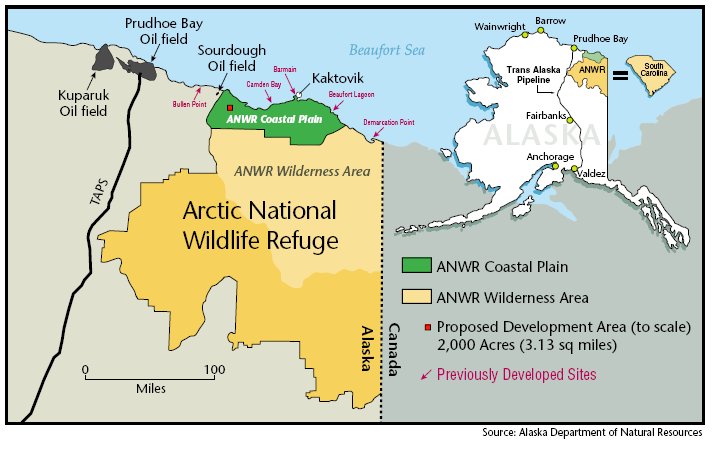
ANWR is another acronym (pronounced “Anwar”), short for “Arctic National Wildlife Refuge.” It’s located in the extreme northeastern region of Alaska and encompasses some 19 million acres. It includes what is literally the most remote territory in the United States. A portion of the region contains rich sources of petroleum. In contention is the effect drilling there would have on the habitat of diverse forms of animal life. ANWR is remarkable for its inclusion of six distinct biozones. But the petroleum rich subsection of ANWR is part of a 1.5 million acre extension of the refuge made in 1980. The move appears to have been as much an effort to protect this resource for possible future drilling as it was for any other environmental objective.

A very small percent, then, of ANWR is even considered attractive for oil-production purposes. And yet the resource is thought to be incredibly rich. And though approval by Congress is required to begin drilling in that area, it has, from the beginning, been regarded a potential source of oil production to be used under the right conditions.

Americans need to be educated about the potential for oil production in ANWR, the politics surrounding the possible use of this resource, and alternatives to drilling in ANWR. For the time-being, offshore drilling appears to be more imminent than drilling in ANWR. This is in part due to political vicissitudes. But off-shore production may also be more cost-effective. In any case, ANWR need not be the bone of contention that it has been, with such impressive resources closer to hand, both geographically and politically.

The emerging market demand for oil worldwide could position the United States to be a major exporter of oil. This demand will be so substantial by 2030 that prices for a barrel of oil could inflate to unimaginable levels. But by then, the United States could be online as a major oil producing country.

Meanwhile, by all means, we should be heavily invested in research and development for alternative forms of energy. And Americans should become better informed about the affordability, safety, and cleanliness of nuclear energy.