Why Would a University of Chicago Professor Call Obama a Marxist?


Maybe he knows something we don’t. Or maybe he knows something we secretly suspect. A lunch companion of Barack Obama’s reportedly claims that Obama is a Marxist.

Here’s what James Pethokoukis writes today for U.S. News & World Report:

A while back I chatted with a University of Chicago professor who was a frequent lunch companion of Obama’s. This professor said that Obama was as close to a full-out Marxist as anyone who has ever run for president of the United States. Now, I tend to quickly dismiss that kind of talk as way over the top. My working assumption is that Obama is firmly within the mainstream of Democratic politics. But if he is as free with that sort of redistributive philosophy in private as he was on the campaign trail this week, I have no doubt that U of C professor really does figure him as a radical.

Believe it or not, there are people in America who would dearly love to have a Marxist in the White House. Bill Ayres may be one of those people. Almost certainly the Reverend Jeremiah Wright would be delighted, since he is himself an advocate of liberation theology. I’m not a lunch companion of Barack Obama, but I do know something about liberation theology. It is a fundamentally Marxist ideology with a religious veneer. A major goal of leaders in the liberation theology movement is to radicalize people on the lower end of the economic spectrum by causing them to believe that they are oppressed and entitled to redistributed wealth.

Now we can hear in Obama’s own words that he is a redistributivist. He told a now-famous plumber named Joe that he wants to “spread the wealth around.” His plan for doing this is to penalize the success of some people to provide handouts to the less successful, without regard for the work ethic of the parties involved.

I can’t shake the suspicion that Barack Obama’s students days and his years as a budding politician were framed by a radical ideology. This would explain many of the few things we actually know about Obama.

Was Obama Really as Comfortable as He Looked in Last Night’s Debate?


To me, last night’s debate was the third—and, mercifully, the last—in a series of lackluster debates between senators Obama and McCain. But somehow the media have managed today to cull from the regurgitation of campaign sloganeering some rich moments truly worthy of playback. Maybe it wasn’t so lackluster after all.

Could McCain have done better? Pretty much everyone agrees that he missed opportunities. That’s interesting. It means two things. The first is that McCain has a platform of strength that might really resonate with people if he could only launch his case with compelling pizzaz. Second, Obama has opened himself to some pretty withering criticism that McCain has been reluctant to exploit.

Contrast Obama. What opportunities did he pass on last night? Could he have made his policies more compellingly attractive than he did? Could he have put McCain on the defensive? I don’t think so. Obama did what he could, and all that he needed to perhaps.

Once again, Obama “looked presidential.” But did he feel as comfortble as he looked? The question can’t really be answered objectively, except by Obama, and we all know what he would say. But Obama will raise taxes during “the worst economic crises since the Great Depression”; and McCain made that stick. Obama has fraternized professionally with people most of us wouldn’t shake hands with; and McCain reminded everyone that we still don’t know who Obama really is. McCain was unequivocal in his pro-life stance, and missed an opportunity to demonstrate how radically pro-choice Obama really is. But this was not a comfortable topic for Obama. He had to nuance his way out of the spotlight while McCain beamed confidently in the background.

Obama is counting on his lead and the lateness of the hour to carry him to victory. From this point on it’s a matter of damage control. That’s one thing McCain really doesn’t have to worry about. The most seriously debilitating event for his campaign was the egghead announcement by Hank Paulsen that the sky is falling and the whole world is going to go bankrupt. Paulsen’s alarmist tactics and his timing could not have been worse. You have to wonder if he isn’t a liberal democrat himself, given the tone of his message and the nature of his proposed solution—socialize the entire market in America.

The irony is that Obama is specially vulnerable on this point, if the message gets out. He wants bigger government on every flank and surely relishes the opportunity to preside over the socializing of medicine, our economy, education, and who knows what else. But people are ticked off at government right now. It can’t be just the Republicans and the Bush administration they distrust, but the whole lot of them. So bigger government portends more to be angry about as the months and years tick by.

Obama has two other things to be worried about before the election: Nancy Pelosi and Harry Read. It is an undeniable fact that under Obama our government would be on the verge of its most controlling ever. The democrats are pro big-government. Pelosi and Read, party leaders in their respective houses in Congress, and Obama are democrates, and they are among the most liberal democrats. This is a frightening prospect for anyone who wants government to downsize.

The only way that Americans across this country can prevent unchecked government by tax-and-spend democrats is to vote for John McCain. That’s bad news for Barack Obama, and a reason to be uneasy, even if he looks presidential.

Howard Stern on Doug’s Blog?


Yep. I’ve gone over the edge. I’m posting a video of Howard Stern in his radio studio talking to his listeners. There has to be a good reason for this, right?

There is.

Stern sent one of his guys out to the streets of NYC to ask people about their preferences in this year’s presidential election. Stern shares three audio clips of brief interviews with Obama supporters. The interviewer asks who the individual supports, then tricks the person with questions that entail that Obama wants to keep the troops in Iraq, that Obama is pro-life and against stem cell research, and that Sarah Palin is Obama’s running-mate. These people explain in vague terms why they don’t support McCain (e.g., he’s not very intelligent) and then express unqualified support for Obama, even though Sarah Palin is his running-mate, etc.

You’ve got to hear this. If you’re interested, click here for a post yesterday by SusanUnPc. Thanks, Susan!

* * *

Related Link at Doug’s Blog:

Should Everyone Vote?


Answer—yes . . . and no. It depends. Given the way things are right now, the way things have always been, and the way things will always be, not everyone should vote. So I guess the answer really is “no.”

This is political heresy. You don’t hear many politicians saying this. It isn’t politically expedient because it challenges a pervasive myth. It could be political suicide to say that there are citizens who should not vote.

Who should not vote?

  1. People who don’t exist.
  2. People who have taken no initiative to get registered or to understand the issues.
  3. People who vote to protect their own self-interests only.

I know the first claim is controversial, but in order to save space, I won’t try to support it here.

The second claim is motivated by my belief that a vote should be cast in order to promote the common good. A failure to get registered and negligence in seeking to understand the issues are indicators that this responsibility is not taken seriously. And those who register because someone from a particular party urged them to and provided them with on-the-spot opportunities to register are vulnerable to manipulation. In fact, often they are manipulated. Deliberately compelling people, often the poor and uneducated, to register and vote, and to be sure their vote is cast for a certain named candidate, is manipulative; it betrays the condescending, patronizing attitude of those who take to the streets to get more people registered. The cynicism behind their alleged desire to help the poor and uneducated by getting them to vote for a particular candidate is lethal to democracy. It is a powerful indicator that party leaders are not interested in doing right by the poor and uneducated, that they are more interested in keeping their political machine running by exploiting those very people. If the policies of hard-left liberals succeeded and everyone was educated and living above the poverty level, these liberals would be out of business. To stay in business, they’re counting on there always being people who need their advocacy. Many of their policies will ensure that they remain in business.

I would add that, in general, people who do not understand the issues should not vote, even if they have taken pains to sort out what the issues are and what the candidates stand for.

What about the third claim? It implies that those who are low on the economic spectrum should not cast a vote for someone willing to levy taxes on the wealthy simply because it could mean that they will have more money to spend. It means that public educators should not vote for bills and propositions promising additional benefits to them and to public education just because they are educators and so stand to gain personally. These are but two examples. But the possibilities are legion.

Our elected representative have responsibilities to represent all of the people to the best of their ability. The electorate has responsibilities, too. We have a responsibility to act in support of the common good. We need not agree on what issues and candidates best serve the common good. But it should be our sincere pledge and intention to be informed to the fullest degree possible, to vote in deliberate support of the common good rather than pure self-interest, and to stay home on election day if we can’t meet these basic conditions.

What say you?

* * *

Related Posts on Doug’s Blog:

Talk about an Abuse of Power


An Alaska ethics probe concluded today that Governor Sarah Palin did abuse her power in the ordeal surrounding the dismissal of state official Walt Monegan. Monegan had refused to fire state trooper, Mike Wooten, who had been married to Palin’s sister until that marriage ended some years ago. Wooten had, Palin alleged, tasered his 10-year-old stepson and threated to kill Palin’s father. This before Monegan’s departure from his job.

Inquiries into Gov. Palin’s possible conduct in the matter had already begun prior to her nomination to be John McCain’s running-mate. There is evidence, however, that the probe was managed by Obama supporters and was speeded up to result in a decision soon enough to have a bearing on the presidential election.

I don’t know the facts, but if this suspicion is true, or even if the suspicion is well-founded without being demonstrably true, then there ought to be a very speedy inquiry into the ethics of the ethics probe and the possibility that those who conducted the probe are themselves guilty of an abuse of power.

* * *

It’s not surprising that Alan Colmes (of Hannity & Colmes) was pleased with this result. He interviewed Dick Morris, who noted that trooper Wooten had made a death threat on Palin’s father and tasered his stepson. Colmes’s response was interesting. He said that Wooten denies making any death threat. Apparently, Colmes had done his homework and knew that this did not apply to the allegation that Wooten had tasered the young boy.

A few weeks ago, during a televised interview, the officer in question acknowledged that he had tasered his 10-year-old stepson. He said he did it because the boy was curious about tasers and asked to be tasered. He agreed in the interview that it was a dumb thing to do.

I mention this because of the example it provides of the deterioration of public discourse. Morris’s statement was a conjunction: Wooten made a death threat against the father-in-law and Wooten tasered the stepson. To defeat this statement, Colmes challenged the second conjunct and ignored the first. In challenging the second conjunct, Colmes offered as evidence Wooten’s denial of the allegation. This is hardly compelling evidence, especially if the first conjunct is true. And the first conjunct is true. The evidence for that is that Wooten confesses to that.

Now, logically, if the second conjunct of Morris’s statement is false, then the entire conjunction is false. But it doesn’t follow that the first conjunt is false. That part of the conjunction is true. And Morris’s comments clearly indicated that he believed its truth is a sufficient condition for Sarah Palin to have fired Monegan if he refused to fire Wooten.

If the trooper had been anyone else than a former brother-in-law, then an ethics probe might never have been started. Who can say? But the grounds for questioning her ethics would certainly have been different, since the findings in the actual probe are tied to the investigators’ judgment that Palin’s behavior was, in some sense, payback. Again, I don’t know the facts, or the evidence that was produced during the probe. But I wouldn’t imagine that Palin’s previous relationship with Wooten would count as sufficient evidence that this was her motive.

What is of interest—because we are in a position to judge based on observation—is the conduct of the press in this matter and the jockeying that will go on among chieftains of the two presidential campaigns. Barack Obama is under closer scrutiny than ever before because of his financial support of ACORN and his relationship with sundry scoundrels. Treatment of the Palin news will be an illuminating test of the objectivity of the “mainstream media.” I make no predictions about what will transpire over the weekend, but if the several prominent news and commentary shows direct more attention to the Palin issue than the Obama probe they themselves should be conducting, it will be very telling.

This Election as a Referendum on the Liberal Media


Voting for John McCain is a referendum on the liberal media. They have made it obvious that they support Barack Obama and will cover for him by not covering him when that’s in his (and hence their) best interests. They are doing what they can to get Obama elected a few weeks from now. This is patronizing and offensive. They presume to know better than voting Americans who should be the leader of this great nation. They filter the news and editorialize without restraint, believing that we must rely on them to get the facts that matter. Since we do rely on them for this, and they have not fulfilled their noble duty, voters can send a powerful message of disapproval to the media by voting for the McCain/Palin ticket. If they do, they will also have a President they actually know something about.

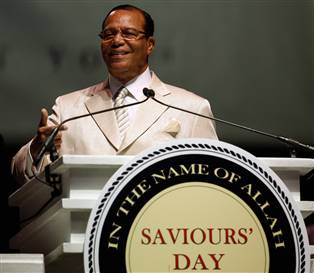
Louis Farrakhan Knows Messiah Obama Better Than You Do


Louis Farrakhan says he wants to keep a low profile in his support for Barack Obama, because he knows this could hurt Obama’s chances of winning the election. Farrakhan is the Honorable Minister of the Nation of Islam, with headquarters in Chicago. Yesterday, WorldNetDaily posted an article titled “Farrakhan on Obama—’The Messiah is Absolutely Speaking,'” where there’s a YouTube video of Farrakhan gushing about Obama.

I have no doubt that Farrakhan knows Barack Obama better than anyone reading this post. What are the implications of that?

If voting Americans sincerely witsh to know who Obama really is, there are two things to do.

First, we need to connect the dots we have and resist the temptation to connect dots we can only imagine. What are the dots we have to navigate so far? Obama’s voted “present” so often as Senator that all we know is that he was in the room and didn’t cast a vote one way or the other on significant issues. We don’t know what he was into or who he palled with as a university and law school student. We’re beginning to learn that his affiliation with Bill Ayres went deeper than he said at first. And we know that he can speak with some eloquence in vague generalities.

It looks like Barack Obama doesn’t want people to know who he really is. His single greatest acomplishment since achieving public prominence has been keeping us all in the dark about his core values and the specific direction he will take this country if elected.

Second, we need to do everything we can to compel the media and others to thoroughly vet Obama’s background immediately. They’ve been asleep at the wheel on this one. Maybe they have vetted him and are afraid to say what they know. Maybe they’ve neglected their responsibility because they fear what they’ll learn. Or maybe they just don’t care. But we should care. And if we don’t know enough about Barack Obama to vote for him responsibly, then we shouldn’t. This is Obama’s Achilles’ Heel.

* * *

Here are a few other posts related to Farrkahn’s enthusiasm for the “Messiah”:

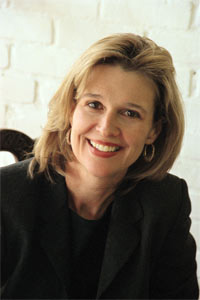
Do You Know Kathleen Parker?


If you do, there’s only one reason for it—Ms. Parker’s “cringe reflex has been exhausted.” That happened on September 26. She must be truly exasperated by at this point in time. But what does Ms. Parker mean?

She means that Sarah Palin, whose selection by John McCain she really tried hard to endorse, just isn’t verbally fluent enough to be Vice President, to say nothing of being President.

I cringe, too. I even wrote a post about it. But how does having a dilapidated cringe reflex explain why Kathleen Parker is now enjoying a few minutes of fawning media attention? To understand that, you have to know something most of us didn’t know and you have to remember something that really isn’t that easy to forget.

What you have to know is that Kathleen Parker is a conservative columnist who writes for The National Review and a woman (duh) who wrote a piece called “Palin Problem—She’s Out of Her League.” You’ll find it here. In this September 26 piece, Ms. Parker, with great reticence, I’m sure, suggested that McCain should dump Palin because of the liability she has become, and get someone more erudite to stand at his side. (Maybe Ms. Parker would like the job. She seems to believe that she knows better than McCain how to pickem’, and that’s got to count for something . . . right?)

Now, here’s what you have to remember. Sarah Palin is incredibly popular among leagues of women voters. These are women who will vote. And many of them were not as likely to vote at all until Sarah Palin came along. That’s got to scare the bajeebers out of the liberal left and the liberal media that bleed allegiance to their cause, especially their version of the feminist cause.

Who doesn’t know that if the liberal media can find a conservative woman journalist who thinks Palin’s got to go, that woman journalist is bound to get her chance to be on TV? It sure looks like the media is hoping to scare up a caucus of Republican Women Against Palin. (Not that Ms. Parker is a Republican; I wouldn’t know.) This ought to get interesting. Will it work? Who can say? I figure it’s got at least a 50% chance of backfiring.

* * *

Thinking about this has led me to wonder about the polls we’ve been hearing about. I would imagine that a legitimate poll would include a significant number of women who are backing Palin, quite apart from that fellow McCain. I think it would be interesting if pollsters asking who voters are more likely to vote for, McCain or Obama, would also ask, “And what do you think of Sarah Palin?” And report the results, of course.

Here’s what I’m thinking. If only a small fraction of the people polled show real enthusiasm for Palin, then a satisfactory cross-section of likely voters has not been included in the poll. And that ruins the value of the poll.

From Drama to Trauma Under Obama?


Flannery O’Connor, one of our great American writers said, “To expect too much is to have a sentimental view of life, and this is a softness that ends in bitterness.”

I have two questions:

  • What do Americans expect if Barack Obama becomes our next president?
  • What can Americans expect if Barack Obama becomes our next president?

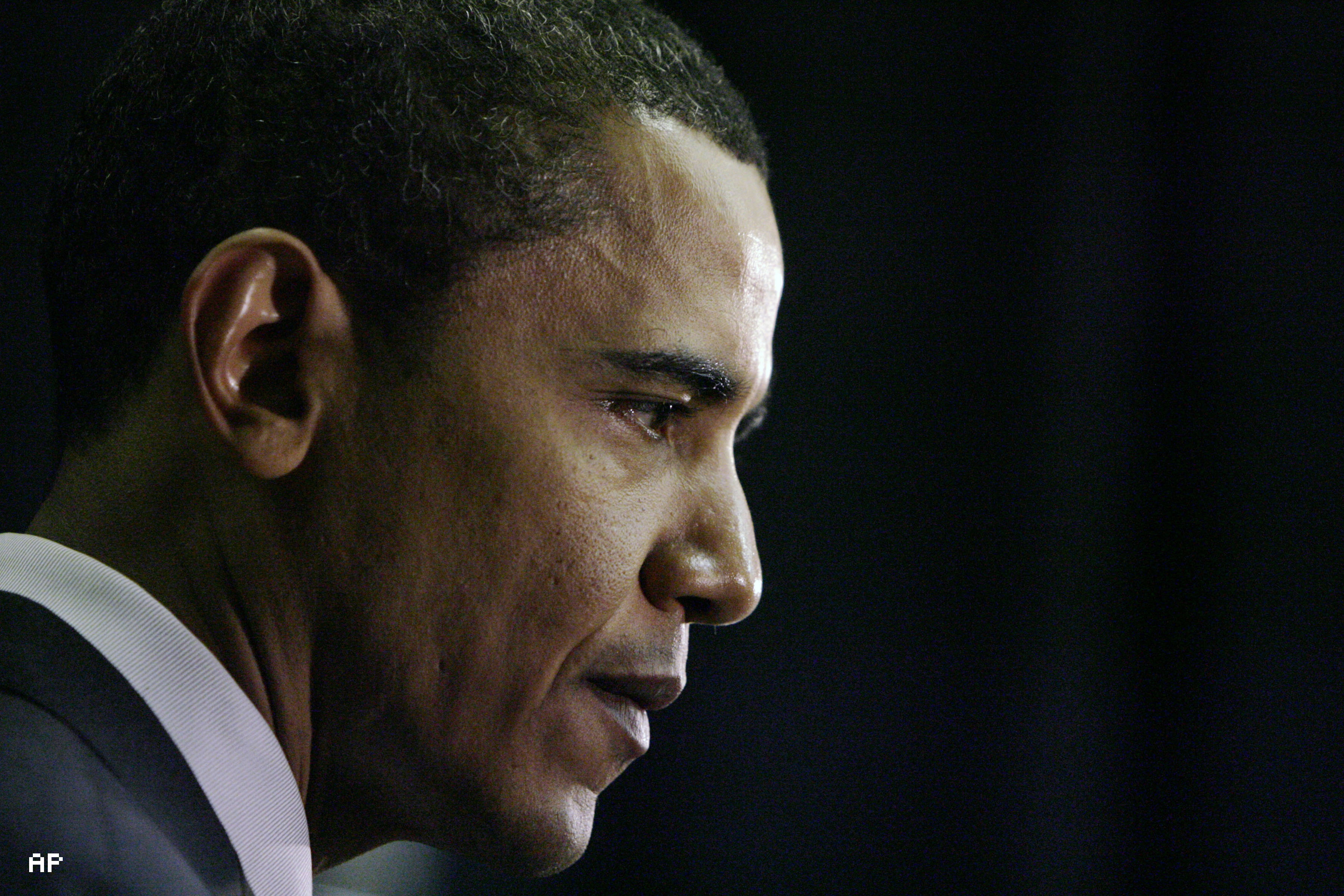
Obama Headshot

To the first question there are straightforward answers. Just ask the people around you. To the second all we can say is, “We’ll just have to wait and see.” No matter what the answer to number two is, Obama is going to be faced with a serious problem—if he becomes president. He will have to live up to expectations that he has deliberately fostered as a would-be messiah who stands for The Audacity of Hope.

This is the first time we’ve had the opportunity to vote for a messiah. Barack is special. Barack is young. Barack is charming. And you know what else? Barack doesn’t make mistakes. Just ask him.

Ask Barack what mistakes he’s made when voting as a Senator. Ask Barack what mistakes he’s made in his circle of associates. Ask Barack what mistakes he’s made about the war in Iraq. He might confess a peccadillo or two. But copping to anything substantive would be a strain on his memory and his self-understanding.

Of course, you can’t ask him these questions. You don’t have the opportunity. But members of the media, who have the opportunity, don’t ask, either. Do you know why? Because we don’t interrogate a messiah.

We should be wary of messianic promises. And that begins with shedding the sentimental dreams we all have of a utopian society. When we cherish messianic expectations we are vulnerable to messianic promises. But we are bound to be disappointed. The higher our hopes when a candidate is sworn in as the next president, the greater our feeling of defeat when it turns out that he has feet of clay. We’ve always known that about candidates for the presidency—until now.

Barack Obama’s campaign has been dramatic. He beat Hillary Clinton in the primaries when she was the presumptive nominee from the beginning. He was received with acclamation by European citizens. He’s raised astonishing amounts of money from sources that remain a mystery. He is all-knowing, except when he’s asked about his past associations with unrepentant terrorist thugs and a racist, anti-American minister. He’s made a fetish of inexperience, for he has almost no record to speak of, and so nothing to explain.
And the media have been entranced by this great man. Barack owes them big time for keeping alive the drama of Obama. (And he owes a special debt to Keith Olberman, a man of extraordinary objectivity and an icon of our collective wisdom).

If and when we see the man for who he really is—because he will be making very public decisions that affect us all—what will become of the drama that is Obama? That depends on who Barack Obama really is. If we don’t roll the dice and get him elected, we’ll never know. Could we accept such an anticlimax to such drama? Alternatively, could we stomach the trauma that is Obama if he isn’t the messiah we would like for him to be?

Madeleine L’Engle, another novelist, once said, to no one in particular, “Because you’re not what I would have you be, I blind myself to who, in truth, you are.” That is another option.

* * *

Note: “The Drama of Obama” is part of the title of a book by black activist Wayne Perryman: The Drama of Obama on Racism.

For a book related to this post, see Who Is the Real Barack Obama? For the Rising Generation, By the Rising Generation. The authors, Steve Bierfeldt, Francisco Gonzalez, and Brendan Steinhauser, are young investigators with a message specially written for college and university students whose support the Obama campaign has fought hard to win.

Recent links that dig behind the public persona of Barack Obama:

“At Least He Looks Presidential”


Any number of people would look equally presidential in the situation we witnessed tonight. Some of them are good friends of mine. They are self-possessed, have an authoritative bearing, are practiced public speakers across a full range of contexts (including debates), and could have learned everything that was said tonight in less than a week just watching a selection of Obama’s and McCain’s campaign speeches. But none of these friends of mine has any business running for president. Thankfully, they are not.

But Barack Obama and John McCain are running for president. And they both look like they could be president. It’s befuddling and disappointing that this is the single most significant factor the pundits have utilized in calculating the net result of tonight’s debate. Obama only had to look presidential to win—even if McCain also looked presidential—as long as McCain did not deliver a knock-out punch. This because Obama’s lead in critical states has lengthened. And that’s more-or-less how things turned out, if we’re to believe post-debate chatter.

What do pudits mean by a “knock-out punch”? What many of them mean is the slick delivery of a purely rhetorical zinger. An example, courtesy of Brit Hume (Fox News), is Ronald Reagan’s admittedly clever and endearing jibe about not taking advantage of Walter Mondale’s youth and inexperience.

Give me a break. Has the media gone bonkers? The most charitable spin I can put on this is to suppose that the punditocracy is merely speculating (perhaps quite plausibly) about how viewers (especially undecideds) will perceive the outcome. But that isn’t exactly what the pudits are saying. It sounds like it’s what they themselves believe. And they should know better. More than that, they would serve us better if they attempted to educate us in the proper criteria for evaluating a candidate for the presidency. Otherwise, we don’t really need them.

Maybe they think that’s what they are doing—educating us in a tradition of collective wisdom. If so, they and I disagree about what that is and what criteria matter most.

I’m of the anachronistic opinion that we need to distinguish between necessary conditions and sufficient conditions for being qualified to serve as president of the United States. Looking presidential (talk about a subjective variable) may be a necessary condition—may be. But in my judgment it is by no means a sufficient condition. A candidate must have other qualities. And among the preeminent qualities are proven experience and policies that make sense on close inspection.

That probably sounds like an endorsement of a particular candidate. But I’d like to know who disagrees with me about the criteria. “Proven experience” may be a lock for John McCain. “Policies that make sense on close inspection” will be matters of principled disagreement among those who take pains to understand proposed policies thoroughly, know what to look for in sensible policies for times like these, and have the disposition to embrace those policies.

Do you reckon you’re one of those people? I’m not sure I am. Remember that “zen-like” question the candidates had to answer at the end of the debate? “What is it that you don’t know now that you’ll have to learn after you become president?” Maybe those of us who plan to vote in November should be asking ourselves a parallel question: “What is it that we don’t know now (about the candidates) that we’ll wish we knew after one of them becomes president?” Something tells me that tonight’s debate did little to dispel our dangerous ignorance.

Our democracy is threatened by a glib populism. I suppose that’s always been true to some extent. But greater access to modern media by more people, and the dumbing down of America, is cause for concern. This can’t be what the Founding Fathers had in mind, though I’m sure they feared the possibility of its emergence.

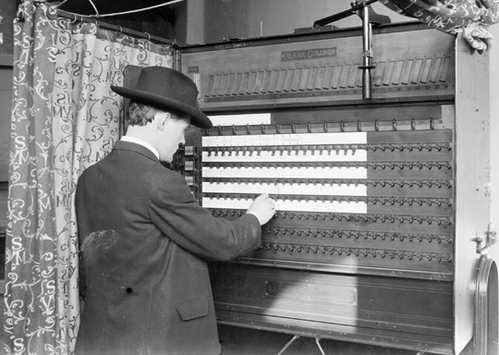
Let’s at least think as hard as we can before we “pull the lever” (to use a quaint expression).

Ambivalence about the Congressional Vote for the Not-a-Bailout


Credit is unquestionably tight right now. Individual stock portfolios are in the pits—seemingly bottomless pits. The faux buoyancy of our politicians has evaporated (except Sarah Palin’s buoyancy, which seems anything but faux and far from slipping). Nobody knows whether the $700 billion “bailout” will accomplish much, or even whether it is a bailout or something else.

And I do mean nobody. Nobody has effectively explained how this infusion of government cash is supposed to help the situation. On the other hand, nobody has effectively explained how individual taxpayers could actually be hurt by the action that was taken.

But almost everybody has an opinion about the decisions made in Congress—being either emphatically for it or unequivocally against it. How can this be? What do so many people know and understand that completely evades me?

I’m ambivalent. But that statement has to be qualified, for two reasons. First, I’m not ambivalent about the “pork” or “earmarks” that were weaseled into the legislation. I hope we find out specific ingredients that have no real place in this bill-cum-law, and that we learn by name all those who “porked out.” I hope we find out before the election so we can vote on our representatives with real knowledge of their principles and behavior.

House Speaker Pelosi promises a “bright light of accountability” for greedy Wall Street denizens. But is she willing to shine the same bright light on the doings of Congress to get this bill passed? I’m skeptical. And I wonder if Pelosi herself could be in jeopardy in the November election.

Second, I believe the Fed, the Treasury, the President, and both houses of Congress acted precipitously and pumped hysteria into the atmosphere and needlessly panicked the rest of us. This resulted in self-fulfilling prophecy on fast forward. The market imploded. And we’ll all feel the reverberations of that. Maybe the government needed to step in, maybe not. But this was heavy-handed.

Finally, while I’m ambivalent the general action taken, I’m not indifferent. And if I knew more than I’ll ever know about what just went down, I probably wouldn’t be ambivalent at all.

* * *

Source for “Helicopter Ben” sketch above: UrbanDigs.com

The TimesOnline Make a Good Point about Biden-Palin Debate


Gerard Baker, writing for the London Times Online, has a nice little piece on the Biden-Palin debate. He concludes:

Last week, Senator McCain probably lost his first debate against Senator Obama by not winning it.

On Thursday night Mrs Palin won her debate by not losing it.

That sounds about right to me, on both counts.

I would add that Palin scored points that were missed opportunities for McCain last week. Many were baffled when McCain’s debate with Obama ended and McCain had not drawn attention to his demonstrable record of seeking to reform Fannie Mae and Freddie Mac, while Obama had dubious ties to the principals at those entities. Now I wonder if McCain didn’t keep his powder dry so that Palin could use it to good effect in her salvo Thursday night.

Wall Street Journal Wisdom on Biden-Palin Debate


Jerry Seib, Executive Washington Editor at the WSJ, weighs in already with his “post-debate analysis” and comes to the following conclusion:

It was, in the end, what viewers might have expected from the man who is chairman of the Senate Foreign Relations Committee — much as what they got from Gov. Palin was what they were led to expect from her widely heralded speech to the Republican national convention just a few weeks ago. It was a fascinating byplay — but not necessarily one that changed many minds.

“Not necessarily one that changed many minds”? Apparently, Mr. Seib isn’t one to go out on a limb.

Does anyone else think we should expect more from a Wall Street Journal analyst?

Do You Agree with the Charlie Gibson Doctrine?


What is the “Bush Doctrine”? Who can say? But we now know something about the “Charlie Gibson Doctrine”—which might also be called the “Elite Media Doctrine.”

Charlie Gibson was the first member of the mainstream media to interview Sarah Palin, Republican candidate for the Vice Presidency. I’m only guessing here, but I’d say Gibson was worried about how he would appear to his media colleagues during the interview. This was a much-anticipated interview and news people country-wide were overtly jealous of Gibson. So Gibson knew he was being scrutinized, and he knew what was expected of him by the media. They wanted red meat, and they got it in the form of one question in particular. He asked Governor Palin, “Do you agree with the Bush Doctrine?”

This is pandering. Why? Because Gibson wanted to please his media buddies. It’s also dirty pool. Why? Because there is no such thing as “the Bush doctrine.” But Charlie Gibson thinks there is. He stated it as follows:

“The Bush doctrine, as I understand it, is that we have the right of anticipatory self-defense, that we have the right to a preemptive strike against any other country that we think is going to attack us. Do you agree with that — the right to preemptive attack of a country that was planning an attack on America?”

Charlie Gibson should be embarrassed, not because he put the candidate on the spot, but because he didn’t know what he was talking about.

Everybody knows that the media would disapprove if Palin answered “yes” to Gibson’s question. You can tell from Gibson’s demeanor that he believed two things: (1) Palin would have to say yes, and (2) if Palin said yes this would cause trouble for the McCain campaign. Remember, Barack Obama’s singular objection to John McCain has been that a vote for McCain would be a vote for a four-year extension of the unpopular presidency of George Bush.

There’s only one other possibility, and that is that Palin wouldn’t know what to say because she didn’t know what the Bush doctrine is. That’s pretty cynical, though, and an upright media professional would simply have stated the so-called doctrine, without attributing it uniquely to President Bush, and asked if the candidate agreed with it. Imagine how things would have seemed if Charlie Gibson had asked his question that way, without trying to bait Sarah Palin into an uneasy association with a currently unpopular president. Palin could have said yes. No harm, no foul. Next question.

I know some astute observers believe that Sarah Palin faltered, ever so slightly, in response to Gibson. But there’s another way to interpret her response. Perhaps Gibson should be grateful that Sarah Palin answered graciously. The presupposition of his question was false, and yet Charlie Gibson believed it. Palin was forbearing. She did not confront him about his naivete.

We should hope that every candidate would answer an undisguised formulation of Gibson’s question in the affirmative, without equivocation or nuance. It would be shameful if a President did not adopt this view.

Teddy Roosevelt accepted it, that’s for sure. So did Abraham Lincoln, and I believe his conduct of the Civil War is evidence of it. Every President during the Cold War held firmly to this view, which is one reason why there was a Cold War.

It’s plausible to suppose that the Monroe Doctrine, stated in James Monroe’s annual message to Congress December 2, 1823, presupposes a similar commitment. Here is a passage from Monroe’s presentation nearly two hundred years ago:

Our policy in regard to Europe, which was adopted at an early stage of the wars which have so long agitated that quarter of the globe, nevertheless remains the same, which is, not to interfere in the internal concerns of any of its powers; to consider the government de facto as the legitimate government for us; to cultivate friendly relations with it, and to preserve those relations by a frank, firm, and manly policy, meeting in all instances the just claims of every power, submitting to injuries from none. But in regard to those continents circumstances are eminently and conspicuously different. It is impossible that the allied powers should extend their political system to any portion of either continent without endangering our peace and happiness; nor can anyone believe that our southern brethren, if left to themselves, would adopt it of their own accord. It is equally impossible, therefore, that we should behold such interposition in any form with indifference.

There has been some controversy about whether Franklin Delano Roosevelt knew beforehand of an imminent attack by the Japanese at Pearl Harbor and deliberately waited for the attack in order to strengthen the grounds for entering the war, which he wanted to do anyway. If the bare suggestion of that possibility is heresy, and beneath the dignity of the President, it is because the so-called “Bush doctrine” is assumed by the American people to be an axiom of American foreign policy.

George Bush, whatever his faults, was right to remind his people that he was duty-bound to protect them from imminent threat with preemptive action. It’s a shame that this required special boldness, especially in the aftermath of 9/11.

Gibson’s question, without its supercilious association with President Bush, ought to be one of the first questions that both Obama and McCain have to answer early in their upcoming debate. Their respective answers could set the tone for the rest of the debate. I wonder what Obama would say. I think we all know what McCain would say.

* * *

Note:

This post was inspired by today’s post by Dennis Prager, who writes:

“All the interview did was reconfirm that Republicans running for office run against both their Democratic opponent and the mainstream news media.

“This year it is more obvious than ever. The press’s beatification of Obama is so obvious, so constant (how many covers of Newsweek and Time has Obama been on?) that media credibility even among many non-conservatives has been hurt.

“Let me put this another way. Charlie Gibson showed far greater hostility toward the Republican vice-presidential candidate than Dan Rather did in his interview with Saddam Hussein or Mike Wallace did in his interview with Iran’s Mahmoud Ahmadinejad.”

Who can disagree?

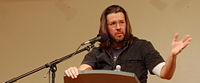
David Foster Wallace


He was someone I thought it would be great to meet sometime. Had I known he was living and working only a stone’s throw away, it might have been arranged.

Unfortunately, that won’t be possible. David Foster Wallace hanged himself and was found by his wife when she returned home Friday night, September 12, 2008. He was 46.

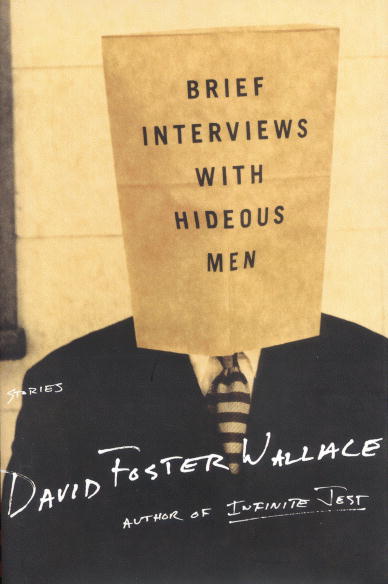
Wallace was clever with words. He was inventive. He employed extensive footnotes in his fiction. And he was candid. He went naked onto the page and exposed his soul in ways few novelists do.

His parents were university professors, his father in the department of philosophy at the University of Illinois (Urbana-Champaign). David Foster Wallace himself majored in English and philosophy at Amherst College. And it shows in his writings.

His writings reveal something else, too. In his tribute to Wallace, David Gates writes that “we’ll surely be spotting more and more of these clues in his work,” clues of his long-standing depression and contemplation of suicide. I find it hard to believe that Wallace’s readers didn’t suspect it already, because the clues are littered everywhere.

While reading Wallace myself, I would recall the thesis that genius and great art are often accompanied by threatened madness, that great talent and erudition can only be managed with a colossal effort of self-possession that no one else but the artist can know.

In her book, The Midnight Disease, neurologist Alice Flaherty examines the mental disorders that frequently haunt the most creative writers. She develops an illuminating theory of “manic hypergraphia.” Kay Redfield Jamison, whose work I’ve recommended on this blog, explores the culverts of this condition in a wonderful book called Touched with Fire: Manic Depressive Illness and the Artistic Temperament. The treasure of a gifted man’s labor is more precious when understood in the light of this fire.

***

As it happens, David Foster Wallace travelled with John McCain’s presidential campaign in 2000. He wrote a book about it that came out this past summer. It’s hailed as a journalistic tour de force by someone other than your typical political journalist. It’s called:

McCain’s Promise: Aboard the Straight Talk Express with John McCain and a Whole Bunch of Actual Reporters, Thinking about Hope.

Kindle edition