Why We Fight: A Film Discussion Guide


Why We Fight is a documentary film directed by Eugene Jarecki. According to the DVD cover, this film “launches a nonpartisan inquiry into the forces—political, economic, and ideological—that drive America to fight.” Why We Fight was awarded the Grand Jury Prize at the Sundance Film Festival in 2005.

I’ve screened this film in my course on “Faith, Film and Philosophy.” Here are the discussion questions I developed for use in discussing this film: Read more of this post

Julian Jackson on Daniel Cordier on the French Resistance


Anyone interested in the history of the French Resistance should become familiar with the memoirs of Daniel Cordier. To be convinced of that, I recommend Julian Jackson’s recent critical review of Cordier’s book (here). Read more of this post

No Such Thing as an “Attempted Terrorist Attack”


So what do you call it when a man, claiming affiliation with al Qaeda, ignites an incendiary device on a commercial flight from Amsterdam to Detroit?

It’s being reported that President Obama has called the Christmas day incident an “attempted terrorist attack.” I hope that’s not what he’s calling it.

If someone attacks innocents, for terrorist purposes, then the attack is a terrorist attack, whether or not the attack is completely successful. Read more of this post

Americans Shamed by Obama for Carping?


Greta Van Susteren reported on Monday, December 21, about President Obama’s morning speech. In his speech, he scolded those who are opposed to his health-care bill, and said they need to “stop carping.” Greta went to the dictionary to check up on “carping.” She discovered that the word means “marked by or inclined to querulous and often perverse criticism.”

So the President thinks that if you express concern about his bill, then your criticism is “querulous,” and possibly “perverse.” I believe he said what he believes, even if he didn’t mean to say what he said.

On what basis can the President say what he did if the “carpers” add up to roughly 60% of Americans? I think it’s simple. Read more of this post

No Surprise that Post-War Iraq Was Not Planned During Run-Up


Today the BBC reports that a senior British officer, Major General Tim Cross, had urged the UK and the U.S. to plan more thoroughly for post-war Iraq before entering the war. Cross is quoted as saying to then Prime Minister, Tony Blair:

“I do remember saying, in so many words, I have no doubt at all that we will win this military campaign. I do not believe that we are ready for post-war Iraq.”

Who can deny that he was right, and that we should have been better prepared? Read more of this post

Who Is the Commander in Chief?


So it’s official . . . kind of. Major Hasan is a zealot for “radical Islam,” and people knew it. Doesn’t give you too much faith in the system, does it?

In an earlier post about the Fort Hood incident, I suggested that the question is: How could this happen? Though I suspected it then, it’s obvious now that part of the answer is our faith in political correctness. Yes, PC is an abstract concept, not a person. So having faith in it sounds preposterous. So what I should say is that because of the insidious influence of PC, we have faith in people we never should trust. PC blinds us to the importance of knowing whom we trust.

I did not knowingly trust Maj. Hasan. But I surely did indirectly. More important, the people he gunned down trusted him. That trust has always seemed warranted and invulnerable to suspicion. Not any more. Read more of this post

What Made Him Do It?


Yesterday, United States Army Major Nidal Malik Hasan shot and killed 12 people and wounded 31 others at the Fort Hood Army base. He survived four shots and is now hospitalized.

Wild speculation began immediately. Fueling speculation are reports that Maj. Hasan is a Muslim Read more of this post

Chris Matthews an Authority on Negative Campaigning and Wing-Nuts


WingnutsTonight, on MSNBC’s “Hardball” show, Chris Matthews says he “can’t stand” negative campaigning, from Republicans or Democrats. But earlier in the same segment he repeatedly calls right-wing conservatives “wing-nuts.” His Democrat strategist guest was more honorable. Even he couldn’t  call them wing-nuts, after being pressed to do so by Matthews.

Who’s the real wing-nut here?

Has Obama Cut a Deal with FOX News?


The President’s advisors and spokespeople have publicly castigated FOX News and pronounced their verdict that FOX News doesn’t report news. Presumably, this is a calculated strategy to accomplish a certain goal. On the surface, it may seem that the goal is to discredit FOX News. But how realistic is that? Can the White House staff actually change minds about FOX in this fashion? Not likely. What’s far more likely is that more attention will be directed to FOX and that FOX will garner an even larger share of the cable media market. This has to be good news for FOX. But presidents surround themselves with smart people. Since it would have been predictable that FOX would benefit from this kind of “exposure,” you have to wonder, do “all the president’s men” (and women) have a different agenda? Are they out to promote FOX because deep down they regard FOX as an ally?

Again, you have to wonder.

Can Any Good Come from the Iranian Election?


There’s reason to believe that our national security in the United States will be stronger if Ahmadinejad emerges, as expected, the “victor” of Iran’s recent “election.” It doesn’t matter that Ahmadinejad’s opponent may be more “moderate.”

I believe this for one reason only. The United States president, Barack Obama, is too easily anesthetized by sweet-sounding shibboleths uttered by the most sinister of “world leaders.” We’ve seen his bizarre deference to Ahmadinejad already. That’s bad news for America. But with all the talk of the moderate politics of Ahmadinejad’s opponent (whoever he is), the presidential slumber factor would increase and things would be worse.

We have to wonder, what does “moderate” mean in comparison with Ahmadinejad? If Obama is asleep at the wheel with Ahmadinejad as the international face and presumptive leader of Iran, what sweet dreams will dance in Obama’s head if the “moderate” fellow “wins”?

Since becoming president in January, Obama’s conduct in relation to Iran has compromised the chances for democracy to grow in Iran.

Consider:

  1. Obama is flattered by the cajoling he imagines he receives from the current Iranian president. The freedom-craving people of Iran know this president to be friendly with Ahmadinejad, yet they despise Ahmadinejad. What will they think of America if their democratic revolution currently underway is not at least verbally supported by “the supreme leader” of the Free World?
  2. Obama has set a dangerous precedent for his dealings with Iran. He may have naively imagined that Ahmadinejad would fail in this election and believed that a more peace-loving, freedom-embracing regime would take over, thus leaving him the option of cajoling Ahmadinejad during an interim of temporary defiance from Iran. If so, Obama is pretty bad at reading the tea leaves. He will now be compelled to follow his previous course in dealing with a blowhard and a thug.
  3. We have taken one step back in our own affirmation of democracy by the representation we have received from our president in this desperate but opportune situation. If he doesn’t say so at times like this, how do we know that he believes in democracy?
  4. Obama has sedulously separated himself from a long-standing tradition of affirming freedom for Iran and called it “meddling.” In his infinite wisdom he thus condemns the policies of all past presidents, Republican and Democrat. Is that the kind of change “the people” really want?

In the transcript of yesterday’s Fox News “Special Report”, with panelists discussing Obama’s public comments about the Iranian election, Charles Krauthammer made this point:

He [Obama] is using an honorific [i.e., “the supreme leader] to apply to a man [Ahmadinejad] whose minions out there are breaking heads, shooting demonstrators, arresting students, shutting the press down, and basically trying to suppress a popular democratic revolution.

So he uses that honorific, and then says that this supreme leader — it indicates that he understand[s] that the Iranian people have deep concerns about the election. Deep concerns? There is a revolution in the street.

I believe Krauthammer was too gentle in his reproach when he said earlier in his comments, “I find the president’s reaction bordering on the bizarre.”

Many Americans believe that the president has passed on an opportunity to do great good in the pursuit of democracy where it is so desired. They believe this because they believe that Obama has mis-read the signals and intentions of the state of Iran. What should the same Americans think of the signals we are now receiving from our president? How should they respond?

If the American people conclude that the American president has been seduced by signs of obvious exploitation by Ahmadinejad, and has cratered to a heartless regime, then, by parity of reasoning, the American people should wonder what the president’s behavior signals. If his calculated action seems obviously naive and reckless, it makes sense to raise our voices loudly in support of a different policy.

Our Role in the Appointment of a Supreme Court Justice


A few days ago, President Obama announced his first nominee for Supreme Court Justice. Among the various tools the President has used to get his message out is his website, where a 4-minute video announcement is posted here. I encourage you to view this video. I also encourage you to think carefully about what the President says at each stage in his announcement.

We live in a democracy. We have the opportunity and the responsibility to pay attention to major developments occurring in the executive, congressional, and judicial branches of our federal government. We should not simply elect a new President and our congressional representatives, and then forget about it. We have a duty to unceasing vigilance. The survival of democracy depends upon it.

The appointment of a new justice to the United States Supreme Court involves all three branches of our government, starting with the executive branch and the President’s nomination of the person he or she believes is best suited to the role. Congress then deliberates and votes up or down on the President’s nomination. If the nominee is approved, he or she steps into the vaunted role of applying the United States Constitution to the most sensitive legal cases of the age. If Congress does not approve the nominee, then the whole process begins again, with the President’s selection of a new nominee.

Now is a good time to consider why so much circumspection is required—required by the Constitution. When drafting the Constitution, the founders of our nation recognized that the degree of authority vested in justices of the Supreme Court is, well, supreme. What they say goes. Each appointment is a life appointment. It ends only when an individual justice decides to retire or that justice dies—whichever comes first. It is not unusual for justices to sit on the highest court for several decades. Except in very rare cases, a justice’s tenure on the Supreme Court is years and years longer than the maximum eight years any person can serve consecutively as President of the United States.

In addition, the decisions made by our Supreme Court justices outlive the justices themselves and stand indefinitely. Reversing the effects of a Supreme Court decision is far more complicated than appointing justices to the Court. It is probably the most unlikely action our federal government can make.

Finally, decisions made by the Supreme Court are compelling for all 50 of the United States.

You may wonder what difference ordinary citizens can make in the process of appointing justices to the Supreme Court. Here are a few key opportunities:

  1. Our responsibility begins with the election of a President.
  2. We then are free to follow the nomination and confirmation process. This is mostly a matter of staying informed. This takes some skill, since media outlets themselves have political agendas.
  3. Being informed is not enough. We must be thoughtful about what we hear. We must consider how a nominee is being pitched to “we, the People.” This requires skills of another kind, the skills associated with critical thinking.
  4. We are represented by elected officials in Congress. Our representatives are sensitive to our expressed will to be heard. Citizens hold some power, then, in influencing the approval process.

The single most significant aspect of our duty as citizens is vigilance and critical thinking.

This post reveals nothing about my response to President Obama’s nomination. I may add posts about that later. Meanwhile, I’m especially interested in the way the nominee is being presented to “the public.” That’s us. Except that we aren’t “the public.” We are the People. And We the People must do our part.

To that end, I’ll be adding posts that encourage critical reflection on aspects of the media coverage. My first post about this can be found here. It begins at the beginning with the President’s announcement.

Geivett’s Book Recommendations:

President Obama’s Argument for Bipartisan Support for the Confirmation of Sonia Sotomayor


A few days ago, President Obama announced his first nominee for Supreme Court Justice. Among the various tools the President has used to get his message out is his website, where a 4-minute video announcement is posted here. I encourage you to view this video. I also encourage you to think carefully about what the President says at each stage in his announcement.

Here’s a specific question to consider:

  • Can you identify President Obama’s argument that Sonia Sotomayor should be a bipartisan slam dunk for confirmation by the Congress?

He makes an argument toward the end of his speech. He doesn’t say, “Let me give you a good argument for this.” But he does make an argument. If we’re paying attention, we’ll recognize the argument. And if we’re critically engaged, we’ll make a sober judgment about the plausibility of his argument.

So the second question I have for you is:

  • Does the President make a good argument that Sonia Sotomayor should be a bipartisan slam dunk for confirmation by the Congress?

These questions are rooted in my goal to encourage greater understanding of media messages—whether from the President, or anyone else.

By greater understanding I mean deeper awareness of what the message is and whether that message is reasonable. The President’s speech, because it is addressed to ordinary citizens and because it can be viewed very conveniently online, presents us with a great opportunity to hone the skills needed to be responsible citizens of a fragile democracy.

Book Recommendations:

If you have any questions about these recommendations, please use the comment box below.

Related Posts by Doug Geivett:

Joe the Sneezer—VP Advice for Americans


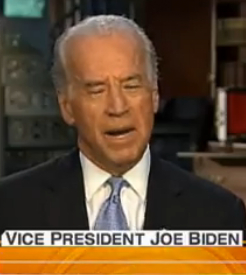
joe-biden-on-swine-fluVice President Jose Biden has profound advice for Americans faced with the prospect of a swine flu epidemic drifting across our borders from Mexico. Here’s what “say-it-ain’t-so-Joe” said in an interview with Matt Lauer on the Today Show:

I would tell members of my family, and I have, I wouldn’t go anywhere in confined places now. It’s not that it’s going to Mexico; it’s you’re are in a confined aircraft. When one person sneezes, it goes all the way through the aircraft. That’s me. . . . If you’re out in the middle of a field and someone sneezes, that’s one thing. If you’re in a closed aircraft, or a closed container, or closed car, or closed classroom, that’s a different thing.

Joe Biden is so well-known for his verbal slips that you have to wonder what he meant by, “That’s me.” Is he the sneezer we all need to steer away from? Maybe it’s President Obama.

For a report on Biden’s remaks, made yesterday (April 30), go here. Here’s a YouTube recording of Lauer’s interview with the vice president.

Rebecca Waer offers simple, commonsense suggestions for travelers who may come into contact with the contagious swine flu (here). This is a good time to keep that Purell hand sanitizer “on hand.” Purell has packaged this product in a convenient gel pack that can be clipped to a hand bag, sports bag, daypack, computer bag, you name it. For added protection, there’s the disposable ear loop face mask. For the mildly neurotic, there’s the half facepiece respirator assembly, and for the completely neurotic, the full facepiece respirator assembly.

Reports of a swine flu pandemic is especially dangerous for sufferers of hypochondriasis. Some with Münchausen syndrome may interpret the news of swine flu as an opportunity to qualify for medical leave, without actually being sick.

Whatever you do, remember this: until the World Health Organization lowers the threat level for the swine flu, stay out of closed containers.

“Chicago Tea Party”? Don’t Think It Can’t Happen


Rick Santelli was riled today when he reported on CNBC from the trading floor in Chicago. On national television he said he’s about ready to organize a Chicago-based tea party. This in response to the federal budget plan to subsidize the mortgages of fiscally irresponsible Americans using the tax money of solvent Americans. He makes a good point. Several good points, in fact.

First, fiscally responsible Americans don’t want to pay the bill for borrowers who can’t keep up with their mortgages.

Second, fiscally responsible Americans shouldn’t have to pay the bill for borrowers who can’t make their payments.

Third, this plan doesn’t rob the rich to give to the poor. It takes from every tax-paying American and turns it over as free cash to people who can afford to rent but can’t afford to buy.

Fourth, there are ways to get the federal government to pay attention, ways the government is totally unprepared for.

For example, what do you think would happen if 30% of all Americans with an income of $50,000 or more organized to do the following two things:

  1. Convert all of their assets held in the stock market and at banks and credit unions into cold, hard cash (or gold bars holed up in their bank’s safe deposit boxes)?
  2. Refused to pay income tax for 18 months (or indefinitely)?

The second action might provoke the government to garnish their assets and leave them all out on the street without food and shelter. But would the government go that far? It would surely compound a crisis.

What about the first option? Why shouldn’t Americans start cashing all their payroll checks and keep minimum deposits in their accounts to write checks as needed? Maybe their money is safer under the mattress at home than it is in the coffers of large banks.

For good measure, they could pledge a moratorium on unnecessary spending. They could close their credit card accounts. They could cancel subscriptions to everything there is to subscribe to, including cable television. They could reduce their use of cell phones to one per family. They could buy groceries instead of eating out. They could stay home and work in the garden instead of taking vacations. They could limit their use of gasoline to what they need for getting back and forth to work.

Heck. They could get to know their spouses and children. Maybe even some of their neighbors. They could have more BBQs. They could find more creative ways to entertain themselves—like read a few of the books they’ve purchased over the past ten years. They could listen to all the “crazy right-wingers” who dominate the airwaves—at least until radio stations are no longer able to pay their bills because nobody can afford to advertise what nobody’s buying.

Some Americans already feel like the President’s “stimulus” package is tantamount to garnishing their assets. When it comes to elections, economic concerns trump most other concerns. People vote to preserve their capital, or to get a slice of the capital earned by someone else. But what do the People do when they’ve just had a general election and the next opportunity to vote is four years away—and they’re scared to death?

The answer might depend on how far the President goes with his apocalyptic pronouncements about the economy and how much fear it causes. There’s no telling what people who fear for their economic future might do.

Was Rick Santelli serious? Maybe. Maybe not. But the stock market is at a six-year low as of today. So things are happening, even without a concerted effort.

Note: I attended a small gathering for one of our U. S. senators today. The senator commented on the recently passed stimulus bill. The bill was well over 1000 pages long, and senators were allowed eight hours to digest its contents and vote. At today’s gathering, the senator suggested that this was deliberate. So sponsors of the bill got what they wanted. But I wonder, will they get what they bargained for? In due course, the bill will be digested and re-digested. It will be subjected to close examination and the truth will be outed. And it won’t be too late for a vigorous electorate to experience rage, even with the President’s signature on it.

Presidential Leadership


So today is Presidents’ Day. We can’t all be in Washington, DC to visit the National Archives, the National Portrait Gallery, or the National Museum of American History. But there are interesting and edifying (or not) ways to memorialize the date and celebrate our presidential heritage. Some of these you can spread out over the week, others over a year—until the next Presidents’ Day.

  1. Visit the C-Span site for the Historians Presidential Leadership Survey for pages and pages of interesting facts and rankings. See also The American Presidency Project.
  2. Visit a presidential museum. We have two in southern California, the Ronald Reagan Presidential Library and the Richard Nixon Library and Birthplace.
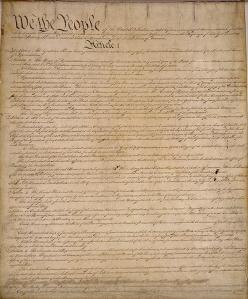
  3. us-constitutionReview U. S. Constitution guidelines for the presidency. Amazon has a nice paperback edition here.
  4. Have some fun. See if you can arrange pictures of the presidents in the chronological order of their administrations, at MIStupid.com. Do a word search puzzle or a jigsaw puzzle of the American presidents. There’s even a People’s Choice Presidential Card Game.
  5. Browse a pictorial reference book on American presidents. I recommend The American President: The Human Drama of Our Nation’s Highest Office.
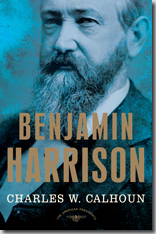
  6. Select four presidents you’d like to know more about. Determine to read one substantive biography of each before next Presidents’ Day (15 Feburary 2010). Here are some recommendations: John Adams, by David McCullough; Washington’s Crossing, by David Hackett Fischer; T. R.: The Last Romantic, by H. W. Brands; An Honest President: The Life and Presidencies of Grover Cleveland, by H. Paul Jeffers; and, Team of Rivals: The Political Genius of Abraham Lincoln, by Doris Kearns Goodwin. Or you might select from The American Presidents Series, a stunning set of easily digested volumes. Arthur M. Schlesinger, Jr., the general editor writes, “It is the aim of the American Presidents series to present the grand panorama of our chief executives in volumes compact enough for the busy reader, lucid enough for the student, authoritative enough for the scholar. Each volume offers a distillation of character and career.” This is a great series for getting to know those forgotten presidents—James Buchanan, book-coverbenjamin-harrisonBenjamin Harrison, Andrew Johnson, Grover Cleveland, Chester Alan Arthur, William McKinley, James K. Polk, Martin Van Buren. I have the volume on Chester Alan Arthur, by Zachary Karabell, and the one on William McKinley, who was assassinated, written by Kevin Phillips.
  7. Alternatively, read a book that compares presidents from an interesting vantage point. For this I suggest Presidential Courage: Brave Leaders and How They Changed America, by Michael R. Beschloss. Beschloss is the fellow you see interviewed so often about presidential history. He has several bestselling books to his credit.
  8. For the biographies of those who ran for the presidency and lost, I recommend They Also Ran, by Irving Stone.
  9. In the category of historical fiction, you might try something like The Shut Mouth Society, by James D. Best; The President’s Lady: A Novel about Rachel and Andrew Jackson, by Irving Stone; or, Never Call Retreat: Lee and Grant—The Final Victory, by Newt Gingrich. In the “alternate history” category, there’s 1901, by Robert Conroy, imaging the transder of power from William McKinley to Theodore Roosevelt when Germany invades the United States. For speculative fiction involving presidential decision making during crisis, try Brad Thor’s novel State of the Union, or Absolute Power, by the bestselling thriller novelist David Baldacci.
  10. Identify a favorite non-living president and write down ten things you admire about him. Share these with a friend or family member.
  11. Pick a president you know little about, and see if you can learn ten interesting things about him. Try to identify skills or character traits you admire.
  12. Imagine a conversation with one of our past presidents. Who would you like to spend an hour with? What would you want to talk about? Write down ten questions you would ask? Do this with friends or family, and compare.
  13. Write an imaginary conversation between yourself and one of the presidents, or between three presidents who never knew each other (I did this in a blog post recently).
  14. Read select speeches of various presidents (for example, nomination and convention speeches, inauguration speeches, state of the union speeches, or speeches on important occasions—as when Reagan addressed the nation after space shuttle Challenger exploded shortly after launch).
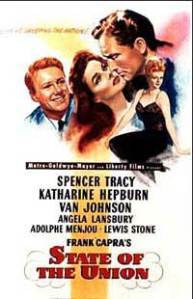
  15. Rent a movie. Here’s a list of some “presidential” films, of different state-of-the-unionposter1kinds and quality: State of the Union, The American President, Dave, All the President’s Men, Nixon, Jefferson in Paris, Murder at 1600, Absolute Power, Wag the Dog, Primary Colors, JFK, Young Mr. Lincoln, Wilson (1944, with Charles Coburn), Gabriel Over the White House, Air Force One, In the Line of Fire, The Assassination of Richard Nixon, The First Wives Club. Don’t forget about movies from The History Channel: JFK: A Presidency Revealed, FDR: A Presidency Revealed, and Nixon: A Presidency Revealed. Here’s the IMDB site for a listing of Ronald Regan’s movies. For a book on how Hollywood has portrayed presidents and their administration, see Hollywood’s White House: The American Presidency in Film and History.
  16. Watch past episodes of 24 and The West Wing.
  17. Write a blog post with your own suggestions.
  18. Post suggestions in the combox for this post!

Related posts: