Thomas Barnett Decodes Obama’s Speech Defending His Libya “Policy”


Americans have been pleading with the President to explain his rationale for engaging our military in fighting action in Libya. Yesterday, March 28, President Obama gave the speech that was supposed to sell us on the decisions he’s been making, and to prepare us for decisions he’ll continue to make.

Obama must be afflicted with misgivings, hearing as he no doubt has, that people from across the political spectrum are less than impressed with his leadership.

To hear the President’s speech, and to hear it decoded, feel free to visit Thomas P. M. Barnett’s post for Esquire‘s “The Politics Blog.” Barnett revisits the President’s speech and offers a line-for-line translation of what Obama actually said. It would be hard to find a more plausible interpretation than Barnett’s.

Notes:

Is Donald Trump a “Birther”?


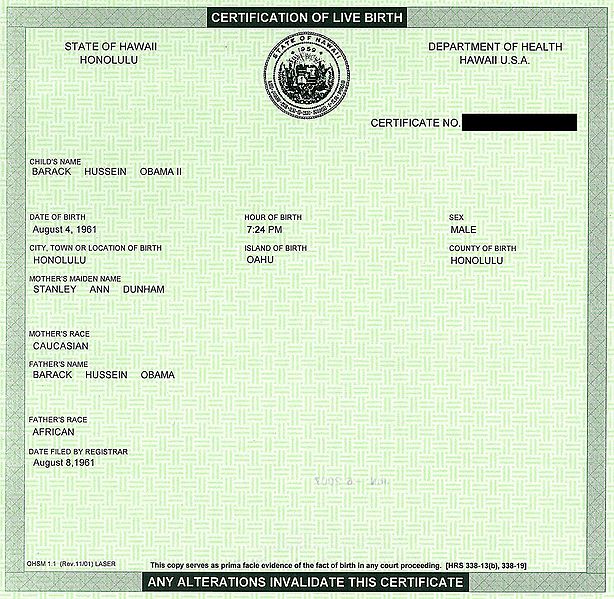
Donald Trump has been making a very publicly visible appeal to President Obama to settle the matter once and for all and make his birth certificate public. Does this make Trump a “birther”?

First, keep in mind that the term “birther” has been used by the media to stigmatize a portion of the American electorate as right-wing kooks. Some media outlets seem to have calculated that by calling these American citizens by this epithet it will eventually embarrass and silence them, or at least contain their influence.

This appears to be a clear effort to defend the President. But defend him from what? Apparently, the President’s stubborn refusal to publish his birth certificate is viewed even by his defenders as a posture that is worthy of media defense. But why?

And what exactly is a birther? You’re definitely supposed to be a birther if you actually believe that Obama was not born in the United States. There are people in this country who believe this. So they have the clearest claim to the epithet. And maybe some of these “true believers” wear the epithet with pride.

Are you a birther if you are genuinely concerned about the possibility that Obama was not born in this country, and would simply like for him to step up and prove that he was? I wouldn’t say so. And this seems to be Donald Trump’s attitude. Trump, as far as I can tell, is not a birther. He has said that he hopes Obama was born in this country. Would a real birther hope for this?

With Trump’s recent appeal to Obama to take the very simple step of proving his citizenship, I’ve thought about the issue a bit more than in the past. It now seems to me that Obama has repudiated an opportunity to demonstrate good will toward all Americans, including those who would like to have clarity about this matter. What possible harm can there be in accommodating a reasonable request for such information? What past American President would refuse to make his birth certificate public if there was such a broad interest in seeing his American citizenship demonstrated?

Many who are not generally considered birthers have enjoined Obama to produce his certificate. In response, challengers often say, “Do you believe that Obama was not born in the United States?” And if the answer is, “No,” then challengers think it’s stupid to ask the President for his birth certificate. But it isn’t stupid. If there is enough concern among the American people to see this demonstrated, then that should be reason enough for the President to accommodate them.

That’s my view, then. Without believing that Obama was born outside the United States, I do believe he very simply ought to make his birth certificate public. I believe this because his refusal to do so has revealed a stubbornness that is unbecoming of the leader of our nation. There’s some reason why he does not wish to give satisfaction to those who have called for it. Those reasons create suspicion and escalate discord about the matter. Why not “bring the country together” on such a small point?

Trump alleges that Obama has spent quite a bit of money to ensure that his birth certificate does not come to light. If that’s true, I’d like to know why. Does it lead me to believe that Obama was not born in the U.S.? No.

Others have said that media outlets are so thorough in their scrutiny of a presidential candidate that if Obama was not born in the United States, then this would have been exposed during Obama’s candidacy. But doesn’t this argument cut the other way just as well? Doesn’t it stand to reason that if Obama was born in the United States—given the huge controversy concerning the President’s citizenship—compelling evidence that he was born in the U.S. would have come to light via media scrutiny? The evidence, apparently, hasn’t been conclusive either way.

The issue hasn’t subsided and there’s reason to think it will haunt the President in the future. It’s looking now like Obama will be confronted with this issue again as he campaigns for a second term. Will the pressure be great enough this time round for him to capitulate and make his birth certificate public? Who can say? If the President was not born in the U.S., then, by Article 2 of the U.S. Constitution, Obama is not the legitimate President of the United States. That would provide motive for refusing to go public. But if that’s true, how long can the truth be suppressed? I imagine that sooner or later, even if Obama is elected for a second term, actual dissembling about his citizenship would come to light eventually. And that would not be good for Obama.

Here’s something to consider. There’s a good chance that the history books will note the issue and document Obama’s determination not to publicize his birth certificate. Readers will not have the benefit of observing his charisma and judge his likeability. If the President isn’t eventually forthcoming, perhaps a majority of Americans a couple generations from now will be birthers. That would not be good for Obama, either. What President would wish to go down in history as very possibly the only “American President” who was never really a legitimate President? The only way for Obama to ensure that that never happens is for him to produce his birth certificate.

Notes:

  • FactCheck.com concluded that an alleged digital copy of the certificate, released by the Obama 2008 Campaign, is of an authentic certificate for Obama from Hawaii. The story features a foto with the caption “The Obama birth certificate, held by FactCheck writer Joe Miller.”
  • Snopes.com also has written in defense of this perspective.
  • See Wikipedia articles on conspiracy theories about the Obama birth certificate and about Article 2 of the U.S. Constitution.
  • Donald Trump appears to be testing the water for a run at the presidency in 2012. Could this be why he has re-introduced the topic of Obama’s birth certificate into the national discussion?
  • Chester Arthur, 21st President of the U.S., has gone down in history with doubts about his citizenship still lingering. Vice President Arthur succeeded President James Garfield after Garfield died of gunshot wounds caused by an assassin.

Related Post:
Dick Morris Reports Popular Support for Controversial Governors


Events in Japan have caused a nearly total news blackout on everything else. But things continue to happen elsewhere in the world. For instance, in Wisconsin, the Republican Governor Scott Walker is still threatened by angry Democrat leaders, and a few Republican state senators are being challenged with recall efforts by Democrat senators who boycotted passage of a bill they didn’t like by leaving the state.

Dick Morris, a very smart political strategist, has polled Americans for their attitudes about these happenings. The strong more popular support for bold challenges to public employee unions surprised me.

One of the most interesting sections of Morris’s report says this:

Absentee State Legislators

Voters reacted strongly against state legislators who boycott their legislatures to stop the passage of labor legislation. By 25-61 they rejected the idea that it is “necessary” for Democrats to boycott the legislature so as to deny the majority a quorum “to stop legislation restricting unions from being passed.” The majority agreed that the legislators “should return to the legislature and respect the decisions the voters have made in the last election.”

See the full report here.

Nuke Media Distortion with Facts—What to Believe about the Dangers of Japan’s Nuclear Reactors


Are you good at believing the things you believe? That’s my motto. So what are we supposed to believe about the danger of nuclear radiation following Japan’s recent 9.0 earthquake and damage to nuclear reactors at two locations?

Satellite view of Fukushima Daiichi Nuclear Power Plant

First, why we need to know what is happening:

  • We care about the safety of the Japanese people.
  • We care about the safety about the world population.
  • We care about radiation drift toward North America.
  • We have energy needs that may be met with new reactors in the U.S., but only if they’re safe.

Second, why the mainstream media cannot be trusted for knowledge of what is happening:

  • The media are prone to sensationalize the “news” in order to boost their ratings.
  • The media have a liberal bias, which is already heavily invested in opposition to nuclear energy.
  • The media have no idea what a reactor is, how one works, and what terms mean when used to described behavior at a nuclear plant (e.g., “meltdown).
  • The media, even if they try for “balanced coverage” by “experts” with opposing views, are as likely to get crackpots having their own meltdown over what’s happening in Japan.

Third, the only way to nuke media distortion (whether deliberate or not) is with facts and critical reflection.

For facts, the internet is probably your best guide.

The most valuable report I’ve read so far comes from Dr. Josef Oehman, a research scientist in mechanical engineering and engineering systems at MIT. Read his analysis “Why I am not worried about Japan’s nuclear reactors”. The cost of being well-informed is the effort of becoming informed. Oehman’s article is lengthy, but accessible. You can settle for sound bytes or get the facts in clear and cogent detail.

Oehman captures the threat level with this advice:

If you were sitting on top of the plants’ chimney when they were venting, you should probably give up smoking to return to your former life expectancy.

I’ve started following Oehman on Twitter.

Of course, you want more than one doctor’s opinion. So switch off your TV and search out other reliable sources of real information. If you must monitor the TV coverage, be sure to note the names of specialists and experts who are interviewed, find out who they work for, and examine their credentials.

And listen carefully to the naive questions the journalists are asking. Watch for their own off-hand comments and simplistic reactions. Last night I watched Geraldo interview specialists about the news out of Japan. Geraldo marveled with near-panic that engineers had resorted to flooding their reactors with sea water in order to cool the over-heated reactors. Apparently he didn’t know that this is backup protocol when disaster strikes. (See the article by Oehman.)

Critics of nuclear energy will be sorely tempted to make good use of the disaster in Japan. But this could backfire on them if it turns out that the 9.0 earthquake demonstrates the safety and viability of nuclear power plants, even when disaster strikes.

Time will tell.

Protesting Governor Scott Walker May Backfire on Liberals


Wisconsin Budget Repair Bill Protest: Scott Wa...

Image by mrbula via Flickr

There’s turmoil in Madison, Wisconsin, as some public school teachers and others protest the efforts of Governor Scott Walker to curtail excessive state spending on state employee benefits. From a distance, this looks like a bad play by liberal Democrats.

  • Teachers who have left their jobs to protest at the state’s capitol may be breaking the law and may pay a price for doing so.
  • 14 Democrat legislators who have left the state in order to prevent a vote on the Governor’s proposals may not last long in their elected positions.
  • The antics of protesters in Wisconsin have brought national attention to the debacle, and these protesters are at risk of a backlash in public sentiment across the nation.
  • With the substantial visibility of Governor Walker’s boldness, and the prospects for his success, other states in fiscal trouble may be emboldened to adopt similar measures.

These probably would not be welcome effects of the protest movement in Wisconsin, among those actually protesting. But there is an even more significant possibility they may not have anticipated.

  • Governor Scott Walker has been propelled to national attention and has become a symbol of broad national support for greater fiscal responsibility and bolder leadership to achieve that end. Protesters have generated greater interest in Governor Walker as an icon of conservative politics. A figure who was unknown outside Wisconsin only a week ago is now a national icon. If he succeeds in Wisconsin, he may be a compelling candidate for national leadership. He may even be scrutinized as possible presidential timber. Imagine that! With every ounce of continued protest, the governor’s critics run a greater risk of showcasing the governor’s achievement if he prevails.

If the governor of Wisconsin prevails, his example may galvanize a cadre of conservative politicians to step up with ever bolder measures. The conservative movement could be on the cusp of new energy, so far unprecedented. That would truly be significant, given the already substantial inroads that have been made by conservatives among the electorate.

The Perils of Multiculturalism


British Prime Minister David Cameron

One of the most important speeches of the year—and it’s only February now—was delivered by British Prime Minister David Cameron a few days ago at the Munich Security Conference. In his speech he focused, in laser-beam fashion that is unusual for a politician, on the perils of multiculturalism. I urge you to read or view his speech.

Cameron links “Islamist extremism” to the “British experience” of multiculturalism, and argues that, if only for security purposes, multiculturalism must be reversed in his country.

Here are a few questions we all should be considering:

  1. What is “multiculturalism”?
  2. What’s the difference between multiculturalism and a policy of multiculturalism?
  3. Does Great Britain have a policy of multiculturalism? Does the United States?
  4. What are the virtues of multiculturalism?
  5. What are the perils of multiculturalism?
  6. Should the British government halt multiculturalism?
  7. Can the British government halt multiculturalism?

I’m especially interested in two other questions:

  1. How are you affected by multiculturalism?
  2. Do you agree with David Cameron’s general position on the issue?

Update:

This post was referenced in the “Roundup for Week 7” at the The Naked Listener’s Weblog. Thanks, Robert Lee, for the notice!

Bill O’Reilly’s Brilliant Interview with President Obama


Bill O’Reilly interviewed our president on Sunday morning for about fifteen minutes of live television. Bill (it’s all first-name basis these days) has been collecting reactions from “the regular folk” and from everyone else who will favor him with an evaluation. Some of his guests have been on his show to talk directly about his interview performance: Brit Hume, Bernie, and Charles Krauthammer.

This seems very odd to me. O’Reilly comes across like a giddy kid who just returned from the candy shop with pockets full of free confection. The last thing he wants to hear is that his interview was inconsequential. Notice how he talks about it. He asserts that probably no live TV interview has been so widely disseminated. (That may be true.)

And notice how he interprets what the president said. He asked whether Obama agreed that he had moved toward the political center since the November election, when so many Democrats were turned out of Congress. Obama said he hasn’t moved. O’Reilly keeps saying that he (O’Reilly) believes the president “really thinks” he has not moved toward the center.

I doubt that Bill O’Reilly knows better than the rest of us what the president believes. I can’t tell from the interview that O’Reilly is in a better position to know than we are. And from what the president said in the interview, I can’t say with confidence what the president believes—certainly not with O’Reilly-styled bravado. I feel more confident saying what the president wants us to believe. And he wants us to believe that he hasn’t moved politically. After all, that’s what he said. What he said is what he wants us to believe.

Of course, as long as it’s unclear what Obama meant by what he said it will be to that extent unclear what we are supposed to believe. The politician’s specialty is to answer a direct question ambiguously, but to disguise its ambiguity so that it is confidently interpreted one way by one group of constituents and is confidently interpreted another way by another group of constituents. If you can get disagreeing constituents to believe they have the correct interpretation of your words and they happen to like what you say on that interpretation, then you have acted the political genius.

The evidence of Obama’s political genius is that O’Reilly thinks he knows what the president believes based on what the president said.

What Obama said is probably supposed to mean one thing to those of us who are troubled by his leftist political outlook, and something else to those of us who are cheered by his leftist political stance. (It may not mean anything to those of us who think he isn’t a leftist.) To the first cohort, it should mean that he has never been the insufferable leftist that many have feared. To the second cohort, it should mean that he is every bit the leftist that many have hoped, and that he will continue to resist insufferable conservatives.

I can’t take seriously any interview where a politician makes it necessary for me to read between the lines in order to “know” what the politician believes or means. This is because one can’t really know what a politician means when what he says is ambiguous—and hence deniable. When the ambiguity is evident, then we should know that we don’t know, and we should know better than to think that we do know. But skillful ambiguity may fool us into thinking that we do know what we don’t know.

So, did O-Reilly discharge his duty as a journalist and press for the kind of clarity needed for his interview to matter? That’s for you to decide.

Superbowl Sunday or Ronald Reagan’s 100th Birthday Anniversary?


Official Portrait of President Ronald Reagan

Image via Wikipedia

Both, of course.

People today are obsessed, as always, with the Superbowl. But many will remember Ronald Reagan on this, his 100th, birthday. I returned home from church this morning just in time to watch and hear the 21-gun salute to our 40th president.

The remarkable ceremony honoring his memory at the Ronald Reagan Presidential Library continues as I write this post. Nancy Reagan has greeted the audience of distinguished guests, and actor Gary Sinise has given a brief and moving tribute. James Baker, Reagan’s Chief of Staff during his presidency, has just now been introduced as the main speaker of the event.

How will you remember Reagan today?

There are many ways that you might remember the man, all of which will leave you feeling personally inspired. Read a biography, sift through his influential speeches, watch one of the movies in which he starred, view a documentary of his life and administration, pore over fotos of Reagan from different periods of his life, Google quotations for which he is well-known, find and watch a re-play of today’s tribute to Reagan that is now being broadcast from Simi Valley, CA.

Movies to see:

Documentaries:

Books:

Related posts:

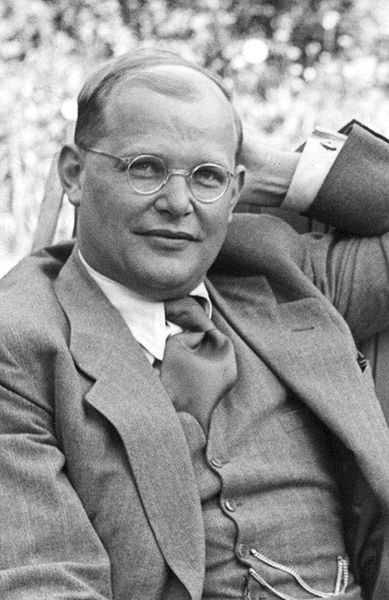
Dietrich Bonhoeffer’s Birthday Today


Dietrich Bonhoeffer (1906-1945)

Today we are witnessing the throes of political unrest in an important part of the world. Cries of revolution are all over the news.

Today, it happens, is also the 104th anniversary of Dietrich Bonhoeffer’s birthday. Bonhoeffer famously and courageously determined to participate in a plot to assassinate Hitler. He and his co-conspirators failed. They were arrested and executed. Their execution occurred just 23 days before the Allied victory in World War 2. And do you know, Bonhoeffer did not have a high expectation that their plan would succeed? Rather, he believed he was under an obligation, that it was the right thing to do, even should the effort fail. In his case, the verdict of obligation was worked out in thoughtful consideration of the authoritative will of the loving God of the Christian Bible. Not everyone agreed with him then (most disagreed), and many would disagree still. But the point is simply that he acted from a sense of duty and deep moral principle informed by a close study of God’s revealed purposes.

The moral justification of a political revolution, on my view, must be justified on grounds that do not depend on the actual outcome. What do you think?

Note: Today I attended a luncheon at my university where the author of a new biography of Bonhoeffer spoke about the great man’s conviction and self-sacrifice. The biography is Bonhoeffer: Pastor, Prophet, Martyr, Spy, by Eric Metaxas.

Democratic Terrorists in Egypt?


I’ve been watching coverage of the mess in Egypt and have not commented here until now. I’m stunned by what I’m hearing . . . and not hearing.

TV commentator Rich Lowry spoke tonight as if the Obama administration had only two choices. He could support Hosni Mubarak, the evil dictator, and watch the Egyptian President shoot down the demonstrators in the streets. Or, he could support the “democratic demonstrators” in the streets of Cairo. Obama, he thinks, rightly chose to support the democratic demonstrators.

Where does Lowry get the ridiculous idea that the protesters are “democratic”? Their demonstrations have hardly been peaceful.

And who are the Muslim Brotherhood? They sound like barbarians, and the likely heirs to the evil Mubarak regime.

John McCain said it well yesterday. Mubarak has been a friend to the United States for many years, and he has helped to keep some stability in the Middle East—which is otherwise hell-bent on the extermination of Israel. But Mubarak stayed too long and did not use his position to institute a democratic government in Egypt.

After watching the mess on the streets every night from the comfort of my living room, I’d like to know what democratic measures anyone, Mubarak included, could have introduced. I can’t visualize these people stowing their molotov cocktails the day after tomorrow and going peacefully to the polls to elect a respectable government in a free election.

The Egyptians are making a spectacle of themselves in front of the rest of the world. Their actions have galvanized dispirited citizens in countries elsewhere in the region. What exactly is their message, and why should we care what they want if all they can say is that Mubarak has to go?

Mubarak says he would like to leave, but believes the country would descend into greater chaos if he just walked away right now. Maybe people should consider the possibility that he’s right.

Here’s another possibility. Our president has been telling us, the American people, that he’s been talking tough to Mubarak on the phone. When our president announces this on television, then it doesn’t matter what he said on the phone. The world has heard Obama scold Mubarak and tell him what to do about the mess.

So what’s Mubarak supposed to do in response? Is he supposed to let Obama dictate to him what he should do? What if Mubarak is as vainglorious as Obama?

Does Obama really understand “the democratic process”? He seems to think that the process begins with a free election. This is simply naive. A “free election” isn’t an important step in a democratic process if that election results in a fascist government. And it looks like that’s the result we should expect. Dana Perino told Greta tonight, “Democracies take time.” Obama doesn’t know that?

What’s really going on in Egypt? Everybody is guessing here, including our officials. They’ve made that pretty obvious. Shame on them for being so out of touch with world realities. And shame on us if we stand by and watch without criticism the naive, oddly paranoid and aggressive response of our government to a complex conflagration.

We’ve ostracized a valuable ally. Israel is mystified by our response. Things aren’t getting better on the streets of Cairo. The Muslim Brotherhood lurks in the background. Obama chastens a proud dictator who no doubt has his own ideas about what he should do. Mubarak won’t budge (as of today). Western reporters are crying foul for the mistreatment they’re receiving in their efforts to scoop the story.

I would like a clear and detailed statement from Mr. Obama that explains his view of our relationship with Egypt, and how it will improve if Mubarak walks away and the people participate in the kind of free election he has goaded them to demand.

Two Bad Ideas—Building a Mosque & Burning the Qur’an


Two big items in the news today: first, Imam Feisal Abdul’s article congratulating America on its religious tolerance of Islam; second, an American pastor’s plans to burn copies of the Qur’an on the anniversary of 9/11.

Building a mosque at Ground Zero is a bad idea. So is burning the Qur’an.

The media and politicians on the Left are obsessed with the differences between the two intentions. Putting it mildly, they condone the erection of the controversial mosque. But let’s be honest. Those who haven’t been silent—including President Obama and NYC mayor Bloomberg—have expressed unequivocal support for building the mosque (even though they have equivocated following their unequivocal expressions of support).

What about the pastor, with plans of his own? He is angrily denounced.

Ahem. What about the striking similarity between the two men and their “projects”?

Whatever else can be said about their true intentions, their plans appear to be deliberately provocative. That’s the point that ought to be stressed in the great conversation we’re having about “tolerance” and “rights.”

Within the framework of this likeness—that is, both are deliberately provocative—we can make more useful distinctions between the men and their plans. We should acknowledge their similarity, then ask: as deliberately provocative acts, how do they differ?

Here’s one salient difference. A mosque will have a longer term effect, with direct bearing on more people, than the singular act of burning copies of the Qur’an on 9/11. The minister’s action, if he goes through with it in a few days, will soon be forgotten—even by Muslims, I dare say. But if the mosque is built, it will stand as a permanent monument to—well, what?

For non-muslims, the mosque would not be a monument to anything at all. But can this be said of Muslims? Hmm?

My Right to Park My Car in Front of My House


There’s a debate in my town about whether residents should be free to park their vehicles in the street in front of their homes, without threat of getting a parking ticket.

Last weekend, The Orange County Register published a story about this— Read more of this post

Voter Intimidation and the Law


The concept of voter intimidation and the Voting Rights Act of 1965 are in the news today. Last month, J. Christian Adams resigned from the Justice Department and is being called a “whistle-blower” for describing a disturbing insensitivity to voters’ rights during the 2008 election—in this case, white voters’ rights. Read more of this post

The Obama-McChrystal Debacle


They’re calling them “interviews.” I don’t know whether that’s the proper term, but statements by General Stanley McChrystal and several of his staff are reported and embedded in a narrative to be published in this week’s issue of Rolling Stone magazine. But this is already old news, rendered obsolete by developments of yesterday and today.

The Rolling Stone article reveals that Read more of this post

Media Responsibility & a Democratic Republic


About a year ago I had the opportunity to speak with one of our nation’s Senators. I suggested that a responsibly engaged electorate must be a well-informed electorate. My question to him was about how any of us who aren’t part of the “inner ring” can be assured of being well-informed. He agreed that this is a real difficulty.

There’s nothing new about this worry. In 1969, Vice President Spiro T. Agnew gave a speech on “The Importance of Television.” He noted the “profound influence” of television news “over public opinion.”

Television’s influence is disproportionately great because: Read more of this post