Comment on “Euthyphro’s Lament”


Portrait of Socrates. Marble, Roman artwork (1...

Image via Wikipedia

Roger Morris has kindly referred me to a blog where the relation between God and morality is discussed in two unsigned posts: “Euthyphro’s Lament” and the briefer “One Other Thing” (in which the author promises that this is “the Absolute Bloody Final word from me” on the issue he raises).

The “Euthyphro problem” lies at the heart of a dialogue recorded by Plato, between Socrates and one called Euthyphro. This dialogue has a fitting title: Euthyphro; it is sometimes called The Euthyphro. Euthyphro is a great introduction to the Socratic method on a topic of broad interest because it concerns the nature of ‘piety.’ Socrates presses the question, “Is the pious loved by the gods because it is pious, or is it pious because it is loved by the gods?” This is called a ‘dilemma’ because it seems to present Euthyphro with stark choices, both of which are troubling in their own way.

Let it be noted that the problem of the nature of piety is not resolved in this dialogue of Plato’s. Nor is it definitively settled that both lemmas set forth in Socrates’ question are impossibilities.

It’s worthwhile keeping this in mind when considering a modified version of the problem in contemporary discussions of the relation between God and morality. The question in this context differs from the original in two main respects: (1) the dilemma now assumes some version of monotheism, and (2) the dilemma may be expressed in terms of the will or commands of God, rather than in terms of what is loved or hated by God. Another possible difference is that (3) the dilemma is now less concerned with piety as a character trait than with moral actions (in obedience to divine commands).

Here’s a characteristic statement of the new form of the dilemma, expressed as a question:

Is a morally right action right because it is willed or commanded by God, or is it willed or commanded by God because it is morally right?

If an action is morally right because it is willed or commanded by God, then whatever God wills or commands is right, and would be right just in virtue of his willing or commanding it. It’s supposed to follow that God could will or command anything whatsoever—including actions we rightly abhor, such as rape and murder—and what is willed or commanded would be (for that reason alone) morally right.

On the other hand, if a morally right action is willed or commanded by God because it is right, then it’s supposed to follow that God, who is otherwise thought to be utterly sovereign over all things, is subservient to an ontologically independent (objectively existing) standard of right and wrong.

So we have it that either (a) the goodness of any right act is arbitrary, subject to divine whim, or (b) God is less than sovereign because subject to an independent moral authority.

From these stark choices it is sometimes argued that God does not exist, or that the concept of God is incoherent.

Consider the first horn of the dilemma. Why is the morality of a right act thought to be arbitrary? Because its rightness is linked to the will or commands of God. But that, it seems, is tantamount to saying that God’s will and commands are themselves arbitrary. But why think that? I see no reason to seize the other horn of the dilemma in order to avoid this supposed implication.

What about the second horn? Most of its formulations use terminology without clear delineation of their significance. We must know, for example, in what sense God is presumed to be sovereign, in what sense ultimate moral authority is thought to be independent or external to God (or God’s character), and in what sense God is to be considered subservient to this external standard. The burden of making these notions precise is weighty. It is also frequently ignored.

In “Euthyphro’s Lament,” the author attempts the required clarification by saying that “there is an objective standard – logically prior to God’s character – that constrains God’s character.” But I must say that the notion of an objective (moral) standard as “logically prior” to anything (be it God or something else) is less than clear, and the suggestion does little to illuminate the supposed problem. Further, we must understand this vague notion of “logical priority” before we can make any sense of the claim that some logically prior standard “constrains God’s character.” How does it “constrain”?

I think it also needs to be said that the formulation of divine command theory in the essay is awkward. The author says,

Briefly, Divine Command theory states that it is good to obey God’s commands.

A more adequate formulation is needed. Here’s a better approximation, I think:

What makes a morally right action right is that it is commanded by God, and what makes a morally wrong action wrong is that it is prohibited by God.

From this it does follow, I suppose, that it’s (morally) good to heed God’s commands. But that is a different matter.

On the divine command theory, God’s will determines the rightness or wrongness of morally significant human actions. The theory, as a theory of morality, is concerned with the moral character of human actions. It is a separate question why God wills what God wills.

I conclude with three brief points.

First, this post is not a defense of divine command theory, but an attempt to impose clarity in relation to a less than clear statement of the associated problems in a particular blog post.

Second, it is odd if the envisioned dilemma concerning God’s relation to morality implies that God does not exist. It is so odd, in fact, that it’s far more likely that the proposed dilemma is a clever contrivance with less bite than is often imagined.

One may say that the dilemma is not the mainstay of an argument against theism, that it is merely rhetorical, a challenge to the theist to explain precisely what is God’s relation to morality. Ah, and if the theist falters? What then? Surely this is supposed to mean something.

Or one may say that the dilemma showcases a problem for theism that—whether or not it entails that theism is false—delivers the naturalist from the threat of any moral argument for God’s existence. The proper answer to that is that there are varieties of arguments from morality for theism, some better than others (and some no good at all). The best arguments are invulnerable to the dilemma we have been considering. And they have the further advantage of highlighting severe limitations of utterly naturalistic conceptions of ethics.

Third, adapting the dilemma posed in Plato’s Euthyphro to current discussions of God and morality may preempt proper consideration of what is “logically prior” (if that means anything), namely, the question, “Why does God will what God wills?” The answer to that must depend on what sort of being God is. Suppose God is such that he is neither subject, in any meaningful sense, to some external standard of morality, nor good in some merely arbitrary sense. Is there really anything deeply disturbing about such a conception? Mysterious perhaps. But disturbing?

Suggested Reading:

William Lane Craig vs. Christopher Hitchens: First Report


Tonight, Biola University hosted a debate between William Lane Craig and Christopher Hitchens on the question “Does God Exist?” The debate was moderated by Hugh Hewitt and seen live by several thousand in attendance at Biola and many more at remote locations in 30 states and several countries.

I’ve just returned home from the event and will record a number of my observations as a first report from the front lines.

  1. This event was no mere spectacle, but a legitimate debate that addressed substantive arguments.
  2. Everybody behaved themselves, including members of the audience.
  3. Bill Craig made two claims in his opening argument: (A) There are no good arguments for atheism, and (B) there are several good arguments for the existence of God (theism). The balance of his opening argument was devoted to four carefully delineated arguments and a fifth thesis about the role of experience in grounding belief in God. This organization of the case for God’s existence has been used by Bill Craig time and again. The first argument is a cosmological argument, based on the origin of the universe. The second was a version of the teleological argument that emphasizes the improbability of the existence of a universe inhabited by human beings, given the evidence of both physics and biology. Third, he argued that the best explanation for the existence of objective moral facts is the existence of God. Fourth, he stated three sets of historical facts that are uniformly accepted by New Testament scholars, which together provide ample evidence that Jesus Christ rose from the dead, implying the occurrence of an important miracle and hence the existence of God. Each argument was constructed as a valid deductive argument, so that rational denial of the conclusion would require a direct challenge to one or more of the premises in each argument. His fifth point was that belief in God can as well be grounded in direct experience of God, though this is not to be confused with an argument for the existence of God. He ended with a challenge to Christopher Hitchens to show how these arguments err, and also argue that God does not exist.
  4. Bill Craig made the interesting point that believers in God should not be so distracted by arguments for the existence of God that they miss the experience of God.
  5. In his opening argument, Christopher Hitchens argued first that Bill Craig is not a consistent evidentialist, and that, to the extent that Craig is an evidentialist, he is, like any evidentialist Christian, a “retrospective evidentialist” who appeals to evidence now that no theist could have centuries ago. Further to this point, Hitchens suggested that contemporary (Christian) theists have, in the face of scientific evidence for evolution, “retreated” from their earlier strategies by claiming that evolution is evidence for theism, or is at least compatible with theism. Next he argued that even if God did exist (by which I think he meant the God mentioned in the conclusion of Craig’s arguments), no reason has been given to believe that this God cares, while there are reasons to think this God is indifferent. (I think, consistent with his practice in his book god Is Not Great, Hitchens would use the word “god” without caps.) His third point was that Craig is obligated to “prove to a certainty” that God exists, while atheists like himself rightly value the role of doubt in the absence of evidence and intellectual humility. This led directly to disclaimers about Craig’s definition of the term “atheism”—Hitchens regards himself as an “a-theist” in the sense that he believes no good reasons exist for believing God exists and so he does not believe that God does exist. Thus, he does not claim to know that God does not exist; therefore, he has no obligation to argue that God does not exist. He concluded with a direct response to the teleological, or fine-tuning argument, for theism. First he said that most physicists acknowledge that “we hardly know what we don’t know” about the origin of the universe and its early history. This looks more like an objection to Craig’s cosmological argument, so Hitchens may have mispoken. He then said there were three “layman’s reasons” for rejecting the fine-tuning argument. I was only able to distinguish two, since they were not enumerated clearly. First, he asked whether prior to the beginning of the universe there was pre-existing matter, as a step toward the question, “Who designed the Designer?” Second, he asked whether theists have considered the “nothingness that is coming,” his point being that the universe will eventually fade into oblivion and that therefore the so-called “Designer” seems to have designed poorly.
  6. The two opening speeches differed dramatically. Bill Craig laid out a case in straightforward manner, with numbered premises and his conclusion. (A complete outline of his cumulative case was included on one sheet of the program that was printed for the occasion.) Christopher Hitchens adopted more of a narrative style that was more loosely argued and less linear in its progression. Both were articulate and engaging.
  7. In the rebuttal, cross-examination, and response portions of the debate that followed, Bill Craig pressed Christopher Hitchens on his conception of atheism, his reasons for being an atheist, and his responses to the arguments presented in Craig’s opening speech. In this respect, Craig was in greater control of themes in the debate. This was helped immensely by the clear progression, crisp identification, and repetition of his original arguments. Hitchens resisted Craig’s efforts to extract a more precise definition of Hitchens’s atheism than his simple denial that there is adequate evidence for theism. Hitchens claimed that if you believe the universe is designed, then you also have to believe the designer is short on the excellence attributed by theists to God. There is a tension between there being a god who is completely indifferent to human suffering, or a god who provides a bizarre remedy in the form of having “someone tortured to death during the Bronze Age” and Roman rule, a god who demands conformity to his requirements in order to be saved from damnation, and, in any case, who leaves countless individuals without opportunity to hear about and accept this remedy.
  8. The most noteworthy difference between these debaters consists in this: preparation. One may agree or disagree with Bill Craig’s claims, but there can be no question that he was thoroughly prepared for every aspect of the debate and never faltered in his response to objections by Hitchens. Christopher Hitchens, on the other hand, dropped several of Craig’s opening arguments, and seriously misunderstood or distorted the moral argument, the argument from the resurrection of Jesus, and Craig’s appeal to experience. I think Craig was most successful in demonstrating the error in Hitchens’s discombobulated rendition of Craig’s moral argument. Whether the audience followed the competing interpretations of N. T. Wright’s historical argument concerning the probability of the resurrection is another matter. But I can vouch for Craig’s construal of Wright’s argument, and, for that matter, for Hitchens’s confusion on the point. As for the appeal to experience of God (and the witness of the Holy Spirit), I might have put the point differently than Craig did and treat it as a kind of evidence that serves the subject of the experience without the need for argument. But Bill Craig and I may have a different view of the epistemology of such experience.
  9. Christopher Hitchens made a couple of odd points in his rebuttal, as if to answer arguments or objections that Bill Craig had not given. For example, he asserted that he believes in free will, and went on about it as if Craig had pressed him directly on this point. This was a strategic mistake, if only because it wasted valuable time that should have been devoted to what was already on the table. Worse, Craig could have challenged Hitchens’s claim to believe in free will, given his naturalism. I gather that Hitchens sensed this, saw its relevance to the question of moral conduct, and attempted to pre-empt Craig on the point. But Hitchens’s complete failure to understand the moral argument presented by Craig landed him in enough serious trouble as it was. Hitchens also digressed about the embarrassing canonization of Mother Theresa by the Roman Catholic Church. I suppose he couldn’t resist, since he had written a whole book on the subject. (See this link for the crass title of that book.)
  10. The only thing that surprised me about Bill Craig’s strategy in the debate was his determination to get Hitchens to specify more precisely his self-identification as an atheist. Much of Craig’s cross-examination time was taken up with this question. That is due in part to Hitchens’s bobbing and weaving on the point. I understand Craig’s rationale for tasking Hitchens with clarification of his position. I’ve encountered the same maneuver in my debates with Michael Shermer and Greg Cavin, for example. As I see it, regardless of the standards of formal debate, both parties to a debate of such existential significance should be clear about their own positions and be prepared to present good reasons for them. (While this is a burden of proof issue, the term “burden of proof” never came up, if I remember correctly.) Christopher Hitchens has a worldview. It is thoroughly naturalistic and scientistic, and indeed materialistic. It hardly matters what he means by “atheism” in application to himself, since this is clearly his positive stance. And he made no attempt to argue that his worldview is true. Bill Craig is right about this.
  11. Christopher Hitchens’s attempt to distinguish between the hubris of the argumentative theist (my term) and the intellectual humility of his kind of atheist was totally unconvincing. Hitchens’s tone in the debate, consistent with his hallmark practice, belied his disclaimers about claims to knowledge. Once, in his closing argument, Bill Craig drew attention to this point, and did so dramatically but graciously. He pointed out that Hitchens made his own truth claims on behalf of atheism, that he did so without supporting argument, and that “you’ve got to come to a debate prepared with arguments.” While Hitchens did make arguments, they were largely unfocused, sometimes disconnected, and often irrelevant.
  12. The second half of cross-examination must have been interesting to the predominantly evangelical audience. Christopher Hitchens asked Bill Craig directly whether he believes that there are devils, that Jesus was born of a virgin, that some nonChristian religions are false, and that some Christian denominations entertain false beliefs. Craig answered each, respectively: yes, yes, yes, and yes. But he added (a) that the existence or non-existence of demons has no bearing on his argument from the resurrection for theism, (b) that while he did not think the virgin birth could be proved, whether it happened is also irrelevant to his case for theism, (c) that Islam is among the false religions, and (d) that while there are differences among Christian brethren (Craig is not a Calvinist but more of a Wesleyan, for example), their differences are on less substantive points. While Craig may not have expected this line of questioning, he answered well. It was a sign of Hitchens’s lack of preparation, I believe, that his cross-examination of Craig was unproductive. (One further indication of this is that Craig’s answers were never brought up for special criticism.)
  13. The main development of the cross-examination period is that Hitchens allowed that morality could be “purely evolutionary and functional.” Given his comments on morality throughout the evening, I don’t see how they could be anything else than that on his view. Thus, he is, Craig would argue, caught in a contradiction if he also claims that morality is objective in the sense Craig defined. And Hitchens had made such a claim. Note: Hitchens could hardly have denied this and remained consistent with his condemnation of religion in his book.
  14. Speaking of Hitchens’s condemnation of religion, I think he found the balance that was needed if he was to remain faithful to the spirit and tone of his book without completely alienating his audience. His diatribes in god Is Not Great are mean and visceral in the extreme. During tonight’s debate, he was more cautious in his declamations. He did say “I’ll be damned” if I don’t say what I really think of religion and Christianity. But this was mild in comparison with what Hitchen is capable of. The problem is—and he knew this—his off-the-cuff remarks were not germane to the debate. Someone reading his book for the first time after seeing this debate may be surprised by the venom they find, but they probably will not be shocked. I say this because I do think it was a delicate balancing act for him to be more measured while still acting in character.
  15. Christopher Hitchens attempted to drag Old Testament accounts of “genocide” and other divine sanctions of dubious moral character into the debate. This was predictable. Bill Craig rightly noted that these complaints concern the inerrancy and inspiration of Scripture, and are not salient to his case for theism. Some in the audience may have wondered how Craig could avoid these issues and also invoke the New Testament in describing the grandeur of God’s plan of salvation. As it happens, Hitchens didn’t raise the point. But it also happens that there is no inconsistency in Craig’s view of the bearing of Scripture on aspects of the debate.
  16. Another comparison of interest to me has to do with the existential appeal of their respective points of view. Bill Craig seemed actually to be enjoying the dialogue (as one of my daughters noted). Certainly he was unapologetic about his Christian faith. He spoke convincingly of the transformation of his life after believing in Christ. And he explained the basis Christians have for hope in this life and the next. He even urged Christopher Hitchens to become a Christian, since Hitchens wants to say that there are objective moral values but can’t account for them in his worldview. Craig said this without seeming the least bit supercilious. I thought Craig struck an excellent balance in describing the future hope of Christians and its bearing on the endurance of suffering now, and a Christian activism on behalf of those who are oppressed or even deprived of life. For his part, Hitchens explained that he finds meaning in life by seeking liberty for himself and for others, and that, since so much violence against humanity is done in the name of religion, he is constrained to combat religion publicly.
  17. I’ve already mentioned how Christopher Hitchens responded to Bill Craig’s moral argument for theism. It struck me that this argument was the most widely discussed of them all. The irony is that for all that he had to say in response, Hitchens actually “dropped” the argument. (To say that he “dropped” the argument is to say, in debate-speak, that he didn’t actually address the argument.) In his response to Craig’s argument, Hitchens recast the argument as an argument that atheists can neither know what is morally right nor do the morally right thing unless they believe in God. That is not the argument at all. It baffles me that so many atheist, agnostic, and skeptical debaters distort this argument so consistently. The question is how to ground the objectivity of moral truths without reference to God, not whether moral truths can be known without believing in God or whether it’s possible to behave morally without believing in God. The point is neither epistemic nor behavioral, but ontological. My preferred formulation of the moral argument is a little different than Craig’s, but my experience has been the same as his. Debate opponents miss the point.
  18. Returning, finally, to something I mentioned previously, this debate exposed a difference in preparation on the part of these two debaters. This is far more significant than it might seem at first. William Lane Craig has debated this topic dozens of times, without wavering from the same basic pattern of argument. He presents the same arguments in the same form, and presses his opponents in the same way for arguments in defense of their own worldviews. He’s consistent. He’s predictable. One might think that this is a liability, that it’s too risky to face a new opponent who has so much opportunity to review Craig’s specific strategy. But tonight’s debate proves otherwise. Hitchens can have no excuse for dropping arguments when he knows—or should know—exactly what to expect. Suppose one replies that William Craig is a more experienced debater and a trained philosopher, while Christopher Hitchens is a journalist working outside the Academy. That simply won’t do as a defense of Hitchens. First, Hitchens is no stranger to debate. Second, he is clearly a skillful polemicist. Third—and most important—Hitchens published a book, god Is Not Great, in which he makes bold claims against religion in general and Christianity in particular. With his book, he threw down the challenge. To his credit, he rose to meet a skillful challenger. But did he rise to the occasion? Did he acquit himself well? At one point he acknowledged that some of his objections to the designer argument were “layman’s” objections. His book, I believe, is also the work of a layman. It appears to have been written for popular consumption and without concern for accountability to Christians whose lives are dedicated to the defense of the Gospel.

Much more can be said about the debate. I’m confident that it will elicit much discussion worldwide. Viewers and listeners will draw their own conclusions. But after tonight, there is reason to think—as Bill Craig suggested—that we may soon witness a great renaissance of Christianity.

Recommended Reading:

For details on the 2010 debate between Richard Dawkins, Michael Shermer, and Matt Ridley on the atheist side, and William Lane Craig, Doug Geivett, and David Wolpe on the theist side, go here.

Michael Dirda on “The Knowledge Most Worth Having”


My education in the value of the personal essay probably began in a time and space I don’t recall. But I was compelled to appreciate this specialized form of literature most memorably during my reading of Philip Lopate’s collection The Art of the Personal Essay. The enthusiasm inspired by his anthology resulted in a welcome appetite for more of the same. Lopate’s genius for selecting the best of the breed was proven by the difficulty I experienced during my search for collections of comparable value. The annual publication of books in The Best American Essays series, edited by Robert Atwan, sometimes approximates the Lopate standard. And there are other worthy collections. Thankfully, my quest for the best has put me in touch with individual authors, contemporary essayists of the first rank, whose writing is consistently creative, wise, and ennobling.

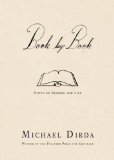
My favorite contemporary essayists include Michael Dirda, Joseph Epstein, John Updike, and many others. This post loiters in one section of one essay from Michael dirdabook-by-bookDirda’s book Book by Book: Notes on Reading and Life. The essay is titled “The Pleasures of Learning,” and the section I’ve isolated for consideration here is called “The Knowledge Most Worth Having.” This section consists of seven sentences, followed by a list of sixteen items, and a concluding sentence that reads:
Know these well, and nearly all of world literature will be an open book to you.

Clearly, Dirda’s reference to “the knowledge most worth having” is circumscribed by a specific purpose. He doesn’t mean to catalog all that it is most important to know. More precisely, he asks, “What should a person know of the world’s literature?” This question presupposes that some works are more worthy of our time and meditation than others, and that if we are to have a “structured reading program” we must have a criterion for determining which works are most deserving. Dirda gives us a criterion and then “a roughly chronological short  list of those that the diligent might read in a year or two.” Both the criterion and the list are interesting.

Dirda’s criterion—the test he uses in deciding which authors and which works are most rewarding for the reader who would attain a knowledge of the world’s literature—is simple. Devote yourself to those works “that later authors regularly build on, allude to, work against.”  Dirda does not elaborate on the principle, except to bestow a name on works that meet this condition; they are “the great patterning works.”

For further insight into the principle, we might consider Dirda’s list. He does not claim that it’s exhaustive. Actually, he implies that it is not. It’s a place to begin. Still, it’s a comfort to hear that “there aren’t many of these key books,” and it’s enticing to be told that “they aren’t all obvious classics.” One might spend a year or two in the company of these books, and then move on to others.

Before I reveal the list, I want to ask, again, what is the point of the list? It is to commend works with the potential to crack open the world of great literature. These works have this power because other authors have built on them, alluded to them, and worked against them. They are, in other words, touchstones for so much great literature that our capacity to appreciate and know the greatness of other works is unlocked by our acquaintance with these.

Now to the list. It is no surprise that it begins with

  • The Bible (Old and New Testaments)

Dirda recommends the Authorized, or King James, Version because it’s “the one that has most influenced the diction and imagery of English prose.” As a kid, I attended a Baptist Sunday School that used the King James Bible in Bible lessons, Scripture memory, and “sword drills.” (Incidentally, I never heard anyone seriously proffer a defense of the KJV on the grounds that “if it was good enough for Saint Paul, it’s good enough for me.” My Sunday school teachers were far more sophisticated than that.) In the third grade, taught by my mother, we children were awarded Bibles of our own—the King James Version, of course. Shortly after that, the production of new English translations began in earnest, and today the original KJV of 1611 is little known, even by those who know the Bible. I’m a proponent of the multiple versions doctrine, that individual versions or translations have their distinctive virtues, and that more than one should be consulted in the serious study of the Bible. But Dirda is hardly alone in proclaiming the incomparable linguistic beauty and legendary influence of the KJV, and I do not disagree. (For those interested in the translation debate, I recommend D. A. Carson’s book The King James Version Debate: A Plea for Realism.)

Next on the list:

The items listed by Dirda are not annotated. He doesn’t say why an entry meets the criterion he’s adopted. But some source containing the ancient myths of Greek, Roman, and Norse provenance is a no-brainer, and Bulfinch’s is the industry standard. Oddly, my copy of the generally reliable Benét’s Reader’s Encyclopedia (mine is the 3rd edition) has no entry for this classic collection. But then, neither does my handy paperback copy of The Reader’s Companion to World Literature. No matter. The important thing is that allusions to mythologies abound in acknowledged “great literature.” The reason for this is worthy of contemplation, but beyond the scope of this post.

Fine. If ancient mythologies must be known on the grounds that they are sources for innumerable allusions, then Homer’s influence is no less significant. The Ionian poet as a man is a mystery. Even his actual existence is doubted. The story of the composition, preservation, and function of “Homer” among the ancient Greeks is interesting in its own right, and is told with clarity uncompromised by brevity in . . . Benét’s.

We begin to suspect that the influence of the ancients runs deep in our literature. Plutarch, who lived in the first century of the Common Era, is best known as a biographer. It’s an irony of history and of literature that little is known about Plutarch himself—no biographer for the biographer. Shakespeare made use of Plutarch in two of his great plays. (Plutarch was, by the way, a master of the personal essay, and his compendium, the Moralia, has survived to please readers to this day.)

So far, Dirda’s choices are obvious. Of course Dante. But why the Inferno and not the whole the the Divine Comedy? Dirda doesn’t declare. So let’s speculate. The Inferno is the first part of the Divine Comedy. So maybe you read the first part and can’t put it down. Or you do put it down, but you’ve had enough Dante for the purposes envisioned by Dirda. Imaginative writing about hell does make for scintillating writing. For some, heaven is boring in comparison, and a proffered reason for indifference about the soul’s destiny. Strange logic.

Next in line:

I confess that I was initially surprised by this entry from the early Middle Ages. But I shouldn’t have been. This is our source for Ali Baba, Aladdin and his Magic Lamp, Sinbad the Sailor, and the phrase “Open Sesame” (which appeals to our get-rich-quick aspirations). The story of Sultan Shahriar and his clever wife Shaharazad is endlessly intriguing. But a guide to The Arabian Nights would be useful, if only because of its length.

The Middle Ages brings to mind the next fairly obvious choice:

  • Thomas Malory, Le Morte D’Arthur (tales of King Arthur and his knights)

Seeing the Monty Python movie is no substitute for reading the book. Take my word for it. But it does give a sense of the book that is somewhat surprising. (Take that with a grain of salt.) The written tales were probably composed in prison by a chap who commended the ideals  of chivalry and was notorious for violating those same ideals. Alfred, Lord Tennyson, was very much taken with these tales, and transcribed them into epic poetry in his Idylls of the King. Here is a clear case where one legendary author, the Victorian poet Tennyson, is understood better against background knowledge of a 15th century author of legend.

You knew he had to show up on the list eventually, and if you’ve been following the chronology, you may have suspected his appearance at any moment—William Shakespeare.

Some of these have been quite respectably adapted for film. Hamlet, starring Mel Gibson (1990) finally made sense of “words, words, words” to me. The Orson Welles film Chimes at Midnight (1965), featuring Welles as Falstaff and John Gielgud as Henry IV, was a favorite of Welles and is generally thought to be one of his greatest movies.

There have been a dozen or more adaptations of King Lear. Most celebrated is the 1983 version starring Laurence Olivier and Dianna Rigg. Another cinematic reprise is planned. How would you like to see Naomi Watts, Keira Knightley, and Gwyneth Paltrow as the three daughters of King Lear, played by Anthony Hopkins? It’s in the works. So now is an especially auspicious time to have a read of the original King Lear.

Film or television adaptations of A Midsummer Night’s Dream were released in 1935, 1968, 1996, 1999, 2002, and 2005. Enough said.

An adaptation of The Tempest is said to be in production. It won’t be the first. The Tempest was first “screened” in 1905, in a two-and-a-half minute production. The play enjoyed a science fiction adaptation in 1956 in the film The Forbidden Planet. Other adaptations were screened in 1982, 1991, 1992 (in animation that is faithful to Shakespeare).

These works by Shakespeare are immortal. The enjoyment of a worthy film adaptation is enriched by a reading of Shakepeare himself.

Michael Dirda’s list continues. But here the entries shade into the controversial.

Miguel de Cervantes Saavedra introduced his dubious but endearing hero, the Man of La Mancha, in two volumes (1605 and 1616). Cervantes is credited by many as the first modern novelist. Since he died in 1616, that’s quite a distinction. The only thing controversial about including Don Quixote on Dirda’s short list is that the list is so short. Some would argue that the inclusion of Don Quixote obliges the inclusion of some other great work not on the list. But the fact is, this grand novel supremely fits Dirda’s criterion. If you disagree, you’re tilting at windmills.

A shade more controversial are

and

Defoe wrote something like 250 works. They call that prolific. Businessman, journalist, government representative, spy, possibly even double agent, but best known for his novel Robinson Crusoe, or The Life and Strange Surprising Adventures of Robinson Crusoe, of York, Mariner. Through this depiction of a solitary figure stranded on an island, we learn how noble men might conduct themselves under such conditions. Crusoe is an admirable figure, with lessons to teach us all. Who hasn’t imagined what it would be like, what we would do, what we would become, if we were to live in such forced seclusion?

Swift was a genius. As evidence for this, I take the liberty of quoting:

Gulliver’s Travels is perhaps the sole major work in all English literature that has continuously led a double life: it has been at once one of the most glamorous of children’s adventure stories and one of the most pungent critiques of humanity addressed to the mature imagination. This almost incredible marriage of opposites is possible because in the main the disturbing satire for adults lurks inconspicuously behind the pleasantly exciting façade of the explorer’s tale; the child can rarely see behind the façade, and the adult can never cease seeing behind it or trying to pierce through it. Further, there are times when Swift is entirely concerned with the façade—of the elaboration of the details of the story for its own sake . . . and the presence of such passages assists the young reader—or the unperceptive reader generally—to take the whole story at the simplest level of meaning. . . . Swift’s obvious enjoyment of playing the game—of unusual sizes, mysterious phenomena, and strangely shaped creatures—gives zest to his narrative without in any way impeding him when he chooses to make the game philosophical. (The Reader’s Companion to World Literature, 226)

Dirda’s inclusion of Gulliver’s Travels is vindicted by the suggestion that this satire “draws upon at least five traditions of world literature,” and the claim that “the use of fantasy for serious statement, virtually eliminated by two centuries of emphasis upon realism, is reappearing in our own day” (The Reader’s Companion to World Literature, 229).

Dirda goes on to add items undeniably suited to his premise. But these, I confess, lie at the periphery of my own reading interests:

and

Fairy tales and folk tales. Their influence has been great. My interest is negligible. For the record, the noted study of folklore and human society is James Frazer’s The Golden Bough.

The final three works are perhaps the most controversial choices. Again, one could argue that some other work is more worthy of inclusion on such a list.

I believe a rationale may be built for each of these entries. Notice, Jane Austin is the only woman to be valorized on the basis of Dirda’s criterion. Some readers might object to this. I know some writers would have filled in with other great female authors just to avoid the appearance of impropriety and escape censure by enforcers of political correctness. But this is Dirda’s list.

There should be considerable pride in and no prejudice against the admission of Jane Austin to the august company of writers of seminal importance. (I hope that doesn’t sound like a bad pun or a contradiction in terms.) In 2003, the BBC sponsored a program called The Big Read, in quest of “the nation’s best-loved novel.” Pride and Prejudice was voted #2, after Tolkien’s Lord of the Rings. I suspect many titles voted onto the Top 100 list for The Big Read found their way there with the help of recent cinematic adaptations. But Dirda’s basis for including Jane Austin’s novel isn’t current popularity but lasting influence in the field of literature.

Lewis Carroll has to be acknowledged, even by someone without predilections for his plotting and style. Alice in Wonderland falls into that class of fairy tales and folklore that have little appeal for me.

As for The Adventures of Sherlock Holmes, I’m completely sympathetic with ranking it high on a list of entertaining and well-crafted fiction. I would even consider bringing Holmes along for my island exile. I’m less sure of the application of Michael Dirda’s criterion for educating ourselves in preparation for mastery of the world’s great literature. Doyle’s imagination, plotting, and writing style are both creditable and inimitable. But there are others. Agatha Christie has sold better—much better, in fact. Edgar Allen Poe is the acknowledged inventor of the mystery story, and is the namesake for the Edgar Award in mystery fiction. I suppose that Doyle gets the nod because Sherlock Holmes is the paradigmatic sleuth, the one who comes to mind first when that special expertise is needed. Fair enough.

So there you have it. A criterion and a list. I’ve tried to make sense of Dirda’s choices. Using his criterion, and limited to sixteen items, I think he succeeds.

Related Posts by Doug Geivett:

Alvin Plantinga’s *Warranted Christian Belief* Now on CCEL


alvin-plantingaYou can now find Alvin Plantinga’s book Warranted Christian Belief (Oxford University Press, 2000) at Christian Classics Ethereal Library. Click here. It can be read online or downloaded in plain text for free. For the modest fee of $2.95 you can download it in PDF format.

Quotations: God and Evil


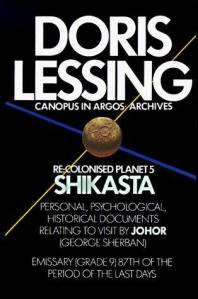
“It is our habit to dismiss the Old Testament altogether because Jehovah, or Jahve, does not think or behave like a social worker.”

—Doris Lessing, Shikasta

Critical Thinking—Best Book in This Category


Amazon

Amazon

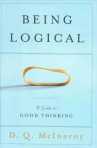
I teach philosophy to graduate students. Many of these men and women are married. Wives of the married men often invite me to speak to their group. Some have told me how much they desire to understand what their husbands are studying, and, frankly, to be able to hold their own in argument when their husbands, by dint of their occupation, have a seeming advantage.

There’s one book I’ve been recommending to them. It’s an excellent general introduction to the skills we all need—both for gentle sparring and for serious debate, but also just for organizing our beliefs into cogent perspectives.

Written by D. Q. McInerny, it’s called Being Logical: A Guide to Good Thinking (2005). (I see that it’s also now available in a Kindle edition.)

Charles Osgood offers this poetic endorsement:

Given the shortage of logical thinking,

And the fact that mankind is adrift, if not sinking,

It is vital that all of us learn to think straight.

And this small book by D.Q. McInerny is great.

It follows therefore since we so badly need it,

Everybody should not only buy it, but read it.

That Bookshop in Portland

That Bookshop in Portland

* * *

What Others Are Saying:

David Foster Wallace


He was someone I thought it would be great to meet sometime. Had I known he was living and working only a stone’s throw away, it might have been arranged.

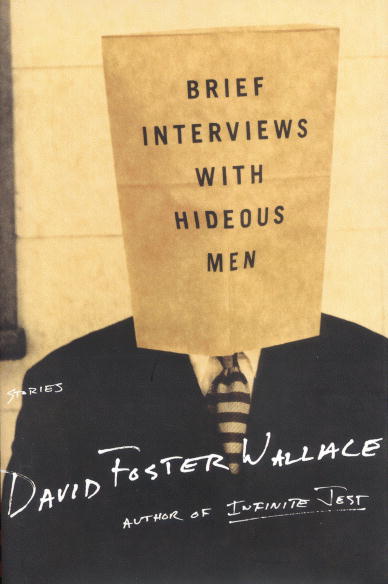
Unfortunately, that won’t be possible. David Foster Wallace hanged himself and was found by his wife when she returned home Friday night, September 12, 2008. He was 46.

Wallace was clever with words. He was inventive. He employed extensive footnotes in his fiction. And he was candid. He went naked onto the page and exposed his soul in ways few novelists do.

His parents were university professors, his father in the department of philosophy at the University of Illinois (Urbana-Champaign). David Foster Wallace himself majored in English and philosophy at Amherst College. And it shows in his writings.

His writings reveal something else, too. In his tribute to Wallace, David Gates writes that “we’ll surely be spotting more and more of these clues in his work,” clues of his long-standing depression and contemplation of suicide. I find it hard to believe that Wallace’s readers didn’t suspect it already, because the clues are littered everywhere.

While reading Wallace myself, I would recall the thesis that genius and great art are often accompanied by threatened madness, that great talent and erudition can only be managed with a colossal effort of self-possession that no one else but the artist can know.

In her book, The Midnight Disease, neurologist Alice Flaherty examines the mental disorders that frequently haunt the most creative writers. She develops an illuminating theory of “manic hypergraphia.” Kay Redfield Jamison, whose work I’ve recommended on this blog, explores the culverts of this condition in a wonderful book called Touched with Fire: Manic Depressive Illness and the Artistic Temperament. The treasure of a gifted man’s labor is more precious when understood in the light of this fire.

***

As it happens, David Foster Wallace travelled with John McCain’s presidential campaign in 2000. He wrote a book about it that came out this past summer. It’s hailed as a journalistic tour de force by someone other than your typical political journalist. It’s called:

McCain’s Promise: Aboard the Straight Talk Express with John McCain and a Whole Bunch of Actual Reporters, Thinking about Hope.

Kindle edition

If You Don’t Feel Like Writing, You Can Always Read About It


You want to write but you can get going? Do the next best thing—read about writing. But make sure what you’re reading is written well. This is my list of recommendations for reading that leads to improved writing. This is kind of an annotated bibliography. I include a favorite quote from each item. Read more of this post

Two Questions about Samuel Clarke’s Cosmological Argument for the Existence of God


I’ve just learned of a reading group that has spent the past several months going chapter-by-chapter through the book Passionate Conviction: Contemporary Discourses on Christian Apologetics. The group moderator contacted me with two questions about my chapter. They’re great questions and I’d like to answer them here, for the benefit of others who might be interested (and in case the questions come up again). Read more of this post

Quotations: On Philosophy


“Philosophy doesn’t begin in some abstract realm; the questions that philosophers concern themselves with begin in human experience.” —Charles Johnson, in his interview with Diane Osen for The Book That Changed My Life

Quotations: On Pain and Suffering


“No, God does not give us explanations; we do not comprehend the world, and we are not going to. It is, and it remains for us, a confused mystery of bright and dark. God does not give us explanations; he gives us a Son. . . . A Son is better than an explanation.”

—Austin Farrer, “The Country Doctor”

“Every war movie, good or bad, is an antiwar movie.” —Steven Spielberg, “Of Guts and Glory”

“. . . after all, the manner in which a person dies, the little details of an autopsy, say, whether the corpse has spots on its liver or lungs, doesn’t in any way cancel the loss.”

—Ted Kooser, The Poetry Home Repair Manual

A high station in life is earned by the gallantry with which appalling experiences are survived with grace.”

—Tennessee Williams

Do You Have Mixed Feelings About ‘Expelled’?


Ben Stein’s movie Expelled opened last weekend. I’ve got a question for those who have seen it and liked some things about it, but are reluctant to give it an unqualified endorsement:

What are its major strengths and its major weaknesses?

Run Lola Run: A Discussion Guide


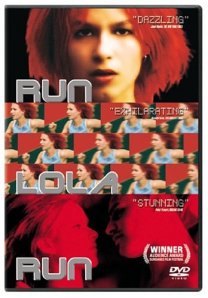
Run Lola Run (Germany, 1998); directed by Tom Tykwer

Chapter 7 of my book, Faith, Film and Philosophy, is titled “What Would Have Been and What Could Be: Counterfactuals in It’s a Wonderful Life and Run Lola Run. The author is Jim Spiegel. Here are discussion questions for the film Run Lola Run that I’ve used in conjunction with his chapter.

  1. Are there any elements in the film that you didn’t understand or can’t explain? Write down what comes to mind?
  2. How would you explain the following: (a) the red hair, (b) the use of black and white, (c) the use of animation, (d) the rapid-fire photo shoots of people Lola encounters, (c) the breaking glass when she screams at different times
  3. The film depicts three possible scenarios. Between the first scenario and the second is a scene when Lola asks Manni a series of questions. She begins with the question, “Do you love me?” What is funny about this scene? What is the logic of her questioning? How does Manni respond? Do you think he should have answered her differently?
  4. Who are the people that Lola encounters during her race to catch up with Manni? What technique is used to portray their respective futures? Why are they portrayed in different ways from one scenario to another? What bearing does this have on the message of the film?
  5. Is there humor in this film? If so, what is its significance, if any, for the message of the film? Is this a comedy? If not, is the humor accidental (not intended by the producers or director) or incidental (not salient to the main message of the film)? Explain your answer.
  6. Between the second scenario and the third, Manni asks Lola, “What would you do if I died?” She thinks his question is stupid. Do you agree with Lola? Why would Manni ask such a thing? How is this bit of dialogue appropriate to the film? Is there anything significant about placing this scene here, rather than between the first and second scenarios?
  7. Does the fact that this movie is in German make the movie more enjoyable, or less? Explain your answer. What would be lost, if anything, if it was in English? Do you think you would enjoy it more, or understand it better, if you understood German?
  8. In the last scenario, while Lola is running with her eyes closed, and she doesn’t have the money, what is she saying? Whom is she addressing? Think about what happens next. Is this supposed to be related to her plea while running? If so, how?
  9. At the Casino, Lola gets incredibly lucky. At this point in the film, is that a surprise? Why or why not?
  10. There are places in the film where a group audience tends to respond with laughter. It’s as if there are cues in the film to laugh at these moments, and most people respond on cue. How does experience of a film in a group situation help in the process of understanding what a film is about, or what a viewer is supposed to believe or feel in response to a scene?

Hacking the ABD Life: Part 2 — The Intellectual Virtues


The academic life has an intellectual component. Duh. But what does that mean?

It means, in part, that an exemplar of the academic life manages his or her life with intellectual virtue. An intellectual virtue is a character trait that improves the chances of believing well—of conducting inquiry in a responsible way and living responsibly on the basis of what is learned through inquiry.

I believe that all members of the human community are called to intellectual virtue, insofar as they are able. Intellectuals should be models of acting from intellectual virtue. I question whether a perceived intellectual is a genuine instance of such a person if he or she is severely lacking in intellectual virtue. The true intellectual must have a suitable measure of intellectual virtue. Diplomas are no assurance of that.

The Ph.D. candidate has already been initiated into academic life—the life of the guild, as it were. One can only hope that this also has included initiation into the intellectual life. The ABD life is a test of intellectual virtue, and an opportunity to grow in intellectual virtue. Certain particular virtues are especially salient to commendable intellectual practice at the ABD stage in one’s career. Here are three of them:

  • Curiosity
  • Courage
  • Moderation

Intellectual curiosity is a natural goad to dissertation research. Intellectual courage is needed to sustain research and overcome obstacles. The virtue of moderation curbs excesses of various kinds. Dissertation research tests the expression of these virtues.

Curiosity stimulates creativity and supplies the initial energy to launch a dissertation project. It’s often difficult to sustain that level of curiosity throughout the research and writing process. The Ph.D. candidate needs to have ways of staying engaged with the chosen topic. As long as new questions emerge with the progress of research, there is evidence of curiosity.

Courage helps the researcher stay at it. The intellectually courageous person believes in the good to be achieved by the research that has been undertaken. Courage fills the void when curiosity dries up, and finds fresh sources of curiosity in the act of persevering. This virtue is threatened in numerous ways. Among the most sinister are the negative judgments of others.

Moderation is probably the least appreciated of the three. Moderation protects the researcher from excesses that would lure him or her away from efficient realization of the primary objective. One can research to excess. The sociology of the ABD experience reinforces the sense that it isn’t possible to “over-research” a topic. Turning over every rock, however promising it may seem in advance, feels responsible; but it is really counter-productive, and hence irresponsible.

Future installments on “Hacking the ABD Life” will focus on specific intellectual virtues. Please chime in with thoughts you have about the connection between the intellectual life and doing scholarship from virtue. Let me know what virtues you think are most salient to realizing that dream of passing from ABD to Ph.D.

Music Mania and Doing Good: Big Things Come in Small Packages


The iPod. The iPhone. Nifty little devices for packing huge inventories of favorite music. In the world of technology, small is BIG—at least some of the time. But today we find out just how BIG small can be. Apple, the people who invented the iPod and the iPhone, announced today that they are #1 in music retail in America. Wal-Mart has left the building; Apple is the new elephant in the room.

How big an elephant are we talking about? Apple has sold 4 billion songs (give or take) to more than 50 million people in this country over the past five years. Let’s do some math. Four billion divided by fifty million equals eighty. So, on average, American customers have purchased 80 songs from Apple. Since tunes go for 99 cents in most cases, that’s roughly $80 per customer, over five years. So $16 per year. Doesn’t sound like much, right? But fifty million customers cranks that figure up to nearly four billion dollars since Apple opened the iTunes music store. A nominal expenditure of financial energy on the part of a sufficient number of people yields an enviable cache of, well . . . cash.

Only 16% of all Americans achieved this result. Sixteen people for every 100 hundred Americans spent $16 on tunes each year for five years, and Apple garnished $4 billion.

Big things come in small packages, if you have enough small packages. But “enough” small packages can be a relatively small percentage of the total pool of possible contributors. In this case, Apple can generate an influx of $4 billion dollars from a relatively small percentage of Americans who love their music to the tune of about $80 each.

One lesson in this is that when enough people care just a little bit about something, and they show that they care with a modicum of energy, big things can happen. Apple has literally been banking on that.

I’ll go out on a limb here and say that most Americans, when they click for a new iTunes purchase, are not thinking, “I sure hope there are a bunch of other Americans out there doing the same thing; otherwise, this just wouldn’t be worth my trouble.” They act for a limited good over which they have considerable control. But because lots of other people do the same thing, Apple is a big winner.

How often do we consider performing some action that would produce only a limited good (something we value), but we refrain simply because the good we can produce by ourselves seems too puny to bother? What if we interpreted our action differently? What if we decided to act for the limited good over which we have some significant control? What if we forgot about whether anyone else cares as much as we do about realizing that good? If we all did that, maybe big things—good big things—would happen.

Having a new three-minute tune to tickle my tympanic membrane is a limited good. I’ll shell out 99 cents for that, now and then. Budgeting $16 a year for this is within reason for most Americans. We manage our music mania pretty well. But it’s only music, after all, piped in through our iBooks, iPods, or iPhones. Surely there are greater goods we could each achieve with the same modicum of expenditure. So what are we waiting for? What good thing would you do, if only enough other people would do it, too?

Tell you what. I won’t wait for you, if you won’t wait for me.