Name This Object
August 17, 2015 2 Comments
,(____),
(o\_|_/o)
Are you good at believing the things you believe? Does it show in the way you live?
August 11, 2015 3 Comments
“Can anyone stop Trump?”
Since Donald Trump’s performance at the first Republican presidential debate, broadcast by Fox News August 6 (2015), there has been much braying, blasting, and boosting about his candidacy. The braying and blasting come mostly from establishment Republicans (for example, Charles Krauthammer and George Will) and a few of his Republican opponents. Boosting is heard from the likes of Anne Coulter and many in the electorate who are just plain angry with “the way business is done in Washington.”
And I’ve kept an open mind and hoped that Trump would inject some energy into public discourse about several urgent issues facing Americans today.
What I did not expect—and what is shocking—is Trump’s invective against women. He has made a number of demeaning public remarks about women that he has singled out for ridicule in the crassest of terms. Early in the debate, Meghan Kelly drew attention to these well-documented remarks and invited him to explain how he could say such things and expect to get elected. In response, Trump came very close to calling Kelly a bimbo; and in the aftermath he attacked her with scandalous language that really has no place in public discourse, least of all among presidential candidates.
Oddly, polls reflect continued enthusiasm for Trump. Some speculate that his harsh language is part of the reason. Political “experts” have been scratching their heads—and wistfully predicting that “Teflon Don’s” sizzle will fizzle. Some are beginning to doubt a future fall from grace.
So who are the people expressing such support for Donald Trump? Why are his poll numbers so high and still rising? My hunch is that Trump would not be polling so well without enthusiasm among conservative Christians.
If true, this is troubling.
Jesus said to his disciples, “The things that proceed from the mouth come from the heart, and those defile the man” (Matthew 15:18). How a person speaks, what he says, the words he uses, expose the condition of his heart. This is a warning because the heart is the core of a person’s being. And it is this core that determines how a man will conduct himself, what kind of a leader he will be. A person’s speech is a public means of assessing a person’s character.
This is why the apostle Paul admonished believers, “Let no unwholesome word proceed from your mouth, but only such a word as is good for edification, according to the need of the moment, that it may give grace to those who hear” (Ephesians 4:29). “But,” you may say, “what Paul expects of Christians does not apply to unbelievers.” But this would be a mistake.
First, Scripture expresses truths that are also good common sense and beneficial to the health of human society. Here we have an example of wisdom for nonsectarian circumstances confirmed by explicit Christian teaching.
Second, Christians are to be an example to unbelievers in every domain that involves attitudes toward others. Our public witness on behalf of wholesome speech is compromised when we celebrate the indecent speech of public personalities and cheer for their success as it impinges on our shared human concerns.
And third, Christians surely believe that both wisdom and grace are needed in the formation of policy by our elected officials. We may not insist on voting exclusively for those who share our religious convictions. But should we turn a blind eye to egregious spewing of venom against others?
In the New Testament letter of James we’re reminded that the tongue is a fire. It is a small organ of the body, but “it boasts of great things.” “Behold,” says James, “how great a forest is set aflame by such a small fire.” What does he mean when using the metaphor of fire for the tongue? “It is a restless evil, and full of deadly poison.” Sometimes we encounter clear cases of this, and we should dread the consequences, for the tongue “sets on fire the course of our lives.” James even says, in direct connection with this, that the same tongue is used “to bless our Lord and Father” and also to “curse men, who have been made in the likeness of God.” This includes words that intentionally demean the dignity of human persons. And this includes cheap shots against women made to garner public attention. (See James 3:5-11.)
One other passage is telling in this regard. It speaks to the issue of solidarity with others. God’s people, those who fear Him, are warned against consorting with scoffers: How blessed is the man who does not walk in the counsel of the wicked, nor stand in the path of sinners, nor sit in the seat of scoffers! (Psalm 1:1). This is relevant, for enthusiasm in the polls expresses solidarity with Trump. This solidarity, I fear, blinds supporters to the shamefulness of his public conduct.
Again, my focus is Trump’s alarming habit of lacing his speech with demeaning words that directly attack the dignity of individual persons—in this case especially, women.
You may like what Trump says about border control or taking a hard line with despots worldwide. You may imagine that a self-made man (who boasts of this at every opportunity) can reverse the downward spiral of our economy. And you may fear that no other candidate, Republican or Democrat, shares your sentiments and feeling of urgency about such things. But can you really be indifferent about what words reveal about a person? And can you ignore the implications this might have for leading a nation that desperately needs God’s blessing? And how are we to explain our professed interest in divine blessing if we temper our objections to Trump’s speech with a rationale that gets things backwards?
I’m writing this for Christians who take seriously their role in human society, who would stand for the right and the good in the public domain. And I urge all believers who are drawn to Donald Trump’s candidacy to consider the possibility that touting Trump approves and encourages shameful behavior.
“Who can stop Donald Trump?” If I’m right about Trump’s support among conservative Christians, they can make a big difference by shifting their support to a more respectable candidate. This answer to the question deserves greater attention.
Here are three suggestions for Christians reading this post:
If Christians take a stand against what is sordid and vulgar in public debate, Trump’s numbers might decline dramatically.
* * *
Other blog posts that speak to this general problem:
June 15, 2015 1 Comment
A few weeks ago I visited a couple in a hospital in Los Angeles. They were friends of friends of mine, and they were in Los Angeles because the wife required treatment for a very rare condition. They had traveled many miles from their home state and really didn’t have close ties with people in my area.
I went to the hospital mainly to meet and visit with the husband. I imagined that his sadness and uncertainty would be compounded by loneliness and isolation. We talked in the courtyard of a small hotel connected to the hospital. As so often in my experience, I was amazed and blessed by this man’s faith and joy, all the more compelling because of his family’s uncertain future and confusion about God’s intentions. Their young children were at home with their loving grandparents, so he was missing them and thinking about how they were managing their own uncertainty.
As I learned more about his wife’s condition and what he told me about her spirit, he mentioned that she was concerned that her smile would be erased from her countenance by the surgery that had been done. He said that her smile was her trademark feature. Many would comment on the effect it had on them when she met them. Would that change? he wondered. This moved me deeply.
After some time, this adoring husband invited me to go to her room to meet her—assuming, of course, that she would be awake and willing to entertain a visitor, someone she had never met and who was not there in any official capacity.
When we reached the entrance to her room, he went in, then came out to say that she would be pleased to meet me. “Pleased” to meet me?
She had only recently had the major surgery that had caused some paralysis in her face. She was weak. But she reached out to shake my hand. Her right eye was bandaged. And sure enough, her face was somewhat contorted. There was no evidence, though, that she was uncomfortable to have me there.
Two things struck me. First, she was more concerned for the hospital staff—the doctors and nurses around her—than she was with own situation. This was a deep spiritual concern that was clearly genuine. She was ministering to them. Talk about a patient’s beside manner! And second, she had this wonderful smile.
This young couple has since returned home. I hear that she’s convalescing well. Today I got a text message from our mutual friends, relaying thanks for my hospital visit. I had to say that it was my joy to meet her and that her smile is wonderful. All by itself it is a ministry to others.
Of course, as time passes, the paralysis may subside and her countenance return to normal. But her joy and concern for others has not lapsed. And people who meet her will feel that a need in their own soul has been touched—even by something as simple as a smile.
June 7, 2015 Leave a comment
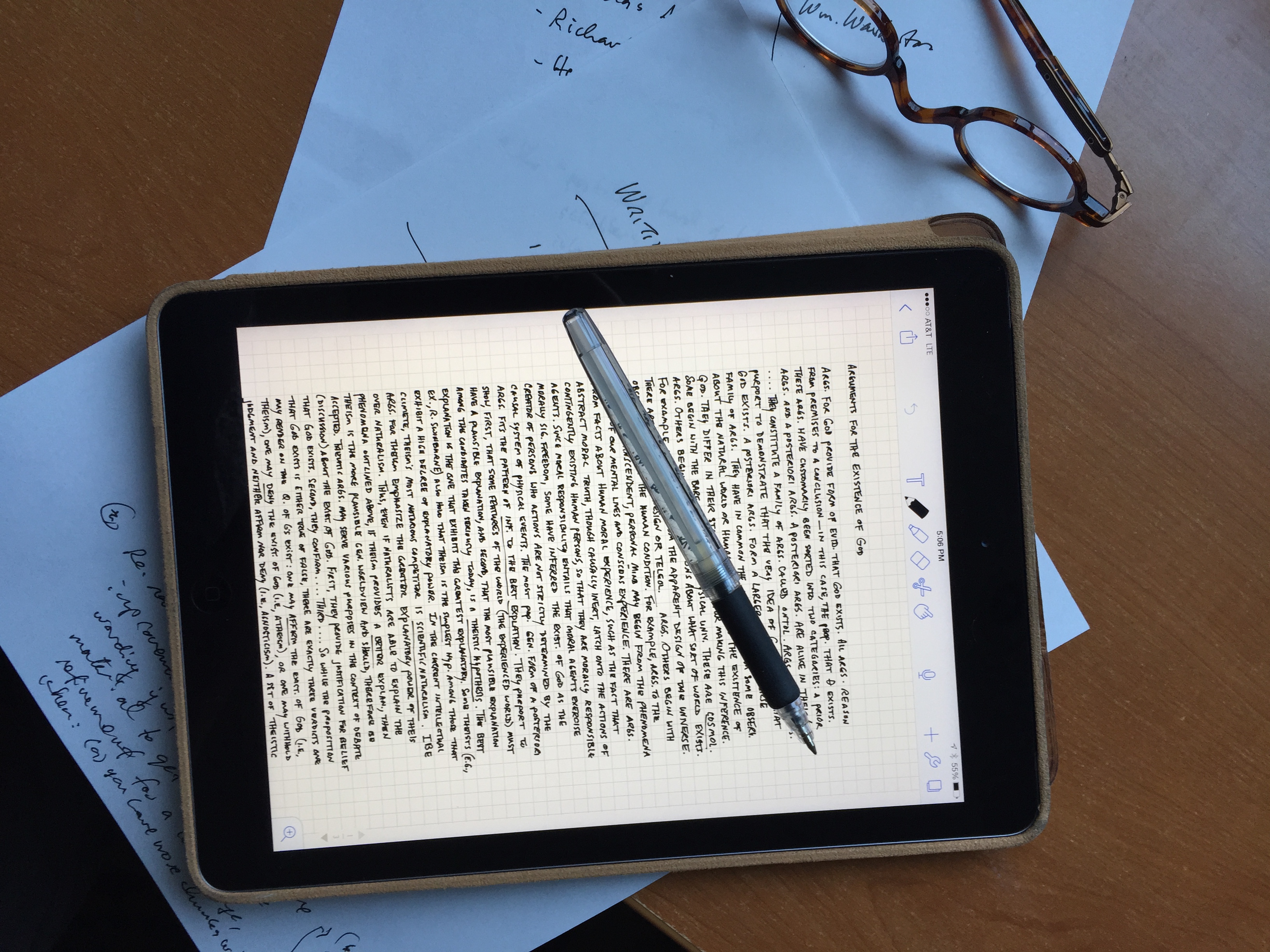
This morning I wrote a 700-page document that will be part of a book I’m working on. I wrote quick, as the ideas kept flowing, one point leading to another. When this happens, digression inevitably happens. During a quick-write, I manage that by putting the detour in brackets and pressing on. I stop when the flow dries up, or something more urgent claims my time. How this works depends on the tool I’m using. Sometimes it’s a basic analog option: a page of paper. This may be a loose page of typing paper or a page in a Moleskine notebook. Sometimes I use an iOS app, like Notability. There are times when I write directly into an email message from my iPhone and then send it to myself. On my laptop, I’m most likely to use Scrivener. I almost never use a conventional word processor, especially Microsoft Word. If my scribblings are in notes to myself sent to my email box, I’ll try to grab a few minutes as soon as possible to copy and paste them into something more permanent and better organized among my other work on the project. I may paste them into MS Word, or Apple Pages (which I like better), or Scrivener (which is where I want them to end up anyway). If my quick-write is on paper, I can scan it and copy the PDF file over into Scrivener. What I use for speed-drafting depends on two things. First, and most basically, convenience. What do I have to work with in the moment? What I’m addressing in this post is, after all, in-the-moment writing. I’m not talking about rough drafts that fit into scheduled writing time. I’m talking about spontaneous writing. I’m talking about writing that happens in your head when you aren’t expecting it. I’m talking about ready-made writing that presses you with urgency at the most inconvenient times. Second, my ever-present intention to be prepared for making the most of these speed-write occasions with the greatest convenience. That means having a plan. Not a detailed plan. Just something as simple as keeping the tools I use close to hand. I almost always have my iPad handy. And I do always have my iPhone with me. But in my truck I have 3 x 5 index cards, spiral-bound so they don’t take flight when I swerve to avoid a driver texting her boyfriend. If I’m carrying a daypack or messenger bag, I have a few other conveniences ready: pens and mechanical pencils, a book I’m reading, and a sheef of blank typing paper. Or maybe a Moleskine notebook. I’m partial to the Moleskine tradition. So I’m pretty much ready for anything anytime, even if it’s just reaching for my smart phone. So far, what I’ve said only speaks to the need for readiness and the most basic things to keep in mind. But now comes the trickier question: How do I do it? That is, how does the writing itself actually proceed and get processed? On this I follow two guiding principles. I’m including them here for two reasons. The first is that they may be helpful to someone else. But there’s also my desire to improve my writing workflow, and someone reading this may have a tweak to suggest in the comments section of this post. Your suggestions are welcome! Principle #1: Write quickly first, as thoughts and provisional words and word order come to mind. This principle is not ground-breaking news that I’ve received from some Oracle. It’s common sense and it’s been said before. But keep in mind, you’re not practicing your writing using someone else’s prompt. In this scenario, the prompt comes from your own mind. Usually it’s related to a project you’re working on, something you’ve been thinking and writing about already. Maybe you haven’t gotten out of bed yet. At this moment, something has happened to set off a chain reaction of thoughts ready for the page. The time is now and you won’t get them back. Not in this form, anyway, and maybe not ever with as much ease and clarity. Principle #2: Later, but not too much later—maybe that day or the next—re-read what you’ve written and make simple improvements. The point is not to wait for some kind of breathing spell to transpire so that things percolate and you can write to perfection. The point is that it usually won’t be convenient to do a major re-write. The aim is to re-read immediately following your spontaneous speed-writing session. You really do want to get to this as soon as you can. But at this stage you still must be careful not to labor over what you’ve written. That will come later. The goal for the time being is to clean up what you were in a rush to write when the words were coming at you fast and furious. This is an initial straightening up, akin to the sort of thing you might do when you’re expecting company in the next few minutes. It’s the second principle that isn’t as well-understood or routinely practiced. So why is Principle #2 so important? It comes down to this: Since you want to follow up your quick-write using Principle #2 as soon as possible, the timing still might not be all that convenient, even for this. You may only have a few moments available. But in the typical case, where you’ve written only a few hundred words, a few moments is all you’ll need for this intermediate step in your writing workflow. But you make those moments count. You press out the most obvious wrinkles, you unkink the knotted branches, you replace a word or phrase with a better one, but only if it immediately comes to mind. While you’re busy ironing out the most conspicuous bits, there may be some actual clothes ironing waiting to be done—before that company arrives in the next quarter hour! Principle #2 is counsel for when the earliest opportunity to edit or re-write presents itself. Some clarifying points about Principle #2:
There are two residual benefits:
So it keeps the writing momentum going. You’re a writer. You’re a writer who writes. You’re a writer who writes when it doesn’t feel like writing. You’re a writer who writes when it doesn’t feel like writing because it happens when you aren’t even trying.
* * *
So what about that 700-page thing I wrote this morning? Well, it happened because of something I was thinking and reading about last night. It led to other things, this post, for example, which itself exceeds 1300 words. And in between the two, because of a text message I received from a friend, I wrote another 500-word post that I’ll publish later. So that makes 2500 words of scratch in various degrees of publicly consumable material. Even I’m surprised by this.
But there’s one last point I want to stress—the simple touching up recommended in Principle #2 sometimes does result in a ready-for publication piece, especially if it’s relatively brief and self-contained. Like this post.
June 7, 2015 1 Comment
The 18th century produced a great many thinkers who made lasting contributions to the study of Christianity’s credentials. On the skeptical side, David Hume has been most significant. William Paley and Bishop Butler have had the greatest enduring influence on behalf of Christianity. Lesser lights from today’s vantage point were leading figures in their time. Among them, William Warburton, who died June 7, 1779—236 years ago today. Warburton’s greatest work was the nine-volume treatise with the odd title The Divine Legation of Moses. The full title was The Divine Legation of Moses, demonstrated on the principles of a Religious Deist. Deist contemporaries, who claimed they believed the doctrine of immortality, argued against the divine authorship of the “Law of Moses.” They reasoned that if the Law of Moses was divine, it would propound the doctrine of an afterlife, which it does not.
The argument has an odd appearance. It isn’t immediately obvious why deist writers, or anyone else for that matter, would think that a divinely inspired text must teach a doctrine of immortality. But, of course, the books of Moses were all there was of the Bible for generations of God’s people. As the source of their knowledge of God’s ways and plans for humanity, it may seem odd, if it is of divine origin, that nothing is ever said for immortality of the self in that source. Surely, if men and women are immortal, and this is by God’s design, then God’s revelation to humanity would indicate that this is so. Men and women are immortal, said these deists, but the Law of Moses says nothing about this. The implication is that the Law of Moses could not have been written under God’s own guidance.
You don’t come across an argument of this sort much these days. And you don’t encounter the sort of argument Warburton made in direct response. Warburton turned the deistic argument on its head, arguing that silence on the question of immortality was actually evidence of divine authorship. The Law of Mose was the “Divine Legation,” and the absence of any direct reference to life after death is evidence of this. If the deist argument seems at all strange, Warburton’s reply seems more so. But the strategy intrigues. Ancient religions contemporaneous with the Jewish religion were unanimous in affirming an afterlife. These were, all of them, manufactured religions. The Jewish religion differed in this one striking respect: no doctrine of an afterlife. This anomaly in the history and sociology of religious belief invites explanation. For Warburton, the best explanation is that the Jewish religious system, rooted in the Pentateuch, was of divine origin. Warburton’s argument was sufficiently compelling that many critics took pains to respond. But this isn’t only because of the core argument. Into the Divine Legation, Warburton squeezed a host of other evidences for Christianity. Among them was the argument from prophecy, which he considered sufficient in itself to establish the truth of Christianity with moral certainty. Warburton was a colorful figure, with many enemies and some surprising friends. He crossed swords with the famed Conyers Middleton in public, but got on well with him personally. The story of Warburton’s life is told with candor, in the Preface to the Divine Legation, by his friend, agent, and executor, R. Worcester (signed at Hartlebury Castle, August 12, 1794). For a catalog of Warburton’s writings, available in PDF, click here.
◊ ◊ ◊
Other posts in this series . . .
June 4, 2015 2 Comments
Yesterday I spoke in two classes, a 7th-grade class and an 8th-grade class, at Vineyard Christian School in Anaheim. Our topic? The Existence of God. I had a 2-page handout for them, and in 45 minutes we examined the value of evidence for what we believe, what it means to have evidence, and what sort of evidence there might be for the existence of God. This is not my usual audience and my biggest concern was that it would all seem boring and over their heads. I was mistaken. Here are three lessons I learned:
It was with some trepidation that I handed my outline to the office assistant for duplicating. I worried that she would take one look at the detail and sophistication and be hard-pressed not to snicker. She was more confident than I that it would work. The kids proved me wrong. We need to expect more from our young people, urge them to keep the questions coming, and invite them into a vigorous life of the mind. Let us not underestimate their interest and capacity. They are the next generation. And we are responsible for their nurture.
Related posts:
May 26, 2015 2 Comments
What’s the causal relation between these two objects, and what third object is missing from this picture?
May 21, 2015 Leave a comment
I don’t get it, these coincidences with no significance always happening to me.
Allow me to illustrate from today’s events.
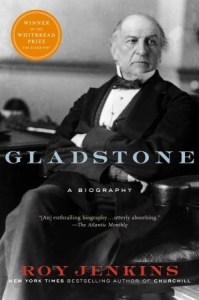
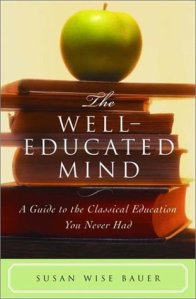
Around noon, I hefted my copy of Roy Jenkins’s biography of William Gladstone from the shelf, with the vague intention of reading some portion of its 698 pages. As if this would not be enough to occupy the few moments I could spare, it occurred to me that I might also refresh my memory of what Susan Wise Bauer says about reading biography, in her book The Well-Educated Mind.
Not only had I forgotten what Bauer says about biography, I had forgotten that she doesn’t say anything about biography as such. Rather, she has a chapter on reading autobiography. And her guidelines are fairly specific to this sub-genre, with only limited application to biography in general. Still, my wandering eye surveyed the pages on autobiography. In there, she recommends several worthy examples. Among them is Mary Rowlandson’s The Narrative of the Captivity and Restoration (1682). This autobiography Bauer calls a “captivity narrative,” as if this is a recognized sub-species of the genre. This was news to me, but it was plausible.
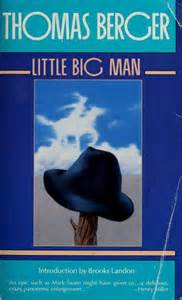
This evening—mind you, this was several hours later the same day—I was relaxing with a different book. I had ordered Thomas Berger’s novel Little Big Man and it arrived with today’s junk mail. Naturally, I began with the Introduction by Brooks Landon. It is mercifully short, so getting to the first page of the novel itself was relatively pain-free.
But now I come to the coincidence that occasions this post.
It was entirely coincidental when I read Brooks Landon’s opinion that this novel is “a literal model of the traditional ‘captivity narrative'” (page xvi).
There it was again—”captivity narrative”—twice in one day, with no recollection of prior encounters with the term. Certainly, the term is not (or was not) a part of my active vocabulary. So why, with no real familiarity of the term, did I encounter two uses of it in such a disconnected sequence of events, in two books, one a work of non-fiction and the other a novel—all within the space of a few hours?
What difference does it make? you ask. But that’s the point, you see. It makes no difference. It just happened. It was a coincidence of no consequence!
But coincidences often are thought to be consequential just in the nature of the case. And so it is doubly puzzling that inconsequential coincidences should happen so often.
May 6, 2015 Leave a comment
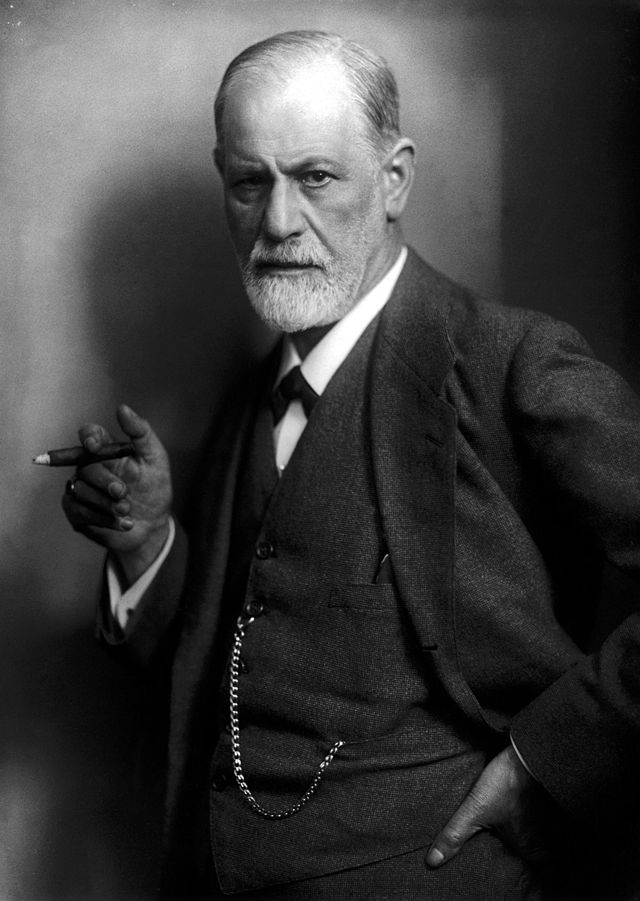
Yesterday’s post was about Karl Marx. Today it’s about Sigmund Freud, who was born on this date in 1856. They have this in common—that religion is a subjective response of one sort or another, to be explained away psychologically or sociologically. Feuerbach contended that God is part of the furniture of a dream world. Marx called religion “the opiate of the people,” a drug that postpones the realization of social utopianism. Freud, when writing about religion, spoke of “the future of an illusion.”
All were atheists. All traded the idea of God for a vision of reality that gained traction for awhile, then lost steam. Almost no one knows about Feuerbach, and those who do seldom think of him with affection. Marx’s communism, where it exists, is anything but utopian. And Freudian psychoanalysis is now repudiated by most practitioners and theorists in psychology.
The doctrines that God is a projection of the human imagination (Feuerbach), that religion is a drug that holds humanity back from realization of its highest aspirations and greatest potential (Marx), that the idea of God meets some need for a grand Father figure (Freud), are all affectations. They each acknowledge the pervasiveness of religion in the experience of humanity. Each explains away what it does not argue is false. Each imagines a world improved by the deconstruction of religion. And each has failed in its diagnosis of the human predicament and in its prognosis for a religionless world.
Notice, each of these visions for humanity attempts a solution for the human predicament, which they each in their own way attribute to religion. But the attempt to shift responsibility for the human predicament onto God is itself responsible for the human predicament. The strategy has its origin in the Garden, where the serpent alleged that God’s warning and God’s promise would hold the first couple back from realizing the full potential of humanity.
The impulse is the same for every generation. There is nothing new under the sun (Ecclesiastes 1:4-11). Today, the false starts toward utopian society are rooted in scientific naturalism, mysticism, political meliorism, and religious fanaticism. In every case, true religion is either denied or obscured. The effect is the same: to steer men and women away from the only sure source of salvation, individually and collectively.
We frantically grasp for some semblance of peace—peace of mind, peace among nations. But our frenzy only makes things worse. It displaces peace. And it ensures that the true source of peace is passed by, unnoticed. That source is too good to be true, too easy for it to really count: “Come to me all you who labor and are heavy laden, and I will give you rest. Take my yoke upon you, and learn from me, for I am gentle and lowly in heart, and you will find rest for your souls. For my yoke is easy, and my burden is light” (Matthew 11:29-30).
But isn’t that how the achievement of peace should come? Not as an achievement, but as a gift?
Some dates:
May 6, 2015 2 Comments
Pam Geller, president of the American Freedom Defense Initiative, is an activist. She clearly is on a mission to raise awareness of the threat from radical Islam. Most recently, she hosted an event in Garland, Texas. The idea was to award $12,500 to the winner of a cartoon contest for depicting the prophet Muhammad. This is just the sort of thing that riles Muslims worldwide. It is provocative and incendiary. It appears that it was deliberately so. Ms. Geller doesn’t like jihadists, and this is her way of drawing—quite literally—attention to the seriousness of their threat.
The event in Garland turned bloody when two gunman rolled up to the venue, brandished high-powered weapons, and were shot dead by the police. A media frenzy has developed over the event, but it has been focused through a peculiar lens: the misdeeds of Ms. Geller.
Apparently, Geller wishes to test the first amendment protecting freedom of speech in the United States. And she seems to have concluded that this precious right has been trampled in the aftermath of the event. In her media appearances, she has sought to direct attention to the truth of her message, so dramatically demonstrated by what happened at the Curtis Culwell Center: Muslim radicals are a danger and a threat to Americans right here at home.
There are at least three possible motivations for the media outcry against Ms. Geller:
I should mention a fourth potential motive for the media’s present obsession: Their need for another news story. “After all, Baltimore has calmed down, and they need some news to report.” This vague allusion to media cynicism neglects the significance of similarities and differences in media treatment of Ms. Geller’s escapades. They share a distaste for her actions; they differ in their specific criticisms of them.
The Common Sense Objection
The media critique of Geller has generally fallen short of accusations that she crossed the line protecting her freedom of speech. Her freedom of speech is protected. And note, Geller is doubly protected. First, the first amendment protects her from prosecution for her actions. Second, when threatened by violence, she and her cohorts are rightly protected by law enforcement. The gunmen who were killed violated the law. Geller did not. They had murder on their minds. Geller did not.
Here’s a difficult question for the media to wrestle with: If the gunmen were shot and killed for their own violent, law-breaking actions, while Pamela Geller was exercising her first amendment rights and did nothing legally wrong, should we focus on what the jihadists are doing to threaten American civil liberties, or should we focus on the wisdom of Pamela Geller’s actions? Wow, that’s a tough one.
Many media personalities have focused exclusively on the provocations of Ms. Geller and not at all on the nefarious action of the gunmen who represent world jihadism. They’ve blamed her for what occurred on May 3. This is a diversion from the truth that the gunmen were responsible for the outcome and that their acts were motivated by commitment to extremist Islam. And it ignores the report that ISIS has taken responsibility for the murderous decision to attack the Muhammad Art Exhibit.
There is a place for considering whether Pamela Geller is going about things in the right way. I think it’s a mistake. For several reasons. Not the least of which is that it isn’t exactly the Christian thing to do. I hope there aren’t a lot of Christians commending her for the strategy she’s adopted. Rank and file Christians—who have little influence on the international stage and can do little to effect geopolitical change—are called to winsome engagement with those who do not accept their Gospel. On the other hand, I believe there is the possibility of crafting a Christian strategy for dealing with ISIS and others. I even think that a Christian strategy is what is most needed today. Urgently needed.
But the media have a responsibility to get their priorities straight in the encouragement of civil discourse about what matters most. And right now that includes assessment of the potential for future attacks, some of which will likely succeed if we’re not vigilant. It’s not as if it takes a Pamela Geller to stimulate jihadist outrage.
And all Americans should be wondering whether fellow Americans whose tactics they disapprove should be cowed into silence into order to make peace with those who plot the disruption of our civil liberties. Reportedly, the winner of the cartoon contest has gone into seclusion after receiving death threats. Does Chris Matthews think he’s getting what he deserves?
May 5, 2015 6 Comments
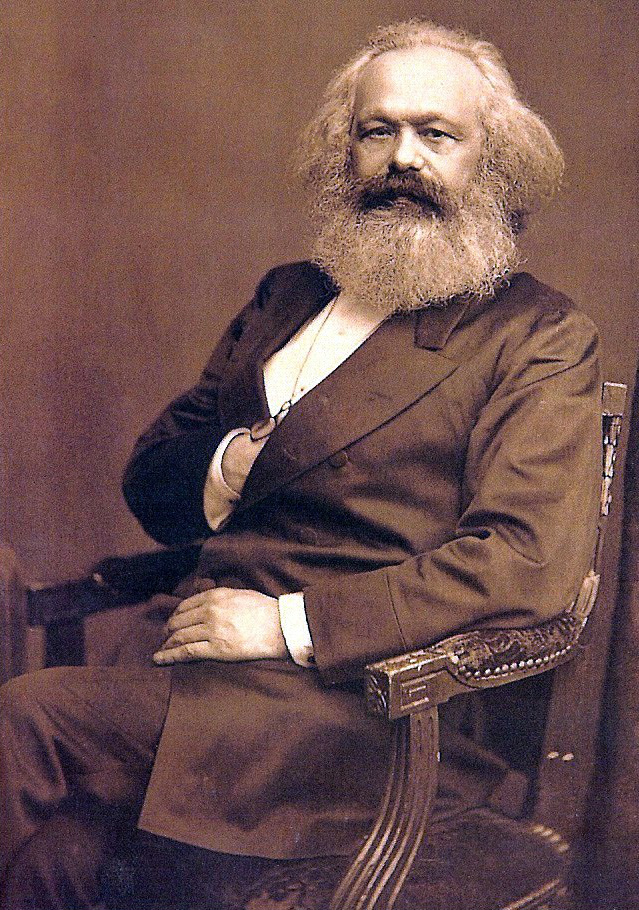
Nietzsche famously said, “God is dead.” His great intellectual forebear, Karl Marx, was born on this date in 1818, just five years after Søren Kierkegaard, who has the same birthday. Marx is perhaps the best-known atheist of the 19th century. He grew up in a German-Jewish home. But it is said that he converted to Lutheranism when he was only six years old. Either it didn’t take, or it didn’t last.
He was a militant atheist during his college years at Bonn and Berlin. He was drawn to a group called “the Young Hegelians.” A major figure of this group was Ludwig Feuerbach, who influenced Marx and probably inspired much of the atheist element in Marx’s “dialectical materialism.” For Feuerbach, God is nothing more than a projection of the human imagination. Religion is but a dream. And it is a dream with a mixed reputation. It expresses the guilt and remorse characteristic of the human condition, and then pretends to offer a solution. Humans find it pretty hard to escape this fantasy, since it serves a useful purpose.
Marx extended the motif, calling religion “the opiate of the people.” More drug than dream. The corrective he envisioned would replace the need for a beneficent transcendent being with a social arrangement that would ensure tranquility and economic stability. His dialectical materialism provided the metaphysical framework for his communist utopianism. As materialist, he asserted that all is matter, including the human person. But his materialism affirms an evolutionary history that leads dialectically to utopian finality, where society progresses from “each according to his ability, to each according to his need.” The path to this ideal condition would be painful but necessary. It would be mediated by revolution.
Sadly, this much of the Marxist vision has been realized; but its glorious outcome has been more nightmare than dream. Neither Marx nor Feuerbach offered any real arguments against the existence of God. Instead, they embrace the nonexistence of God as a kind of article of faith. They imagined that all who believe in God do so without objective warrant. But pervasive belief in God must be explained—and got rid of—somehow. Thus they offered psychological and sociological explanations for religious belief. This created space for Marx’s theoretical speculations, which gained surprising traction in his day. His dialectical materialism is mostly a thing of the past. Communism has been exposed as a vicious means for dictatorship rather than equality. But the attitude persists that religion is a private matter that tends rather to debase humanity than to realize humanity’s highest aspirations.
This is a powerful catalyst for secularism. If religion is ungrounded, the most it can offer is private solace. But the heart grows restless with solace that has no objective ground. And so humanity turns to substitutes, seeking always to make a better life without God. It matters not whether God is dead—as Nietzsche proclaimed. What matters is whether the heart appropriates what reason supports. Our need for spiritual solutions to pervasive problems is some evidence that spiritual solutions do exist. But that possibility can only be taken seriously if evidence for religious truth is considered fairly and objectively. No path to a better world is worth trying if it doesn’t start there.
As I noted in a previous post for today, Søren Kiekegaard sought to awaken recognition of these facts about humanity and spiritual values. Too bad Marx didn’t listen to Kiekegaard.
May 5, 2015 2 Comments
I didn’t think I’d find the Apple Watch very interesting. The #1 reason is that I was sure it would be priced beyond my reach, for a timepiece. The #2 reason was that I thought it would be more timepiece than anything Apple should be willing to brag about.
Then I watched the various short tutorials at the Apple website. It does seem to have some nice features. Certainly, if you want to, you can pay $10k for a special edition. But for a few hundred you can get the same technology with less but completely satisfactory luster.
Still, a few hundred dollars? I wear a watch I paid less than a hundred for and everybody thinks it’s a Rolex. And I have a smart smart phone, the iPhone 6. I could strap it to my wrist.
If Apple and its loyal customers have watch envy, they have some catching up to do. They may want to drool over “The World’s Most Expensive Watches.” For my money, I’d go with the Roger Dubuis Excalibur Quatnour. Unfortunately, it’s priced at 1 million Swiss francs, and I have only a few dozen francs left over from my last trip to Zürich.
I think I’ll stick to my policy of waiting for the second or third generation Apple Watch before I buy the first—at a discount.
Here’s a New Yorker cartoon that captures the tech zeitgeist, and my own mood, in good humor:
May 3, 2015 Leave a comment
Last week I was interviewed by the Good Book Blog about the New Apostolic Reformation. This blog publishes articles written by faculty of Talbot School of Theology at Biola University.
To read the interview, follow this link.
Note: This is post #500
May 1, 2015 Leave a comment
Reading about love. The lovestruck will have no interest because being in love takes you out of being in any conceptual mode, such as reading about the sort of thing love is. Or is supposed to be.
Maybe this is a part of what Emily Dickinson was pointing to when she wrote:
That love is all there is,
Is all we know of love.
When you’re in love, all there is is love. Next question?
But then there are the unrequited lovers. Which may be most of us most of the time. Do they read about love?
It turns out that many may be reading about love these days. Certainly, more are writing about it philosophically. This is documented in Clancy Martin’s review of Berit Brogaard’s book On Romantic Love. Martin likes Brogaard’s book.
From what I gather, the controlling idea is that love, though it is an emotion, may be rational or not. Brogaard means “rational” in a sense that permits some choice and control on the part of anyone with romantic love on his mind (and not just in his heart).
This suggests that if you’re in love and you wish you weren’t, you might be able to do something about it. And if you aren’t in love, maybe you can do something about that, too.
I see a problem here. While your emotional state may be under some measure of control, you have no control over the emotional state of another person. This is a real problem for the lovelorn. For romantic love is arguably reciprocal. Without reciprocation—that is, as long as love goes unrequited—the love you feel may not be the same thing it would be if reciprocated. It may not even be romantic love.
But then, what is it?
Notes:
[1] The Emily Dickinson quote is from her undated poem “That love is all there is.” Dickinson lived from 1830-1886.
[2] For Clancy Martin’s review of Berit Brogaard, follow this link: Choosing Love – The Chronicle Review – The Chronicle of Higher Education.
Recent Comments