Be Still and Know that I Am an Artist


Margaret Atwood tells a joke:

The Devil comes to the writer and says, “I will make you the best writer of your generation. Never mind generation—of this century. No—this millennium! Not only the best, but the most famous, and also the richest; in addition to that, you will be very influential and your glory will endure for ever. All you have to do is sell me your grandmother, your mother, your wife, your kids, your dog and your soul.”

“Sure,” says the writer, “Absolutely—give me the pen, where do I sign?” Then he hesitates. “Just a minute,” he says. “What’s the catch?”

Atwood uses this fictional exchange to explore “the problem of moral and social responsibility in relation to the content of a work of art.” The passage appears in chapter four of her 2002 book Negotiating with the Dead: A Writer on Writing. I’m still in chapter three, but I skipped ahead.

Negotiating with the Dead is a literary essay on the writer as artist. At least, that’s true of the half I’ve read so far. Chapter 3, titled “The Great God Pen,” traces the Art Wars generally, and the world of poetry and fiction as a theatre of war in particular. And she examines an interesting argument—strictly syllogistic, mind you—that “we should devote ourselves to beauty-worship.” An unexpected but crucial premise in this argument is Jesus’ declaration, “The truth shall make you free.”

The interesting story here is that art has displaced religion in a secular society. Atwood isn’t all that explicit about this. But what she says is suggestive. Her chapter begins with clichéd questions about literary worth and money. Since writers are warned against unrealistic expectations of monetary gain, they must come to grips with deeper incentives. One possibility commends “the social usefulness of art.” But writers beguiled by this idyllic motive are victims of censorship, often inflicted by themselves. “Thus, the heroes of Art became those who were willing, as they say, to push the envelope.”

In due course, this pushed artists in the direction of a “pure aesthetic” that pitted art against moral purpose. The upshot, in the words of Ralph Waldo Emerson, is that beauty, rather like God, “is its own excuse for being.”

Oscar Wilde drew out religious parallels with art that imitate the language of Christianity, says Atwood. In his preface to The Picture of Dorian Gray Wilde wrote, “No artist has ethical sympathies.” He added, “Those who find beautiful meanings in beautiful things are the cultivated. For these there is hope. They are the elect to whom beautiful things mean only Beauty.”

The artist is a high priest of the imagination. But this does not require scruples. When it comes to Art, some get it and some don’t. Art for art’s sake is non-utilitarian. It disdains mammon and turns a blind eye to social responsibility. For a writer of this persuasion, there is no accountability. The only ultimate is the instinct of the artist.

Atwood explores this theme without committing herself to its creed. But she does seem to think that there are only two other motives for writing. They are writing for monetary gain and writing to fulfill a social responsibility of one sort or another.

***

Atwood is probably best known for her novel The Handmaid’s Tale (1985), depicting an apocalyptic future with the world’s women in subjection to a theocracy run by fanatical devotees of the Bible. The film adaptation appeared in 1990, starring Faye Dunnaway, Natasha Richardson, and Robert Duvall.
Remains of the Day


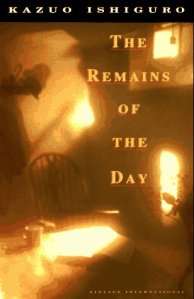
The Remains of the Day, published in 1989, is Kazuo Ishiguro’s third novel. Born in Nagasaki, Japan in 1954, Ishiguro lived in Great Britain from age five and is a British citizen. And there can be no question that he is a British novelist.

This novel won him the Booker Prize. In an interview at the time of his award, Ishguro explained that he wanted to explore two themes, how ordinary people relate to people of influence and the effects of sublimating one’s own feelings for an ill-conceived ideal. His vehicle for this is a series of brooding ruminations by a British butler who has dedicated his best years in service to a wealthy Brit who was a naive Nazi sympathizer in the years leading up to World War 2. Read more of this post

Quotations: On Poetry


Emily Dickinson Script

Emily Dickinson Script

“. . . you can’t force a poem.” —Elizabeth Jennings, quoted in The Poetry of Piety, edited by Ben Witherington III and Christopher Mead Armitage

“It takes a grateful audience to keep a poem alive.” —Ted Kooser, The Poetry Home Repair Manual

“Another note to tack up over your desk: Too much cleverness in poetry can be a real killer.” —Ted Kooser, The Poetry Home Repair Manual

“Poetry, even the poetry of humor and delight, is an agent of the imagination pressing back, in Wallace Stevens’s phrase, against the pressure of reality.” —David Lehman, Forward to The Best American Poetry 2006, edited by Billy Collins

Beyond the Sounds of Poetry


In a separate post, I’ve recommended Robert Pinsky’s little book The Sounds of Poetry. So maybe you’ve jumped in and grabbed your own copy of the book to get yourself educated in the values of poetry. What comes after Pinsky’s guide? Here are a few suggestions that vaguely parallel my own path toward greater understanding and appreciation of the riches of poetry. Read more of this post

Don’t Like Poetry? Start Here


How often have you read a poem and thought, “I don’t get it”? I can relate. How about this one: “I don’t get it; but I wish I could”? That was me, too. And it kept me away from poetry. Then I discovered Robert Pinsky’s little book The Sounds of Poetry: A Brief Guide. Pinsky helped me get it, and made me a believer in poetry.

There are several reasons why I wanted a deeper appreciation of the poetry I didn’t understand. Read more of this post

Quotations: From Fiction


These are quotations culled from my reading of fiction, not easily categorized. If you can think of a good category for any of these quotations, please let me know using the Comment box below.

“I don’t think he hunted. But he could talk on any subject. In this regard, he was a good barber.” —Raymond Carver, “The Calm,” a short story in What We Talk About When We Talk About Love

Quotations: On Literature


“Even the objects in a fictional world are shot through with meaning and philosophical significance.” —Charles Johnson, in his interview with Diane Osen for The Book That Changed My Life

“I think that a good work of fiction is comparable to a good work of philosophy. That means it must engage the life of the spirit as well as the life of the intellect. I don’t want the characters to just talk the ideas; I want them grounded in the drama they find themselves in, in the world of action. Philosophy doesn’t begin in some abstract realm; the questions that philosophers concern themselves with begin in human experience.” —Charles Johnson, in his interview with Diane Osen for The Book That Changed My Life

The Sign of the Book, by John Dunning


Years ago I read John Dunning’s detective novel Booked to Die and realized I’d found a new author to stalk during my reading jags. The novel was the first installment in Dunning’s series featuring Cliff Janeway, ex-cop and second-hand bookseller, living, reading, and sleuthing in Denver. I watched for the sequel, The Bookman’s Wake, but somehow missed it (if memory serves). Almost ten years went by before there was a third installment. By then I had stopped monitoring Dunning’s authorial movements.

About seven months ago I stumbled across The Sign of the Book, #4 in the series. I reckoned I could get away with reading it without playing catch-up on #2 and #3. I was right. But I didn’t put this theory to the test until recently. Saturday was my first beach day of the summer. I brought the Dunning novel with me to Corona del Mar and enjoyed my re-introduction to the author and his detective.

To the degree that I can recall, Dunning is true to form in #4. I still like his style and will eventually get to his other series books. Dunning adopts the first person point of view, probably the trickiest POV out there. When reading fiction written in the first person, I have the tendency to ask periodically why the fictional narrator is telling me his or her story. First person point of view doesn’t work for me if there aren’t any clues about the speaker’s motive. The first-person novel is, after all, one long monologue—in this case, 513 pages worth.

Dunning makes it work. Only rarely did I take exception to the way he handled the speaker’s perspective on the mental states of other characters in the story. This novel impresses me as an exemplary specimen of first-person narration. It’s fitting that in the final sentence of the novel, Cliff Janeway remarks, “The mysteries of the human mind are far beyond my comprehension.” (I’m confident that quoting the last sentence is not a spoiler.)

The writing is intelligent, but The Sign of the Book is not literary fiction in the hifalutin sense. Each character speaks in a distinctive fashion that is consistent throughout. The best bit of dialog occurs in a courtroom scene. I was a little confused about the floor plan of an important building at one point in the story. But this was not as much of a handicap for Janeway as it was for me.

This isn’t comic fiction, but Dunning manages to amuse with his choice of words and the dialog at which he excels. Suspense comes in two forms. First there’s the plot and the mystery about who dunnit. But frequently along the way there are stretches of suspenseful action . . . or inaction . . . as well. And that’s critical to the success of a detective novel (in contrast, for example, to the sort of mystery fiction so masterfully crafted by P. D. James).

One more thing. Janeway taught me a new way to survive the monotony of waiting for countless hours with nothing to do. This could come in handy if I’m ever on a stakeout without my Kindle.

***

John Dunning is a distinguished author. Booked to Die won him the Nero Wolfe Award, and The Bookman’s Wake appeared on the New York Times list of Notable Books. Other detective novels of his have been nominated for the Edgar Award. In addition to awards, Dunning has readers. Drew Goodman, book sales manager at the University of Utah campus store, has gone so far as to include two of Dunning’s Janeway novels on his “Sacred Shelf of 10,” as of October 25, 2007.

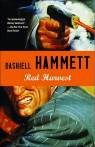
Classic Mystery Reads:

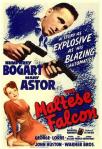
The Films:

For the preview and Unbox rental for The Maltese Falcon, go here.

Poem in Need of a Title


Poetry

Is not for me.

I wrote “this little ditty,” as they say, earlier this year. Imagine the exertion!

I’m now taking suggestions for a title. I’ve had two nominations, so far: “The Poet,” and “Poet Wannabe.”

For the time being

And maybe in perpetuity,

“Poetry

Is not for me,”

Will have to idle

As “Poem In Need of a Title.”

The Stuff Growing on the Bark


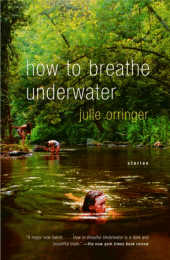
Nick Hornby, a.k.a. Nick Jagger, was induced to read this volume of short stories by a friend, Johanna. Agreeing to do so, with the usual reluctance he reserves for books recommended by friends, Hornby found himself buying up first editions for his other friends. “It’s that sort of book,” he says, in The Polysyllabic Spree.

The book is How to Breathe Underwater, by Julie Orringer. One year after reading Hornby’s endorsement—today, in fact—I sampled two of the stories. First I read “Stations of the Cross,” the last in the book, and not mentioned by Hornby. It reminded me of a film I saw recently, where the son of an Irish Catholic fireman sets out to convert the ailing son of the local rabbi. I could see immediately that Orringer can write. But she hadn’t convinced me yet that her writing was for me.

So I turned to the first story in the book, called “Pilgrims.” It was this story that had single-handedly compelled Hornby to grab up copies. This story, he promised, “makes you feel panicky and breathless.” That sounded like a rewarding experience, so I dipped into it. I didn’t feel panicky and breathless. Still, I could see why I might if I hadn’t been led to expect it.

For me, there are a couple of crucial tests of a good short story. These are utterly subjective. First, I have to be tempted, if not driven, to find more by the same author. Second, I have to believe that the story is one I would return to periodically. “Pilgrims” passes these tests. But I can’t say I “liked” the story. Like “Stations of the Cross,” “Pilgrims” has that artsy unfinished feel to it. This authorial penchant is fine with me, if it’s handled properly. I want to have some idea how my train of thought can proceed—not to say, should proceed—without the author’s assistance, when the sentences have run out. My limitation, I suppose.

Hornby generalizes in this way about Orringer’s ouvre: “while her themes are as solid and recognizable as oak trees, the stuff growing on the bark you’ve never seen before.” Now I’ve read two of her stories, I think maybe I know what he means. Maybe.

Get Thee to the Novel!


This is Cynthia Ozick’s advice. It’s a vital antidote to the crowding of the mind by the . . . well, by the crowd. Ozick values “The Din in the Head,” the title of her essay in defense of the novel.

Cynthia Ozick

Cynthia Ozick

Problem? That special form of consciousness that is the unconstrained play of the mind is overwhelmed with noise from the outside world. The crowd, the human community, is her metaphor for this noise, because it is such a typical source of the noise. The problem has worsened with “the ratcheting up of technology.” So many things contrive to sublimate the maelstrom of the heart, “that relentless inner hum of fragility and hope and transcendence and dread.”

Solution? Reading that returns one to interiority. Two forms of literature have this power, and both are sadly neglected and increasingly hard to come by: the personal essay and the literary novel. “Literary grandeur is out of style.”

Why does Ozick value the din in the head over the din of the crowd? Din—defined by Merriam-Webster as “a welter of discordant sounds.” Who wants that going on in his head?

It may be that our self-saturation with inputs from a manufactured world is welcome precisely for its power to silence the din in the head. Ozick believes we need rest stops along the information highway. Our obsession with the delivery system of one kind of knowledge deafens us to another source of knowledge. Yes, knowledge. The literary novel imparts knowledge, but not systematically. Thus, it is not a delivery system. But there is truth in fiction, truth that surfaces through varied “cobwebby knowings.”

There are truths that have that cobwebby texture in our minds. It can’t be helped. And there’s no knowing them, at least initially, without this sort of acquaintance. But do we prize this sort of knowledge? Arguably, we do not. It is more likely that we are confounded by the claim that this is a kind of knowledge.

I believe that there is such knowledge and that it is foundational to the knowledge enterprise. Our reasons for believing so much of what we believe are often beyond articulation. And yet they are sound. They ground much of what we know through a peculiar form of consciousness, experience that is possible only under conditions of quietude. But what’s the novel got to do with that? The novel is the distillation of imagined experience. By reading I am able to experience what is otherwise beyond my frame of reference. And this puts me in cognitive contact with truths whose nature determines how they can be known. I concur with Ozick; reading carefully crafted fiction is one way they can be known.

Cynthia Ozick’s essay can be found in One Hundred Great Essays, edited by Robert Diyanni.

Cynthia Ozick Links:

Quotes on Fiction


“. . . one discovers that an authentic sermon even within the confines of fiction [as in John Updike’s novel Of the Farm] can have a kerygmatic quality: one feels addressed, in a fairly direct way that collapses in part the illusions of fiction. Updike is able here to fix a receptive mood in which the reader is led to respond to the message as well as to the fictive situation.” —Robert Detweiler, “John Updike’s Sermons,” chapter in Breaking the Fall: Religious Readings of Contemporary Fiction