Doubt (Film): A Discussion Guide


doubtposter081

Doubt (USA, 2008)

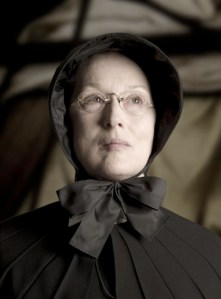
Philip Seymour Hoffman and Meryl Streep put in great performances in the new film Doubt, based on a play of the same title written by John Patrick Shanley. Shanley wrote the screenplay for and directed the film. Here are some discussion questions for the film. (These are based on an assignment I’ve developed for my course Faith, Film and Philosophy.)

  1. Why is Doubt a suitable title for this film? There may be several reasons.
  2. This film is an adaptation of John Patrick Shanley’s play Doubt. Have you read the play? Have you seen the play performed? If you’ve read or seen the play, what is your evaluation of the film as an adaptation?
  3. What is the opening scene of the film? Having seen the whole film, what makes this a fitting start?
  4. Where does Father Flynn get his ideas for his sermons? What is the theme of his first sermon? His second sermon? His farewell sermon? What is the source of each of these sermons?
  5. Sister James asks Father Flynn if the sermon about gossip was directed at anyone in particular? He replies with a question, “What do you think?” Neither question is answered directly. So, what do you think?
  6. doubt-hoffmanWhat do you think of Father Flynn’s description of gossip and his method of illustrating this vice? Is it effective? Does it give you greater insight into the nature of this common but malicious practice? Have you ever been the victim of gossip? Did it have an unfair effect on your reputation? How did you respond? Did you do something about it? What should a person do when someone with influence has spread rumors about him or her to others?
  7. What does Sister Aloysius think Father Flynn has done wrong? Does she have a specific allegation of wrongdoing? What is it? If Sister Aloysius candidly agrees that she has no evidence and cannot prove her allegations against Father Flynn, why is she so certain that he has done something wrong? Is it true that she has no evidence? Are there moments when you suspect that Sister Aloysius is right to suspect Father Flynn? If so, when, during the film, do you feel this way?
  8. Sister Aloysius walks with Mrs. Miller in the cold weather toward the place where Mrs. Miller works as a cleaning lady. What do we learn about Mrs. Miller’s son, James, from their conversation? What effect does this have on the Sister’s suspicions about Father Flynn?
  9. Immediately following the conversation between Sister Aloysius and Mrs. Miller, there’s a gust of wind that vehemently lifts and swirls the fall leaves around the Sister. There is something unnatural about this. Perhaps it is symbolic. Can you relate this occurrence to any other features of the film that explain it significance?
  10. While coaching the boys in basketball, Father Flynn notices that some of the boys have dirty fingernails. He stresses the importance of having clean nails and shows them his own, saying, “I like mine a little long.” What’s significant about this moment in the film? Recall that Sister Aloysius later orders Father Flynn to cut his nails. What does this business about Father Flynn’s nails have to do with the themes of the film?
  11. Father Flynn thinks things should be a little more relaxed and friendly at the school. You might suspect that his theological views are also more lax and progressive. Is this accurate? Are there indications that Father Flynn’s theological beliefs are traditional or more progressive (i.e., liberal)?
  12. Ultimately, Father Flynn leaves the parish to become pastor of another congregation. Why does he leave? Does his departure mean that he is guilty of wrongdoing? Sister Aloysius remarks that his resignation is proof of his guilt. Do you think she might be right? Suppose Father Flynn has done nothing wrong in his relationship with the boy named James. And suppose he’s done nothing wrong with other boys at other parishes.
  13. How does Sister Aloysius justify her lie about speaking with a nun about Father Flynn’s behavior at his previous parish? Could a lie of this sort ever be justified for a person in her position? Why hasn’t Sister Aloysius made the phone call she claims she has made?
  14. The Oxford English Dictionary defines “innuendo” as “an oblique hint, indirect suggestion; an allusive remark concerning a person or thing, especially one of a depreciatory kind.” Consider the role of innuendo in this film. The accusations of Sister Aloysius are indirect and yet pointed and insistent. Father Flynn’s response is often diffident and cautious. Sister James is coy. Why are the themes of the film handled in this way, rather than more directly?
  15. How does the film end? Are you surprised by the confession made by Sister Aloysius? Is this a satisfying ending? Is there any sense in which Sister Aloysius, stern as she is, is a sympathetic character? Explain.
  16. What does this film say about doubt? What else is this film about? What lessons does this film have for the viewer?
  17. Are there people you know who would enjoy seeing this film? Why do you think they would enjoy it? Are there people you know who would not enjoy seeing this film? Why do you think they would not enjoy it?
  18. doubt-streepList other films you’ve seen starring Meryl Streep in a lead role. Compare Streep’s performance in Doubt with her performance in these other films. On a scale of 1 to 100, how would you rate her performance in Doubt in comparison with her performance in other films? Alternatively, rank her performance in this and other films by placing them in order, starting with the best and working down the scale.
  19. Do the same for Philip Seymour Hoffman that you did for Streep in the previous question.

For the highly-touted play from Amazon, click here.

Copyright © 2009 by R. Douglas Geivett

Adam Sandler Rides Again


bedtime_storiesHe rides a red horse, a motorcycle, a chariot, and (almost) drives a red Ferrari. Adam Sandler is in fine form with his usual lack of finesse as comic hero Skeeter Bronson in Bedtime Stories (distributed by Walt Disney Pictures). Sandler’s basic costume is a handyman uniform. But the actor is kept busy changing in and out of cowboy chaps and gladiator garb for period performances of his imagination.

As children, Skeeter and his sister, Wendy, had helped their father run a splendidly modest motel. Marty Bronson had been a wonderful father, indicated especially by his storytelling powers. But, as fate would have it, he was a lousy businessman. Of economic necessity, Marty signed his cherished family business over to a charmer named Barry Nottingham. Young Skeeter was witness to this unfortunate transaction, and the insincere promise from Nottingham that the boy would run the place, if he chose to, once he was old enough.

The story gets going some years later, when Nottingham emerges as an unscrupulous tycoon with an odd aversion to ordinary germs and a bad-girl daughter who is inexplicably chased about by admiring paparazzi. (Think Paris Hilton.) Nottingham retains Skeeter, not to run the company as promised, but as chief fix-it man. Responsibility for managing the firm is left to a conniving fellow named Kendall, who courts Nottingham’s daughter, Violet, in a scheme to succeed the aging tycoon.

Just when old man Nottingham has announced that Kendall is to be promoted, and Skeeter concludes that life’s true stories have no good endings, Wendy, now single mother of two, has a favor to ask. She needs Skeeter to be night-time sitter for the children while she’s away for several days to interview for a job. Skeeter has no natural affinity for Bobbi and Patrick, and no idea how he’s supposed to keep them entertained when they’ve lived in a protective bubble—without television, camping experiences, and the like.

One of the best scenes of the film captures the first night Skeeter has charge of the children. They ship off to bed happily enough. But Skeeter, they tell him, must read them a bedtime story. He samples the titles of books in their bedroom collection. The titles humorously reveal the uptight habits of their mother, obviously stricken with politically correct inhibitions about the environment and personal safety. To avoid rehearsing this “communist” propaganda with niece and nephew, Skeeter proposes that he make up a story, like his old man did when he was a kid.

Naturally, the movie revolves around these bedtime stories. Instantly warming to the idea, the children insist on modified endings to Skeeter’s tales, which are told with gusto and feature himself as the conspicuous hero. Amazingly (and this we know already from the previews for the film), events during the next day parallel the story line, conclusion and all, of the previous night’s tale.

It’s never sorted out how these daily coincidences are fated to occur. The family guinea pig, a recurring presence in the film, has something to do with it, apparently. What that is, you might say, is a lacuna in the story. At any rate, the coincidence is plain, and once he catches on, Skeeter takes pains to arrange for a day that will turn to his advantage with the lovely Violet Nottingham and the graces of her doddering dad. Adventures ensue, but never with the blessed results eagerly anticipated by Skeeter.

Meanwhile, the children are tended during the day by a wholesome female friend of Wendy’s. Jill harbors understandable misgivings about Skeeter, whose sensibilities tend toward the reckless and irresponsible. The moderate tension that defines their relationship is one of several plot twists that must be resolved for the movie to come to a complete and satisfying ending. (This probably makes the movie sound more subtle and sophisticated than it is.)

While watching this movie, you may be reminded, as I was, of two other fabulous movies (by “fabulous” I mean having no basis in reality)—The Princess Bride and Night at the Museum. For one scene in particular, and a good one at that, you may recall the classic film Ben Hur (which was loosely based on a true story of some significance).

With two exceptions, the characters are interesting enough. There’s Violet Nottingham—nice on the eyes, but not nice—and Jill—easy on the eyes, and very nice. Violet is played by Teresa Palmer, 22-year-old Australian starlet with the possibility of a future in film. Kerry Russell, who plays Jill, will be recognized as the more experienced actress with significant roles in more substantial movies: as Lyla Novacek in August Rush (2007), the waitress, Jenna Hunterson, in Waitress (2007), and lead character Katie Armstrong in Rohtenburg (also known as Grimm Love) (2006)—recognized, that is, if you’ve seen any of these films. Russell is probably best known as the empathetic victim of a horrible explosion early in the film Mission: Impossible III (2006). Her performance in that role was brief, but very compelling.

British actor Richard Griffiths (b. 1947) is pleasing as Barry Nottingham. The comic lilt of his performance was, I’m sure, enhanced for me by my acquaintance with someone who is rather Nottingham-esque. Griffiths’ claim to fame is as Uncle Vernon Dursley in the Harry Potter series. (An interesting fact about Griffiths is that his parents were both deaf; but in Bedtime Stories there’s no obvious evidence that this contributed to his acting repertoire.)

The children, Bobbi and Patrick, are played by Laura Ann Kesling and Jonathan Morgan Heit, respectively. Both do a swell job. Kesling, for whom this is her film debut, I believe, is better than swell and doubtless has a future in acting. Her apparently spontaneous peels of bemused laughter are endearing. They may well be truly spontaneous, which would be a credit to Adam Sandler as a demonstrated laugh-maker by nature.

adam_sandlerSandler has more movies to his credit than I’ve seen. But of those I’ve seen, he’s at his best in Bedtime Stories. (It should be noted that he is also producer of this film, which may account for much of its comic genius.) Here, Sandler isn’t slapstick funny. He isn’t funny for funny’s sake. Funny seems to come naturally to his character as a means of dealing with the pain of loneliness and ignominy. But the almost incessant playfulness has understated moments, and in general it doesn’t betray the deep bitterness many would feel in his situation. There are worse ways of dealing with disappointments in life than to make light of their occurrence. I like this complexity about the character, even if the effect was utterly serendipitous.

The two fiends in the film are Guy Pearce as Kendall, the scheming hotel general manager, and Lucy Lawless as Aspen, co-conspirator and manager on duty. Pearce and Lawless (how apropos is that pair of names?) have the look of simpleton villains who are utterly unsympathetic. The name “Aspen” speaks with loud innuendo; I haven’t the foggiest association to make with “Kendall.”

Guy Pearce starred in the very dark film Memento (2000), and was cast as a drag queen in Priscilla: Queen of the Desert (1994). So he is, you might say, “versatile.” In Bedtime Stories, he looks and acts pathetic, as I imagine he’s supposed to. But during screenwriting I would have suggested a different permutation of pathetic. He looks, sounds, and acts silly in a way that loses the scent of funny most dominant in the movie.

Lucy Lawless’s liability is her casting alongside Pearce qua Kendall-permutation-of-pathetic. I want to say that the inane visual and verbal exchanges between Aspen and Kendall insult the capacity of today’s audience to take the bad guys a little more seriously. But this isn’t a serious film, so that, in itself, isn’t a serious criticism. Still, something’s not quite right about the style of humor attempted in the portions of the script assigned to these unfortunate actors. I do think it’s a problem with the script. (Note: Lucy Lawless played D’Anna Biers, Number 3 in Battlestar Gallactica.)

On the whole, though, the script is a good specimen of its type. Audiences still appreciate the kind of humor executed here. And what they like best, from the response I heard in the theater, is comic acting and dialogue that presupposes a reasonably intelligent audience—that is to say, an audience that can discern the referents of subtle allusions and modulate their laugh response to the shifting characteristics of comedic elements in a film.

This film has something else going for it in the comedic category: plot twist and artistic conceit. Nah, forget plot twist. That refers to the threads of the story and their connections. Artistic conceit is something else. It has to do with the vehicle used for conveying the plot and its various twists. Here the conceit is creative and naturally conducive to comedic rendition—the fulfillment in real life of stories told on the eve of their occurrence. The technique sometimes buys two laughs for the price of one, as when Skeeter resuscitates the “big harry guy on the beach.” Eavesdropping on Skeeter’s bedtime stories, you try to imagine how their fulfillment will play out, and usually you’re mistaken about some relevant detail. For someone with an uncanny ability to see what’s coming, for almost any genre of film, that’s a plus.

Bedtime Stories gets off to a promising start by cutting quickly to the grownup stage of Skeeter’s life and establishing his character with a three-way conversation at the hotel registration desk—between Skeeter, Aspen, and an aging alcoholic guest who swears that the mini bar in her room was raided by a Leprechaun. Here we’re introduced to the primary tension, the predominant tone of humor, and Skeeter’s affability despite painful exploitation.

There are quirky moments and unaccountable details to be noted. I’ve already mentioned the metaphysically curious causal function of the family guinea pig. The narrative emphasis given to the creature’s bulging eyes is a bit peculiar, too. The timetable for events is highly compressed; events it would take months, if not years, to unfold transpire in the span of a few days. This may be necessary to ensure that Wendy hasn’t abandoned her children indefinitely. But this sort of fabulosity is out of sync with the central conceit of the movie.

Some of the dialogue is a little offbeat. When Skeeter asks Jill, during what is supposed to be a magical moment, and as if in a trance, “Are you the fairest maiden of the land?” she replies with self-effacing candor, “Do you mean, like, the fairest in checkers?” (or something to that effect). Huh?

Another oddment of the film: it begins and ends with a narrator, who happens to be Skeeter’s father, Marty (played and voiced by Jonathan Pryce). But Marty has gone to his reward, so how is this possible? This, too, is fabulous. But, again, it’s fabulosity is of a different cut than is realized fairly effectively with the bedtime story “fulfillments.” If Marty Bronson’s narrative role makes intentional sense on some subtle level, it’s lost on me.

More important to the story line, but not high profile, is the part played by Courtney Cox. It’s nice to see Ms. Cox in a wholesome role, as Wendy, the politically correct single mom. In the end, Wendy has a private moment with Skeeter, when she’s repentant about her stiffness as the older sister who couldn’t let her hair down. I suppose it’s a fantasy, but I like to think there’s a latent message here that the whole  politically-correct-environmentalist-zeal-and-health-craze-thing is a tad overdone these days.

I almost forgot to mention Mickey, played by Russell Brand. This good-natured good buddy of Skeeter’s is exotically inept. He suffers from “sleep panic disorder”—among other things, apparently. But his “translation skills” come in handy at a crucial moment when Skeeter must impress Mr. Nottingham with a superior plan to take the dynasty to the next level of success. And Russell Brands’ costumes are among the most interesting.

Adam Shankman directed. This is one talented guy. He directed and choreographed Hairspray (2007), and is doing the same for a sequel. Box Office Mojo lists Hairspray fourth in gross receipts (nearly $120 million) among live action musicals produced since 1974. He’s said to be working up a Sarah Palin inspired TV series about the female mayor of a small town (in development at Fox and tentatively titled “Cadillac Ranch”).
dont-stop-believingI have no recollection of the musical score, which is film-speak that seems a little highbrow for this kind of movie. I did pay attention to the music that accompanies the closing credits. It’s the 80s hit song by rock band Journey, “Don’t Stop Believing.”

As for the editing, it’s critical to what I’ve been calling the conceit of the film, and it’s handled pretty well. Bicyclists decked in racing gear are smoothly morphed into cowboys galloping on stallions, for example, while our hero and his girl race the opposite direction, alternately on motorcycle and horseback. The composite sequence that completes “the arc of the story” (something that would have been appreciated by Mickey, the brainless buddy) is a clever resumé of the bedtime stories. It moves toward a predictable but fitting victory for the good guys.

Bottom Line:

On the downside, the villains lack that special je-ne-sais-quoi, the narrator has inexplicable talents for telling stories from the grave, and events happen in fast-forward. The end of the movie is very nearly ruined by a reprise of the Kendall-Aspen theme that overstates their humiliation. But there’s more upside than downside to Bedtime Stories. It’s hard for a movie to be this kind of funny today. If memory serves, Night at the Museum (2006) scampered after the same funny bone, but I think with less success. Movies in this genre (some would say “of this ilk”) don’t generally fare well with critics. But if you laugh pretty consistently and groan only occasionally for one hour and thirty-five minutes, the movie fulfills its objective.

Army of Shadows: A Film Discussion Guide


army_of_shadows_1shThe French film L’Armée des Ombres (“Army of Shadows”) is an adaptation of the 1943 book (same title) by Joseph Kessel, who participated in the French Resistance. Whether you know little or much about the Resistance, if you want a realistic film portrayal of a critical aspect of the Second World War, this is a film to rent or buy. I can’t imagine a more effective vehicle for presenting an insider’s view of the movement.

The film is expertly cast and paced with precision. But the action is subdued, so don’t expect a Jason-Bourne-meets-James-Bond kind of experience. Army of Shadows offers a tight shot of espionage—plotting with limited resources, the paltry odds of success, endless psychological misgivings, and complex interpersonal dynamics.

The movie is filled with tension. But it’s the kind of tension that invites serious consideration of difficult questions:

  • What does it really mean to be courageous?
  • Is it possible to exercise genuine freedom of self-determination in the very moment you are about to be executed by a firing squad?
  • Can a cause be so just that killing an innocent co-belligerent is justified if letting her live could compromise the mission?
  • On what basis can you entrust your life to someone you’ve never met?
  • Should a woman with the skills needed to execute a tactically sophisticated and personally dangerous mission be enlisted if she has a husband and children who know nothing of her activities?
  • Does it ever make sense to engage in a fatal rescue operation if no one will know of your valor?
  • Why does the simple offer of a cigarette enable some men to face certain death with dignity?
  • Was the French Resistance a prudent response to the Nazi occupation of France?

This film churns the emotions and the mind. The Resistance is testimony to the indomitable spirit of human beings guided by commitment to a high ideal. I saw  Army of Shadows soon after seeing the Angelina Jolie film Changling. The similarities are unmistakable. Both are based on actual events. In both cases individuals pursuing righteous causes suffer terrible indignities. In both, success seems humanly impossible. Hope wells up from a secret place and keeps men and women in the game, even when the game is almost certainly lost. These are remarkable parallels, parallels I would have missed if I had not seen the two films in the same week.

As these films end and the credits roll, some viewers will be stuck to their seats with feelings of sadness mixed with cheer. The sadness explains itself. The cheer is unexpected. But the cheer is solidly grounded. It rises in response to the failed heroism of Christine Collins, the mother in Changling, and of Phillipe Gerbier, the head of a Resistance network in L’Armée des Ombres. Because the heroism is real, though it is not rewarded with complete success (or perhaps because it is not rewarded with complete success), our own dignity is affirmed.

I’m ususally content to see a movie once, even a very good movie. But soon I’ll be downloading L’Armée des Ombres from Amazon to my TiVo. This one is worth owning and re-viewing.

Amazon DVD

Amazon DVD

Amazon Video on Demand

Amazon Video on Demand

The Book by Joseph Kessel

The Book by Joseph Kessel

Update for “Jason Bourne vs. James Bond”


Now that Bond has made another appearance recently, in A Quantum of Solace, I’ve updated my post of four months ago on “Jason Bourne vs. James Bond.” Click here.

Back in the Saddle


For the past two weeks I’ve been off-blog. Two weeks ago I was in Birmingham, Alabama to debate Michael Shermer on the question, “Does God exist?” Then I travelled to Spokane, Washington for a conference on “Faith, Film and Philosophy,” co-hosted by Gonzaga and Whitworth Universities. The title of my presentation was “Big Ideas on the Big Screen—How Arguments Work in Film.”

When the conference ended, my daughter caught up with me and we flew over to Seattle, then drove to the Olympic Peninsula to do some writing without distraction. I worked on an essay on “Death and Immortality.” She worked on two novels she’s been drafting.

Today was the first day back on my motorcycle, a ritual that comes before blogging. With that out of the way, I’m ready to log on.

With the election past, and the unctuous posturing of the media, I think my blogging in the immediate future will move into other areas. I’ll still find it irresistable to post comments on the media, political happenings, and media coverage of political happenings. But there’s so much more to think about!

Catch ya later!

From Unbox to Amazon Video on Demand


Image representing Amazon Unbox as depicted in...

Image via CrunchBase

I’ve touted Amazon’s Unbox program for video rentals and purchases online. This program just got a new name and a new look. It’s now called Video on Demand.

You can purchase or rent movies and TV episodes. A recently added feature allows you to view the first two minutes of a movie for free before deciding whether to buy or rent. Prices, as you would expect, are very competitive.

I write about film at this blog and elsewhere. When I’m looking for a video, I start with Video on Demand. Their inventory is good and growing. If I can’t find what I’m looking for, I go to Netflix. The local Blockbuster store is my last recourse.

The greatest advantage of Video on Demand is that your selection can be downloaded to your computer or TiVo device. Within minutes you can be watching your choice of video, without leaving home.

To learn more, click here.

If you give it a whirl, let me know what you think.

Reviewer Sought at “Obscure Classics”


Here’s an opportunity to review classic films at a site dedicated to Obscure Classics.

“Have you dreamed of having your reviews and essays featured on our site? Have you fantasized about the enormous fame you’d have if only you could be a member of the Obscure Classics team?

“Well, lucky for you, we’re recruiting! I’m currently looking for one or two people to add to the awesomely awesome team here.”

Go here for details:

Unbox—The Online Movie Rental Source


Image representing Amazon Unbox as depicted in...

Image via CrunchBase

If you haven’t tried Unbox yet, you really should. This is the first place I go to rent a movie or popular TV series or series episode. The price is right. And if you use Windows on your computer or have TiVo, it’s an immediate download. You can also purchase items and play them on TiVo or Windows.

To check it out, click here: Unbox Video Downloads

Remains of the Day


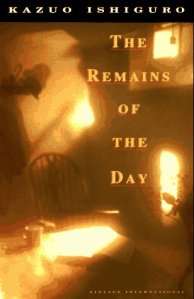
The Remains of the Day, published in 1989, is Kazuo Ishiguro’s third novel. Born in Nagasaki, Japan in 1954, Ishiguro lived in Great Britain from age five and is a British citizen. And there can be no question that he is a British novelist.

This novel won him the Booker Prize. In an interview at the time of his award, Ishguro explained that he wanted to explore two themes, how ordinary people relate to people of influence and the effects of sublimating one’s own feelings for an ill-conceived ideal. His vehicle for this is a series of brooding ruminations by a British butler who has dedicated his best years in service to a wealthy Brit who was a naive Nazi sympathizer in the years leading up to World War 2. Read more of this post

My Idle Banjo


We’ve had family visits from out-of-state this summer, and we’ve celebrated our 25th wedding anniversary. This has called for hauling out ancient video for the “entertainment” of one and all. During one of these forays into the past, my daughters were remarking about some video of me with a Christmas gift some years ago. It was a banjo—something I had long wanted to try. I can be very distinctly heard saying, “Now I’ll have to learn to play the banjo.”

I did make an attempt for several months, maybe even a year. And I enjoyed it. I made encouraging progress, up to a point, at which time I found I was simply “too busy” to keep at it. I continue to be proud of my banjo, carefully selected for me by my wife and children, if not my playing. But every time I glance at it now, or see another banjo (which isn’t often), or hear bluegrass music (which isn’t much more often), I get that guilty sensation and I half-heartedly remind myself to get back to playing (which would mean starting from the beginning).

As a result of this blog, I’ve made a number of friends in recent months. Today I learned that one of them, Carol Woodside, has a shared interest in bluegrass. I replied to a comment she left at one of my posts, then learned of her blog, Woodside Roots and Branches, where her home page makes it pretty obvious that she’s a fan of Earl Scruggs and company. (You should check out the blog and the related website.)

I can listen to Earl Scruggs, if I don’t get him in out-sized doses. I’m more of a Bela Fleck listener. But I don’t enjoy guilt, and it always mixes with the joy of listening. So I don’t listen much. All because of my idle banjo.

***

Update

The Washington Pugilist, having read this post, recommended a book and a CD to get me back into the banjo groove. The book is Old and In the Way Banjo Songbook. That pretty much says it all, doesn’t it? It includes tablature for Jerry Garcia riffs. The CD is called Old and In the Way. At Amazon as of right now, this CD has 34 customer reviews, with an average of 5 stars. I’ve just added the book to my Amazon shopping cart. Thanks, my friend at The Washington Pugilist.

No Joke—Morality Matters


My daughter and I planned to see The Dark Knight together. One of my movie buddies, who saw it earlier this week, said I should spend the time some other way because the film was average, at best. Naturally, I had to see for myself. And when my daughter asks me out on a date, how can I refuse?

I kept hearing that the movie is “very dark.” This isn’t a very enlightening summation (no pun intended). In fact, now that I’ve seen the movie, I wouldn’t say that at all.

First, Gotham City is remarkably lit up. It doesn’t have that pervasive seedy look that we naturally associate with the City. It looks like a normal American metropolis—present-day New York, in fact. Doesn’t the director know that Batman movies of the past have uniformly rendered Gotham City gothically? Of course he does. So maybe there’s a message there: a bright and bustling city on the brink of moral chaos . . . . Hmm.

Is city-wide chaos really imminent? The citizens think so; the Joker hopes so. And by the end of the movie there is quite a mess to clean up. The demolition of the General Hospital, the disarray of the police force, panic in the streets, mangled vehicles piled everywhere, the involuted character of the District Attorney, are all powerful symbols of disintegration. Teetering on the brink, however, a deeper truth about Gotham’s citizens is brought to light.

Isn’t that what the Joker believed, that in those final moments, with life in the balance, a person’s true character is revealed?

The Joker’s mind is supposed to be completely inscrutable because there quite literally is no method in his madness. This is how he wants to be known, and this is how he is regarded. He has an appallingly distorted view of the world. We can agree that his childhood experiences contribute significantly to his twisted perspective. He seems genuinely unable to resist his urge to injure others. He is, we imagine, driven by some unintelligible motive. But for all that, the Joker is a calculating individual, with a conception of humanity and our shared moral impulses.

The Joker’s worldview is dark. It is repugnant. But it is not representative. He reasons that the good conduct of individuals in an ordered society is an illusion. There is no goodness, deep down. All people are fundamentally self-interested. The Joker is so sure of this that he fully expects one group of passengers on one ferry to blow up the ferry loaded with other passengers. It doesn’t matter which group prevails, the group of ordinary citizens or the group of convicts. In their heart of hearts, they do not differ. And though they deliberate about saving their own skin at the expense of the others, each group ultimately resists the temptation. Even the convicts, represented by a truly imposing man of criminal bearing, do the right thing. And the Joker is baffled. Batman notices this and rubs it in. It is the most effective means of wounding the Joker: demonstrating that his worldview is simply false.

The Dark Knight is not a dark film. It conveys the hopeful message that morality matters, and that it is within reach. It also reflects the possibility of self-inflicted character deformation. The Joker is not altogether mistaken when he says, “I’m not a monster—I’m just ahead of the curve.” His sinister behavior is the result of habit, fueled by an obsession with his own injuries. He plays the hand he’s been dealt in life with clownish charades of “chance” behavior. His life is tragic, but he is a responsible agent in a morally significant arena.

Unfortunately, the film makes no attempt to explain why morality matters. Being good appears to be a purely secular value. As such, it dangles in suspended animation, rather like the Joker himself, whose fate remains a mystery at the close of The Dark Knight.

My Bucket List


Roger Ebert was offended by the movie The Bucket List. He thought it made a mockery of the seriousness of terminal cancer. Maybe he took the film a little too seriously.

My gripe with the movie is different: while it pays tribute to friendship and its redemptive value, it fails to come to grips with the the real value of an adventurous life. The Jack Nicholson character, true to form, is all about exotic thrills, the rush of adrenalin, and tempting fate. The Morgan Freeman character has more depth, but as a comparison with Nicholson, that’s not saying much. Both men are self-absorbed; neither can place “the list” into the context of purposeful living.

G. K. Chesterton

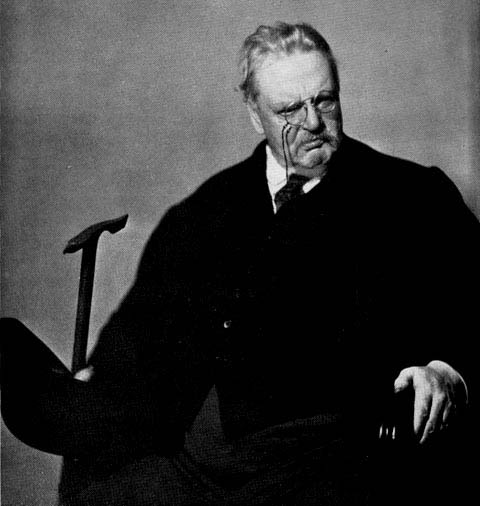
Today I read these words by G. K. Chesterton: “An adventure is only an inconvenience rightly considered. An inconvenience is only an adventure wrongly considered.” Chesterton could see the adventure in the ordinariness of life. Anything can be regarded with the lens of expected surprise. But the inconveniences of life, even the most mundane, afford real opportunities for adventure—a kind of living beyond the ordinary without demanding a change in circumstances. It all depends on perspective.

Today I had an adventure. Not a big, spectacular one that I can check off my own personal bucket list. I had been shopping for something on Craig’s List and had an appointment at a seller’s house. When I rang the doorbell, dogs began barking. Nothing unusual about that. But suddenly, one dog, yelping wildly, sprang through the screen door and lunged at me. As I reared back, the dog grabbed my shirt-tail in his teeth.
I wasn’t injured, but my favorite summer shirt is in tatters.

The adventure potential of this experience really was a matter of perspective. I didn’t like the sudden conversion of my shirt from something that was a pleasure to wear to a rag more worthy of washing the car. But I did feel oddly energized by this close encounter with physical danger. And I can imagine wearing the shirt in future as a badge of courage, so to speak. For a moment I was reminded that real surprises happen. I’m not generally fearful of dogs. And I didn’t have time for fear in this case. The dog—like my own dog, an Australian shepherd—was on me in an instant. But as the dog fled, I felt the exhilaration of a survivor.

In the modern world, we often have to manufacture experiences of that kind. Some go in for extreme sports, others for extreme travel. I like sea kayaking and motorcycling, each activity with its distinctive set of challenges and array of risks. But they aren’t things I have to do, in the utilitarian sense of “have to.” If I have to do them it’s because modern life is a little too humdrum.

Isn’t that why we have “bucket lists,” adventure ticks that we hope to get out of our system before we pass on?

Claudia Root and Jerry Root

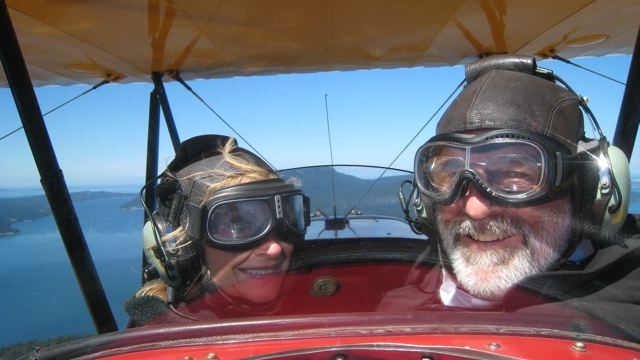
Today I had an email message from a good friend who lives in another state. Completely incidental to the message of his email was an attached photo of him and his wife in a bi-plane over the Puget Sound. They’re sporting goggles and leather headgear—and broad smiles, of course—in a tight picture that says, “We’re having a blast, and we’re doing it together!”

I love the Puget Sound, and I love flying. I’ve dreamed of making a pontoon trip there some day. But it never occurred to me to view the San Juan Islands from altitude in a vintage bi-plane. I’ve now added that to my personal bucket list.

But I have another goal, as well—to remember Chesterton’s spin on the ordinary and the inconvenient. With a perspective like that, everyday is a bucket-list kind of day, every day an opportunity to check something off the list that I didn’t know was on it!

Quotations: On Film


“Even the objects in a fictional world are shot through with meaning and philosophical significance.” —Charles Johnson, in his interview with Diane Osen for The Book That Changed My Life

Iron Man—What I Expected, and Why


So last night I finally saw the movie Iron Man. That’s what we like to say, isn’t it, when weeks have gone by before we’ve seen a hit movie of the summer season? The statement often means, “Of course I was going to see it, and probably would have seen it on opening weekend, but somehow other things crowded out my fundamental priorities, and, gee, I’m sorry, people, but I did eventually do what I would have done sooner, if only . . .”

Yea, right. Here’s the truth. When the movie was fresh out in theaters, I called a friend thinking maybe he’d like to see it with me. We see a lot of films together, and pretty much on the spur of the moment—mostly films that are guaranteed to be of little interest to our respective wives. For example, D and J don’t go in much for violence, even of the comic book variety, maybe especially the comic book variety. So I pitched it to him. “How ’bout we go see Iron Man tonight?”

He wasn’t interested. “Maybe there’s a better movie we could see instead?” he suggested and asked at the same time. Not to be thwarted so easily, I started listing off names of major actors in Iron Man, including Gwyneth Paltrow. I kid you not, I was only jesting. I had no idea that Paltrow was in the film; that’s how much I knew about it. And I wasn’t expecting it to be as good as any Gwyneth Paltrow movie she actually was in. Maybe I’d get my buddy to go to the movie, and apologize later for the mistake about Paltrow. No luck.

Sometime later I checked back with him to see if he’d changed his mind. He had. That is, he had already seen the movie with his two sons! So last night I called another friend. He surprised me on several counts. No, he hadn’t seen the movie. Yes, he’d like to see the movie. And yes, he’d be willing to drop everything for the showing scheduled within the next hour.

I wasn’t expecting much, but I did want to see the movie. So what was I expecting? Lots of action. Terrific graphics. Brilliant stunts. These elements do not, by themselves, make for a great movie, even at the level of mere entertainment. A mere entertainment film is a film that isn’t a film, but a “movie.” It has little “intellectual” value and does not remotely qualify as an object d’art. It just kills an evening when you don’t feel like doing much else. And, if you’re lucky, when it’s over you don’t feel like it was a total waste of time.

That was the trend of my expectations. I deliberately aimed low because I was not in the mood for being disappointed.

Iron Man would be predictable (this coming from someone who never once read an Iron Man comic). It would be filmed for kids and rated so adults would come and kids (the younger ones) wouldn’t be allowed to. It would depict the making of a super-hero. That hero would be conflicted about his former way of life and his new mandate to protect “the people.” He would blow away the competition, and bask in the glow of adulation, but with that moderation that we require in our super-heroes (though apparently not in many of our not-so-super heroes). Glib lines would be delivered glibly. . . . Oh, and the original comic book character and his circumstances would be brought up to date, or “contextualized,” maybe in light of post-9/11 trauma about terrorism.

I think the main reason why this is all I expected is that I had assumed all the really good super-heroes and their antics had already been mined bone dry for film potential. If the Iron Man series deserved filmic interpretation, it would surely have been done already and in a memorable way. For that matter, I would have known about Iron Man, the comic book hero, long before the film came out—which I didn’t. (How I could have known the other Avengers and been oblivious to Iron Man is beyond understanding.)

Now, if I had known that Gwyneth Paltrow actually was in the movie, my expectations might have been higher.

In that event, I might have been more disappointed than I was. In fact, I wasn’t disappointed at all. This is a movie I would see again—on DVD. And not because of Paltrow, but because of Robert Downey, Jr. Boy, I never thought I’d say that! But it seems the actor has found a role that’s a good fit on him, as if he kind of lives like the playboy narcissist in the “real world.” Huh.

Jeff Bridges was a surprise, and not only because of his shaved head and bushy gray beard. He was very good as a bad guy. The rest of the actors seemed like they were . . . well, out of a comic book or something. And in this respect, Paltrow was supreme. She acted more corny than her name, Pepper Potts. (Parents, don’t alliterate your children’s names using the letter “p,” especially with words that serve also as the commonest of nouns). Paltrow’s Pepper Potts made the movie seem more like a real comic book come to life. This is a good thing, brilliant, in fact. (Pepper Potts is the subject of special attention in a review at the Hathor Legacy blog. This blog focuses on “the search for good female characters” in film and other pop culture venues. That’s a pretty specialized nighe, I should think.)

Iron Man worked because it was realistic without being too realistic. It was both realistic and true to form. When it was most true to form, it was more fantastic than realistic. But you could swallow the fantastic bits because of the otherwise more-or-less realistic story line. (When realism is wedded almost seamlessly to the comic book form, something has to give, and that something is going to be realism.) It isn’t realistic that Tony Stark survives the ambush at the beginning of the film. It isn’t realistic that his friend, Rhodey, survives the attack, if he was riding in a vehicle behind Stark’s (as we’re made to believe). Stark is so far above average as an improvisational engineer and entrepeneur that the exaggeration is literally comical. And so on and so forth. What is most fantastic, however, is how Stark survives his experiments with palm-operated thrusters in his basement workshop!

That kind of exaggeration is the stuff of old-fashioned comics, though. And the movie Iron Man is the rendering of a comic book character and his story. It can’t be easy mimicking the comic book to such good effect, especially for the jaded audience of the present decade. And that’s why this movie is a film.

I say the film effectively mimicks the comic book. How do I know this if I haven’t read the comic book version? I just do.

Jason Bourne vs. James Bond


If you’re a Jason Bourne movie fan, please let me know here. Do you prefer Bourne over Bond? If so, why? If not, why not? How many of the films have you seen in each series (estimate, at least)? Which would you rather see, another James Bond movie, or another Jason Bourne movie?

I’m just doing an informal poll here.

* * *

Update for 16 November 2008: James Bond has multiple problems. As a film icon, his biggest problem is a dilemma: “Do I play Bond with the key historic links that make this a Bond movie, or do I shake off the clichéd persona of a day gone by?”

Bond is an anachronism. He can’t exist in today’s world. Adapt the storyline to match current events all you like; if Bond is going to be “Bond, James Bond,” he’s going to look like a dinosaur in bow tie and cufflinks. But if he calls himself James Bond without really being James Bond, then he looks like a caricature, like someone who began admiring the real James Bond when he was twelve years old and always wanted to be him.

I think this answers Joel Ryan’s question, over at E!Online: “Why Can’t James Bond Catch Jason Bourne?”

Personal note to Daniel Craig: Please don’t take this personally. But a quantum of solace is about all you have in the day of Jason Bourne. I’m sure you’ll find someone to enjoy the moment with you.

Update for 11 August 2010:

In a 2007 post called “The Best and Worst of James Bond Films,” Webomatica ranks the Bond movies and the Bond actors. Daniel Craig is omitted. Here’s my ranking:

  1. Sean Connery
  2. Roger Moore
  3. Daniel Craig
  4. Pierce Brosnan
  5. Timothy Dalton

What about you?