Starry, Starry Night


When you look into the night sky, do you see stars against a dark background, or do you see space speckled with stars? And does it matter?

What say you?

Note: This question is inspired by a passage in Isaac Asimov’s novel I, Robot. The chapter titled “Reason” features a robot called QT-1, whom his builders call “Cutie.” It’s Cutie’s perspective on the stars and his view of creation and intelligence that draws attention to the difference alluded to in my question for this post. Asimov, who is generally fun to read, is in rare form in this SF novel. Will Smith starred (no pun intended) in a film based on this novel.

Why Book Covers Matter


As a reader, I care about what books in my library look like. As an author, I care about what my books look like. Cover art has its own aesthetic. It should appeal. It should say something about what is between the covers, but without saying too much. And, if you’re a marketing director at a publishing firm, it should have what they call “pop”—it should get a prospective buyer (notice, I didn’t say reader) to turn the book over, to read the blurbs, to inspect the pages. With that sort of investment, there’s a better chance the book will sell (whether or not it’s read).

There’s more to the aesthetic of a book than its cover design. What does it feel like in the hand? How are the pages trimmed? Are they ragged, or clean? What about the paper itself? What is its quality? The font, the margins, the kerning. These all matter.

The cover is special. It’s the most noticed feature of the aesthetic of any book. And yet, for me at least, it isn’t always noticed. Countless times I have perused a book without noticing, much less examining, its cover. Not everyone is flawed in this way. I’m sure that what I don’t attend to directly still leaves an impression via its subliminal power. But when I do notice, this noticing is often the source of two different feelings, which may or may not concur. I’m either bewildered by the art or pleased by it, or both.

What I mean by bewildered is quite simple. I don’t get it. I can’t make heads or tails of it. I don’t understand it. And this is what is arresting about it. The design of the cover confuses me or strikes me as impertinent. I assume that the cover is designed. That is, there’s an explanation why this cover is attached to this book. But the explanation escapes me. This intrigues me, especially if the art is at the same time pleasing.

When I say I’m pleased by the cover art of a book, I mean that it gives me pleasure. This is more difficult to explain. And the pleasure induced by a particular cover may be diminished or it may be intensified by the effort to explain its special appeal. Explaining the appeal of a book cover must begin with a description of the experience induced. And this is remarkably variable.

At any rate, this experience of pleasure may be a selling point for me. I may wish to own a copy of the book as much for its cover design as for any other reason. I may feel this way even if I realize that the book holds this “limited” attraction for me. I may even buy the book. This could explain, at least in some cases, why I have purchased a book at a brick and mortar establishment, even if I could have saved a few dollars by ordering it online. It isn’t necessarily an indication of impatience. It may have to do with an attachment to this particular copy of the book I hold in my hands. It is this one that has provided the pleasure. I will zigzag through the columns of books, each shelved book beckoning hopelessly for my attention. I will stand in line, beholding the book with persistent wonder. I will step up to the cashier and hand over my credit card with satisfaction.

The physicality of this unified experience cannot be matched by a paypal order. I will leave the store “holding the bag,” feeling responsible for my purchase. I may pull the book out and place it on the passenger seat of my car, giving it occasional sidelong glances as I return home, and thus extending the experience of pleasure. The prolongation of the experience adds texture to the experience.

At home, I will leave the book out for awhile, so that the initial pleasure returns for brief instants as I tend to other business. I will wait to “process” the book, to assign its place in my collection. For now, its place is distinctive. It is not just one more book among many. It has a distinctive power over my attention.

To be sure, and thankfully, there won’t be many books like this. Man does not live, aesthetically or otherwise, by books alone. But the quality of life may be improved by the cover of a book.

***

A Book about Book Covers

Links about Book Covers

Doug’s Publications


Books

Book Chapters

Articles in Reference Works

<script type=”text/javascript” src=”http://www.assoc-amazon.com/s/impression-counter?tag=faifilandphi-20&o=1″></script&gt;
<noscript><img src=”http://www.assoc-amazon.com/s/noscript?tag=faifilandphi-20&#8243; alt=”” /></noscript>

What Is It about Licorice?


I like it. The women in my life (my wife and two daughters) don’t. I’m OK with that, but I don’t get it. For me, “licorice” means licorice, pure and simple. “Black licorice” is redundant. If I offer someone licorice, I’ll say, “Would you like some licorice.” But if someone offers me licorice, it’s possible they mean “the red kind.” So I ask, what kind of “licorice”? It’s almost always “the red kind,” and I usually say, “No. Thank you anyway.” And if I am most sincerely polite, I don’t add, “By the way, that’s not really licorice.”

Experience tells me that Red Vines are the most popular of “the red kind.” That’s what the women in my life keep on hand. I’m on my own to keep a stash of the real thing.

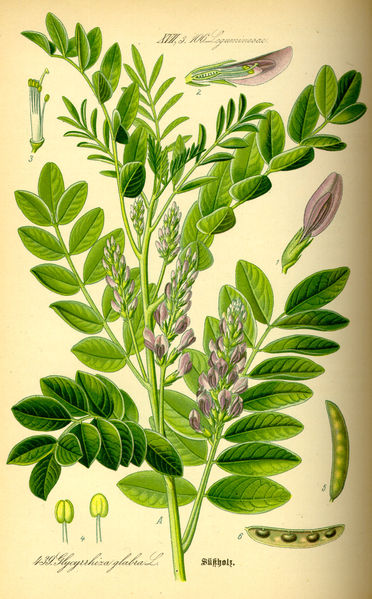
So what’s the real thing? Well, to begin with, it’s black. And—surprise, surprise—one key ingredient is . . . licorice, or licorice extract. The substance is extracted from the root of a plant whose botanical name is Glycyrrhiza glabra. The root is believed to have medicinal uses, but it is most often enjoyed in the confection known as licorice candy.

My friend Lucas says he likes the Goodyear brand, for the ingenuity they’ve demonstrated in making tire rejects into something quasi-edible. Thanks to another friend, Kristel, my current favorite is Australia’s Darrell Lea Traditional Licorice, available at Trader Joe’s. Contrary to popular lore, licorice candy is not necessarily tough to chew. The Darrell Lea brand can be masticated with ease, because the bite-size chunks are soft. It contains no trans fats and is cholesterol-free.

The distinctive taste of real licorice derives from the use of molasses, wheat syrup, and, of course, licorice. But texture is just as important to the quality of the experience. It should be chewy, without sticking to the teeth. Bite-size pieces are the right-size pieces, filling the mouth with flavor that lasts long after the candy has been chewed up and swallowed.

Eating licorice in moderation is one of life’s simple pleasures. And Darrell Lea Traditional Licorice makes my list of Favorite Things.
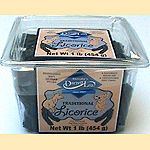
To participate in an informal poll, let me know if you enjoy licorice (not “the red kind,” but the real thing), and if so, what brand you prefer.

A book about “Licorice”:

Licorice: Webster’s Timeline History 1872-2007

Description: Webster’s bibliographic and event-based timelines are comprehensive in scope, covering virtually all topics, geographic locations and people. They do so from a linguistic point of view, and in the case of this book, the focus is on “Licorice,” including when used in literature (e.g. all authors that might have Licorice in their name). As such, this book represents the largest compilation of timeline events associated with Licorice when it is used in proper noun form. Webster’s timelines cover bibliographic citations, patented inventions, as well as non-conventional and alternative meanings which capture ambiguities in usage. These furthermore cover all parts of speech (possessive, institutional usage, geographic usage) and contexts, including pop culture, the arts, social sciences (linguistics, history, geography, economics, sociology, political science), business, computer science, literature, law, medicine, psychology, mathematics, chemistry, physics, biology and other physical sciences. This “data dump” results in a comprehensive set of entries for a bibliographic and/or event-based timeline on the proper name Licorice, since editorial decisions to include or exclude events is purely a linguistic process. The resulting entries are used under license or with permission, used under “fair use” conditions, used in agreement with the original authors, or are in the public domain.

The Sign of the Book, by John Dunning


Years ago I read John Dunning’s detective novel Booked to Die and realized I’d found a new author to stalk during my reading jags. The novel was the first installment in Dunning’s series featuring Cliff Janeway, ex-cop and second-hand bookseller, living, reading, and sleuthing in Denver. I watched for the sequel, The Bookman’s Wake, but somehow missed it (if memory serves). Almost ten years went by before there was a third installment. By then I had stopped monitoring Dunning’s authorial movements.

About seven months ago I stumbled across The Sign of the Book, #4 in the series. I reckoned I could get away with reading it without playing catch-up on #2 and #3. I was right. But I didn’t put this theory to the test until recently. Saturday was my first beach day of the summer. I brought the Dunning novel with me to Corona del Mar and enjoyed my re-introduction to the author and his detective.

To the degree that I can recall, Dunning is true to form in #4. I still like his style and will eventually get to his other series books. Dunning adopts the first person point of view, probably the trickiest POV out there. When reading fiction written in the first person, I have the tendency to ask periodically why the fictional narrator is telling me his or her story. First person point of view doesn’t work for me if there aren’t any clues about the speaker’s motive. The first-person novel is, after all, one long monologue—in this case, 513 pages worth.

Dunning makes it work. Only rarely did I take exception to the way he handled the speaker’s perspective on the mental states of other characters in the story. This novel impresses me as an exemplary specimen of first-person narration. It’s fitting that in the final sentence of the novel, Cliff Janeway remarks, “The mysteries of the human mind are far beyond my comprehension.” (I’m confident that quoting the last sentence is not a spoiler.)

The writing is intelligent, but The Sign of the Book is not literary fiction in the hifalutin sense. Each character speaks in a distinctive fashion that is consistent throughout. The best bit of dialog occurs in a courtroom scene. I was a little confused about the floor plan of an important building at one point in the story. But this was not as much of a handicap for Janeway as it was for me.

This isn’t comic fiction, but Dunning manages to amuse with his choice of words and the dialog at which he excels. Suspense comes in two forms. First there’s the plot and the mystery about who dunnit. But frequently along the way there are stretches of suspenseful action . . . or inaction . . . as well. And that’s critical to the success of a detective novel (in contrast, for example, to the sort of mystery fiction so masterfully crafted by P. D. James).

One more thing. Janeway taught me a new way to survive the monotony of waiting for countless hours with nothing to do. This could come in handy if I’m ever on a stakeout without my Kindle.

***

John Dunning is a distinguished author. Booked to Die won him the Nero Wolfe Award, and The Bookman’s Wake appeared on the New York Times list of Notable Books. Other detective novels of his have been nominated for the Edgar Award. In addition to awards, Dunning has readers. Drew Goodman, book sales manager at the University of Utah campus store, has gone so far as to include two of Dunning’s Janeway novels on his “Sacred Shelf of 10,” as of October 25, 2007.

Classic Mystery Reads:

The Films:

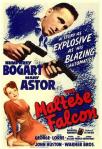
For the preview and Unbox rental for The Maltese Falcon, go here.

Truly Cultured


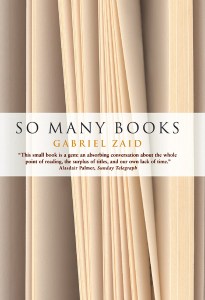
What does it mean to be “truly cultured”? Here’s what Zaid said, or wrote, in his book So Many Books: “. . . the truly cultured are capable of owning thousands of unread books without losing their composure or their desire for more.” (That’s Gabriel Zaid, by the way.)

Heartened by this keen observation, and taking the point further, Nick Hornby writes that “with each passing year, and with each whimsical purchase, our libraries become more and more able to articulate who we are, whether we read the books or not.”

So if you need to streamline your holdings because you’ve long since run out of room for new volumes, one rule may be to ask of a given book, “What does your presence in my library say about me? Is that who I am? And whether it is or not, is that how I want to be known?”

Football and Philosophy: The Book


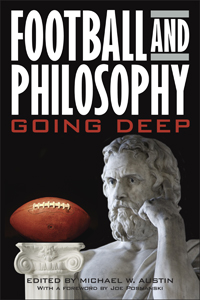
My friend, Michael Austin, has just announced at his blog that his latest book is now available. This is an edited book called Football and Philosophy: Going Deep (University Press of Kentucky). Congratulations Mike! I’m pleased to have a chapter in the book, titled “Inside the Helmet: What Do Football Players Know?” A look at the list of contributors and the chapter titles has me anxious to get my hands on a copy.

Faith, Film and Philosophy—The Evolution of an Idea


A book I did with James Spiegel, Faith, Film and Philosophy: Big Ideas on the Big Screen, was released late last fall by InterVarsity Press. Today I heard from Cindy Gould, leader of a reading group called “Verbivores” (suggesting an appetite for words). Cindy asked about the origin of the book, how we decided on films to write about and how we selected contributors. Here’s the answer to that question.

Jim and I are college professors who teach philosophy and enjoy film. We decided we wanted to bring these interests together into a book. When big ideas are packaged in a compelling film, they have great potential to influence culture. We wanted to test this thesis by inviting other philosophers who like film to share their perspectives. We wanted this to be fun, so we thought about friends of ours who share this interest and asked them to participate.

We had an idea how long we wanted the book to be and decided we could manage about a dozen chapters. We ended up with fourteen. We didn’t start with a detailed structure for the book and then recruit authors to fit into that structure. Instead, we began with a list of people we knew we would enjoy working with. They also had to be people with talent for thinking about cultural trends and a gift for writing with wisdom and an engaging style. With list in hand, we approached each one with the basic idea and asked this question, “If you were to write a chapter for this book, what film or films would you want to write about, and what ideas would you like to discuss?” We picked the authors; they picked the films.

Now I have to qualify. We knew that if we were going to do a book of this kind, we had to include a chapter on The Matrix. Some people think of this film and its sequels as the most philosophical of relatively recent films. A potential reader couldn’t pick the book up expecting to find a discussion of The Matrix and be disappointed. Instantly we knew who we needed to get for this chapter. We just hoped he would agree. He did.

When we had chapter proposals from everyone, we recognized there was this remarkable range of film coverage that included the classic and the contemporary, the familiar and the intriguing, the safe and the edgy. On top of that, our hoped-for contributors had all settled on different topics and issues, resulting in a surprising balance of treatment of themes in philosophy. With chapter ideas set side-by-side, a natural structure for the book emerged. People who liked film could read this book and learn more than a smattering of philosophy—philosophy made (almost) painless.

I’m anxious to hear how the Verbivores respond to the book during their discussion on Wednesday. Maybe some of them will post their comments here.