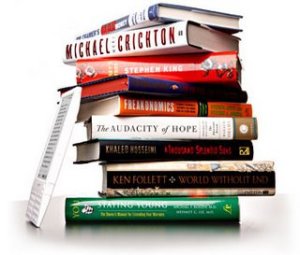
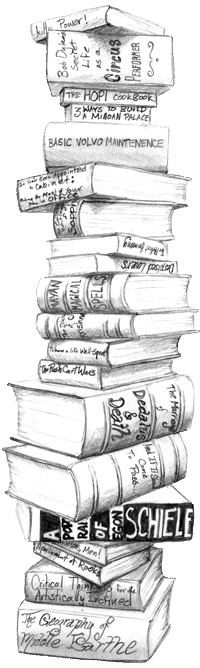
My Bookshelf of Best Books


Click here for a list of 100 books of virtually every kind that have given me the most pleasure, and have been the most personally useful, spiritually uplifting, and intellectually stimulating.

Related Posts:

<script type=”text/javascript” src=”http://www.assoc-amazon.com/s/impression-counter?tag=faifilandphi-20&o=1″></script&gt;
<noscript><img src=”http://www.assoc-amazon.com/s/noscript?tag=faifilandphi-20&#8243; alt=”” /></noscript>

Biography of Sarah Palin


Lot’s of people want to know about Sarah Palin, John McCain’s VP choice. Her biographer, Kaylene Johnson, must be pleased with the timing of her book, released in April.

Sarah: How a Hockey Mom Turned Alaska’s Political Establishment on Its Ear

159 pages/retails for $19.95

Books by Kalene Johnson

Related Posts:

Getting the Most Out of Your Kindle—Tip #1


“Bibliophile” isn’t a strong enough label for my affection for books. “Bibliophiliac” is probably more accurate. One symptom is my habit of cruising bookstores. But as much as I like the brick and mortar shops, they have two limitations: price and selection. Three out of four times they don’t have a book I’m there to find, and the one out of four times they do I usually have to pay full price. So I resort to browsing, which is dangerous. The temptation to buy, even if it’s something I wasn’t looking for, can be overpowering. You know the drill.

But I have a Kindle, and I (almost) never leave home without it. And my Kindle is very handy when I’m in browse mode.

Suppose my arms are laden with books that beckon. I go to the most inconspicuous bench or chair in the store, turn on my Kindle, and flip the switch for Whispernet. Within a few seconds I have a wireless connection to the Kindle store. I type in the title for one of the books I’ve gathered and let my Kindle search for it. If the title isn’t yet available on Kindle, I set the book aside and repeat the process for the next one, working my way through the stack.

It really gets interesting when I find that a Kindle version of the book is available. I have a choice. I can order it and have it on my Kindle within moments, usually at a deep discount, OR I can download a selection from the book . . . for FREE. Since I can always buy the book later, and I may decide I want a physical copy rather than the Kindle edition, I download the free selection and move on to the next book.

Later, when my pulse has slowed, I read the selections I’ve downloaded. I now have a good idea whether I want to spend my money, and whether I want the Kindle version or a physical copy of any item. Bottom line? I make better decisions about the books I buy, I spend less, and I enjoy greater mental health. All because my companionable Kindle has kept me from compulsive spending and buyer’s remorse. And eventually, my Kindle pays for itself! How great is that?

***

The Get Rich Slowly blog has posted “Six Steps to Curbing Compulsive Spending.” They’re good ideas. Let me add one more, specially suited to the bibliophiliac:

7. Don’t shop bookstores without your Kindle.

Related Posts:

Show Your Appreciation to Those Who Blog Books


Some of the best blogs are “Book Blogs,” and My Friend Amy is hosting Book Blogger Appreciation Week for September 15-19.

I blog books and enjoy finding consistently classy book blogs. So I’ll be making my own nominations in a few of the twenty-four categories Amy has set up.

Meanwhile, here are some award categories Amy might consider adding:

  • Best Philosophy Book Blog
  • Best Science Fiction Blog
  • Best Biography Blog
  • Best Science Writing Blog
  • Best Writing about Writing Blog

Be Still and Know that I Am an Artist


Margaret Atwood tells a joke:

The Devil comes to the writer and says, “I will make you the best writer of your generation. Never mind generation—of this century. No—this millennium! Not only the best, but the most famous, and also the richest; in addition to that, you will be very influential and your glory will endure for ever. All you have to do is sell me your grandmother, your mother, your wife, your kids, your dog and your soul.”

“Sure,” says the writer, “Absolutely—give me the pen, where do I sign?” Then he hesitates. “Just a minute,” he says. “What’s the catch?”

Atwood uses this fictional exchange to explore “the problem of moral and social responsibility in relation to the content of a work of art.” The passage appears in chapter four of her 2002 book Negotiating with the Dead: A Writer on Writing. I’m still in chapter three, but I skipped ahead.

Negotiating with the Dead is a literary essay on the writer as artist. At least, that’s true of the half I’ve read so far. Chapter 3, titled “The Great God Pen,” traces the Art Wars generally, and the world of poetry and fiction as a theatre of war in particular. And she examines an interesting argument—strictly syllogistic, mind you—that “we should devote ourselves to beauty-worship.” An unexpected but crucial premise in this argument is Jesus’ declaration, “The truth shall make you free.”

The interesting story here is that art has displaced religion in a secular society. Atwood isn’t all that explicit about this. But what she says is suggestive. Her chapter begins with clichéd questions about literary worth and money. Since writers are warned against unrealistic expectations of monetary gain, they must come to grips with deeper incentives. One possibility commends “the social usefulness of art.” But writers beguiled by this idyllic motive are victims of censorship, often inflicted by themselves. “Thus, the heroes of Art became those who were willing, as they say, to push the envelope.”

In due course, this pushed artists in the direction of a “pure aesthetic” that pitted art against moral purpose. The upshot, in the words of Ralph Waldo Emerson, is that beauty, rather like God, “is its own excuse for being.”

Oscar Wilde drew out religious parallels with art that imitate the language of Christianity, says Atwood. In his preface to The Picture of Dorian Gray Wilde wrote, “No artist has ethical sympathies.” He added, “Those who find beautiful meanings in beautiful things are the cultivated. For these there is hope. They are the elect to whom beautiful things mean only Beauty.”

The artist is a high priest of the imagination. But this does not require scruples. When it comes to Art, some get it and some don’t. Art for art’s sake is non-utilitarian. It disdains mammon and turns a blind eye to social responsibility. For a writer of this persuasion, there is no accountability. The only ultimate is the instinct of the artist.

Atwood explores this theme without committing herself to its creed. But she does seem to think that there are only two other motives for writing. They are writing for monetary gain and writing to fulfill a social responsibility of one sort or another.

***

Atwood is probably best known for her novel The Handmaid’s Tale (1985), depicting an apocalyptic future with the world’s women in subjection to a theocracy run by fanatical devotees of the Bible. The film adaptation appeared in 1990, starring Faye Dunnaway, Natasha Richardson, and Robert Duvall.
Kindle Your Reading Habits


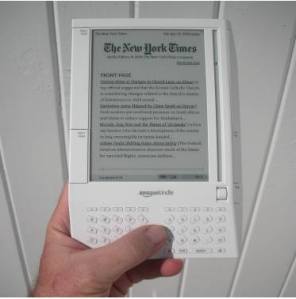
The Kindle is a thin, book-sized reading device that holds innumerable e-books and other digital reading material that can be downloaded in an instant using wireless technology almost anywhere in the U.S. Wow! Amazon boasts a Kindle library of over 160,000 items. And the inventory continues to grow.

The Kindle came out fall 2007. My gadget-guy instincts kicked in immediately. But I held off buying. I thought the price might go down (it did), that the wait period for it to come in the mail would shorten (it did), and that my “need” for a Kindle would increase (it did).

I ordered my Kindle from Amazon in March so I would have it in time for my trip to Europe in May. It’s the only thing I took for reading material during my trip. And it’s one of the reasons why I was able to travel extremely light using carry-on baggage only.

So now I can get my reading fix no matter where I happen to be. And if I just want to read today’s issue of The New York Times, or I don’t have a book that suits my mood, I can download what I want no matter where I am. The technology is wireless.

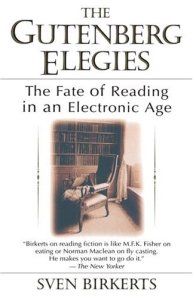
A few years ago, I read The Gutenberg Elegies, by Sven Birkerts. Like Birkerts, I believe it would be a tragedy if books—I mean real books—became a thing of the past because they all went digital. I’m a hardcore advocate for having a houseful of books. To me, books—books on shelves, books in piles—are the ultimate in home decorating options. Books speak to me even when I’m not reading. There’s nothing quite like being in the presence of books.

Still, I welcome the arrival of the digital version of reading material. While an e-book can’t replace the role of a real book, there are things it can do for readers that the traditional book can’t. And Kindle is the way to go in this arena.

Here are seven of the main reasons why I now own and use a Kindle:

  1. I can go anywhere and read what I want while I wait.
  2. I can go anywhere in the U.S. and download books for instant reading.
  3. I can subscribe to newspapers and magazines without having them pile up around the house.
  4. I can pack light when I travel and still bring a huge library with me.
  5. I save space on my shelves for physical copies of books I really must have.
  6. I save money when I order books for my Kindle.
  7. It’s the easiest way to read in bed.

The Kindle is the perfect complement to my other hobbies. I can fit a whole library in the saddle on my motorcycle, or carry it in a small book bag on my back. The Kindle goes with me when I’m kayak touring. Traveling is a greater pleasure now that I can haul all the books I want on my Kindle. I can practice foreign languages as long as I have the right tools on my Kindle.

Yes, I can mark my Kindle books, bookmark them, and take unlimited notes that are linked to specific passages in them.

Then there’s the cool factor. A woman and her daughter saw me reading on my Kindle at a Starbucks; seeing mine convinced them to get one for themselves. On a recent trip to Europe, nearby passengers asked about it. On the train between Stuttgart and Zurich an engineering student who had never heard of the Kindle decided within a few minutes that he had to have one.

***

For Discussion:

  • Had you heard of the Kindle before now?
  • Are you interested in becoming a Kindle user?
  • Are you a Kindle user?
  • If so, what would you say are the best reasons to have a Kindle?
  • What are some of the things you’ve downloaded to your Kindle?
  • What is your evaluation of the Kindle?

Related Posts:

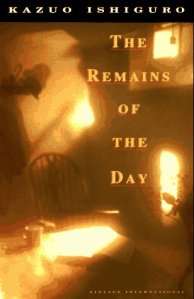
Remains of the Day


The Remains of the Day, published in 1989, is Kazuo Ishiguro’s third novel. Born in Nagasaki, Japan in 1954, Ishiguro lived in Great Britain from age five and is a British citizen. And there can be no question that he is a British novelist.

This novel won him the Booker Prize. In an interview at the time of his award, Ishguro explained that he wanted to explore two themes, how ordinary people relate to people of influence and the effects of sublimating one’s own feelings for an ill-conceived ideal. His vehicle for this is a series of brooding ruminations by a British butler who has dedicated his best years in service to a wealthy Brit who was a naive Nazi sympathizer in the years leading up to World War 2. Read more of this post

Should Chelsea Green Be Ashamed?


“Who’s Chelsea Green?” you ask. Chelsea Green is a small, third-rate publishing house that has confirmed its third-rate status with its recent snub of independent booksellers by making a new pro-Obama book available through Amazon and at a special discount before it becomes available in bookstores. The book is Obama’s Challenge, by Robert Kuttner. Read the story here. Read more of this post

How to Write Book Reviews for Your Blog


Book reviews are everywhere now. And more people are writing reviews and posting them online. Journal and magazine editors worry that literary book reviews will become obsolete and that paid reviewers will be out of a job. I hope this doesn’t happen, because so much of the reviewing done online is of a different quality and serves a different purpose. At the same time, I think the proliferation of book reviewing by bloggers is a positive development. Read more of this post

If You Don’t Feel Like Writing, You Can Always Read About It


You want to write but you can get going? Do the next best thing—read about writing. But make sure what you’re reading is written well. This is my list of recommendations for reading that leads to improved writing. This is kind of an annotated bibliography. I include a favorite quote from each item. Read more of this post

Good Reading—Part 1


We discover good reads in lots of different ways. I’ve benefited from reading books about reading and about books worth reading. I have several of these in my library. And one I purchased 18 years ago is still a source of fresh ideas for me. The Prentice Hall Good Reading Guide, by Kenneth McLeish, doesn’t need to be updated. Read more of this post

Two Questions about Samuel Clarke’s Cosmological Argument for the Existence of God


I’ve just learned of a reading group that has spent the past several months going chapter-by-chapter through the book Passionate Conviction: Contemporary Discourses on Christian Apologetics. The group moderator contacted me with two questions about my chapter. They’re great questions and I’d like to answer them here, for the benefit of others who might be interested (and in case the questions come up again). Read more of this post

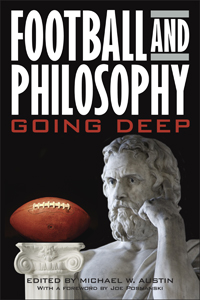
Reviews of Football and Philosophy


The book Football and Philosophy: Going Deep (University Press of Kentucky), edited by Mike Austin, is now garnering reviews. Here’s a very favorable review from the Lexington Herald-Leader“Tackling big ideas,” by Chris Collins.

Beyond the Sounds of Poetry


In a separate post, I’ve recommended Robert Pinsky’s little book The Sounds of Poetry. So maybe you’ve jumped in and grabbed your own copy of the book to get yourself educated in the values of poetry. What comes after Pinsky’s guide? Here are a few suggestions that vaguely parallel my own path toward greater understanding and appreciation of the riches of poetry. Read more of this post

Don’t Like Poetry? Start Here


How often have you read a poem and thought, “I don’t get it”? I can relate. How about this one: “I don’t get it; but I wish I could”? That was me, too. And it kept me away from poetry. Then I discovered Robert Pinsky’s little book The Sounds of Poetry: A Brief Guide. Pinsky helped me get it, and made me a believer in poetry.

There are several reasons why I wanted a deeper appreciation of the poetry I didn’t understand. Read more of this post