Alvin Plantinga’s *Warranted Christian Belief* Now on CCEL


alvin-plantingaYou can now find Alvin Plantinga’s book Warranted Christian Belief (Oxford University Press, 2000) at Christian Classics Ethereal Library. Click here. It can be read online or downloaded in plain text for free. For the modest fee of $2.95 you can download it in PDF format.

Hugh Laurie Reads Jerome K. Jerome


hugh_laurie_actors_guildjerome_k_jerome1To improve your enjoyment of Jerome K. Jerome (1859-1927) and to find more to appreciate about the talents of Hugh Laurie (b. 1959), you can do both at once. Just go to this YouTube reading by Laurie of a portion of Jerome’s Some Idle Thoughts of an Idle Fellow. The book is a favorite of mine, making the list, even, on my profile at Facebook. On a separate page of this blog I’ve recorded the blessed dedication JKJ wrote for SITIF. Click here if you’re at all curious.

John Updike as Book Reviewer


Encountering John Updike as book reviewer is to witness something akin to the 8th wonder of the world. I calculate that the time it takes for him to write as much as he dupdikedue-considerationsoes (speaking here of volume) leaves no time for reading, much less reviewing, books written by other people. My calculations have to be pretty far off the mark. He reviews like a fiend. (I mean this in the most positive sense of the term.) And reviewing is but one of the many grooves his writing follows. Is there any form he does not indulge?
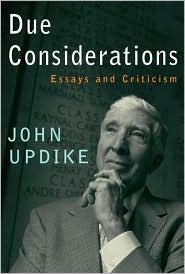
I might not be so impressed by the monumental volume of his output if it were not for the other, more fundamental impression Updike makes. He is a master writer. People who write better than I, and not nearly as well as Updike (by their own confession), have been saying this about him for decades. With Updike, you need not begin with an interest in any topic he takes up to be delighted with his perspective.

For example, in an essay titled “Groaning Shelves,” he reviews the book The Book on the Bookshelf, by Henry Petroski. A book with a title like that would tempt me. In the scope of five pages—seven paragraphs—by Updike, I experience at least as much pleasure and add every bit as much to my fund of knowledge as I would expect from reading Petroski himself (279 pages). Come to think of it, the relish of reading Petroski firsthand is converted to relish in not having to read it because of the relish of reading Updike on Petroski.

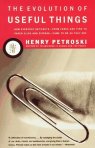
In the first paragraph, Updike describes the publishing niche of this professor of civil engineering and history, mentions two of his previous books, The Pencil (1990) and The Evolution of Useful Things (1992), identifies the primary sources for Petroski’s third work, here under review, and demonstrates that The Book on the Bookshelf (1999) would not have been much of a book without the use of stretching devices, since the territory (“the history of book housing”) has been pretty thoroughly scampered over by others before Petroski.
petroskithe-pencilpetroskibookonthebookshelf

petroskievolution-of-useful-things2What we learn from Updike in this first paragraph is technique in the art of book reviewing that requires having something to say about a book that says little more on its topic than what others have already said in earlier books. We also learn something about Updike—that this is no reason to leave the book alone or end a review having said as much. Something else about Updike: he judges that arranging the books in one’s personal library in accord with the Dewey decimal system is “whimsical” rather than “obvious.” (It seemed obvious to me several years ago when I adopted the system. Ironically, perhaps, this gentle chastening by Updike, for being whimsical when I thought I was being practical, was reinforced the day before reading his review; I learned with mixed emotion that the latest version of bibliographical software I use—namely, Bookends—enters the Library of Congress call number in the designated field for each new book reference. I’m now in engaged in a tedious cost-benefits analysis of switching over to the LC system from this point forward.)

The second paragraph begins with a sentence that must have been a relief to Petroski: “Nevertheless, we need to be reminded that people did not always live surrounded by books arranged on shelves, with their spines outward and stamped with the title, author, and publisher.” On this point, I take issue with Updike. I’m not sure we “need” to be reminded of such things, or even that we ever “needed” to learn such things. This may be Updike’s way of persuading himself that Petroski’s book is worthy of review. He surely needs to convince his readers, given the mediocre assessment implied in Updike’s first paragraph.

The balance of paragraph two re-traces the earliest stage of “book” production (papyrus rolls) and the practical solutions that were devised for the problem of their convenient storage. One sentence, albeit parenthetical, glistens: “In truth, only in certain circles, smaller than academics like Petroski might imagine, could people be said [even today] to be surrounded [by books]; I am frequently struck by how many otherwise handsomely accoutered middle-class American homes have not a book in sight.” I know that experience—the experience of not only seeing this to be the case, but also the experience of being “struck” by the fact. I am, of course, an academic. (Not that being struck by the absence of books in the homes of other people is a sufficient condition for being an academic, except in that “special” sense of being eccentric.)

The next four paragraphs carry on the exposition, in chronological sequence, of book production and storage adjustments, leading up to the present, when the volume of books at institutional libraries, it is estimated, doubles about every sixteen years. Updike boils down, in five paragraphs, the history of this transmigration of the souls of books. Even to the layman, it is an interesting history, if told well and in no more than five paragraphs.

I knew nothing before of “chained libraries.” I’m not sure I quite have an adequate picture in mind of this invention that served for several centuries. The most interesting fact I learned is that “even after books came to rest on shelves, their spines were unlabelled and faced inward.” Updike surmises that “when books were few, they did not need to be labelled, any more than do familiar people.” I’m not about to experiment with this technique of book arranging with my several thousand volumes (although the storage of many hundreds in boxes is hardly more satisfactory).

pepys1The eighteenth-century member of Parliament, Samuel Pepys (pronounced “Peeps”), most famous for his Diary, was apparently compelled (by his wife?) to constant winnowing of his own book collection, so that it never exceeded the manageable limit of 3000 volumes. He ensured efficient use of space for his books by arranging them in two rows, tall books in front, shorter books behind on raised shelves, a strategy that is “impressively harmonious, though somewhat forbidding to a would-be browser.” You can see this for yourself at Magdalen College in Cambridge, where twelve cases of the Pepys collection are preserved.

As always, after reading Updike, my vocabulary is much improved. I now know how to identify the “fore edges” (not “four edges”) of a book. I’ve got a sprinkling of new Latin terms under my belt, which should come in handy next time I cross paths with Seneca: volumina, capsae, armarium commune. Speaking of Seneca, he opined that those who ostentatiously surround themselves with books as mere ornamentations of their digs make themselves ridiculous, or something to that effect.

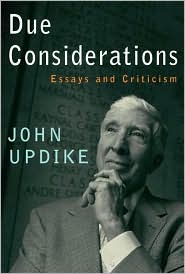
“Groaning Shelves” appears in a 700-page collection of John Updike’s writings over a period of eight years, third in a series of such collections. This volume is called Due Considerations: Essays and Criticism (2007). It contains nearly 150 brief essays. Since yesterday, I’ve read eight of them, including: “On Literary Biography”; “A Case for Books”; “Looking Back to Now” (not unlike Jorge Luis Borges); “Against Angelolatry”; a tribute to Eudora Welty; Updike’s Introduction to Seven Men, by Max Beerbohm; “Groaning Shelves”; and one other whose title I’ll withhold, lest you infer something disagreeable and false about my (or Updike’s) character.

I purchased my copy yesterday, after browsing the entry on “The Future of Faith” (pp. 27-41). I excluded this from my count in the previous paragraph because I haven’t yet read it closely. But I know that I will, and soon.
updikedue-considerations1

Amazon Paperback

“My Heart Belongs to Edward”?


twilight_book_coverI know you’ve been wondering why teenage girls have crushes on vampires. After all, the four-installment Twilight series is the latest reading sensation for that social niche. And some of you have teenage daughters whose fancy for the undead has you flummoxed.

Well, if you really must know, Caitlin Flanagan may be the place to turn. In her recent Atlantic essay “What Girls Want” she explains how Twilight taps into “the complexities of female adolescent desire.” I sincerely hope there are exceptions to her generalizations. But her multifacted theory is as plausible as any we’re likely to encounter.

Be a Good Student—Best Book in This Category


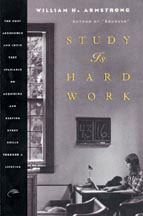
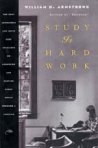
armstrongstudy-is-hard-workIt’s brief, it’s well-organized, and it’s full of sane advice. It’s a book called Study Is Hard Work. The author, William H. Armstrong, explains all the fundamental skills needed to be a successful lifelong learner. Here are the chapter titles:

  1. Learning to Listen
  2. The Desire to Learn
  3. Using the Tools
  4. Getting More From What You Read
  5. Developing a Vocabulary
  6. Putting Ideas in Order
  7. Books and the Library
  8. Written Work
  9. Acquiring Skill in Methods
  10. How to Study Languages
  11. Letting Mathematics Serve You
  12. How to Study Science
  13. Getting the Most Out of History
  14. Tests and Examinations

All of this in 143 pages. Each chapter begins with an Interest Measurement Test and ends with five Review Questions. Each “Interest Measurement Test” is a set of five questions that get readers to think about their current experiences and skill level in some category of study. Here are a few samples:

  • “Have you ever stopped to think what your life would be like if there were no books?”
  • “Do you believe that you really have a desire to learn, or would you, had you been left alone from birth, be totally primitive and beastlike in your thoughts and feelings?”
  • “Do you believe that, other than your parents, the people who will most influence your life for good are your teachers?”
  • “When you have read a book do you feel that you have talked with, and come to know, the author?”
  • “Do you know certain traits of your own mind that lend themselves to some methods of study more effectively than others?”
  • “Would you agree that there is much of the poet in all great mathematicians?”
  • “Do you believe that your life will be influenced by your interpretation of history?”
  • “Are you afraid of tests, or do you consider them a challenge?”

Chapters are loaded with numbered tips, steps, strategies, for doing all the things a college or university student must do to succeed, all showing students how to achieve real success by learning with pleasure and good work management. My students are exceptional graduate students, and every one of them could benefit from practicing the methods set forth here.

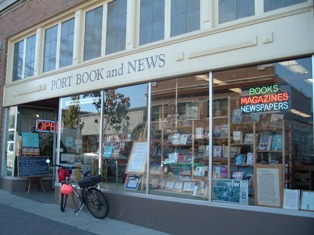
bookstoreport-book-newsI came across this book at a charming little bookshop we visit when we’re in Port Angeles, Washington. One tip for studying foreign languages struck me right away as eminently sensible and yet generally unknown.

“Make your own vocabulary cards, writing the word to be learned on one side and the English meaning on the other. If you are lucky enough to be studying two languages, write the meaning in the second language on the back also.”

The second sentence is simply brilliant. It makes a truly powerful suggestion, and it strikes a positive chord about foreign language study. My first thought was, “If you’re going to learn a foreign language, why not make it two?”

If you aren’t officially a student and you read this book out of curiosity, you may feel a strong desire to sign on for a class at your local college or university. I say, go for it! But if for some reason you aren’t able to take a class, Armstrong is still an excellent guide through the steps to independent learning. It all begins with a desire to learn (chapter 2).

Note: There are two other groups who would be helped by this book. First, high school students, especially those who plan to go on to higher education. Why not learn how to learn before learning gets even harder? Second, home school parents. These heroic people know what lifelong learning means, and welcome suggestions for organizing the learning process into manageable steps. I believe that practicing the principles presented in this handy book will shave hours of labor from the task of home schooling, make the whole experience more enjoyable, and result in much less stress.

From Amazon:

armstrongstudy-is-hard-work1

From “That Bookstore in Portland”:

armstrongstudy-is-hard-work1

Leave your comments about this book in the reply box below!

In Defense of Miracles Reviewed


Albert McIlhenny briefly reviews my book In Defense of Miracles here, and gives it a strong recommendation. Thank you, Albert!

Doug’s other posts on the subject of miracles:

The Religious Lives—and Questions—of Children


I know from experience that children think deep thoughts and come up with the most difficult questions. Throughout their childhood, my daughters plied me with questions about the nature of the universe, the existence of God, whether we have souls—that sort of thing. I have always been amazed by two things as a parent and a university professor. First, grad students in philosophy ask questions they probably had when they were three to five years old. They had’t forgotten the answers; they had forgotten the questions. Second, the quirky solutions young kids reach in answer to deep intellectual challenges are seldom more quirky than the ideas of philosophers and theologians about the same things. Come to think of it, their answers often bear a remarkable resemblance!

I’m not the first to marvel at this. My friend Jim Spiegel also teaches philosophy. He has twice as many children as I do, and they’re about half the ages of my kids. And his kids don’t let him relax from doing philosophy when he comes home from work. Fortunately for us, he’s written a spanking new book about his experiences in this arena.

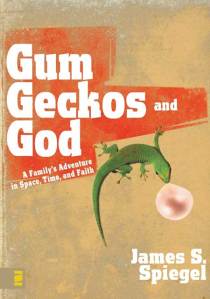
It’s called Gum, Geckos and God: A Family’s Adventure in Space, Time, and Faith. My copy just arrived and already I’ve read the first forty pages. Jim is a talented writer and an insightful parent. He can tell a good story, and this book is loaded with them. He’s funny, too, and self-effacing. If you have children or grandchildren, or know someone who does, and you haven’t given up asking questions about faith, I think you might enjoy and grow wiser reading this book.

Critical Thinking—Best Book in This Category


Amazon

Amazon

I teach philosophy to graduate students. Many of these men and women are married. Wives of the married men often invite me to speak to their group. Some have told me how much they desire to understand what their husbands are studying, and, frankly, to be able to hold their own in argument when their husbands, by dint of their occupation, have a seeming advantage.

There’s one book I’ve been recommending to them. It’s an excellent general introduction to the skills we all need—both for gentle sparring and for serious debate, but also just for organizing our beliefs into cogent perspectives.

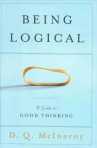
Written by D. Q. McInerny, it’s called Being Logical: A Guide to Good Thinking (2005). (I see that it’s also now available in a Kindle edition.)

Charles Osgood offers this poetic endorsement:

Given the shortage of logical thinking,

And the fact that mankind is adrift, if not sinking,

It is vital that all of us learn to think straight.

And this small book by D.Q. McInerny is great.

It follows therefore since we so badly need it,

Everybody should not only buy it, but read it.

That Bookshop in Portland

That Bookshop in Portland

* * *

What Others Are Saying:

David Foster Wallace


He was someone I thought it would be great to meet sometime. Had I known he was living and working only a stone’s throw away, it might have been arranged.

Unfortunately, that won’t be possible. David Foster Wallace hanged himself and was found by his wife when she returned home Friday night, September 12, 2008. He was 46.

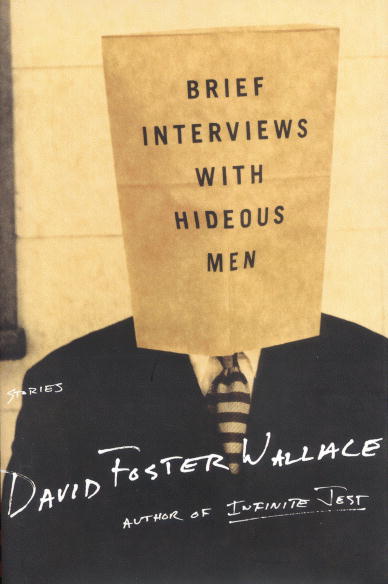
Wallace was clever with words. He was inventive. He employed extensive footnotes in his fiction. And he was candid. He went naked onto the page and exposed his soul in ways few novelists do.

His parents were university professors, his father in the department of philosophy at the University of Illinois (Urbana-Champaign). David Foster Wallace himself majored in English and philosophy at Amherst College. And it shows in his writings.

His writings reveal something else, too. In his tribute to Wallace, David Gates writes that “we’ll surely be spotting more and more of these clues in his work,” clues of his long-standing depression and contemplation of suicide. I find it hard to believe that Wallace’s readers didn’t suspect it already, because the clues are littered everywhere.

While reading Wallace myself, I would recall the thesis that genius and great art are often accompanied by threatened madness, that great talent and erudition can only be managed with a colossal effort of self-possession that no one else but the artist can know.

In her book, The Midnight Disease, neurologist Alice Flaherty examines the mental disorders that frequently haunt the most creative writers. She develops an illuminating theory of “manic hypergraphia.” Kay Redfield Jamison, whose work I’ve recommended on this blog, explores the culverts of this condition in a wonderful book called Touched with Fire: Manic Depressive Illness and the Artistic Temperament. The treasure of a gifted man’s labor is more precious when understood in the light of this fire.

***

As it happens, David Foster Wallace travelled with John McCain’s presidential campaign in 2000. He wrote a book about it that came out this past summer. It’s hailed as a journalistic tour de force by someone other than your typical political journalist. It’s called:

McCain’s Promise: Aboard the Straight Talk Express with John McCain and a Whole Bunch of Actual Reporters, Thinking about Hope.

Kindle edition

What Good Writers Do—Best Book in This Category


To be a good writer, you must be able to select the best words, craft sentences, and build paragraphs. This is more than a matter of knowing the rules of punctuation and having a strong vocabulary. Read more of this post

Getting the Most Out of Your Kindle—Tip #2


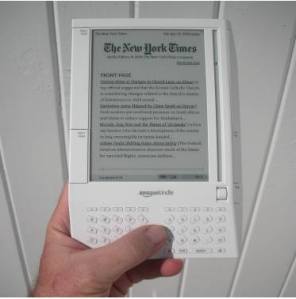
Sarah Palin was a newsmaker when her selection as John McCain’s running-mate was announced. Suppose you wanted to read prominent newpaper coverage of her convention speech the following day—in The New York Times, The Washington Post, The Los Angeles Times, The Boston Globe, or even The Times of London or Germany’s Allgemeinde. Suppose you wanted to sample editorials from all of these papers.

You could have your dog fetch them from the front driveway (if he hasn’t been retired because of illegal immigration). You could make a special trip to your local bookstore and pick up copies of each of these papers. Or you might go online and scan the web editions.

But have you considered using your Kindle? You can subscribe to all of these papers, and more, to be downloaded automatically to your Kindle as soon as they are off the press. But you don’t have to subscribe to several papers, or any papers. Why not just purchase each of these papers for that day only, and read the bits you like? Kindle gives you that option.

Sure, you could go the laptop route and be more or less portable. But you’d need an internet connection, and you’d have something larger and heavier to carry around—unless you have one of those fancy cell “phones” that does it all. What you wouldn’t have, even with the cell phone, is the possibility of reading on a screen more than half the size of an iPhone screen, wi-fi uploads wherever you go, the freedom to read offline with no extra effort, portability when you travel on airplanes, bookmarking wherever you’ve left off in your reading. You wouldn’t be able to mark passages or make notes with ease. You wouldn’t be able to adjust font size to accommodate your reading environment. You wouldn’t have hours or days of battery power.

Use your Kindle to read the newspaper. You’ll be glad you did.

Related Posts:

Kindle Your Reading Habits

How to Get the Most Out of Your Kindle—Tip #1

How to Get the Most Out of Your Kindle—Tip #3

How to Get the Most Out of Your Kindle—Tip #4

Stuff I Have to Read (Not That I Don’t Want To)


<script type=”text/javascript” src=”http://www.assoc-amazon.com/s/impression-counter?tag=faifilandphi-20&o=1″></script&gt;
<noscript><img src=”http://www.assoc-amazon.com/s/noscript?tag=faifilandphi-20&#8243; alt=”” /></noscript>

How To Cultivate the Reading Habit


Reading takes effort. But with the right habits and tools, it is richly rewarding. Here’s a list of tips for improve your reading skills and achieving more of your reading goals.

  1. Relate your reading goals to your larger goals. If you’re powerfully motivated to achieve some larger goal, try thinking about reading as a component in achieving that goal. One goal will fuel another.
  2. Understand that you don’t have to read everything on your list to benefit from the reading habit.
  3. Set specific reading goals. How many books do you want to read in the next year, or month? What kinds of books do you want to read? Make a note of the specific reasons you want to read these books.
  4. Select several books to have on hand to read at the same time.
  5. Use procrastination to your advantage. If you’re procrastinating about reading a particular book in your pile, use that procrastination to read another book in the pile.
  6. Select books that are practical and books that are theoretical. Books of the practical sort recommend solutions to interesting problems, provide guidance for self improvement, or explain how to do something. Books of a theoretical nature expand your knowledge base and enlarge your powers of critical thinking.
  7. In each broad category—the practical and the theoretical—include books that fit different subcategories. You might pick one book from each of ten subcategories: literary fiction (a novel), light fiction (another novel), short fiction (a collection of short stories), poetry (an anthology of works from a specific period, or on a common theme, or by the same writer), biography, history, inspirational literature, cultural commentary, and two practical books (for example, a book that will help you improve your writing and a book about sea kayaking).
  8. Make a note of the primary reasons you have for reading each of the books you’ve selected. Don’t settle for mere enjoyment. Assume that you’re going to enjoy the books you’ve compiled and refine your reasons for reading each book. Is one book in your pile because you want to improve your motorcycling skills? Is a book in the history category going to help you understand some event in the present? Will a particular novel enlighten you about a personally puzzling aspect of the human condition? Will the poetry you’ve picked improve your powers of imagination, or help you see the ordinary in extraordinary ways? Are you reading this book on cosmology in order learn the latest theories about the origin of the universe? Is that book about the narcissistic personality disorder going to help you understand a difficult colleague at work? Write these aims into each book.
  9. Keep these books together in a place where you feel relaxed and are most likely to have the inclination to read. This may be a cabinet next to your bed. Otherwise, use your imagination.
  10. Develop the habit of reading whenever your book stash in nearby. If you have a varied selection of books in different categories, just read what most suits your mood at the time.
  11. Pre-read each book to get an idea what it’s is about and how it’s organized. This will save time in the long run. It will help you decide whether to read the book more carefully, how to re-read the book to achieve your specific goals, and how much time to allocate for a closer read.
  12. Guard against time consuming eye movements. Keep your eyes moving from left to right, without regressing (even if you feel you’ve missed something). Train your eyes to “land” (ever so briefly) on points along the trajectory of your reading path, without moving your head. Work at reducing the number of “landings” for each line as you subconsciously scan for key words and phrases in the line.
  13. Separate the wheat from the chaff. Based on your pre-reading, decide which books deserve to be read more closely.
  14. While reading more analytically, pace yourself to fit the specific goals of your reading and the nature of the material as it changes from one passage to another. Skip over the bits that you already understand, or are repetitive, or don’t serve your reading objectives. Slow down for the complex parts, where key concepts are explained, or crucial details of a plot are revealed, or the line of a major argument is delineated.
  15. Mark your book in pencil as you read. Underline, circle, add symbols in the margins to identify a feature of special significance (for example, asterisks, question marks, explanation marks, bracketed numerals for lists or numbered items, arrows, horizontal lines for significant but unmarked breaks in the progression, check marks, squares, triangles). Create a simple shorthand system with letters of the alphabet for frequent kinds of marking. (If a passage is quotable, I draw a ‘Q’ in the margin. If it should be noted elsewhere in my files, I draw a cursive ‘f’.) Use vertical lines. Bracket sections with corner marks. Experiment with squiggly lines, double lines, light lines and heavy lines, and lines that are mostly light with brief stretches of heavy lines.
  16. Write unfamiliar words in the top or bottom margins—and look them up in a dictionary. This is the best way to improve your vocabulary. Over time, you’ll write fewer words and have a record of the growth of your vocabulary.
  17. Write out questions that come to mind—questions stimulated by what you’re reading. Interrogate the author. (Or, if you prefer, have a “conversation.”)
  18. Draw simple charts to show relationships that have been describe.
  19. Create your own index to the book, using the back endpages. Index key terms and concepts. If necessary, invent names for concepts.
  20. Reserve space in the back endpages to index passages that relate to research, writing, or speaking you may be doing. If you have an abbreviated title for each project, you can use this title for indexing purposes. Later, you’ll be able to return to these notes and enter them elsewhere as needed.
  21. Keep track of the structure and progression of the book.
  22. Write a summary and/or general outline of the entire book into the front endpages, and make a note about the general value of the book relative to your purposes. You may want to draft this on separate paper or with a word processor, and then transfer your final version into the pages of the book. Another option is to use Post-It notes that are nearly the size of a trade book and stick them into the front of the book with these notes and comments.
  23. For maximum portability and time management in pursuit of your reading goals, buy a Kindle and learn how to use it efficiently. (See separate posts with Kindle Tips on this blog.)

***

NOTE: Some of the ideas described in this post can also be found in How to Read a Book, by Mortimer Adler and Charles Van Doren. As the subtitle says, this is The Classic Guide to Intelligent Reading.

John Wyndham Book Covers


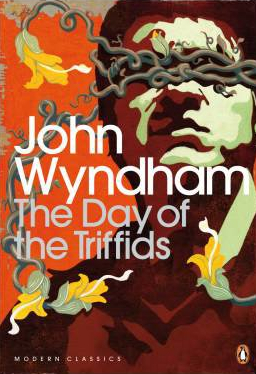
I’m still reading John Wyndham’s classic sci-fi novel The Day of the Triffids. This one’s on my Kindle. I’ve now discovered what amounts to a virtually exhaustive catalog of book covers for all of Wyndham’s novels:

The John Wyndham Post That Made My Brain Hurt

Here are two of the best book covers for The Day of the Triffids:

Bedside Books—The Stuff I Don’t Have to Read


6 September 2008

7 September 2008

14 September 2008

1 October 2008