Dodgy Ruminations about an Afterlife


“God bless non-scientific narratives,” writes Jacques Belinerblau, a professor at Georgetown University. Of course, this is with tongue in cheek, since, though he’s Jewish, Berlinerblau is an atheist.

He speaks sincerely, however, about a hopefulness grounded in certain non-scientific narratives, for he’d like to believe that there’s an afterlife. Actually, he finds it hard to believe that there is not an afterlife of some kind.

So he believes that God does not exist, and sorta-kinda believes that there is an afterlife.

This lede sets the context for Berlinerblau’s review, titled “You’re Dead. Now What?” of four books on the topic:

Berlinblau is a touch dismissive of D’Souza. But Berlinblau, I believe, is right that there really isn’t good strictly scientific evidence for an afterlife.

If Berlinerblau’s review of Frohock is rooted in a reliable summary of the book, I’d say it’s worth a look. But it sounds like Frohock is working from some sort of pantheist or neo-pagan metaphysics (or worldview). I wish Berlinerblau had said more about this.

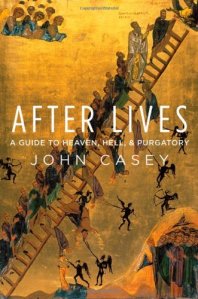
This reviewer makes Casey’s book sounds especially dull. But he has positive things to say about it. And I must say that the pages of this book are cloaked in the most impressive cover of the bunch.

Johnston appears to be one of those philosophers who has to be brilliant simply because it’s frequently impossible to understand what he’s saying. I suspect he’s of the “continental” variety. Berlinerblau’s sample quote from the book is almost a dead give-away.

I probably will read Frohock, eventually. He’s supposed to be ambivalent about whether science could yield evidence for an afterlife. And yet, says Berlinerblau, he’s a materialist. Like Berlinerblau, I find this confusing. If an individual person is completely constituted by material stuff and its physical organization, and this stuff dissolves—or its structure breaks down—following death, then what is the nature of the life beyond death?

The review is published in The Chronicle of Higher Education, of all places. This indicates re-entry of the possibility of an afterlife into academic surmise. Until recently, most scholars would rather die than enter a conversation about such things. Possibly, most scholars still have this preference. (It has not always been so.)

It’s equally fascinating that the traditional Christian doctrine of the afterlife is waved off with an almost pious flick of the wrist. (Check out the review and see if you agree.)

Berlinerblau’s book review enters a general conversation that is cautiously making its way back into serious discourse. But this discourse is dominated by a distinctly secular hope for a pleasant afterlife. Does this sound to anyone else like whistling past the graveyard?

Afternotes:

1. Berlinerblau adorns his essay with a choice literary quote:

The flesh would shrink and go, the blood would dry, but no one believes in his mind of minds or heart of hearts that the pictures do stop.

—Saul Bellow, Ravelstei

2. Christopher Benson reviews the Casey book, together with A Very Brief History of Eternity, by Carlos Eire, for the Christian periodical Books and Culture. Benson titles his review “Without End—Changing conceptions of the afterlife.” Indeed.

***

What do you think?

  1. What is the best evidence for an afterlife?
  2. If you believe in an afterlife, what will it be like?
  3. What is the best argument that there is no afterlife?
  4. Would there have to be a God for there to be an afterlife?
  5. Are you hoping for an afterlife?
  6. Are you expecting an afterlife?
Mysterious Opening Lines: Le Carré, Ludlum, and Others


GIGA Quotes, an online source for quotations, has listed 43 pages of first lines from books, beginning with Merrian-Webster’s Collegiate Dictionary. This amounts to more than 2300 first-line excerpts from “classical, notable and bestselling books” (here).

First lines interest me. They interest me as an author, and as a reader. Read more of this post

Audio Post: A Commentary on Four Novels


This is my first podcast or audio post. It’s kind of an experiment—a discussion of four novels that I read the past week during a refreshing vacation in Washington and Idaho.

Here are the books with links to Amazon:

Now Reading “Little, Big,” by John Crowley


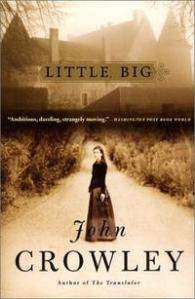
If you know the name Smoky Barnable, it’s because you’ve read all or part of John Crowley’s fantasy novel Little, Big, or, The Fairies’ Parliament. Or—less likely—you’ve only read about it. I suggest this is unlikely because you probably haven’t read about the novel unless you are a reader, like fantasy fiction, and can’t resist when the accolades for a book are in the order of: Read more of this post

Twice Shattered—A Memoir by Frank Pastore


In 1970, I was playing Little League baseball for the “Sparks” in Alta Loma, California. In Upland, the next town over (not 10 minutes away from my home), Frank Pastore was the Little League pitcher for his team. We both played “south of Foothill Boulevard,” but I have no idea whether I ever faced Frank with a bat on my shoulder.

More than twenty years later, we were introduced officially. Read more of this post

Review of “Snakes in Suits”


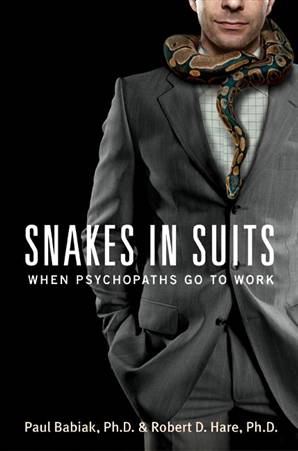
A few days ago I unexpectedly came across a book that I believe may be one of the most important books I’ve read—Snakes in Suits: When Psychopaths Go To Work, by Paul Babiak and Robert D. Hale (2006).

This is not your standard self-help book that panders to readers needing yet another pop-psychology fix. It is a serious but readable treatise on how the psycho-dynamics of predatory behavior manifests in the workplace, the damage that results when this happens, and how co-workers and superiors can and must respond with greater wisdom. Read more of this post

Faith, Film & Philosophy—New Format


Large Print Format

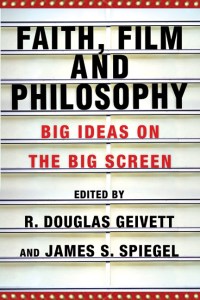
Our publisher has recently announced that our book Faith, Film and Philosophy: Big Ideas on the Big Screen is now available through “Read How You Want”—a company that customizes select books for readers with reading difficulties. This is good news for readers who will benefit from the special formatting provided by this company. Read more of this post

Amazon Search Link


To search Amazon for any product, including the books, films, and various tools discussed in these pages, click on the Amazon icon:

amazon_icon

Julian Jackson on Daniel Cordier on the French Resistance


Anyone interested in the history of the French Resistance should become familiar with the memoirs of Daniel Cordier. To be convinced of that, I recommend Julian Jackson’s recent critical review of Cordier’s book (here). Read more of this post

More Christmas Reading


In my recent post “‘Tis the Season for Christmas Reading,” I included titles to consider in the days leading up to Christmas. But there are many more to know about.

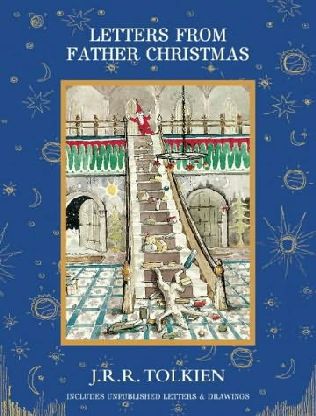
One I should have included comes from the category of fantasy, by one of fantasy fictions greatest practitioners, J. R. R. Tolkien. For twenty years Tolkien wrote and illustrated letters from Father Christmas, delivered from the North Pole to his own children. So here is my entry for best fantasy fiction for this year: Letters from Father Christmas, by J. R. R. Tolkien (in hardback or paperback). You may be inspired to write your own letters from Santa or Father Christmas to children (your own, or someone else’s).

The rest of this post will be updated as I’m able, with More Christmas Reading:

Fantasy Fiction

General Fiction

Humorous Fiction

Hymns and Carols

Miscellany

Mystery & Suspense

Non-fiction—Social Commentary

Poetry

Thematic

Note: Though I’ve been careful in selecting these titles, I haven’t read all of them myself.

Original Post: ‘Tis the Season for Christmas Reading

Related Posts by Doug Geivett:

‘Tis the Season for Christmas Reading


There’s so much great Christmas-related fiction that you have to start January 1 to get it all in before Christmas. But the best time to dive into Christmas stories, large and small, is during the Christmas “season.” That starts earlier for some people than others. But within ten days of December 25 you should be into the spirit of things. Some good reading can help.

Here are a few tips, including some suggested reading: Read more of this post

Best Books in Systematic Theology


Everyone should read some Christian theology. And the first thing to read is a systematic theology, that is, a work that treats all the major doctrines of Christian theology in systematic fashion. (This used to be called “Dogmatic Theology.”)

Recently I’ve been reading E. A. Litton’s 19th-century volume Introduction to Dogmatic Theology. I wouldn’t hesitate to recommend Litton to any serious reader who has time or shelf space for only one volume of systematic theology.

Here are my recommendations for different categories. Read more of this post

The Apologetics of Jesus


What would Jesus do if he was alive on the earth now and facing the skeptics of our day? The same thing he did in the first century. And what was that?

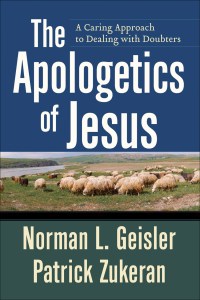
This question is answered with great clarity in the new book by Norman Geisler and Patrick Zukeran—The Apologetics of Jesus: A Caring Approach to Dealing with Doubters.

I want to recommend this book for several reasons: Read more of this post

Sixteen Works of Creative Nonfiction


Here are sixteen works classified as “creative nonfiction” and called “superlatively entertaining and artful” by Michael Dirda, in loose chronological order: Read more of this post

First Lines: The Life and Opinions of Tristram Shandy


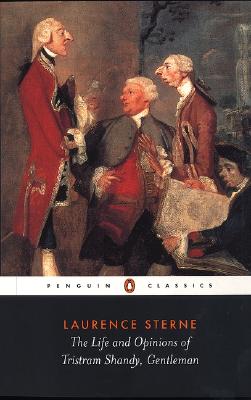
9780141439778Laurence Sterne’s ironical work of fiction, The Life and Opinions of Tristram Shandy, Gentleman, was first published in 1759. It baffled and intrigued Sterne’s contemporaries. You may feel the same way after reading the opening sentence:

I wish either my father or my mother, or indeed both of them, as they were in duty both equally bound to it, had duly considered how much depended upon what they were then doing;—that not only the production of a rational Being was concerned in it, but that possibly the happy formation and temperature of his body, perhaps his genius and the very cast of his mind;—and, for aught they knew to the contrary, even the fortunes of his whole house might take their turn from the humours and dispositions that were then uppermost;—Had they duly weighed and considered all this, and proceeded accordingly,—I am verily persuaded that I should have made a quite different figure in the world, from that in which the reader is likely to see me.

Come again? Read more of this post