How to Write Book Reviews for Your Blog


Book reviews are everywhere now. And more people are writing reviews and posting them online. Journal and magazine editors worry that literary book reviews will become obsolete and that paid reviewers will be out of a job. I hope this doesn’t happen, because so much of the reviewing done online is of a different quality and serves a different purpose. At the same time, I think the proliferation of book reviewing by bloggers is a positive development. Read more of this post

If You Don’t Feel Like Writing, You Can Always Read About It


You want to write but you can get going? Do the next best thing—read about writing. But make sure what you’re reading is written well. This is my list of recommendations for reading that leads to improved writing. This is kind of an annotated bibliography. I include a favorite quote from each item. Read more of this post

Good Reading—Part 1


We discover good reads in lots of different ways. I’ve benefited from reading books about reading and about books worth reading. I have several of these in my library. And one I purchased 18 years ago is still a source of fresh ideas for me. The Prentice Hall Good Reading Guide, by Kenneth McLeish, doesn’t need to be updated. Read more of this post

Honorable Mention


This page is similar to my page titled Well I’ll Be Blogrolled. It lists blogs that have links to my blog. But there’s a difference. This is a list of specific posts at other blogs where one or more of my posts is noticed, even if my blog is not listed on their blogrolls. In my view, these are cases of honorable mention, and deserve notice in their own right.

I’ve learned of many of the links below because of someone who has traveled to my blog from that page. These are, in blog-speak, “referrals.” This is my way of returning the favor. I’m sure I’ve overlooked cases, so if you have a post that mentions this blog or links to a specific post in this blog, feel free to let me know in the combox below and I’ll see about adding it to this list.

Related Posts:

Two Questions about Samuel Clarke’s Cosmological Argument for the Existence of God


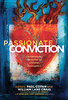
I’ve just learned of a reading group that has spent the past several months going chapter-by-chapter through the book Passionate Conviction: Contemporary Discourses on Christian Apologetics. The group moderator contacted me with two questions about my chapter. They’re great questions and I’d like to answer them here, for the benefit of others who might be interested (and in case the questions come up again). Read more of this post

Quotations: On Poetry


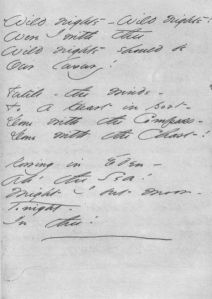
Emily Dickinson Script

Emily Dickinson Script

“. . . you can’t force a poem.” —Elizabeth Jennings, quoted in The Poetry of Piety, edited by Ben Witherington III and Christopher Mead Armitage

“It takes a grateful audience to keep a poem alive.” —Ted Kooser, The Poetry Home Repair Manual

“Another note to tack up over your desk: Too much cleverness in poetry can be a real killer.” —Ted Kooser, The Poetry Home Repair Manual

“Poetry, even the poetry of humor and delight, is an agent of the imagination pressing back, in Wallace Stevens’s phrase, against the pressure of reality.” —David Lehman, Forward to The Best American Poetry 2006, edited by Billy Collins

On Christology


John Donne

John Donne

“Twas much that man was made like God before;/But that God should be made like man—much more.” —John Donne

“The central miracle asserted by Christians is the Incarnation. . . . If the thing happened, it was the central event in the history of the Earth—the very thing that the whole story has been about.” —C. S. Lewis, Miracles (chapter xiv)

Quotations: On Death and Immortality


Ted Kooser, Poet

“When the heart stops, my contemporaries say,/Shrugging their shoulders, that’s it.”

—Czeslaw Milosz’s poem “Treatise on Theology,” in his collection Second Space

“. . . after all, the manner in which a person dies, the little details of an autopsy, say, whether the corpse has spots on its liver or lungs, doesn’t in any way cancel the loss.”

—Ted Kooser, The Poetry Home Repair Manual

Writing about an important passage in Joseph Conrad’s canonical work Heart of Darkness, David Denby says, “It is perhaps the most famous death scene written after Shakespeare.” He then quotes at length in demonstration of his claim:

“Anything approaching the change that came over his [Mr. Kurtz’s] features I have never seen before and hope never to see again. Oh, I wasn’t touched. I was fascinated. It was as though a veil had been rent. I saw on that ivory face the expression of somber pride, of ruthless power, of craven terror—of an intense and hopeless despair. Did he live his life again in every detail of desire, temptation, and surrender during that brief moment of complete knowledge? He cried in a whisper at some image, at some vision—he cried out twice, a cry that was no more than a breath:

“‘The horror! The horror!’ . . .”

—David Denby, Great Books

“I think, just as you do Socrates, that although it is very difficult if not impossible in this life to achieve certainty about these questions, at the same time it is utterly feeble not to use every effort in testing the available theories, or to leave off until we have considered them in every way, and come to the end of our resources. It is our duty to do one of two things, either to ascertain the facts, whether by seeking instruction or by personal discovery, or, if this is impossible, to select the best and most dependable theory which human intelligence can supply, and use it as a raft to ride the seas of life—that is, assuming that we cannot make our journey with greater confidence and security by the surer means of a divine revelation.”

—Simmias, in Plato’s dialogue Phaedo 85 c-d

“A man should be mourned at his birth, not his death.”

—Charles de Montesquieu, Lettres Persanes (1721)
On Biography


“The history of my stupidity would fill many volumes./. . . . The history of my stupidity will not be written./For one thing, it’s late. And the truth is laborious.” —From Czeslaw Milosz’s poem, “Account,” in New and Collected Poems, 1931-2001
Reviews of Football and Philosophy


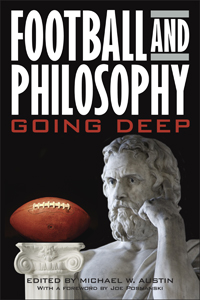
The book Football and Philosophy: Going Deep (University Press of Kentucky), edited by Mike Austin, is now garnering reviews. Here’s a very favorable review from the Lexington Herald-Leader“Tackling big ideas,” by Chris Collins.

Beyond the Sounds of Poetry


In a separate post, I’ve recommended Robert Pinsky’s little book The Sounds of Poetry. So maybe you’ve jumped in and grabbed your own copy of the book to get yourself educated in the values of poetry. What comes after Pinsky’s guide? Here are a few suggestions that vaguely parallel my own path toward greater understanding and appreciation of the riches of poetry. Read more of this post

Don’t Like Poetry? Start Here


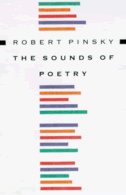
How often have you read a poem and thought, “I don’t get it”? I can relate. How about this one: “I don’t get it; but I wish I could”? That was me, too. And it kept me away from poetry. Then I discovered Robert Pinsky’s little book The Sounds of Poetry: A Brief Guide. Pinsky helped me get it, and made me a believer in poetry.

There are several reasons why I wanted a deeper appreciation of the poetry I didn’t understand. Read more of this post

Quotations: On Love


“. . . it ought to make us feel ashamed when we talk like we know what we’re talking about when we talk about love.” —Raymond Carver, “What We Talk About When We Talk About Love,” a short story in What We Talk About When We Talk About Love

“Love is so short, forgetting is so long.” —From Pablo Neruda’s poem, “Tonight I Can Write”

Quotations: On Cognition and Thinking


“I don’t have to be drunk to say what I think.” —Raymond Carver, “What We Talk About When We Talk About Love,” a short story in What We Talk About When We Talk About Love

Quotations: On Suicide


“I’ve seen a lot of suicides, and I couldn’t say anyone ever knew what they did it for.” —Raymond Carver, “What We Talk About When We Talk About Love,” a short story in What We Talk About When We Talk About Love